Millenial Bugs --Mankind's Battle with Microbes
Chang Chiung-fang / photos Pu Hua-chih / tr. by Robert Taylor
September 1998



The best way to cool off on a hot summer's day is a splash in the swimming pool, But with the threat of enterovirus about, pools which would ordinarily be crowded have been all but deserted.
Some say: "I've never seen people die so fast from enterovirus. It can't be the only pathogen. . . ."

The basic hygienic practice of washing one's hands is an effective way to prevent enterovirus infection. This summer, with much urging from teachers and parents, nearly all children have got the message.
Others say: "Actually, more children died last year from enterovirus-type infections than this year."
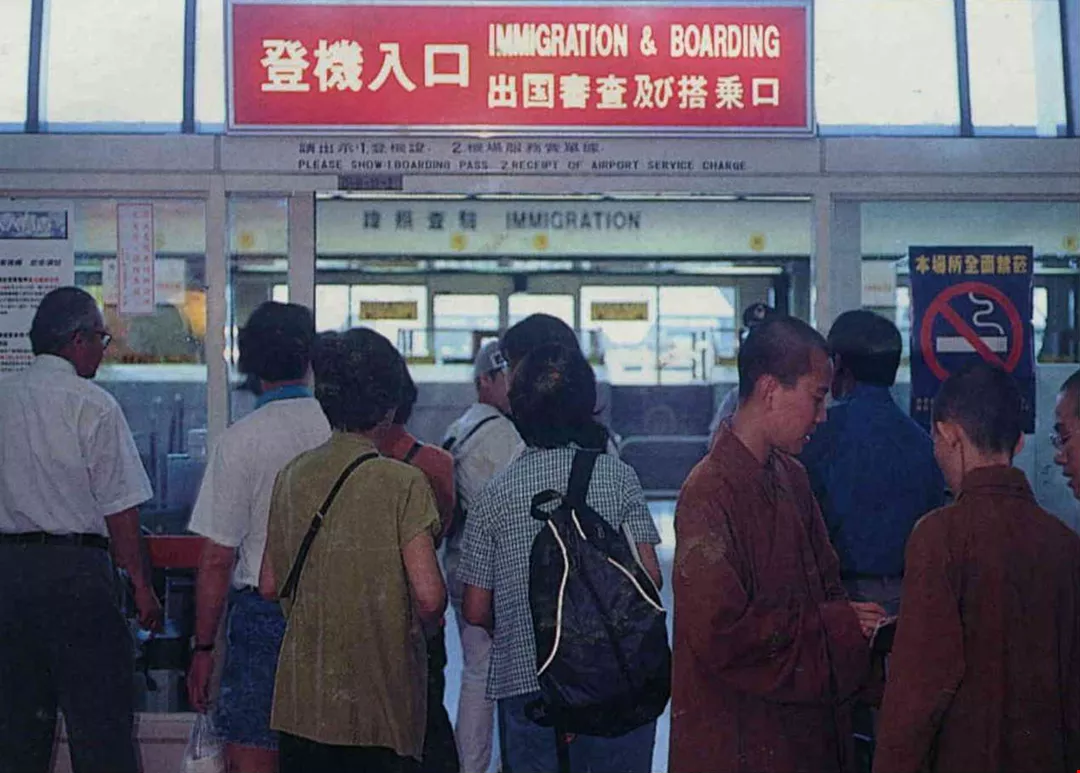
In today's global village with its convenient transport links and constant movement of people, infectious diseases also know no borders.
Half a century ago, infectious diseases caused by bacteria, viruses and other microorganisms were the main causes of death in Taiwan. In recent years, scrub typhus, caused by a bacterium, and dengue fever, a viral disease-both formerly confined to outlying islands and the south-have spread throughout Taiwan. This summer's enterovirus outbreak caused widespread alarm. Will infectious diseases once again come to rank among Taiwanese people's ten major causes of death?

The poultry flu outbreak in Hong Kong last year not only led to chickens and ducks being destroyed, it also caused the territory's usually lively "Bird Street" to close down for a time.
Are the infectious disease epidemics of recent years inevitable natural disasters? Or are they calamities humans have brought upon themselves? And what other diseases may be waiting in the wings to threaten us?
In late July, in the emergency room of a major hospital, after a brief dialogue with a patient the exhausted doctor prescribes two injections and three days of medicine. If the patient still has problems after that time, she should go to an ordinary doctor. The terrified-looking patient asks again and again: "Is that all? I even threw up the water I drank this morning. . . ." The doctor has no doubt that this is another case of enterovirus infection, but the patient's fears are not so easily allayed.
Kindergartens and cr鋃hes have been forced to suspend classes; swimming pools have been closed; public places such as department stores and fast food outlets have seen a large fall-off in business-everyone has been afraid of catching the enterovirus. As soon as a child gets a fever, vomits or is a little off color, its parents are scared out of their wits. All kinds of remedies purported to ward off enterovirus and boost the immune system have appeared on the market; rumors have been rife, and people have been terrified.
"In all the major epidemics in the past, things never got so chaotic as during this year's enterovirus outbreak," says Chen Hao-yung, head of the virology section at the National Institute of Preventive Medicine (NIPM). Even the major polio epidemic of 1982, in which there were over 1000 cases of disease and 98 deaths, did not cause such turmoil as this year's outbreak.

Rather than saying that viruses are on the attack, it would be more accurate to say that we humans are recklessly exposing ourselves to attack.When mankind develops rainforests and mountain areas, it is we who are invading the viruses' territory. (photo by Diago Chiu)
The Department of Health (DOH) and major hospitals, along with epidemiologists and experts in biomedicine and public health, were rushed off their feet. Ho Mei-shang, an associate research professor at Academia Sinica's Institute of Biomedical Sciences, says that in order to identify and combat the disease-causing enterovirus, the institute's epidemiology laboratories suspended all their other work for two months. The mythical enterovirus?
In the three months from May to July, the enterovirus outbreak caused 300 children to be hospitalized, and led to over 50 deaths. Ho Mei-shang says this is no less serious than most historical epidemics of diseases such as cholera, which people used to blanch at the mere mention of before the advent of vaccines.
Wu Tsung-neng, director general of the DOH's National Quarantine Service (NQS), also says that in terms of the course and severity of the disease, this year's enterovirus outbreak was indeed serious.
But why should it be that of the children admitted to hospital, all in serious condition, some recovered fully but others quickly died? What went wrong in the more than 50 fatal cases? Wu Tsung-neng says some researchers suspect that in addition to enterovirus 71, there was a second pathological factor. This hypothesis is still being investigated.
"To this day I don't believe enterovirus 71 was the real cause," says Chen Hao-yung. "In six autopsies, enterovirus 71 was found in the brain in only one. On that basis, how can one conclude that enterovirus 71 alone was the killer?"
"With ebola, which is one of the deadliest viruses known, it still takes three days from the onset of disease to death. But some of the enterovirus cases died within two days." Chen Hao-yung finds this extraordinary-he suspects that another virus is involved, and has started performing tests to investigate.
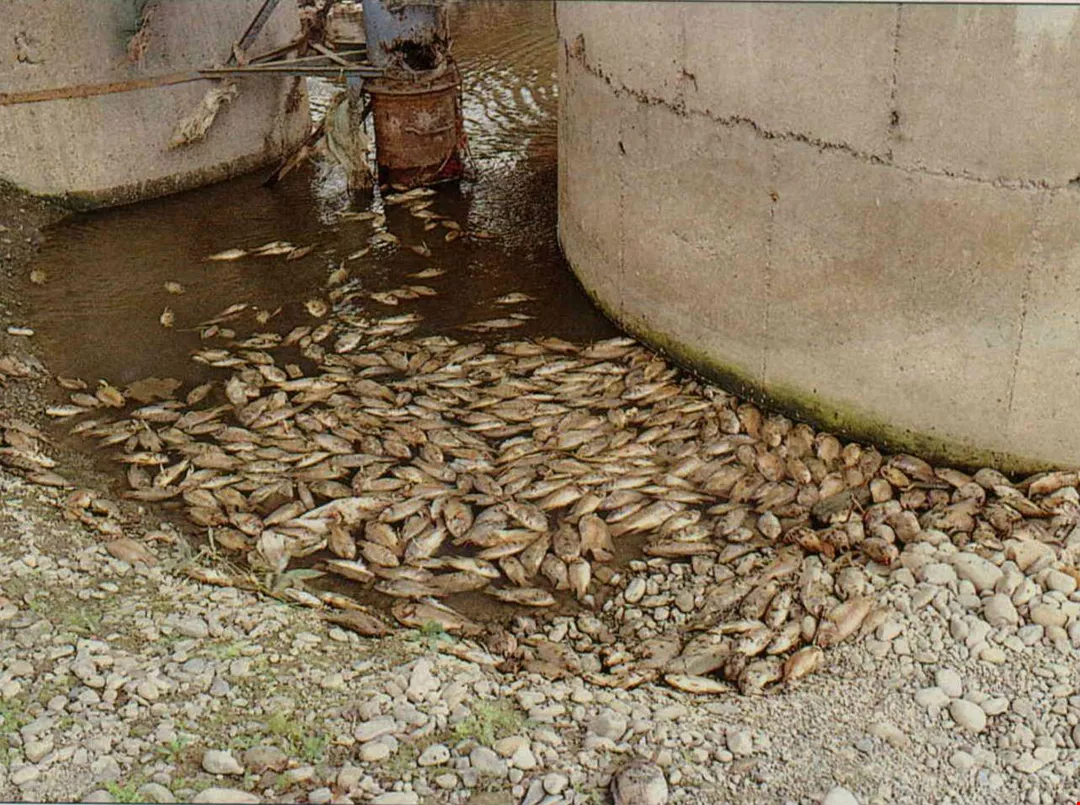
Climate change, pollution and other human abuses of nature are not only changing the ecology, but also creating sources of disease.
"Such rapid death was something doctors hadn't seen before," says Ho Mei-shang, who also believes that this "infantile hand, foot and mouth disease with sudden death" syndrome should probably be regarded as a new disease. She says the sudden death phenomenon may be associated with some facilitating environmental factor, such as the effect of certain drugs. But the possibility which most worries people in medical circles is the emergence of an unidentified new pathogen.Attack of the space viruses?
This uncertainty leaves the public fearful. Apart from worrying whether the enterovirus will reappear next year, they are also worried whether still more dangerous viruses will emerge. Why would the tiny enterovirus leave doctors at a loss, without an effective response?
Where viruses first came from is still a mystery. Researchers generally believe they came from the genes in cells; some believe they may even have come from outer space.
Chen Hao-yung explains that viruses are among the world's smallest and most ancient biological entities. They are composed of a protein shell enclosing a minute amount of genetic material, and are only one-hundredth to one-thousandth the size of a bacterium.
There are many types of viruses-six hundred or more, according to estimates-and enteroviruses are among the smallest, at about a millionth of a centimeter long. Apart from viruses, other causes of infectious disease in humans include bacteria, fungi, parasites, rickettsias and chlamydia. Among these types of microorganisms, viruses and bacteria cause the fastest onset of disease and the most acute effects.
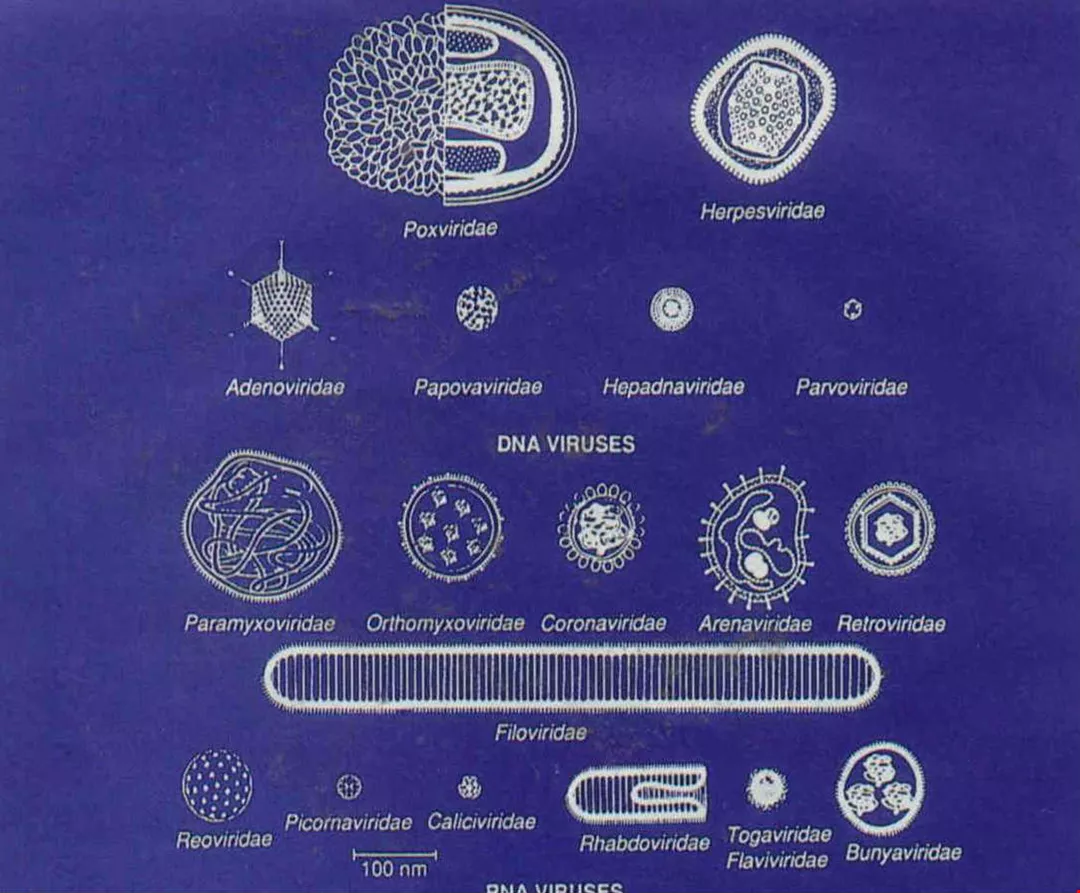
Viruses come in all shapes and sizes. The largest, the smallpox virus (upper left), has already been eradicated by mankind. (courtesy of Chen Hao-yung, NIPM)
Although countless different microorganisms exist in the natural world, not all pose a threat to humans. To take viruses as an example, Chen Hao-yung explains that whether a virus is pathogenic (disease-causing) for humans depends firstly on whether it can enter cells, and secondly on whether it can continue to reproduce and multiply inside them. The final crucial factor is whether it can coexist with cells. If a conflict arises between them, disease results.Invisible adversaries
In former times, someone infected with a bacterium or virus could only rely on luck as to whether their immune system could defeat the invader.
From the 19th century on, as medical technology advanced, attenuated vaccines, containing microbes of reduced virulence, and antibiotics, which destroy bacteria, made their appearance. Only then did humans have weapons to combat bacteria and viruses.
In May 1980, it was confirmed that mankind had eradicated smallpox; since then, the smallpox virus has only continued to exist in the form of samples retained at three medical research centers in the UK, the US and the USSR.
After thousands of years of war between humankind and viruses, humans had finally achieved their first victory.
The World Health Organization now has plans to make measles, rubella (German measles), polio and neonatal tetanus, all of which have effective vaccines, disappear from the world by the early 21st century.
But can mankind really defeat microorganisms, and gradually eradicate the threat they pose to life?
Forty or fifty years ago, acute bacterial and viral diseases were the major cause of death in Taiwan. Today, they have been replaced by cancer and cerebrovascular disease. However, the threat from infectious diseases has not disappeared.
At about the same time as it was announced that mankind had wiped out smallpox, an even more intractable disease-AIDS, which is thought to have started as a localized disease in Africa-began to spread across the world. To date, it has caused three million deaths worldwide.
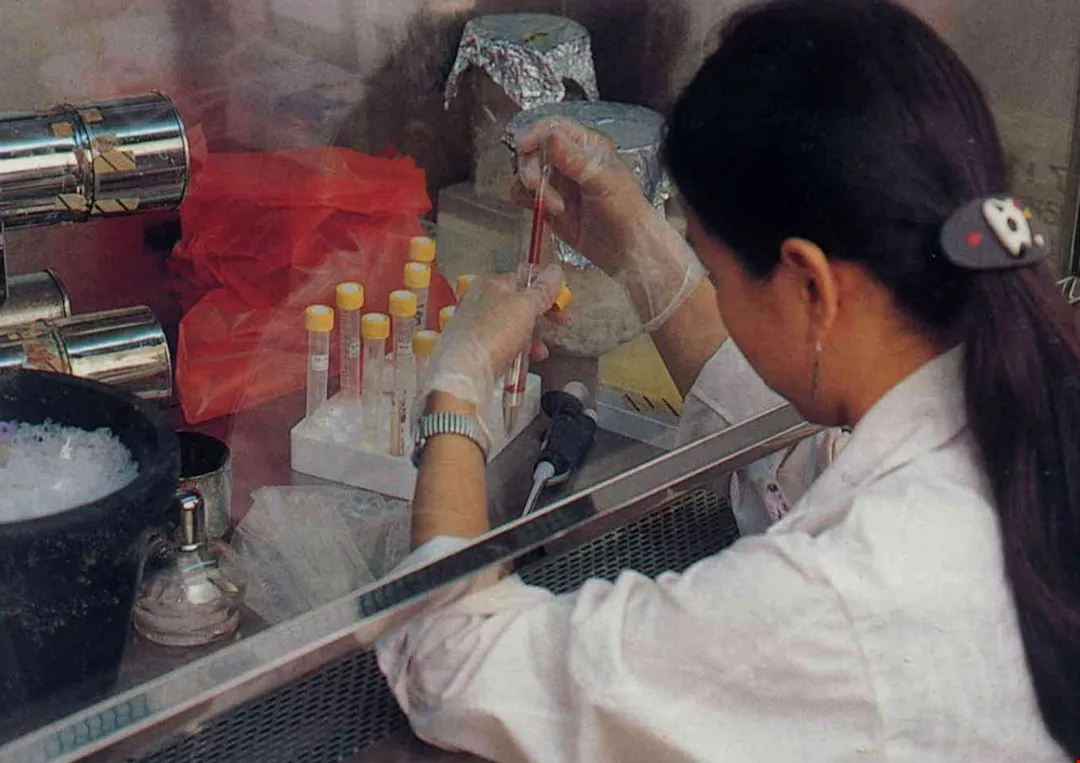
Biotechnology may be making new strides every day, but human understanding of the mysteries of microorganisms is still limited.
In fact, although smallpox has been wiped out, in the 20th century over 30 previously unknown infectious diseases have emerged. They include the highly deadly ebola virus, hantaviruses and AIDS. "When you look at the race between human technology and microorganisms, I'm afraid humanity has fallen a long way behind," says NQS director general Wu Tsung-neng.Killer viruses
Why are there more and more infectious diseases? Is the number of bacteria and viruses growing?
Ho Mei-shang says that most new infectious diseases are not the result of new pathogens coming into being. They emerge when microorganisms find new paths by which to enter susceptible hosts, like the hantaviruses from forests, or when new test methods are developed which enable previously unknown pathogens to be identified.
For example, enterovirus 71, which aroused such fear during the recent outbreak, may very well have occurred before in Taiwan, but simply not have been identified. Shiao Men-fang, director of the National Defense Medical Center's Institute of Preventive Medicine, says that in the same period last year, over 100 young children died, and for some of them the real cause of death is completely unknown. "We can say that human research into and understanding of microorganisms is still very superficial," he says.
Furthermore, although human understanding of bacteria and viruses is limited, with human "assistance," those microbes which are known are becoming more and more resistant to drugs.
Tuberculosis had been thought to be under control, but in recent years has seen a resurgence in major cities such as Tokyo, New York and London.
The tubercle bacillus can survive outside the human body for anything from an hour to several years. Hence in the densely populated environment of cities it is extremely infectious. In October 1990, under a sensational headline, the New York Post reported that a "plague" of highly contagious tuberculosis had emerged, and people might be infected anywhere in New York.
According to WHO figures, tuberculosis has become the world's number-one killer of adults, and it is predicted that over the next 10 years it will kill 30 million people.
Shiao Men-fang says that apart from reduced immunity due to AIDS, the major reason for the resurgence of tuberculosis, and the difficulty of controlling it, is the bacillus' increased resistance to drugs.

The urban jungle is a hotbed for viruses. The development of human civilization has also unwittingly provided viruses with perfect breeding conditions.
Humans developed antibiotics to combat bacterial diseases, but the widespread use of antibiotics has caused the emergence of resistant strains of bacteria. A face lift for bacteria
"Life always finds a way," says Chen Chien-jen, director of the National Science Council's Division of Life Sciences-bacteria can easily adapt to new environments.
"Microorganisms are not going to die out, so infectious diseases can never be completely eradicated either," says Shiao Men-fang. He says that the simpler an organism is, the greater its ability to adapt to its environment, for example by developing drug resistance.
For instance, a major new mutation of the influenza virus appears about once every ten years. These bypass the resistance people have to previous strains, leading to major new epidemics.
Ironically, although modern medicine is able to cure many infectious diseases, medical interventions may also assist the spread of infectious pathogens.
Chen Chien-jen describes hospitals as distribution centers for bacteria and viruses: The bacteria found in hospitals are more virulent than those found in the community at large, because hospital patients include many who have to undergo lengthy treatment, so that bacteria have greater opportunities to congregate and to exchange drug resistance genes. With the trend towards the concentration of medical treatment in hospitals, rates of in-hospital infection have risen greatly.
Lien Te-cheng, an attending physician in the Department of Respiratory Therapy at Taipei's Veterans General Hospital, suggests that it is best if in-patients are discharged as soon as they are 70% recovered, because somebody just recovering from a major illness is much more vulnerable to any secondary infection which they might contract in hospital.
Other factors, such as the immunosuppressive drugs used to prevent rejection after organ transplants, produce an "immune deficiency syndrome" in patients, which also reduces their resistance to infectious disease. Many such effects of medical treatment make infectious diseases more difficult to combat.
As well as the side effects of medical technology, fears have recently been raised overseas that the alteration of microorganisms by genetic engineering may lead to new diseases.Nobody's fault but our own
The upsurge in bacterial and viral diseases is also related to changes in the environment and ecology. The effects on infectious diseases of recent climatic and environmental changes have become a new topic for epidemiological research.
Chen Chien-jen says that both long-term global climate change and the short-term El Nino effect are leading to an expansion in the geographical range of many infectious diseases.
Professor Hsu Huang-hsiung of NTU's Department of Atmospheric Sciences says that over the last century, average global temperatures have risen by 0.6蚓, and many experts predict that in the 21st century this figure will exceed 1蚓, and could even reach as much as 4-5蚓.
Epidemiologists suspect that global warming will allow arthropod-borne diseases such as dengue fever, yellow fever and malaria to spread from the tropics into temperate regions where they did not previously occur.
Teng Hwa-jen of the National Institute of Preventive Medicine's medical entomology section says that dengue fever used to occur only sporadically in Taiwan, but the trend in recent years seems to be for it to become a cyclical endemic disease.
Dengue fever was formerly seen only in southern Taiwan, but since 1995 there have also been outbreaks in Taipei County and Taipei City. Yang Yan-shih, a senior specialist at the DOH's Bureau of Communicable Disease Control, says that monitoring of dengue fever has now been extended from areas south of the Choshui River to cover the whole of Taiwan.
Scrub typhus, caused by a rickettsia carried by chiggers, has also spread from the outlying islands and southern mountain areas, and may now occur throughout Taiwan. Teng Hwa-jen says that this year there has been a large increase in the number of cases, with over 150 so far.
Chen Chien-jen says the spread of diseases from south to north may indeed be associated with the past two successive warm winters and this summer's consistently high temperatures.Urbanization of rural viruses?
Although investigation of the relationship between climate and infectious diseases is still at a preliminary stage, excessive human development of jungles and rainforests has increased people's chances of coming into contact with the microorganisms which live there, and with their natural hosts. Although it may not be obvious to most people, there can be no doubt that this has increased the chances of diseases spreading.
For example, it is the development of forest areas which has enabled dengue fever, which originated in the jungle, to evolve into an "urban virus."
Chen Hao-yung of the NIPM says that once a virus develops into an urban virus it becomes very hard to eradicate. Viruses are very simple in structure, and as long as they have live cells to act as their hosts they can continue to reproduce. Hence cities, which have dense human populations and also harbor large numbers of rodents and other pests, are perfect breeding grounds for viruses.
Furthermore, human activities such as forest development and the construction of dams change the ecology of pathogens and their vectors. Schistosomiasis in Egypt is an excellent example. Chen Chien-jen explains that schistosomiasis, which is caused by "blood flukes"-tiny parasitic flatworms-which use water snails as intermediate hosts, was once transmitted to humans in the Nile Valley only when the Nile was in flood. But since dams and barrages were built on the river's upper reaches, the water flows all year round in irrigation schemes, and the snails thrive year-round too. Thus humans are now at risk of infection from the schistosoma parasite at any time of the year.Migrant mosquitoes, displaced dogs
Diseases which occur in countries overseas may seem far away, but now that the world has become a "global village," no nation can isolate itself from the risk of infectious bacteria and viruses.
Population growth, population movements and increasing international travel and trade have all accelerated the spread of infectious diseases. The "airport malaria" which has appeared in Western Europe in recent years is a typical example.
Shiao Men-fang explains that with frequent air connections between Africa and major European cities such as London, Paris and Frankfurt, a few Anopheles gambiae malarial mosquitoes often "hitch rides" on Boeing 747s and other large aircraft, and this leads to malaria being transmitted to people living in the vicinity of the European airports.
Fortunately, the climate in Western Europe is not suitable for the mosquitoes to breed, so they only cause a few infections near airports, not major epidemics. But disease control specialists fear that as global warming leads to longer summers and higher temperatures, the mosquitoes may one day successfully "migrate" and establish themselves permanently in Europe, at which point malaria could become endemic there.
A case of malaria transmission which occurred at Taipei's Veterans General Hospital (VGH) in 1995 shocked the public. A local resident who suffered chills and fevers after returning from Algeria had finally gone to VGH after other doctors had been unable to determine the cause. The doctors at VGH also failed to diagnose malaria, but sent the patient for a PET brain scan. A tube in the system used to inject the radioactive tracer compound became contaminated with the malaria parasite, and because it was used for subsequent patients, it led to seven people being infected with malaria.
If disease-carrying mosquitoes can move from country to country, rabid dogs may also become illegal immigrants. With recent close contacts-and frequent smuggling-across the Taiwan Strait, people have begun to worry that rabies, which has not been seen in Taiwan for 40 years, may also be "smuggled" onto the island.
In Shiao Men-fang's view, this is no idle fear. He says that rabies is endemic in mainland China, and anyone who brings in a dog from there may also bring in rabies.Self reliance beats drug reliance
Urbanization and lifestyle changes have already made many infectious diseases "unstoppable." This is particularly true of airborne diseases of the respiratory tract.
"We can improve management of drinking water, eradicate disease vectors and promote good hygiene, but we can't isolate ourselves from social interaction," says Wu Tsung-neng.
Most experts take the view that in densely populated Taiwan, the diseases most likely to cause large epidemics, and those most difficult to prevent, are still the common respiratory tract infections such as tuberculosis and influenza.
Influenza is an acute disease of the respiratory tract. Four global epidemics over the last century have caused many deaths from complications among people with weak immunity, such as old people and young children. For example, the 1918 Spanish flu epidemic claimed 20 million lives around the world.
The human race has never had an answer to influenza, and similarly many people find it difficult to understand why the medical world is unable to find effective treatments against enteroviruses. In fact, unlike bacterial diseases, apart from herpes virus there are no drugs available to treat most viral infections, and doctors can only provide supportive treatments. In other words, to defeat viruses we have to rely on the body's own defense mechanisms.
This has caused many people to wonder whether the fact that 50 children were killed by an enterovirus which most people take in their stride is a sign that the immune systems of children today are growing ever weaker.
"Quite the opposite," says Dr. Huang Li-min, chief of the Division of Infectious Diseases at National Taiwan University Hospital's Department of Pediatrics. He says that in fact, children's immune systems have been growing ever stronger. He cites the example of rotaviruses, for which there are no drug treatments available, so that recovery depends entirely on the body's own defenses. Huang says that in recent years better nutrition has strengthened the immune systems of Taiwanese children, and nowadays one very rarely hears of people dying of rotavirus infections. But in third-world regions such as Africa and India, such infections claim millions of lives every year.Fight fire with fire?
But in the case of enteroviruses, the opposite seems to be true. None of the regions where enterovirus disease occurs are so-called backward regions-they are areas such as the USA, Taiwan and Malaysia where hygiene is considered to be relatively good. In fact, some experts feel that since most enterovirus cases in Taiwan are in rural areas, it is still the result of poor hygiene. Nonetheless, it is also true that children today live too cleanly: they lack natural sources of infection in their environment, so that when they do meet with a virus they are quite unable to fend it off.
Cleanliness is a goal pursued avidly by modern people. The market offers a panoply of personal hygiene products: shampoos, face washing emulsions, mouthwashes, shower gels. . . . From head to foot, nothing is left uncleansed. And then there are the washing up liquids, washing powders, floor cleansers, kitchen cleaners, bathroom cleaners and the like. People are terrified of leaving a spot of dirt or a trace of bacteria around them.
"It's not necessarily the case that the cleaner people are, the healthier they are," says Chen Hao-yung: without bacteria, humans cannot survive, so on no account should we try to wipe them all out. For instance, gargling with an antiseptic mouthwash is quite unnecessary, and showering several times a day would destroy the natural "barrier" which protects our bodies from microbes, thus achieving exactly the opposite of what was desired.
Physicians regard polio as a disease which arises from excessive cleanliness. In many traditional societies, most children contract mild infections of the polio virus as babies, and develop immunity to it; but if they are isolated from it by hygiene measures and do not first come into contact with it until they are a little older, it can cause severe paralysis or even death.
There is no shortage of examples in Taiwan of improved conditions bringing the risk of disease. Huang Li-min says that improvements in public hygiene have reduced rates of natural infection of hepatitis A, and some 90% of people under 30 in Taiwan now have no antibodies to the virus. But Taiwan is densely populated and hygiene here is still far from perfect. This creates the potential conditions for major epidemics of hepatitis A. Hence in the future everyone without antibodies may need to be vaccinated.Too high a price
Although natural infection is one method of "immunization," it has a downside. To take this year's enterovirus outbreak as an example, NQS director general Wu Tsung-neng estimates on the basis of reports from 800 physicians at selected locations throughout Taiwan that some 450,000 people were infected. The majority of people now have antibodies to the virus, so it will not cause another major epidemic in the next few years. But this natural immunization cost over 50 lives.
As economic conditions and the quality of life have improved, people today naturally value life far more highly than in former times. For instance, although chickenpox usually produces only mild symptoms, it is potentially crippling or even fatal. Old people still believe that the earlier a child gets chickenpox the better, but despite the high price of the chickenpox vaccine now imported from America, many parents are willing to have their children immunized.
Huang Li-min observes that improving people's living conditions and carrying out vaccination programs are effective ways of reducing people's risk of contracting infectious diseases. The problem is that "many economically backward regions are not able to buy vaccines or improve living conditions, so that improvements cannot be carried out simultaneously in countries around the world."
For the whole global village to be improved into an enormous "aseptic chamber" is surely impossible, but what we can predict is that if humans do not change their attitudes towards the environment and nature, and if they continue to pay scant regard to safe practice in medical treatment and the use of drugs, new viruses and infectious diseases will never stop appearing.
@List.JPG?w=522&h=410&mode=crop&format=webp&quality=80)


