Taiwan's Creative Firms Cross the Strait
Coral Lee / photos Chuang Kung-ju / tr. by Jonathan Barnard
November 2011


Mainland China is making the transition from being the world's factory to being the world's market. The Yangtze River Delta area is spearheading this change, and old industrial sites are being turned into centers for cultural and creative industries. In this transition, Taiwan's cultural and creative firms have become a force to be reckoned with.
Their ranks include businesses involved in pop culture, publishing, performance arts, fine arts and many other cultural fields. With trailblazers having already established a path, more and more creative firms are following in their footsteps.
These are the soldier ants of fields ranging from arts and crafts to design and digital content, and they have boldly brought Taiwan's cultural sensibility and dynamically creative ethos to mainland China. How are they cultivating opportunities in the vast mainland market? And how can Taiwanese and mainland Chinese, who share a language and ethnic heritage, create innovative international brands that are distinctively Chinese?
A shelf on stage displays an elegant vase and a cloth handbag. Suddenly a drumbeat sounds as some Chinese characters flash on screen: "Building dreams sets the stage for cultural creation." Accompanied by the choreographed motions of two agile dancers, images of Taiwanese hallmarks-lush rice paddies, lotus fields, and slowly ascending sky lanterns-are projected on screen. Cultural and creative Taiwanese products, such as Hakka Blue ceramics, bags of rice from the Green In-hand Food Bank, and Cheerful brand bags, also appear. At the conclusion of the show, the audience bursts into enthusiastic applause.
The video-Taiwan Impressions: A Show of Interactive Technology-was screened at Nanjing's Taiwan Trade Fair in September. Offering a look at both the island's scenery and its award-winning cultural products, it earned high praise.
In recent years numerous trade shows-of varying sizes and on both sides of the Taiwan Strait-have put a focus on "cultural and creative" industries. For instance there is the Beijing International Cultural and Creative Industry Expo, which has been held five times. In 2007 it started with 14 Taiwan companies transacting total sales of RMB3 million. By last year, the expo had attracted 127 Taiwanese firms, which conducted business totaling RMB750 million.
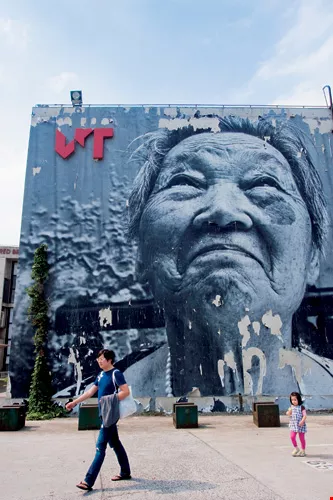
Guided by government policy, parks for cultural and creative industries in Shanghai are helping to bring about a structural transformation in the city economy. The photo shows Hongfang, an industrial park for creative and cultural industries.
Taiwan's creative workers have gone to the mainland having sensed its limitless potential. Unlike earlier waves of information technology manufacturers, which regarded mainland China as a good place to build their factories, these cultural and creative firms believe that there is money to be made by selling to the mainland market.
A quick history of recent policies affecting the development of cultural and creative industries in China: In 2006 the "Outline for National Cultural Development of the Eleventh Five-Year Plan" was announced. It represented the first time that cultural industries were given national strategic importance. In 2011 came the "Outline for National Cultural Development of the Twelfth Five-Year Plan," which went a step farther, offering a plan for industrial upgrading. According to the PRC's Ministry of Culture, the nine largest cultural industries had total revenue of RMB150 billion in 2009. That represented growth of 16.7% over the previous year.
Cultural districts on the mainland have been sprouting like mushrooms after a downpour. Shanghai alone has 89 districts devoted to creative industries. These have attracted over 8000 companies from more than 30 nations.
Take, for instance, "M50," named for its location at No. 50, Moganshan Road. Converted from a textile factory, it holds over 100 galleries, advertising firms, workshops, photography studios and so forth. Trendy Hongfang is located in a converted steel factory and features a grassy plaza adorned with modern sculptures. As a park for creative industries, it adds a bit of cultural spice to a city focused on maximizing profits.
"Parks for cultural and creative industries can help to change the industrial and employment structure of Shanghai," says He Shouchang, deputy director of the Cultural and Creative Industries Promotion Office of the Shanghai Municipal Government. He explains that M50 was originally a base of production for the Shanghai Textile Bureau. After it was converted for use by cultural firms, the Textile Bureau (now the "landlord"), taking advantage of its zoning for industrial use, was able to offer rents to creative firms that were cheaper than those typically offered in districts zoned as commercial. In return, the Textile Bureau can use the rent and maintenance fees to support laid-off workers. Some 20,000 of the 550,000 workers that used to be employed by the textile factory have been retained by the cultural park, as the site has shifted from blue-collar to white-collar work.
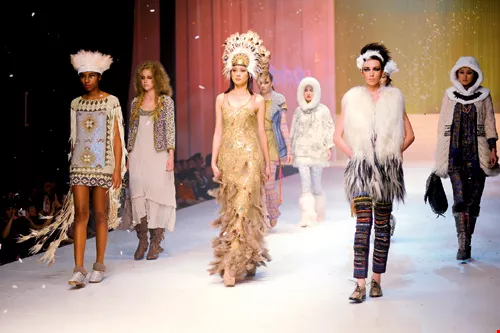
Districts devoted to cultural and creative industries often sponsor activities of various kinds to attract interest. The photo was taken at a fashion show held at Hongfang by the Taiwanese brand Bernini, which has had a presence on the mainland for 10 years.
Model No. 1: Franz Ceramics
Shanghai and other large mainland cities have a magnetic pull on manpower that serves to focus energy on "cultural consumption." How should Taiwan's creative firms plough the fertile fields of this market, where business opportunities are only growing larger?
Looking at the experience of successful Taiwan brands, the first key is to have a refined product with rich cultural content.
The Franz Collection of porcelain, which has been called the "pride of Taiwan," was established by Francis Chen in 2001 after 20 years of making products for other brands in the gift industry. Making porcelain items with high-temperature glazes that combine European artistry with an oriental flavor, the company is known for its ornately stylish and delicately romantic style. Reconceiving Chinese porcelain for the modern era, it has been able to cultivate more than 6000 points of sale within only a few years.
After establishing Franz 10 years ago, Chen-following the model of Taiwan companies looking for subcontractors on the mainland-went to have a look at Jiangxi's Jingdezhen at the invitation of the city's party secretary. Jingdezhen, which used to proudly manufacture ceramics for the imperial court, has long been known as the "capital of Chinese ceramics." But much to Chen's dismay, he found that its manufacturers were still using coal-fired kilns. The city was full of industrial chimneys, the air quality was terrible, and the ceramics produced were all copies of old designs. The lack of aesthetic sensibility deeply disappointed Chen, and he abandoned the idea of subcontracting there.
In 2002 Franz's first product line-the Papillon Butterfly Collection-was released at the New York International Gift Fair, where it won an award as the fair's best collectible gift item. Having gained acclaim on the international stage, Chen once again received an invitation from Jingdezhen's party secretary, and he returned for a second look.
A year had passed and various construction projects had been completed, vastly improving the air quality, local infrastructure, and appearance of the city. The original coal kilns had all been replaced with environmentally friendly electric kilns. Seeing the determination of the local officials, Chen decided to bring his production techniques to Jingdezhen after all. Franz became the first company to set up in a new industrial park there, opening in October of 2005 on a beautiful site of more than 160 hectares. The site offers gorgeous scenery, with mountains on one side and water on the other.
At Franz's spurring, Jingdezhen, with its history of making "china" for 1700 years, has moved into the modern international era of art and design. The company has reinvigorated the mainland's ceramics market, stimulating new ways of thinking within the industry. With its high-quality products and service, Franz has taken a strong position within the mainstream of the mainland market.
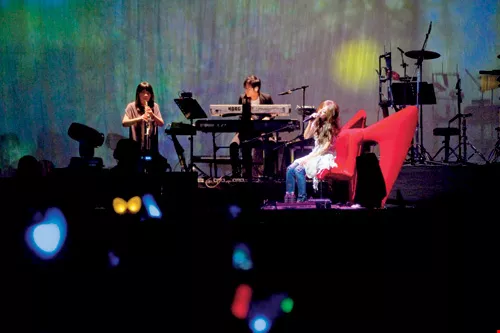
The Taiwanese chanteuse Cheer Chen at a performance in Hangzhou. A singer-songwriter who draws from her personal experiences, Chen has created songs that deeply resonate with young mainlanders.
Whereas Franz successfully built a bridge between east and west, other creative firms have established a foothold on the mainland through their familiarity with digital technology. These companies have made nimble use of their technical prowess and taken advantage of China's rise by bidding for contracts associated with major international events such as the 2008 Summer Olympics in Beijing and the 2010 World Expo in Shanghai. They have taken a cultural heritage rooted in the distant past and brought it to life for modern people, establishing a new creative industry in the process.
During the 2010 World Expo in Shanghai, River of Wisdom employed multimedia to recreate what it would have been like to visit Kaifeng when it was the capital of Song-Dynasty China. River, created by the Taiwanese firm YAOX Edutainment, was the most popular feature of the China Pavilion, and when the Shanghai Expo closed, it was moved to Taipei and Hong Kong, where it likewise was a big hit.
The husband and wife that own YAOX, Crayon Yao and Wu Ju, originally worked shooting television commercials. In 1994, holding a dream to build their own brand, they established YAOX, which has a focus on animation. Yet because the Taiwan market was too small, the firm shifted its focus 10 years ago to become one of the first firms in Taiwan to produce 3D films for theme parks. As technology advanced, YAOX entered the world of 4D video, creating several dozen well-received animated films with science-education or science-fiction themes for museums in Taiwan, Japan and Korea.
The skills that YAOX had accumulated by designing hardware for 3D and 4D multimedia theaters allowed it to reap impressive contracts at the Shanghai Expo, including those for general creative supervision and engineering of a multimedia theater for the China Pavilion. YAOX also designed and constructed a 4D theater with a 720-degree spherical screen for the Taiwan Pavilion. With those prestigious commissions, the firm was able to make big strides in the mainland museum and theme-park markets.
Another example of a Taiwanese multimedia firm that has met with success on the mainland is Bright Ideas Design, a company with only five employees that has been established for only a decade. Bright Ideas excels in giving traditional cultural products a "technological feel" via digital technology. It has helped the National Palace Museum in Taipei with multimedia shows, and its representative works include the multimedia paintings and calligraphies in the museum's 201 exhibition room.
Bright Ideas' Chairman Kuo Cheng-hsiung notes that the company first smelled the possibility of mainland museum work when it went to the China Beijing International Cultural & Creative Industry Expo five years ago. The mainland had been actively developing cultural sites in recent years. But many of those sites, including the Qing-era Yuanmingyuan imperial gardens, are places where physical traces of history remain but there is little sense of the historical context. Consequently, Bright Ideas suggested using digital technology to bring those sites to life.
The firm made a proposal to Yuanmingyuan Park, and after four years of negotiations, the two sides reached an agreement this year to create a "digitial Yuanmingyuan."
Bright Ideas has made photographs of Qing-Dynasty court paintings, historical documents, and prints of paintings made by western artists in order to shoot Yuanmingyuan Tells Its History, which is a work of 3D virtual reality. Visitors will be able to use "binoculars" to survey the original park scenery before it was burned down during the Second Opium War. They will be able to look at Dashuifa, where Emperor Qianlong and his concubine Xiangfei would observe water dance performances; or Fangwaiguan, a mosque erected in a western architectural style, where Xiangfei would go to pray; or Wuzhuting, a pavilion where Qianlong would rest.

In recent years Shanghai's economy has been growing by leaps and bounds, providing opportunities for cultural and creative firms to flourish. The photo shows Hongfang, a converted steel factory complex in Shanghai that is now devoted to cultural and creative industries.
Despite their strengths, Taiwan's cultural and creative industries face challenges in figuring out how to open the mainland market.
Because Franz has a robust economic foundation, the company could approach the mainland market in steps, establishing its own sales channels, holding sales activities and engaging in conversations with customers. Other creative enterprises have instead directly established relationships with mainland companies, reducing risk by pooling resources.
The model of Pili TV Hand Puppetry, which shot Dream of the Butterfly with the mainland company FanFan Comic Culture & Art, is worth a close look.
Pili, which has millions of fans in Taiwan, entered the mainland television market in 2000. It attracted widespread notice there in 2001 thanks to its film The Legend of the Sacred Stone and gained more exposure via Internet broadcasts. Within a decade the company had hundreds of thousands of mainland fans.Unfortunately, because the mainland authorities impose many restrictions on performances by foreign groups, the hand-puppet troupe, despite its popularity on the mainland, has found it hard to expand its business there and benefit financially.
It took its first big step in the mainland market when the city of Hangzhou adopted policies to support the animation industry and approved a film that Pili created with its local partner FanFan.
They took the Liang Shanbo and Zhu Yingtai legend, which is set in Hangzhou, and turned it into a four-episode TV show. Pili was responsible for completing the production work in Taiwan, and Fanfan was tasked with releasing and marketing the film on the mainland. Plans were also laid for filming other legends, including those of Tan Daoji, Su Dongpo, and "Tale of the White Snake."
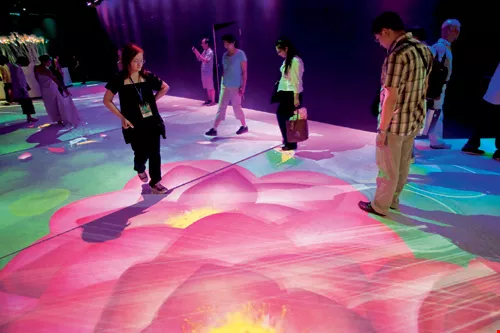
Bright Ideas Design specializes in using digital technology to breathe new life into museum exhibits. The firm designed the Technology and Culture Hall at the 2011 Taiwan International Cultural and Creative Industry Expo.
Intense competition in the luxury goods market has caused some firms to seek mainland partners. Franz, though doing quite well already in the mainland, has also pioneered a cross-industry model with Hangzhou's Dragon Hotel.
Located near the famous West Lake, the Dragon Hotel has poured money in recent years into turning itself into a five-star hotel. While investigating how to redecorate the hotel, the hotel's general manager Du Hongxin discovered Franz and its "Jean Boggio for Franz" line. Du then reached an agreement with Franz to work on the hotel's "Oriental Impressions" floor.
Located on the hotel's 16th floor, there are four spacious luxury suites. Each features a bold color scheme. The "Dream Suite" establishes its main color scheme via pink tree peonies matched with green bamboo. The "Imperial Brocade" suite, meanwhile, uses silk brocade quilts matched with orange shelves and lanterns. Jean Boggio, Franz's highly paid French gift designer, brings visitors into a fantastical realm-as if transporting them on a magic carpet from the Arabian Nights. The romantic oriental style is breathtaking.
Francis Chen explains that these four rooms cost nearly RMB10 million to decorate. Although it was impossible to directly recoup the expenses to create them, they provide a "never-ending exhibition space" for Franz.
Taiwan's creative firms may do well by focusing on particular market segments. Taiwan's vibrant aesthetics and creativity are something that mainland parents would especially like to give to their children, those "little emperors" born under the one-child policy. Hence, the 300 million children on the mainland represent a big market for cultural and creative industries.
Before he died, the noted tech-industry leader Sayling Wen invested in Tomorrow Technology China. In recent years the company he left behind has established Star Cat, a well-received lifestyle brand marketed to mainland children. Based on its cartoon The Adventures of Star Cat, it has developed various kinds of children's merchandise, appealing to parents' desires to give their little darlings happy childhoods.
Currently, Star Cat has more than 100 stores on the mainland. In addition to selling children's clothing, shoes, toys and electronics, the stores also host storytelling performances and provide robot-kit assembly services.
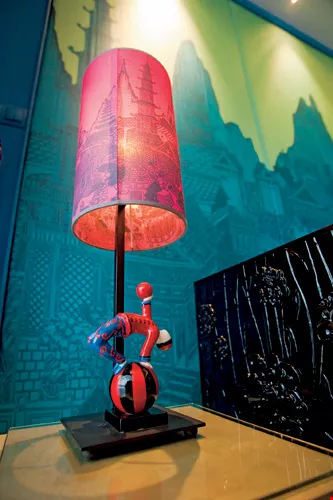
A joint undertaking by the Franz Collection and Hangzhou's Dragon Hotel offers a good example of cross-industry alliance. Luxury suites, decorated by the designer of one of Franz's lines, provide a sumptuous backdrop for Franz porcelains. These brightly colored "Oriental Impressions" suites are stunningly beautiful and romantic.
A full look at the cultural and creative industries that have crossed the strait reveals a tremendous variety of companies, each with unique individual stories. But are there any general lessons that can be learned from their collective experiences?
Crayon Yao, the creative director of YAOX Edutainment, points out that mainland China is a huge, dense market. The number of museums and exhibition spaces that are being built in a single province may far exceed the total number of them in Taiwan. Multiplying that figure by 34 (the total number of provinces) reveals a scale that is simply awe-inspiring. Apart from its size, the mainland is also extraordinarily fast moving. It only takes four or five years for a national-level museum to open after construction is approved. Permission to build a cultural area can be obtained in a week. This astonishing speed bears witness to the ambitions of the mainland government, which always aspires to have the biggest and most dazzling.
Yet there are potential pitfalls amid the opportunities. For instance, cultural parks are sometimes established only to meet the needs of real-estate speculators.
Because most land on the mainland is owned by the government, developers regard the creation of cultural and creative districts as a means to get ahold of large quantities of land. Consequently, they are on the lookout for concepts and teams so that they can approach the government with plans to build "creative industry parks," "animation centers," theme parks, and so forth.
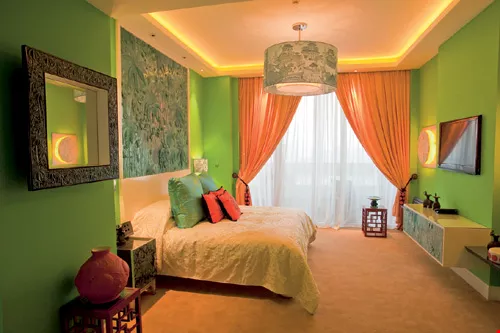
A joint undertaking by the Franz Collection and Hangzhou's Dragon Hotel offers a good example of cross-industry alliance. Luxury suites, decorated by the designer of one of Franz's lines, provide a sumptuous backdrop for Franz porcelains. These brightly colored "Oriental Impressions" suites are stunningly beautiful and romantic.
What's more, because Taiwan's cultural and creative firms are mostly small, they usually lack the NT$20 million capitalization required to establish corporate branches on the mainland. Instead, they mostly have to take the riskier route of working with local agents or front companies.
Currently, none of the NT$10 billion allocated by the Executive Yuan for supporting small and medium-sized creative companies is being used to support firms looking to open branches on the mainland. Cultural and creative firms hope that future negotiations to revise the Economic Cooperation Framework Agreement will resolve the problems posed by the NT$20-million capitalization requirement. The difficulty these firms are facing in raising funds is something the government should work hard to resolve.
"True cultural and creative businesses should be able to replicate what they are making in order to reap profits," says Francis Chen, who also serves as the founder and chairman of the Asia Pacific Cultural Creative Industry Association. Taiwanese performing arts troupes like Cloud Gate Dance Theater and the Performance Workshop Theater are very popular on the mainland. But their work can't be replicated, and their economic scale consequently remains small, with profits hard to come by. On the other hand, Cirque du Soleil has consistently taken an international approach, recruiting performers from around the world and establishing six or seven troupes. Consequently, at any given time a Cirque du Soleil troupe is bound to be performing in Las Vegas or Macao. The DVDs that Pili TV Hand Puppetry has widely distributed offer another replicable model. Only when a company can replicate its product can it reach more people and expand its influence.
"Taiwan has outstanding cultural and creative firms in areas such as film, animation, arts and crafts, and design," notes Chen. "By replicating themselves on the mainland, they could have a big impact." If Taiwan wants to build well recognized brands, then its firms are going to have to plough the fields of a larger market. Meanwhile, the mainland, which certainly has sufficient size, needs to regain some of the glorious cultural legacy and cultural creativity that it lost in earlier decades. If the two sides can work together toward advancing onto the world stage, opening doors to international markets, then the outstanding cultural and creative firms on both sides of the Taiwan Strait are sure to have bright futures.
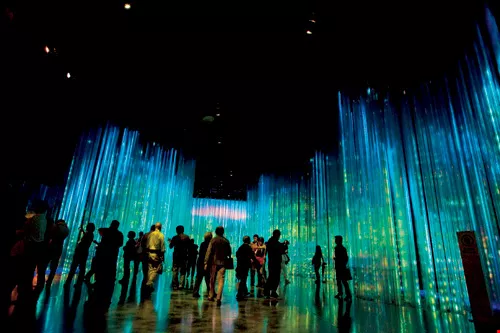
The China Pavilion at the 2010 Shanghai Expo. The mainland market has great potential and offers tremendous opportunities for Taiwan's cultural industries. With Taiwan's creative excellence and the mainland's strong financial resources, the future looks bright.
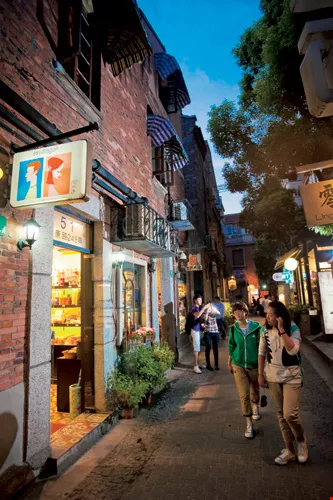
Esydragon, located in Shanghai's Tianzifang, sells products by Taiwanese designers. With its old streets and alleys, Tianzifang is a magnet for tourists.
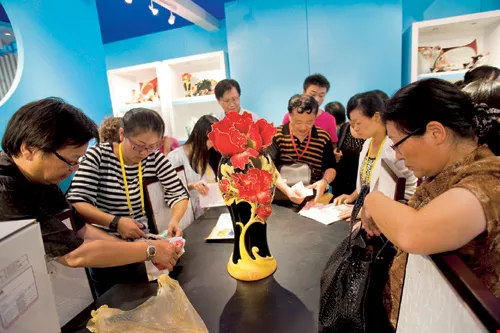
With the mainland's startling consumer power, international brands have been constantly looking to establish a foothold there. Taiwan firms have also enthusiastically embraced the mainland market. The photo shows the Franz Collection's stall at the Taiwan Trade Fair in Nanjing this fall. Business was booming.
@List.JPG?w=522&h=410&mode=crop&format=webp&quality=80)


@List.jpg?w=522&h=410&mode=crop&format=webp&quality=80)


