The Frog Prints:Pan Chih-ming
Chang Chin-ju / photos courtesy of Pan Chih-ming / tr. by Phil Newell
September 2000


Pan Chih-ming, a teacher at the Chingnien High School in Taichung, has organized his whole life around his passion for observing and photographing frogs in their natural habitat. Pan has spent more than 1000 days in the last six years roaming through Taiwan's mountains in pursuit of frogs. It's not just anyone who is cut out for this pursuit, for frogs are especially active at night, when most people are in dreamland. He explores dark forests, deep valleys, and remote watercourses, searching for the 31 species of frogs and toads in Taiwan. He has become the first nature lover to make a complete record of the geographic distribution and life histories of Taiwan's frogs.
For Pan Chih-ming, the night life of frogs is a lot more interesting than the night life of his own species.
It is 7:00 p.m., and Pan, who has just hurried northward from Taichung, is driving his trusty old jeep on mountain roads skirting the Feitsui reservoir, on his way toward Pinglin. Despite the racket made by the car's engine, his acute ears pick up the relentless clamor of a microhylid. The croaking of this mini-frog (a mere two centimeters) is reminiscent of an insect-ji-ji-ji... ji-ji-ji.... It's a tremendous racket. As the jeep goes farther along the narrow mountain road, the voices of "white-throated tree frogs" (Polypedates mega-cephalus) become audible. The sounds rise and fall as the frogs exchange calls-da, da, da, da! like the beating of a drum. Passing by a lumber-soaking pool, Pan's instinct tells him to stop the jeep for a look around. With the help of a feeble flashlight, we see a pond covered with duckweed, broken here and there by eight or nine "spotted brown frogs" (Rana adenopleura) submerging and surfacing. These expert divers are about to open their throats and have a little yodeling contest of their own.
Every summer night, as the day's heat dissipates, the seven or eight types of frogs inhabiting northern Taiwan put on a concert, despite the lack of an audience, which reaches its climax in the dead of night. Trying to impress potential mates, male frogs engage in gentlemanly singing competitions. A frog (or toad) makes a sound by first forcing air from the lungs into an area of loose skin on its throat, called a "sac." The sac inflates, and the frog then pushes the air out of the sac over the vocal cords, which make the sound as the sac deflates. Some frogs have only a single sac, and make sounds like bubbles popping, while others have a double sac.
The structure of the vocal organ is different for each type of frog. By causing the air to vibrate, they create a chorale of varied pitches and volumes. The sound of the "Kuhl's brown frog" (Rana kuhlii), known as "big-head," is like a lower-pitched old mother hen, and that of the spotted brown frog is like the glug-glug sound of water being poured out of a bottle, while a few "Butler's microhylids" (Microhyla butlerii) sound like a cacophonous group of ducklings.
Croaking the night away
Amidst the frog symphony, against the black shadows cast by the layered range of peaks, Pan's silhouette moves smoothly through the night. On his back and around his waist he carries more than 20 kilograms of photo equipment and batteries. Following the croaking, he searches with deliberation along the mountain road, rattling vegetation with his hand to scare away any poisonous snakes that might be about.
On the steep slope of a tea plantation, two Kuhl's brown frogs, with teeth protruding from their lower cheeks, are engaged in an instinctive struggle over territory; it is hard to say who is coming out ahead. At the man-made pond not far away, a female white-throated tree frog has been drawn out by the calls of the males. Three or four males, not showing the least concern for decorum but only worried that they will lose out to another, leap on to her back. (Females, charged with the onerous duty of producing eggs, are about twice as big as males.) As the male frogs try to kick each other off, chaos breaks loose in the little pond, until finally one gains ascendancy, the others flee, and order is restored.
On a different slope, Pan draws apart the vegetation to reveal a small pool of water. We see a cluster of transparent white spherical eggs, while alongside tiny tadpoles wriggle their tails. "These are the eggs and babies of the Butler's microhylid," explains Pan. "They filter algae out of the water using their lower jaws."
Having taken a look at the players already on stage for tonight, Pan is in no rush to get to work; he is simply enjoying the sounds of croaking and the fun of the hunt. It is only later, when the night deepens, mist rolls in from all sides, and the humidity begins to weigh heavy that the lead players in tonight's show-miantian tree frogs (Chirixalus idiootocus)-deign to begin delivering their lines. The vocal entry of the miantian tree frog, which is highly averse to dryness, raises the intensity level on the night stage. Pan, relying on his acute hearing, walks toward the sound of the croaking, where, as expected, he finds a single miantian tree frog engrossed in its singing. Pan sets aside his backpack and takes out his camera to begin his night's work.
After one or two in the morning, the crescendo of croaking segues to diminuendo, and the curtain closes. The frogs go off in search of a cool dark place to escape the heat of the coming day. Pan, getting sleepy himself, packs up his gear and nods off in his jeep. Luckily it is summer vacation. If it were the school year, by this time he would have been on the road, hustling to get back to Taichung.
Mendicant monk
Some people might think that finding frogs in tropical Taiwan is no big deal. After all, who has never seen a Chinese tiger frog or a "swamp frog" (Rana l. limmocharis)? They often pop up in rice paddies, and the toad-which because of the keratinization of its skin is at home away from the water-is also a frequent visitor to inhabited areas. But other species are confined to specific areas or are only active in particular seasons. So unless you traipse across countless rivers and endless mountains, you aren't likely to ever see them in their natural state.
On more than half of the days for the past six years, the routine for Pan has been to get out of class at 4:00 p.m. and set off to visit mountains or wetlands, which could be anywhere in Taiwan. Accompanied by stars and mist, bearing up through rain and intense heat, and fighting a constant battle against drowsiness, he plods up mountain roads, all to spend the night with a frog.
For Pan personally, searching for and photographing frogs is a test of his physical and mental endurance. For the frogs, there is now a photographic record of 31 species of frogs at all stages of life: birth, maturation, and reproduction. This is the first comprehensive picture of frog life in Taiwan available to the outside world. The recent book Taiwan Shang Wa Ji (Taiwan Frog-Watching Notebook), a product of Pan's painstaking photography and of his patience and perseverance, gives people an even better look at the colorful and fascinating world of Taiwan's frogs. Finally, for the environment as a whole, Pan's record of the geographic distribution and life cycles of Taiwan's frogs constitutes an important data set against which future environmental change can be compared.
Pan's willingness to wander the island on behalf of frogs reminds one of a determined mendicant monk. But when Pan first picked up a camera, he had no such determination.
At 15 or 20
Now 35, Pan has a room in his Taichung home devoted exclusively to storing photographic equipment. He's got everything you could possibly want. The cameras and lenses in the room have set back Pan-by no means a wealthy man-by nearly NT$10 million.
Yet, for Pan, the only priceless object in the room is his first no-name camera.
When he was in high school, just for fun he asked his dad to buy him a camera. Though the family didn't really have much of a discretionary income, his father did not refuse him outright, but simply told him to wait a while. Pan's sister strenuously objected to this, because she knew her younger brother's enthusiasm was usually fleeting.
In those days, a camera was considered an extravagance, and both film and developing were expensive. "When I was young, the neighboring dads thought I was a bad son who only wasted the family's money," recalls Pan. But his father never regarded him this way. Two weeks later, his father took him to buy his first camera. Though it was not a famous make, it still cost the family more than NT$10,000. Holding the most expensive object he had ever held in his life, the first night he was so excited he couldn't sleep. Yet, as his sister anticipated, after a couple of weeks the novelty had worn off, and he stopped playing around with it.
One evening, however, on the bus on his way home from school, Pan saw a familiar silhouette in military khakis walking along the street. It turned out to be his father, who at that time worked on a military base in Miaoli, walking the seven or eight kilometers home just to save the 2.5 NT dollars that it cost for a soldier to buy a bus ticket. Pan was thunderstruck by what he saw, and woke up to his father's tireless and uncomplaining contributions to the family: They had borrowed money to buy the camera, while his father sacrificed to save every penny. Pan picked up the camera again, and has not stopped shooting since.
After high school, Pan came to Taipei to work and tested into university. When his father fell ill, he took a leave of absence from school to return to Taichung, where he took a job as a car salesman. Whatever his economic circumstances, he remained an avid shutterbug, and headed out to take pictures at every opportunity. "I felt like I didn't get paid for years," says Pan, who usually spent his money on new equipment as soon as he got his pay packet. He thought he would become a professional photographer, so he quit his job and began taking pictures of everything and anything. He even did commercial photography, and later traveled all over, including Europe and Mainland China.
Mainland revelations
Back in the mid-1980s, after the government lifted the long-standing ban on travel to the PRC, photographers fell over each other to get there. Carrying his equipment on his back, Pan went backpack traveling on his own, covering the mainland from top to bottom. He visited the Pamir Plateau, with temperatures of 40 below. He ate lamb for three months straight in Xinjiang, and he rented a yak-skin coat to keep out the cold near Lake Kalakuli. Then, as he was taking in the beautiful karst landscapes of Yangshuo by bicycle, he happened to meet an old photographer who lived there, and only then did he end his days of wandering.
"The old guy had come to Yangshuo after Liberation [1949], and besides working he also took photographs every day. He had a moldy old camera, and he would go to scenic spots before sunrise and wait for the first rays of dawn," says Pan, retelling the story that changed his life. The old man asked Pan to his home to have a look at four decades of photos he had taken of Yangshuo. "As soon as I saw them, I knew I had been 'bested.' Though mainland film is not very light-sensitive, and conditions for developing are poor, the man's work was very moving, and in that moment I couldn't help but hide in shame the brand-name camera I held in my hand."
"That was the old man's hometown. He opened his door and that was his land right there. I thought that no matter how hard I worked to photograph the mainland, I could never do better than he." After the event, Pan wrote about how the old gent had used his entire life to record the spirit of his hometown, and approached his work with an attitude of simple dignity. Pan realized that no matter what you do, what is most important is having an attentive and determined attitude.
Pan also came to the mind-altering realizations that hardware alone cannot produce anything, no matter how much you fool around with it, and that life is limited, so you cannot photograph everything. He learned that it is better to go deeply into one theme that you love, and to experience it with your entire life. "In the past, my attitude in taking photographs was very offhand. I went places, and I photographed whatever was there. But the old man made me understand that one can only transcend the level of technique and technology by focusing on the land and the environment that is closest to oneself." That night, in his diary, Pan wrote: "There is an uninterrupted sound of frogs croaking, I begin to miss my home of Taiwan."
His chance meeting in Yangshuo caused him to return to Taiwan, where he turned his attention to frogs.
A bird-eating toad?
In his many travels, nature had always been the lead actor in front of his camera. He was often especially attracted by little frogs, which inspired him to wonder about many things. Once, in Hunan in mainland China, locals told him about a kind of frog that could pretend to be dead to draw in birds, and then turn around and eat the birds. They claimed that this was the origin of the expression, "A toad trying to eat a swan," which is usually used to describe a man trying to woo a woman who is "out of his league."
In 1993, he returned to his alma mater, Chingnien High School, to teach photography. At the same time, he continued to search for information about frogs. He discovered that although people had done in-depth research into some species in Taiwan, there was not a lot of information about the overall distribution, numbers, and habitats of frogs in general. It was especially difficult to find anything about frogs like the emerald green tree frog, which live only in very circumscribed areas. Since he was an outsider to biology, his only option was to start from scratch. He gave himself an assignment: Before rushing out to photograph the frogs, first find them, observe them, and understand them.
Thereafter, he roamed about in places where frogs might show up, such as the lakes and wetlands on the border between Ilan County and the Taipei Basin, which are especially suitable for frog survival. He followed the Nanshih river upstream, searching through each water pool and bamboo wood along the mountain roads. He also spent two years continually exploring the Chiayi-Yunlin area. The highlight of that effort was seeing, in Kukeng Rural Township, a Rhacophorus arvalis, a rare species unique to Taiwan.
As he piled up the miles in his searches, he was from time to time made a fool of by frogs. For example, the Taipei green tree-frog is rarely active on the surface, preferring instead to hide in the dirt or camouflage itself in fallen leaves. Pan covered every inch of the cities and towns in the outskirts of Taipei, and, after great difficulty, finally found the habitat of this elusive creature. However, each time he approached the sound of their croaking, the tree-frogs, alerted to his presence, would go silent. But as soon as he turned away the croaking would begin again. Several hours passed in this way, and he was spun in circles until finally, before he had taken even a single picture, his batteries ran out.
In order that he might more readily see frogs in the darkness in remote places, he came up with schemes to "train" his vision, and he became a maniac for consuming carrots. In such ways did he spend nearly three years, until he had found all 31 species of frogs, knew the places and seasons they would appear, observed and recorded their habits, and developed the ability to track their sounds. Only then did he begin taking photographs.
Frog diversity
There are many variations on frog life in Taiwan. In rice paddies, rivers, and irrigation ditches, you can find what the Chinese call the "swamp frog," which all children of the plains know well. On the other hand, fast running streams and waterfalls are the domain of the dark green "Swinhoe's brown frog" (Rana swinhoana). The central Formosan toad, meanwhile, lives at altitudes of 2000 meters, while the Yaeyama harpist frog lives only around Lotus Pond in Nantou County.
Different types of frogs not only have their own habitats, but also come on stage in turns, depending upon the rotation of the seasons. In spring and summer, the "Moltrecht's tree frog" (Racophorus moltrechti) comes out in force, like an invading army. The fierce Kuhl's brown frog appears only in summer. The emerald green tree-frog has an especially long reproductive season, lasting from spring to autumn, and it is not hard to spot their jade-green bodies in this period. When winter rolls around, it is the turn of the Taipei green tree-frog, with its drawn-out and raspy croaking, as well as of the Taiwan brown frog. And of the two species of toad unique to Taiwan, the house toad makes its presence felt in spring and summer, while you can only see the central Formosan toad when it comes out in autumn and winter to keep up an uninterrupted vocal personals ad for a mate.
Besides having different voices, the frogs also have different life patterns and personalities. The golden frog is the giant among Taiwan frogs, growing to lengths exceeding 10 cm. Though born with a big mouth, the golden frog is very silent by nature. Unless feeding, it rarely opens its trap. The Chinese tiger frog is highly intelligent: When this slippery-skinned frog runs into predators, it finds an opportunity to jump into the water, kicking up silt to muddy the waters as it escapes. It can also stay submerged for three or four hours, so that it often proves completely impossible for a person to catch one. The brown tree frog (Buergeri robustus) has especially large suction cups on its feet, giving it an extraordinary ability to leap and adhere; it can climb rock walls even in rapidly flowing streams.
Though Pan's time spent learning about frogs means that he had no problems finding frogs to photograph, he set himself quite a task with his ambition to capture every stage of their life history, from egg to reproducing adult, on film. For example, in his efforts to photograph the brown tree frog, which lives in fast-flowing water, he risked being washed away himself. To get the spotted frog, an expert diver, he had to soak himself in ponds, picking up a skin disease and getting eaten alive by mosquitoes in the process. And, with his attention focused on frogs, he has accidentally brushed up against stinging nettles, been stung by highly toxic bees, and found himself face-to-face with poisonous snakes.
Even more important to his work has been the waiting. There have been times when he has crept quietly forward into position, patiently biding his time in hopes of getting an action shot of a frog grabbing an insect or leaping into the air at full stretch, only to wait in vain for half an hour or an hour for the frog to cooperate. All he can do is sigh. "After the first few hundred times, or few thousand times, you get used to it," he explains. But at other times there are miracles, as the little guys provide a surprise by coming right up to the front door, as it were. At times like these, Pan's morale is fully restored.
Frog finds a princess
In comparison with the young man whose fancies changed every five minutes, today's Pan Chih-ming is relentless, sometimes not even asking what the cost might be. To save money to pay for fuel and developing, when out shooting he just eats corn and potatoes, and afterwards sleeps outdoors or in his jeep; he has never known the feel of a night spent in a cabin or a hotel room. Besides memory of his father always there to encourage Pan, he has not abandoned his work because it is highly challenging, and because the frogs themselves are really loveable. "If you could spend a night with each different type of frog, you would feel very happy," says Pan.
Hard work has its rewards, and frogs served as the matchmakers who introduced Pan into his wife's family. His favorite haunt is Chiahsien, along the Southern Cross-Island Highway, where you can find all four varieties of microhylid in Taiwan. Once he went to Chiahsien to take photos, and crouched beside a field for a long time without moving. An older person returning home after a day in the taro fields thought him a bit strange, and after he found out that Pan was there to photograph "field chickens," the elder warned him not to stay in the mountains after dark, that it was dangerous.
The next day, when the farmer returned, he found Pan still there. Perhaps he felt that any young person who liked frogs so much couldn't be bad, and he became more and more amused as he continued to watch Pan, so he invited Pan home. One thing led to another, and the old man eventually became Pan's father-in-law. The old farmer, who still tills the soil, is now more enthusiastic than Pan himself and takes note of any frogs he sees in the fields. He asks from time to time: "What frogs haven't you got pictures of yet? I'll keep an eye out for you!"
Pan's love of frogs has even caught on with his wife, Chien Fang-tse. At home Pan raises three American bullfrogs, which are not native to Taiwan. He and his wife were passing by a frog-fishing arcade and saw several of these large bullfrogs hanging on hooks waiting to die. The frogs' expression was so innocent, he and his wife were moved to empty their purses and pay NT$500 each to take them home. The couple have looked after them for four years now, and they take the frogs-named "Big Treasure," "Treasure Two," and "Treasure Three"-out for walks, swimming, and sunbathing. On rainy nights, you can also see the Pans out on the Chiahsien stretch of the Southern Cross-Island Highway carrying flashlights and shooing frogs off the road (after it rains, frogs frequently hop onto the road and are crushed by passing vehicles).
Now that he has altered his own biological clock to keep in step with the frogs, Pan sometimes stays up all night, and has to hurry off to school in the morning. Though he rarely gets adequate sleep, Pan says that the air in the mountain forests has a high oxygen content, and, when he is done taking photographs, he often only needs an hour or two of sleep to get through the next day. But on days when he doesn't go into the mountains, he says, he feels listless no matter how much sleep he gets.
But of course no one can keep up such a lifestyle indefinitely, and Pan confesses that he has fallen asleep in class while writing on the blackboard. Is he sacrificing teaching to his pursuit of frogs? His students don't think so. On the contrary, they feel that they can learn even more by going with him on field trips. He has taken his photography class into the mountains to shoot pictures, and he put on an exhibition of frog photos, causing frogs to momentarily replace pop stars as the hottest topic of conversation at his school.
Defending the frogs
In the future, Pan wants to systematically establish a bank of images of greater scientific value. It would cover everything from the eggs to cell division and embryonic development to the characteristics of the tadpoles. This will take many more years.
To this end, he raises frogs at home, and has created a greenhouse-type frog garden on the roof of his building. At first, neighbors protested when the critters started up their croaking, but Pan has, through door-to-door lobbying, finally won their understanding. Now, Pan's neighborhood has the unique attribute of having the calls of frogs interspersed with the usual karaoke singing and clacking of mahjong tiles.
Pan advises that people should not raise frogs themselves unless they are doing observation and research. Frogs require a lot of time, and getting food for them is a problem.
These days, Pan sees his role in society as guiding others to be more attentive to ecological resources. Therefore, he wants to become more of an expert himself.
In the process of evolution, frogs climbed out of the water on to the land, but they continued to rely mainly on breathing through their skin. Except for toads, whose skin retains water better, most frogs need to keep their skin wet and avoid ultraviolet rays, which is why frogs prefer dark, wet places. Because frogs are fated to remain close to water, their numbers are declining. In Taiwan, wetlands are steadily being turned into orchards, tea plantations, and betel nut farms. "In the old days Yuchi Rural Township used to have three levels of terraced rice paddies, and you could see spotted frogs, brown frogs, and tiger frogs all over the place. Now it is a sea of betel nut trees, and the frogs have gone without a trace," says Pan Chih-min. Yet frogs don't ask for much in the way of space. Once Pan asked a tea farmer in Pinglin to simply stop washing the equipment he used for spraying pesticides in the water tank; soon thereafter, the number of frogs in the area increased noticeably.
Pan Chih-ming has spent much of his youth on frogs. Given what it has cost him, it is unlikely that anyone will follow in his footsteps. But Pan feels that one thing for certain has been worthwhile: Through his frogs, Pan has gone from being a photographer to being a defender of his land.
p.43
Three American bullfrogs saved from a frog-fishing arcade have become Pan family pets. (photo by Diago Chiu)
p.44
In the mountains upstream of the Feitsui Reservoir, Pan tracks the sound of an emerald green tree-frog. (photo by Diago Chiu)
p.45
The Rana adenopleura has two air sacs to help its nighttime crooning as it strenuously advertises for a mate to accept its affections.
p.46
It is a rainy night in a bamboo forest, and a Polypedates megacephalus-known in Chinese as a "white throated tree frog"-looks like it is barely hanging on. Fortunately, its limbs have tremendous adherence, so it can easily pull off stunts worthy of an Olympic gymnast.
p.47
Behind a curtain of night, surrounded by aquatic plants, two central Formosan toads mate.
p.48
An immature white-throated tree frog, dragging its tail, is curious to find out more about its surroundings.
p.49
With their short front appendages and long back legs, frogs are natural jumpers.
p.50
In the food chain, each animal feeds on the next. Obviously this courageous fly is not aware that his new perch specializes in consuming insects.
p.51
Snakes are "public enemy #1" for frogs, and even toads that are themselves poisonous cannot escape this hunter. In the picture, a checkered keelback prepares to attack an unsuspecting victim.
p.52
When Pan Chih-ming is off yet again to who-knows-where to photograph frogs, his wife Chien Fang-tse takes responsibility for the "frog garden." (photo by Diago Chiu)
p.53
There are now over 20 species in the frog garden. Small tubs are provided for the frogs to lay their eggs. At right, an emerald green tree-frog and white-throated tree frog share space with a recently discovered tree-frog species called Rhacophorus arvalis. Who is the fairest of them all? (photo by Diago Chiu)
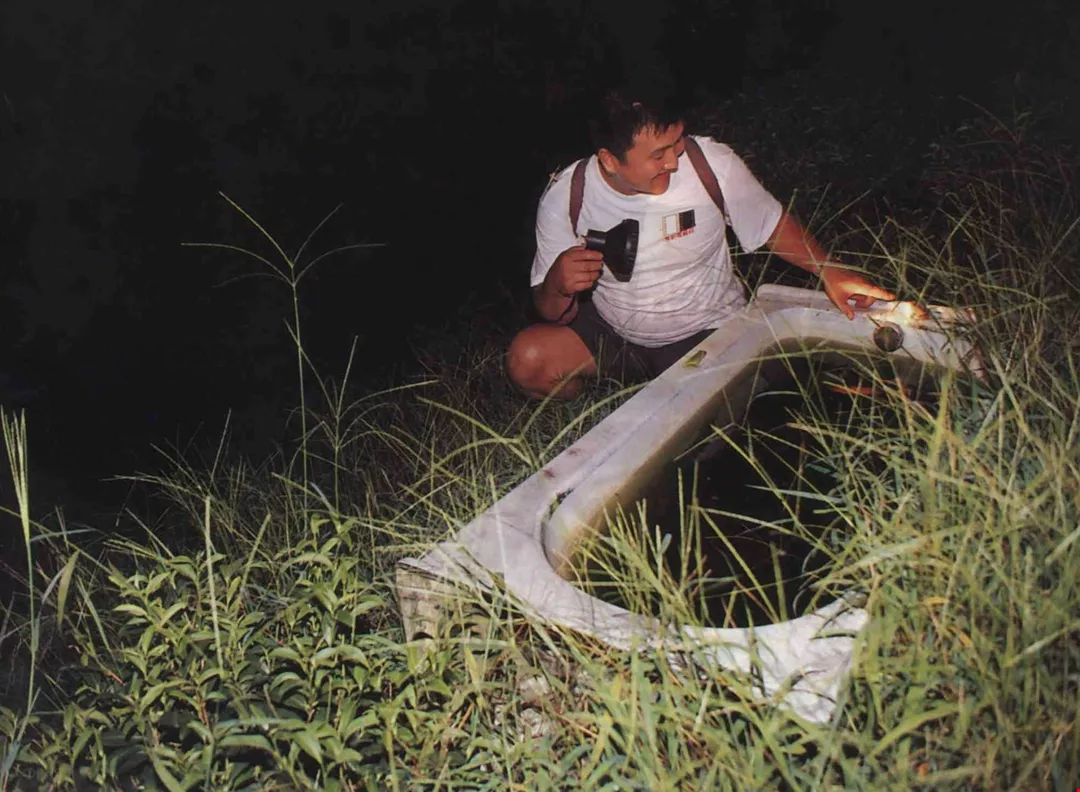
In the mountains upstream of the Feitsui Reservoir, Pan tracks the sound of an emerald green tree-frog. (photo by Diago Chiu)
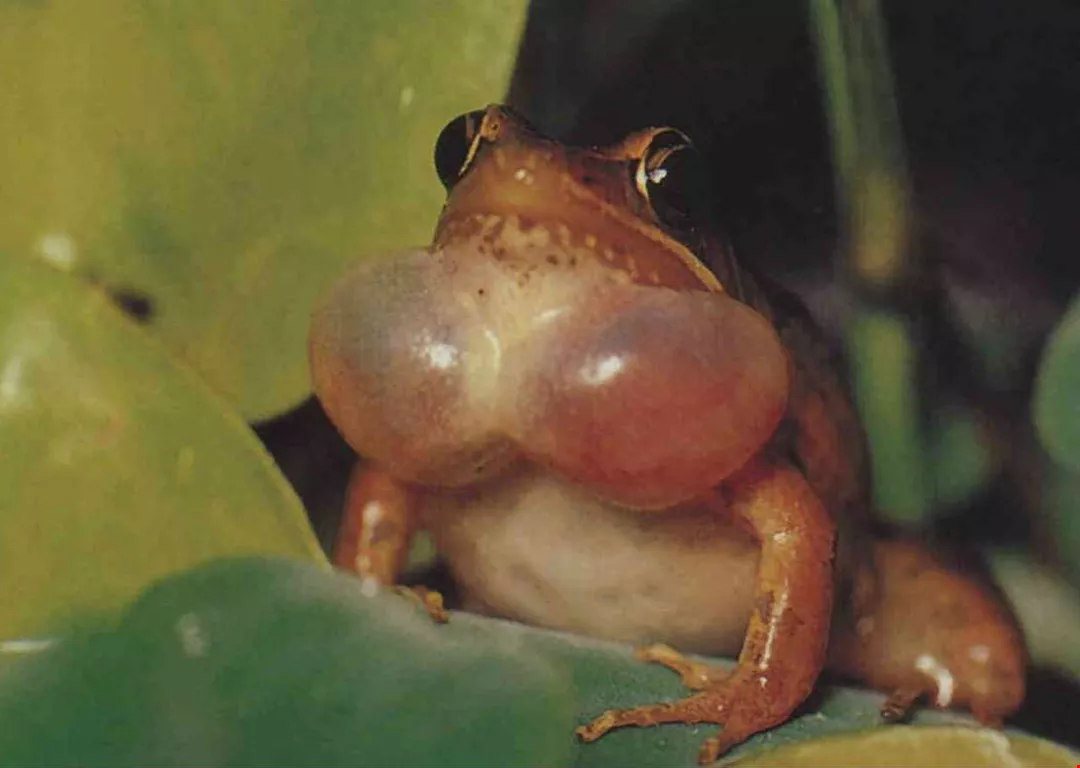
The Rana adenopleura has two air sacs to help its nighttime crooning as it strenuously advertises for a mate to accept its affections.
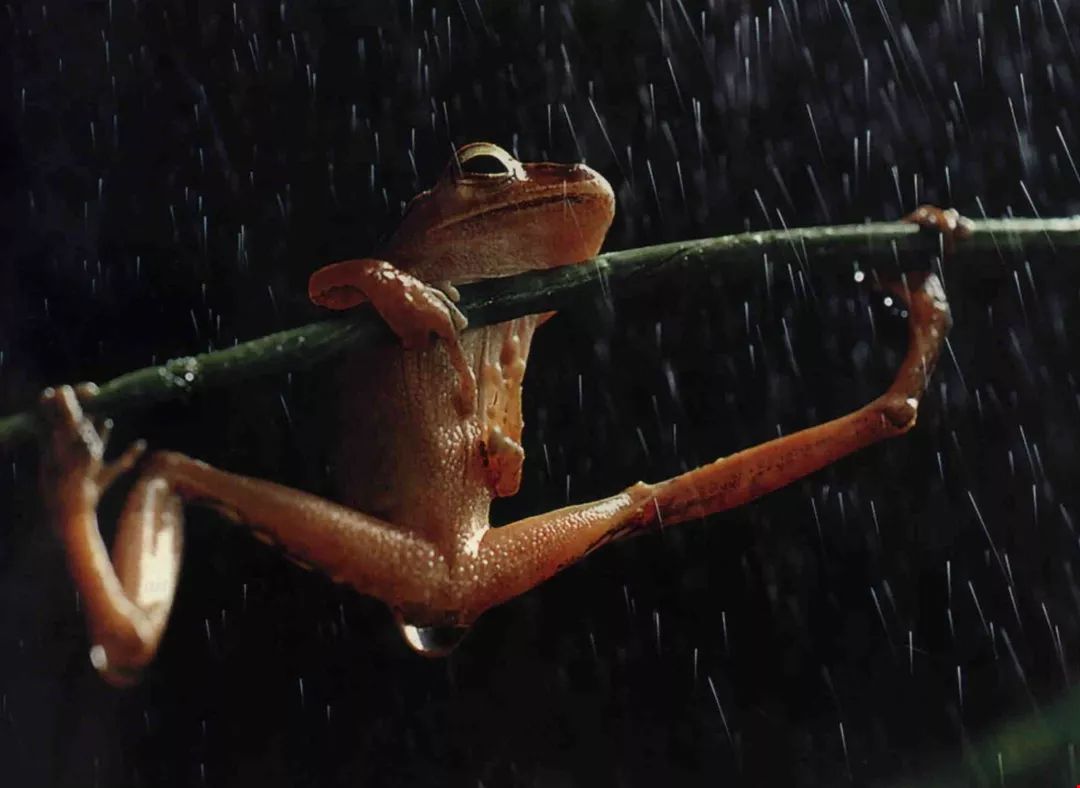
It is a rainy night in a bamboo forest, and a Polypedates megacephalus-known in Chinese as a "white throated tree frog"-looks like it is barely hanging on. Fortunately, its limbs have tremendous adherence, so it can easily pull off stunts worthy of an Olympic gymnast.
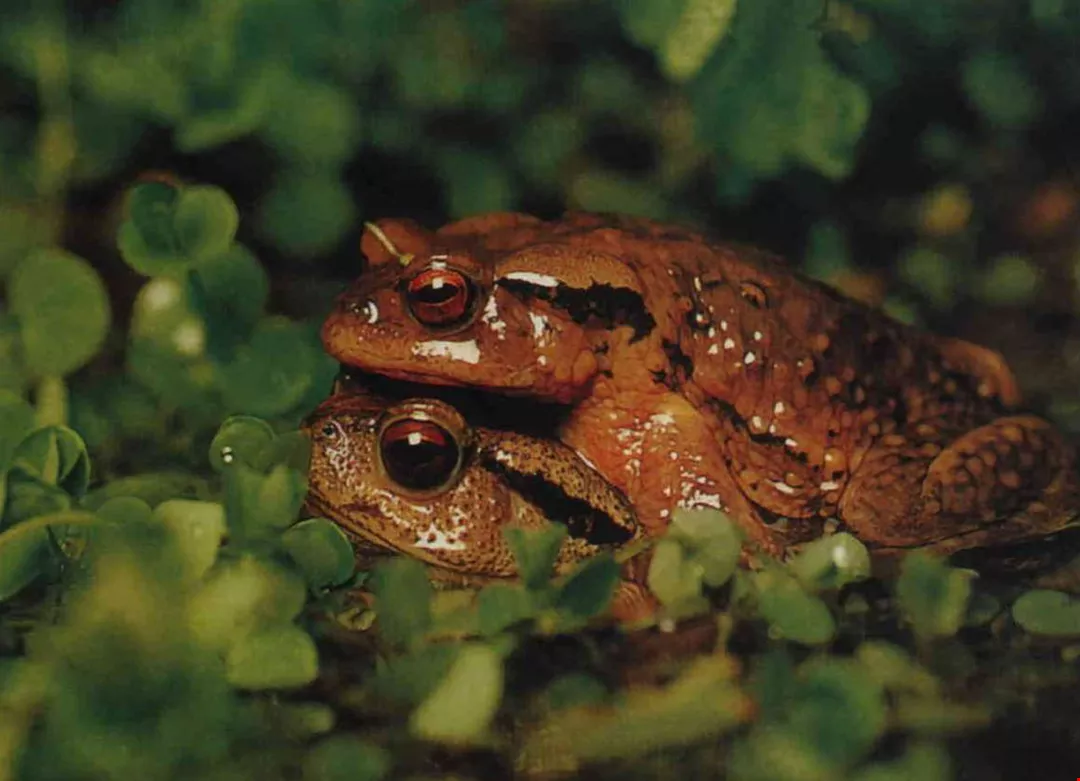
Behind a curtain of night, surrounded by aquatic plants, two central Formosan toads mate.
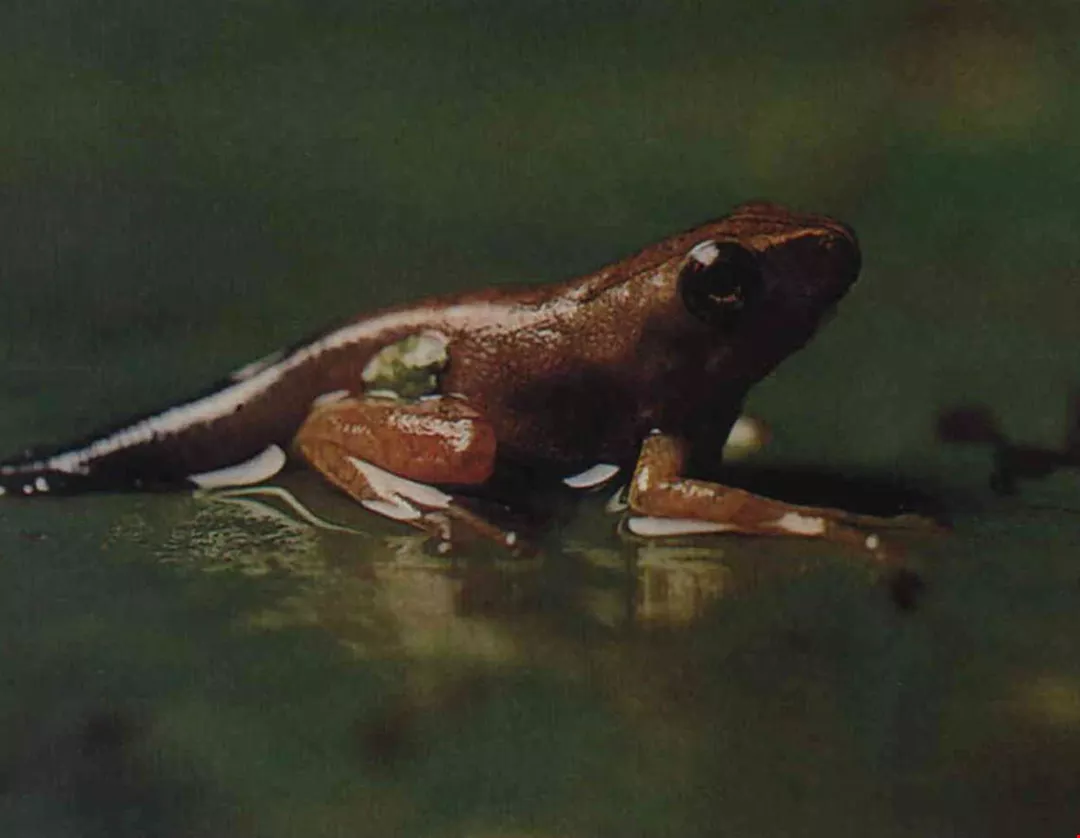
An immature white-throated tree frog, dragging its tail, is curious to find out more about its surroundings.
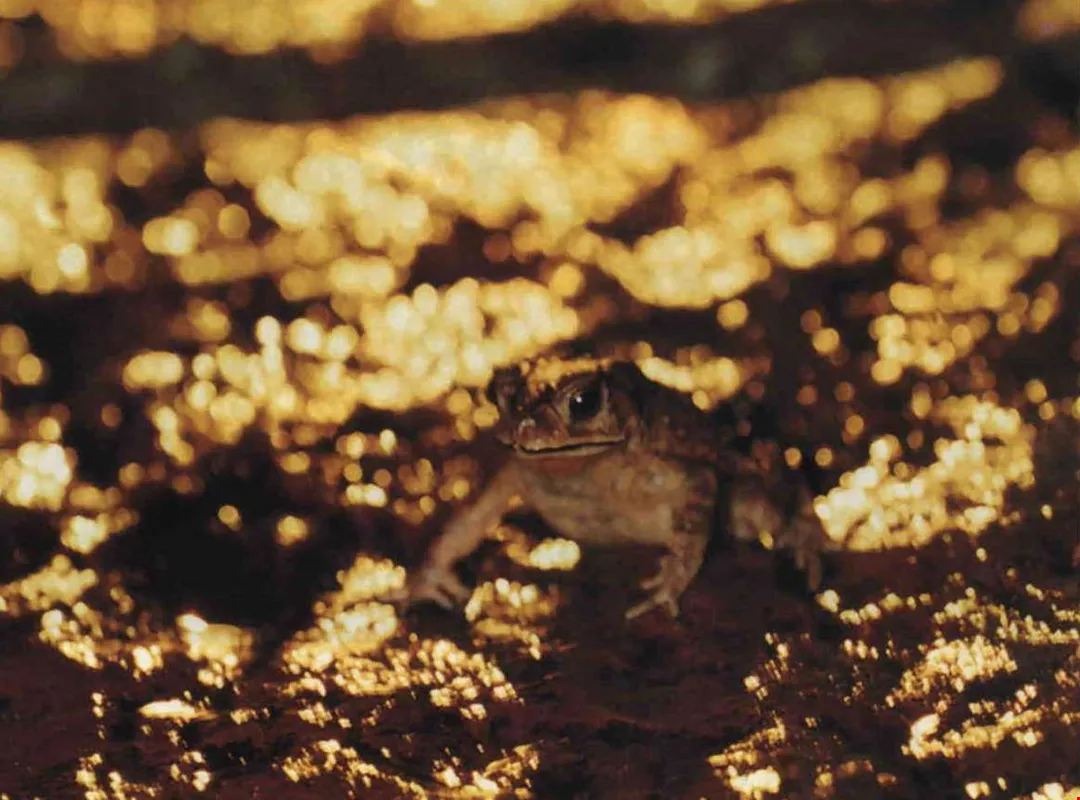
With their short front appendages and long back legs, frogs are natural jumpers.
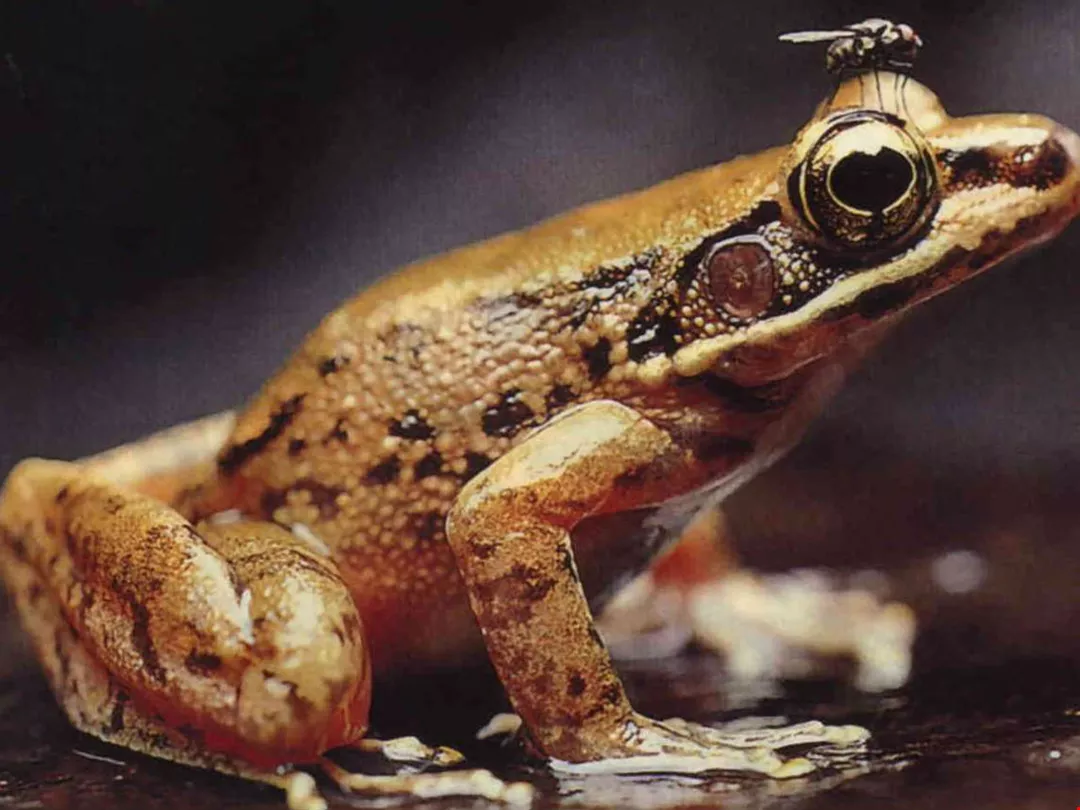
In the food chain, each animal feeds on the next. Obviously this courageous fly is not aware that his new perch specializes in consuming insects.
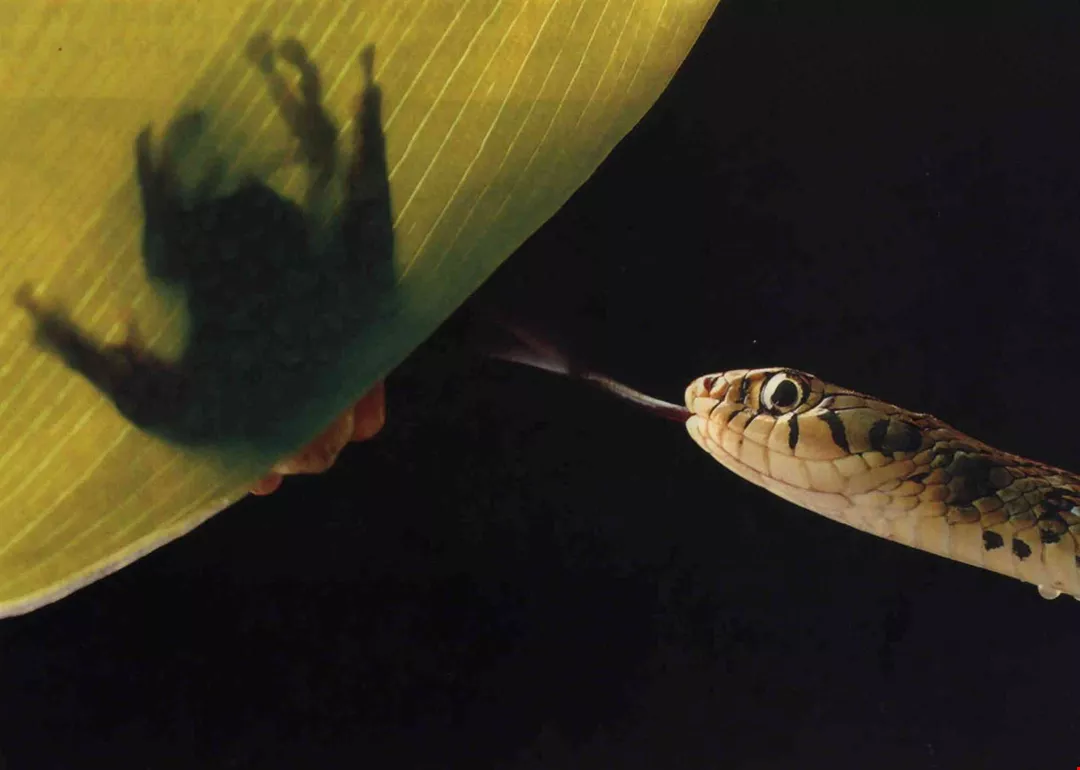
Snakes are "public enemy #1" for frogs, and even toads that are themselves poisonous cannot escape this hunter. In the picture, a checkered keelback prepares to attack an unsuspecting victim.
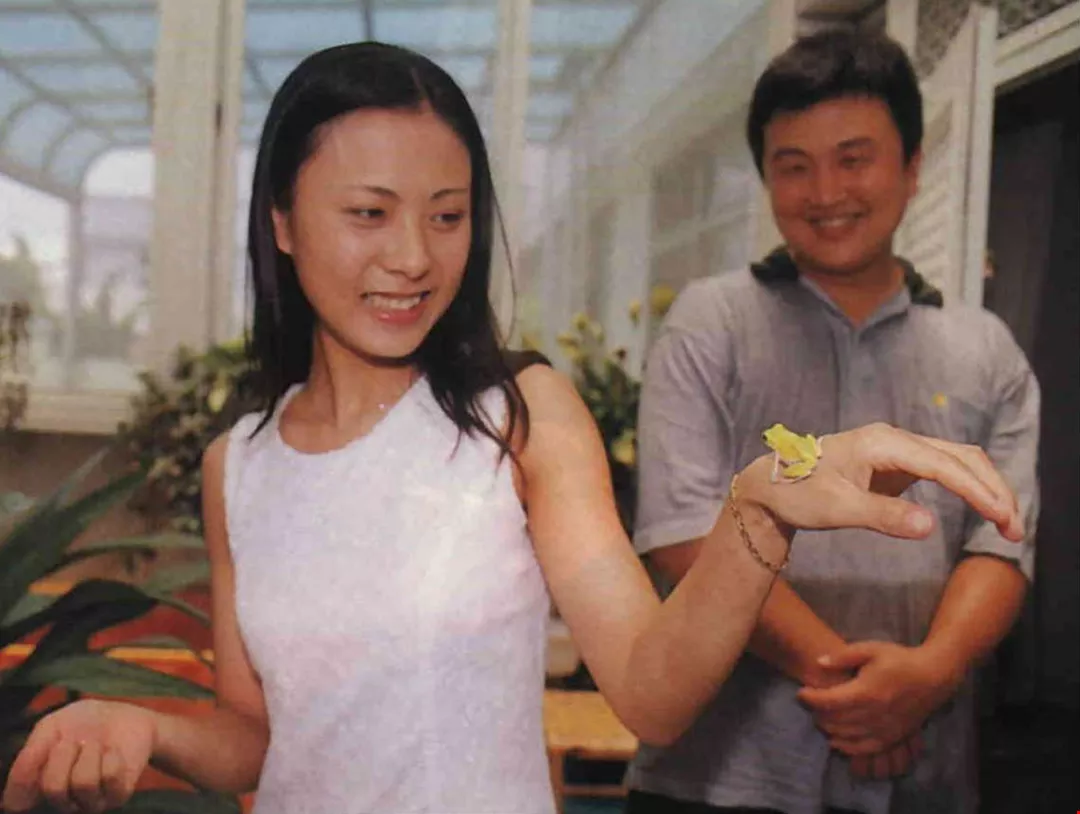
When Pan Chih-ming is off yet again to who-knows-where to photograph frogs, his wife Chien Fang-tse takes responsibility for the "frog garden." (photo by Diago Chiu)
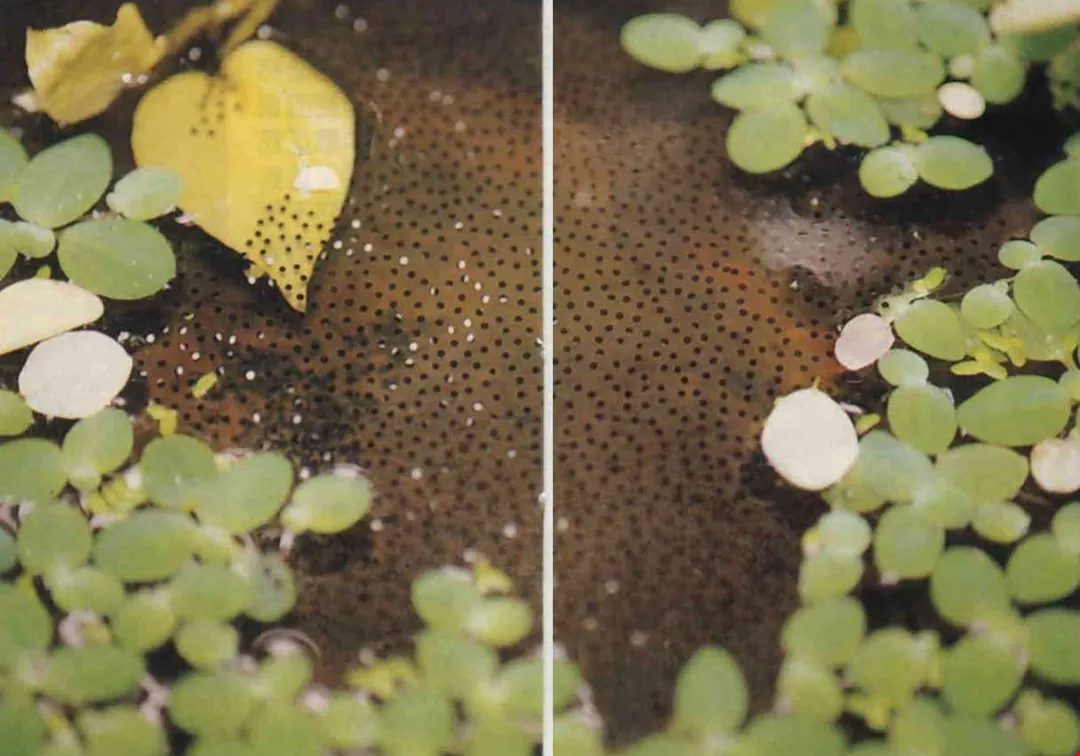
There are now over 20 species in the frog garden. Small tubs are provided for the frogs to lay their eggs. At right, an emerald green tree-frog and white-throated tree frog share space with a recently discovered tree-frog species called Rhacophorus arvalis. Who is the fairest of them all? (photo by Diago Chiu)
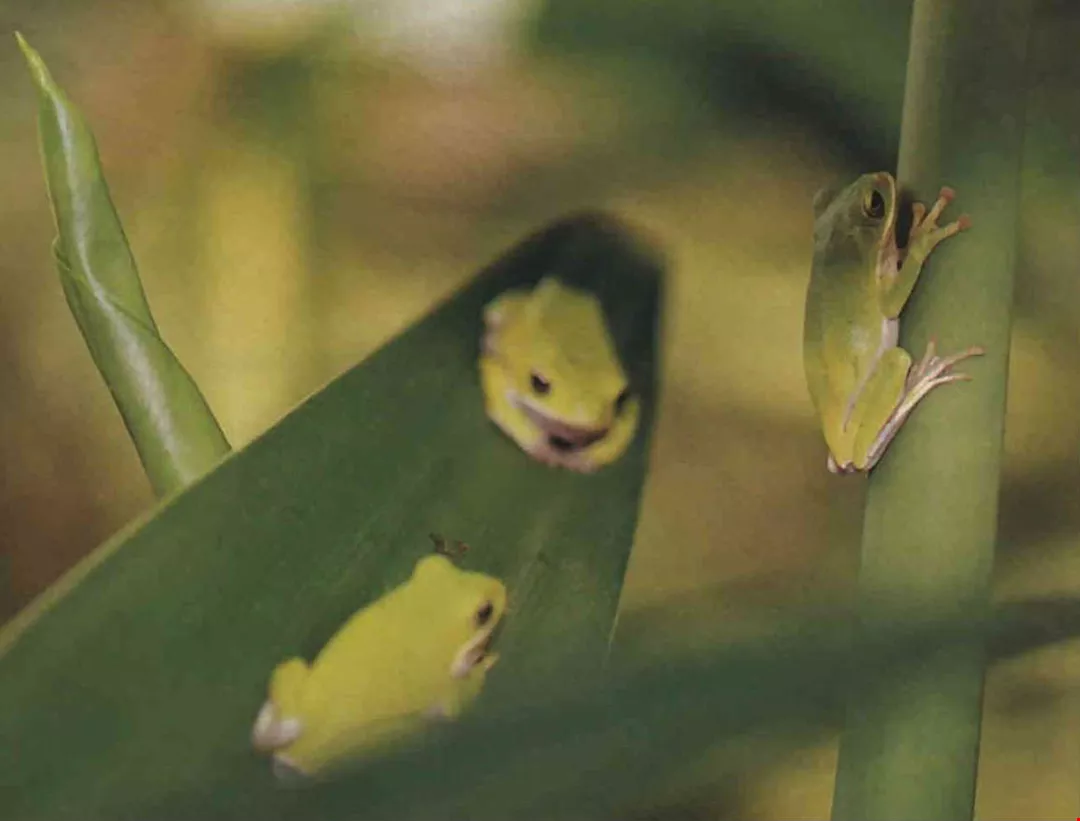
There are now over 20 species in the frog garden. Small tubs are provided for the frogs to lay their eggs. At right, an emerald green tree-frog and white-throated tree frog share space with a recently discovered tree-frog species called Rhacophorus arvalis. Who is the fairest of them all? (photo by Diago Chiu)


@List.jpg?w=522&h=410&mode=crop&format=webp&quality=80)


