Rubber Barons--The Sheico Group
Kaya Huang / photos Hsueh Chi-kuang / tr. by Chris Nelson
April 2007


How long does it take for a street-side stall in the countryside of a small island to grow into a global leader? The answer is 30 years. How long does it take for a company of eight workers to grow a thousand-fold to 8,000? The answer is 40 years.
The Sheico Group started out in 1965 as a stall in Lotung, Ilan County, survived a fire in 1996 that threatened its very survival, and became the world leader in dive wear and accessories a year later. Based on its past business model for global expansion, the company aims to become the world's leading manufacturer of spandex, an indispensable synthetic fabric, by 2012.
Sheico president Shiue Pi-goong and managing director Min Shiue are father and son. Together they've made the whole journey hand in hand, bringing new prosperity to sleepy rural Ilan County through two roles as a world leader.
It's March 7, and the first cold snap of the spring has brought flurries of snow to Yushan. As we drive through the drizzle on the byways of the Lanyang Plain, wisps of heat drift through the crisp air, mimicking the character of the people of Lanyang: cold on the outside and hot on the inside. As we exit the Lotung Interchange, we pass along a narrow road traversing rice paddies, the villages of Wuchieh, Ssuchieh and Sanchieh passing by our view. We enter Erhchieh and start looking for Hsiho Road. Just when we seem lost, the phone rings.
"Turn into the lane just past the 7-Eleven, and you'll see rice paddies. There's a white building behind the paddies. That's it," the caller, K. C. Huang, legal director for the Sheico Group, tells us eagerly. Her earnest, considerate nature is our first impression of this old yet sprightly company.
The story of Sheico's development is a classic "best of Taiwan" tale: there's a first-generation businessman puttering around Taiwan in his old truck plying his trade, and a second-generation professional manager videoconferencing by computer with the domain of the company's business displayed on a world map. But the details of the story are somewhat out of the ordinary.

In August 2004, a new office building was completed, with ten conference rooms. During the peak season, more than 500 clients from overseas take turns to meet Sheico staff here. Sometimes there aren't enough rooms available for all the meetings.
Street-side stall
"Raincoats! Rain boots! Come and get 'em!" Back then 19-year-old Shiue Pi-goong, future chairman of Sheico, had to quit his low-paying teaching job at Ilan's Hsiaowei Elementary School to help his 11-member family, and started doing business from a street-side stall in an arcade on a Lotung street. That was a time when the currency was worthless: an elementary-school teacher's monthly salary was barely enough to buy three pairs of canvas shoes.
Giving up what others had said were good prospects in teaching, Shiue exercised the stamina he had built from eighth grade, back when he made daily trips between Ilan and Taipei, selling onions from Sanhsing Township to earn money for his family. From his stall, he worked his way up to owning his own shop, and in 1965, at the age of 35, he bought an old sugar mill in Erhchieh which became the first location for Shei Chung Hsin Industrial Company (SCHI), the forerunner of the Sheico Group. The innovative Shiue also developed his own brand, Chung Hsin, growing from a wholesaler to a manufacturer of raingear. This was his first step toward his future empire.

Shiue Pi-goong, the father (right), who built Sheico Group, is the epitome of the first-generation Taiwanese entrepreneur. His son, Min Shiue, typifies the second-generation business manager. Combining their forces, father and son are bringing new prosperity to Ilan. The red building in the background is the original factory of Shei Chung Hsin Industrial Co.
The old sugar mill
"If you saw the image of giant yellow rain boots across the fields, you knew it was a Shei Chung Hsin truck making a shipment," laughs Mrs. Chen, who has run a general store in Erhchieh for 40 years. Shiue had his own factory and brand, but as with other small Taiwanese businesses eking out a living in that era, he, as both captain and crew, was constantly rushing around Taiwan's highways, making a delivery in Kaohsiung one day, looking for new customers in Taichung the next.
Having learned the trade from his father since his youth, Shiue's second oldest son, Min Shiue, had another identity besides "student" when he was majoring in economics at Fu Jen Catholic University: he was Northern Regional Representative for SCHI. In the mornings he often took up his book bag after class and rode his 125-cc Sanyang Wild Wolf motorbike to visit government offices for his father in order to expand business.
In 1979, the clothing and food industries reigned supreme in Taiwan, but the industrial structure was about to undergo a sea change, with the electronics industry taking the lead. That year the second oil crisis swept the world, and oil prices jumped from US$15 to US$39 a barrel causing the price of rubber, the main raw material for raingear, to skyrocket. To SCHI, which was not a major player like Tah Hsin, it was like adding insult to injury.
Qualitative change is a major issue in business restructuring, and it was key in SCHI's transformation into the Sheico Group. In 1978, Shiue's eldest son, Shiue Chih-cheng, found while visiting a sporting goods exhibition in Munich that surfing was popular in Europe. There was a demand for large quantities of gear such as surfboards, wetsuits and gloves. Figuring this was an industry with great growth potential, he reported this information to his father. After a family discussion, they decided to start making neoprene materials for dive wear, a field long dominated by the Japanese, basing the decision on the knowledge of rubber they had accumulated from making raingear.
This was an entirely new area to the Shiues. At that time there wasn't a single manufacturer of neoprene sponge sheet in all of Asia, let alone Taiwan. After two years of work, the company's first pair of diving shoes made by their own personnel on their own equipment saw the light of day. But when the Japanese-speaking elder Shiue went to seek a market for the shoes in Japan, he noticed the well-designed diving shoes of his competitors on display in their showroom. One thought came to his mind: "Our stuff doesn't hold a candle to theirs. They'll laugh if I show them ours." Unable to demo the diving shoes he had brought along, he headed home.
A global leader for the first time
This shocking eye-opener from abroad steeled the Shiues' resolve to press on in the field of diving goods. When Min Shiue finished his military service he immediately became a pillar of SCHI's manufacturing capabilities. After relentless R&D and consultation with the Taiwan External Trade Development Council, at the end of 1981 they landed a contract from Germany for 5,000 pairs of diving shoes, allowing them to migrate from the domestic to the overseas market.
The party never lasts. In 1983, just two years after stepping into the international market, SCHI encountered a lesson in raw material cost control that threatened the survival of the business.
"It was a seller's market then. The Japanese said, 'raw materials are in short supply--we need to raise prices.' Originally the price of neoprene set in the contract was US$30 a sheet, but a month later it jumped to US$40. No matter how we objected or pleaded, the Japanese made it obvious we could take it or leave it. Not wanting them to lead us by the nose, we decided to do it on our own." When describing how he and the Japanese were at loggerheads, the nearly 80-year-old Shiue speaks angrily in a resonant voice.
Not wanting to be constrained by others, president Shiue Pi-goong and the newly appointed managing director Min Shiue worked together as father and son developing raw material for diving goods. Sometimes, after the father finished talking shop on the phone in the front office, he would have to go to the factory building out back for a while to help clear out the black smoke produced when his son's experiments with melting leftover material went awry. On the surface, Shiue encouraged his son to redouble his efforts, but privately he was watching the bills pile up day by day from the research into raw material.
"If something like that happened today, the environmental authorities would step in and put a stop to it," says the elder Shiue, lowering his head in embarrassment.
One time, when trying out a new formula for neoprene sponge, Min Shiue, always taking the fore in R&D, was staying after hours at the factory as usual, mixing rubber materials and using a hydraulic press to heat and foam the rubber. But then there was a sudden loud bang: the mixing flask in his hand abruptly exploded. Although the factory suffered little damage, the blast blew off part of the little finger of his right hand, and he almost passed out from the pain while alone in the factory.
After the accident, his mother felt bad for him, grumbling "Why do you have to risk your life doing business?" while at the same time seeking various doctors. Someone said that he could heal his finger by placing it into his own tissue. Thus Min Shiue's finger was inserted into his abdomen for six months. Now his finger appears normal save for a small bump at the first knuckle, fine testament to SCHI's self-conducted materials R&D, which was an important key to the company's ability to compete globally.
A key year
Those who master both raw materials and technology will be at the forefront of the industry: this is an unchanging law of business. Yet for sustainable operations, the true secret is constant adherence to good quality. The elder and younger Shiue were clear that the entry threshold for manufacturing the neoprene sponge and fabrics needed for wetsuits and related goods was not very high; they needed high quality to find favor with customers. Their thinking was simple: "If our quality is the same as that of the world's foremost producer but our price is lower than theirs, then there's no reason to fear that no orders would come in."
If control of raw material was the first step toward the Shiues' global victory, then setting up a factory overseas was the indispensable second step.
"There really were a lot of orders. Also, among our more than 500 customers around the world, only 20% had their own design departments. The others gave us ODM orders." In 1988, while shouldering 65% of the world's dive wear production, SCHI extended the battlefront of their business overseas, setting up factories in Thailand and China as well as a subsidiary in Hong Kong.
It was 1997, and the East Asian financial crisis engulfed everything. Despite this, it was SCHI's most prosperous year. When Shiue and Shiue reviewed the business figures for that year, they found that the world's ten biggest brand-name wetsuit companies had become their customers, with SCHI's OEM-produced wetsuits and related goods covering over 40% of the world's market. From then on, this little company that rose to fortune in Taiwan's countryside was at the forefront of the world. It became known as the Sheico Group, the industry's leading manufacturer.
Currently, 99% of Sheico's products are sold overseas to more than 500 customers. The biggest market is the US (40%), followed by Europe (30%), with the remaining 30% made up of Australia and Japan. Sheico does not have its own brand, instead relying on OEM and ODM orders for well-known manufacturers. Its global market share has reached over 65%.
Compared to some companies, which may bask in the glory of being the world's best, Shiue and Shiue are well aware of the risk that the fortunes of a global market may change in the blink of an eye, and are seeking ways to overcome limitations to market growth.
"Frankly, Sheico didn't grow big overnight. At first we had a speedy annual growth of 20%, and we became the world's number one without realizing it. But the market for wetsuits and related goods is only so big. Our market share is nearing saturation point, and future growth is limited. Moreover, in 2005, mainland Chinese companies began grabbing orders due to their low production costs, and the market sank into a price war. Selling at a loss has become ever more serious. We can only find new room for growth if we expand into new areas," says the younger Shiue, earnestly describing the rationale for Sheico's next battleground.
Yet if a company waits for a crisis to happen before considering a change in tack, it's too late. As early as ten years before this "red ocean" (i.e. saturated market) war began in the neoprene sheet market, Min Shiue was already busy scouting out possibilities for Sheico's future.
One day in 1993, Min Shiue was on a routine monthly tour of overseas factories and customers. While visiting with customers he found that orders were booming for DuPont's artificial elastic fabric Lycra, and supply was unable to meet demand. Stretch fabric has broad applications, and with a greater market than wetsuit neoprene, it has greater added value. Based on a market sensitivity built over the years, Min Shiue had an idea: "Why not enter the elastic fiber market?" In April 1996, Sheico's first spandex production line started up. But then in the fall of that year, Sheico was hit by a major fire that jeopardized their business. A boom and a bust happened at about the same time.

Sheico started in an old Ilan sugar mill. In 1986 the company opened a subsidiary in the US, followed by a factory in Thailand in 1988. Now there are nine factories around the world, including those in China.
A global leader again?
As this "best of Taiwan" story continues up to the present, we know the blaze didn't extinguish the Shiues' business. That year, amid public pessimism, they built a temporary structure to keep up production, then took things step by step. In 2007 the output of spandex from Sheico's production lines around the world amounted to 10,000 tons, or 3% of the world market.
Can this 3% market share really grow enough for Sheico to dominate the market in five years? Min Shiue has a clear battle plan in mind: "We predict that by the beginning of 2008, the quality of spandex we produce will be on par with that of DuPont, the overlord of elastic fabric. Since we don't bear the burden of a brand name, we can offer lower prices, and orders will come naturally as long as we keep a stable supply."
By sticking to the pattern of mass production and seizing market share, Min Shiue foresees that by 2012 they will have seized 30% of the world's spandex market. It's not beyond reach to fracture the current triumvirate of DuPont, Hyosung and Asahi Kasei, making Sheico a "global leader" in a second area.
Forty years ago, Shiue Pi-goong was a poor kid running between Taipei and Ilan selling onions to feed his family. Today, managing director Min Shiue, worth more than NT$100 million, has made the company a global leader in one field, and hopes to do so again in another. This is the new challenge this father and son team is facing.
Founded: 1965
Revenue sources:
Neoprene sheet: 30%
Neoprene finished goods: 65%
Spandex: 5%
Annual turnover: about NT$8 billion (2006)
Number of employees: about 8,000 worldwide
Head office: 65 Hsiho Rd., Wuchieh Township, Ilan County, Taiwan
Overseas office: Hong Kong
Manufacturing facilities: Taiwan, Thailand, China
Website: www.sheico.com.tw

The whitish building jutting out from the surrounding rice paddies is the headquarters of the Sheico Group, whose market domain covers more than 40 countries in the Americas, Europe and Asia.

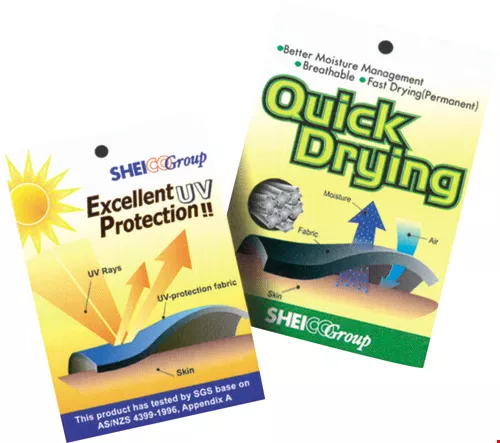
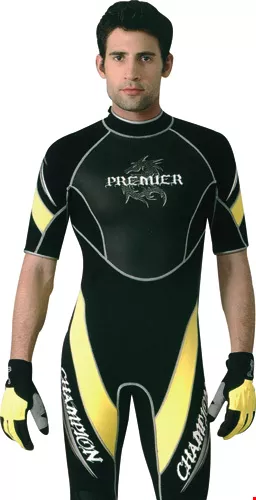
In wetsuit manufacture, volumes are small but variety is great. By optimizing its manufacturing processes and integrating its capabilities, Sheico has achieved the price competitiveness it needs to succeed in global markets.

@List.jpg?w=522&h=410&mode=crop&format=webp&quality=80)


@List.jpg?w=522&h=410&mode=crop&format=webp&quality=80)
@List.jpg?w=522&h=410&mode=crop&format=webp&quality=80)
