Giving Life a Chance:The New Health Food Revolution
Coral Lee / photos Jimmy Lin / tr. by Phil Newell
February 2007


In a noisy urban apartment, a couple just back from a trip to Europe, having seen first hand the luxuriantly languid culinary culture of that continent, give up fast food and hectic restaurants and decide to stay home, cook for themselves, and really savor their food. In big cities and small towns, more and more people who "love health and love the earth"--those pursuing "lifestyles of health and sustainability" (LOHAS)--are buying organic foods, and on weekends even take the kids to organic farms to experience the crop-growing process for themselves.
Some people see the LOHAS and "In Praise of Slow" trends as nothing but fads. But it cannot be denied that some people have really changed the way they think and live as a result.
fHowever, organic health food--simple, light, and free of all harmful ingredients--is far removed from what most people think of as fine cuisine, like Peking Duck, Dongpo Meat, or that winter favorite "Spicy Hotpot." So what is it about the "healthy diet" movement that is getting so much attention?
Pedestrians huddle as they walk along Hsinyi Road during a cold spell that is sweeping through Taipei, but inside the Cotton Fields shop and restaurant it is warm, cozy, and relaxing. The furniture and shelves are all wood, soft music plays in the background, and customers holding shopping baskets select vegetables and other food products at a leisurely pace. Others read quietly over by the bookshelf, while in nooks and crannies staff chat with customers like they are old neighbors and friends.
In the dining area the store manager is demonstrating how to prepare "organic delicacies." Today, the dishes being taught include tomato with hibiscus, king-oyster mushrooms, and pumpkin soup.
"The lycopene in tomatoes can help prevent cancer, but it is only released when the tomatoes are cooked," explains the teacher, as she stir-fries tofu skin and tomatoes in "cold oil" (meaning that the cooking oil is added to the hot pan just before the ingredients, so that it is not preheated before the food goes in). For the second course, chilled king-oyster mushrooms, the emphasis is on the selection of spices. For the pumpkin soup, the teacher not only explains how the beta-carotene and vitamins C and E have antioxidant and blood-enriching functions, she also describes her experience in using pumpkin seed oil to improve her husband's prostate hyperplasia. For the last two hours, more than 20 students have been intently taking notes and asking questions from time to time. Each dish looks and smells fabulous.
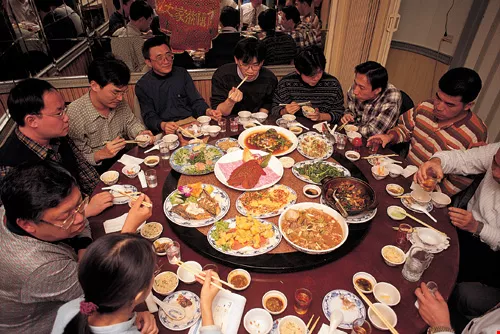
Seafood and meat are de rigueur at parties and banquets put on for guests. But excess meat intake is posing health problems for modern people.
Health first
There are seven branches of Cotton Fields in Taiwan, and they have been offering free health-food classes for many years now. Thus far 45,000 students have passed through the three-month, 12-session courses. Director Sunny Weng happily relates, "In the past, 70% of the people who came had health problems, but in recent years 60% have been coming just to learn how to stay healthy."
Businesses like Cotton Fields that sell organic vegetables or health foods, and sometimes also cooked meals, have flourished in Taiwan in recent years. For example, the international chain Yogi House now has more than 200 locations across Taiwan, while the home-grown brand Green Village has grown to more than 30 outlets. Orange Mart, specializing in organic foods, has now opened five branches. In addition, established corporations like President, Formosa Plastics, and YFY have rushed into development of organic foods, established their own brands, and opened restaurants to promote sales. In bookstores, new books on healthy toxin-free eating are coming out all the time and have even advanced onto the bestseller lists.
Unpacking the various health food concepts on the market, though each of them--whether called "healthy," "organic," "natural," "detoxifying," or whatever--has its own claims to fame, the following common principles can be distilled:
(1) In eating, use mostly organically grown plants (vegetables, beans, grains, fruits and nuts) without toxins, and reduce the proportion of fish, meat, eggs, and dairy to less than 20%, or avoid eating such things at all.
(2) Preparation methods should be natural and simple, such as steaming, boiling, water-cooling (splashing with cold water after boiling), frying in water, or stewing in sauce. Avoid the most common traditional ways of preparing Chinese cuisine, such as wok-frying, frying on a hot-plate, or deep-fat frying. For spices, stick to natural or organically grown flavorings.
(3) In terms of the balance among the three meals of the day, the word is "eat well for breakfast, eat your fill for lunch, and eat early and selectively for dinner." The ordering of courses should be the opposite of traditional Chinese habits, with soup coming first, followed by raw vegetables, then less easily digestible offerings like cooked food, grains, and meat. Fruit and desserts should no longer be taken at the end of meals, but should be eaten between meals or before meals.
(4) As for "raw vs. cooked," because the enzymes and various nutrients in plants are destroyed in processing or heating, the various schools all advocate eating a fresh salad or energy soup once or twice a day.
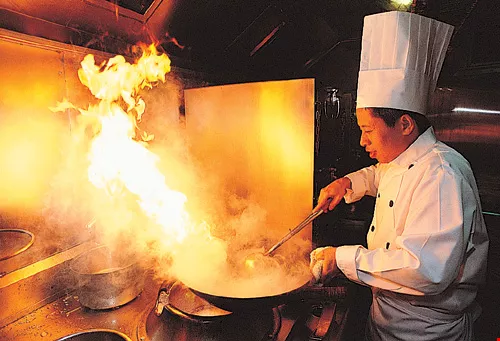
Stir-frying is an essential element in authentic Chinese cuisine. But the vegetable oils sold on the market easily break down and produce toxins when exposed to high heat, so from a health point of view, the less the better.
To each his own
Among the "health gurus" currently promoting natural healthy eating, many have been strongly influenced by cancer researchers Lai Chiu-nan and by Chiang Shu-hui, who has studied both Western and traditional Chinese medicine, carrying forward their research into practice and giving it greater visibility. Such figures include Sunny Weng, the founder of Cotton Fields, and Hsiao Shu-pi of Universal Love Light.
Some of these health gurus come out of the medical profession, and promote cancer resistant lifestyles and eating habits from the point of view of preventive medicine. These include Andy Sun, an advocate of strengthening the immune system; Lin Kuang-chang, author of the book Fresh, Light, Toxin-Free; and Shieh Ming-jer, dean of the School of Nutrition and Health Science at Taipei Medical University. There are also quite a few who have themselves suffered from, or had family members suffering from, cancer and who have recovered their health through health food therapy, after which they have continued to learn and share their stories with society. Examples include Li Chiu-liang, founder of the Wang Der Garden Shengji Promotion Center; the well-known TV host Grace Chen; and the writer Tsao You-fang.
Though there seem to be a bewildering variety of theories and schools of thought, they share the core principle known in Chinese as shengji (生機)--a concept that encompasses all styles of healthy eating.
Previously, when people heard the word shengji, they used to think of a bland diet exclusively composed of raw fruits and vegetables (one meaning of sheng [生] is "raw," while ji [機] can mean "organic"), foods that in the jargon of traditional Chinese medicine are "cold" and therefore unsuitable for those of weak constitution. But in recent years the shengji concept has been broadened to mean "a mutually complementary combination of raw and cooked foods."
Li Chiu-liang, who went from being a terminal-stage cancer patient to a strong advocate of shengji, states that a shengji diet means eating plant materials that have been organically grown and contain no pollutants; it is not essential that the food be raw. Cotton Fields director Sunny Weng, meanwhile, sees shengji as being even more metaphorical, as meaning an approach to eating that "gives life a chance" (besides meaning "raw," sheng also means "life," while ji, which can mean "organic," can also mean "opportunity"). In any case, it does not by any means mean eating only raw food.
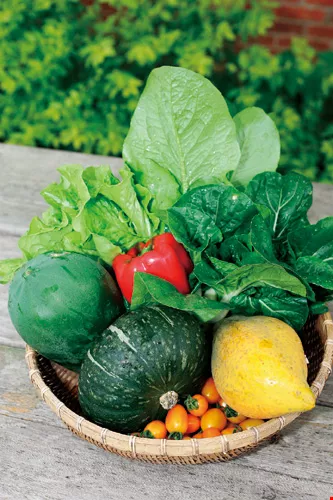
There are at least as many minerals and as much protein in vegetables, fruits, and grain as in meat, eggs, and dairy products, and the former are rich in fiber, which is good for helping the body deal with toxins. All the health gurus out there today advocate eating more of them.
Vegetarian cure-all
Why is it that all of these schools advocate eating mainly plant matter? To get to the bottom line, people today suffer greatly from "diseases of civilization" such as cancer, cardiovascular disease, and diabetes, largely because we eat things that don't "agree" with us.
According to a 2001 survey of citizens over age 15, one in 13 suffers from high blood sugar, one in 4.7 has high blood pressure, and one in 10.8 has excessively high cholesterol. And the latest cancer figures show that one new case of cancer is diagnosed every eight minutes, and one of every 3.7 people will die of the disease.
There has been one common thread in all the research that has for many years now been devoted to the relationship between diet and chronic illness or cancer: eating more vegetable matter, and less animal matter, has a preventive and even curative effect.
Dr. Henry Bieler, a specialist in family medicine in the US, wrote in his book Food Is Your Best Medicine (published in Taiwan in 2000) that mainstream medicine generally limits its search for human illness to germs, but he by no means agrees that it is germs per se that make people sick. Rather, they appear after people become sick, because sickness allows them to flourish. Thus people become ill originally because of inappropriate diet.
He states that over 2000 years ago the father of Greek medicine, Hippocrates, had already discovered that physicians are only the helpmates of nature, and that sick bodies need a period of rest for the body chemistry. If you simply stop inputting food, the organs will be able to expel accumulated wastes, and only then will the body be cleansed and returned to health. Bieler argues that using pharmaceuticals to treat disease can often result in serious side effects, and may even cause new illnesses. Since disease comes from inappropriate diet, the proper foods can set things right and return the body's functions to normal.
For diabetes, Bieler instructs patients to make soup with celery, string beans, and zucchini, eat it daily along with plenty of bedrest for two to three days, then get back to normal life and a vegetarian diet. When glucose reappears in the urine, again drink the soup for two or three days, and keep at this until you find a diet that suits your physical condition and the urine glucose is under control.
Balance and cleansing
Bieler's theory on diabetes is this: The main chemical used by the pancreatic cells is potassium, so one should increase intake of potassium when the pancreas malfunctions. Vegetables are therapeutic because they contain a great deal of potassium. Moreover, they are relatively low in sodium (the potassium-to-sodium ratio in vegetables is 100 times that of fish).
The main point advocated by Chiang Shu-hui, who has been a pioneer of shengji living in Taiwan--she stresses the balance between acidity and alkalinity--is different, but amounts to pretty much the same conclusion. Her argument is this: When bodily fluids are in a state of mild alkalinity, various biochemical processes in the body operate at maximum level; waste expulsion is thorough and rapid. On the other hand, if because of an unbalanced diet, the body is excessively acidic, this will cause the liver, kidneys, cardiovascular system, pancreas, and other organs that participate in the purification of bodily fluids to become overburdened, leading to illness. In her clinical practice she often tells patients suffering from gout or numbness in the limbs to eat less meat and more vegetables and fruit. Many people have in this way been restored to health without medication.
"The acidity or alkalinity of a food is often determined by the types and proportions of minerals it contains," she says. Fish, meat, eggs, dairy products, sweets, and fat are acidic foods. But vegetables, fruits, and seaweed are considered alkaline foods because they contain minerals like calcium, potassium, sodium, magnesium, and iron, so they should be eaten in larger quantities.
These different theories testify to the different illnesses that affect industrial societies as opposed to agricultural societies. In Western countries, where people consume steak, fried chicken, and other rich foods, cancer, cardiovascular disease, and digestive tract illnesses are the leading killers. Among indigenous peoples like Native Americans, who previously had simple diets of vegetables and grains as their main source of food, these kinds of diseases rarely occured, though these peoples have fallen one by one into the same trap as they have accepted Western cuisine.
The shengji crisis
A loss of balance in the amounts of meat and vegetable foodstuffs in the diet is just one end of the problem. Even more disturbing is that the grains, vegetables, and fruits themselves have been victims of poisoning. Over the past few decades, overcultivation has exhausted the land, so that crops are much less nutritious than they once were. In particular, the massive use of pesticides and chemical fertilizers has killed the microorganisms in the soil, and microorganisms are precisely the essential helpers that turn minerals into organic matter that can be absorbed by the human body.
Cheng Cheng-yung, a professor of horticulture at National Taiwan University, takes the following example from Japanese research: 30 years ago, there were 13 milligrams of minerals in every 100 grams of spinach, but today there are only 3.7. Components like Vitamin C, which have antioxidant properties, have suffered the same fate. In other words, you now have to eat four times as much spinach to get the same amount of nutrition. "But don't forget too that if you really eat four times as much, you will get more oxalic acid, which can lead to problems like gallstones or kidney stones."
Another problem with modern foods is the ever-greater demand for "speed" and "refinement." In healthy diets the emphasis is on eating slowly, eating things in their rough natural state, not overeating, and using spices sparingly--extolling natural ingredients and natural cooking methods. In fact, you could see a reassessment of the modern diet as a microcosm of the reassessment of the very ethos of our era, with its emphasis on efficiency and superficial appearance.

Diseases of civilization
Take for example the pursuit of speed. In recent years food merchants have discovered that busy working women have no time to prepare full meals at home, and so have come up with all kinds of convenient ready-made meals, frozen food, instant noodles and rice.... Although a dish can be made ready in only three minutes, because of overprocessing the nutritional value has disappeared. Ready-to-eat meals are especially problematic because they contain all kinds of preservatives, germicides, and additives, further damaging human health.
Busy modern people not only want their food to be ready on demand, they unwittingly shovel it down hastily as well. A rushed breakfast on the go, a takeaway eaten during a lunch meeting, rifling through a McDonald's bag in a taxi while trying to meet the day's agenda... all these things are bad for digestion of foods. Li Chiu-liang always tells people to chew slowly and carefully. "You need to eat more food rich in enzymes, and chew thoroughly, 30 to 50 times for each mouthful, and up to 70 or 75 times for hard-to-digest foods." She says that this will stimulate the production of the mouth's own enzymes, which is good for digestion and absorption. It also allows time for the information "the stomach is now full" to reach the brain, so that you will stop eating; that's the secret to weight control.
As the rhythms of life get faster and faster, another by-product of pressure is that people increasingly look at indulgent eating as a form of self-pampering that they award themselves to alleviate stress. This is where exotic delicacies, pastries, and sweets get their opportunity, but alas these are all highly processed, low-fiber foods.
"The average person needs 30 to 35 grams of fiber each day, but urban people generally don't even get 20," says Lin Kuang-chang. This is why he is always nagging people to eat brown rice, with its germ and bran in the outer layer.
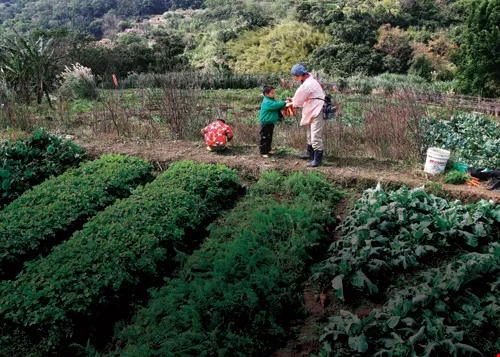
Come on up to the Mt. Yangming public farm on a holiday, turn some soil, plant some seeds? Besides a change in lifestyle, when the time comes to harvest, you can eat your fill worry-free!
The tiger and the lamb
Some may ask, despite the fact that plant foods have so many advantages, if you eat too little meat won't you be lacking in energy? Is a meat-free diet really nutritious enough?
From the experience of strong advocates of vegetarianism like Li Chiu-liang, in fact "not eating meat" is the secret to their high energy levels. "Just look at the strongest carnivores in the savannah (tigers, lions)--often they can't catch the strongest herbivores (like antelope), so who really has the most endurance, those who eat grass or those who eat meat?" says Li. But there is a caveat: For a really healthy vegetarian diet, the key is balanced nutrition. Unfortunately, a lot of people think that people like Li "cured cancer by eating pasture grass"; that idea is dead wrong.
"The amounts of the various nutrients in vegetables, fruits, and grains are all at least as great, and generally greater, than in meat, eggs, and dairy products," points out Lin Kuang-chang in the book Fresh, Light, Toxin-Free Part 2. The content of calcium or iron in vegetables and legumes is tens of times that of meat, or even one or two hundred times greater, and in fact the protein content is far above that of fish. Even more important is that vegetable protein is very easy to digest, so it doesn't place an extra burden on the body, and you definitely won't find yourself in that common situation of feeling sleepy and drained like you do after eating a big steak dinner.
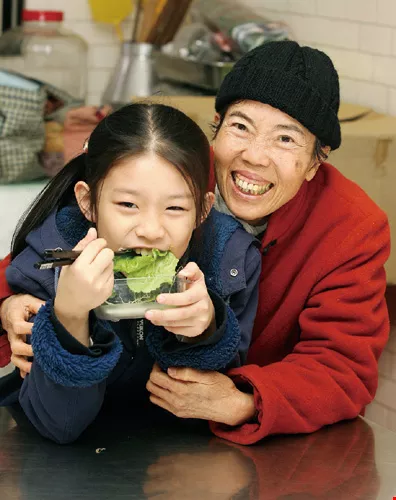
Cancer survivor Li Chiu-liang, whose up-and-down battle against the disease is a moving story, is the founder of the Wang Der Garden. She has been promoting healthy eating for 17 years now, though besides teaching sick people how to eat better, she also emphasizes the importance of "mindset."
Know thyself
Faced with a bewildering array of claims and fads, how is the ordinary person supposed to know what to believe? For instance, is it true that only "organic" foods can bring health? Are they worth the expense? Is raw food really better for you than cooked food?
Grace Chen says that everyone's body is different, so besides following the basic principles of "natural, light, and roughage," there is no diet theory that is right for everyone. Thus you have to shop around until you find the one that is right for you.
For example, shengji diets find nothing wrong with eating raw food. But traditional Chinese medical tenets, emphasizing "warm" and "supportive" effects and avoiding anything that can bring on "cold-stomach syndrome," say the opposite. Grace Chen ended up experimenting on herself, discovering not only that eating some raw food didn't make her long-suffering stomach any worse, she in fact felt more energized. Once she broke through traditional myths, she felt emboldened to try all kinds of health diets.
Seeder Natural Clinic director Stephen Huang, who has a doctorate in natural medicine from the US and recently returned to practice in Taiwan, advises people to first know their own bodies, "especially your body's ability to digest and absorb food and cope with toxins and expel waste." He says that through various biochemical tests available on the market you can discover for yourself where you are functioning poorly, and only then can you take the next step to map out a plan. For example, in terms of expelling toxins, first you have to figure out where in your body the toxins are accumulating--is it the liver, kidneys, blood, nervous system, skin...? Different locations of accumulation call for different methods of expelling toxins. In recent years, a variety of imported tests for types of toxins have been available in Taiwan, and people should take more advantage of these.
Is there any risk to the various anti-toxic diets on the market? Huang suggests that eating more vegetables and less meat, and choosing non-toxic high-fiber foods can certainly reduce the burden on the body's "waste treatment facilities"--the liver and the kidneys. Speaking more precisely, this should be "reducing the pressure of detoxification," but there is no evidence to indicate that this kind of diet actually improves the anti-toxic functions of the liver and kidneys.
Huang reminds us, moreover, that detoxification is not limited to diet. Besides urination and defecation, our skin and respiratory systems also remove toxins from the body. Therefore, other forms of internal cleansing include drinking a lot of water, exercising and sweating, breathing more deeply more often, and expelling bad air.
A new attitude toward life
It is the first weekend of 2007, and a cold wind is blowing over the township of Kuanhsi in Hsinchu. The classroom at the Wang Der Garden Shengji Promotion Center is filled to overflowing with students, listening as Li Chiu-liang, who 17 years ago lost her cervix and bladder to cancer, shares her shengji diet experience. After she finishes talking about how to eat correctly and how to prepare tasty shengji dishes for the upcoming Lunar New Year, she emphasizes that the shengji lifestyle means not just a change in diet, but a change of mindset, a return to simplicity and purity. Each day she rises early and retires early, keeps her thoughts simple, lives in the moment, and keeps an upbeat outlook. Although Fate has given her a "troublesome life," with an artificial urethra emptying through an opening in her abdominal wall, requiring her to empty a urine bag at regular times each day and wear the bag to bed at night, she still feels grateful.
"It takes more work to make shengji cuisine, since you have to put some thought into both the selection and acquisition of ingredients and the method of preparation. When a person becomes willing to invest energy into worrying about these kinds of things, her attitude toward life will also start to change."
Li explains that as we escape from the influence of fast food culture, we become more acutely sensitive and treasure life more. For example, if you grow your own alfalfa sprouts, as you see the process of how the tiny seeds produce sprouts, you realize that this tiny life has its own natural laws, and needs to be carefully protected, and therefore you will treasure it. From this beginning, people's illnesses and even their whole lives have the chance for transformation. "Learning how to treasure, appreciate, and be grateful is very important for both physical and psychological health."
So it turns out that changing your diet isn't only about getting fresher taste and a healthier body, it can also put you in a simpler, more clearheaded state of mind.
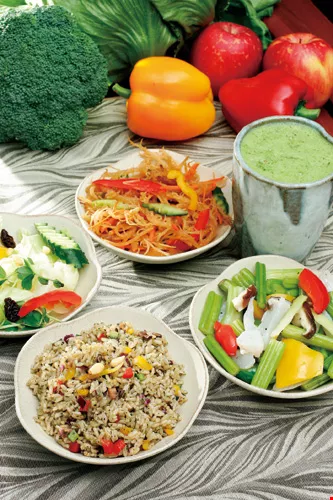
Dining in the age of health is more than a matter of appearance, aroma, and taste. You have to also have grains and raw foods (raw veggies or energy soup) to get full marks for nutrition. The photo shows a meal at a Cotton Fields health food store and restaurant.
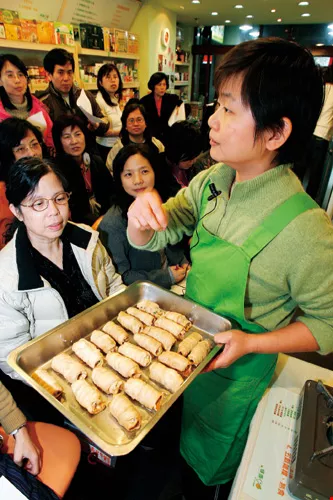
After work, office ladies come to a cooking class to learn how to prepare more nutritious meals. The tiny shop is filled with these Moms' high hopes for robust health. The photo was taken at an organic food restaurant located near the Legislative Yuan.



@List.jpg?w=522&h=410&mode=crop&format=webp&quality=80)


