The Deities that Shape Our Lives:
Everyday Religion in Taiwan
Cathy Teng / photos Jimmy Lin / tr. by Phil Newell
November 2025


Bao’an Temple in Taipei’s Dalongdong area was built for immigrants from Tong’an County in China’s Fujian Province. Famous for the artistry of its temple decor, it won a UNESCO Asia-Pacific Heritage Award for Cultural Heritage Conservation.
In Greek mythology Zeus is majestic but emotional, while in Norse mythology Loki is cunning and capricious. In many cultures deities have human feelings, including joy, anger, sorrow, happiness and even desire. This likewise applies to the divine beings in Taiwanese temples. Not only does each have his or her own responsibilities, but also very human-like stories and personalities, making religion more accessible and interesting.
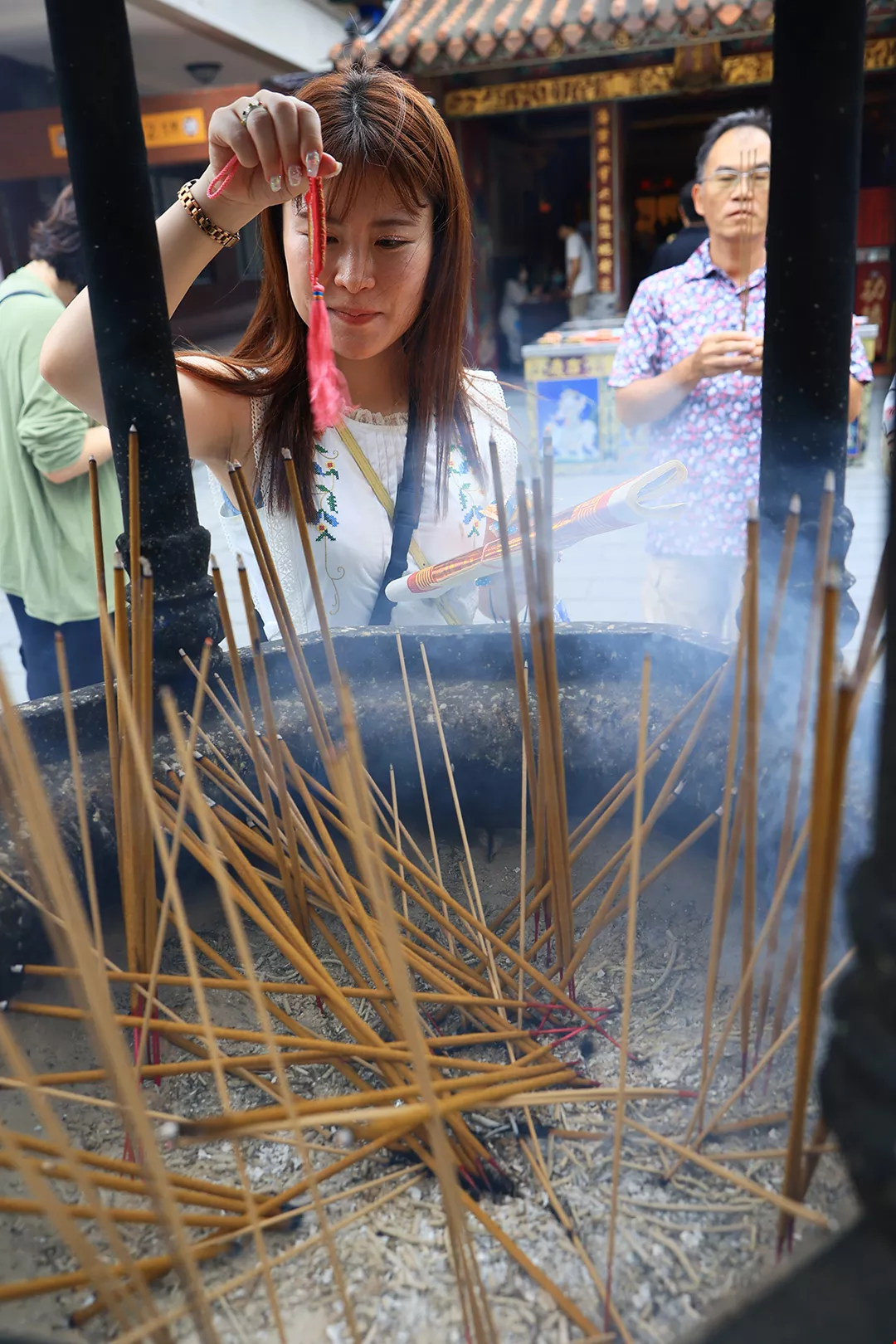
In the childhood memories of many Taiwanese, religious worship is part of daily life. Whether it be praying to Wenchang Dijun (Emperor Wenchang) to ensure good marks on exams or lighting incense to Tudigong (the Earth God) when moving into a new home, interactions with deities are as familiar as greetings between neighbors.
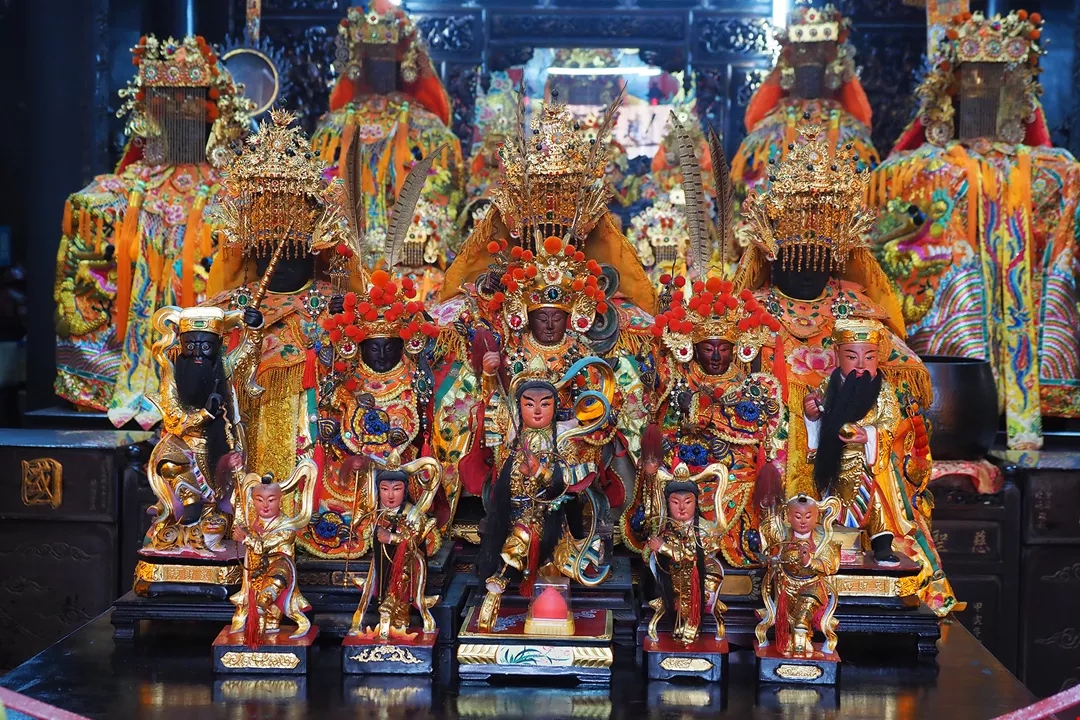
There are many deities in Taiwanese temples, and they are linked in intricate ways.
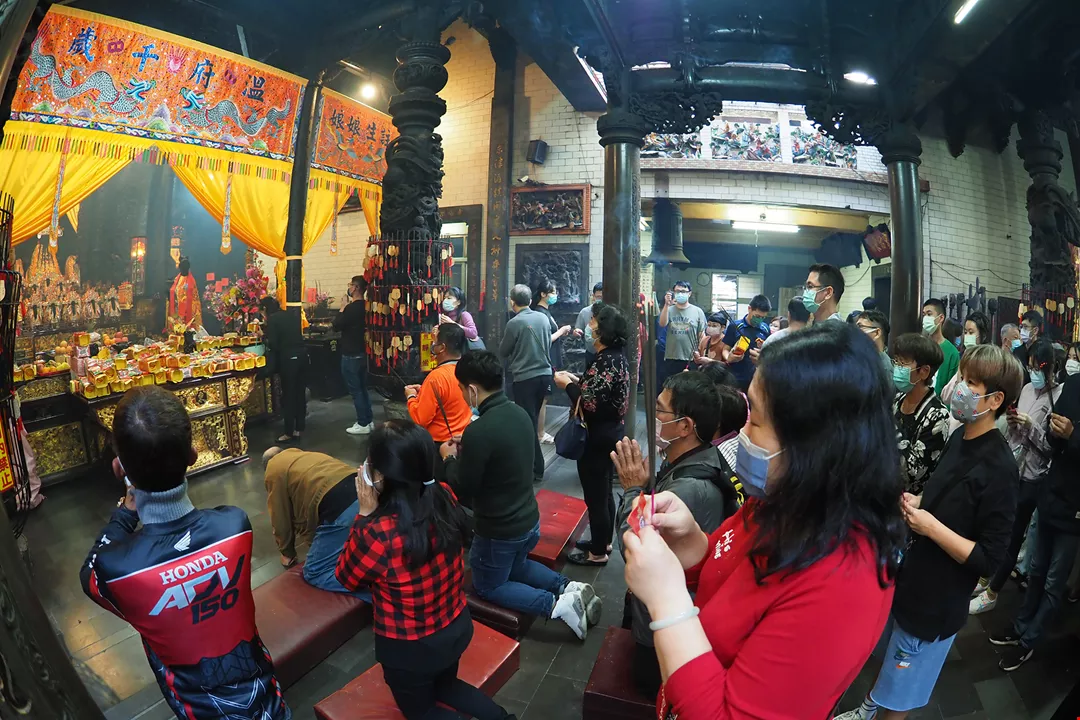
A diverse and complex system of gods
Hsieh Chung-jung, head of the Gengyanju Workshop for the Study of Religious Folk Customs, has invested many years in researching popular temple faith in Taiwan. He says that Taiwanese folk religion blends together Daoism, Buddhism, Confucianism, nature worship, and sorcery. It includes animistic beliefs as well as deified historical figures, with numerous gods and goddesses linked in intricate ways.
The earliest faith was based on the veneration of nature. For example, Sanguan Dadi (the Three Great Emperor-Officials) had dominion over heaven, earth, and water, with Yuhuang Dadi (the Jade Emperor), in charge of heaven, ranking highest among them. The Earth God also originated in nature worship. In traditional agricultural society, the Earth God was an important protector of rural communities, and there are Earth God temples at both ends of many historic streets in small towns. In urban areas, Earth God icons show him holding a gold ingot, symbolizing wealth, which is very different from rural Earth Gods, who hold a staff that helps them patrol farmland. Earth God temples often have no doors, making them more accessible to believers and showcasing this deity’s “down-to-earth” nature.
Chenghuangye (City God) deities, meanwhile, have evolved from notions of city defense. Originally involving worship of objects—the city wall (cheng) and dry moat (huang)—this belief system later transformed into a faith in protective city gods. Being the “highest urban official,” each Chenghuangye naturally needs an administrative team. At the Xia-Hai City God Temple in Taipei’s Dadaocheng area, one can see ranks of deities, including Wenwu Panguan (Civil and Military Judges) flanking and assisting the City God, along with further otherworldly beings, including Niutou (Ox-head), Mamian (Horse-face), and Qiye Baye (the Seventh and Eighth Masters), who act as law enforcement agents. It’s like a mini-city hall.
Many deities are historical figures who have been deified over time. The most famous is probably Mazu, a real girl who was deified as goddess of the sea and has become Taiwan’s most widely venerated maritime protective divinity. Hsieh Chung-jung notes that after arriving in Taiwan, Mazu became an all-purpose protectress. This is in large part because Minnan (Southern Fujianese) people prefer to venerate local deities that are closer to their daily lives, and therefore also gave her the functions of local divine beings.

Hsieh Chung-jung explains that because Taiwan was historically an immigrant society, connections based on which deities people worshiped outweighed familial and regional ties as a source of community cohesion.
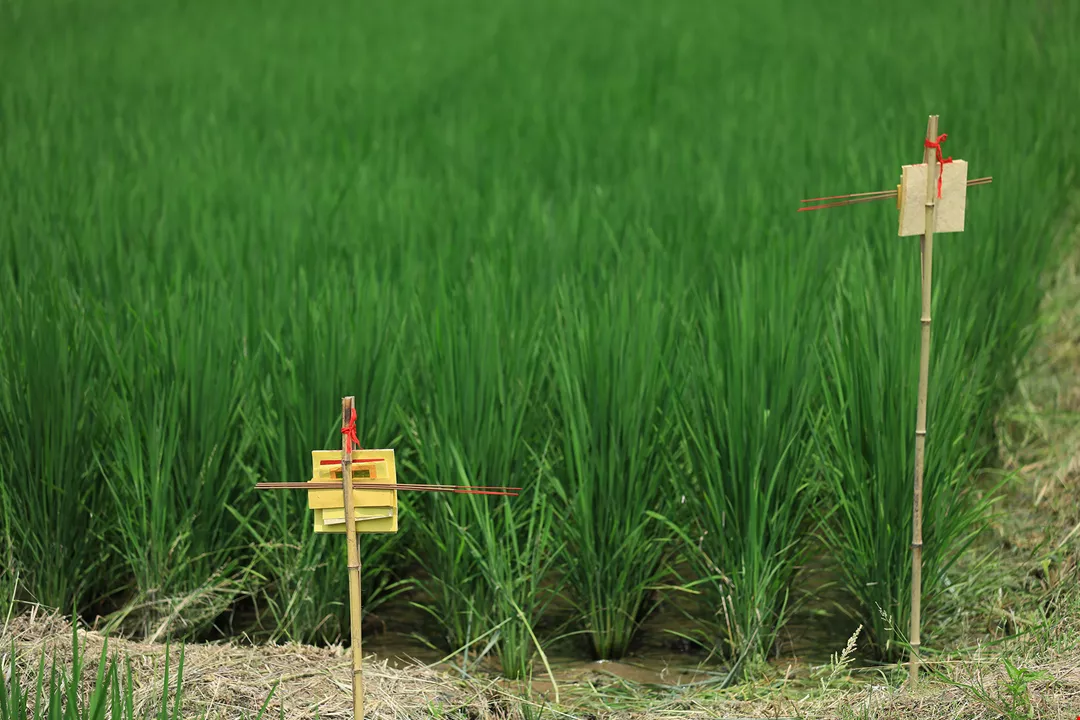
In Central Taiwan some people still observe the tradition of setting up “Earth God staffs” to help their local Earth God make his rounds. These also reveal the attachment and respect that people have for the land.
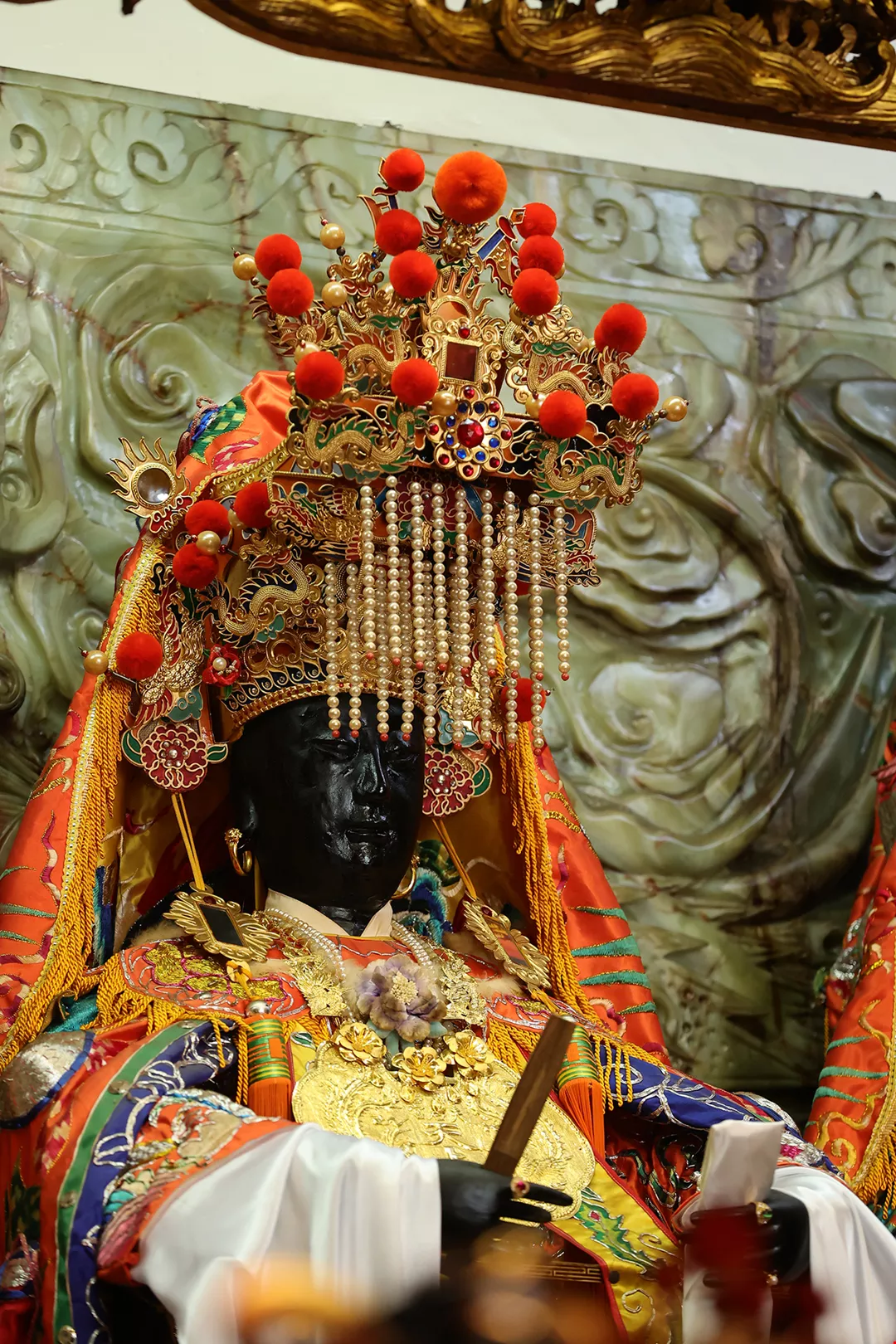
In Taiwan, Mazu has become an all-purpose protectress.
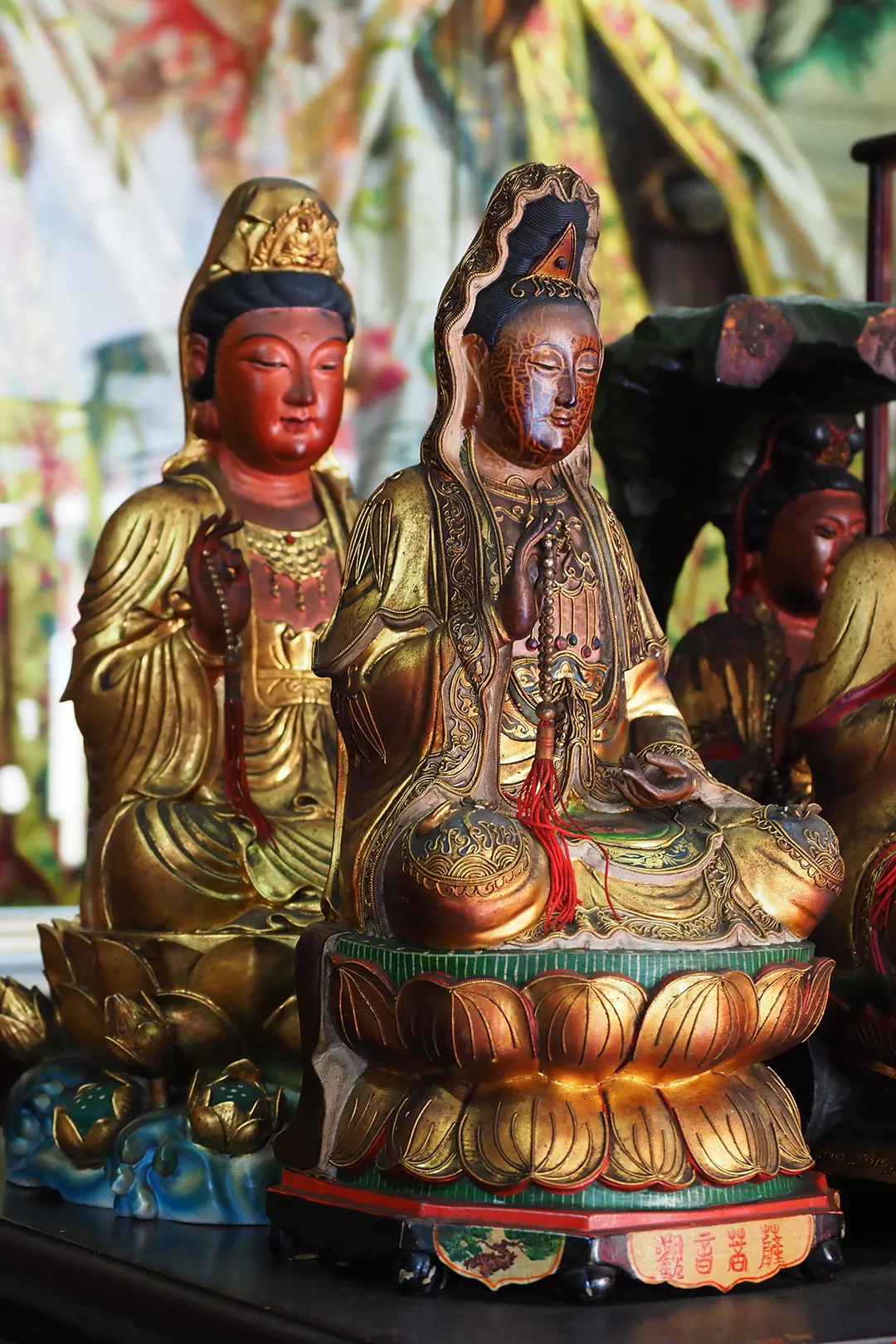
The Bodhisattva Guanyin, known in Sanskrit as Avalokiteśvara, originated in India, but has been transformed into a localized deity in Taiwan.
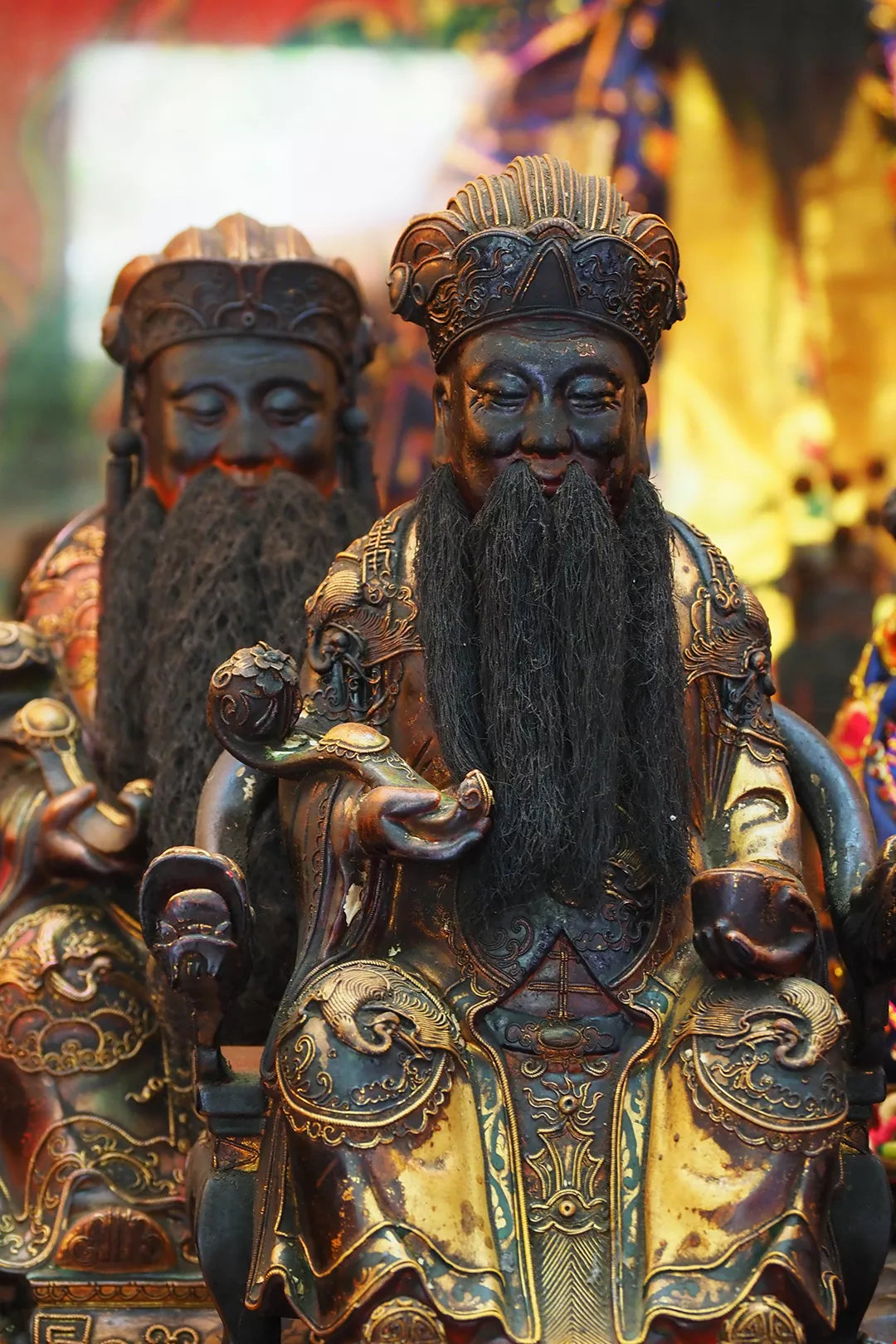
Earth God icons in cities hold gold ingots, symbolizing wealth.
Divine connections
Folk beliefs in Taiwan are in fact closely connected to Taiwan’s history as an immigrant society.
Although, as Hsieh Chung-jung says, “blood ties are a fundamental cohesive factor in Han Chinese society,” many early immigrants from China to Taiwan did not come with their extended families, but in small groups of relatives or even as individuals. Faced with an unfamiliar environment and unpredictable future, they had to battle diseases, win control of land and water, and even resist oppression by corrupt officials.
Therefore, people from the same localities in China’s Fujian Province often settled together in communities in Taiwan and placed the protective deities from their old homes in local temples. Over time, these became the protective gods and goddesses of their new hometowns. Examples include Qingshui Zushi (Pure Water Patriarch), worshiped by people from Fujian’s Anxi County; Guangze Zunwang (King Guangze) from Nan’an County in Quanzhou Prefecture; Baosheng Dadi (Great Emperor Baosheng) from Tong’an County; Kaizhang Shengwang (Sacred King, Founder of Zhangzhou) from Zhangzhou; and Sanshan Guowang (Three Mountain Kings) from Chaozhou. Reverence for these deities gradually transcended the primitive worship of the land and they became symbols of unity for their local populaces.
“People were not connected except by place of origin.” Hsieh Chung-jung explains that “the use of geographic relationships to build social cohesion was a natural evolution originating in Taiwan’s immigrant society, but since geographic relationships could not replace blood ties, ‘deity connections’ eventually replaced both geographic and familial links.” The veneration of different protective beings by different groups has enriched the fabric of folk religion in Taiwan.
In the early days, you could even tell people’s ancestral hometowns from the deities they worshiped. For example, Qingshan Temple in Taipei’s Bangka area, dedicated to Ling’an Zunwang (the Qingshan King), was founded as a center of faith for people from Hui’an County in Fujian Province. Also, Bao’an Temple in Taipei’s Dalongdong area, where the “god of medicine” Great Emperor Baosheng is venerated, was an important temple for immigrants from Fujian’s Tong’an County. Although nowadays, with urbanization and greater mobility of the population, these geographic links are not so obvious, one merely has to go into any temple and from its background stories and the deities’ origins, one can still find traces of Taiwan’s early settlers and how religious belief bound them closely together.
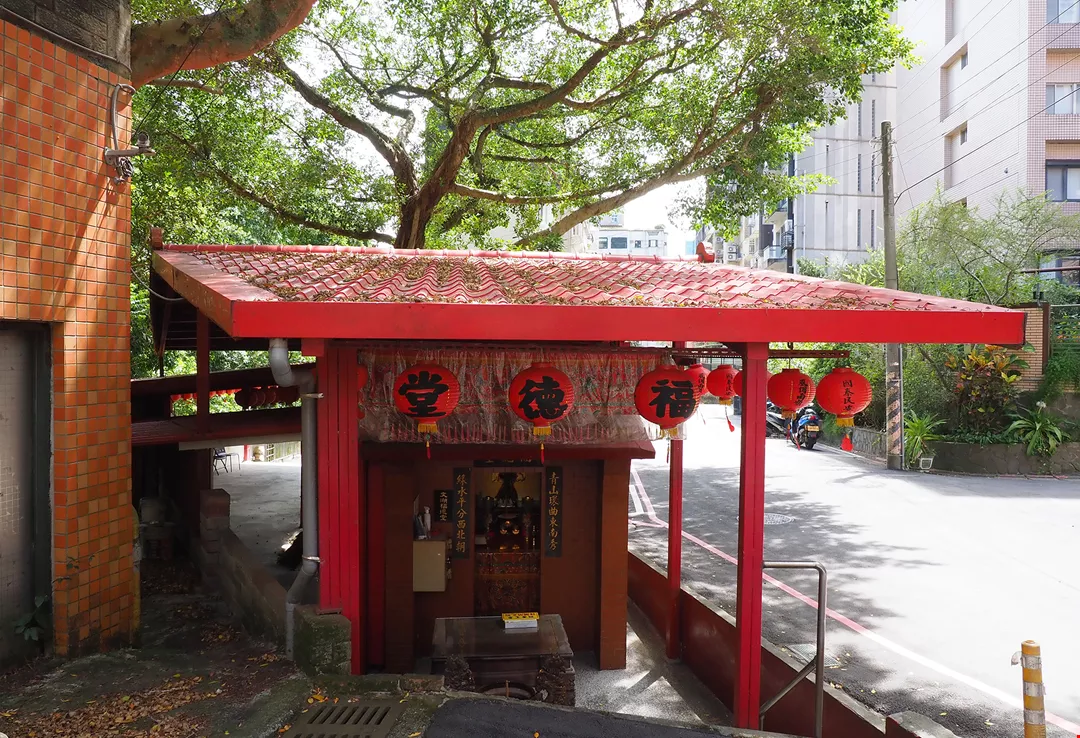
Earth God temples often have no doors, making them more accessible to believers and highlighting this deity’s “down-to earth” character.
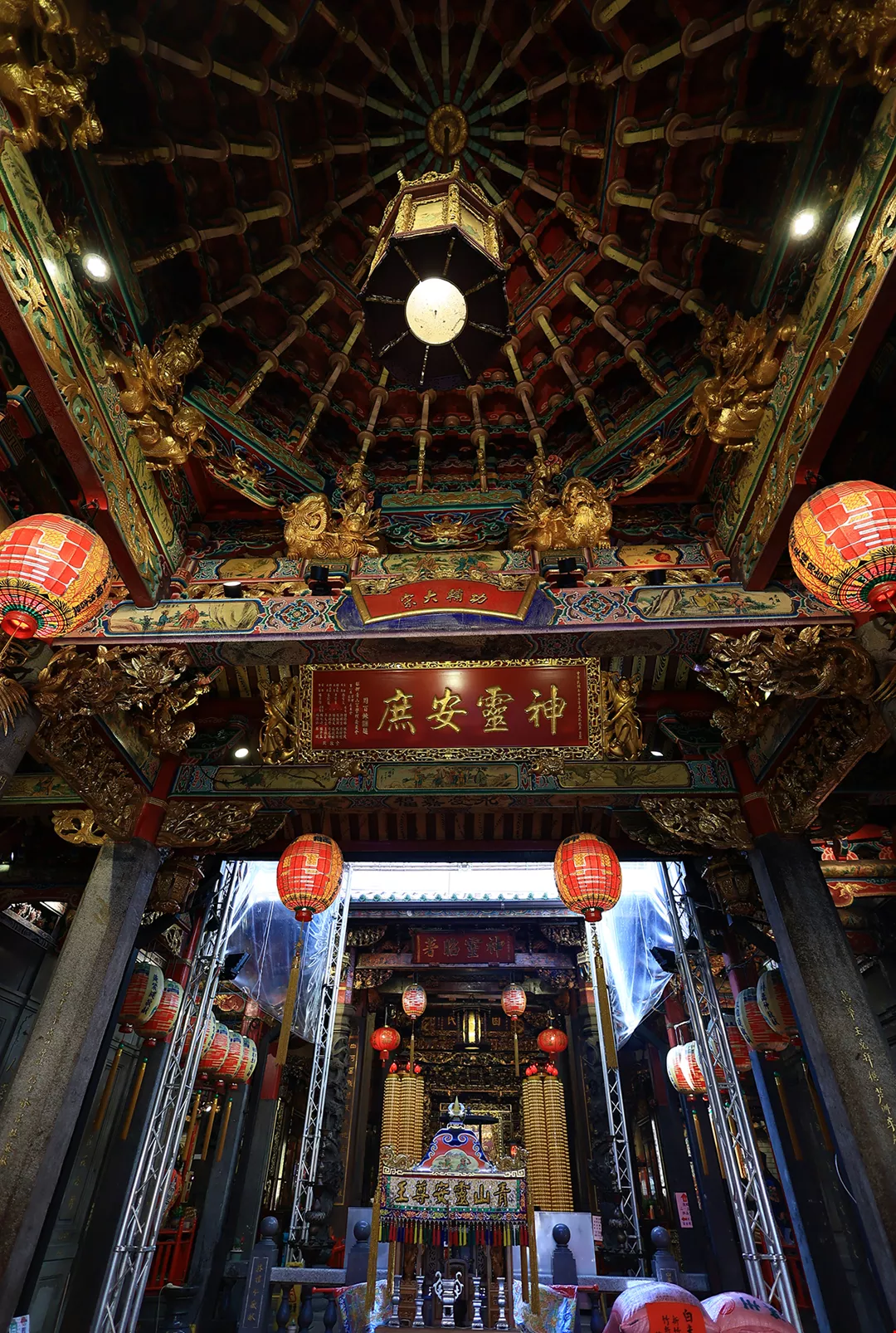
Qingshan Temple in Taipei’s Wanhua District, dedicated to the divinity Ling’an Zunwang (Qingshan King), was founded as a center of faith for people from Hui’an County in Fujian Province.
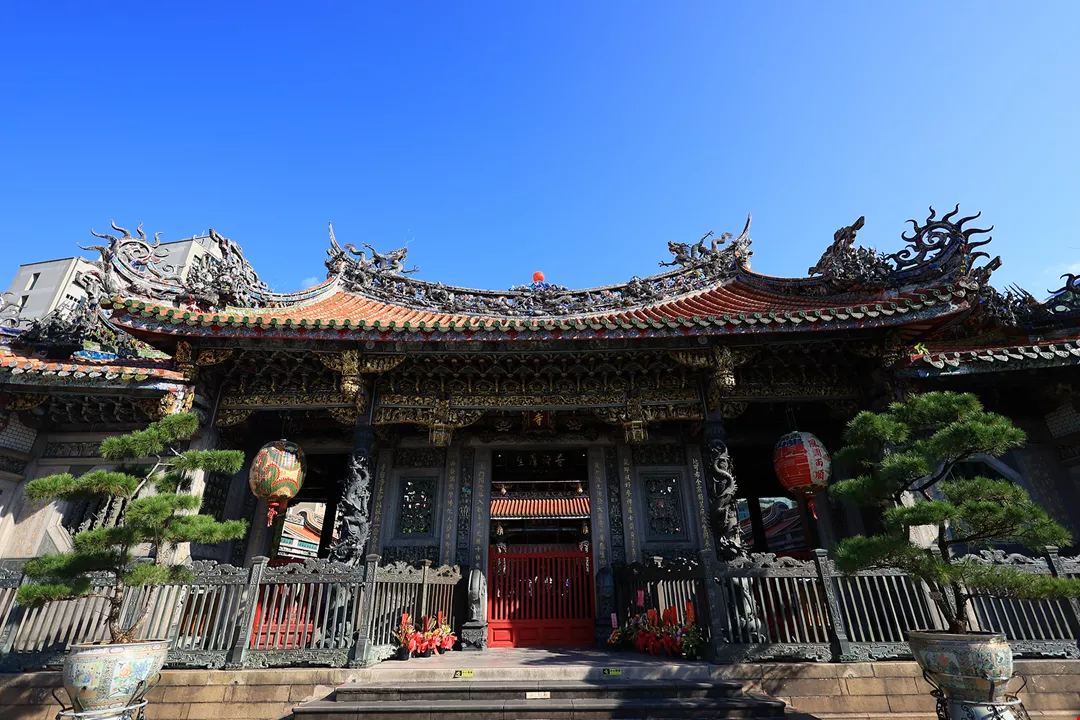
Taipei’s Longshan Temple, the most famous temple in Taiwan, is dedicated to the Bodhisattva Guanyin. It is a must-see destination for foreign visitors to Taipei.
Division of labor
If you walk into any temple in Taiwan, you will discover that not only are there many deities, but they each have their own responsibilities. Hsieh Chung-jung explains that since the beginning there has been a clear division of labor among divine beings. For example, Shennong Dadi (Emperor Shen Nong) has since ancient times been the god of agriculture and the patron deity of herbal medicine. Looking closely at icons of Shen Nong, most hold an ear of grain or bunch of herbs in one hand. Often portrayed with a red or black face because he was poisoned by tasting many herbs to discover their medicinal properties, he is worshiped by farmers, grain merchants, doctors, and pharmacists.
Guansheng Dijun (Holy Emperor Guan), who is worshiped in all three major Chinese faiths—Buddhism, Daoism, and Conficianism—is the Han-Dynasty general Guan Yu (d. 220 CE), better known as Guang Gong (Lord Guan). Icons of Guan Gong can be identified by their red faces and long whiskers. Because of his reputation for courage and loyalty, he is revered by the business community and also appears on altars set up by police and by criminal gangs.
Scholars, meanwhile, venerate Emperor Wenchang. More particularly, to perform well on exams one must pray to Kuixingye (Lord Kui Xing), who holds a “zhuangyuan writing brush” in his hand, with zhuangyuan referring to the individual earning the highest score on the highest-level imperial examinations in any particular year.
Each profession has its own deities. Hsieh Chung-jung points to the example of Nüwa, a mother goddess who is worshiped by ceramics makers because she created humanity from clay and melted stones to patch holes in the sky after a cataclysmic battle. Woodworkers and builders honor the carpenter Lu Ban (c. 507‡444 BCE), while people in the theater or music professions revere Xiqin Wangye (Lord Xi Qin) and Tiandu Yuanshuai (Marshal Tiandu).
Santaizi (Nezha, the Third Prince), who is quite well-known internationally, is famed as the god of children, and can be identified by his Universe Ring and Wheel of Fire. Because of the Wheel of Fire, he is also the patron divinity of professional drivers, such as truck and taxi drivers.
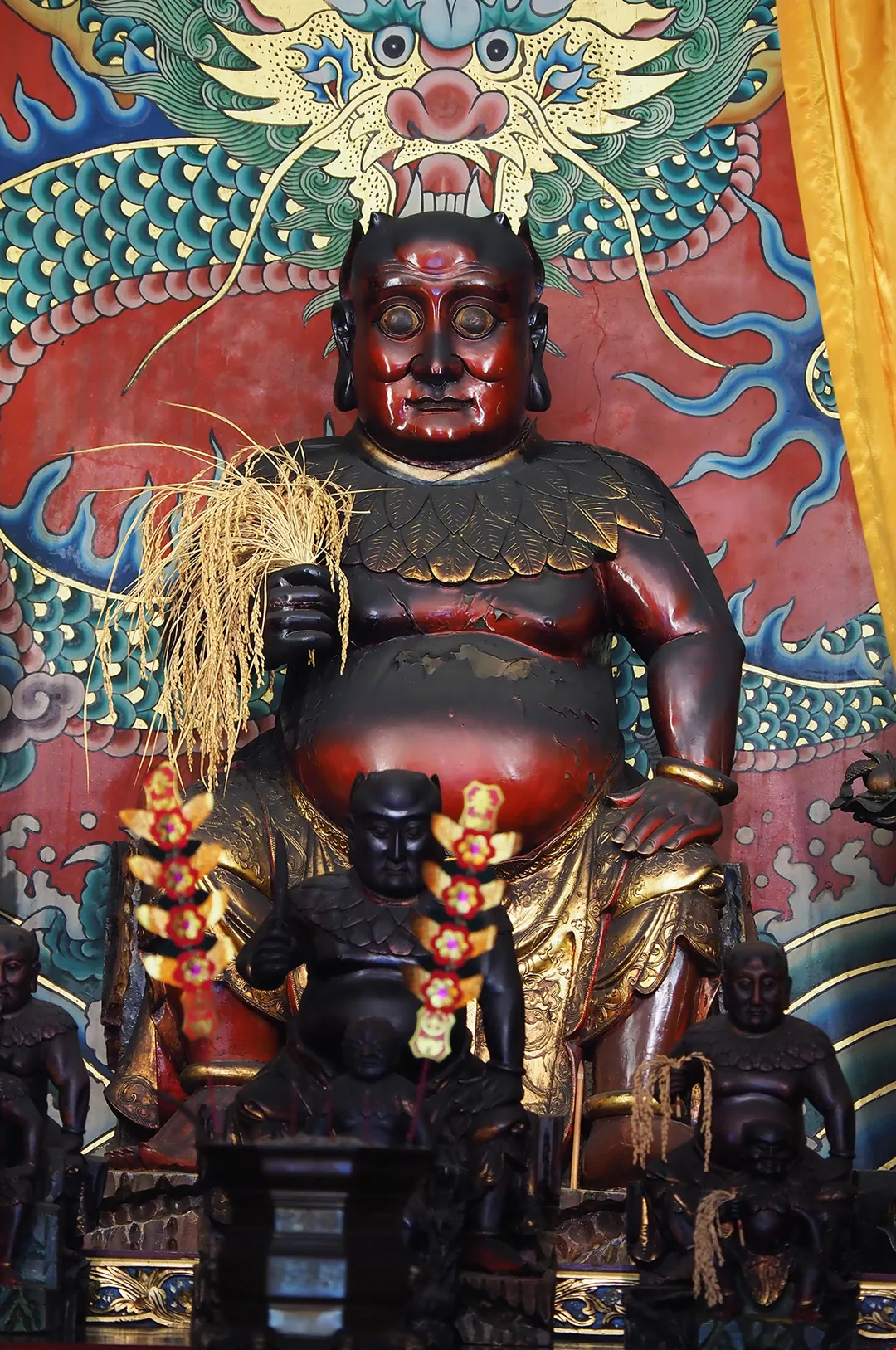
Shennong Dadi (Emperor Shen Nong), the god of agriculture and herbal medicine, is usually portrayed holding grain or herbs.

Theater folk and musicians revere Xiqin Wangye (Lord Xi Qin).
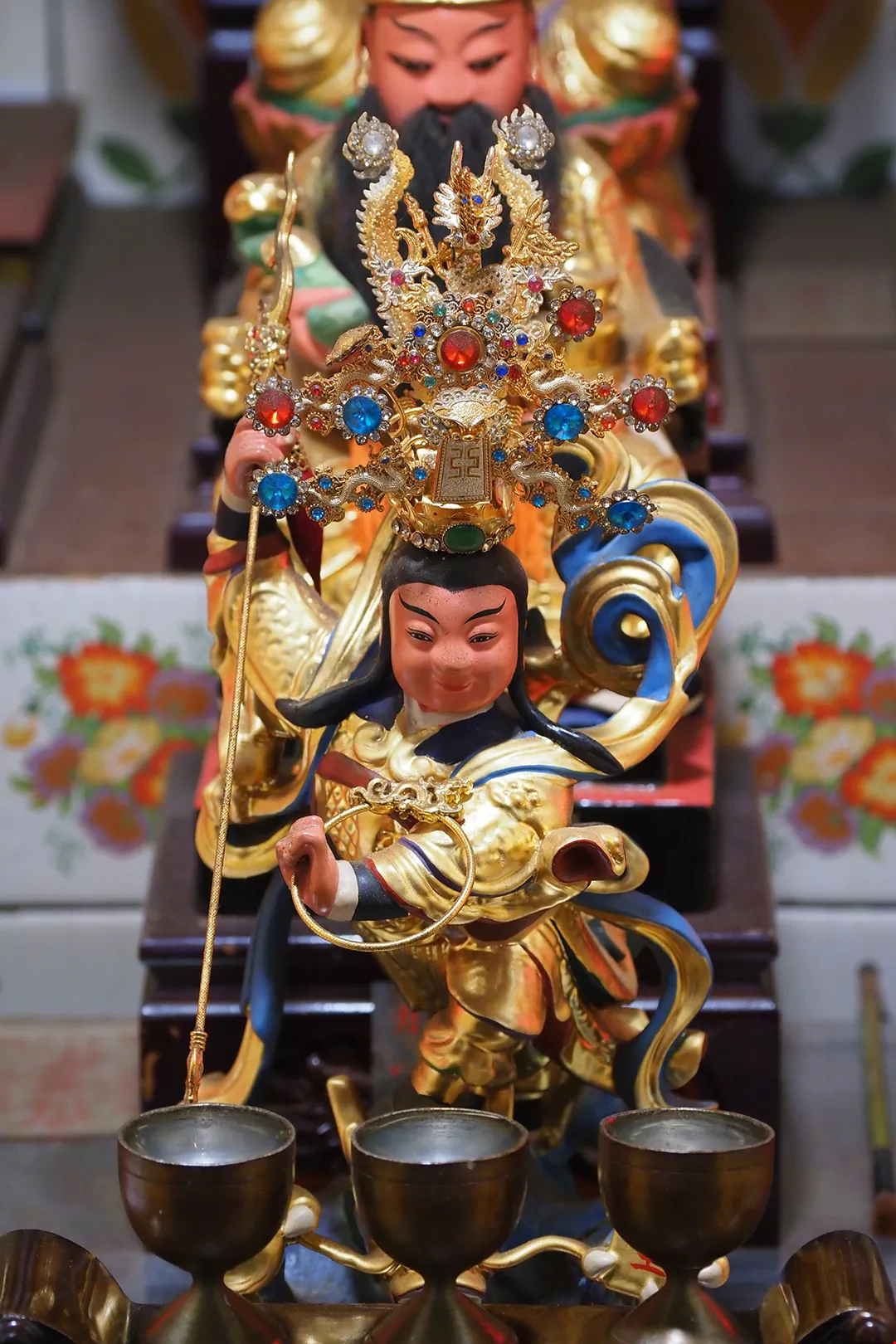
Santaizi (Nezha, the Third Prince), the god of children, retains a childlike appearance. Because of the Ring of Fire at his feet, he is venerated as the patron deity of professional drivers.
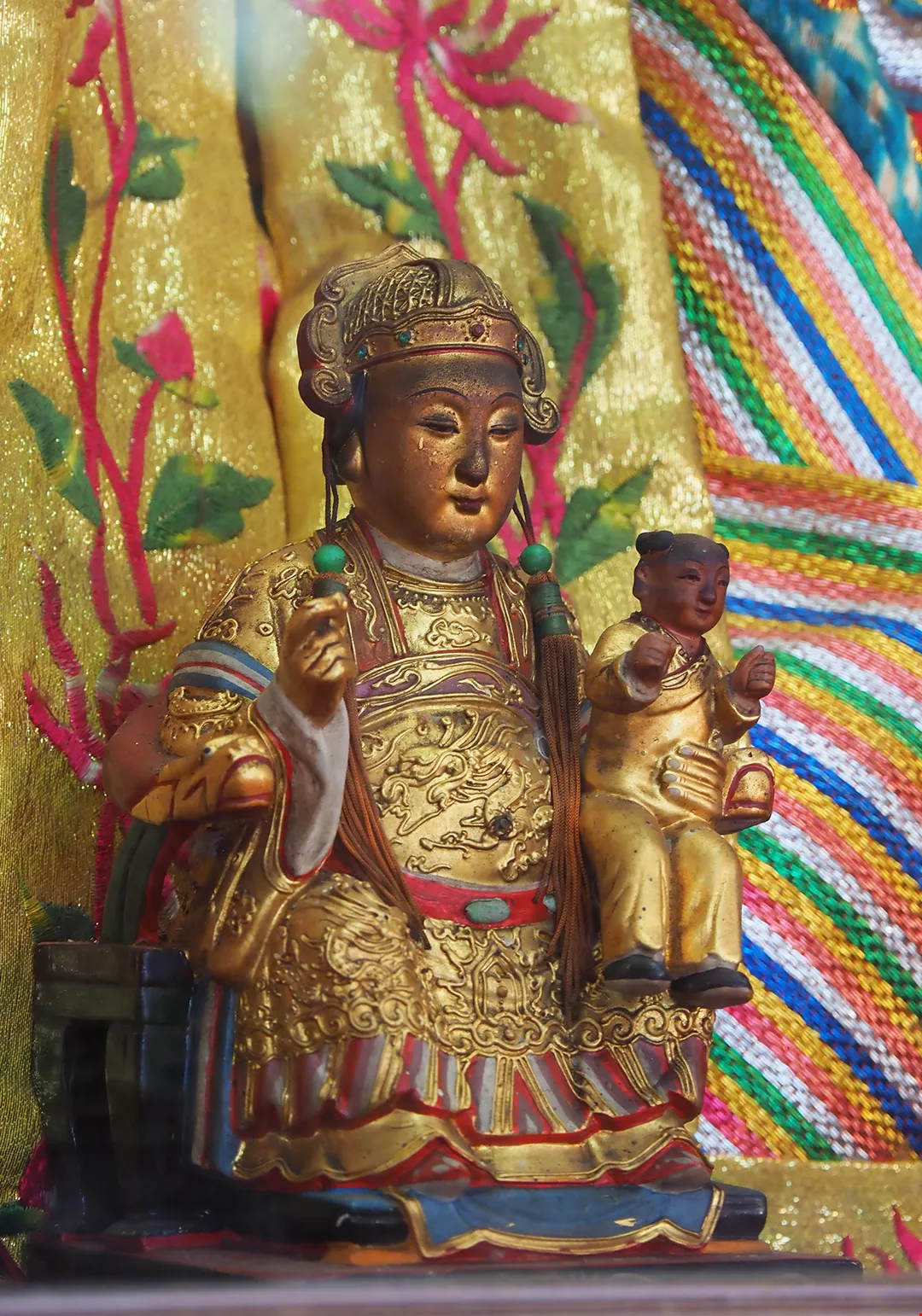
Zhusheng Niangniang (the Goddess of Childbirth) has dominion over fertility.

Wenchang Dijun (Emperor Wenchang) is the patron deity of scholars and people taking exams.
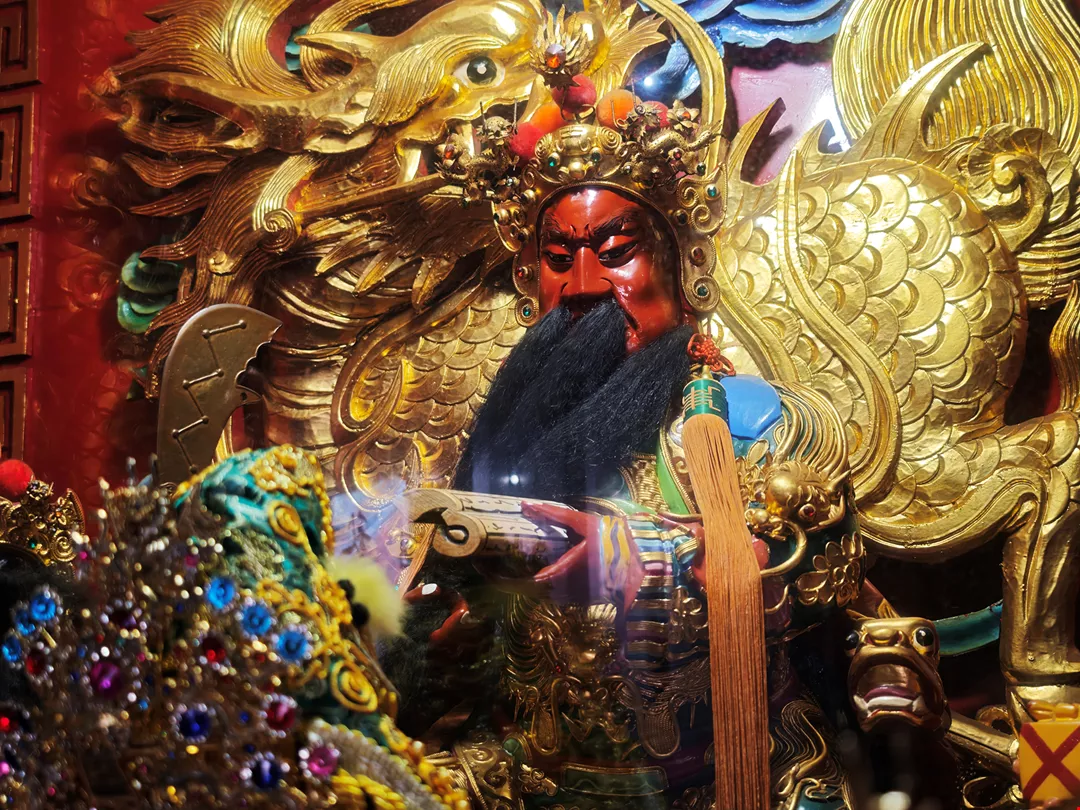
Guansheng Dijun (Holy Emperor Guan), also known as Guan Gong (Lord Guan), is characterized by his red face and long whiskers and is often portrayed in a seated posture reading the Spring and Autumn Annals.
Keeping up with the times
Some deities have come to prominence more recently as a result of societal change in the modern age. For example, worship of the god of matchmaking, Yuelao (the Old Man Under the Moon), has arisen only in the last half century. At the end of the 1980s, Taiwanese society was in transition and interpersonal relationships were changing. The average age of marriage rose steadily, leading to a surge in demand for singles activities. Unmarried men and women also turned to the heavens for assistance, causing faith in the Old Man Under the Moon to gradually become popular.
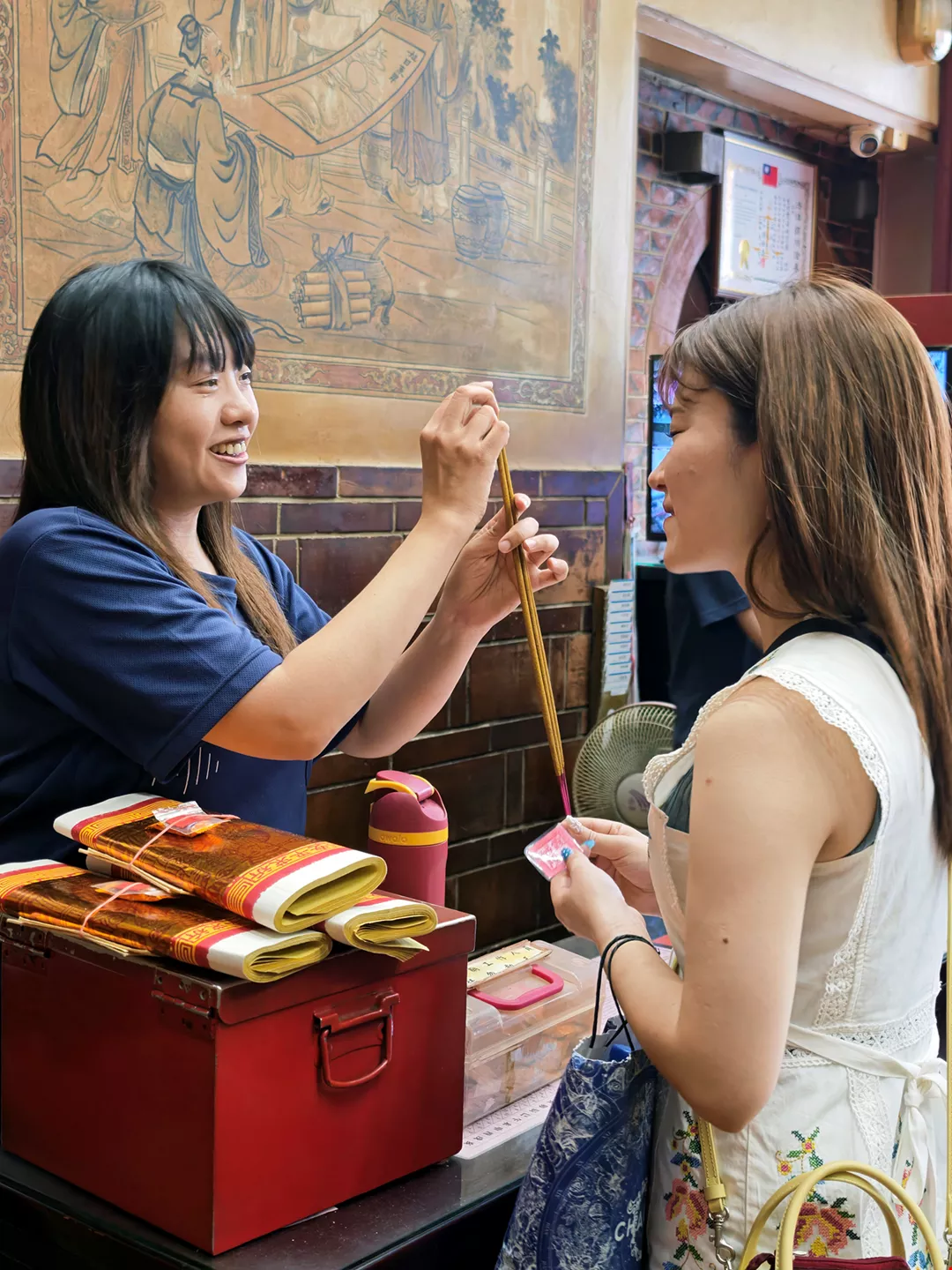
The Old Man Under the Moon at the Taipei Xia-Hai City God Temple is arguably Taiwan’s most popular matchmaking deity. At this temple, one can see many men and women offering wedding sweets, lead coins, and red thread to the deity as they introduce themselves in prayer. Online, the saying goes that “so long as you sincerely worship this god, you will make a marriageable connection within three months.” Meanwhile, people who want to prevent their spouses from finding lovers on the side have to pay respects to the City God’s Wife, who can ensure domestic harmony.
Did you know that in 2019 Taiwan became the first country in Asia to legalize same-sex marriage? The Old Man Under the Moon has also become a patron deity for gay couples, and he offers protection and good fortune to anyone who prays with sincerity.
Taiwan’s polytheistic system of religion appears very complex, but this is simply a reflection of its multi-layered society. There are divine beings originating from nature worship and deified historical figures; there are local protective deities and new beliefs that have evolved as times have changed. Entering a temple, you may find everything from the “top-ranking” Jade Emperor to the “grassroots” Earth God. Sitting side by side, they represent the values of Taiwanese society: inclusiveness, equality, and diversity.
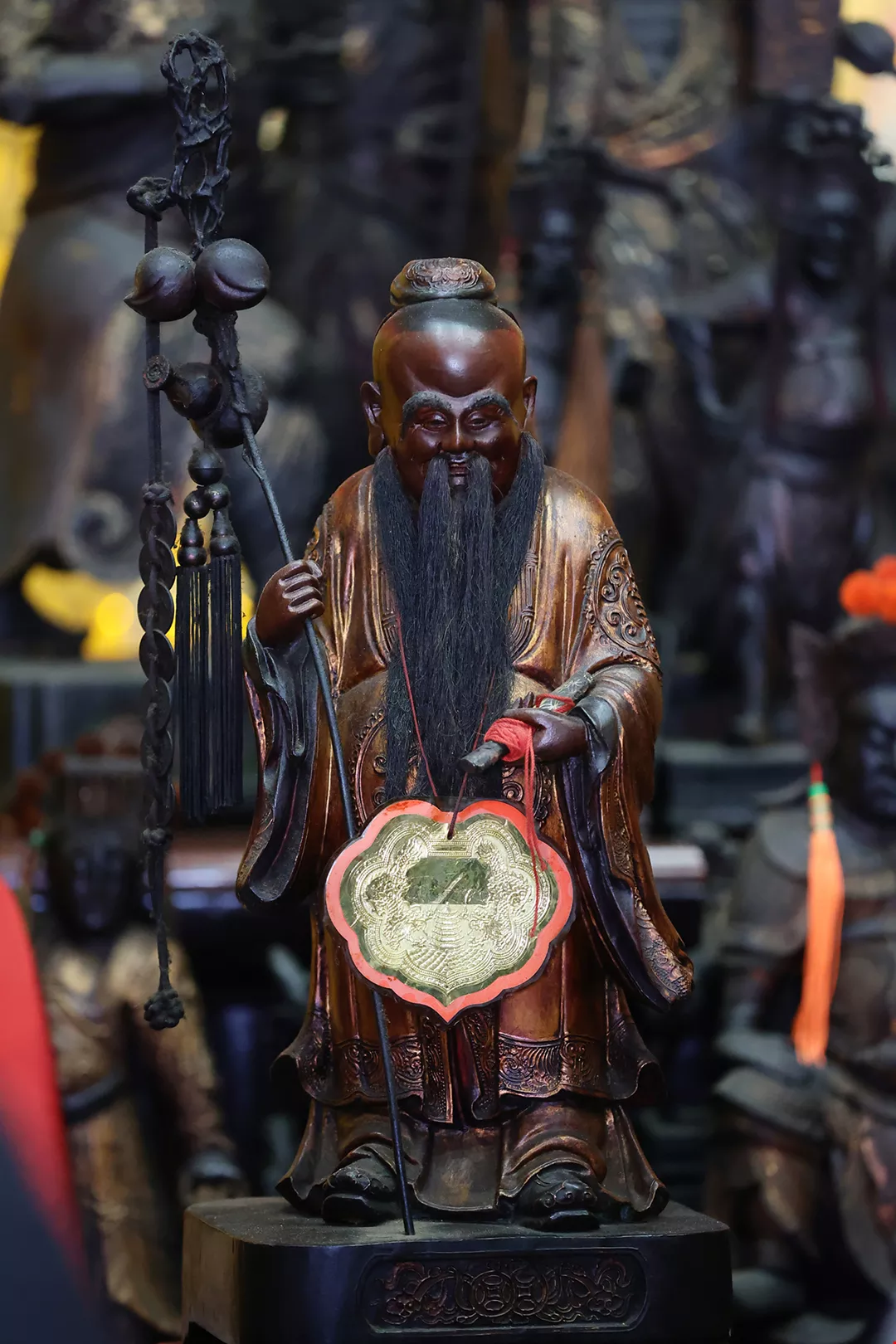
Worship of the Old Man Under the Moon (Yuelao, the god of love and marriage) has grown widespread in modern times due to social change. The icon of this deity in Taipei’s Xia-Hai City God Temple is arguably Taiwan’s most popular, and he is also seen as the patron deity of gay couples.
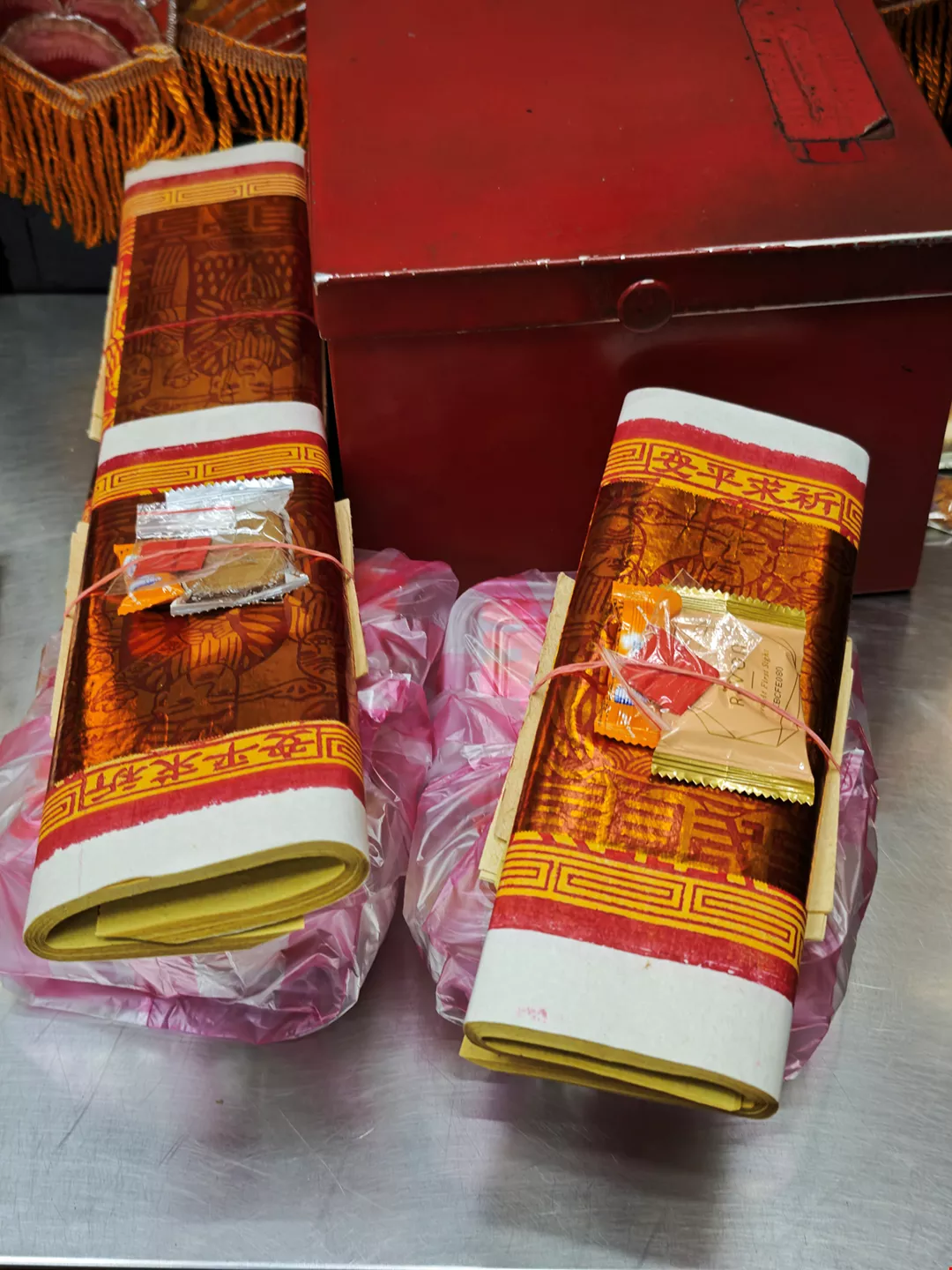
Men and women offer wedding sweets, lead coins, and red thread to Yuelao as they introduce themselves to him in prayer. It is said that with his help, anyone who is sincere is sure to find a marriage partner.


-1_web@List.jpg?w=522&h=410&mode=crop&format=webp&quality=80)


@List.jpg?w=522&h=410&mode=crop&format=webp&quality=80)
@List.jpg?w=522&h=410&mode=crop&format=webp&quality=80)
