

Seventy-five is a ripe old age for a person, but for a nation it merely marks the entrance into maturity. But be it for man or nation, growth is always a painful process, presenting many tests and turning points. Each year we celebrate our Nation's birthday, and each year it's with a different spirit.
In 1911 the martyrs of Canton paved the way for the Republican Revolution with their blood, and the uprising at Wuchang on October 10th heralded the birth of the new Republic.
October 10th, 1912, marked the Republic's first birthday. A Shanghai newspaper on that day reported the following news items:
"President Yuan Unable to Attend Memorial Ceremony for Martyrs; Will Be Represented by Premier Chao." The blood of the martyrs must have still seemed warm then. Besides memorial ceremonies, how else did they commemorate that day?
"The Shanghai Defense Headquarters has set up ceremonial arches, decorated with colored electric lights. . . ." So it seems they had electricity then. And there was more: "Mechanical models of airships and peacocks that turn in all directions. . . and colored flags. . . ." (There was no national flag then.)
At six o'clock there was a festive lantern celebration at Shanghai's west athletic grounds. And taking a holiday of from one to three days was a must for most.
The year 1928 saw the successful completion of the Northern Expedition by the National Revolutionary Forces commanded by Chiang Kai-shek. News accounts from the capital at Nanking described the national-day celebrations there:
"The streets and markets today are adorned with lanterns and festoons, hung with flags [these, unlike the "colored" flags of 1912, were real national flags], and decorated with ceremonial arches. Schools and organizations are all parading through the streets. The jubilance is such as has never before been seen."
On September 18, 1931, the Japanese suddenly attacked Manchuria and occupied Mukden. October 10th of that year was the 20th anniversary of the Republic. The main headline of a Nanking newspaper that day called on the country to resist the Japanese: "Remember Double Ten But Don't Forget Our Great Humiliation!" Except for a review of the troops, the paper reported scarcely a celebration. And a twelve-year-old wrote an essay that began like this: "Kids, please listen to me. . .Let's all stop buying Japanese goods--forever. We'll make them poor, we'll make them starve, so there will be no more of them left in the world to hurt people."
On August 12, 1937, after the Marco Polo Bridge Incident, the full-scale War of Resistance began. That October 10th, the front page of the Wuhan Daily was overwritten with huge red characters saying, "Please Buy Bonds." The newspaper carried no news of celebrations, and the editorial was titled "No Happiness This National Day."
Eight long years later the newspapers presented a completely different face, full of joy and celebration. The front page of the Central Daily News was given over completely to engagement and wedding announcements. On the second page was a report of Chiang Kai-shek's speech at the first national day celebration after victory.
On October 10, 1949, the main headline on the front page of the Taiwan Central Daily News was "Legislative Yuan Denounces Communist Regime Before the Nation's Compatriots." On page five was a small report of the national day observances that took place before Taipei's Chiehshou Hall (today the Presidential residence).
The headline of the Central Daily News on the next year's Double Ten was "Reconstruct Taiwan to Retake the Mainland; Save Our Compatriots and Restore China." The next day's paper reported that the 500,000 inhabitants of Taipei had passed a grand national day and that ROC airplanes had dropped 50,000 kilos of rice over the mainland as relief.
By last year's Double-Ten Day, Taipei's population had passed 2.5 million. The ROC's economic growth rate since 1962 had averaged 9.1 percent a year, the highest in Asia, and the nation had become the 11th largest exporting country in the world. Per capita income was US$3,142, the 23rd highest in the world and 63 times higher than the country's mark of US$50 in 1949. These figures give us confidence of entering the ranks of the developed countries by the year 2000.
1986's Double Ten will soon be upon us. With what sort of spirit should we celebrate it?
[Picture Caption]
This Shanghai newspaper from 1912 is full of articles commemorating the first anniversary of the Republic.
This cigarette advertisement is from a 1928 Shanghai newspaper.
Celebrations held in Peking on Double-Ten Day in 1928, after the success of the Northern Expedition, were festive.
After the Japanese began their encroachments in 1931, the streets of Shanghai presented a sober scene. The sign says "National Disaster."
The first page of this Wuhan newspaper from 1937, at the start of the War of Resistance, is filed with notices of openings at military schools. Th e large characters say "Please Buy Bonds."
With victory in 1945, the front page changed completely. These are all wedding and engagement notices.
Taiwan was retroceded to China on December 25, 1945. The people put up ceremonial arches to celebrate their rebirth.
This headline from October 10, 1949, describes the fervent crowds who gathered to celebrate the national day, as "unanimously denouncing the Communists for creating chaos."
President and Mrs. Chiang Kai-shek reviewed the troops on October 10, 1971, the year we withdrew from the UN.
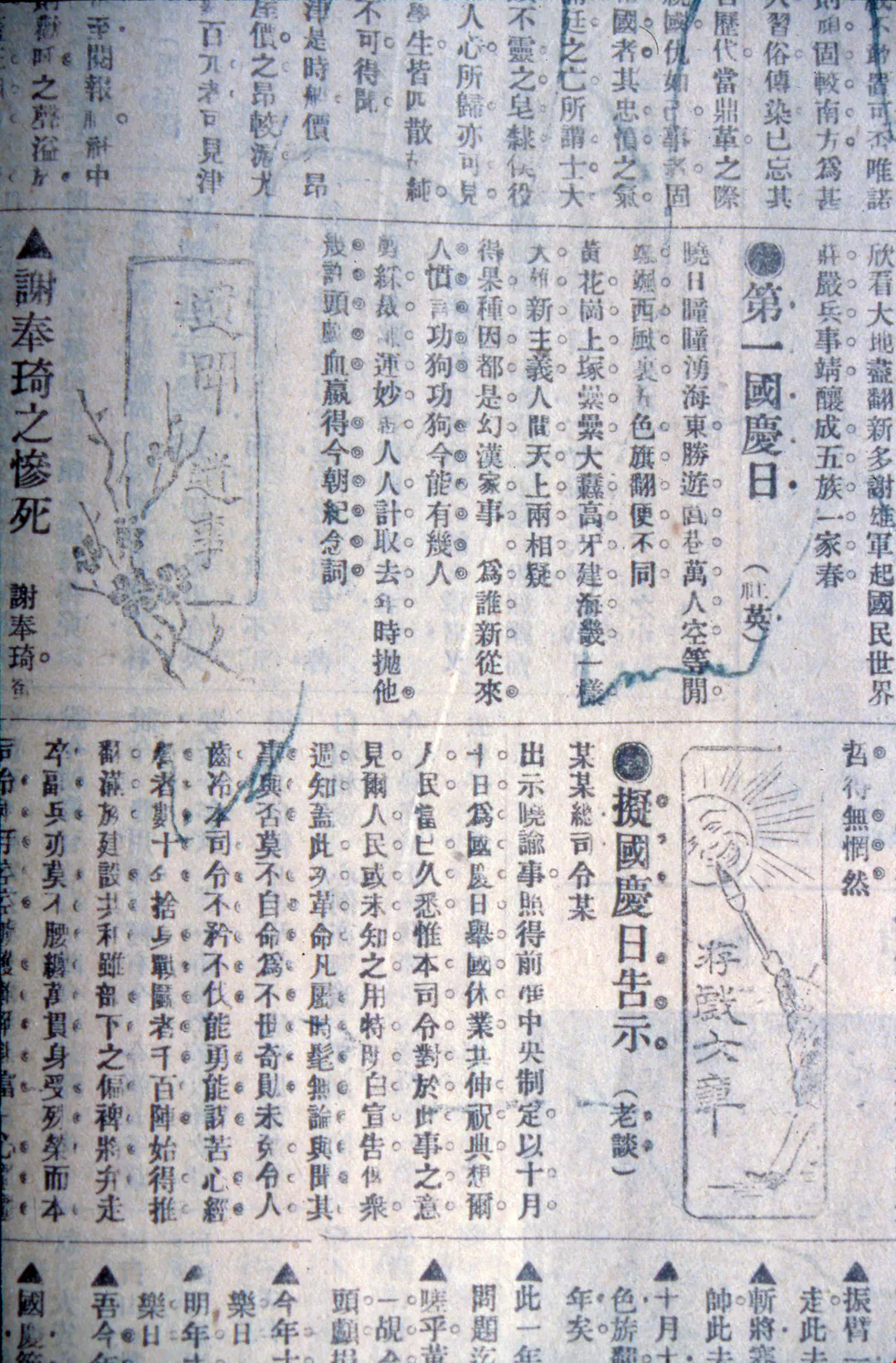
This Shanghai newspaper from 1912 is full of articles commemorating the first anniversary of the Republic.
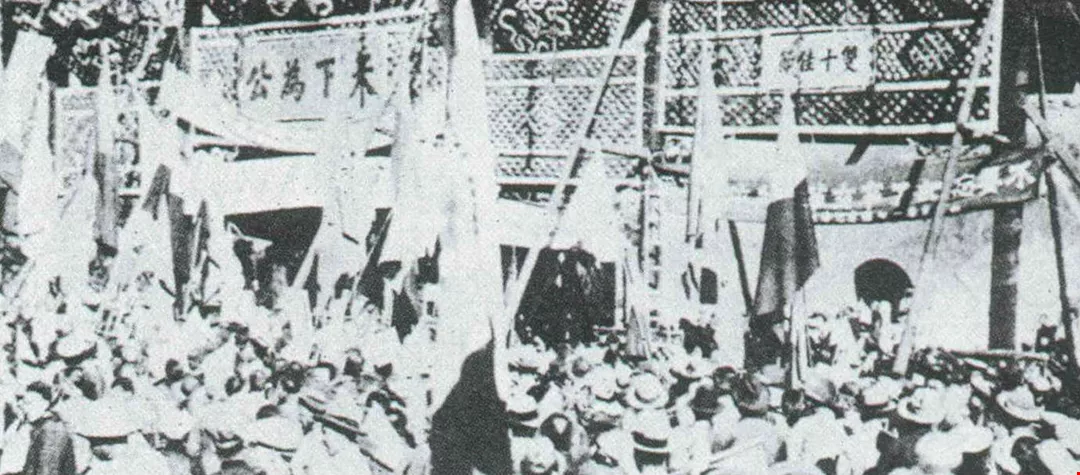
Celebrations held in Peking on Double-Ten Day in 1928, after the success of the Northern Expedition, were festive.
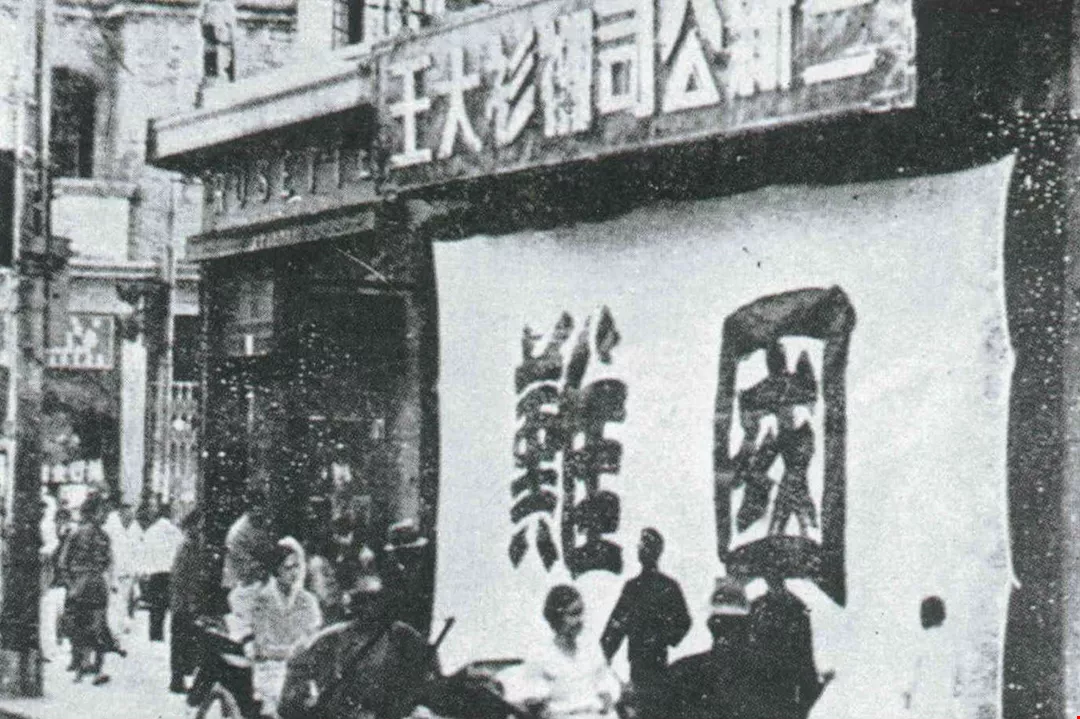
After the Japanese began their encroachments in 1931, the streets of Shanghai presented a sober scene. The sign says "National Disaster.".
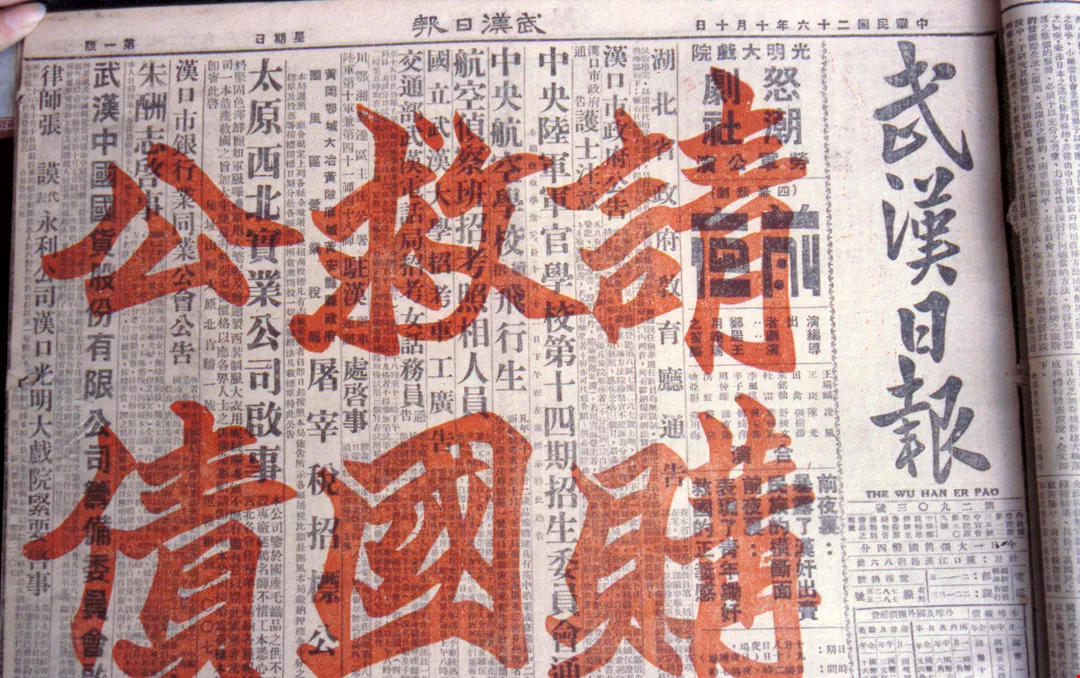
The first page of this Wuhan newspaper from 1937, at the start of the War of Resistance, is filed with notices of openings at military schools. Th e large characters say "Please Buy Bonds.".
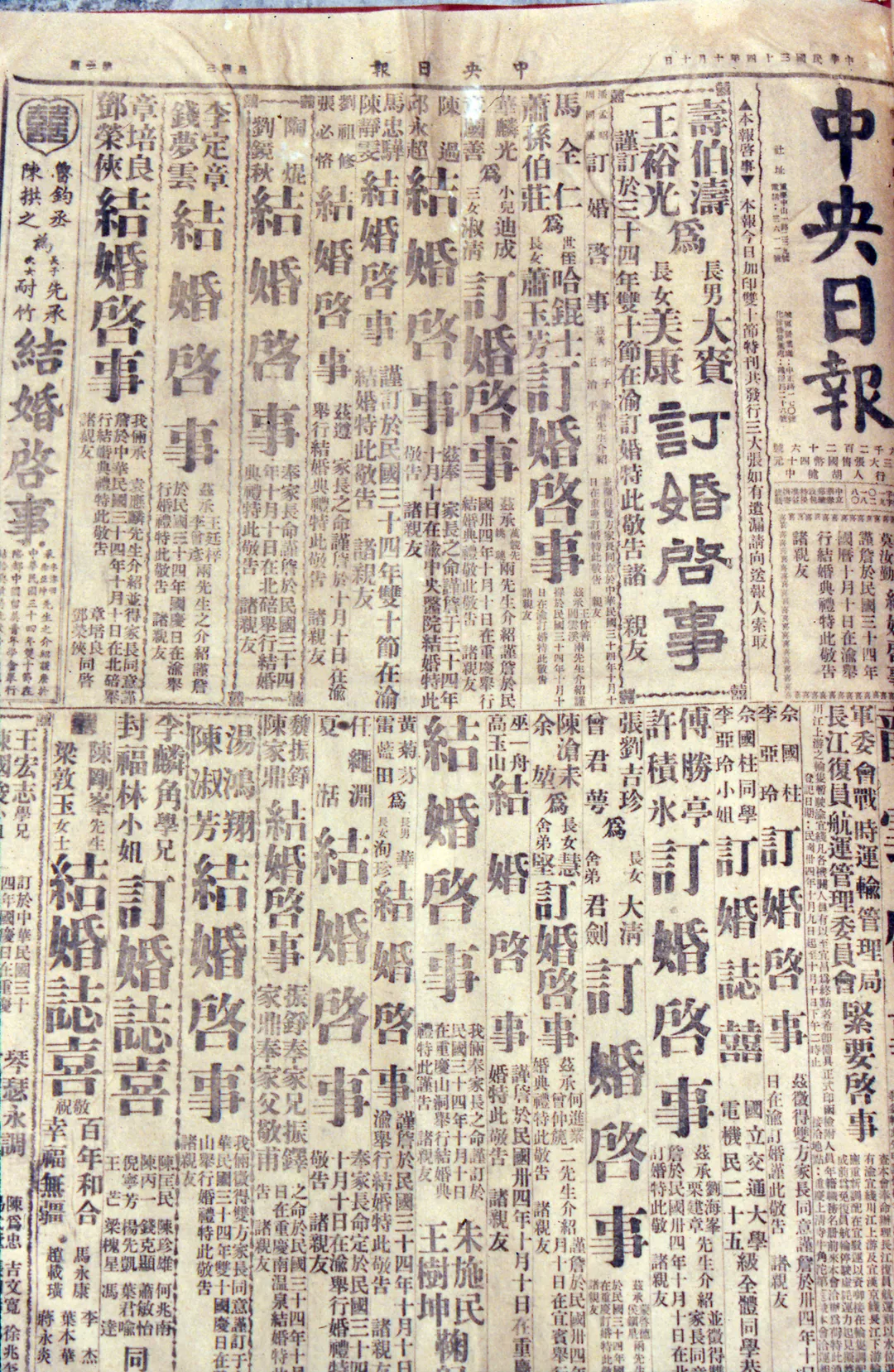
With victory in 1945, the front page changed completely. These are all wedding and engagement notices.
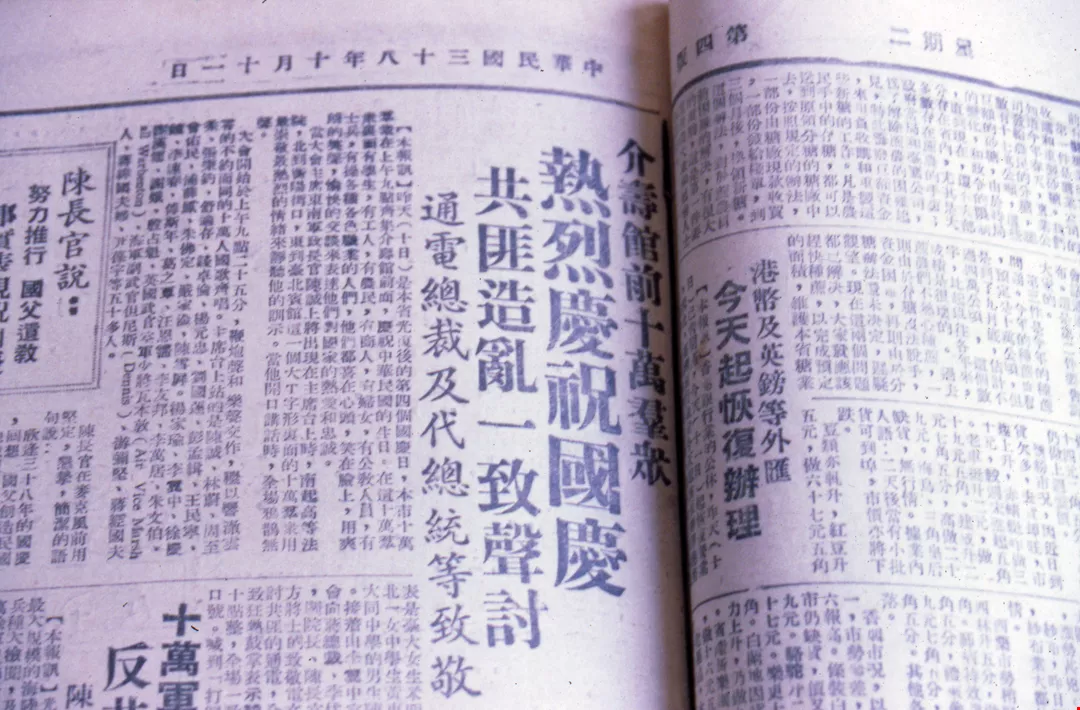
This headline from October 10, 1949, describes the fervent crowds who gathered to celebrate the national day, as "unanimously denouncing the Communists for creating chaos.".
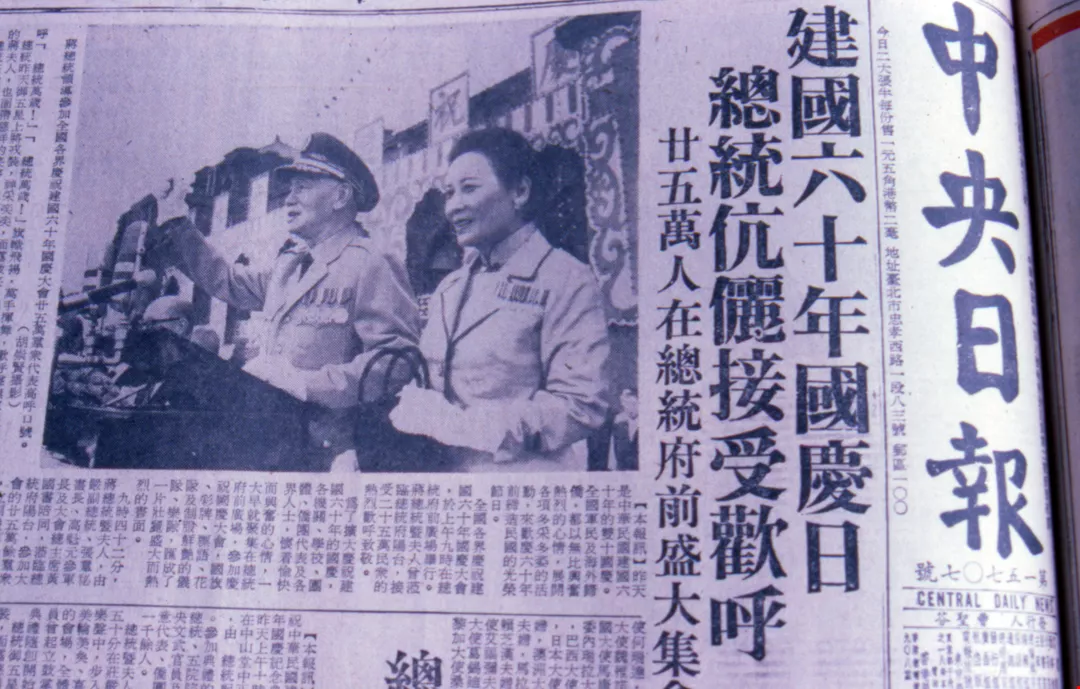
President and Mrs. Chiang Kai-shek reviewed the troops on October 10, 1971, the year we withdrew from the UN.
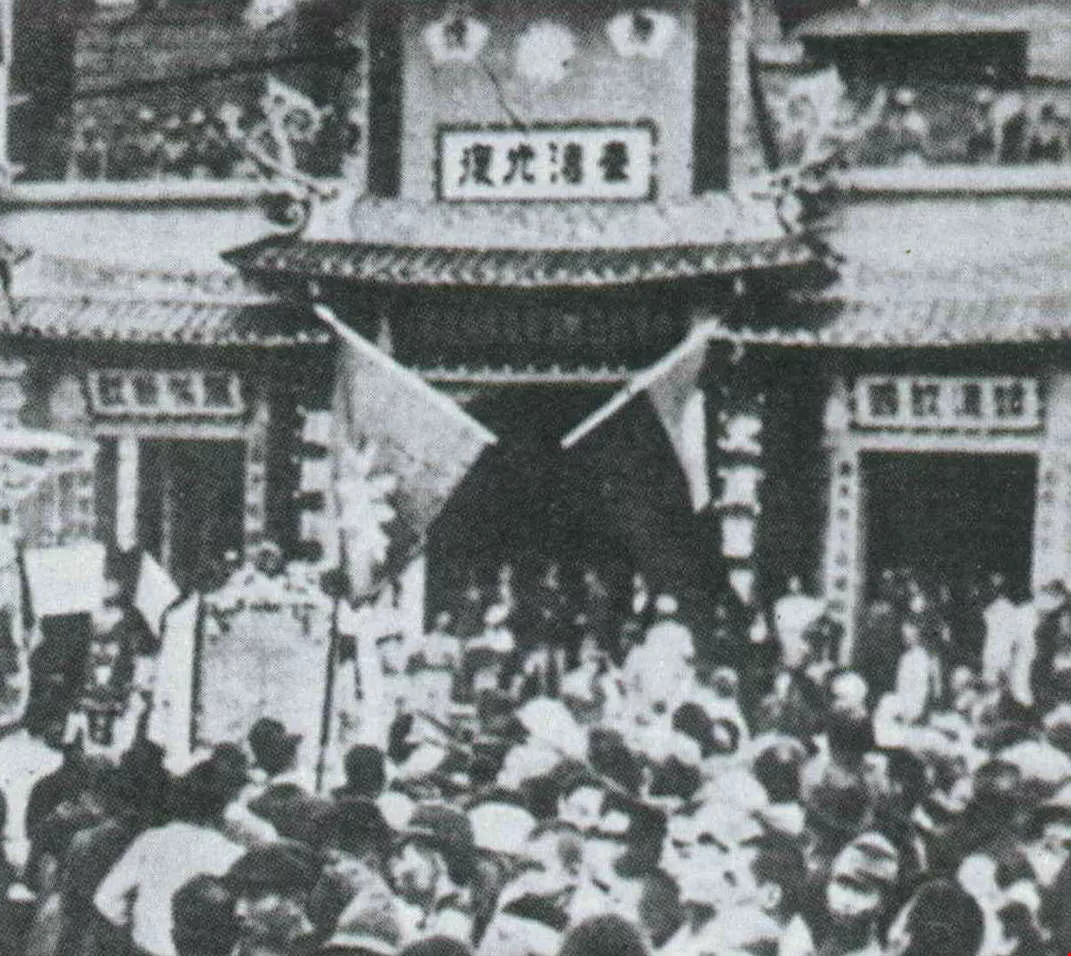
Taiwan was retroceded to China on December 25, 1945. The people put up ceremonial arches to celebrate their rebirth.


@List.jpg?w=522&h=410&mode=crop&format=webp&quality=80)


