What the Forests Teach Us
—Learning from Indigenous Hunters
Chen Chun-fang / photos Kent Chuang / tr. by Phil Newell
March 2026
On the day of our visit, a group of Indigenous children are taking an outdoor class in the hills of Wulai. They learn from hunters about the animals and plants in mountain forests, as well as how to use a bow and arrow, cut bamboo, and start a fire with friction, becoming versed in humbly coexisting with nature.

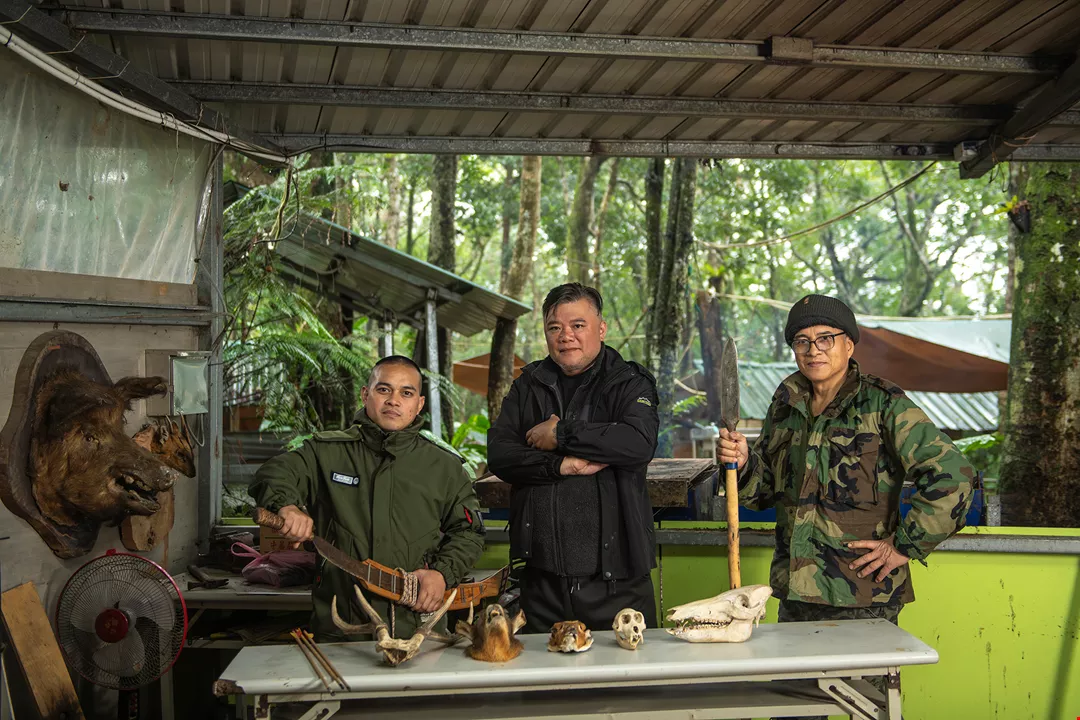
Silvan Oyong (center) founded the Wulai Hunting School and recruited hunters including Yu Law (right) and NowKang Unsi (left) to teach mountain forest culture, using the hill country south of Taipei City as their classroom.

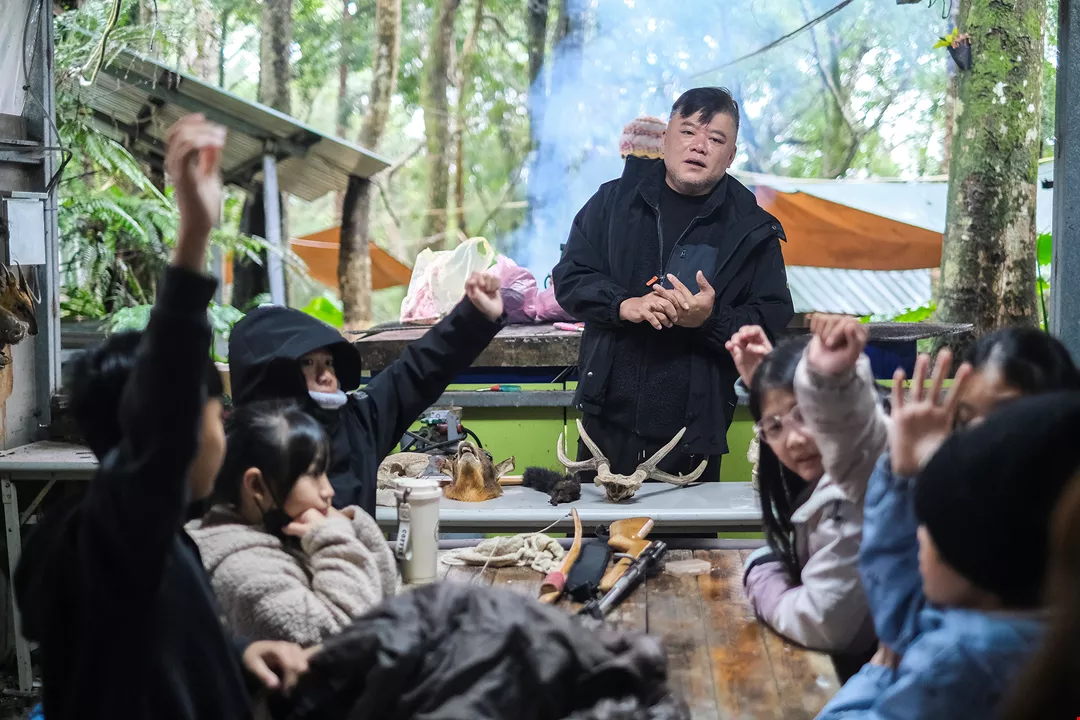
Silvan Oyong vividly and wittily shares his knowledge of the mountain forests. People of all ages can have a great deal of fun at the Wulai Hunting School.


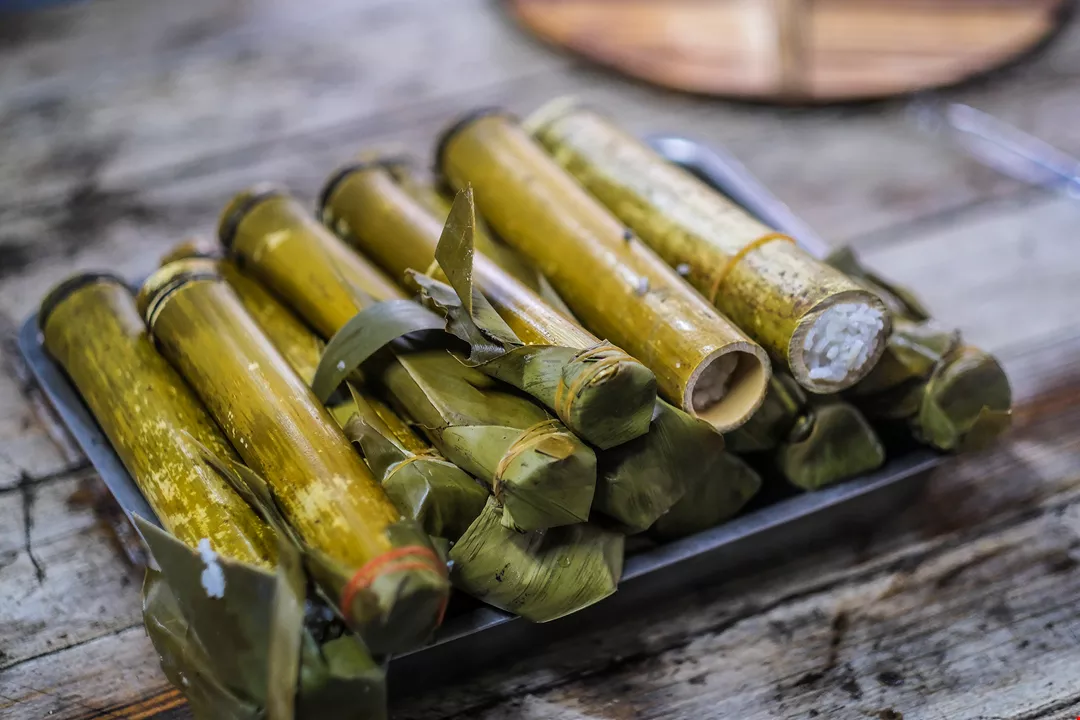
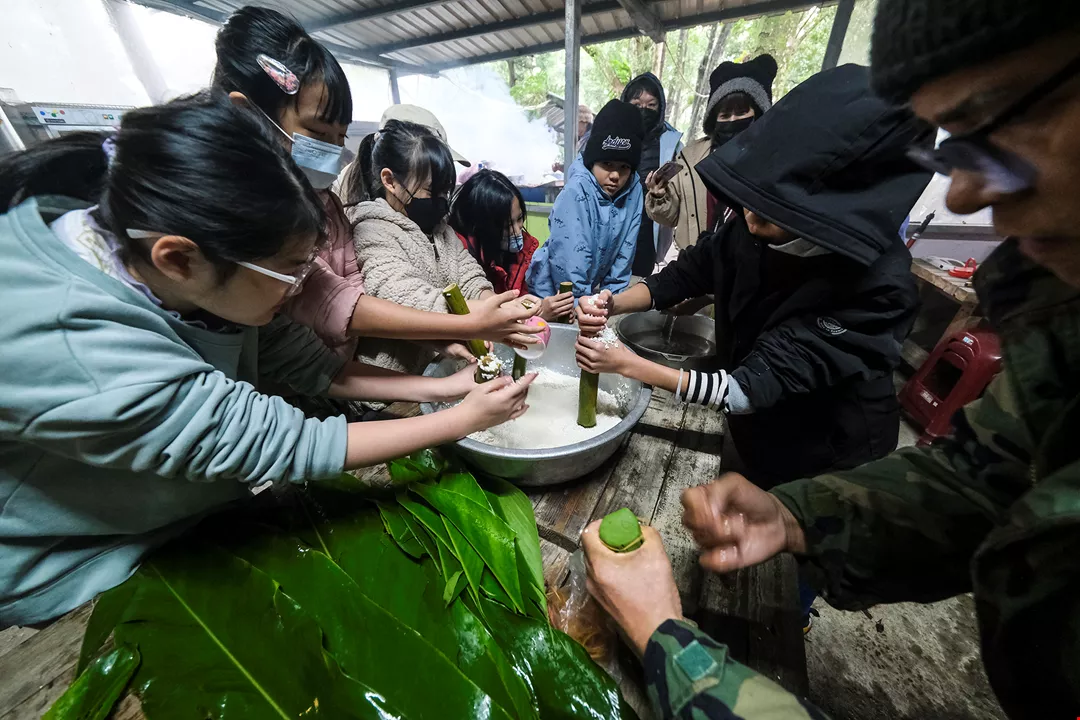
After cutting bamboo by hand, students use the hollow segments to cook rice, which comes out especially fragrant and delicious.

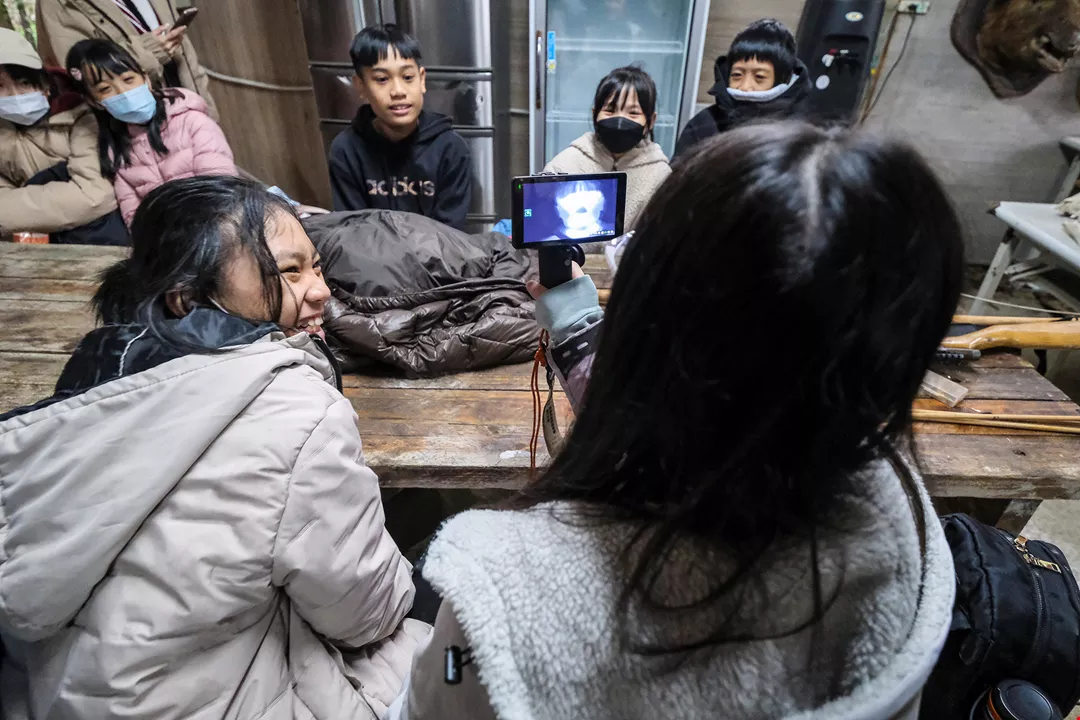
Modern hunters use thermal imaging devices to reduce the possibility of shooting accidents. These kids are really enjoying their hands-on experience with thermal sensing.
Learning in the hills
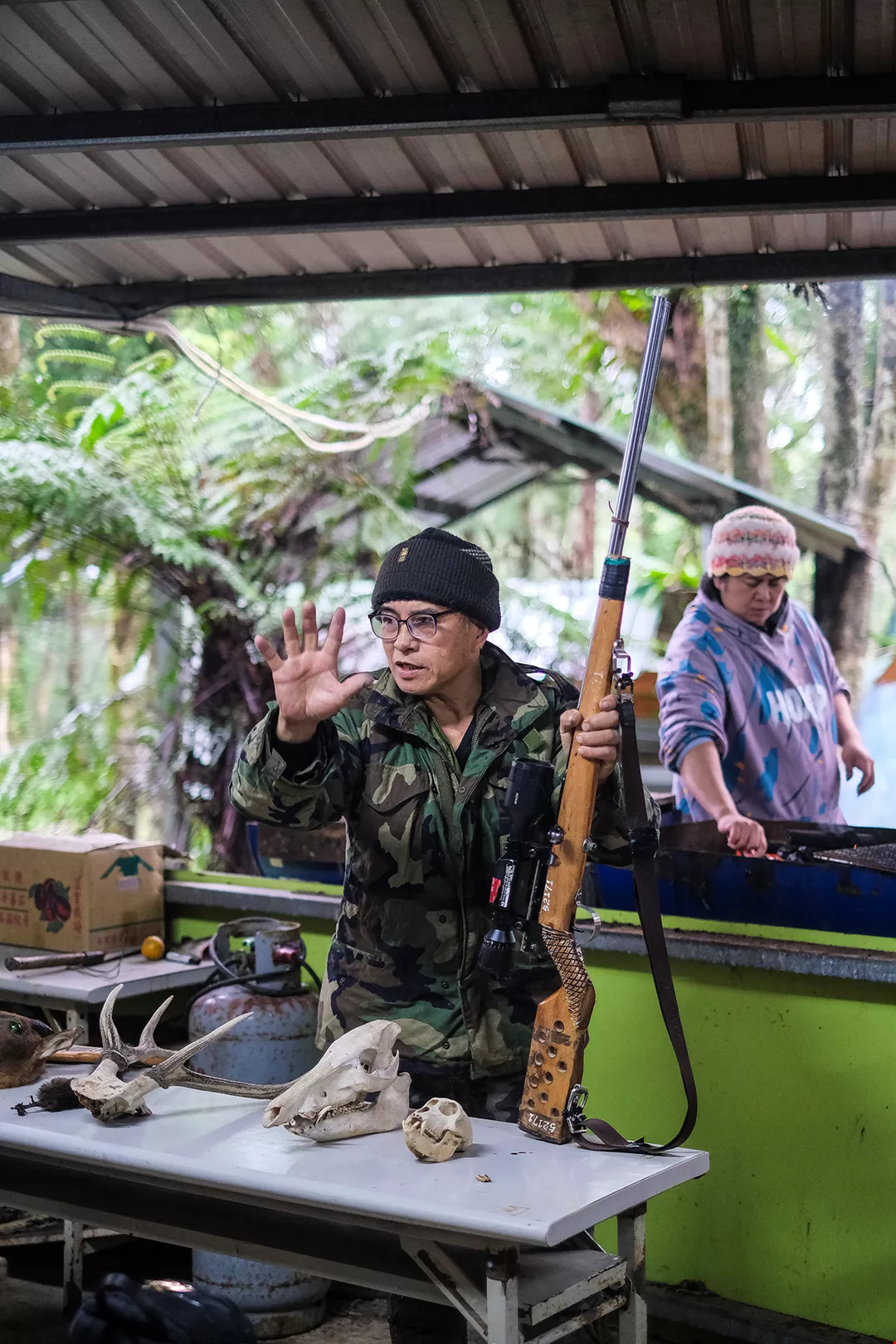
This is the Shamatayal Traditional Campground, located in the mountains of New Taipei City’s Wulai District. It is also a classroom for the Wulai Hunting School of Silvan Oyong, founding chairman of the New Taipei City Indigenous Hunting Association. Camp director Yu Law, a local Atayal Indigenous man, demonstrates the use of a hunting rifle to students as we watch.
Many of Taiwan’s Indigenous peoples share the tradition of not hunting the Formosan black bear. “In the past our elders always said that the Atayal saw the black bear as a protective deity, and that something bad would happen to the family of anyone who caught one,” says Yu Law.
As a hunter, Yu Law enthusiastically shares the secrets of surviving in the mountains. Before us are a number of animal skulls, all caught in this area. Yu Law tells us: The sambar deer was an important source of protein for tribe members back in the day; the boar has razor-sharp tusks, and must never be taken on alone; when patrolling traps, hunters must travel in pairs to look after each other; in the past hunters applied a stupefying drug to their arrows, and after animals were struck they would not fall until the drug took effect, so hunters had to track them in the mountains for up to three days…. The kids listen with relish.

Yu Law, head of the Shamatayal Traditional Campground, is shown here teaching students how to hunt with a rifle. He wants people to understand that hunting is not for fun, but is a sacred and solemn—and also dangerous—activity.

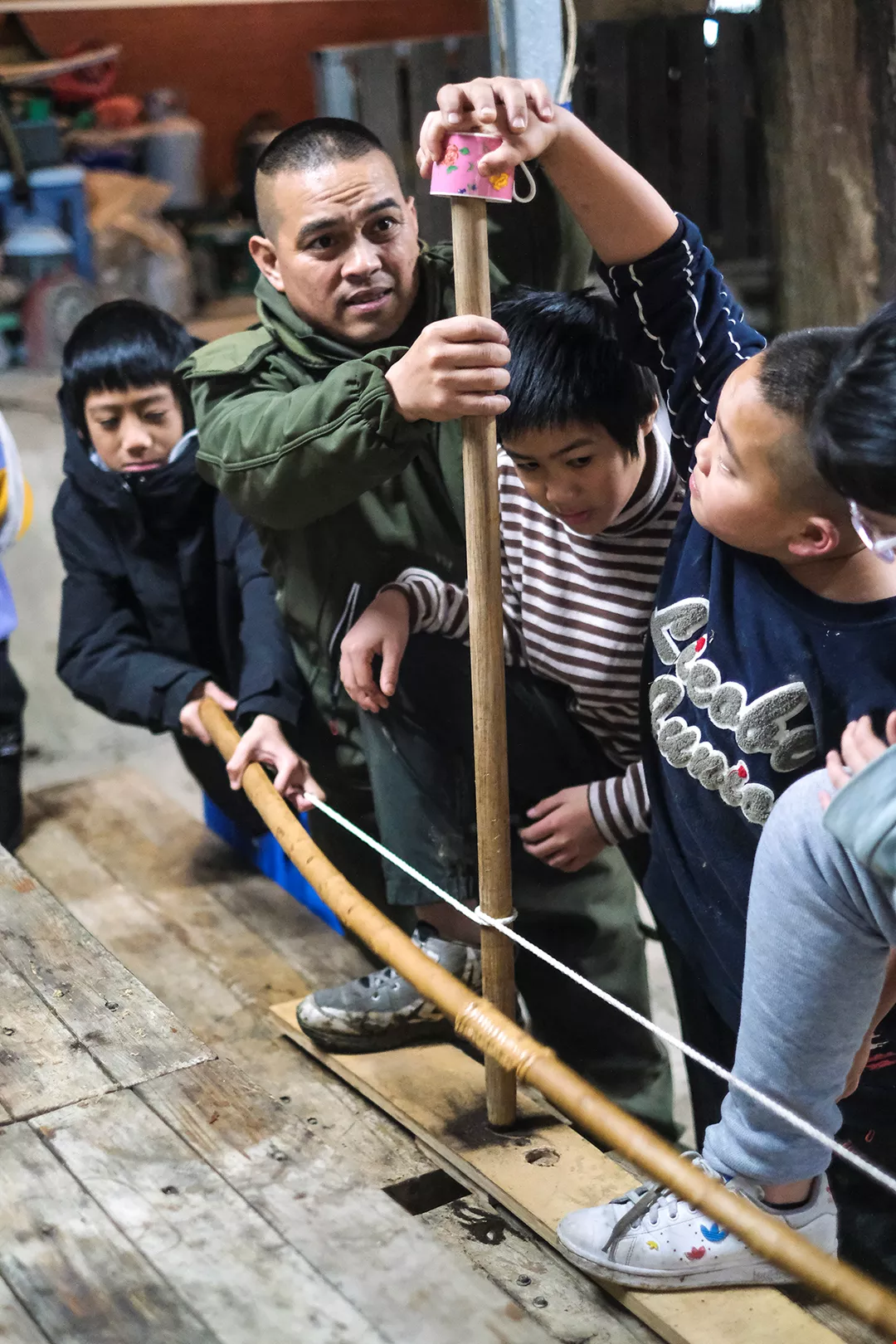
NowKang Unsi teaches children how to make fire with a traditional bow drill. One must work the drill for a long time before the friction produces a small glowing ember. This gives the kids a taste of how difficult it was to start a fire in days gone by.

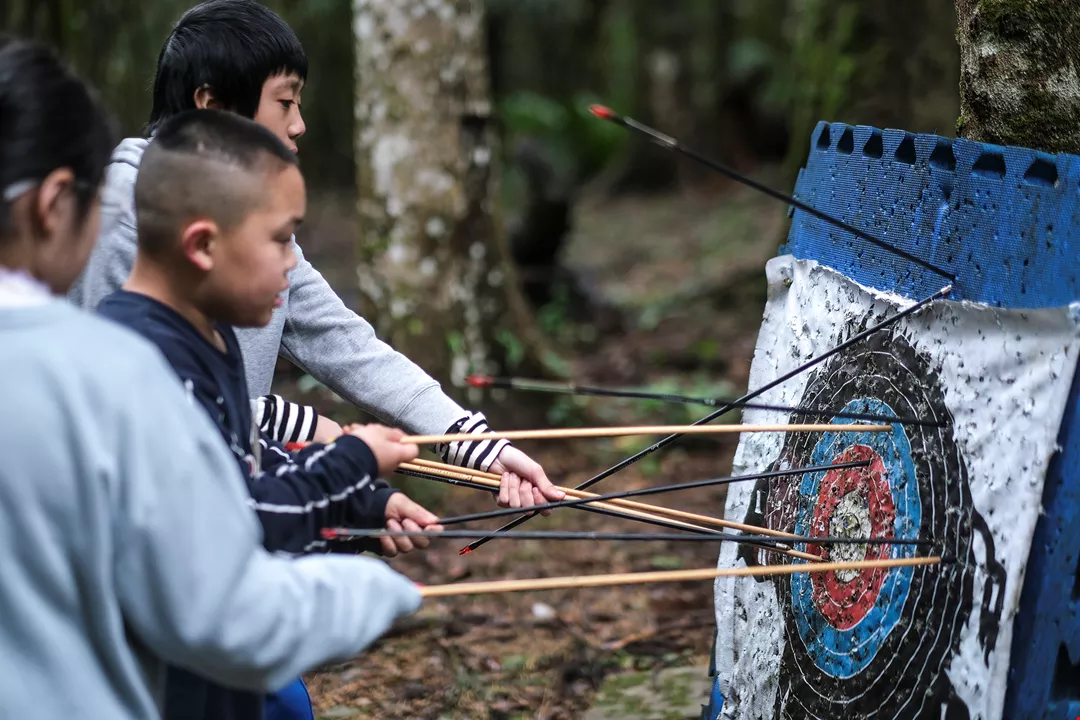
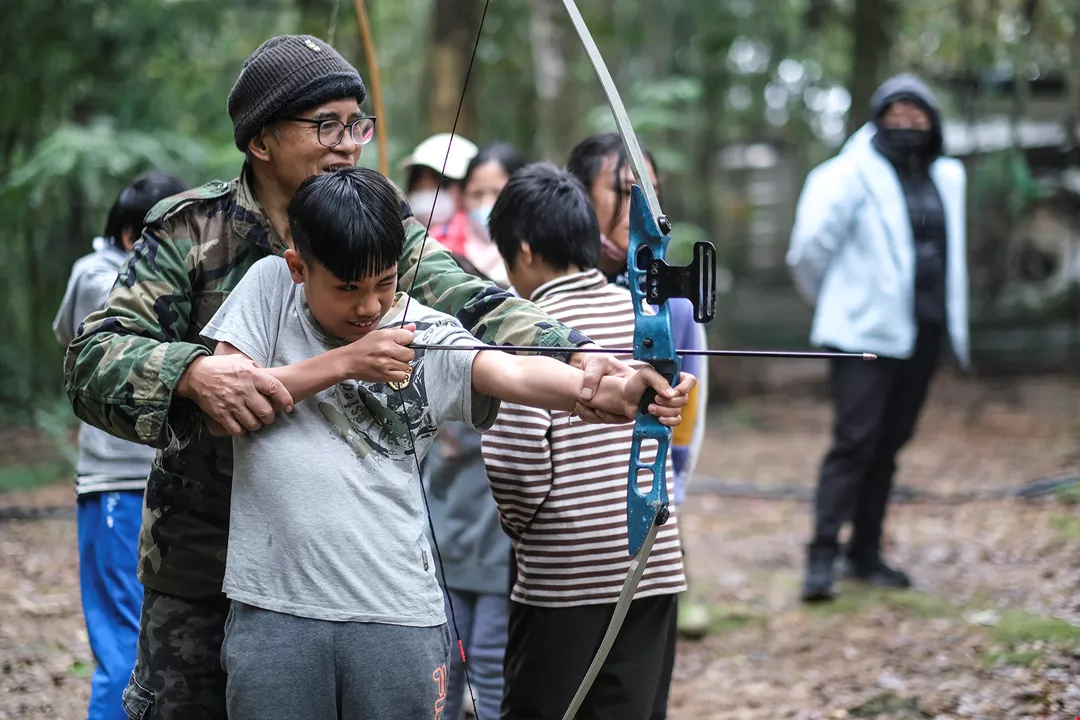
Children focus seriously and intently on learning how to use a bow and arrow.

The heart of the forest
Yu Law shares the fact that the Shamatayal campground is located on the site of a now abandoned Indigenous community that was relocated in the era of Japanese rule (1895‡1945). A nature lover, he works to keep this land left by his ancestors in its primeval state, and the Taiwan blue magpie, Swinhoe’s pheasant, flying squirrel, and Formosan muntjac are frequent visitors. Also, because Wulai lies within a water source protection zone, it has not been highly developed, so many places have kept their original forest ecosystem, providing habitats for hill-country wildlife.
For Indigenous people who have lived here for generations, hunting is not only a means of survival passed down by their ancestors, but also an important part of their culture. Nonetheless, the flourishing tourism industry around Wulai Old Street has given tribe members alternative ways to make a living, and they have gradually left tradition behind. Silvan Oyong founded the Wulai Hunting School because he didn’t want to see young Indigenous people growing up “Aboriginal on the outside” but without inner cultural substance.
Silvan Oyong regards the whole mountain area around Wulai as an instructional zone for his school. In the summer they go river tracing and fishing, while in winter they go hunting in the mountains. He learned from his forebears not to catch animals that are too small or in their breeding seasons. NowKang Unsi, secretary-general of the New Taipei City Indigenous Hunting Association, explains that in the past hunting was for survival, but now it is a means of transmitting culture.
Indigenous hunters obey the strictures of their communities, which amounts to a pledge to respect every living thing in the mountains. Correctly identifying plants in the mountains enables them to make a living, and when hunting animals they express gratitude to the mountain spirits and consume the meat with a sense of appreciation, while also hoping that the creatures’ souls will exist alongside the spirits of their own ancestors. Only by hunting virtuously will they be able to hunt sustainably—this, NowKang Unsi says, is the correct way of the hunter and the proper frame of mind for the mountain forests.
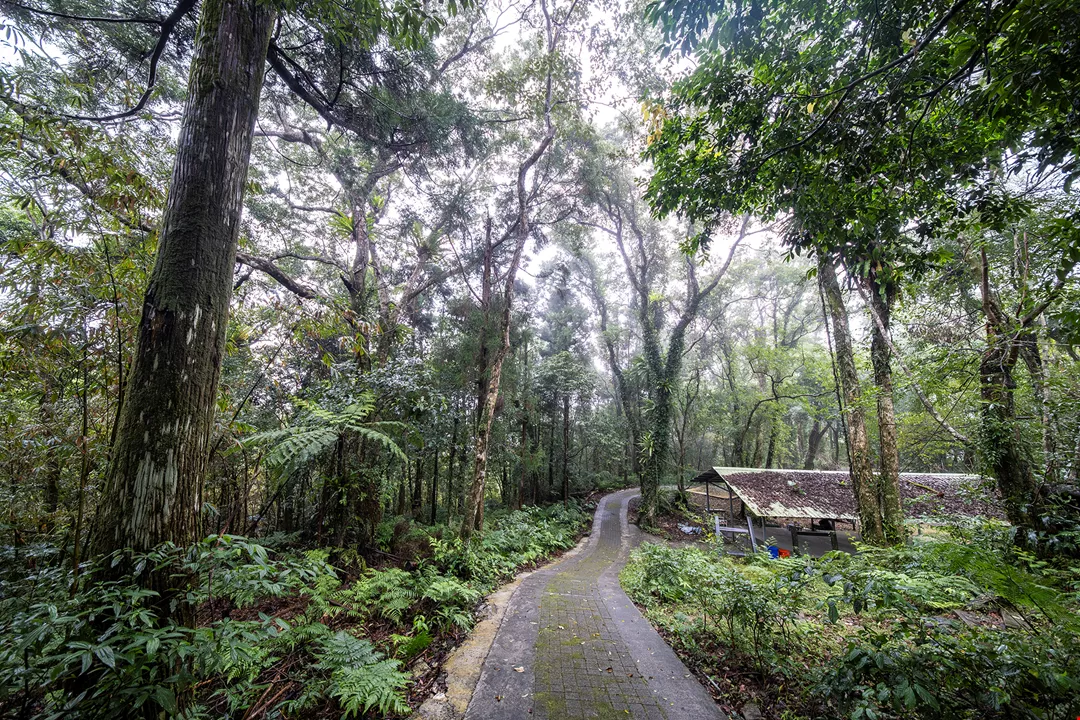
The natural forest environment around the Shamatayal Traditional Campground is well preserved. Many hill-country animals are frequent visitors here.
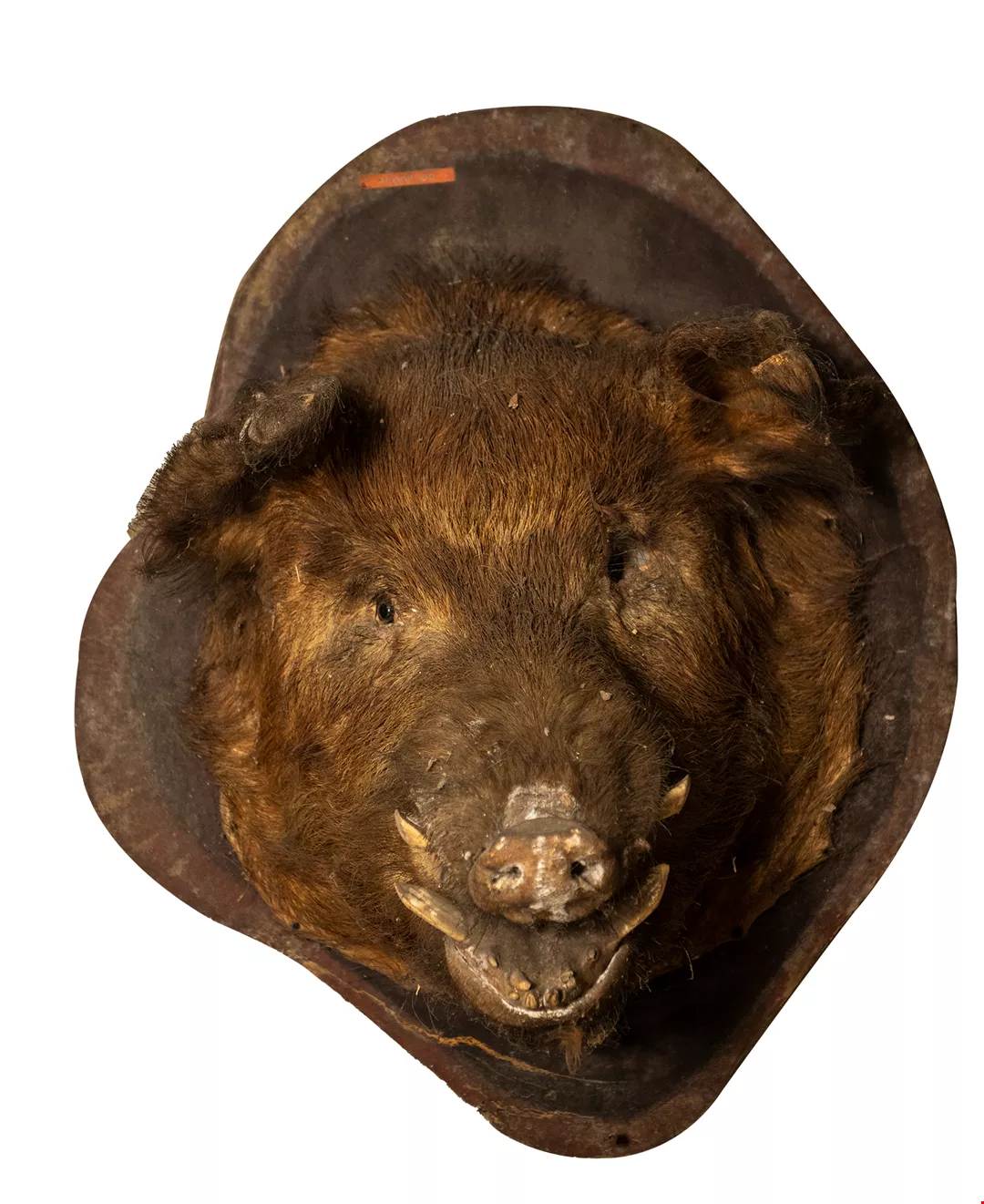
Hunting jargon “Getting the goods”: Yu Law tells us that when hunters hit or catch their prey, they don’t say “I hit it” or “I caught it,” but “I got the goods.”
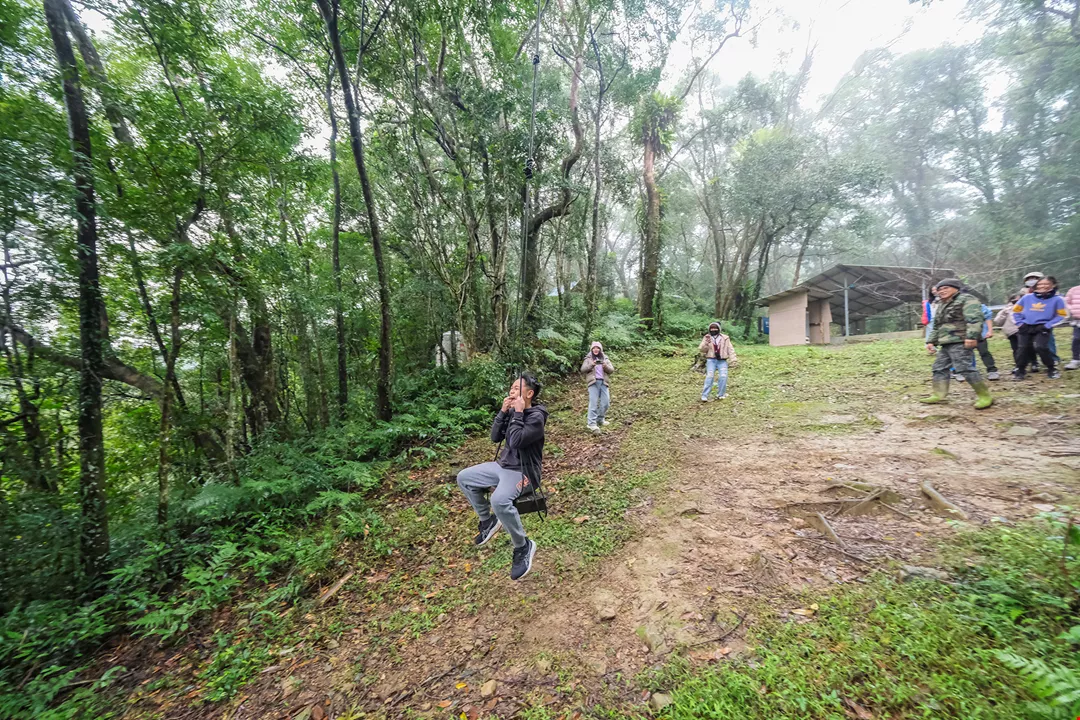

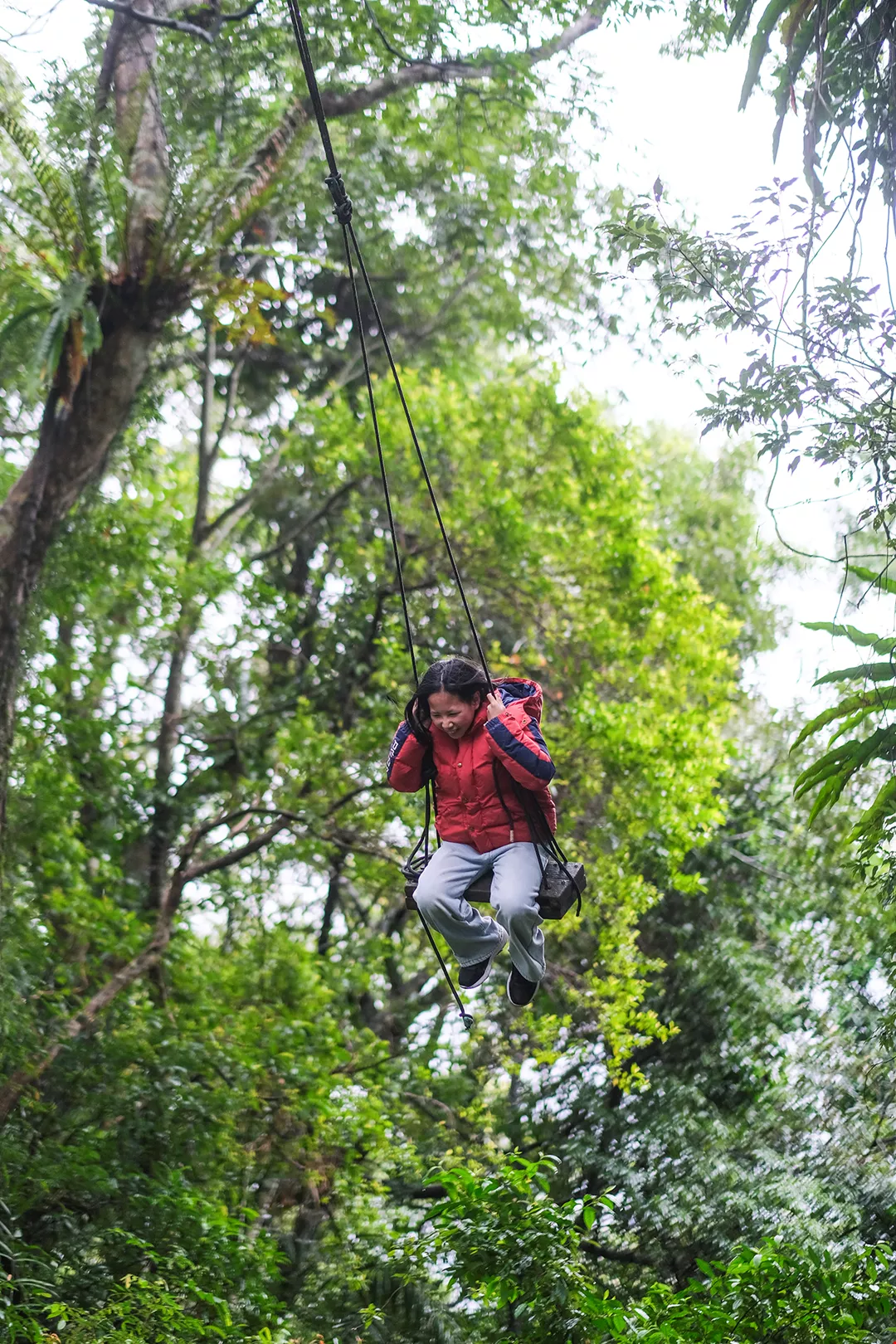
There is a swing at the Shamatayal Traditional Campground from which visitors can admire the beautiful scenery of the valley, helping them forget their troubles.