Everyday People and A Story of True Grit--The Wu Family of Taihsi
Laura Li / photos Hsueh Chi-kuang / tr. by David Mayer
April 2000


They say a rising tide lifts all boats. No one would know more about that than the older generation in Taiwan. The changes of the past five decades have had a deep impact, for example, on the Wu family of Yunlin County. Their main claim to fame is... nothing, actually, and that is precisely why their story typifies the experiences of so many. So lend your attention, dear reader, as we recount the ups and downs of an average family from a quiet little backwater called Taihsi Township.
Wu Tsung-sheng and his older sister have come to meet me at the train station in Touliu, administrative seat of Yunlin County. We pile into a car and head toward their parents' home. Wu Tsung-sheng fills me in on his hometown. "Taihsi is a rather unusual place," says Tsung-sheng, the family's oldest grandson and a doctoral candidate in sociology at Tunghai University in Taichung. "When I read the studies that describe Taiwan as being so prosperous, I have to wonder how their descriptions could be so totally different from what our lives have been. They might as well be talking about a different planet." Probably most people don't realize, adds Tsung-sheng, that there are still places in Taiwan as backward as Taihsi.
To the outsider, however, the place doesn't look backward at all. As Tsung-sheng drives west in a very nice Toyota at a comfortable speed down a broad county highway, his older sister sits in the front passenger seat with cell phone in hand discussing the traffic situation with someone at home. In the meantime, Tsung-sheng's five-year-old nephew clamors from the back seat for his mother to buy him a Pokemon plaything, just like kids the world over are doing these days. When McDonald's stores in Taiwan were swamped last year during a giveaway of Hello Kitty dolls, lots of people thought they might be able to beat the crowds by hitting McDonald's in supposedly untrendy Taihsi, but they found the lines there every bit as long as in more urban locations.
The emperor is far away
The scenery grows increasingly rural as we move west through the townships of Huwei, Tuku, Paochung, and Tungshih. Temples tower over green rice fields. Less than half an hour after leaving the train station we get off the county highway and onto narrow Tungshih East Road. When we reach our destination in rural Taihsi Township, a few dozen buildings of modern ferroconcrete construction line the road, and shops of every description occupy the ground floor of each one.
Wu Tsung-sheng's parents, who are pushing 60 years old, run a local bakery, and they greet us with the wide smiles and warm hospitality so typical of haikou (as the locals are accustomed to calling Taihsi and the surrounding townships near the coast in western Yunlin County). They also speak Taiwanese with an unmistakable haikou accent. To welcome their guest they have ordered a big seafood meal in advance. Tsung-sheng's grandmother, parents, uncles, aunts, cousins, nephews, and nieces have all come in from around haikou for the gathering. The strength of the Wu clan's family ties is plainly evident.
These people go back for generations here. From the destruction of World War II to the mixed joy and grief of the early post-war years, from the barest of rural hamlets to a prosperous little town, this family has seen it all.
84-year-old grandma Wu is not as sharp as she used to be, but she can still rattle off a tale or two. Two indignities suffered back in the 1940s, in particular, remain indelibly etched in her memory. The first occurred in the latter part of World War II when the Japanese tied her hands behind her back and marched her off to do forced labor for over a year, building roads, digging ditches, and carrying a shoulder pole. The second indignity was the onerous taxes that were levied in the early years after Taiwan returned to Chinese rule.
"We had to pay taxes twice a year," says grandma Wu, flashing a mouthful of dental work. "The first time was for water, and the second was for land. It didn't matter whether you even had a crop to harvest or not-you had to pay, or they'd throw you in jail." She explains that one dou (10 liters) of rice back in the 1940s was worth five or six yuan, or about four days' pay for a manual laborer, but the tax on one jia of land (0.97 hectares) was 150 yuan. A lot of people had to borrow money just to pay their taxes.
"It took four days to earn one dou of rice," says grandma Wu. "We couldn't afford to eat it, because we needed it to pay our taxes." Although the Kuomintang government eventually carried out land reform to provide relief for poor farmers, the Wu family never shared in the benefits. They were as poor as their neighbors, to be sure, but they owned land and were thus classified as small landowners, which by definition meant that they neither had any extra land to rent out nor did they rent from others. While many of their neighbors received land as a result of the reforms, the Wu family got nothing.
Grandma Wu was close to 30 years old when the Kuomintang recovered Taiwan from Japan, but the event meant little to her, for she had never received any schooling. All she remembers is that when the war ended, Taiwan was turned over to "them." With a grin, grandma Wu throws up her hands in a gesture of helplessness and quips, "When the colonial government spoke, I didn't understand their Japanese. When the Kuomintang speaks, I don't understand their Mandarin either."
"There's no difference between the Japanese government and the Kuomintang," says Grandma Wu. "If something important comes up, they send a local official out to make an announcement and explain what it's all about." Wu Tsung-sheng adds, "They're totally outside the loop here. You of course know the phrase, 'Heaven is high and the emperor is far away.' Well, it was people like my grandmother who coined it."
Grandma Wu was adopted into the Wu family at age ten. Within half a year both of her adoptive parents died, and at age 11 she slipped and fell in the sugar cane fields, poking her left eye out. Orphaned and blind in one eye, a hard life lay in store for her, but she made the best of a bad situation. With no male siblings to carry on the family line, at age 25 she managed to find a husband who was willing to let his first male child take the Wu surname. The children came rapidly, and there was never any money to spare.
But it is clear that she does live reasonably well now. When did survival cease to be such a struggle? Grandma Wu remembers quite clearly when the turning point came. It was in the early 1980s, when her oldest grandchild was already a teenager, that business gradually started going better for her three sons. The three brothers got together and decided that they should each give her NT$2,000 every month. For the first time in her life, she was able to relax a bit, then five years ago the government started providing a monthly pension of NT$3,000. This was enough to cover meals, and her life improved even more.
Grandma Wu now lives together with several other old folks very near the coast in the old traditional farmhouse where she grew up. Her main worry these days is her granddaughter in Taipei, who is in her 30s and still unmarried. "Her father got married when he was 22. How can a girl be putting things off?"
13-year-old construction worker
A lot of hard work has gone into the comfortable life Grandma Wu enjoys today. Her eldest son Wu Chien-lo recounts that after he graduated from sixth grade in 1954 his family was too poor to let him go any further in school, so at age 13 he took off with an older boy on the slow train for Taipei.
Without pausing to take in the sights of the big city, Chien-lo went straight to work at a construction site, where he carried a shoulder pole and mixed cement. Buildings were going up everywhere in Taipei in the mid-1950s, and the city was bursting with opportunities. But, says Chien-lo, "I only had a grade-school education. I didn't have what it took to think about a career in Taipei. I just wanted to go back and help my family work the fields." After two years in Taipei he went back home just as the area was getting electric power for the first time. The bright lights at night got some people so excited at first that they couldn't get to sleep.
Taiwan back then was one of the world s biggest producers of sugar cane, but the harvest was extremely difficult work, as Chien-lo is painfully aware. Once he came very close to cutting a finger clean off with a sickle, but he just slapped some cement mix (commonly regarded as a good disinfectant) on the wound and worked on through the pain.
United we stand
Wu Chien-lo joined the army at age 20, and during his stint he made friends with someone who had been making a living as a baker. Chien-lo began to realize that selling his manual labor was not a viable long-term option. He decided to open a bakery. After receiving his discharge he borrowed NT$12,000 from his father, hired a baker, and opened up a store. He himself rode around on a motorcycle all day selling beverages and baked goods. His capital ran out before he expected, and he had to ask for a second loan from his father-in-law to get his business off the ground.
A few years later his younger brother Tsai Jui-ting (as the second son, he was given his father's surname) got married and followed in Wu Chien-lo's footsteps by selling baked goods and beverages. To avoid competing with his brother, Jui-ting opened up his store over ten kilometers north in Mailiao Township. Jui-ting, who in his youth always wore hand-me-downs and crude garments fashioned from throwaway rice sacks and the like, never put on his own set of store-bought clothes until just prior to joining the army. Who would have guessed he would one day become the biggest beverage wholesaler in the Mailiao area?
Having watched his older brothers succeed with their bakery businesses, the youngest brother Tsai Kuo-lung took up the same business in the neighboring township of Szuhu after finishing his military service. The three brothers have worked together over the years to build up their businesses, and an efficient division of labor has evolved among them. Kuo-lung today is in charge of doing all the baking, and he acts as supplier for Wu Chien-lo and Tsai Jui-ting.
"In a rural area like this," says Wu Chien-lo, "family members work together, and everybody shares equally in the success." Not surprisingly, of course, he has seen quarrels arise in other families over who does the most work and who goofs off, who's getting rich and who's not, but in the Wu family, at least, harmony has been the key to success. All three brothers are hard-working and frugal. Each one married through a matchmaker, and none of them ever had an album of wedding photos made. Asks Tsai Kuo-lung, "Why should we work so hard and pinch pennies all the time just to spend our money on something like that?" All three brothers drive Toyota Camrys, purchased from the same dealer.
One can gradually save up money by running a small business, to be sure, but Wu Chien-lo states frankly, "Land is where the real money is. It's hard to get by just running a business." Because his beverage wholesaling business requires a lot of space for large warehouses, he borrowed money from friends for many years to buy land. Little did he know when he first started that what he bought 30 years ago would go up in price from NT$3,000 per ping (approximately 3.3 square meters) to over NT$100,000 today. When you throw in the family farmland, which has not yet been divided among the brothers, the Wu clan is worth over NT$100 million.
Says Wu Chien-lo, "Who figured prices would go up like they have? We didn't buy the land as an investment. We're not greedy enough to even think in those terms. We just bought it because we needed it for our business."
Sacrificing for the kids
Although they may be loath to spend frivolously on themselves, Wu Chien-lo and his wife consider money no object when it comes to their children's education.
"The reason we worked so hard around the clock for so many years was because we were afraid that we might not be able to do right by our kids. We were worried that they might fall in with the wrong crowd after they got into junior high," says Mrs. Wu, adding that Taihsi is well known for the fact that it has "lots of dust in the air, lots of yams, and lots of gangsters." To keep their kids out of trouble they sent all four of them off to a well-known Catholic boarding school in Touliu as soon as they reached junior high. Each child spent six years there (except for the second daughter, who only attended for three years), and every weekend the two parents would pack up lots of goodies and take the bus to see their kids. It was a difficult trip, and required several transfers.
The total cost of one year's tuition plus room and board at the private school came to more than NT$150,000 per child. With four kids at the school, the financial burden was substantial, especially considering the fact that they were spending these sums back in the mid-1980s. The struggle to pay tuition took every ounce of energy they had.
"That's the responsibility you bear as a parent. You want to see your children succeed," says Wu Chien-lo. Luckily, all four of his children were good students and had no problem passing their university entrance examinations. In their little hometown, Wu Tsung-sheng and his siblings are noted for their excellent academic achievements. The result has been a bit comical in at least one respect, for the eldest daughter was so strictly observant of the prohibition against speaking Taiwanese in school (a rule formerly enforced throughout Taiwan) that she doesn't even speak Taiwanese very well any more. After graduating from National Taiwan Normal University in Taipei, she came back to Yunlin County several years ago to teach senior high school in Touliu, and now she makes people laugh every time she opens her mouth to speak her odd brand of Taiwanese. It makes for an amusing contrast with her grandmother, who doesn't speak Mandarin well at all.
In the view of Wu Tsung-sheng, the heavy emphasis that rural parents put on education doesn't have so much to do with the idea of getting ahead, but stems mainly from a deep respect for learning. His parents are not interested in his specialty, nor do they know anything about it, but they have never objected to his chosen path, nor did they say a word when his younger brother switched his major from business management to sociology. This long leash is all the more impressive in view of the fact that there is no chance that either of these sociology majors will ever be able to make a living near home (because there are no major universities or research institutions in Yunlin County).
"Thinking back on it, I realize that our parents began encouraging us very early to aim high and not feel like we had to stay near home. We all started boarding school at age twelve and then went on to university in Taipei. As we got older, we went back home less and less." Their studies ended up weakening their ties to their hometown, notes Tsung-sheng wistfully.
Their parents, in the meantime, are doing everything they can to make it easier for the children to come back home if necessary. For starters, they've built a multi-story house with a separate floor set aside for each of the children. Chien-lo explains, "Our two boys haven't started working or gotten married yet. I hope they'll be able to make a go of it off in some city, but if it doesn't work out they can always come back and tend the store." It would probably make better business sense, in fact, to close the store. People have been moving away from the haikou area for many years, and the local economy is in the doldrums. What's more, it will only get more and more difficult to make money running an old-fashioned mom and pop store now that a new convenience store has opened up across the street. Even so, the couple isn't yet ready to call it quits. It is for their children's sake that they stay in business.
Living next to heavy industry
Less than ten kilometers away in Mailiao stands the Formosa Plastic Group's sixth naphtha cracker complex. Tsai Jui-ting points out that even though Formosa Plastics uses a lot of foreign laborers from southeast Asia, the complex has also hired a lot of local people, and since the plant went into operation he doesn't seem to see so many young people hanging out in the area's small towns with nothing to do. Even though the seawall built to protect the plant has blocked people's view of the sea, and in spite of worries about the possibility of mercury pollution in the soil, the extra employment has won the plant a lot of local support.
Says Wu Chien-lo, "I always say, if you've got work, you've got food on the table. Don't go around complaining about the pay being too low. It used to take four days to earn one dou of rice. Now you can earn over ten dou in just one day. If that's not enough for you, then you might as well go starve to death."
Wu Chien-lo and his younger brothers don't expect a lot from the government. At most, they express nostalgia for the days when former general Hau Pei-tsun served as premier, because "they arrested a lot of criminals when he was in charge." The one thing that really irks them now is national health insurance.
"When you run your own business like we do," says youngest brother Tsai Kuo-lung, "a family of five like ours has to pay over NT$60,000 per year in premiums for national health insurance. That's a lot more expensive than labor insurance or farmer's insurance. What's more, he adds, there are no major hospitals in Yunlin County, so if you get sick you've got to go all the way to the next county. Not only that, says Tsai, the deductible for medicine was jacked up "ridiculously high" last year, and everyone is complaining bitterly about it.
Hoping for more democracy
When the subject turns to politics and Taiwan independence, the normally outspoken Wu Chien-lo suddenly grows cautious. "It doesn't matter who wins the election. They're all good candidates. We'll just have to wait and see."
Wu Tsung-sheng understands the reasons for his father's reticence quite well. Yunlin County politics are riddled with factionalism and the influence of organized crime, and you can find ample proof here that all politics are indeed local. With over 40 voters in the extended family, the Wu clan is a plum of a voting block. All the local factions eagerly woo Chien-lo, who has in the past gotten deeply involved in politics and taken to the streets in support of certain candidates. Over the years, however, he has learned that it is best to avoid offending people, and he now plays his cards close to the vest.
Wu Tsung-sheng explains that local politics in the haikou area are linked only tenuously to what goes on in distant Taipei, and the concept of democracy hasn't made much headway here. The locals are most concerned about what public figure "gives people face" by showing up at weddings and funerals, and who has close personal ties with whom. What is more, vote buying is accepted with breezy indifference, as if it were the normal thing to do. However, says Tsung-sheng, local politics probably won't be so dirty once the younger generation becomes more influential.
Fifty years of struggle have brought prosperity to our island. Will it take another fifty years to establish a mature democracy? As Tsung-sheng drives down the road, holding forth on politics and society, I can't help feeling all of a sudden that there is every reason to be very confident about the future of Taiwan.
p.99
84-year-old grandma Wu puts an arm around her great-grandson and great-granddaughter. From right to left are her sons Wu Chien-lo (and his wife), Tsai Jui-ting, and Tsai Kuo-lung. Throw in the grandchildren and you've got four generations gathered at grandma Wu's traditional farmhouse right near the seacoast in Taihsi Township.
p.100
The Wu family's bakery business has been a steady money earner over the years and has provided a comfortable living. Wu Tsung-sheng and his parents are shown here in front of Wu Chien-lo's shop.
p.101
4-H Clubs were once very popular in Taiwan. The girl at second from the right in the front is today the wife of Wu Chien-lo. (courtesy of Wu Chien-lo)
p.102
The haikou area is known for lots of sandy wind blowing in from the seashore, and for the big yam crop grown here. The area is also a big producer of oysters. The empty shells piled here along the roadside fill the air with their briny aroma.
p.103
Not a whole lot of traffic moves along the streets of Taihsi Township. The slow-paced small town atmosphere lingers in the mind long after a visit to Taihsi has ended.
p.104
Eldest grandson Wu Tsung-sheng is working on a doctorate in sociology. This visit has spurred grandma Wu to tell lots of stories he's never heard before, and he takes a close interest in her tales.
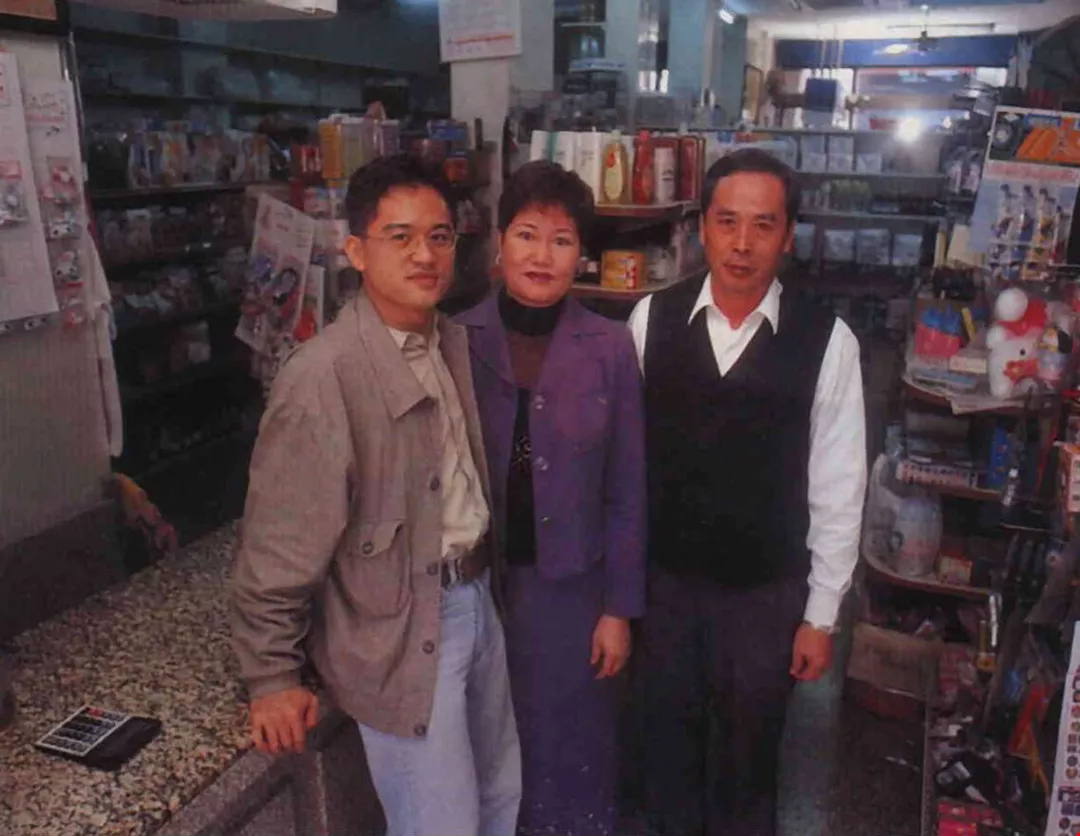
The Wu family's bakery business has been a steady money earner over the years and has provided a comfortable living. Wu Tsung-sheng and his parents are shown here in front of Wu Chien-lo's shop.
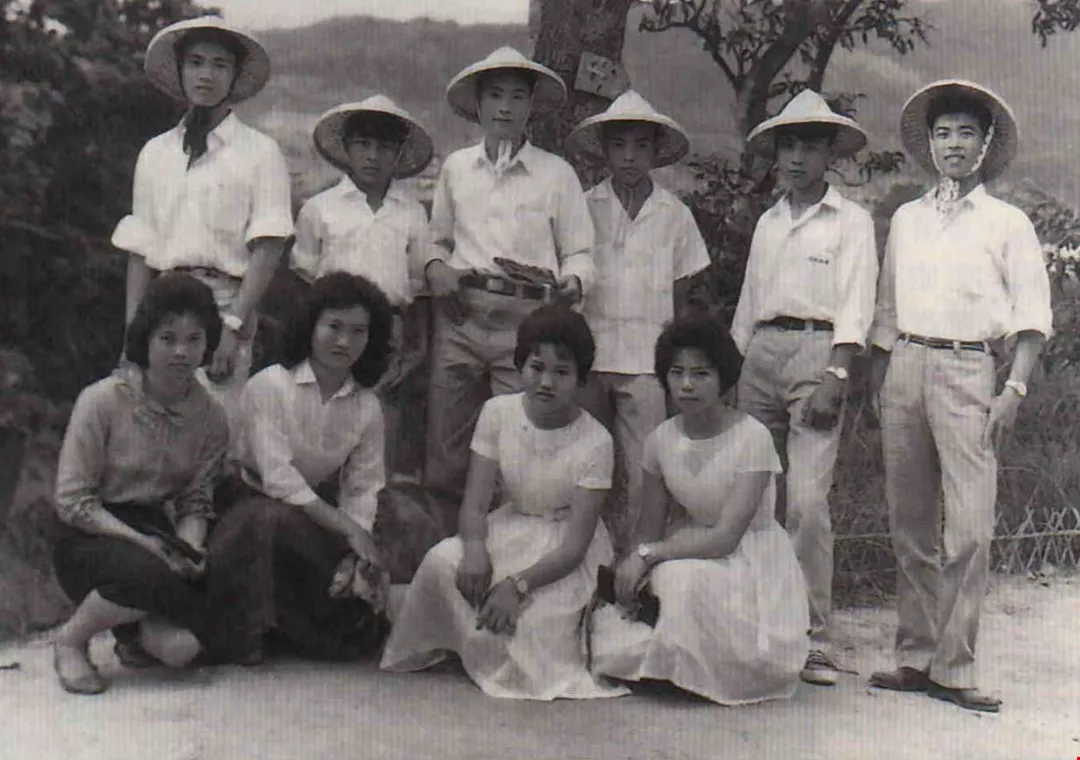
4-H Clubs were once very popular in Taiwan. The girl at second from the right in the front is today the wife of Wu Chien-lo. (courtesy of Wu Chien-lo)
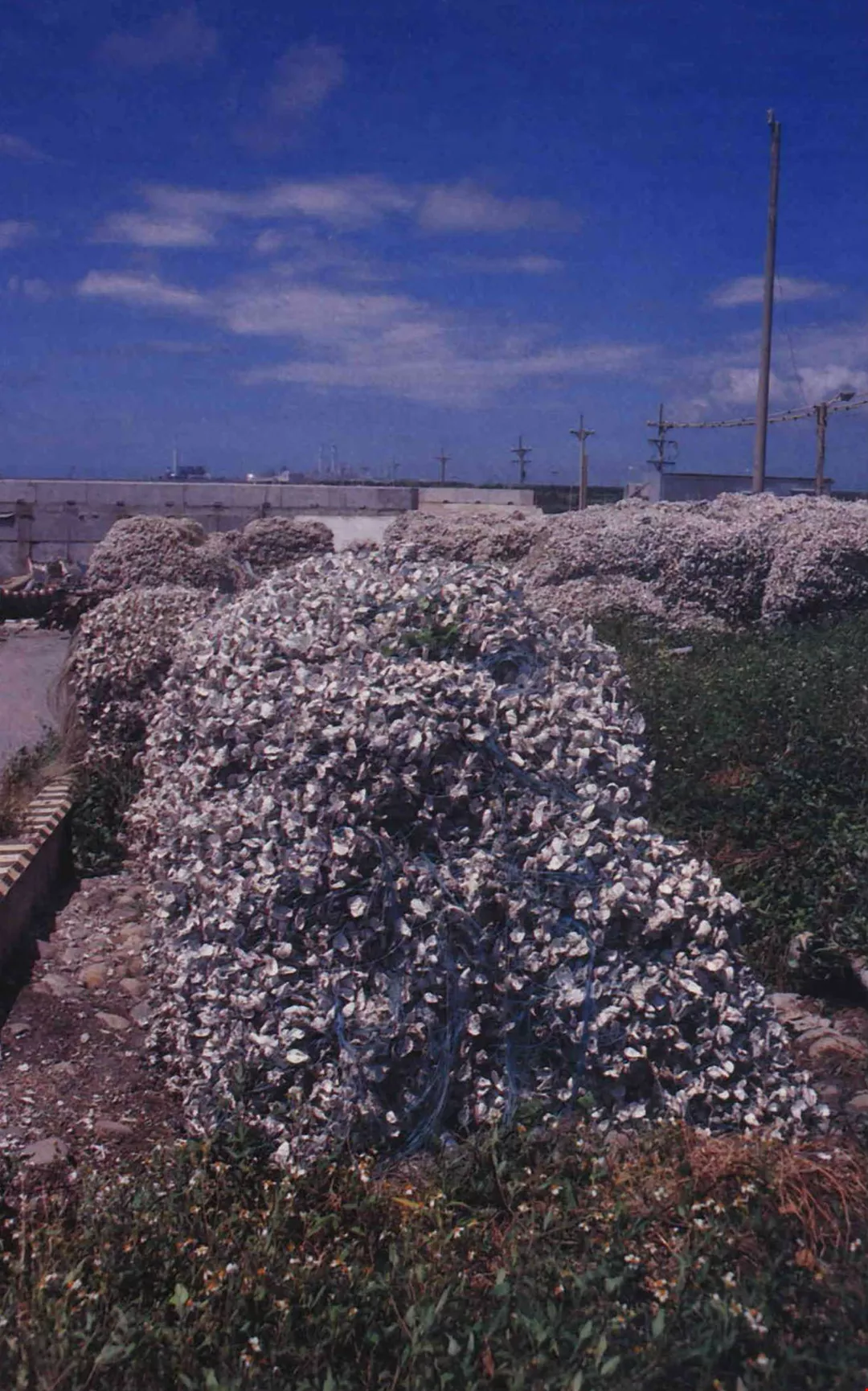
The haikou area is known for lots of sandy wind blowing in from the seashore, and for the big yam crop grown here. The area is also a big producer of oysters. The empty shells piled here along the roadside fill the air with their briny aroma.
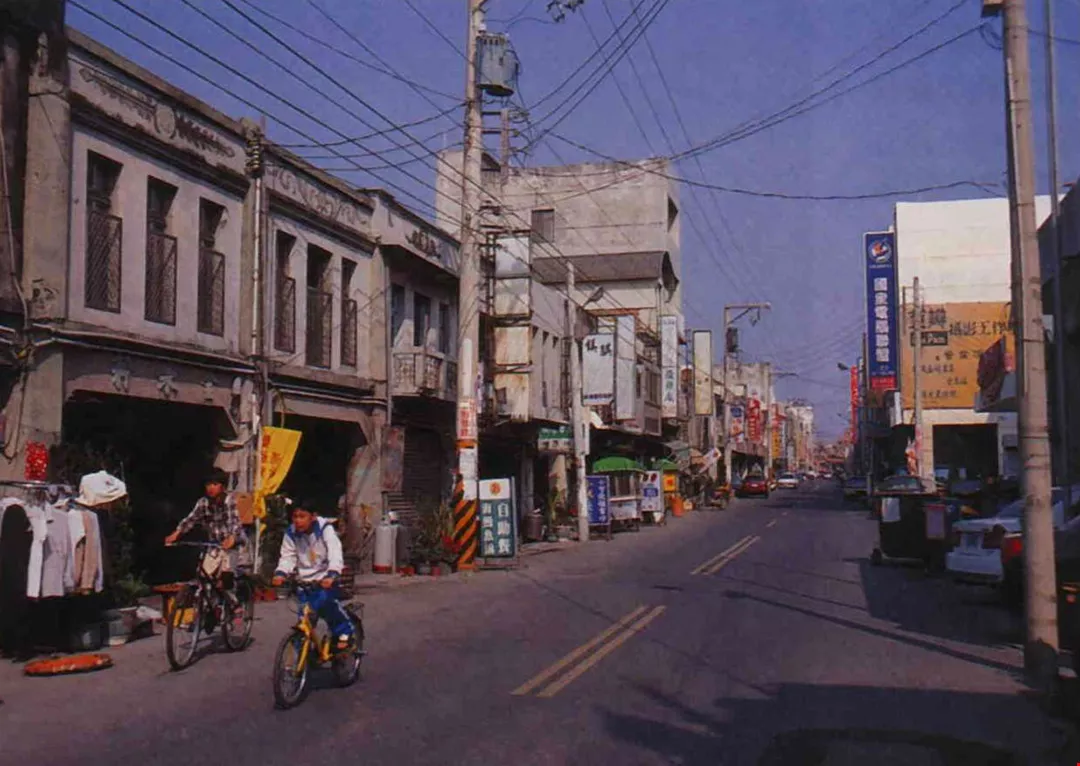
Not a whole lot of traffic moves along the streets of Taihsi Township. The slow-paced small town atmosphere lingers in the mind long after a visit to Taihsi has ended.
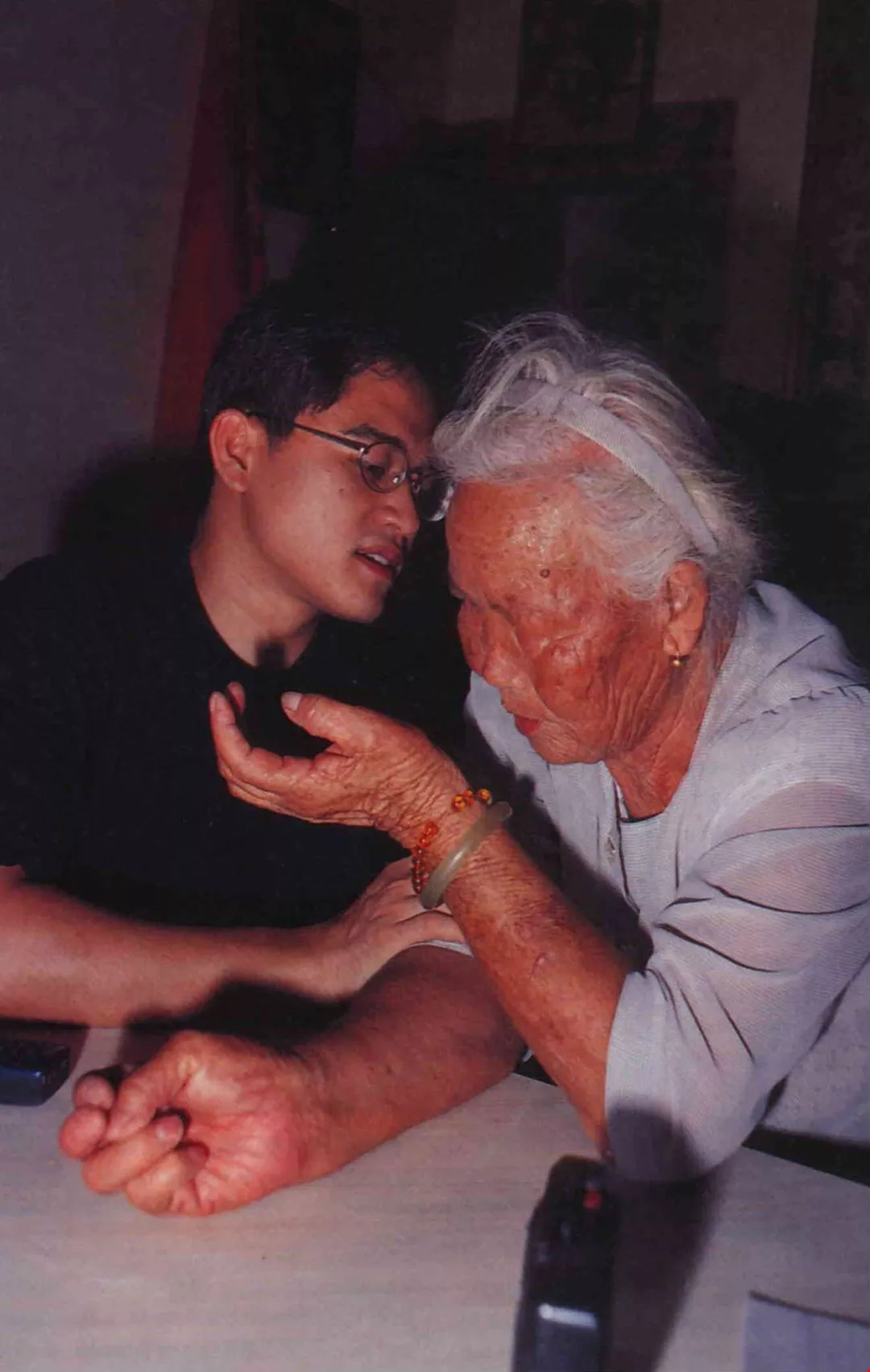
Eldest grandson Wu Tsung-sheng is working on a doctorate in sociology. This visit has spurred grandma Wu to tell lots of stories he's never heard before, and he takes a close interest in her tales.


