A Mountain Town Reborn
The Golden Romance of Jiufen
Chen Chun-fang / photos by Kent Chuang / tr. by Jonathan Barnard
October 2025


Why has Jiufen, formerly a prosperous gold-mining town that was later nearly abandoned, continued to attract so many tourists over recent decades? Is it the crowds of people brushing shoulders as they pass beneath the red lanterns that line its stepped streets? Or is it the poignant mood captured in Hou Hsiao-hsien’s film A City of Sadness? Or perhaps the sense of tranquility that comes from gazing at fishing-boat lights shimmering on the sea at night? The beauty of Jiufen is ever-changing, and if you ask a hundred people, you’ll hear a hundred answers.
Unlike many old quarters of Taiwanese towns that were carefully planned and laid out in straight lines, Jiufen’s developed naturally. Houses were built willy-nilly on mountain slopes, leaving streets that twist and turn as they wind up and down, and shops that vary in shape and size. It gives the town a free-spirited charm.
Climbing the winding stone steps of Shuqi Road and turning right onto Jishan Street, you’ll come upon the Jioufen Teahouse in a century-old house. Inside, you can experience an authentic Taiwanese tea ceremony or join a tour to learn about the building’s history.
Tea in an old house
Amid its stone walls, wooden windows, antique furniture, and art-adorned walls, the fragrance of tea fills the air and time seems to slow down. It’s not uncommon to see foreign visitors having a cuppa as they enjoy the cultural ambiance of the Orient.
The teahouse’s founder, Hung Chih-sheng, explains that Jiufen experienced a glorious gold-mining era during the Japanese colonial period. The town once had a population of 30–40,000, and this house was the residence and headquarters of Weng Shanying, director of the Taiyang Mining Company’s Ruifang Office.
An important local leader, Weng oversaw thousands of miners. Bustling Jishan Street, lined with shops of all kinds, lay just outside. But when the mining industry collapsed and Jishan Street went into decline, Weng’s former residence was abandoned. It had fallen into ruin by the time Hung bought it and gave it a new lease on life.
Inside the Jioufen Teahouse, one can see the tracks of history, whether in its shrine hall or in the mineral paint still visible on the Fuzhou cedar plank walls. Fond of collecting antiques, Hung furnished the space with vintage pieces, such as an old dressing table and a traditional eight-legged bed. These have only added to its nostalgic charms.
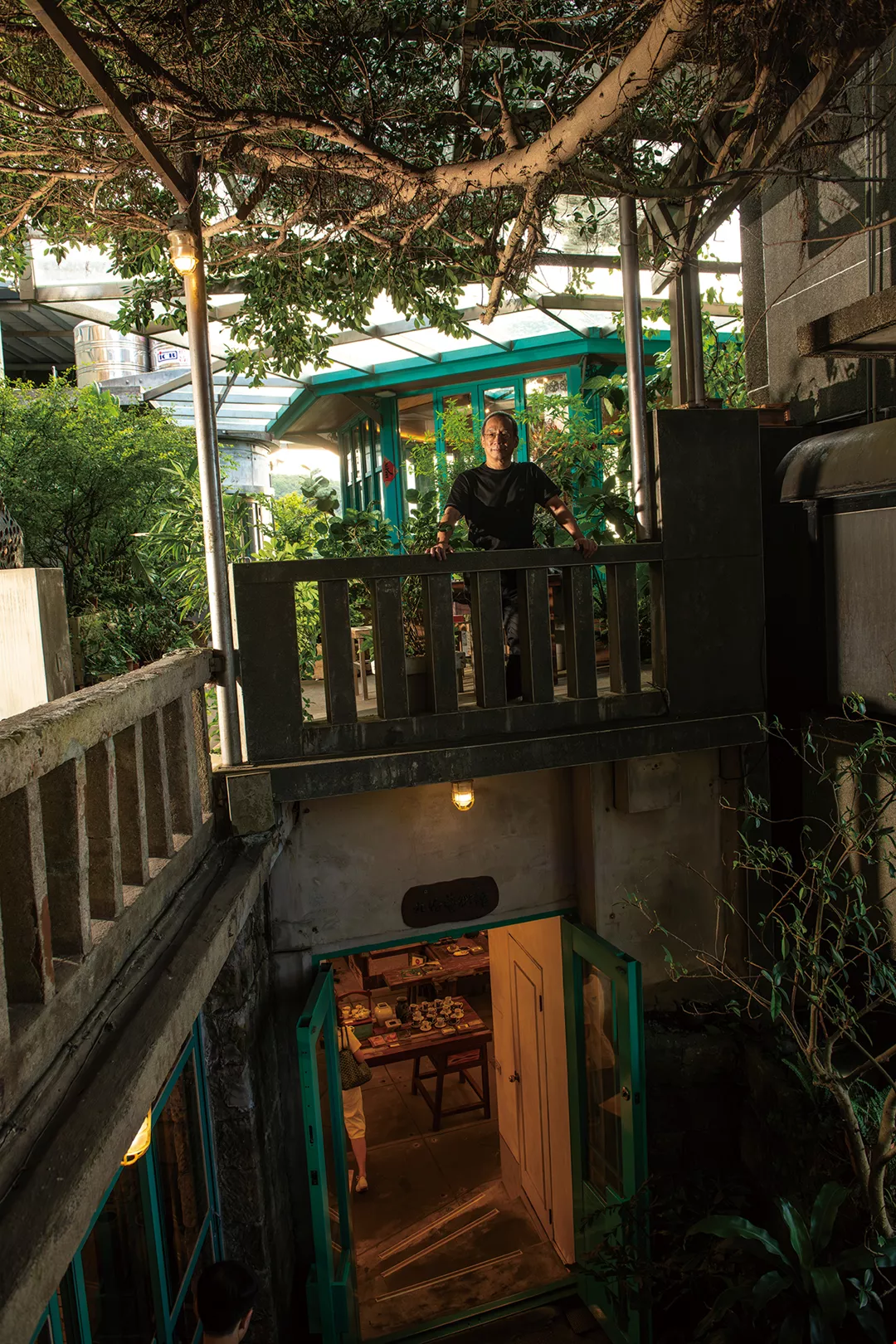
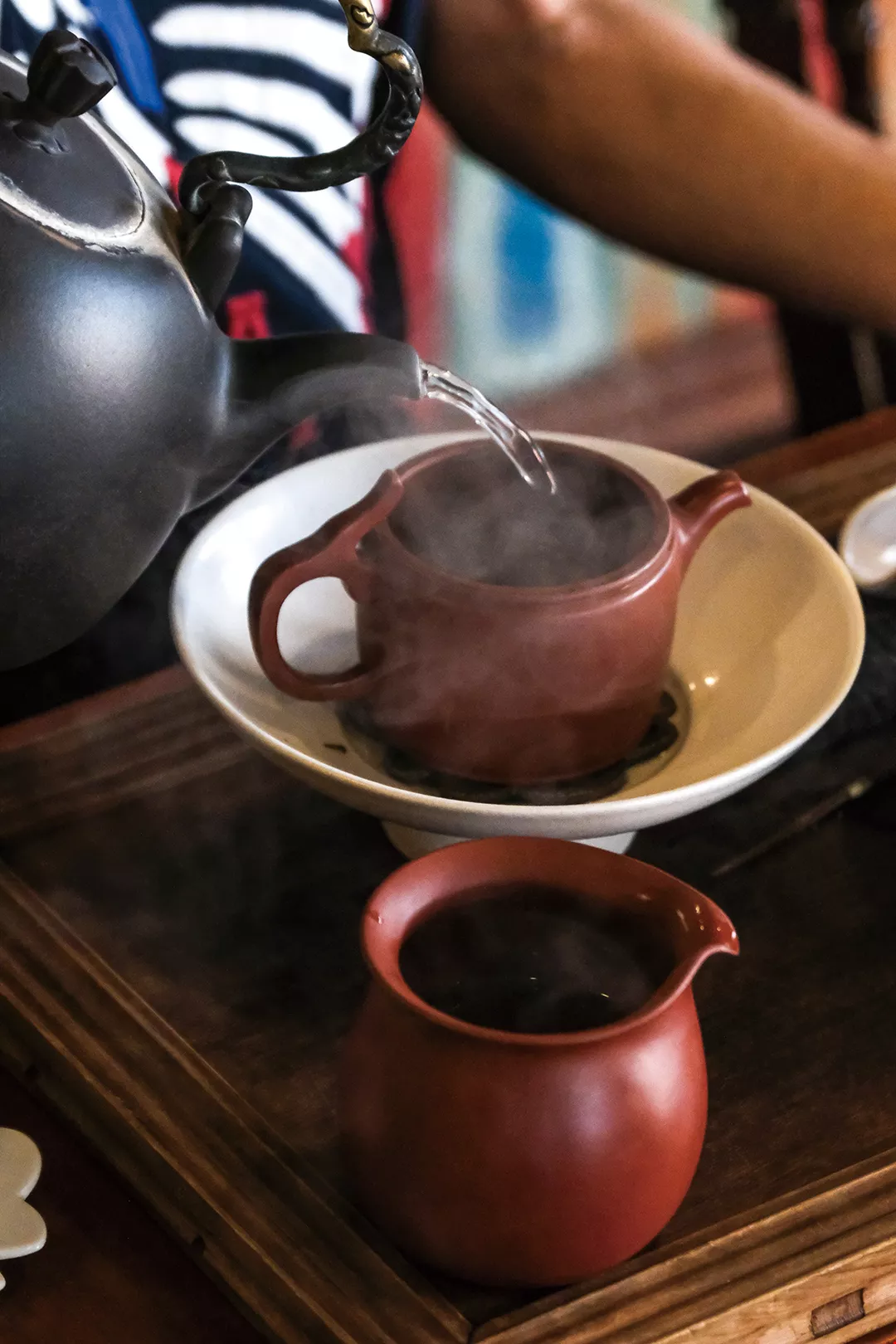
Hung Chih-sheng felt that Jiufen, with its mining history and scenic vistas, possessed great charm, so he opened a teahouse, inviting everyone to come and enjoy it together.
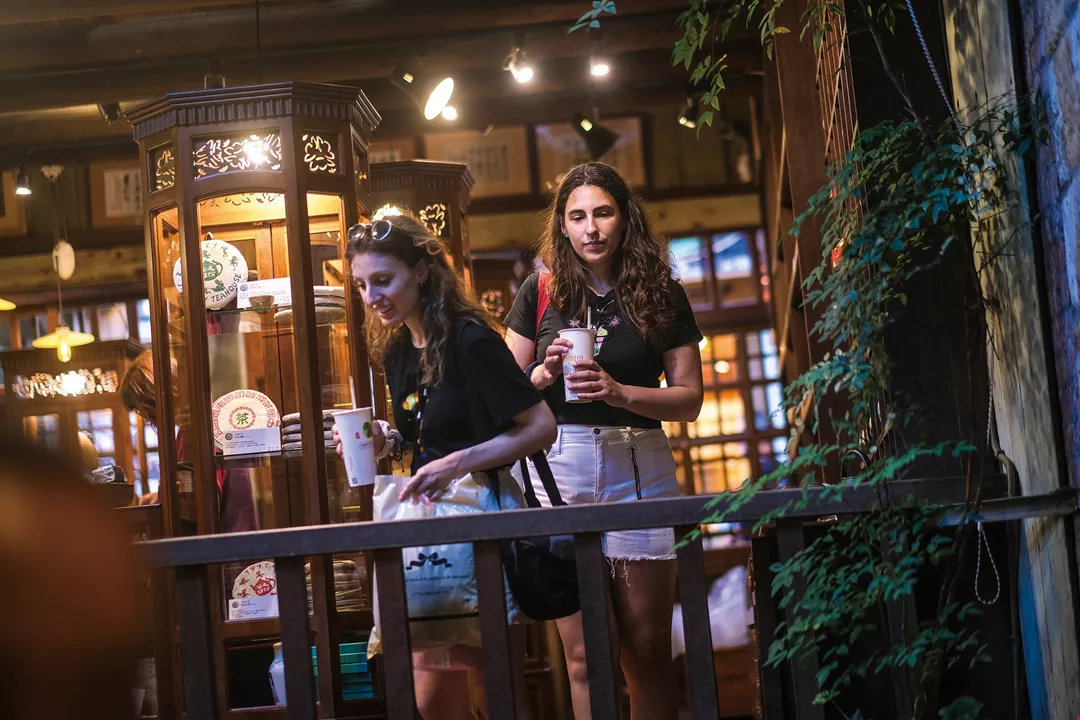
The Jiufen Teahouse is the former residence of Weng Shanying. In this century-old house, visitors can enjoy tea, appreciate pottery and paintings, and explore historic relics. The teahouse attracts many foreign visitors.
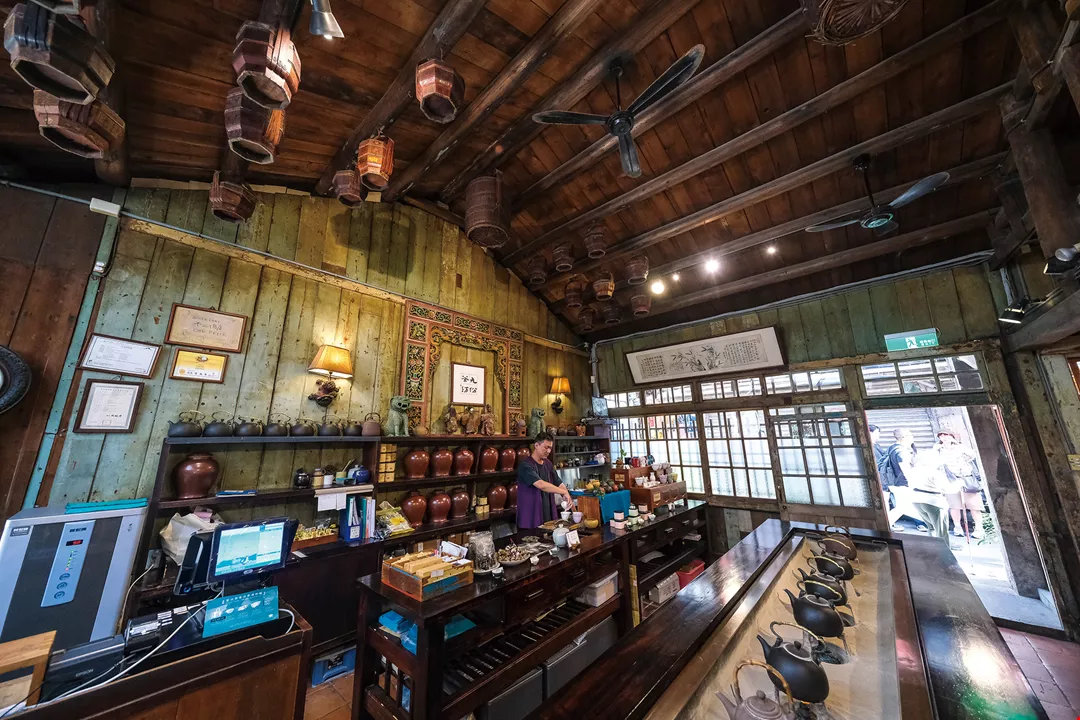
A second golden age
As an art student, Hung visited Jiufen with his teacher on sketching trips back in 1979, when the mountain town’s gold-mining glory had already faded. “I thought the village was very special. You’re halfway up the mountain yet can still see the sea. But why were so many of the houses empty?” Curious, Hung listened to residents’ stories about the town’s mining past, and a seed was planted for his own future.
Later, “Whenever I felt overwhelmed by life, I would escape to Jiufen to paint.” Jiufen became the place where Hung came to recharge. When the Iran–Iraq War broke out a few years later, bringing his career as a stationery printer and exporter to a halt, he returned to Jiufen to devote himself to painting. The town had only become more desolate. Friends and relatives urged him to leave, warning that there was no future in staying there to paint.
Yet Jiufen captivated him. “Taiwan is an island, and sea views from an island are hardly unusual. Yet the layered foreground, middle ground and distant views from Jiufen are special.” A jumble of house roofs spreads before Mt. Keelung, and then, as your gaze stretches farther, Keelung Islet, Heping Island, Mt. Qixing and the vast ocean all come into view.
Jiufen’s ever-changing climate adds even more variety to its scenery. On spring mornings, a sea of clouds surges up from below. In summer, fog drifts in, making the mountain town and the ocean’s surface appear and disappear as if they were mirages. In some seasons the mist rises slowly from the foot of the mountain, while at others it cascades down from the summit. The scenery changes with every season, and sometimes even within a single day one can witness vistas of seemingly entirely different landscapes. Hung believed that Jiufen, blessed with such unique natural beauty and enriched by its mining history, had all the right conditions for a revival. So, bucking convention and expectations, he decided to stay in Jiufen and open a teahouse.
As an art enthusiast, Hung brought tea, ceramics, and painting into his teahouse, creating a romantic space that engages all five senses. That combination was quite innovative in the 1990s, and quickly turned the Jiufen Teahouse into a popular attraction.
As other teahouses, cafes, snack shops, and specialty stores followed suit and moved in one after another, once-desolate Jiufen came back to life. The accompanying wave of tourism ushered in the town’s second golden age.
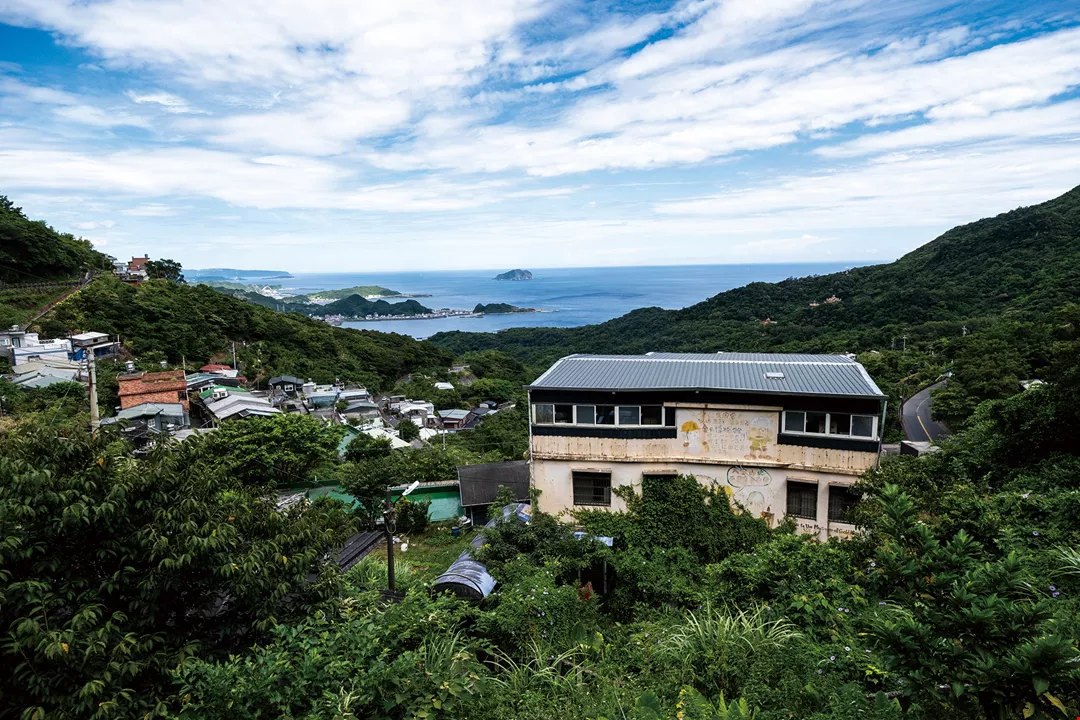
The Jiufen Gold Museum has a modest exterior but contains a wealth of mining history, representing the lifelong dedication of former miner Tseng Shui-chih.
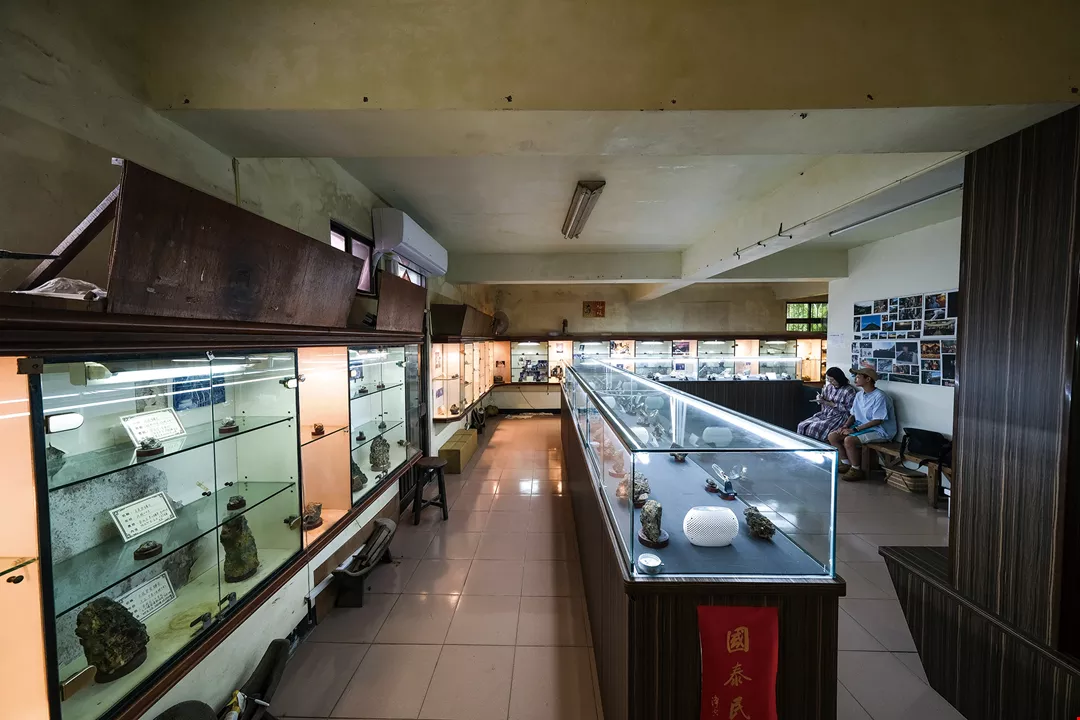
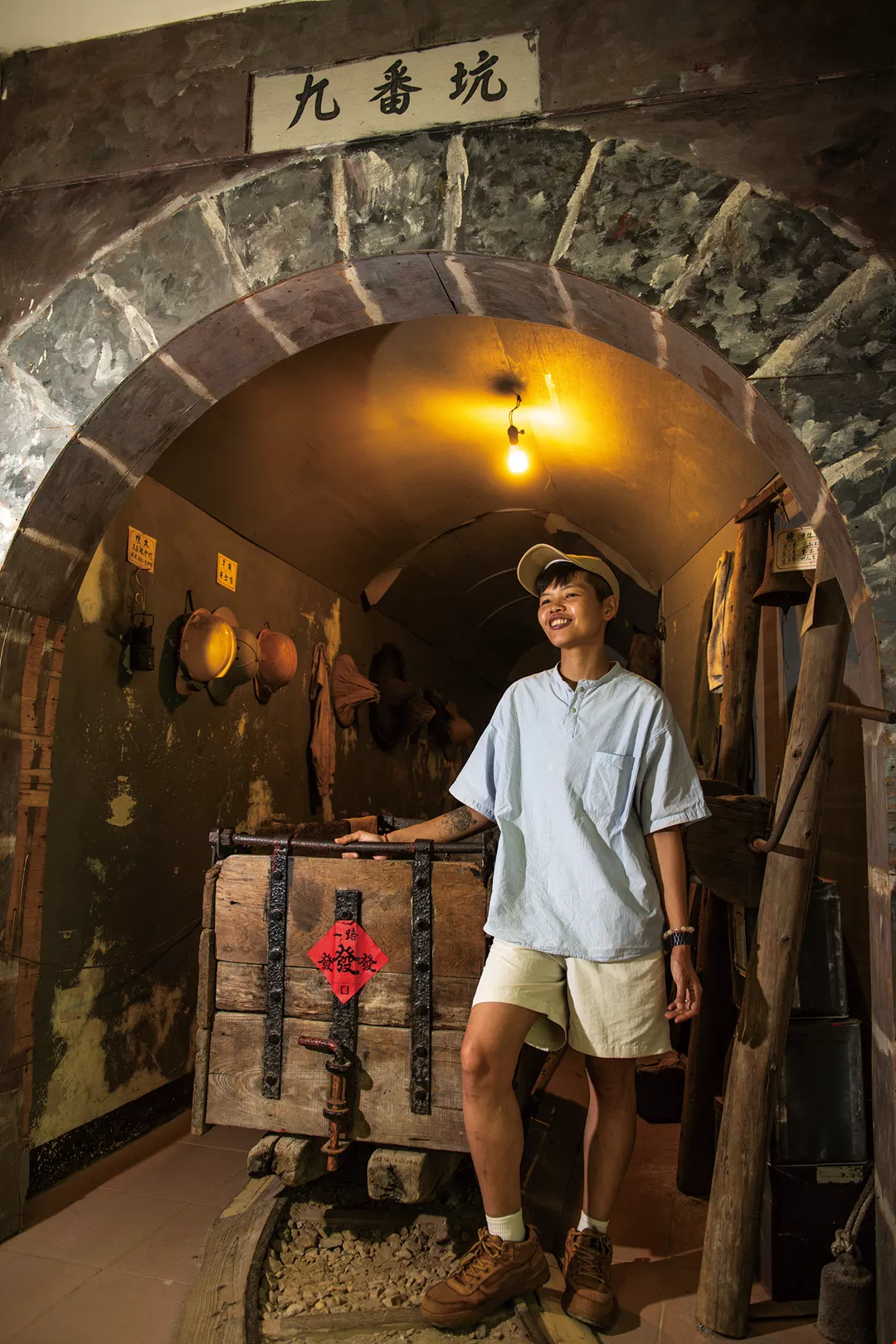
Tseng Yi-hsien vividly explains the daily life of miners in a simulated mine tunnel. She is determined that her grandfather’s efforts to document and commemorate the area’s mining culture will live on.
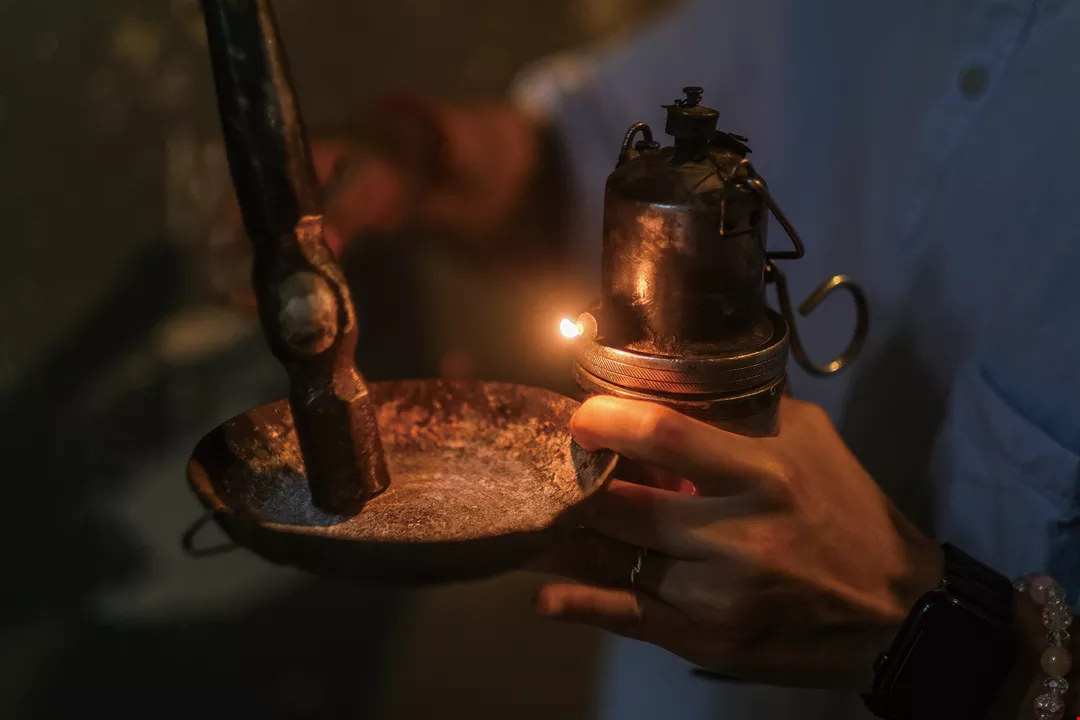
In the gold mines, miners used carbide lamps, known as “lifesavers,” both for lighting and to detect conditions of low oxygen.
A new space for mining’s past
The romance of tea helps people forget the busy clamor of the modern world, but to truly understand the soul of this mountain town, one must explore its proud history of mining.
“For the people of Jiufen, the word ‘dream’ is a verb,” says Tseng Yi-hsien, director of the Jioufen Goldore Museum. “We don’t just imagine things—if we want something, we go out and do it.” Her grandfather Tseng Shui-chih wanted to create a museum, so he transformed their ancestral home into one!
It looks just like an ordinary house, but inside lies a hidden world. A simulated tunnel marked “Jiufankeng” (“Tunnel No. 9”) holds rails and mining carts, with rows of tools neatly lined up along its walls. “These were all collected by my grandfather from the mines,” explains Tseng Yi-hsien, skillfully demonstrating how miners searched for gold and quarried the mountains. Every single object carries a story.
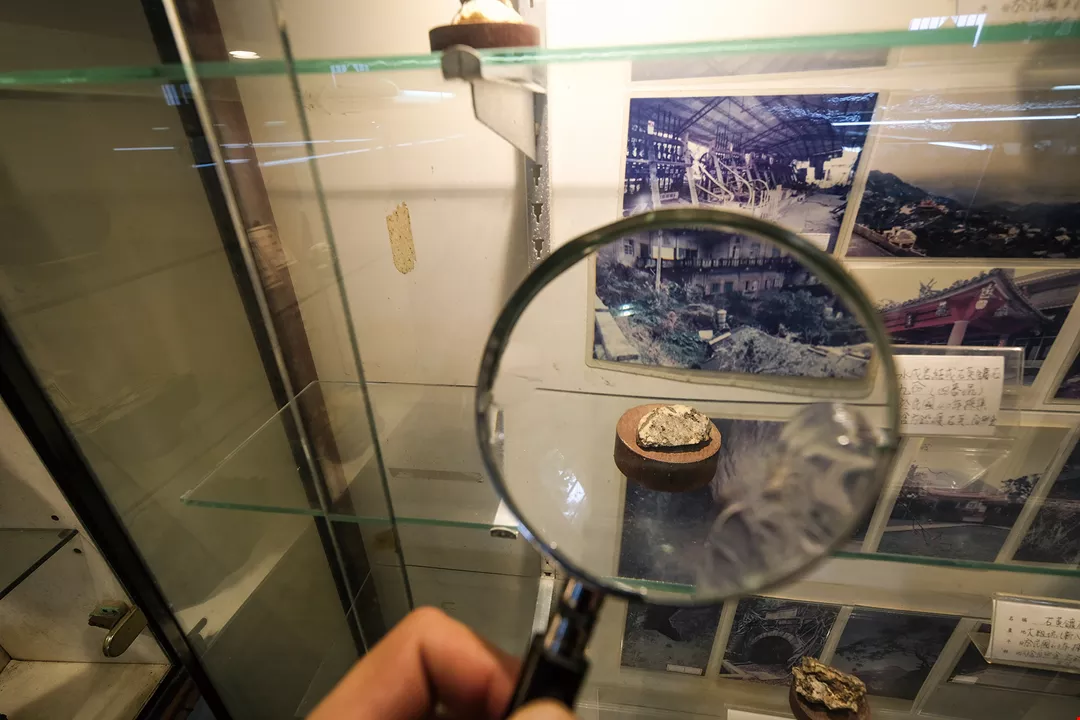
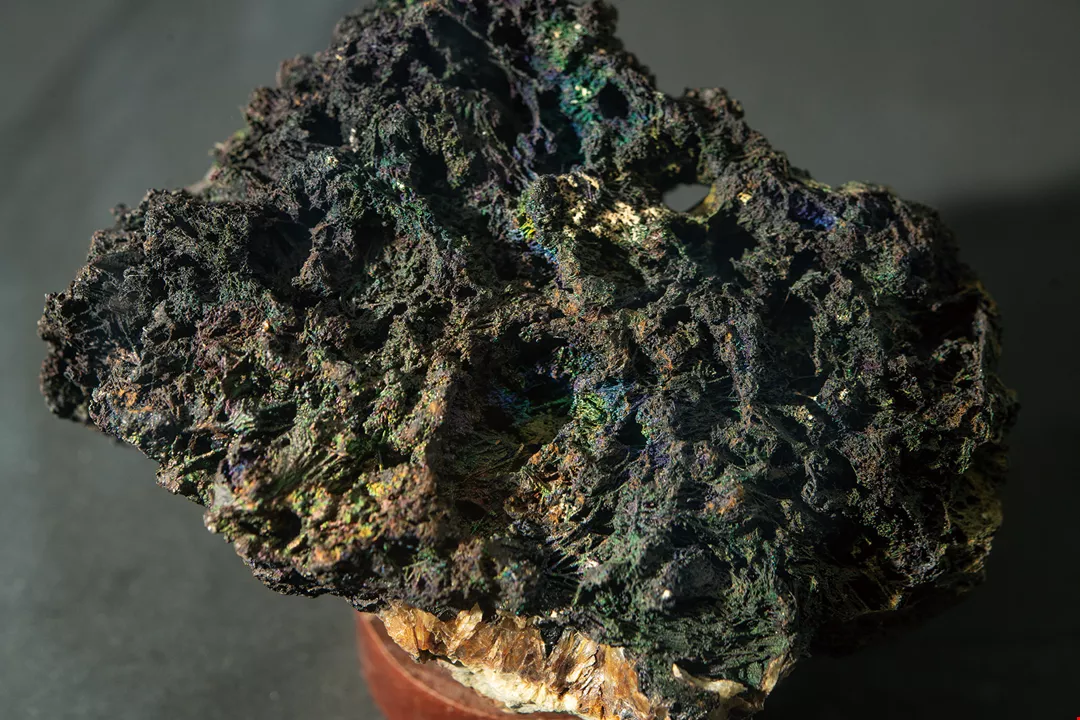
The Jiufen Gold Museum boasts a rich collection of ores. Visitors can also observe ore grinding, gold washing, and mercury-based gold extraction.
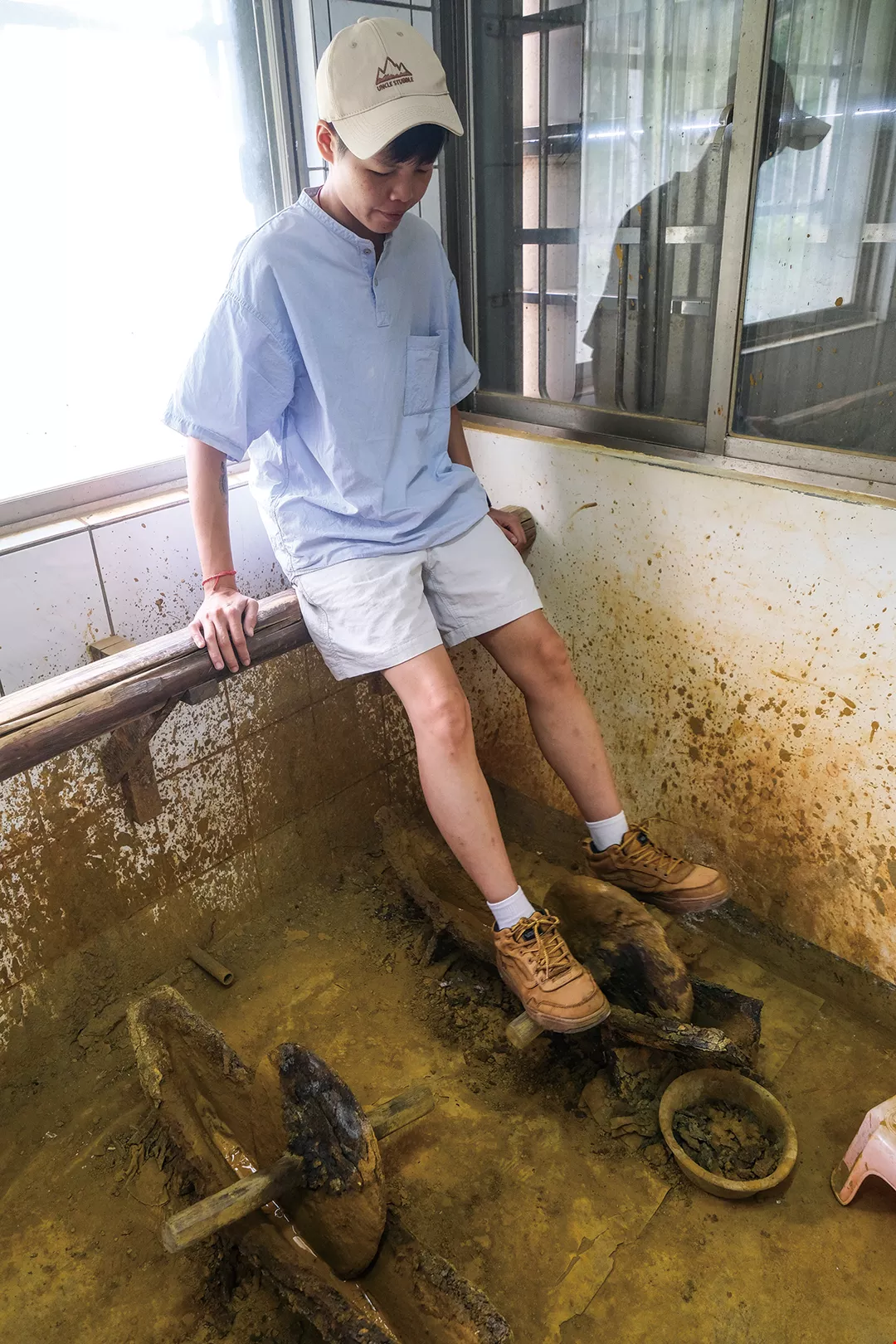
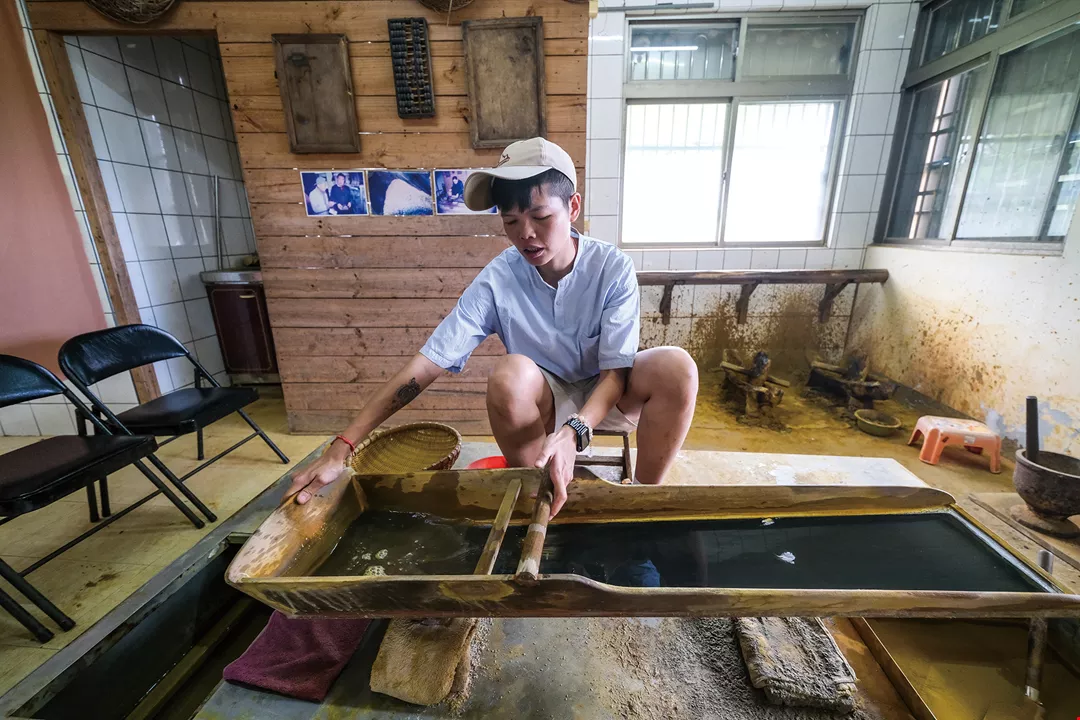
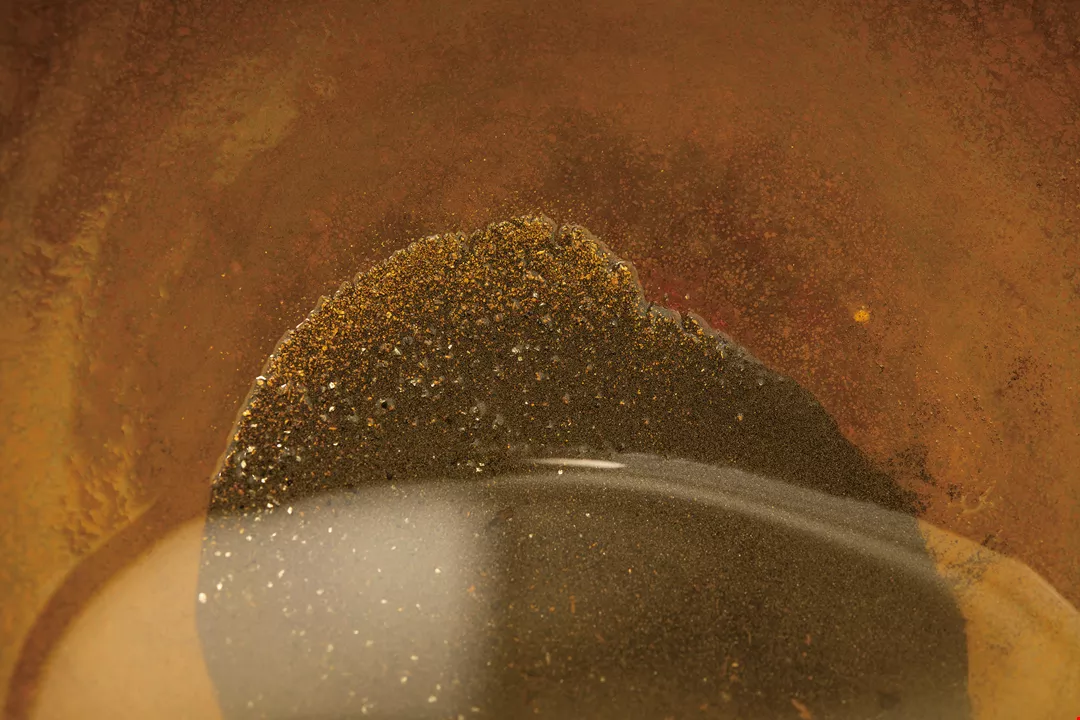
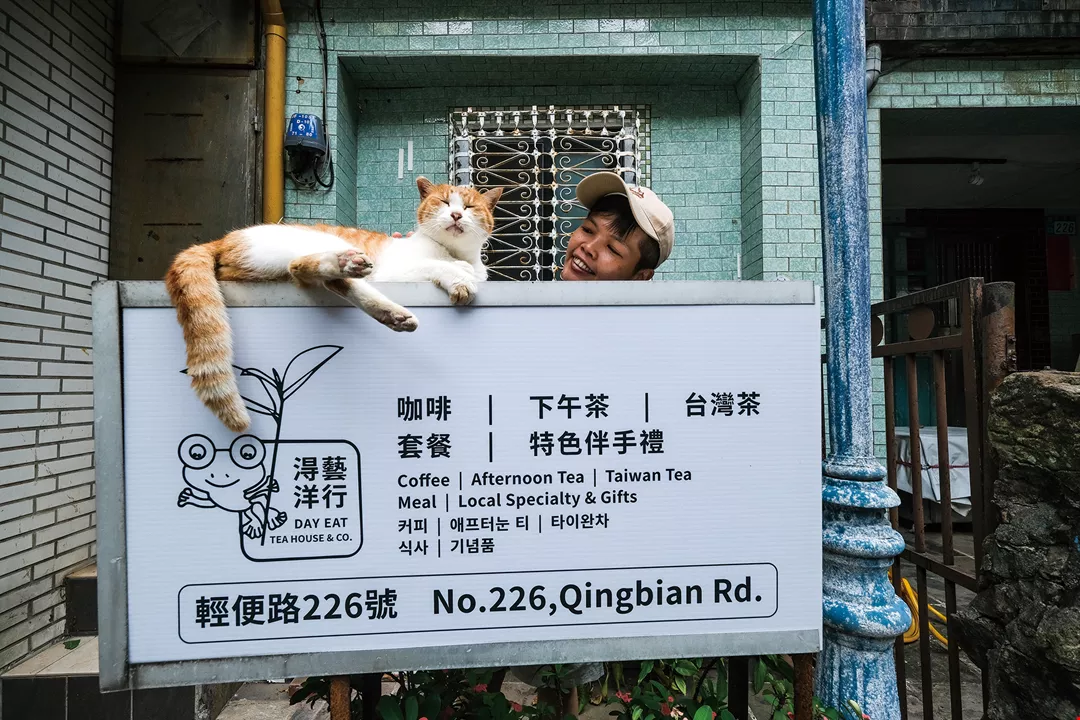
Hoping to let more people understand the essence of Jiufen, Tseng Yi-hsien manages the museum and leads tours. In her, one can feel the spirit and determination of the people of Jiufen.
Miners’ pride
Although she herself didn’t live through the mining era, Tseng can vividly describe daily life in and around the mines thanks to her having listened to her grandfather, Tseng Shui-chih. A third-generation miner, Shui-chih took great pride in his trade even as mining in Jiufen came to an end. In the 1990s he set up an exhibition space, generously sharing with the public ore samples his family members had unearthed over the generations. His motivation wasn’t monetary gain, but rather a belief that these objects carried meaning and were worthy of preservation.
After Tseng Shui-chih passed away, Yi-hsien couldn’t bear to see her grandfather’s efforts go to waste. She decided to quit her job and take over the museum. She has been running it for more than 13 years now.
In the past, Jiufen grew more beautiful as night fell, but nowadays shops are closing earlier and earlier. To keep visitors from feeling the town is too empty at night, some years ago Tseng launched evening tours, guiding guests through the mountain town in search of traces of its mining past. The changing fortunes of the town and its people are exemplified by a couplet at Youying Temple, which reads: “Once seekers of fame and fortune, now but figures in a dream.”
A deeper understanding of Jiufen’s mining legacy is what Tseng hopes to offer travelers. She envisions her museum as a gateway to that understanding. The tour explaining a miner’s daily routine begins with entering the tunnel, introducing the tools, and then showcasing various ores and refining techniques—all aimed at making visitors feel as though they’ve stepped into a miner’s workplace. “What I love most is when at the end of a tour, people exclaim that they have gained a fresh understanding of Jiufen. That gives me such a sense of accomplishment.”
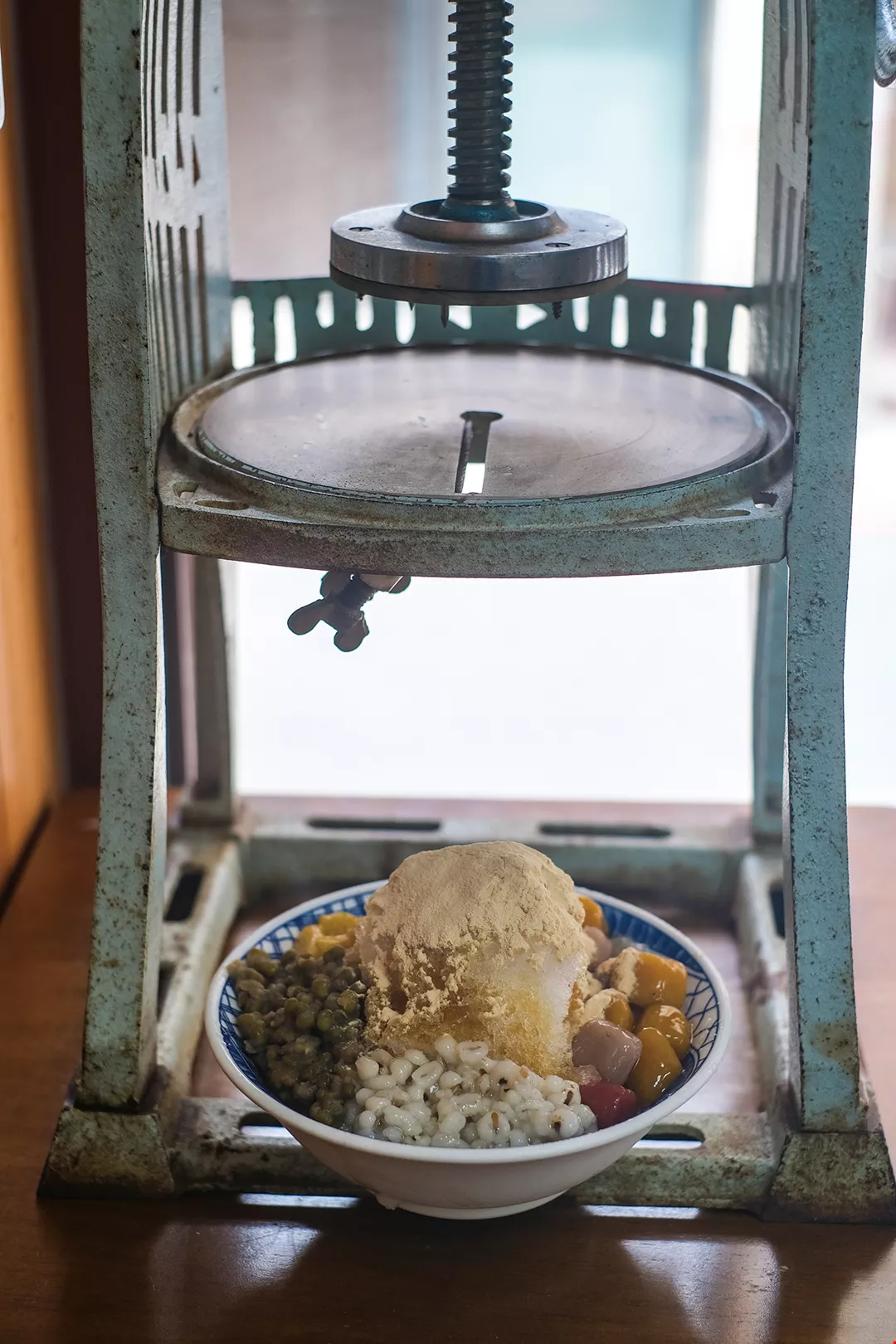
A bowl of taro ball shaved ice is a must for visitors to Jiufen.
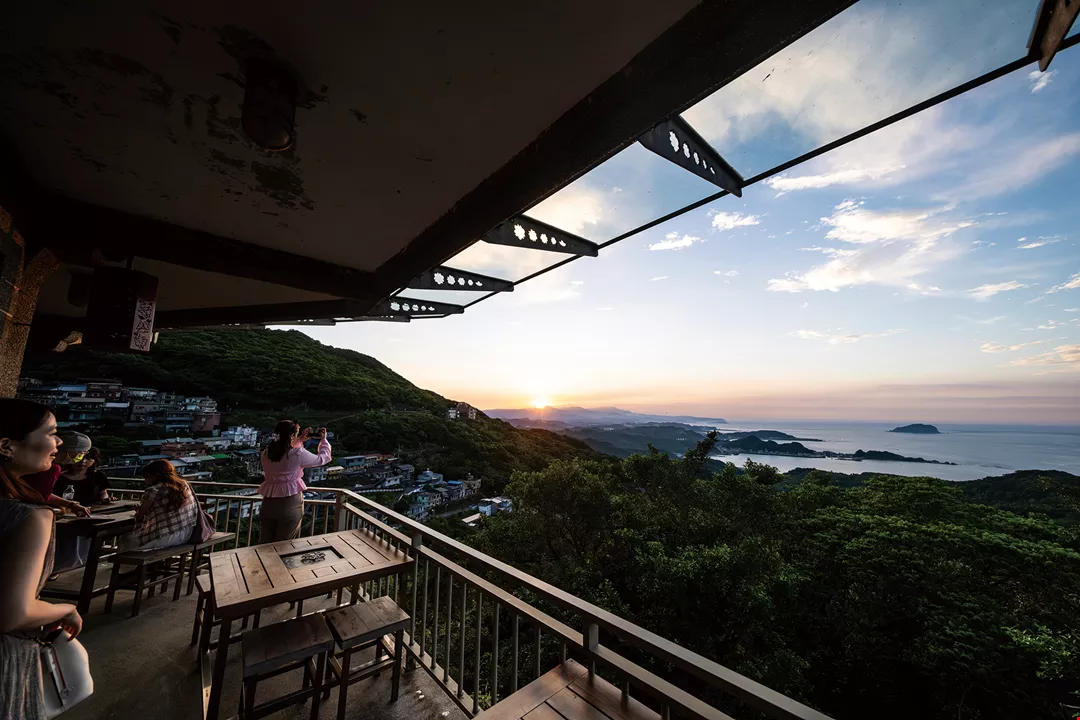
Jiufen’s scenery is rich and ever changing: in the foreground one can see Mt. Keelung, and in the distance Keelung Islet. The mountains, sea, and sky combine in endless variations.
Chasing a dream in Jiufen
Jiufen has long been a place of dreams. Although hopes of striking gold have long since faded, the town’s many teahouses have rekindled Jiufen’s glow and brought a new generation of dreamers. Aaron Li is one of them. Driven by his love for wild herbs, he opened the herbal tea house Yeshi deep in the town’s old quarter.
Yeshi was once the studio of metal mosaic artist Hu Darfar, its gray walls and space crowded with his works. After renovations, a skylight was opened to let sunlight pour in. The walls are painted white, and several of Hu’s pieces remain on display in a clean exhibition space. Lush green plants have been added to echo the herbal theme of the teahouse.
Li is focused on bringing traditional herbs and grasses into daily life. In his view, “The best setting for that is over tea.”
“We want to present the original scents of plants, without deliberately masking them with too much floral fragrance,” says Li. Through repeated trials and adjustments, he has put his own spin on herbal tea culture, concocting flavors suited to modern tastes. For example, “Good Night and Good Luck,” a blend that promotes relaxation and sleep, combines snake jasmine, osmanthus, wild chrysanthemum and dried tangerine peel with roasted brown rice. Its mixture of herbs and grains has become a favorite among guesthouse visitors. Through his skillful blending, even the much-misunderstood fishwort (Houttuynia cordata) emits a refreshing aroma.
Beyond tea drinks, Yeshi has also branched out into related creative endeavors. For example, Yeshi offers classes where participants create herbal pouches, bringing them closer to plants through smell and touch. In recent years, they have also started making amber candy, using wagashi confectionery techniques to incorporate local Taiwanese produce. One example is candy made from Beitou tangerines that highlights not only the sweet–tart flavor of the fruit but also the fragrance of the peel and the freshness of the blossoms and leaves. Each little candy expresses the local terroir in concentrated form. By bringing herbs into daily life, Aaron Li has rooted his dream in Jiufen.
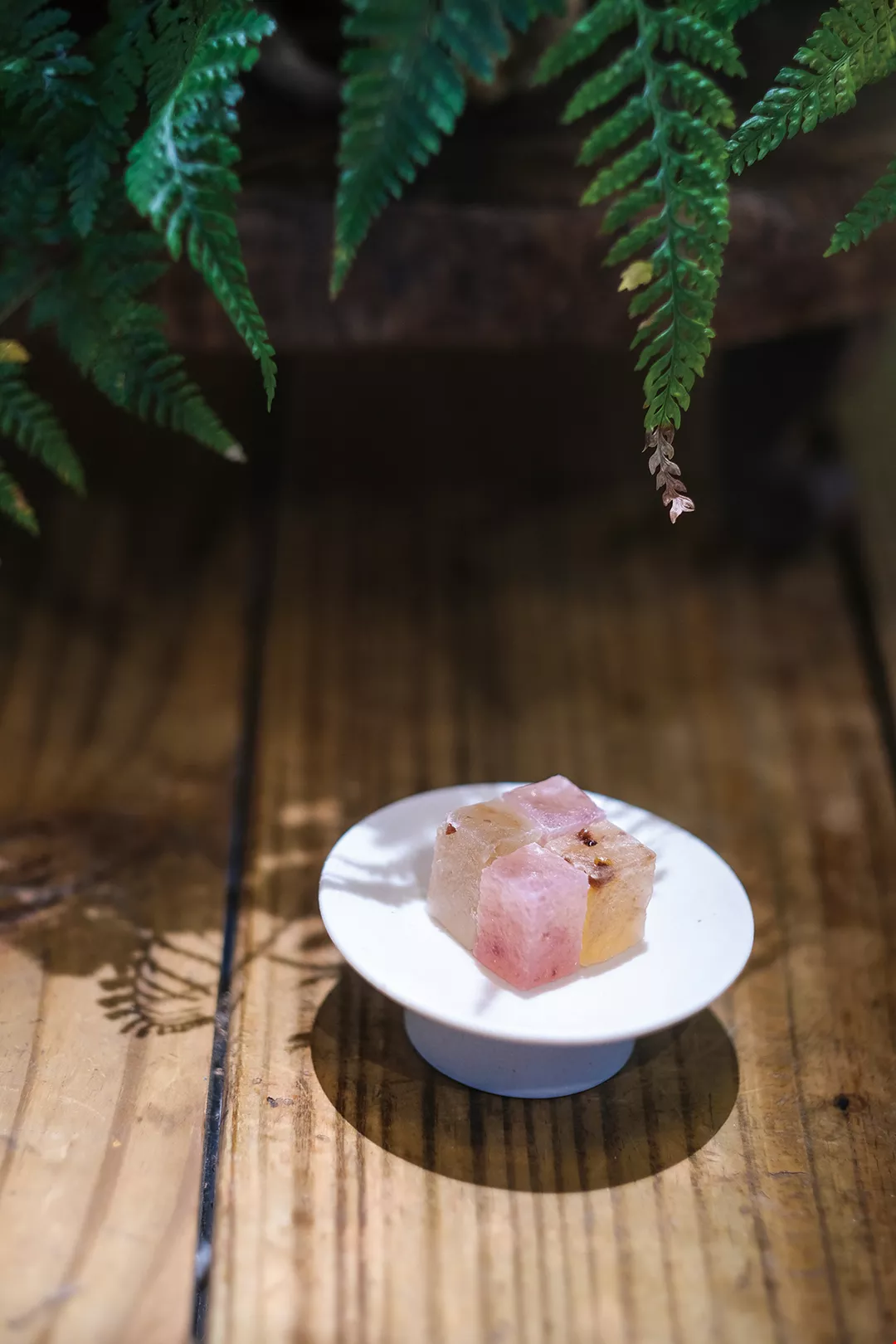
The tiny amber candies come in a variety of flavors, reflecting the diverse terroirs of Taiwan.
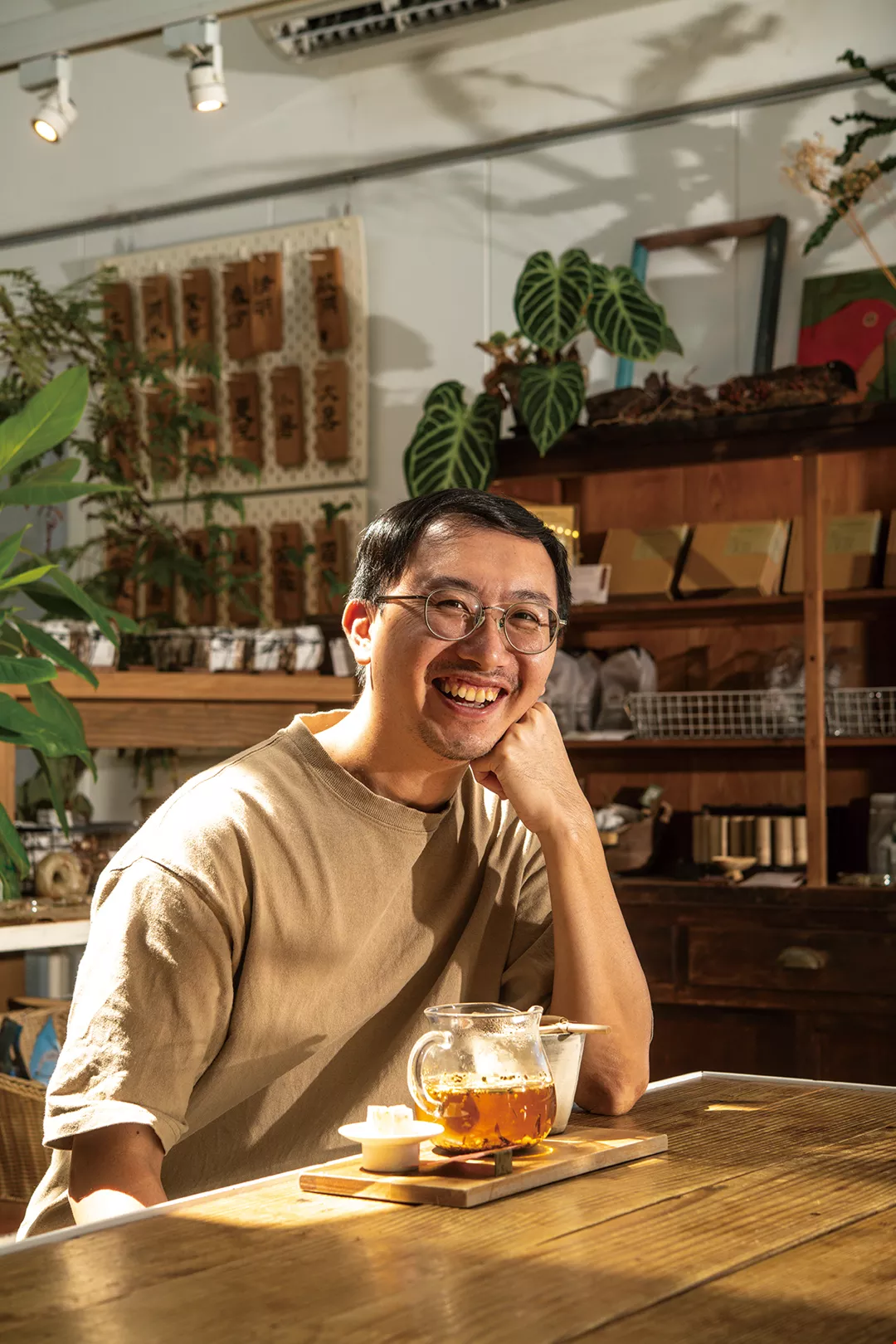
Aaron Li opened Yeshi in Jiufen to connect herbal culture with people’s daily lives in a modern way.
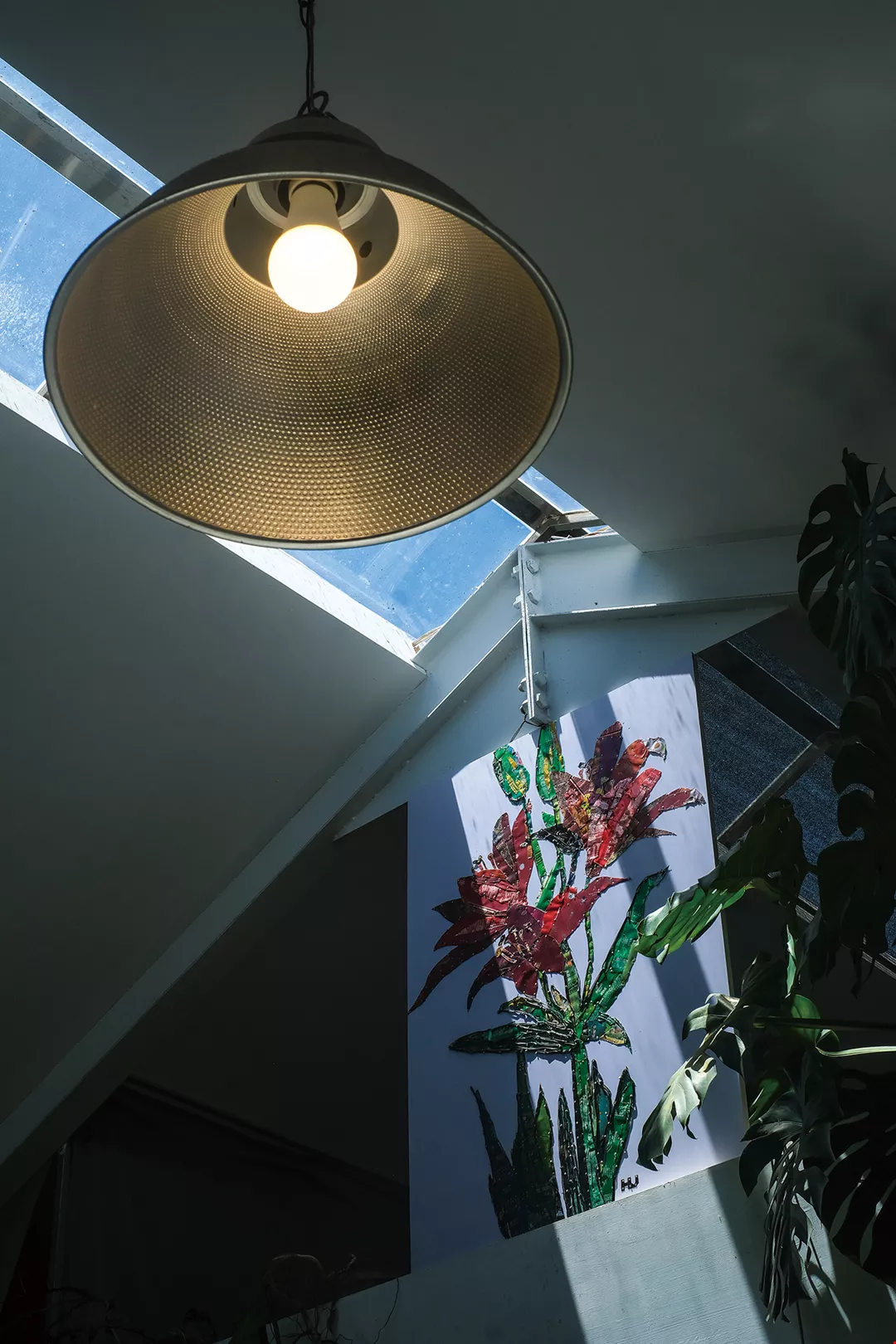
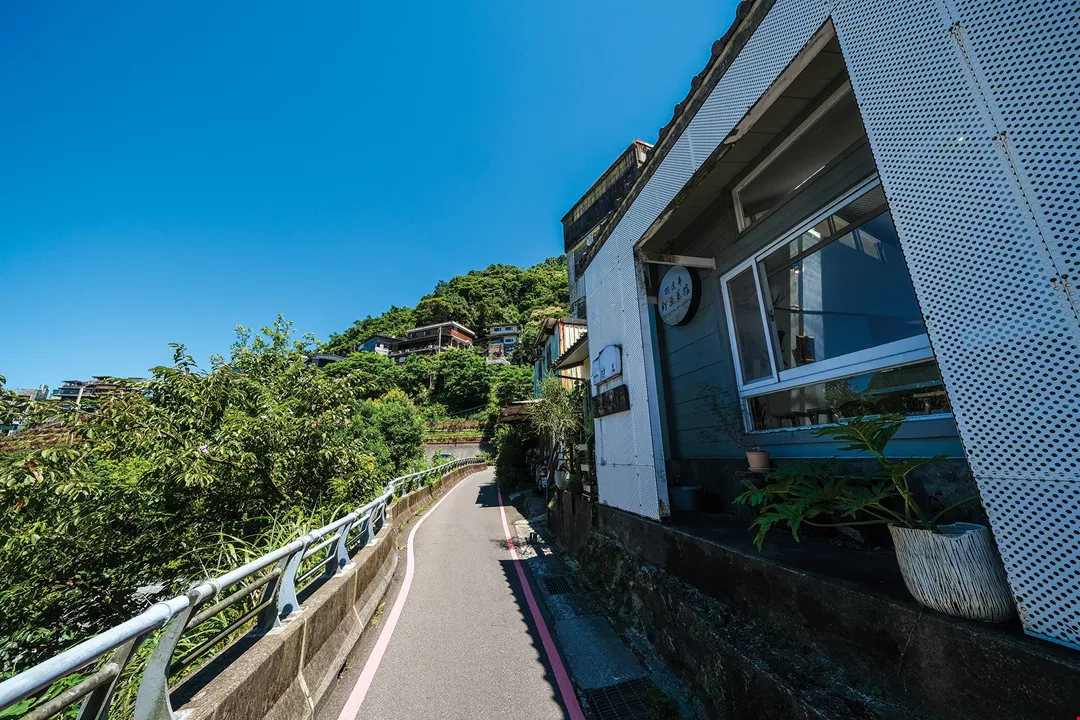
The Yeshi herbal teahouse on tranquil Qingbian Road was formerly the studio of the metal mosaic artist Hu Darfar. In the brightly renovated space, visitors can still see his artworks on display.
Ever-evolving Jiufen
Jiufen has gained a new standout in recent years: the Mountain Town Art Museum. When its founders, the couple Lin Cheng-wen and Chen Hsieh-o, were forced to leave their museum space in nearby Shuinandong, it prompted them to consider an old house they had purchased in Jiufen long before. They were surprised to discover that it had once been home to the Yi He Trading Company, operated by an influential local leader named Gao Jiudeng.
During the Japanese colonial period, Gao struck gold and became a local patron of the arts. He nurtured Jiufen’s Beiguan Opera troupe, founded the Yi He Hall, and even funded the construction of the Shengping Theater. Though the old residence had lain abandoned for decades, with its roof collapsed and its courtyard overrun with weeds, it still retained the “Yi He” plaque. The museum team decided to restore the building to memorialize Jiufen’s mining legacy, while offering travelers a fresh visual experience.
Today, the Mountain Town Art Museum is both a cafe and a platform for local artists. It regularly puts on exhibitions, cultural evenings, and other events, bringing artistic vitality to the town’s old quarter. They have also transformed part of its space into a green restaurant, featuring dishes made with sustainably farmed ingredients, so that visitors can connect with Taiwan’s land as they savor its cuisine.
Beyond art and dining, the museum actively engages in international exchange, inviting foreign artists for residencies and sending staff into schools. Slowly but surely, they have been helping Jiufen transform into an international cultural hub.
From dreams of striking gold to a cultural revival led by teahouses, from the freshness of herbal teas to the spirit of community fostered by an art museum, the residents of this beautiful and ever-evolving mountain town, recent arrivals and longtime residents alike, have continued to write new chapters in its history.
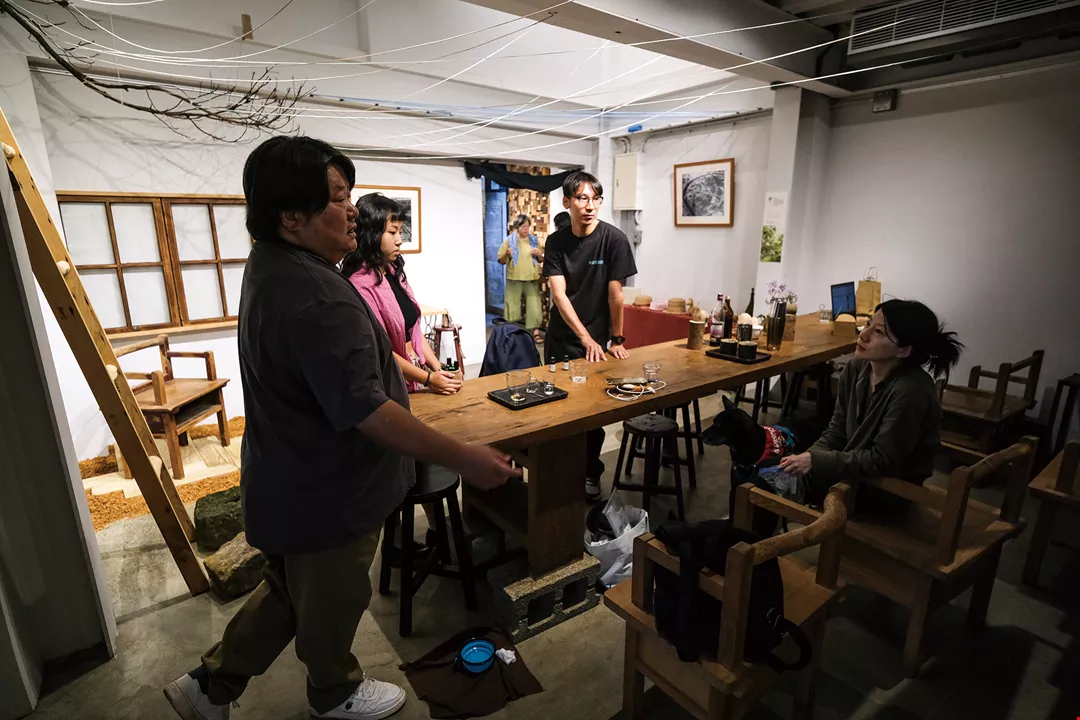
Lin Cheng-wen (front) relocated the Mountain Town Art Museum to Jiufen, where it serves as a bridge between the art world and the local community.
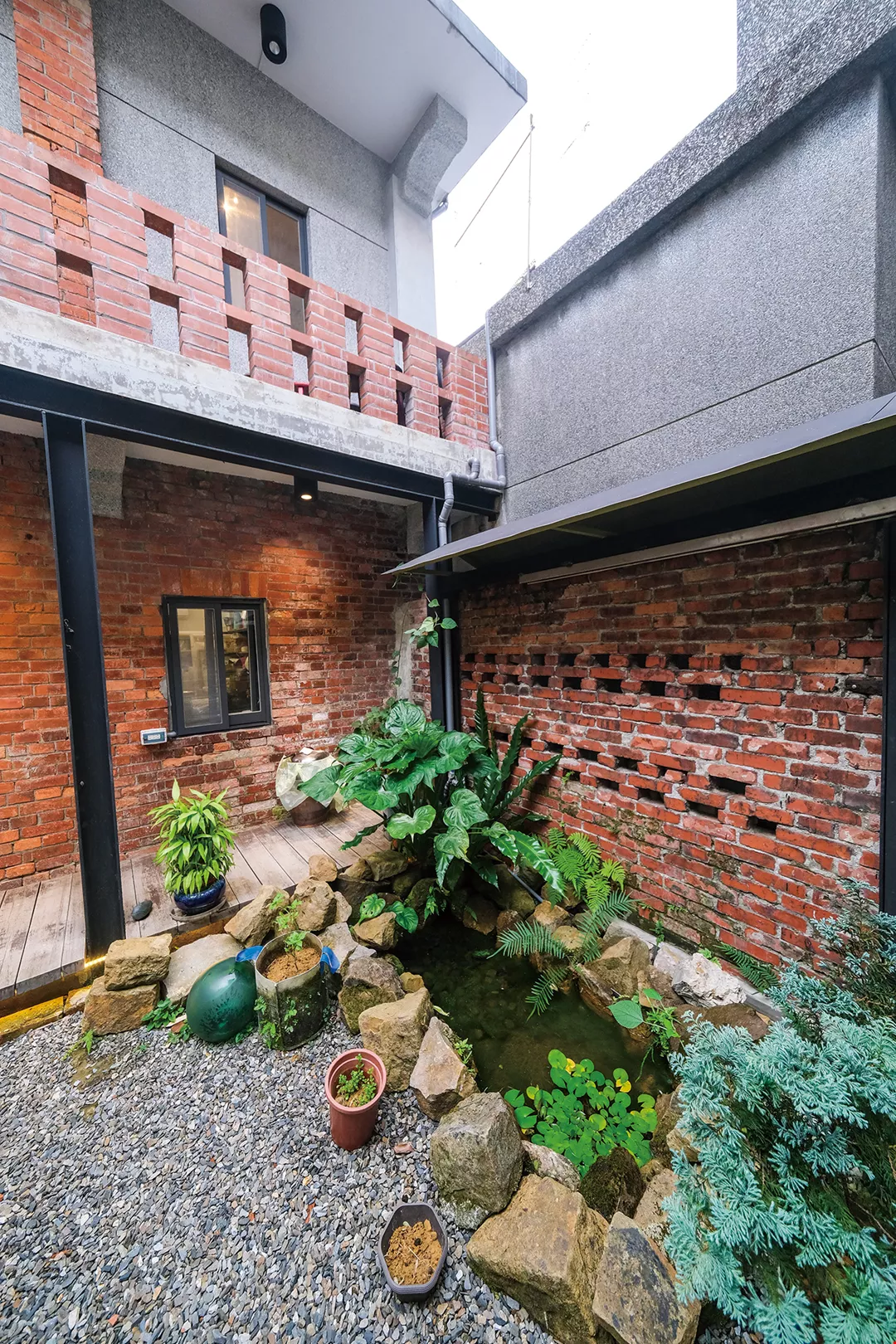
The building of the former Yi He Trading Company, once run by local leader Gao Jiudeng, has been transformed into the Mountain Town Art Museum, which commemorates Jiufen’s mining history.
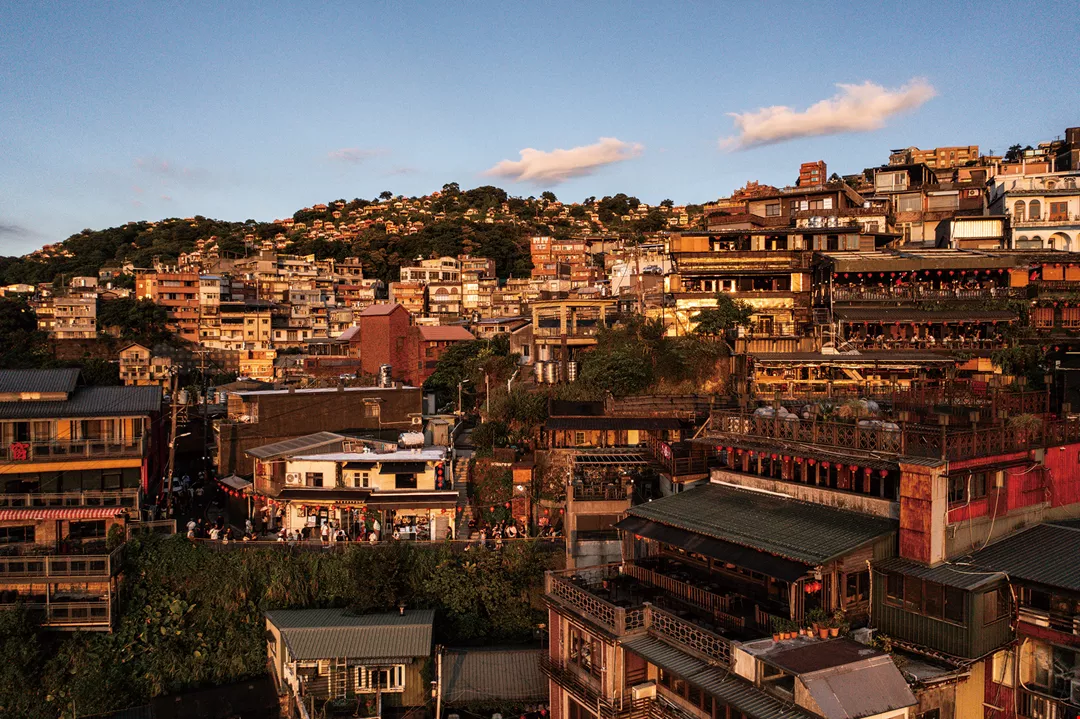
With its winding roads and steep terrain, Jiufen attracts dreams old and new, inviting visitors to explore and experience the vitality of this quintessential Taiwanese hill town.
@List.jpg?w=522&h=410&mode=crop&format=webp&quality=80)
@List.jpg?w=522&h=410&mode=crop&format=webp&quality=80)


@List.jpg?w=522&h=410&mode=crop&format=webp&quality=80)
@List.jpg?w=522&h=410&mode=crop&format=webp&quality=80)
