The Soul of Western Taipei--The Longshan Temple Area
Wang Wan-chia / photos Chuang Kung-ju / tr. by Geof Aberhart
February 2010


Not long ago, Longshan Temple-the spiritual heart of Taipei's Wanhua District-celebrated its 270th anniversary. By it sit Bangka Park and Longshan Temple Underground Shopping Bazaar, landmark locations in the movement to renovate the district and turn its fortunes around.
In 2005, the construction fences around Bangka Park finally came down as after 12 years of work, the park was finished. But a different kind of barrier still exists between the people of Wanhua and those of Taipei proper, and even between people from Wanhua, and this must be addressed in greater detail before the district can truly put its changeless and unique style to use, creating a western counterbalance to eastern Taipei's recent blossoming.
Traveling down the Bannan Line of Taipei's MRT system, after the bustle of Taipei Main Station and the trendiness of Ximen, the next stop is Longshan Temple. Stepping out of the station, the more sensitive visitor will almost immediately note the askew feeling in the air.
Around the station homeless people gather, most looking on blankly, while mentally ill people push and shove each other for fun. In the arcade, groups of middle-aged men congregate, chatting and cursing while casting warning gazes at passersby. Down the lanes and alleys you'll find oyster vermicelli that is well-priced and made from good ingredients, but the overwhelming stench of feet can be enough to put anyone off their lunch. You'll also find vendors, their wares spread out on mats, but these vendors are often offloading goods of dubious legality, and if a tourist should unwittingly pull out their camera, they'll be met with a torrent of abuse.
But if you can get past the unfriendly exterior, pick an eatery with a nice bright sign, and find a seat, you can not only enjoy the delicious pearl wontons and shrimp balls on offer, but also get a taste of the real Wanhua. Listen as a neighbor comes in and banters with the Vietnamese shop staffer: "Hey, you are married for real or is it fake? Can you prove it? Go on, I'm all ears!" Hearing the genuine care beneath the somewhat direct words, even those who are encountering the characteristically blunt Wanhua style for the first time can't help but smile.
Not long ago, a septuagenarian streetwalker named A-Zhu found NT$3000 on the street while she was on the job, and despite being "on the clock," so to speak, she nonetheless turned the money in to the police, concerned for the person who had lost it. It bears remembering that at her per-client charge of NT$400, even if she spent three whole days out in the wind and rain she wouldn't necessarily pull in NT$3000. Local police say that A-Zhu is a familiar face around the station as she is often caught, but she often donates money to the homeless despite her pitiful income.
Also not long ago, an old man who'd sold pig-blood cakes for four decades along the streets of Wanhua went missing. After half a year, he reappeared, and that afternoon he was mobbed by people as he plied his trade once more, as though his customers were meeting once again with a long-lost family member. Each customer was so excited, tripping over themselves to ask where he'd been and if everything was OK. Most were as worried about the old man's health as they were about getting some delicious food.
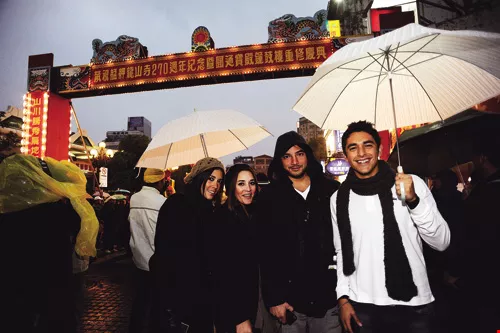
Coming for a visit, seeking the blessings of the gods, walking around seeing the sights, simple shopping.... The reasons for coming to Wanhua are many and varied, but it is always enrapturing.
Wanhua is a place that can be hard to become part of, but once you're a part, it's hard to leave. Fascinating people abound, and friendships between neighbors are strong. In recent years, the Taipei City Government has spent no small amount on trying to give the district a new face, but Wanhua is still Wanhua, its spirit seemingly immovable.
The renovations centered around Longshan Temple aim to make the area western Taipei's go-to destination for religious tourism. From Longshan Temple MRT Station, Bangka Park, and the Wanhua District Administrative Center to the new Longshan Market, the area has it all-food and fun, spirituality and shopping.
Bangka Park-also known as Wanhua No. 12 Park-is bordered to the north by Guangzhou St., and looks directly onto Longshan Temple. It occupies about 13,000 square meters, and was established in 1927 as one of 24 major urban parks designed and constructed by the Japanese during their colonial rule of Taiwan.
As Taipei's commercial side began to develop, by 1956 the park had been co-opted as a temporary congregation spot for street vendors, leading to the conglomeration of traditional markets, food stalls, and fortune tellers that became the old Longshan Market and the West Sanshui St. Market. Over the decades, the area has remained a must-see spot for pilgrims and tourists alike, with stores in the markets becoming known far and wide; many of them still prosper today.
But although business was booming, the city government eventually had to take action not just to solve the problem of having so many vendors packed together, but also of them working under rickety corrugated iron roofs held up by lumber. When work began on the Longshan Temple MRT station in 1993, as part of their efforts to increase the amount of parking and public green spaces in the area the city government tore down the two old markets and zoned the area into a park section and a commercial section, today's Bangka Park, the new Longshan Market, and Longshan Temple Underground Shopping Bazaar.
The newly-constructed Bangka Park was designed as an extension of the Temple Square in front of the temple, and was intended to be a "folk culture" park. The new Longshan Market and L-shaped Longshan Temple Underground Shopping Bazaar aimed to accommodate the 406 vendors that had been evicted from the old market. The underground bazaar is also Taipei's only MRT underground mall to extend to a second underground floor.
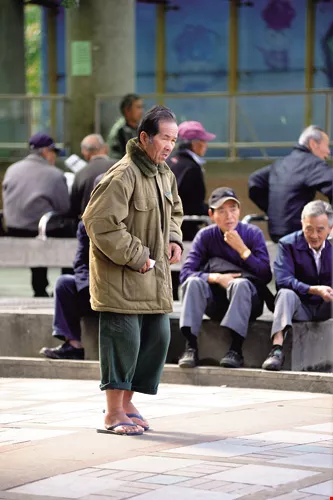
Coming for a visit, seeking the blessings of the gods, walking around seeing the sights, simple shopping.... The reasons for coming to Wanhua are many and varied, but it is always enrapturing.
Although the park and bazaar have now been established for some time, there are still some shortcomings apparent when looking at the results.
Firstly, Bangka Park hasn't turned out quite as planned. Although the vendors have gone, a new atmosphere has yet to settle over the park, with the homeless taking advantage of the location and geography of the park, congregating and sleeping throughout. Even though there are fewer homeless people there by day, few parents have the courage to bring their children to play in it, and overall the general public rarely make use of it. And local shop owners say that recent years have seen the arrival of people hawking "surefire strategies" for winning the lottery; these draw in gamblers who chat and talk about their own strategies, all the while putting ordinary people off the area.
Wanhua antiquarian Ke Te-lung explains that homelessness has long been a problem in the district, but in the past the homeless were hidden in the dark alleys between vendors. Now that the market has gone they've been left with nowhere to hide, exposed to the sideways glances of the general public.
To address this thorny issue, Taipei City's Department of Social Welfare is continuing to provide financial support and shelter to the homeless, while the Parks and Street Lights Office-which is in charge of Bangka Park-can only helplessly explain that as the park is a public space and Taiwan's people have the right to freedom of assembly, all the office can do is forbid commercial activity there. The security staff do not have the authority to force the homeless out, and can only use softer measures to encourage them to leave, while passing on their concerns to the DSW.
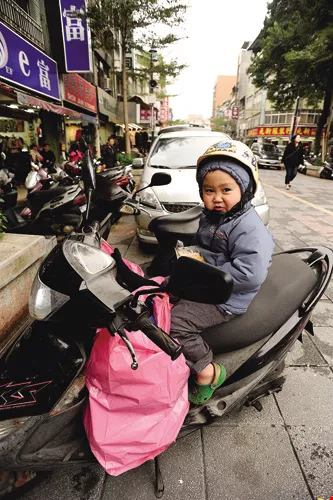
Coming for a visit, seeking the blessings of the gods, walking around seeing the sights, simple shopping.... The reasons for coming to Wanhua are many and varied, but it is always enrapturing.
As for the Longshan Temple Underground Bazaar, visitors there are few and far between, and the place is practically a ghost town. But why?
The market's administrator, the Taipei City Market Administration Office (TCMA), explains that the market was intended to operate under a different model. Rather than the model of the traditional market, with each person running their own small, cramped, dark, and damp stall however they please, the new market was divided into four themed areas-fortune telling, general goods, snacks, and a food court-each with 48 stalls of between three and 10 square meters in area, in the hopes that vendors would start joint ventures. The goal of all of this was to increase the scale of the market while reducing costs and improving overall quality and business opportunities.
While such a modern business model may have been a good idea, unfortunately it was being used on the wrong target. Associate professor of sociology at Fu Jen Catholic University and a Wanhua native herself, Tai Po-fen says that in her experience, these small vendors do forge "alliances," but don't really tend to organize things, so one seven-square-meter store can have underwear on one side, jade on the other. Not only does this make circulation around the store difficult, it can leave customers confused as to what business this eye-catching, but oddly positioned store is really in.
As the TCMA explains, this is largely because the stallholders are long-experienced with traditional stalls, are generally older, and are not so well acquainted with creating brand images or marketing their products. This is compounded by being so close to Sanshui and Guangzhou Streets and having a fairly similar product range, meaning consumers may consider that making a particular point of going into this underground mall is insufficiently appealing.
In addition to providing more guides to the mall at entrances and improving lighting, amongst other physical improvements, the TCMA is inviting bands to perform in the mall each weekend and organizing occasional seminars for the public. All of this is in the hopes of once again attracting people to the market.
Hong Wenhe, chair of the market's First-Floor Merchants Association, also points out that in addition to the places that moved from the old Longshan Market-like fortune tellers, folk arts stores, boutiques, karaoke places, and food stalls-some of the new market is also being sub-let to companies, including a Giordano outlet store and the only branch on Taiwan proper of Kinmen's Liangjin Beef Jerky; overall the market enjoys a 96% occupancy rate, there has been a clear rise in visitors year-on-year, and some major chain stores are in negotiations for store space.
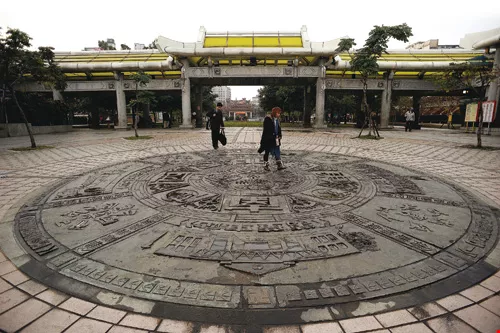
After its completion, Bangka Park became another major landmark for the Wanhua district, but thus far to most people, the park remains a place best avoided.
In both the bazaar and the park alike, the city government's dedication to detail in giving the area an image of folk and religious import is abundantly clear through the myriad design elements you will see, from the traditional sculpture at the entrance to the distinctly Chinese fountains.
For example, in Bangka Park stands the "Beauty's Reflecting Pool," which isn't your ordinary pretty pond-between 9 a.m. and 9 p.m. every day, 598 jets of water shoot up on the hour and "dance" to one of 20 different tunes. From a particular angle, these jets can create a solid wall of water, and with a specialist projector, movies can even be played on this 15-meter-wide screen.
In Temple Square, in front of the pond, is a diagram combining the Western and Chinese zodiacs, and every evening glittering lights illuminate the signs, while an audio guide to the side of the courtyard gives visitors an explanation of them in Chinese, English, and Japanese.
Placing such elegant, informative, high-tech facilities in a dusty old corner of the city like Wanhua might seem incongruous, but Tai Po-fen says that it's just a matter of them not being "tailor-made" for the community, and that's why local residents have hung back.
"If they'd just given a little more thought to the relationship between people and space-Who'll be using the park? What will it be used for?-while designing everything, maybe then they could have made facilities that were more suitable and avoided these kinds of problems."
Tai suggests that in the future, the park could be seen as more of an actual extension of the temple courtyard, offering places to watch performances, and maybe a weekend market. With such things, the park could draw people in, and when that happens, the quality of the park will gradually increase.
Does Wanhua need modernization, refinement, and more tourism? Or does it need a return to the old down-home, yet alluring atmosphere? As winter thaws into spring, why not take a trip to the Longshan Temple area and see if you can find an answer for yourself?
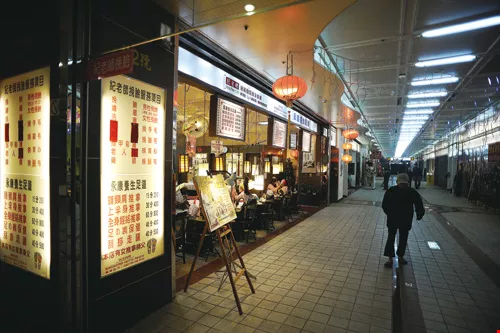
In the second-floor market beneath Longshan Temple MRT station, many stores have shut their doors as a result of the recession. Now the floor is all run by one management team, which has begun to find new commercial opportunities by focusing on traditional, elderly consumers.

_DSC2938@List.jpg?w=522&h=410&mode=crop&format=webp&quality=80)

@List.jpg?w=522&h=410&mode=crop&format=webp&quality=80)


