

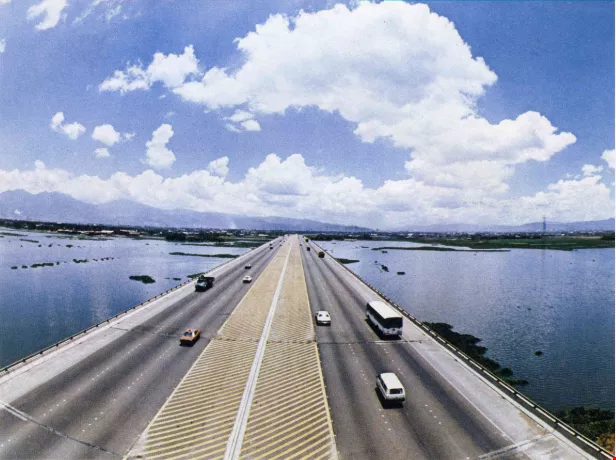
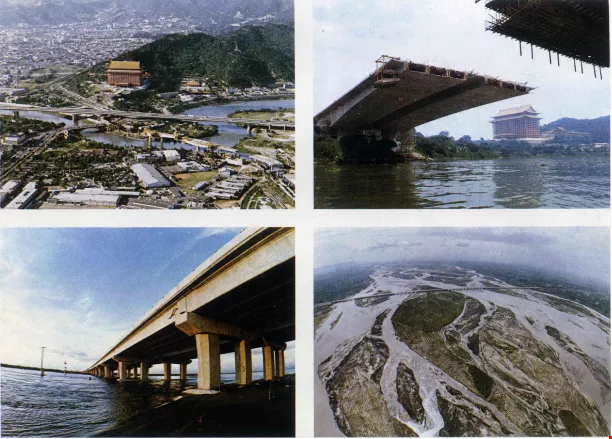
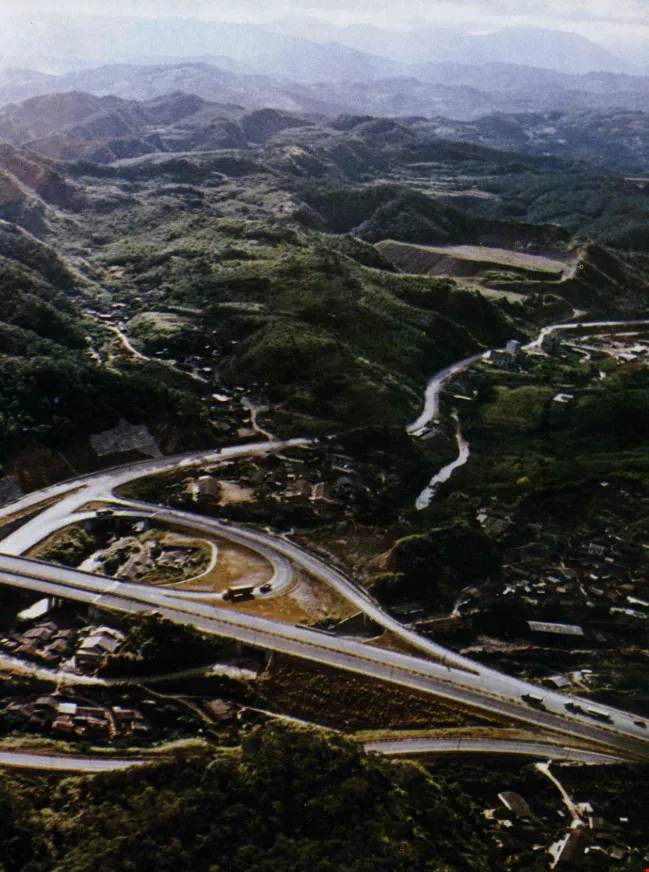
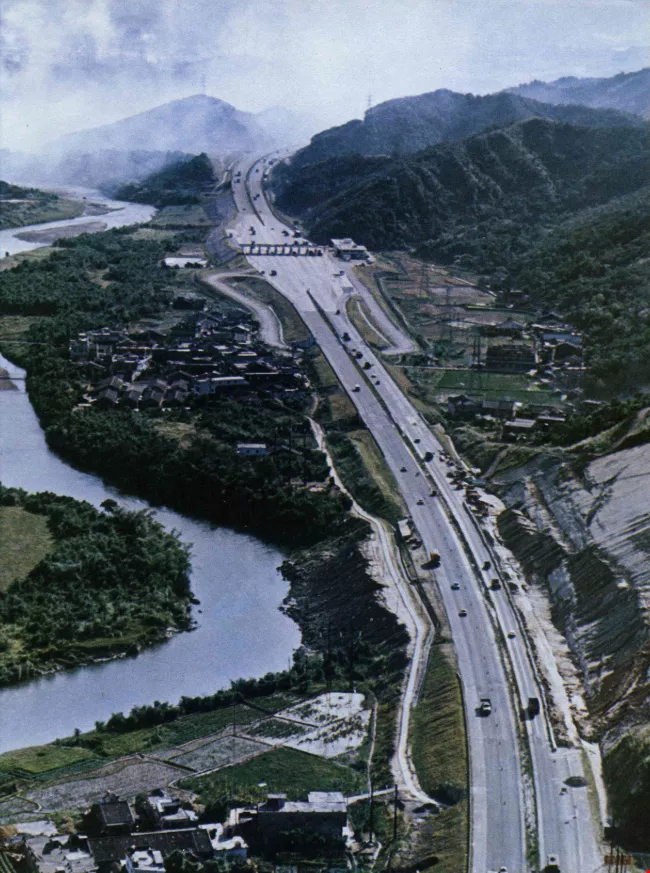
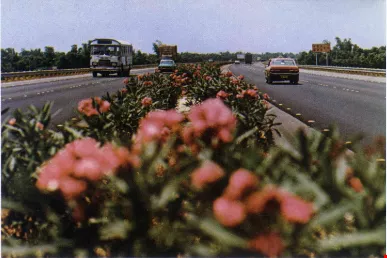
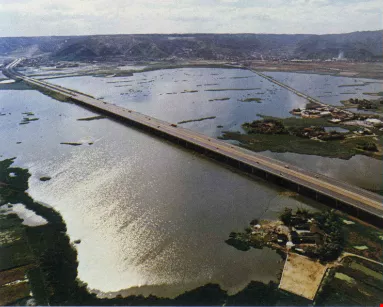
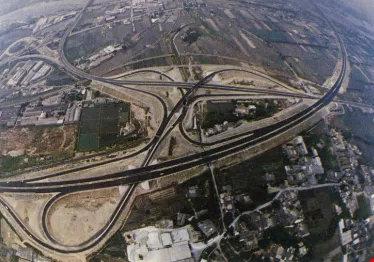
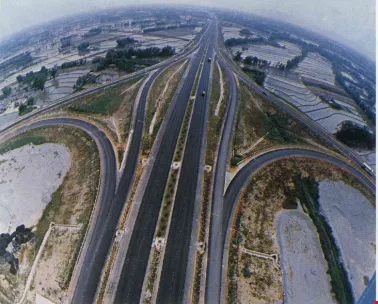
The Taiwan Area North-South Freeway, which took seven years and US$1.2 billion to build, was fully opened to traffic on October 31. A ceremony was held to mark the completion of the freeway on the Sino-Saudi Arabian Bridge, which is more than two kilometers long, named in honor of the low-interest loans from Saudi Arabia which helped finance it. The freeway extends from Keelung, the northern port of Taiwan, traversing through the lush and densely populated narrow western plain of the island to the southern port of Kaohsiung. It serves all the principal cities on the western plain, such as Taipei, Chungli, Hsinchu, Taichung, Chiayi and Tainan, and has branch lines to the international airports at Taoyuan and Hsiaokang, and the new Taichung harbor in central Taiwan. It thus forms an economic artery of the island. At 373 kilometers, it is 37 kilometers shorter than the old arterial highway which it parallels. As the maximum speed on the freeway is 90 kilometers an hour, driving time for the whole distance has been halved from 10 to less than five hours. To prevent drivers from dozing off, the freeway has many bends, particularly in the southern section, where it travels through hilly country to preserve farmland. Of the total length of the freeway, 14 kilometers are eight-lane, 23 are six-lane and the remaining 336 are four-lane. Flowering trees such as oleanders, azaleas, hibiscus and small banyan trees have been planted in the median strip to improve appearances and safety. Along the entire freeway, there are 10 barrier type toll plazas with computer recording system to check the number of vehicles. A total of 37 interchanges has been constructed along the freeway at an average interval of 10 kilometers, providing an attractive geometric pattern from above. Since the freeway extends from the north to the south through the whole western corridor of the island, one district differs remarkably from the others in weather, topography, environment and geology. Consequently, difficulties of many different kinds were encountered during construction. In the northern section, the cut slope usually tended to slide because of the rainy weather all the year round.
Large quantities of pervious pipes were therefore used to drain off ground water, and slope protection work and vegetation cover were required to prevent erosion. In the central area, rivers have longer flood seasons because of the mountainous topography and abundant rainfall. Therefore, only eight months in each year are suitable for construction work, and it takes great effort to prevent loss of construction materials and equipment when flash floods occur. In the southern section, to comply with government policy of protecting agricultural resources, embankment materials were taken from hills, wasteland or riverbeds, instead of from the surrounding farmland. Although this meant a long haul to the construction site, it succeeded in transforming 500 hectares of non-productive land into cultivable farmland. Immediately after the Sanchung-Chungli section of the freeway was opened to traffic in July 1974, the traffic accident rate was rather high for about a year. This was because the freeway was the first of its kind in Taiwan, and most drivers were not used to high-speed travel. During the second year, however, the accident rate was reduced as road users gradually became accustomed to conditions and learned freeway traffic safety through the mass media or by their own driving experience. More than 2.65 million vehicles passed through the Taishan toll plaza near Taipei during the first year (July 1974-June 1975); more than 3.8 million vehicles in the second year (July 1975-June 1976), a 43 percent annual growth, and 5.66 million vehicles in the third year (July 1976-June 1977), a 40 percent annual growth. Intangible benefits of the freeway include expansion of domestic markets, increase of economic activities, reduction of traffic accidents, relief of traffic congestion, and increase in land values. In particular, the freeway will have a great impact on national defense by improving military mobility, since military vehicles dispatched in the morning will be able to reach any place on the freeway before noon. The Republic of China is justified in feeling confident that the new freeway will play an important role in the overall economic development of the country
[Picture Caption]
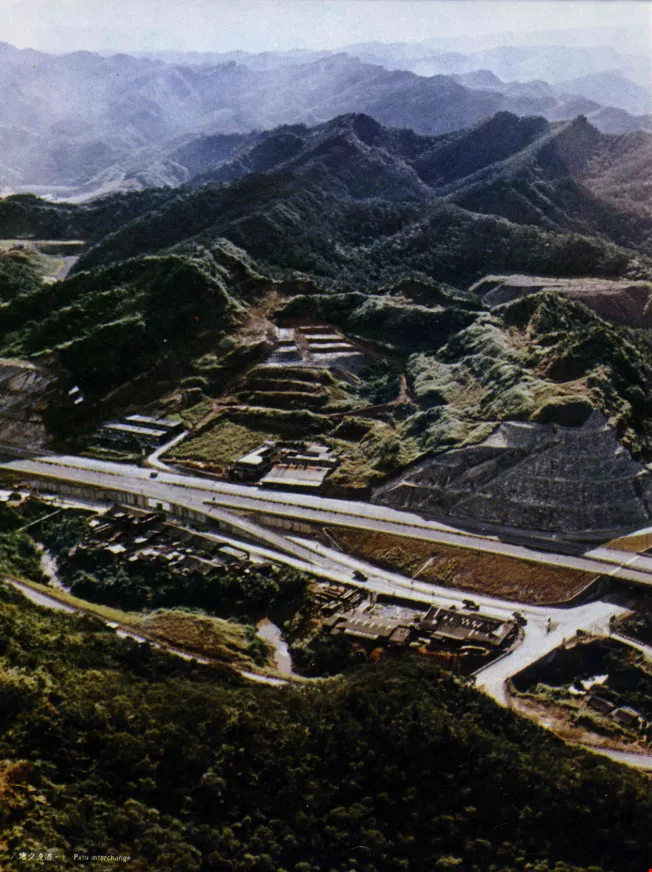
Patu interchange
Picturesque scenery along the North-South Freeway


@List.jpg?w=522&h=410&mode=crop&format=webp&quality=80)


