

At the end of August, hurricane Katrina devastated New Orleans, a city renowned for its jazz and tourist attractions. Enormous 20-meter waves broke through levees, flooding much of the city and causing heavy casualties. The Big Easy was left in ruins.
Several years ago, the South Pacific island of Tuvalu began facing the threat of destruction at the hands of the rising sea level, which would force its residents to emigrate to New Zealand.
These alarming disasters are not aberrations. The climatic changes brought on by global warming--record-setting rainfalls, typhoons, heat waves--have made themselves apparent repeatedly in recent years. The blame for warming climates falls squarely on humans, who produce greenhouse gasses, such as carbon dioxide. To counter global warming and put a stop to unrestrained growth in greenhouse gas emissions, many countries around the world signed on to the Kyoto Protocol in 1997. The hope was that concrete action to share the burden of reducing emissions of greenhouse gases could stop the climb in average temperatures.
After a long period of dispute, the Kyoto Protocol finally took effect in February of this year, presenting humanity with an opportunity to change its destiny. Or is it, merely delaying the inevitable? What will be the impact on Taiwan, which though it was not a signatory to the Kyoto Protocol, still badly needs an approach for limiting carbon dioxide emissions that are increasing every year?
Claimed to be the biggest World Expo in 150 years, Expo 2005 opened in Aichi, Japan in March of this year. With "Nature's Wisdom" as its theme, the Expo guides people through an imagining of future lifestyles.
At the Expo venue, a specimen of a frozen wooly mammoth discovered in Siberia reminds visitors of the seriousness of global warming. In addition, battery-powered streetcars transport riders among the six exhibition areas at the 170-plus-hectare site, while fuel cell-powered buses connect the two main Expo venues--demonstrating the organizers' ambitions to highlight the importance of new power sources. At the rest plaza for visitors, a giant wall of flowers and greenery called the bio-lung prompts visitors to envision a healthy, environment-friendly urban lifestyle. Also on display are several bamboo charcoal products that Taiwan was invited to exhibit and that are all the rage in Japan, where their organic and energy-saving qualities have particular appeal. The spectacular event has come to an end, but the concepts of sustainable development conveyed everywhere at the Expo may continue to linger in the minds of the tens of millions of visitors from around the world.
Indeed, the crises represented by climate change and fossil-fuel shortages have already become the most severe challenges confronting the world in the new century.
In April of last year, a confidential document from the US Department of Defense warned that by 2020 climate change could lead to large-scale food and water shortages. Large numbers of people around the world could thereby be forced to move to regions with milder climates, compelling the US to close its borders, and perhaps even leading to nuclear proliferation and war. When the news was leaked, it caused consternation around the world.
New tasks for the new century
"Just as human beings lack experience in living with new pathogens, we are unfamiliar with climate change and alternative energy sources," explains Niven Huang, secretary general of the Business Council for Sustainable Development. After the UN ratified the Framework Convention on Climate Change (FCCC) in 1992, no progress was made in discussions among countries, as the terms of the agreement were not binding. Finally, in 1997, the legally binding Kyoto Protocol was drafted, clearly setting out obligations for countries in reducing carbon dioxide emissions. It required that 38 of the world's developed countries reduce greenhouse gas emissions to levels 5.2% under those in 1990. Because reducing emissions would have a serious impact on national economies, the date on which the Protocol's provisions were to take effect waspushed back seven years. During this process, countries were accumulating data and experience through the study of relevant issues in the quest for a viable approach.
Over the past several years, though the EU and Japan have strongly supported implementation of the Kyoto Protocol's mechanism for controlling overall emissions, the US--the world's largest emitter of carbon dioxide--continued to resist. President Bush believed that unless the Kyoto mechanism was applied to developing countries, especially China and India, which would see large increases in energy demand in the future, even US achievement of emission reduction targets would not be enough to counter the growth in global greenhouse gas emissions. The US is counting on technological solutions, such as the development of low-emission and carbon-scrubbing technologies, and an acceleration of R&D for new energy sources. At the same time, it is pursuing increased energy efficiency and proposing an emission reduction regime based on "energy density" (the quantity of greenhouse gas emissions per unit of GDP).
In recent years, Europe and the US have seen repeated political, diplomatic, and economic jostling over responses to the greenhouse gases issue. These conflicts have led to a great deal of uncertainty over future developments, and caused many countries to take a wait-and-see attitude. "However, whatever approach is adopted, countering climate change and reducing greenhouse gas emissions is inevitable," asserts Huang, who has observed international trends over an extended period.
Carbon dioxide emissions rising
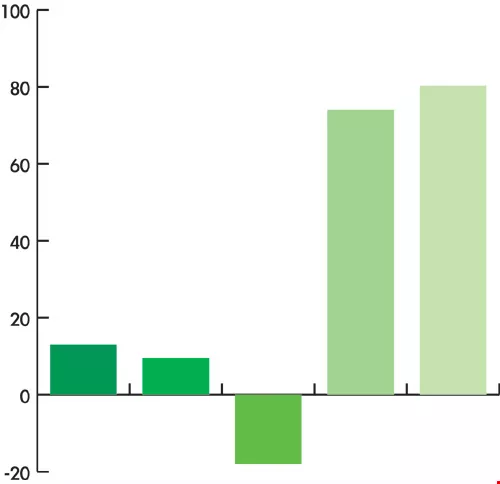
Taiwan produced an estimated 230 million metric tons of greenhouse gas emissions in 2003, or about 1% of the world's total, ranking it 22nd globally. Seven years ago, after the announcement of the Kyoto Protocol, the government responded by holding the National Energy Conference, agreeing at the meeting to concrete goal of restricting emissions in 2020 to 2000 levels. However, over the past several years, with the status of the Kyoto Protocol still in flux and Taiwan's greenhouse gas emissions increasing year-ly, Yeh Jiunn-Rong, a minister without portfolio in the Executive Yuan admitted that Taiwan's situation was "quite dire." Based on current levels of emissions, meeting the target will be nigh on impossible.
Entering the post-Kyoto Protocol era, Taiwan--considered by the international community to possess strong economic fundamentals--cannot avoid facing the responsibility to reduce emissions. At the National Energy Conference held in June of this year, the academic community reached consensus that the earlier Taiwan reduces emissions, the less costly it will be. An early start would also make the economic impact less severe. To achieve this objective, the government has set emission reduction policies in the four major areas of energy, industry, transport, and the residential/commercial sectors.
The policy areas giving rise to the most controversy are, naturally, those at the core of economic development--industrial and energy policy. Liu Chung-ming, director of the Global Change Research Center at National Taiwan University, states that the government's policy on industry's responses to greenhouse gas emissions start with the goal of avoiding international sanctions, making them overly reactive in nature. He suggests that this campaign to save the planet be seen instead from the perspective of national advancement and the creation of business opportunities.
"Looking at human history, crises have generally also been opportunities. Advanced countries use the suppression of energy-intensive industries to build up knowledge-based economies and develop high-value-added industries. On the one hand, emissions are reduced, while on the other, high rates of economic growth are made possible, creating a virtuous cycle," says Liu earnestly.
The energy sector is a good example. In the past only a few countries showed rapid industrial development. Now, however, the entire world is developing industrially, with the result that the day when energy resources are depleted may be approaching much more quickly than we anticipated. Hence, development in of energy sources, energy resource recycling, and new production technologies hold the prospect of enormous business opportunities. However, Taiwan's industrial policy has not been backed up by concrete action.
Various environmental groups have repeatedly called attention to the govern-ment's having missed the opportunity to facilitate industrial transformation over the past few years. They noted that if the government approves construction of For-mosa Plastics' energy-intensive steel refinery and Chinese Petroleum Corporation's No. 8 Naphtha Cracker plant, these pro-jects once online will exacerbate environmental problems. Also of concern is Tai-wan's deficient investment in resource recycling, which will lead to a loss in competitiveness as energy industries evolve.
In contrast, a greater consensus exists in different quarters about energy-efficiency policies for the transportation, residential, and commercial sectors, as their impact on the economy is less.
Looking at the sources of greenhouse gas emissions, besides the 55% stemming from industrial activity, another 40% are collectively produced by the transportation, residential, and commercial sectors. Each of these sectors is related to general public's choices in food, clothing, housing, and transportation. Once greenhouse gas emission reduction measures are implemented, will it lead to strong public resistance or a willingness to go along? There is scant reason for optimism on this score.
18 million motor vehicles
Of all aspects of people's lifestyles, transportation is the one most directly related to greenhouse gas emissions. Because the gasoline used by motor vehicles is refined from petroleum, and the refining process produces large volumes of carbon dioxide, reducing carbon dioxide emissions requires reduction in motor vehicle usage and increasing the energy efficiency of vehicles.
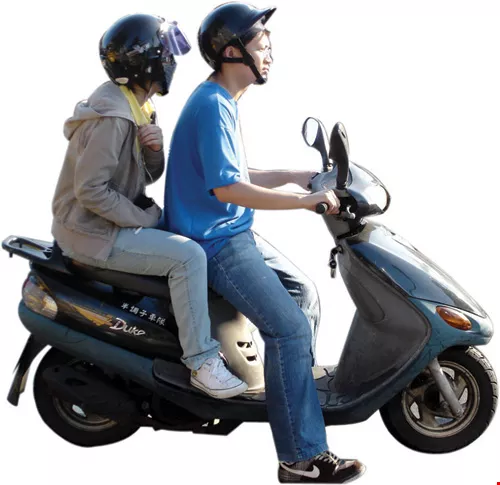
According to statistics, Taiwan's rate of annual population growth over the past ten years has been 0.67%. However, the annual increase in the number of motor vehicles in use has been nearly 6%, with growth in the numbers of cars and motorcycles accounting for 90% of that increase. Figures from the Ministry of Transportation and Communications show that in 1995, of the 13-million-plus motor vehicles registered, cars and motorcycles accounted for more than 12 million. In 2004, the total number of motor vehicles had increased to more than 19 million, with cars and motorcycles numbering more than 18 million. Moreover, Taiwan lacks regulations on compulsory de-registration of end-of-life vehicles, with the result that the roads are filled with old vehicles that not only increase driving risks but also waste energy and pollute.
"Up to now, the development of the domestic transportation system has not followed a sustainable approach," says Shiau Tzay-an, a professor in the Department of Harbor and River Engineering at the National Taiwan Ocean University (NTOU). Carbon dioxide emissions from the transport sector are dominated by those produced by vehicles on highways, accounting for 80%. In recent years, despite the construction of the Taiwan High-Speed Rail and mass transit train systems in Taipei and Kaohsiung, government policy that emphasizes the construction of highways over railways has not been significantly altered.
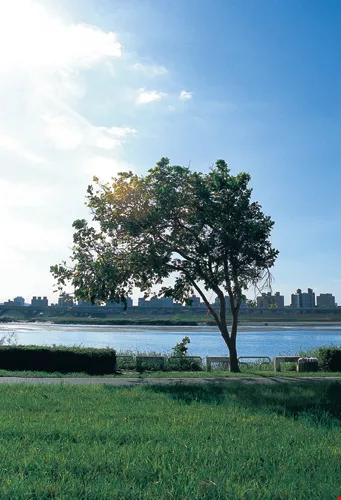
Because road vehicles offer the convenience of point-to-point transport, added to low gas prices that make driving economical, the public is naturally inclined to buy and use cars. The result is a steady increase in the number of passenger cars, which in turn leads to congested roads, compelling continual road construction. "There are even those who propose making the Taipei-Ilan Expressway toll free," laments Huang Guo-ping, associate professor in the Department of Transportation and Communication at National Cheng Kung University (NCKU).
A craze for roads
NTOU's Shiau points out that because the expense of constructing transportation systems is enormous, with a small number of exceptions such as Taipei, Taiwanese cities still lack convenient bus or commuter train systems. In industrial societies, with their demand for efficiency, the numbers of motorcycles and passenger cars naturally continue to increase.
In addition, the technology for low-polluting, energy-efficient means of transportation, such as new diesel-fueled vehicles, and the technology for using alternative power sources such as fuel cells and biofuels in motor vehicles has seen considerable progress over the past few years. However, the associated costs remain high. The gasoline/battery-powered hybrid car, for example, can travel 20 kilometers on one liter of gasoline, fuel efficiency that is far higher than the 12 to 15 kilometers per liter of gasoline achieved by regular cars. This greater fuel efficiency can significantly reduce carbon dioxide emissions, but how can a vehicle costing NT$1.3 million gain widespread adoption? Although the government is contemplating subsidies for buyers, consumers would still face a price tag of more than NT$1 million.
A referendum on transportation?
In theory, once mass-transit trains, the Taiwan High-Speed Rail, and the national railway system provide sufficient coverage, and there is a convenient system of bus connections and transfers, introducing economic incentives--such as increases in parking fees, levying charges for passenger cars entering urban areas during morning rush hours, and add-on taxes for fuel--should easily persuade drivers and motorcycle riders to use mass transit instead.
However, there is always a disparity between what is achievable in theory and in practice. For example, in the greater Taipei metropolitan area, the Mass Rapid Transit system is already quite convenient to use, but downtown areas remain plagued by congested traffic. Many scholars believe that with the citizenry accustomed to relying on cars and motorcycles, convincing them to revert to a more spartan lifestyle will require establishing the concept of "green transportation" as soon as possible.
"In Tanshui, for example, there are bus routes going nearly everywhere." says NTOU's Shiau. However, because local officials believe the public is used to riding motorcycles and insist on offering such parking, the county government has no good options. "If the people have to ride their motorcycles just to go buy something at their local 7-Eleven, how can one promote green transportation?" he asks.
When voters complain of traffic congestion, elected representatives usually respond by reclaiming sidewalks or traffic islands to make room for parking spaces, not only infringing on the rights of pedestrians but also indirectly encouraging the relentless growth in the number of privately owned vehicles.
"Implementing policies for sustainable transportation depends on awakening public opinion," asserts Sun Yi-chun, a general supervisor at the Chinese Institute of Transportation. He points to Bogota, Colombia, as an example. Besides restricting the entry of cars into downtown Bogota during rush hours based on the last number on their license plates, the passage of a referendum paved the way for prohibiting all private passenger vehicles in the entire city during rush hours beginning in 2015. With proven results in promoting sustainable transportation policy, Bogota's mayor has not only received international environmental awards, but will run for president in the next election. His example makes it evident that if only appropriate leadership is provided, public opinion can provide a powerful bulwark for policy implementation.
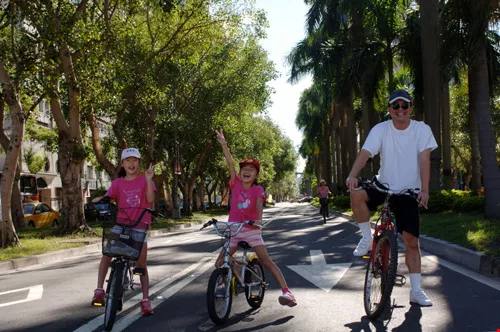
On Car Free Day, which takes place on September 17 every year, the public enjoys riding bicycles on the verdant downtown streets. The concept of more environment-friendly transport is only now gaining traction in Taiwan. Widespread adoption of such transport remains a long way off.
Cold summer
Another element in daily life that has a big impact on greenhouse gas emissions is household electricity usage. Because the process of burning coal or natural gas to generate electricity produces a great deal of carbon dioxide, reducing emissions will have to affect electricity usage.
During the summer this year, after the Taiwan Environmental Protection Union surveyed the indoor temperatures at Taipei convenience stores, supermarkets, and department stores, it released a report on its findings. The report revealed that while the outdoor temperature on the day of the survey was 36 degrees Centigrade, indoor temperatures at the surveyed locations averaged between 20 and 23 degrees, with one as low as 18 degrees--not only wasting electricity, but also endangering people's health.
According to statistics on the total electricity consumption at various types of buildings in Taiwan compiled by the Department of Architecture at NCKU, shopping centers consume 445kWh per square meter, 100 times more than the 30 to 50 kWh per square meter recorded for residences and school buildings. Buildings with central air conditioning, such as tourist hotels and hospitals, also consume electricity at high rates. (see chart)
"Major consumers of electricity use most of the power for air conditioning and illumination, about 80%," says Wang You-hsuan, an IRSD researcher of the Ministry of the Interior's Architecture and Building Research Institute, explaining that the central air conditioning systems in the buildings of both governmental organizations and the private sector are "over-designed." They are quite inefficient, because the capacity of an air conditioning system is proportional to the building's design fee, leading architects to specify excessive capacity for the air conditioning system as a way to inflate design fees, with the result that air conditioning systems typically have excess capacity of more than 30%. Besides often leading to some equipment being left idle, excess capacity causes energy efficiency to reach only 50%--and the lower the energy efficiency, the more electricity that is consumed. Such waste "is like a family buying a bus to take their children to school," says Lin Hsien-te, a professor in the Department of Architecture at NCKU.
Additionally, improper design of the building itself is a major reason for excess electricity consumption. Professor Lin explains that the larger the area of a building's windows, the more sunlight that shines inside, and the more electricity that is consumed to keep the interior cool. An appropriate window-to-wall ratio (WWR, the proportion of the total wall area occupied by windows) for most buildings is 30%. Another percentage point of window area increases electricity consumption by 1%, but some architects in their quest for stylish aesthetics, may design floor-to-ceiling windows that account for 100% of the building's wall area.
According to Professor Lin's research, the excellence of a building envelope's design can result in a four or five-fold difference in electricity consumption.
"It is difficult to reach targets of 10 to 20% power savings for industrial products and motor vehicles, but it is easy to obtain considerable savings with little effort for buildings," notes Lin. At the same time, because Taiwan's buildings have a lifespan of 40 or 50 years, the impact of power savings is long-term.
Besides the building envelope design and air conditioning system, the lighting system is another area that can serve as an indicator of a building's energy efficiency.
Open all hours?
According to figures from the Taiwan Power Company, illumination accounts for 15% of overall electricity consumption in Taiwan, and is growing by 10% annually. Lighting in commercial buildings, such as tourist hotels and office buildings, accounts for 30 to 40% of their total electricity consumption. As Lin points out, electrical lighting in Taiwan's businesses is certainly wasteful. For example, the island's 7-Eleven stores are completely lit up around the clock, with the lighting both indoors and outdoors not turned off even during the day. Electricity consumed for illumination is at least twice that used in 7-Eleven outlets overseas.
Switching to power-saving light bulbs is the key to increasing the electrical efficiency of lighting. Fluorescent bulbs with electrical stabilizers can reduce power consumption by 30% compared to traditional fluorescent bulbs. The electricity consumed by incandescent bulbs is not only three times greater than that for energy-efficient bulbs, but they radiate five times as much heat, making the substantial difference between them self-evident.
To improve the poor energy efficiency of Taiwan's buildings, the government has already decreed that critical elements such as the building envelope, air conditioning system, and illumination be included in the "green building provisions" for buildings' technical specifications. The policy officially took effect in January of this year, and henceforth, all new buildings must be designed in conformity to the "green building" standards.
This innovative new policy will help gradually make the country's stock of buildings more energy efficient, but the regulations cover only new buildings. As for the other 97% of buildings in Taiwan that were built before the rules came into effect, how can their energy efficiency be improved?
To resolve such dilemmas, the US, with its emphasis on using energy efficiency to reduce greenhouse gases, has already developed a new service industry around energy service companies (ESCO).
The main clients for ESCO services are commercial buildings and factories. The ESCO first performs an "energy consumption diagnosis" for the client, and then provides either energy-saving equipment or other concrete measures to reduce energy consumption. The most distinctive feature of an ESCO is that they do not require customers to make large initial outlays for equipment expenses, but can instead pay on an installment basis, drawing on the savings created by reduced power consumption. Customers thus are not tempt-ed to refuse because of an unwillingness to spend. In Taiwan, the Ministry of Economic Affairs' Bureau of Energy is planning to follow America's lead, promoting an ESCO industry as a means of increasing national energy efficiency.

Getting the public's attention
Large energy consumers have much scope for reducing power usage. However, the necessary building improvements and facility upgrades are complex. The approach for families is much simpler, consisting of the use of power-saving light bulbs and appliances, especially large appliances such as air conditioners, refrigerators, and electrical heaters. The govern-ment's Energy Label program and international Energy Star standard provide excellent guidance for purchasing decisions.
Regrettably, measures such as increasing the temperature in every retail outlet and cinema by 1 degree, reducing the number of light bulbs above each person's head by one, and turning off lights and unplugging machines when not in use, while seemingly easy to implement, have had little effect despite having been promoted for many years.
Scholars and environmental workers all point to electrical power as being too inexpensive in Taiwan. Any appeal to consci-ence is no match for resistance to a rise in the cost of electricity. With energy efficiency the policy direction for the residential and commercial sectors, after twenty years of holding the cost of electricity steady, the time to raise fees is at hand.
The Business Council for Sustainable Development's Niven Huang notes grimly that the long-term failure to adjust electricity prices has not only led to a lack of progress in raising Taiwan's energy efficiency, but also threatens the sustainable operation of power generation plants. Even more importantly, so long as government subsidies for water and electricity continue to exist, it will be difficult to arouse consumer awareness of the need to conserve energy. Renewable energy sources and new energy industries will find little room to survive, and the country's overall competitiveness in the future will become a cause for concern.
NCKU's Lin states that in fact the public need not panic over increases in utility prices. "If you don't use a jacuzzi or keep your air conditioning running 24 hours a day, the increase won't have much effect," he explains. That is because the increases will fall most heavily on heavy energy consumers due to the progressive charge structure.
"Consumers often blame global environmental damage on the goods producers. But that is a fallacy," says Consumer's Foundation founder Chai Sung-lin, who began promoting environmental consciousness 30 years ago. He says that although the various forms of pollution and public harm caused by industrial production cannot be denied, the ultimate source of all environmental problems is the consumer himself. As consumers face a rapidly deteriorating situation, he asks: "Do they want to ruin the environment and finally destroy themselves alongside the environment, or do they want to be the environ-ment's savior? It all depends on how much thought people give to the problem, and the choices they make."
Therefore, it wouldn't hurt for people to contemplate a picture of a future environmentally conscious lifestyle. Take the MRT to work--though it's a little crowded, it runs on time and is safe. After getting off, walk on sidewalks adorned with greenery and not congested. In the quarter-hour or so it takes to get to the office, the entire day's work has already been planned out. The air in the office is fresh, not causing yawns or constantly runny noses. In the evening, return to a green haven. A simple dinner is made with a gentle evening breeze blowing, and after the meal, the television and air conditioner are shut off. Take the children to a neighborhood park to talk and play. Each month the considerable sums for using a car and consuming electricity can be saved, and life becomes more carefree and gratifying.
The Canadian government set a challenge for its citizenry to reduce greenhouse gas emissions by one metric ton for each person each year, encouraging every person to do his part in reducing energy consumption. Boasting that they are world citizens, will Taiwanese choose to boldly take responsibility for the future of the Earth, and take the first step toward change, or will they continue to watch from the sidelines?



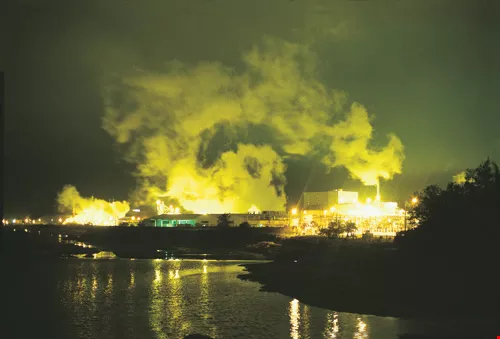
Billowing smog from the combustion of petrochemical fuels has created a bizarre spectacle in the sky. The Kyoto Protocol, which is leading a global effort to restrict carbon dioxide emissions, has finally taken effect. Whether a global disaster can be avoided will depend on the choices that humanity makes.
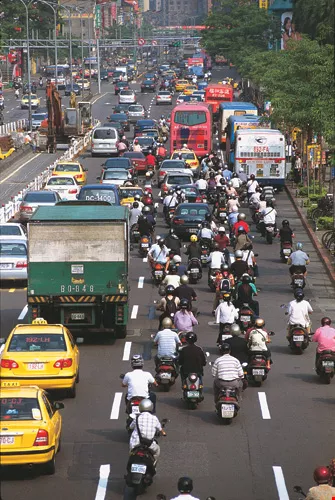
Taiwan will have to do its part to reduce carbon dioxide emissions. Once it has implemented appropriate measures, various sectors--such as industry, transportation, and businesses--will be impacted. However, from the continuing growth in the numbers of cars and motorcycles, it seems likely that Taiwan has a long way to go before it is successful in reducing emissions.
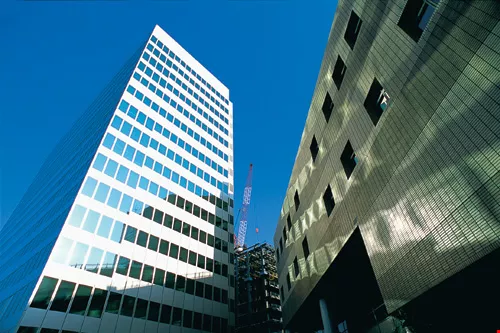
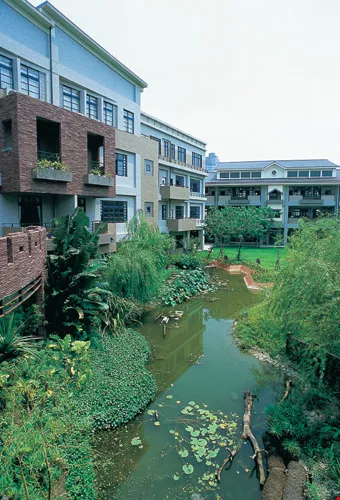
A building enveloped in glass absorbs heat, qualifying it as "green" in a temperate zone. But in Taiwan, with its subtropical climate, such a building merely wastes energy.
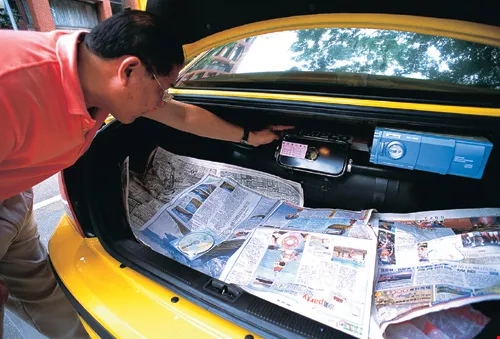
Low-polluting, fuel-efficient transport will become the rule in the post-Kyoto Protocol era. Environmental groups are calling on the government to devote more R&D funds to the area. The photograph shows a taxi that uses natural gas as fuel. Such taxis are gradually becoming more commonplace.

@List.jpg?w=522&h=410&mode=crop&format=webp&quality=80)


@List.jpg?w=522&h=410&mode=crop&format=webp&quality=80)
@List.jpg?w=522&h=410&mode=crop&format=webp&quality=80)
