Dabbling in Saucery--Artisan Producers Bring Back the Magic
Chen Hsin-yi / photos Chuang Kung-ju / tr. by Scott Williams
July 2009


Sauces are the heart and soul of fine food. Whether drizzled on, dipped in, or mixed with, whether added while simmering, frying, or steaming, sauces deliver colors and flavors that exponentially expand the possibilities of your ingredients.
Tastes change over time, and sauces and flavors can undergo huge transformations as they migrate from their origins to widespread consumption. Nonetheless, Taiwan is home to a slew of saucemakers who are preserving artisan methods and traditional approaches, and creating new flavors from premium ingredients. Helping these craftsmen are a small number of gourmet shopkeepers busily promoting their products, pushing these unsung heroes of the pantry out into the limelight. Together, they are making Taiwan's foodies more keenly aware and appreciative of local sauces.
The Azhibao handicrafts shop on Hualien's Zhonghua Road greets you with shelf upon shelf of adorable, finely made handicrafts of every size, shape, and color. Once you've negotiated the rows of cute, you suddenly find yourself facing a wall lined with strange-yet-familiar products that somehow warm your heart and your belly. It's as if you've entered a kitchen at that magic moment when its warmth and delicious scents awaken your senses to the five flavors, or heard again your mother's beloved chatter.
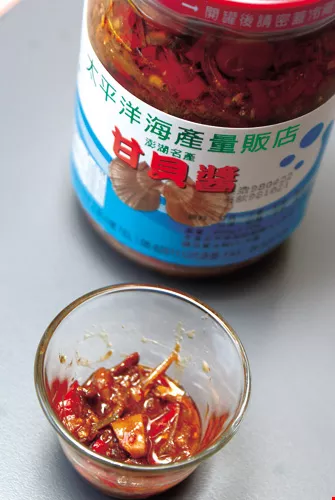
More than 60% of the food-related products Pekoe sells are Taiwanese. In an effort to foster a sense of place, the shop clearly indicates where the ingredients in each product were grown, where the item was produced, and who made it.
Precious seasonings
Open less than three years, Azhibao's goal is "to gather together all the good things in Taiwan." Owner Chen Xiumei came to Hualien when she married over a decade ago. Both Chen and her husband Zeng Mingcheng worked in publishing and are well acquainted with the appeal of the creative-cultural industries.
When Azhibao moved last May to its current location in an 80-year-old wooden building, it added more than 90 new handmade products to its shelves and opened a new section for traditional sauces and seasonings. The section features nearly 20 classics, cleverly referred to as "the unsung heroes of the dinner table," made by renowned artisan producers from all over Taiwan. Many of these products have never before been available outside their own neighborhoods, much less in conventional supermarkets, but have long been the talk of their areas, prized by local eateries and even renowned restaurants.
How did Azhibao get its hands on these "unsung heroes"? Chen assembled a list of local specialties and traditional shopping districts using online and printed references, then spent three months checking them out in person. She was surprised to find these craftsmen stubborn and temperamental. "The most difficult and important task I faced was persuading these old firms to deliver their goods to me," she recalls.
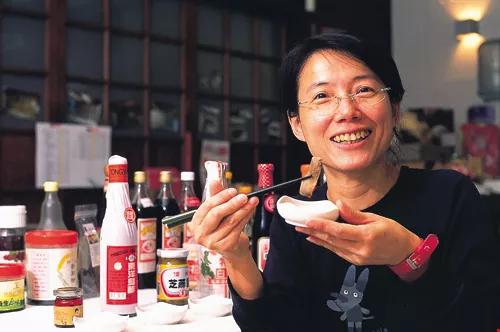
How is it that some bottled sauces electrify the palate? It's not just that they've been around a long time; it's the experience and attention to detail that their makers pour into them. Whether old standbys or innovative experiments, such sauces command our attention. The photo shows Chen Xiumei, owner of Hualien-based artisan goods retailer Azhibao.
Craftsmen
Chen explains that family-owned artisan shops use meticulous, time-consuming processes to produce limited volumes of goods. They can't compete on price with manufacturers that use large volumes of chemical additives and industrial processes to mass-produce goods, so they typically stick to more traditional distribution networks. In the more rural parts of central and southern Taiwan, supermarkets, big-box retailers, and other large distributors are rare. As a result, most consumers are in the habit of buying from traditional grocers and even directly from producers working out of home-factories. "These consumers often buy one or two years' worth of such items at a time, storing them in their homes and using them as they need them," says Chen. Sending small volumes of their products all the way to Hualien, a place with which they had no contact, just sounded silly to artisan producers.
Another issue for Chen was that all the business owners she contacted were at least 50 years old, and some were in their 60s and 70s. They put all their energy into their traditional work, and had neither aptitude for nor interest in sales. The younger generation wasn't much interested either, preferring to minimize hassles by keeping things as they were.
Interestingly, it was Chen's explanation that her goal was to gather traditionally made artisan goods from businesses around Taiwan that caused these owners and craftsman to prick up their ears and ask which brands she was including. "Once a couple of producers had agreed, it got much easier. They felt that going up against respected rivals wouldn't sully their reputations. Some of the guys would test me to see how much I knew about traditional brands. To them, trust was more important than profit."
A tour of these traditional workshops showed Chen the bottleneck they face in passing on their skills and the sincerity and drive of these master craftsmen. As many put it, they derive their greatest sense of accomplishment from the fact that their customers enjoy their products and that some locals who have moved away come back especially to buy their brands. Exceptionally concerned with their reputations, these craftsmen don't wait for the government or consumers to sample and test their products, but are in there every day doing it themselves. They take seriously the old adage about one's honor being second only to one's life.
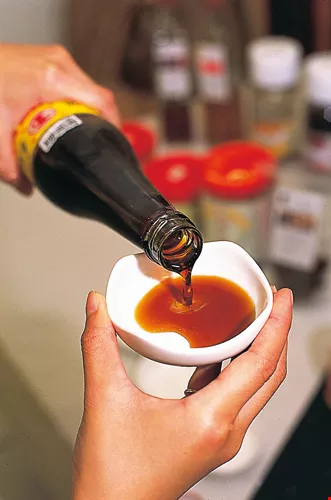
A foodie opens a shop
People recognize good things when they see them. At her Pekoe gourmet foods shop in a quiet alley near Taipei's Ren'ai traffic circle, food writer Yeh Yilan explains her criteria for "outstanding sauces": 1) they taste good; 2) they have a distinctively local character; 3) their production processes are as environmentally friendly as possible; 4) they are handmade on small farms or in small workshops using traditional techniques.
Pekoe originated as a store on the Yilan's Fine Foods and Living website. The name is a reference to "orange pekoe," a grade of black tea, and suggests the beginnings of attention to quality.
Yeh admits her food writing used to focus on describing experiences abroad, and when she set up the website six years ago, she focused on imported goods. But in recent years, she's turned her attention more towards Taiwanese flavors. Her tasting trips into the countryside have inspired a more "Taiwanese" orientation on the site. Since opening in September 2008, the brick-and-mortar incarnation of Pekoe has rolled out a new item every week and carries more than 500 products, nearly 60% of which are Taiwanese, including everything from flavorings like soy sauce to honey, black teas, jams, plum wines, preserved vegetables, dried fruits, and even rice.
But her original impetus for opening the shop was her eye-opening European food experience. "As we enter the 21st century, the whole world has begun reflecting on the ills associated with large-scale industrial agriculture. Small, idealistic food shops have begun appearing in many European cities with the goal of helping preserve local traditions, small farms, and small workshops. They are offering ideological resistance to major transnational brands, mechanized production, and bargain-basement pricing."
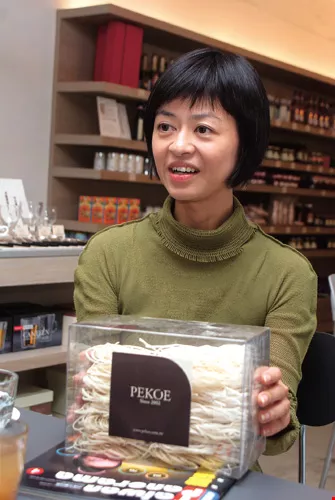
Yeh Yilan, a writer who has made her living promoting fine foods, says that producers who wish to pass their artisan techniques and their firms down through the generations must have realistic business models and must cultivate a sense of pride in the craftsmanship.
New twists
Pekoe, sharing this objective, carries many products that provide innovative takes on traditional flavors, as well as outstanding offerings of traditional artisans. These new brands' founders are ambitious and idealistic. Many traded notes with Yeh during product development, and gave meticulous thought to everything from flavor profiles and production processes to list prices and packaging.
"You have to be able to turn good products, good sauces into good word-of-mouth and long-term sales," explains Yeh. "You really have to communicate with modern consumers." She says that in recent years she's worked out three key things you have to be clear about.
The first is price: You have to make consumers understand that items made by hand with local ingredients in limited volumes are more expensive to make and may cost even more than imported items. The second is palate training: Seasonings and sauces made in the traditional way have a more "rustic" flavor than those made with man-made additives. "People's taste buds need training; they need to settle down before they can truly appreciate how fine these flavors are," says Yeh. The third is use-by dates: The products contain no preservatives. They are natural, delicious, and healthy, but also people need to care for them, treat them with respect, and consume them before their "use by" date.
In its six years in business, Pekoe has grown into one of the best platforms for introducing new local products in Taiwan. Yeh's business model has also transformed over the years. Instead of looking everywhere for new products, she now holds weekly tastings of dozens of samples sent by producers.
"I hope Pekoe leads more people to think about the feasibility of combining development with sustainability in Taiwan's food-processing and agricultural industries," says Yeh, a physically small woman with seemingly boundless energy. "And I hope it helps good things and good sauces to grow long-term sales by word of mouth."
For busy modern people, sauces represent a shortcut to a tasty meal. Makers are constantly striving to develop techniques and products to enable them to deliver inexpensive, easy-to-use goods on a reliable basis. Today's growing interest in traditional flavors is helping to bring the simple honest old-time flavors to the consumer, while also shining a spotlight on artisan saucemakers.
Biography of a Sauce
(Chen Hsin-yi/tr. by Scott Williams)
Different climates, soils and cultures invariably give rise to different sauces. For example, China and Japan excel at producing oils and sauces from beans and grains, and constitute what might be called a "grain-based sauces zone." The Mekong River area, on the other hand, is rich in fish products and forms a "fish-sauce zone."
The existence of sauces is first recorded in two Zhou Dynasty classics. The Rites of Zhou and The Book of Rites both mention intrinsically tasty pairings of sauces and foodstuffs, and delve into the dining etiquette of the nobility. But most of the sauces in those days were meat-based, and involved fermentation with alcohol and salt. As the sauce-making arts developed further in the Han Dynasty, "sauce" came to refer to the bean-based sauces of the heartland (like soy sauce and fermented bean sauce), as well as wheat-based sauces like sweet flour sauce. These are the roots of the "grain-based sauce zone," where flavorings such as pickled vegetables and meat sauces take a back seat to grains and beans.
Taiwanese seasonings have their origins with immigrants from Fujian Province in mainland China. In the old days, the common folk's diet was largely flavored with salt and oils, inexpensive ingredients that gave a quick burst of energy. Almost every household produced its own soy sauce, using it both to flavor and preserve foods.
During the Japanese era, sauce-production technologies, business structures, and consumer tastes all underwent major changes. But traditional techniques and family-owned workshops didn't die out entirely in spite of going into decline.
For example, although industrially produced yellow-soy-based soy sauce dominates the market, some old brands continue to make a sauce from black soy beans, salt, and glutinous rice. And old brands like Xiluo Soy Sauce and Beigang Sesame Oil have turned themselves into important local business and cultural stars by means of invented traditions.
Soy sauce, rice wine, sesame oil, black beans, and flaked shallots are among the most common flavorings in contemporary Taiwanese cuisine. Sweet chili bean sauce, a salty-sweet night-market favorite made with bean paste or miso, chilies or black pepper, and licorice root or plums, and occasionally thickened with corn starch, may well be the most Taiwanese of dipping sauces.
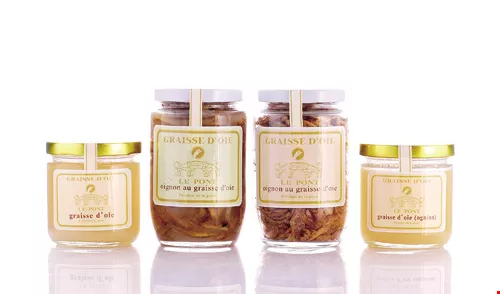
(below) The introduction of goose-fat-based flaked shallot seasonings has reinvigorated an old Taiwanese standby.
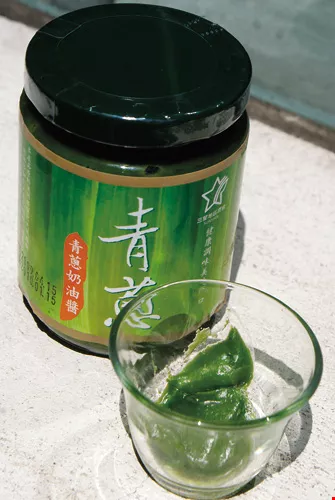
More than 60% of the food-related products Pekoe sells are Taiwanese. In an effort to foster a sense of place, the shop clearly indicates where the ingredients in each product were grown, where the item was produced, and who made it.
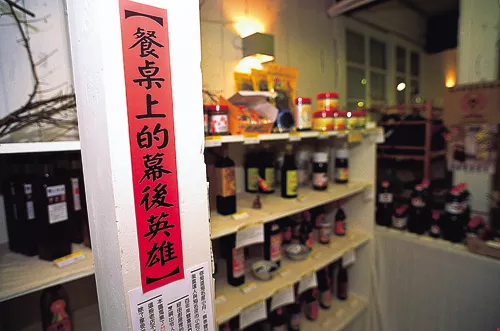
Many of Taiwan's famous old sauces are produced in small volumes, sold at high prices, and rarely found in typical supermakets. Azhibao in artisan items, gathers them all together under one roof.
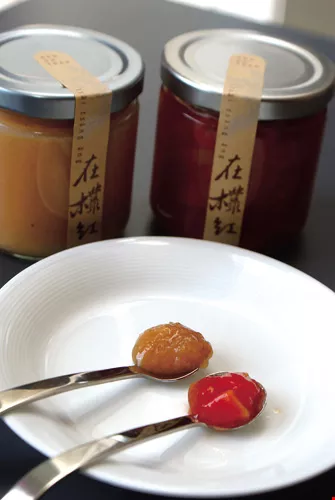
More than 60% of the food-related products Pekoe sells are Taiwanese. In an effort to foster a sense of place, the shop clearly indicates where the ingredients in each product were grown, where the item was produced, and who made it.

@List.jpg?w=522&h=410&mode=crop&format=webp&quality=80)


@List.jpg?w=522&h=410&mode=crop&format=webp&quality=80)
@List.jpg?w=522&h=410&mode=crop&format=webp&quality=80)
