Building New Bridges to Southeast Asia
Cathy Teng / photos Cheng Chi-tso and Lin Chin-ling / tr. by Jonathan Barnard
March 2016
“Teacher, what do you plan on doing during summer vacation? How about going to Thailand? Would you like to take a free trip to Southeast Asia?” These questions prompted Lin Chin-ling and Cheng Chi-tso, both teachers at Shuishang Primary School in Chiayi, to join their student Lin Qiao-han, her Thai mother Lin Yun-ning (née Saithong Phiwkhao) and her older brother, as well as Lin Chin-ling’s two sons, on a trip to Chiang Mai Province. Thanks to the Grandmother’s Bridge program, the group of seven enjoyed an unforgettable trip to Grandma’s.
Lin Chin-ling outlines the happy twists of fate that led the teachers and students to travel to Thailand together: First Qiao-han learned about the Grandmother’s Bridge program sponsored by TrendChip Education Foundation, but couldn’t find a teacher. Chin-ling originally felt disinclined to go, but Qiao-han’s earnestness made her reconsider, and a conversation with the boy’s mother Yun-ning convinced Chin-ling to make the trip. Yun-ning hadn’t been back home for many years, and her own mother had been injured in a traffic accident. Unfortunately, economic constraints were keeping Yun-ning from going home to check up on her. Not being there for her mother truly bothered Yun-ning. As a married daughter, Chin-ling understood the pain of separation from one’s family. She decided to help Yun-ning and her children by taking the trip, and specially invited the down-to-earth and enthusiastic Cheng Chi-tso, a special education teacher at the school, to go with them.

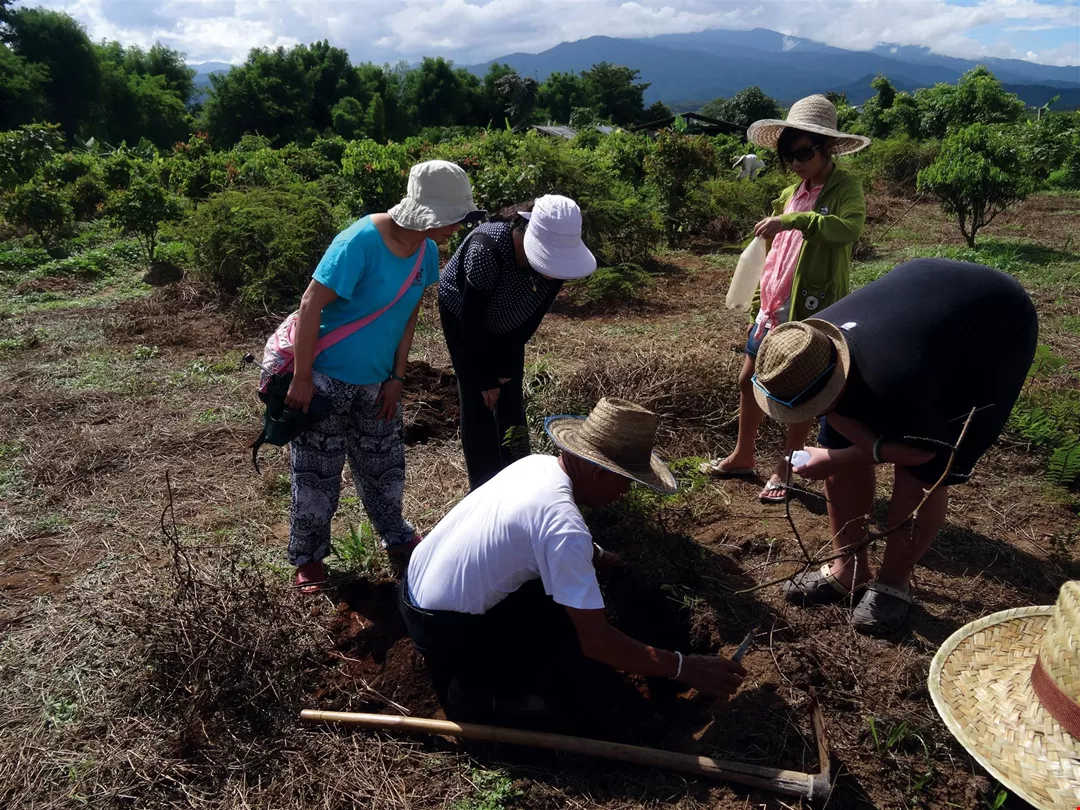
Experiencing farming life and learning from their grandfather, the children had an extraordinary summer vacation.
Taking Taiwanese children
Lin Chin-ling pondered how they could raise the likelihood of their proposal being accepted, and she came up with the idea of bringing Taiwanese children along with them, so as to highlight, from both sides, the experience of cultural dislocation and the broadening of horizons. That’s how her two sons, then in junior high school, ended up joining the group.
No one benefited from the trip more than Lin’s two sons and Qiao-han’s older brother. Previously, they knew little about northern Thailand other than that it was poor. On the trip the three had companions to share their experiences of Thai culture and life in a farming village. It was only upon seeing Qiao-han’s maternal grandfather tend to his chickens and weave rattan and bamboo that Qiao-han and her brother discovered that their mother’s homeland was interesting after all. They gained an understanding of the richness and depth of Thai culture, and they strengthened ties to their maternal relatives.

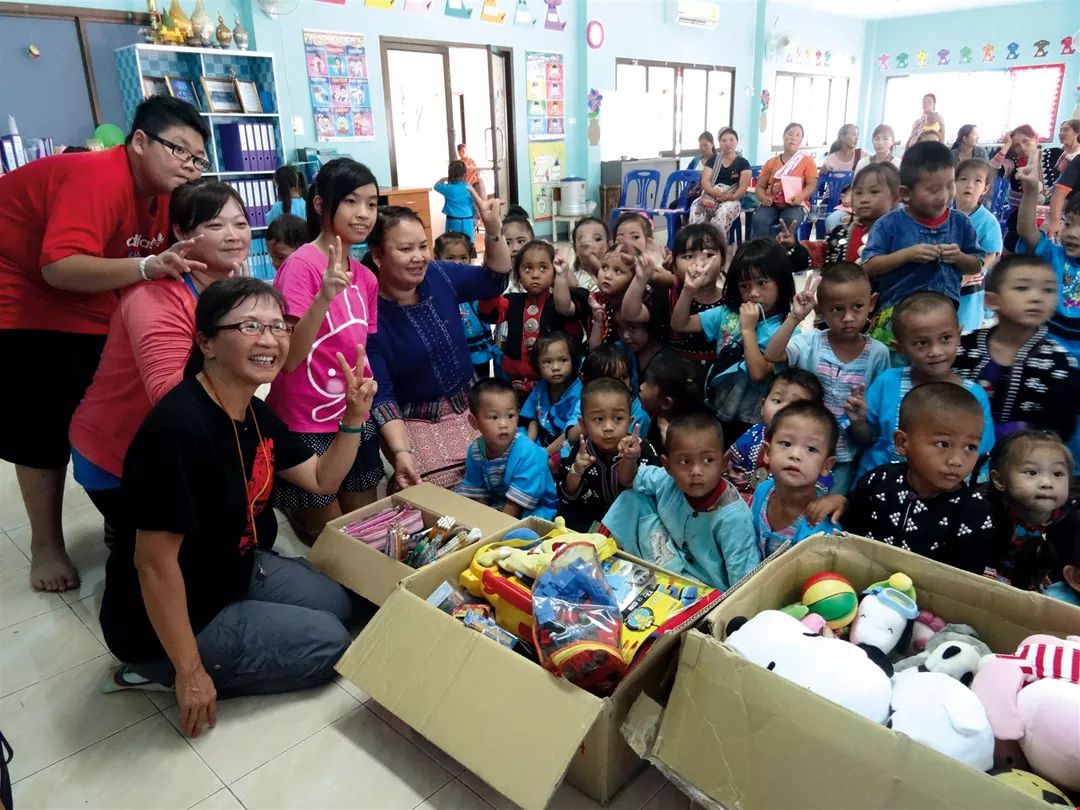
Ahead of time, they collected stationery supplies and toys and sent them on to northern Thailand, planting a flag for the Grandmother’s Bridge program before their arrival.
Collecting supplies
As teachers, Lin and Cheng were eager to learn about education in Thailand. They arranged to visit Thai nursery schools, providing the children there with used stationery supplies, toys and so forth. Collected with love, these gifts were sent to Thailand before the group arrived, allowing the Grandmother’s Bridge program to plant its flag in advance.
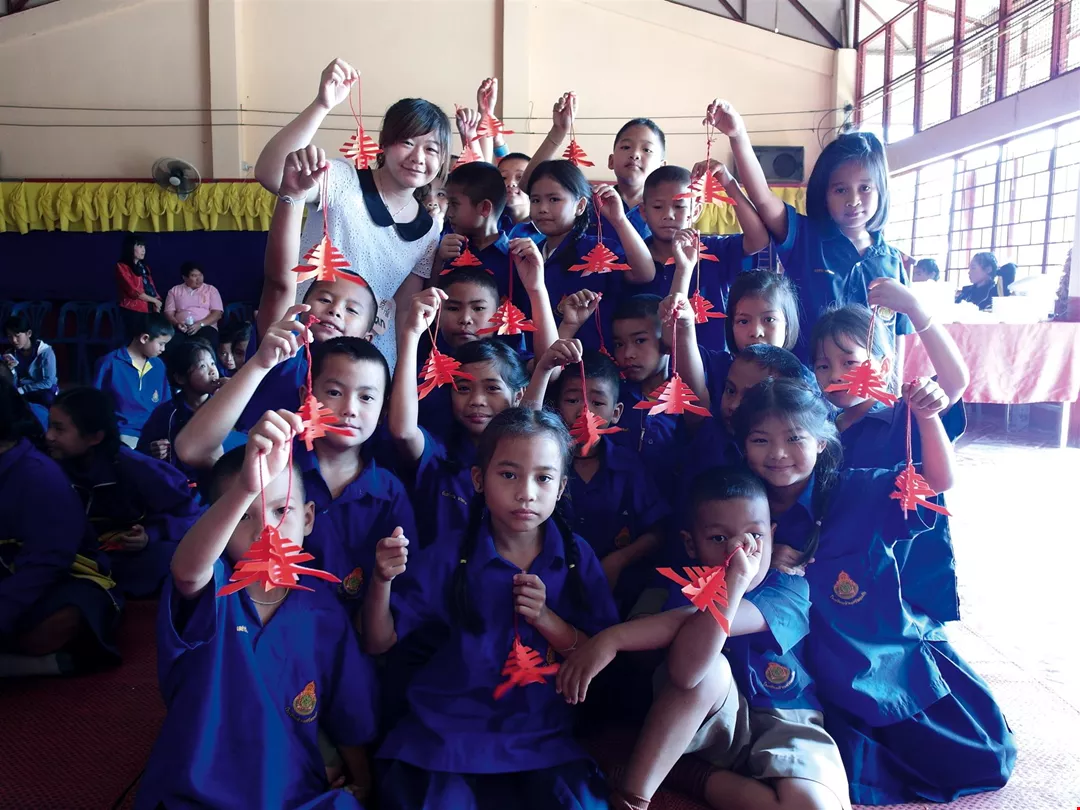
During winter vacation in 2015, the group returned to Thailand on a second visit. This time they made more thorough preparations: Cheng brought to the fore her outstanding skills as a group activity leader, leading children in playing games, singing Taiwanese children’s songs, and making paper cuttings. She excelled in guiding the children from Taiwan to engage in in-depth interactions with the local children.

For a second tour of kindergartens in northern Thailand, a Grandmother’s Bridge group brought some traditional New Year’s paper cuttings so as to share some Taiwan flavor with local children.
Building another bridge to Grandma
Chiayi County’s Grandmother’s Bridge program grew out of Lin and Cheng’s Grandmother’s Bridge trips to northern Thailand. Lacking any previous experience in fundraising, it had been a long and difficult process. Afterwards, they figured they might as well just establish a full-fledged program and association of their own. Cheng recruited principals of schools in Chiayi, including Tseng Nan-hsun and Lee Jung-shan, to help with fundraising and obtaining sponsorships from local businesses. The association wants more families to benefit from these trips.
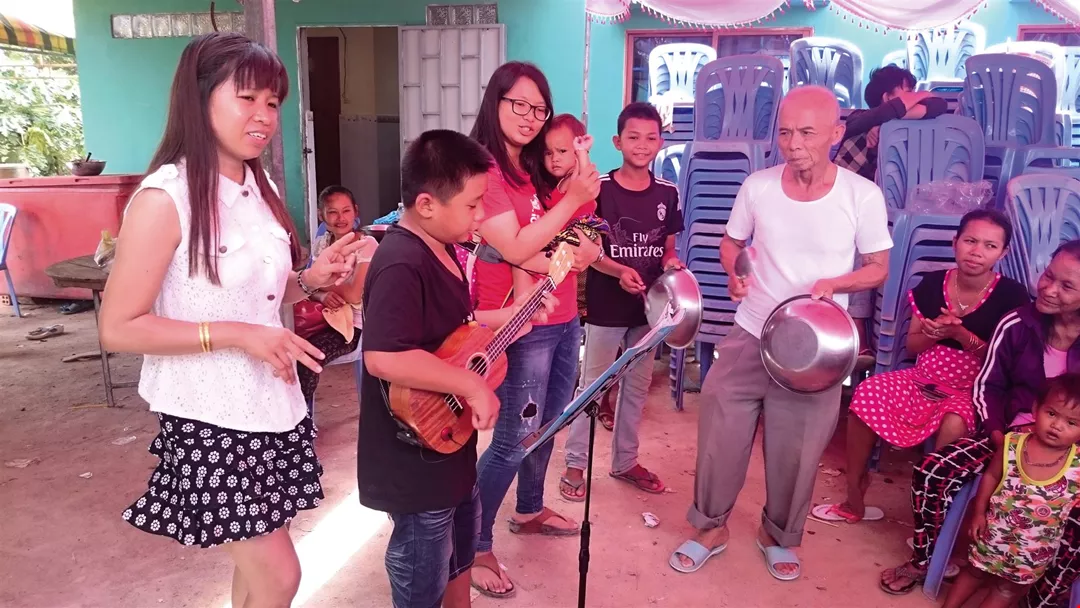
In 2015 the program supported Lin Bo-wen from Song May Elementary and his mother to make a trip to her family in Cambodia. The school’s principal, Tseng Nan-hsun (now principal of Da Lun Elementary), also participated, immersing herself in life in the remote village for five days. Giving the children of immigrant women a chance to return to their mothers’ hometowns for a month or two to gain a deeper appreciation for the local culture can spark interest in studying the language. And with those language skills they can go on to play important roles in Taiwan’s relationships with those nations.
Teachers who have gone on Grandmother’s Bridge trips all passionately share their experiences when they return. Cheng Chi-tso feels that going on the trip was an historical duty. She makes an effort to talk about the trip with other teachers in the hope that they will also step forward to bring more students back to their grandmothers’ homes and to have a positive impact on their whole families.

A Grandmother’s Bridge association in Chiayi assisted Song May Elementary student Lin Bo-wen and his mother to visit her family in Cambodia. As Lin played the ukulele, others joyfully banged on pots and pans in an impromptu concert.
Off to Southeast Asia, to teach
The Grandmother’s Bridge trip pushed Lin Chin-ling to reflect on her future, and she decided to go abroad to teach. She got a job at the Taipei School in Ho Chi Minh City, and in August of 2015 flew with her younger son, a junior high school student, to Vietnam, to begin a new chapter in her teaching career.
Lin says that in Vietnam the children of Taiwanese–Vietnamese marriages lack understanding of Taiwan’s culture, whereas in Taiwan the children of “new immigrants” suffer social discrimination and lack nurturing from their mothers’ native cultures. Bringing the resources of both sides into play for these children will be one of the rewards of Taiwan’s tilt toward developing economic links with Southeast Asia. She has collected various Taiwan resources that she wants to share with students in Vietnam, building bridges between them and Taiwan.
Her son has experienced some culture shock. A lot of English is used in his school in Vietnam, and his classmates hail from a variety of nations, including Malaysia, Korea, Japan and Vietnam. When class lets out, a mix of languages are spoken: English, Vietnamese, Korean, Cantonese and so forth. Multicultural and cosmopolitan, it’s been a rewarding experience for her son.
The program’s distant flowers
In 2015 the National Immigration Agency and the New Taipei City Bureau of Education both launched Grandmother’s Bridge programs. The NIA selected 44 groupings (33 of new immigrant families and 11 of teachers), comprising 99 individuals in all, to go to Southeast Asia. New Taipei City’s program, meanwhile, selected 44 students to go Vietnam, Thailand and other nations for cultural itineraries or corporate internships. They also selected mothers and children to go on trips to spend time at Grandma’s house. Regardless of the specific content, Grandmother’s Bridge programs aim to create or strengthen ties between the children of immigrant mothers and their mothers’ native lands, so that those children can enrich their lives with multiculturalism and cultivate skills and understanding that can help Taiwan in its relations with ASEAN nations.