Caffeine Rush: Taiwan Becomes a Nation of Coffee Drinkers
Lavai Yang / photos Hsueh Chi-kuang / tr. by Josh Aguiar
January 2012


It’s early morning in Taipei and the smell of coffee floats out of the ubiquitous convenience stores that line the streets sometimes with hardly more than a few feet of separation, and also out of hole-in-the-wall joints that roast their own beans and are totally unknown to neighborhood outsiders. Everywhere you look, people clutch hot cups of coffee as they scurry off to work.
Taiwan is a nation of coffee lovers, for sure. Whether it’s the rich smoothness of a latte or cappuccino, or a cup of black coffee made from beans selected from a single estate that are roasted right there in the store, there’s always something to please the most fastidious of palates.
According to statistics, the Japanese quaff 343 cups per year; in America, the figure is 412. In Taiwan, the demand still doesn’t rival either of those two heavies, but consumption has nearly quadrupled over the last 10 years. What is the allure of coffee that is making Taiwanese increasingly inseparable from it?
In just a short span of years coffee drinking has become enmeshed in the warp and weft of Taiwanese daily life, as natural a companion to the day’s activities as tea. Many now start the day with a cup, and may even find it difficult to maintain focus during the workday without several additional infusions. Just recently, illegal price-fixing of convenience-store coffee was a heated topic at the national legislature, as well as a frequent subject of discussion amongst the public.
How much do Taiwanese love their coffee? The increases in both coffee imports and consumption over the past 10 years paint a compelling portrait.
According to customs statistics, in 1999 Taiwanese imported 4,794 metric tons of coffee (both raw and pre-roasted beans). By 2010, that number had exploded to 17,885 tons. In terms of cups of coffee consumed, the ratio is 480 million in 1999 (21 cups per person) versus 1.79 billion cups in 2010 (78 cups per person). That coffee consumption has nearly quadrupled in 12 years is a clear index of the extent to which the average Taiwanese has come to rely on it.
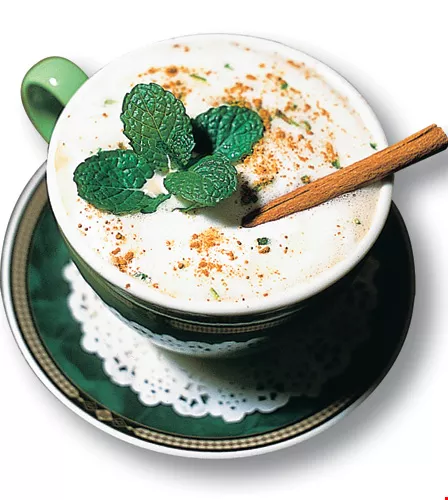
Fragrant to the last drop, coffee is the liquid upper of choice for modern society. Though coffee drinking may not have deep roots in Taiwan, the relentless perfectionism of those in the industry has resulted in a high level of excellence.
How did the potent beverage once branded “the devil’s drink” come to enjoy such broad popularity amongst Taiwanese? The answer is bound up with the rise of cafés, coffee chains, and cheap convenience-store coffee.
For most Taiwanese a half-century ago, coffee was perceived as an accoutrement of a foreign aristocratic culture both remote and inaccessible. In the 1950s, a number of coffee places including Bolero restaurant and Café Astoria cropped up in Taipei’s Dadaocheng and Ximending, at the time both stomping grounds of the cultural elite, attracting a motley conglomeration of intellectuals, politicians, business moguls, and men of arts and letters. Such establishments catered to society’s most rarefied echelon, a realm totally divorced from ordinary walks of life.
Increased prosperity in the 1970s and the growing number of Taiwanese studying overseas kindled interest in foreign cuisine. Coffee consumption steadily increased. At this time, one shop in Ximending, Nan Mei Coffee, made a name for itself by roasting imported beans and serving up a blend of such complex pungency that many customers became committed patrons after just a single taste.
Coffee entered the mainstream following the Taiwanese stock-market boom of 1985. Canned coffee preloaded with milk and sugar, typified by Mr. Brown and other brands, satisfied the market’s demand for less-bitter-tasting coffee in an inexpensive, convenient format. In cities, quaint independently run cafés began springing up, many of which also provided meals and collections of reading material to go along with the libations. Nevertheless, it was still a narrow segment of the population that would visit establishments like Bee or Old Tree for a cup of Blue Mountain Sumiyaki or Mandheling black coffee.
In 1992, the first coffee chains appeared in Taiwan. Japanese franchise Kohikan matched manually drip-brewed coffees with diverse dining options, while Doutor Coffee, Dante Coffee, and Ikari Coffee paired over-the-counter service with machine drip coffee at prices as low as NT$35. A few years later in 1997 and 1998, chains specializing in Italian-style coffee—Barista Coffee, Is Coffee, and Starbucks—took the country by storm.
Dubbed “the McDonald’s of coffee,” Starbucks was brought to Taiwan through the auspices of the Uni-President Corporation. Using a highly streamlined big-business approach that places emphasis on stylish presentation, they crafted an ambience that differed tremendously from the small cafés. Friendly young employees in T-shirts prepare drinks customized to guest specification. People lounge on American-style furniture drinking fancy coffee while music hums in the background. It’s a mid- to high-price-range experience that has swept the white-collar classes, and with over 200 individual outlets in Taiwan, it’s safe to say that Starbucks has set the tone for national coffee culture.
The years 2002 and 2003 marked a watershed in coffee’s rapid takeover. The trendsetting Ecoffee was founded in order to provide takeout coffee at the modest price of NT$35, and in so doing they greatly expanded the consumer base. In the wake of their success appeared 85°C, which combined coffee and cakes into a single package. Within five years they had expanded to over 300 individual locations, and laid claim to an immense clientele that included blue-collar workers and covered the gamut of ages from 15 to 75.
In 2004, 7-Eleven unveiled its City Café brand with a salvo of advertisements featuring celebrities proclaiming, “The city is my café.” The economically priced coffee became available in 4500 individual stores throughout Taiwan. Not to be outdone, Family Mart and Hi-Life entered the fray with their own brands. By the end of 2008, coffee’s dominion was so complete that there were 731 individual coffee franchises in Taiwan as compared to 695 for fast food.
According to estimates, the total number of establishments where one could procure a fresh cup of coffee, including convenience stores, fast-food outlets, and both independent and chain coffee stores, tallies to over 10,000. In monetary terms, that translates to more than half of the NT$40 billion generated by coffee annually.
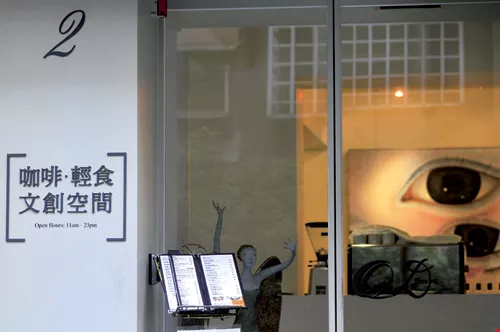
The independent cafés that roast their own beans are generally a little more obscure, but the intense quality of their craftsmanship makes them a compelling contrast to the commonplace convenience-store blends.
That Taiwanese love their coffee is not exactly news at this point. What might come as a surprise, however, is that the quality of Taiwanese coffee is on par with that of Western countries.
On a trip to Paris not long ago, culinary travel writer Yeh Yi-lan made the rounds of all the cafés, including those on the Seine River’s legendary Left Bank. To her great consternation, none of the coffee she had measured up. When she returned to Taiwan, her hometown coffee cravings were so intense that she couldn’t delay gratification the additional hour it would take to get into Taipei; instead she bought a cup at a convenience store right there at Taoyuan Airport and ended 19 days of pining.
Over the course of her globetrotting she has come to an accidental revelation: there aren’t that many countries whose coffee can hold a candle to the alluring brews that you can get at just about any convenience store or coffee retailer in Taiwan.
“Europeans have been drinking coffee for over 500 years. It has become ingrained into the culture,” she says. “Europeans don’t exclusively use Arabica beans, which is the superior variety of coffee bean; they use Robusta beans, which impart a bitter quality, instead. Robusta beans are often used to make canned coffee in Taiwan.”
In Yeh’s synopsis, being relative newcomers to coffee drinking enables Taiwanese to approach the subject from a fresh perspective. In addition, the centrality of tea to Taiwanese culture means that people are adept at classifying tealeaves according to quality and freshness, a skill which easily carries over when searching for choice beans from a particular region.
The Japanese proprietor of Haaya’s Coffee, Izuru Mikami, believes that in a good cup of black coffee, one should be able to taste the qualities that are particular to the region whence the beans derive. It should be crisp and smooth, full-bodied, and rich in fruity overtones, leaving no bitter traces as it courses down the gullet. “Like a glass of red wine, it should leave the drinker feeling relaxed.”
“The reason why Taiwanese coffee tastes good is because it’s true to the original character of the bean—it’s able to highlight all the intrinsic layers of fragrance and texture,” says Yeh.
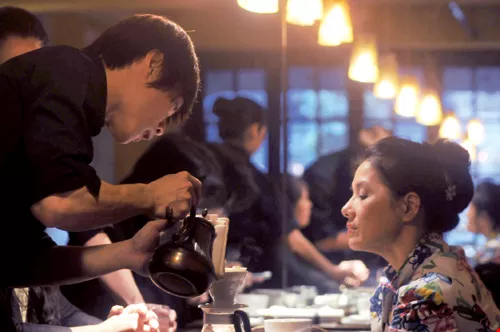
Coffee drinking is a sophisticated, multi-layered experience, from the moist fragrance that permeates the air during brewing to the explosion of sweetness, bitterness, and tanginess that occurs during the actual tasting. Putting it on ice makes for a flavor redolent of tea that lingers long on the tongue.
Over the past few years, Taipei has seen a profusion of independent coffee stores that have hemp bags labeled with the name, origin, and grade of the coffee beans they contain. The bags themselves typically sit in the shadow of huge coffee roasters that stand taller than a person. The message of such a presentation comes through loud and clear: “We’re the real deal—we select and roast individual estate coffees!”
The growing tide of shops that import and roast their own beans may point to the arrival of a new era, but it’s also an indication of the intense competition within the industry.
According to the Taiwan Chain Stores and Franchise Association, there are more than 1500 chain coffee outlets maintained by Starbucks, Dante, Ikari, etc, but that number shoots up to 2000 once you include all of the independent stores. Of the second group, approximately 300 directly import beans for roasting. In 2009, the approximately 400 tons these independents imported constituted 3% of the national total, 11,607 tons.
“In the past there weren’t that many coffee bean wholesalers in Taiwan. The beans that coffee retailers picked out—Mandheling, Brazilian, Columbian, or what have you—tasted about the same after the wholesalers got through with them. It was nigh impossible to make out the distinct characteristics of each bean. Even that Excalibur of coffees, Blue Mountain Coffee No. 1, would be overwhelmed by a bitter charcoal flavor,” says Mikami, who has a cupping certificate from the Coffee Quality Institute, an overseas accrediting entity. Customers, he says, would spend hundreds of NT dollars for a cup of Blue Mountain only to come away with an unremarkable experience.
Now that stores have begun ordering and roasting beans on their own, customers can finally make informed choices.
To distance themselves from run-of-the-mill coffee stores and the large-scale coffee roasters, independent roasters emphasize the freshness of their product as well as their willingness to provide personalized service. These stores are typically small operations with just enough roasted beans to brew coffee for patrons, with perhaps a bit more to sell directly for customer use at home. Oftentimes these establishments roast beans to customer specification, predetermining a time for its pickup so as to ensure freshness.
If you pop into PEG Coffee near the Liuzhangli stop on the Taipei Metro, while you’re making your order proprietor Li Zi will ask you up front: “What kind of flavor are you looking for?” If it’s a fragrant, crisply acidic cup you’re after, he might recommend something like Yirgacheffe; if you’d prefer a more somber, balanced blend, the suggestion might be Kenya AA beans. And if you’re uncertain, you’re welcome to try a few different flavors to help you arrive at a choice, for such is the attention that Li gives to customer service.
Determining quality is a subjective process, and people have entirely different tastes to begin with. Accordingly, small roasters will take every opportunity to provide samples and clear explanations to educate customers about the characteristics of different beans and the proper way to roast them, all of which has the effect of elevating their level of discernment.
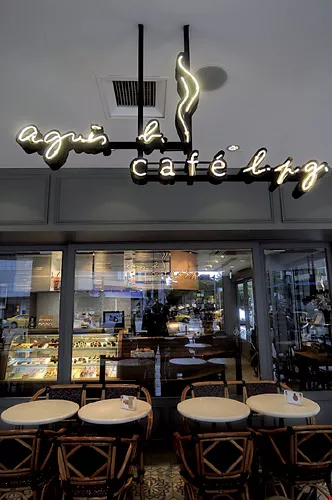
The independent cafés that roast their own beans are generally a little more obscure, but the intense quality of their craftsmanship makes them a compelling contrast to the commonplace convenience-store blends.
The origins of the “micro-roasting” trend and its elevated aesthetic can be traced back to the restless perfectionism of a small group active since the 1990s.
In the early days, Taiwan’s coffee pioneers had to contend with a dearth of information and technical knowhow. “People’s understanding of coffee was unduly influenced by a kind of Occidental exoticism. Just about all of the Taiwanese cafés used a siphon to prepare coffee—it looked like a laboratory experiment, which added an arcane flourish to the procedure,” says Graham Liao, proprietor of Coffee Only.
The tremendous Internet expansion from 1993 brought together coffee enthusiasts flung throughout the island. “The moderators of the BBS coffee sites would periodically collate relevant information. We were all able to share our coffee tasting experiences online,” Liao recalls.
In 1997, a group of coffee fanatics formed “Irvine Café,” a BBS forum. They introduced the work of espresso guru David Schomer and the basics of espresso making. They also shared notes on bean roasting, which many had begun doing on their own. The forum was frequented by a number of outstanding individuals, including the owner of well-known Taipei café La Crema, the owner of high-end coffee bean importer coffeebeans.com, and Cai Ruilin, author of the first Chinese-language treatise on espresso, Italian Coffee Lab.
A number of people ordered small espresso machines via the Internet, and began concocting a kind of viscous black coffee that was as thick as soy paste. “We would set up meetings to discuss our failures, even competing to see who could make the most effective modifications to the machines to yield the best results. But later we realized that the fault lay not with the machines, but with the staleness of the beans we were using. That was the start of procuring our own beans,” recounts Liao.
More than a few initially used popcorn makers as makeshift roasters, but eventually began assembling roasters themselves. One such tinkerer was Su Yanzhang, who sold his invention for only a few thousand NT dollars, tens of thousands cheaper than foreign brands. The support and staying power it has achieved is borne out by the fact that the device’s ninth iteration is presently on the market.
After a while, they were able to hammer out a rubric of the components involved in making good coffee. Atop the list was bean quality, which they reckoned accounted for 60–70% of the results. Next was roasting technique at 20–30%, leaving 10–20% for proper brewing to extract the essence of the beans.
“The coffee connoisseur’s insistence on perfection is a kind of pathology, really,” says Yeh. “But it’s their obsession and their fastidiousness that has broadened the Taiwanese palate.”
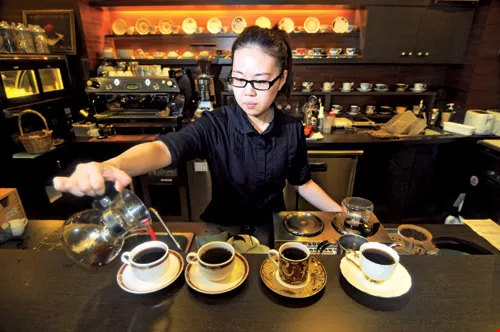
Fragrant to the last drop, coffee is the liquid upper of choice for modern society. Though coffee drinking may not have deep roots in Taiwan, the relentless perfectionism of those in the industry has resulted in a high level of excellence.
In the wake of this recent understanding, many ordinary Taiwanese are enrolling in classes that let them try their hand at coffee roasting and various brewing methods, as well as tasting and providing feedback for their classmates.
Early in 2011, a team of volunteers from Taichung-based non-profit Hope Market made coffee the centerpiece of their campaign for fair trade, a notion including farmers’ rights and respect for the Earth.
For Taiwanese, drinking coffee is a kind of freedom, symbolizing a reprieve from the pressures of life. It can also be an epicurean quest or the companion to blithe conversation. Or it can be a means of showing compassion for those who toil in the fields, and love for the land.
This effervescent “devil’s bean” has taken firm root in Taiwan. It has percolated through the core of society and its various strata, creating legions of devoted drinkers and changing the face of Taiwanese culinary culture and history.
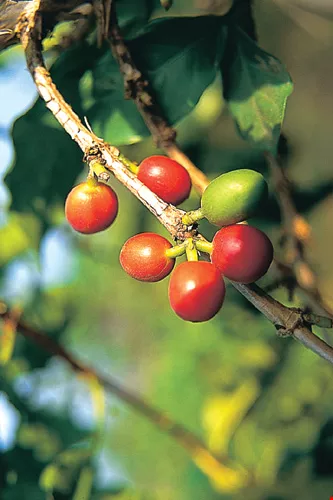
Coffee beans in actuality are tree fruit that look like red berries. They produce the best results when they are picked at the peak of ripeness.
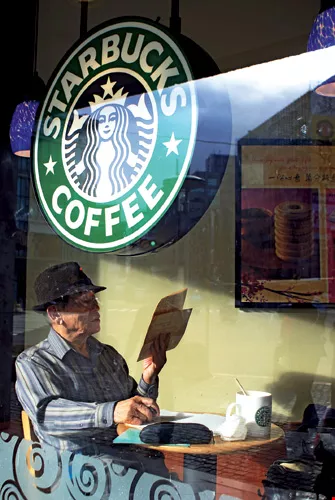
American coffee juggernaut Starbucks’ inroads into Taiwan spawned a new legion of coffee drinkers. The combination of a cup of coffee and a newspaper epitomizes the essence of leisure.
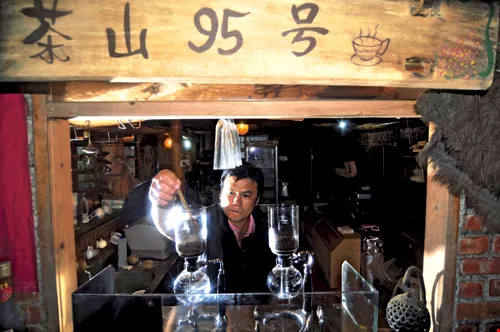
The coffee grown at Chashan on Mt. Ali compares favorably with that of other regions around the world. Due to limited output and expensive labor, it is costly to produce. The photo shows a coffee shop in the growing area.
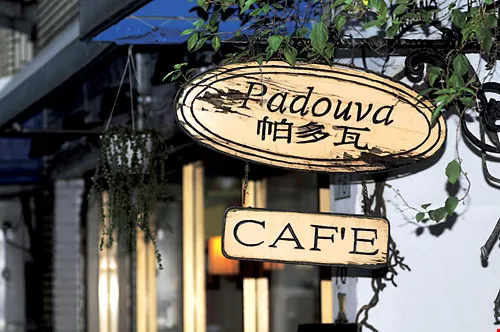
The independent cafés that roast their own beans are generally a little more obscure, but the intense quality of their craftsmanship makes them a compelling contrast to the commonplace convenience-store blends.
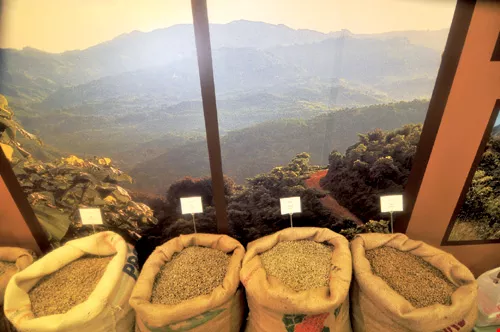
The quality of the raw beans has a tremendous influence on the quality of the end result. Here we see Central and South American beans on display at an event at the Taipei World Trade Center featuring fine wines, teas and coffees.
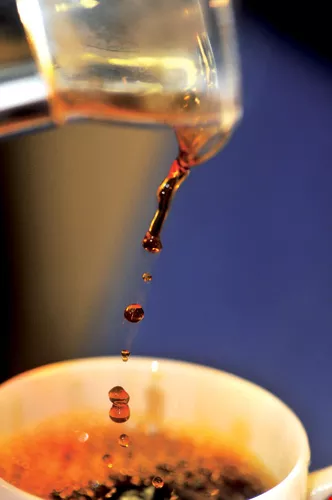
Fragrant to the last drop, coffee is the liquid upper of choice for modern society. Though coffee drinking may not have deep roots in Taiwan, the relentless perfectionism of those in the industry has resulted in a high level of excellence.

@List.jpg?w=522&h=410&mode=crop&format=webp&quality=80)


