The Taiwan Provincial Government-- A Retrospective
Jackie Chen / photos Yu Ju-chi / tr. by David Mayer
January 1999


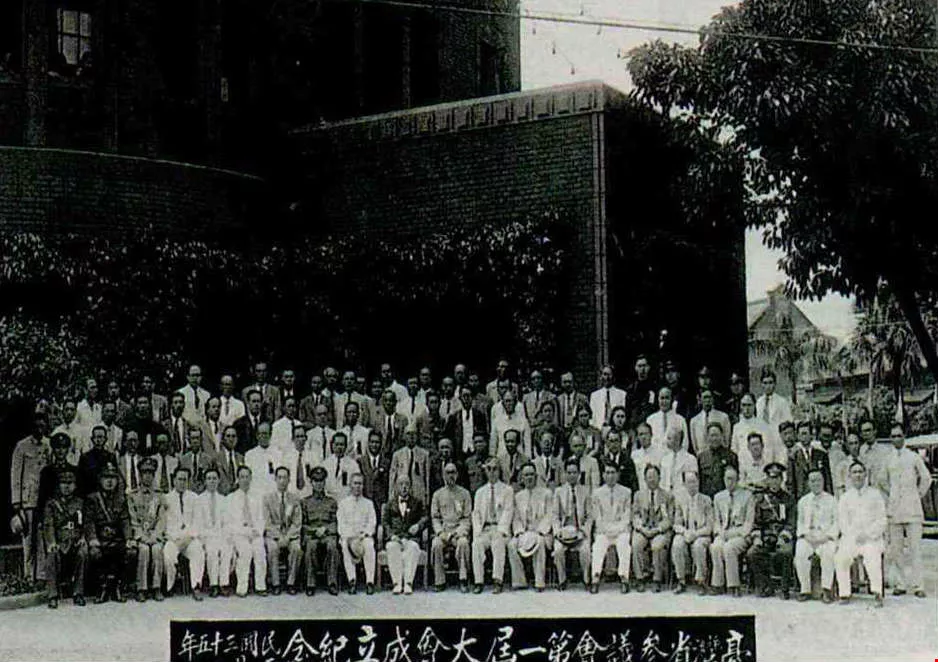
On 1 May 1946 the Taiwan Provincial People's Political Council--the predecessor to the Taiwan Provincial Assembly--was installed in premises on Taipei's Nanhai Road. This representative institution lasted from the latter part of the Japanese occupation era into the postwar period. Its speaker was Huang Chao-chin, its deputy speaker Li Wan-chu, and its secretary-general Lien Chen-tung. All three were native Taiwanese who had returned from mainland China after the departure of the Japanese. (courtesy of Taiwan Provincial Assembly)
Over a century has passed since a cri-sis in coastal defense prompted the Chinese government to separate Taiwan from Fujian and establish it as a separate province. The administrative organizations that have run Taiwan since then have gone by many different names over the years. During the latter years of the Qing dynasty, the provincial government was known as the Governor's Office. During the Japanese colonial period, it was called the Governor-General's Office. After Taiwan was recovered from Japan, it came to be known for a time as the Office of the Governor-General before it was renamed the Taiwan Provincial Government. Now more changes are afoot. The province's administration is headed for a two-tiered split between central and local government, leaving no need for a provincial government. The evolution of the provincial government reflects the history of Taiwan, and offers an excellent case study for scholars interested in administrative organizations.
Taiwan's first-ever popularly elected provincial governor, James Soong, was also the last person to ever serve in this post. After the final session of the final Taiwan Provincial Assembly came to an end on December 14, the governor posed with 29 of his department heads for a "graduation photo." Although there was a certain sadness about the end of an era, there was no aura of tragedy. From its establishment in 1947 until the final gavel last month, the Taiwan Provincial Government had been in operation for 52 years.
The post-war period
On April 24, 1947, the ROC national government (still located in mainland China at that time) decreed that the Office of the Governor-General would be reorganized as the Taiwan Provincial Government. Wei Tao-ming, a career diplomat serving at that time as deputy head of the Legislative Yuan, was appointed to serve concurrently as governor and as a commissioner of the Provincial Council. The national government also appointed many leading members of Taiwanese society to the provincial government, including Chiu Nien-tai, Lin Hsien-tang, Tu Tsung-ming, You Mi-chien, and Chen Chi-ching.
Taiwan had just been through the February 28th Incident, and according to history Professor Woody Cheng of Feng Chia University, the establishment of the provincial government signaled the normalization of Taiwan's governing entity.
Wu Yau-fong, director of the provincial government's Department of Personnel, points out that in August 1948 the Executive Yuan established an expanded provincial government in which the governor and various other high-ranking officials of the provincial government were appointed by the central government. This system of provincial government lasted until July 1994, when the Self-Governance Law for Provinces and Counties ushered in a brief four-year period of provincial self-governance.
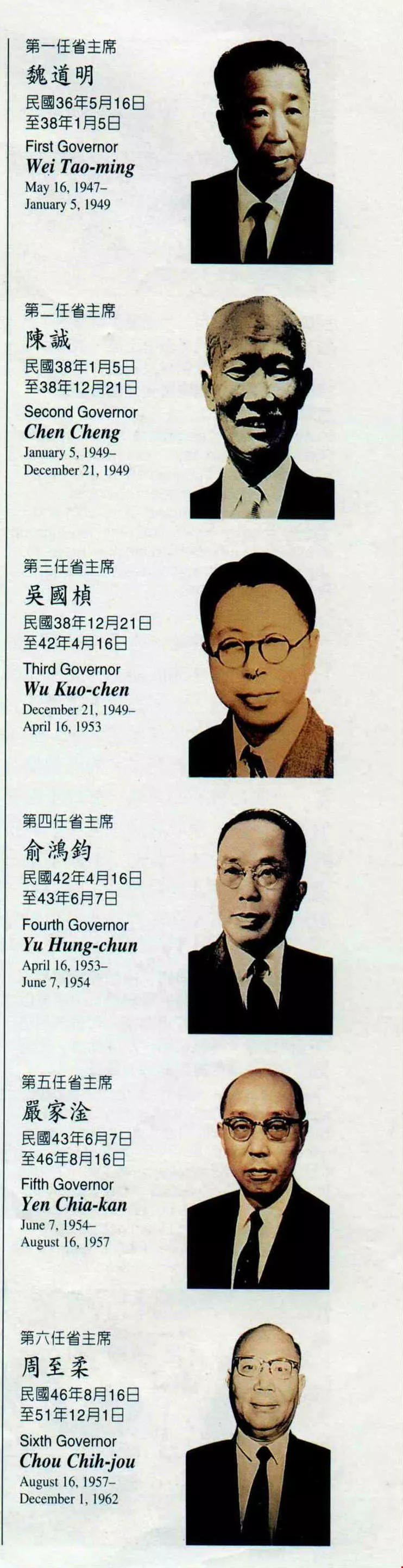
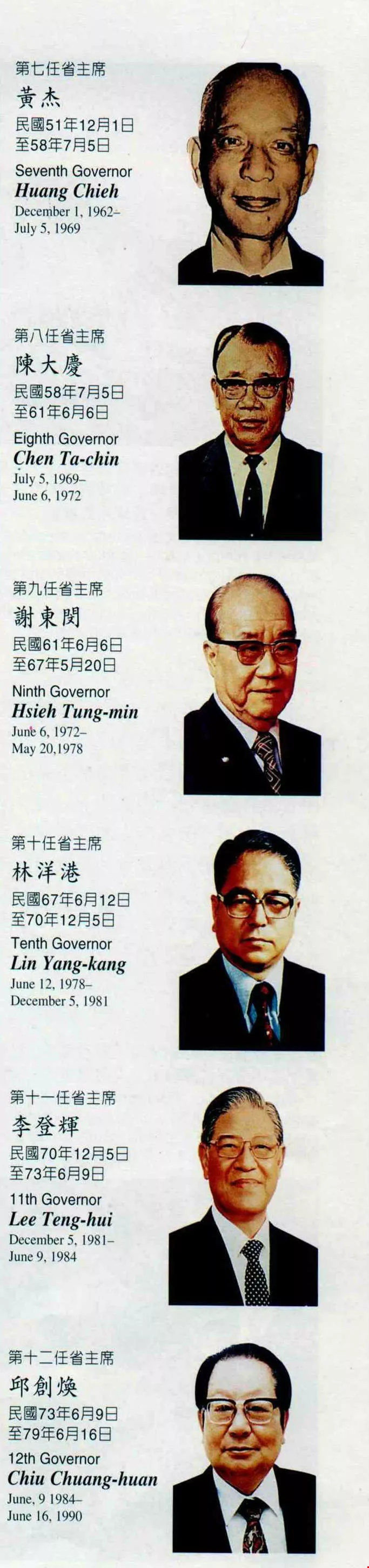
A total of 14 provincial governors served under the old system. By the time the fifth governor had left office in 1957, the position had been filled by two powerful military figures, a big-name diplomat, and two economists. Yang Cheng-kwan, a professor at Tunghai University who serves concurrently in the Taiwan Provincial Government Secretariat, has described this period as one of "restoration and laying of a new foundation." During these years, the top priority was always to achieve political and economic stability so that Taiwan could overcome the economic depression of the war years. To this end, the provincial government issued a redenominated Taiwan Dollar, limited rents on agricultural land to 37.5% of the sharecropper's output, carried out preparatory work for the establishment of local self-governance, maintained stable prices and a stable currency, improved government finances, emphasized the importance of grain crops, instituted a system which enabled Taiwan's cash-strapped farmers to barter their grain for chemical fertilizers, and purchased excess grain production.Industrialization
From 1957 on, the central government appointed three consecutive governors with military backgrounds. Behind this pattern was a tense military standoff with mainland China, which shelled the island of Kinmen heavily in 1958. A number of projects designed to promote political stability and ensure economic and social survival and development were completed during these years. Such projects included the building of the Shihmen and Tsengwen Reservoirs and the Central Cross-Island Highway. The provincial government implemented compulsory education through grade nine, encouraged development of coastal marshes and hilly districts, rezoned agricultural land, took steps to prevent excessive concentration of urban land ownership, built public housing, and developed industrial parks. All these measures were taken to create the conditions that would enable Taiwan to vault from the category of developing nation into the ranks of the newly industrialized economies.
However, some point out that Taiwan's natural environment suffered serious degradation during these years of fast-paced economic development. From 1946 through 1971, for example, the rate of logging increased year by year, growing to over one million cubic meters per annum. In the 1960s logging yielded average annual revenues of over NT$4 billion, but it is quite apparent that it also exacted a heavy toll in terms of soil erosion and lost water retention ability.
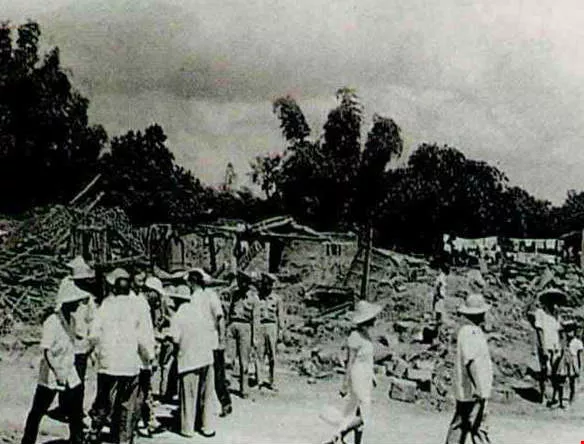
The swearing-in ceremony for the second provincial assembly was led by Speaker Huang Chao-chin. The oath at that time went: "I solemnly swear to uphold the Constitution and loyally serve the Republic. In carrying out my duties under the law as a representative of the people, I shall act without favoritism and shall not accept bribes. If I break this oath, I shall accept the severest sanction. So do I swear.".
With regard to the organizational structure of the provincial government, Professor Cheng states that during the years when military men filled the governorship, administrative powers were highly concentrated in the hands of the central government. In 1967, the city of Taipei came under the direct jurisdiction of the central government, whereas before it had been under the provincial government. In cities under the provincial government, the chief administrators of municipal districts, who had formerly been chosen by direct elections, also began to be appointed.The locals rule
In 1971, the Republic of China withdrew from the United Nations. In the following year Hsieh Tung-min, speaker of the Taiwan Provincial Assembly, was appointed the ninth provincial governor. This marked the beginning of a policy of allowing native-born Taiwanese to administer the island. These same years have been described by Professor Yang as a period in which the provincial government concentrated on developing better social services. The next six provincial governors were all Taiwanese. During their terms in office, they put top priority on: developing local infrastructure; providing better social services for workers engaged in agriculture, industry, and fisheries; expanding the social safety net; cleaning up local environments; building planned communities; accelerating rural development; implementing the second phase of rural land reform; providing full health insurance benefits for farmers; reorganizing agricultural production; and encouraging the use of more sophisticated agricultural technology.
During its many years of uninterrupted organizational expansion, however, the provincial government became less and less efficient. The tenth provincial governor, Lin Yang-kang, adopted a number of measures to reduce government red tape and eliminate out-of-date laws. He established an infrastructure development fund, sold off assets held by the provincial government, and encouraged public-private partnerships. Lee Teng-hui, the eleventh provincial governor, took various steps to address the environmental impact of Taiwan's economic development. Among other measures, his administration completed the Erhchung flood control project, and closed down an illegal development at the Techi Reservoir.
As for the political power of the provincial government during this period, Professor Cheng points out that while most provincial governors were native-born Taiwanese, the authority of the provincial government was further reduced. In 1979, Kaohsiung was placed under the central government jurisdiction. Furthermore, most of the persons appointed as commissioners of the Provincial Council were former KMT mayors and county magistrates, high-ranking KMT party officials, and military officers. As such, the post was largely a sinecure. In 1980, the Executive Yuan promulgated a set of regulations regarding the agenda of the Taiwan Provincial Assembly. These regulations gave the provincial governor the power to change the agenda, which effectively nullified the assembly's consultative function.
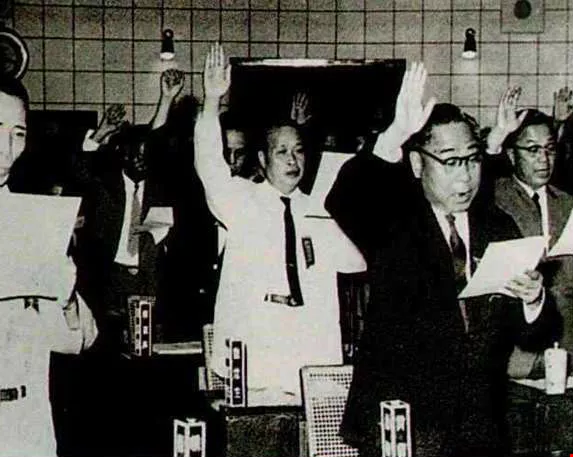
In August 1959 Taiwan was struck by severe flooding. In those days most houses were built with walls of packed earth, and they suffered serious damage. Provincial assembly speaker Huang Chao-chin and deputy speaker Hsieh Tung-min led a group of assembly members to stricken areas to show their concern. (courtesy of Taiwan Provincial Assembly)
In addition during this period, under the law governing the sharing of revenues, most tax and monopoly revenues went to the central government, which then distributed them as it saw fit at the provincial and local levels. Various organs of the central government (the central bank; the Department of Budget, Accounting, and Statistics; the General Personnel Administration; etc.) also assumed direct control over their counterparts in the provincial government.A hand in everything
Mention the provincial government, and any Taiwanese person today will think of Chunghsing Village in Nantou County. But until 1955 it was actually located in Taipei, right next to today's Executive Yuan, Control Yuan, and Legislative Yuan. Hsieh Tung-min, who was secretary-general when the provincial government was moved to Nantou County, states in his memoirs that the move was made primarily because "the Chinese communists were deploying strong military forces along their coast, and seemed to be preparing for an invasion of Taiwan." Some scholars argue, however, that in addition to these security concerns the move to distant Nantou County also served to lessen the degree of duplication between the functions of the central and provincial governments.
When it was first established, the Taiwan Provincial Government had a hand in the great majority of the province's administrative affairs, including financial and banking regulation, tax collection, law and order, traffic and transport, agriculture, forestry, fisheries, animal husbandry and education from kindergarten through university. The main exceptions to this pattern were aviation, military matters and foreign affairs.
For a long time, many departments in the provincial government were either combined with their central government counterparts, or the provincial government took primary charge over administrative affairs. There was a time, for example, when agricultural and forestry affairs throughout Taiwan were mainly administered by the provincial Department of Agriculture and Forestry, and the central government's Ministry of Economic Affairs had only one section to deal with agriculture. Later, however, the central government established a bureau of agricultural affairs, the forerunner of today's Council of Agriculture. A similar pattern can be observed in government agencies dealing with health issues, land policy, water conservancy, local government, etc.
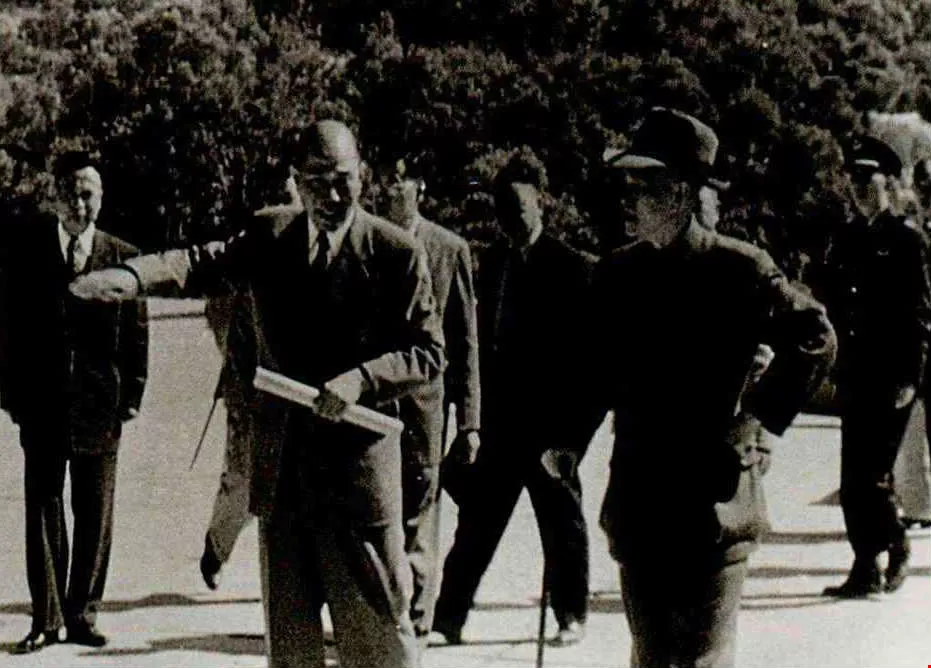
After the Taiwan Provincial Government moved from Taipei to Nantou, the late President Chiang Kai-shek made a tour of inspection at the new location. He is pictured here with Governor Chou Chih-jou. (courtesy of Taiwan Film Culture Company)
As the central government expanded, the division of responsibilities between the two levels of government-with one in charge of policymaking, and the other in charge of implementation and oversight-underwent a gradual change. One step at a time, the central government amended laws to expand the scope of its authority and gain greater control over revenues. At the same time, it passed legislation to strengthen local self-governance, thus moving Taiwan toward a two-tiered structure of government. The provincial government, in the meantime, was slowly slimmed down.A province in flux
The ups and downs of the Taiwan Provincial Government over the past half-century have exerted a profound impact upon people's everyday lives, and they paint a clear picture of the changing and developing nature of Taiwanese society. The bills and coins we use everyday are issued by the Bank of Taiwan, an organ of the provincial government. If you smoke a cigarette or drink an alcoholic beverage made in Taiwan, it will have been produced by the Tobacco and Wine Monopoly Bureau, another organ of the provincial government.
The Taiwan Provincial Government will soon be nothing but a memory. Its closure lengthens by several yards the tapestry of administrative change that forms an integral part of a century of Taiwanese history.
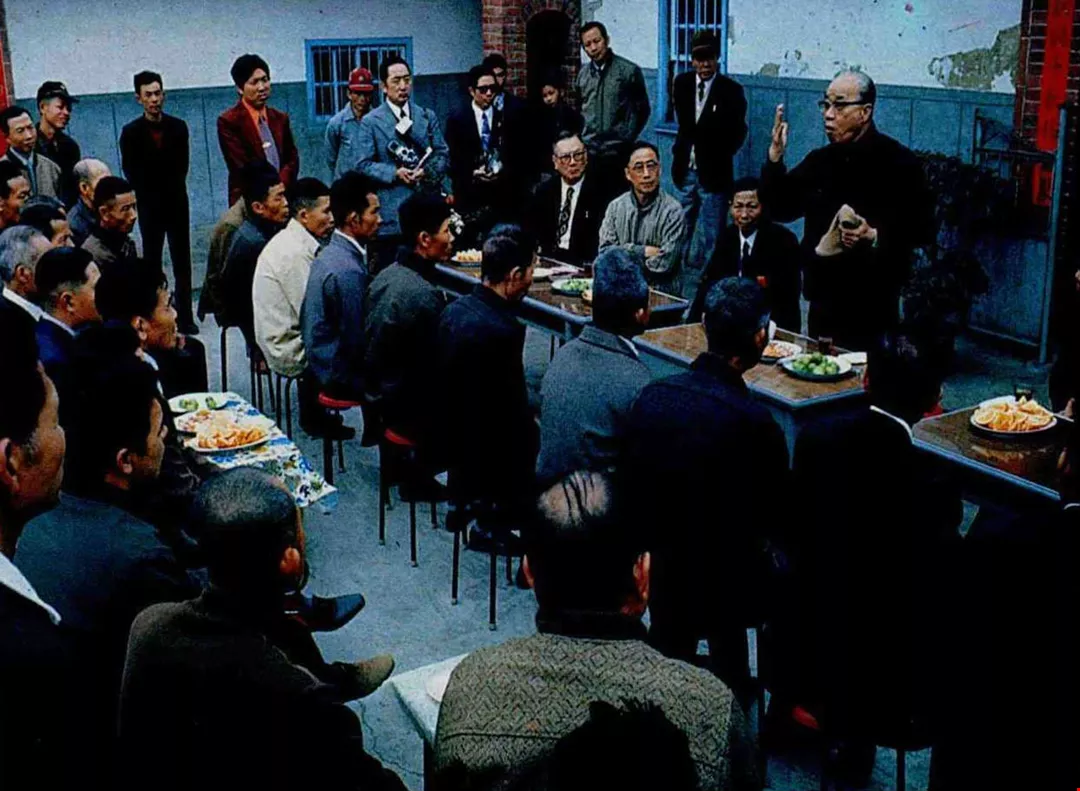
Taiwan Provincial Governor Hsieh Tung-min, well known for such policies as the "frugal living" and "home factory" campaigns, was the first Taiwan-born governor. He liked going out into the countryside, and would often turn up in villages unannounced, dressed in workaday clothes. (courtesy of the Department of Agriculture and Forestry)
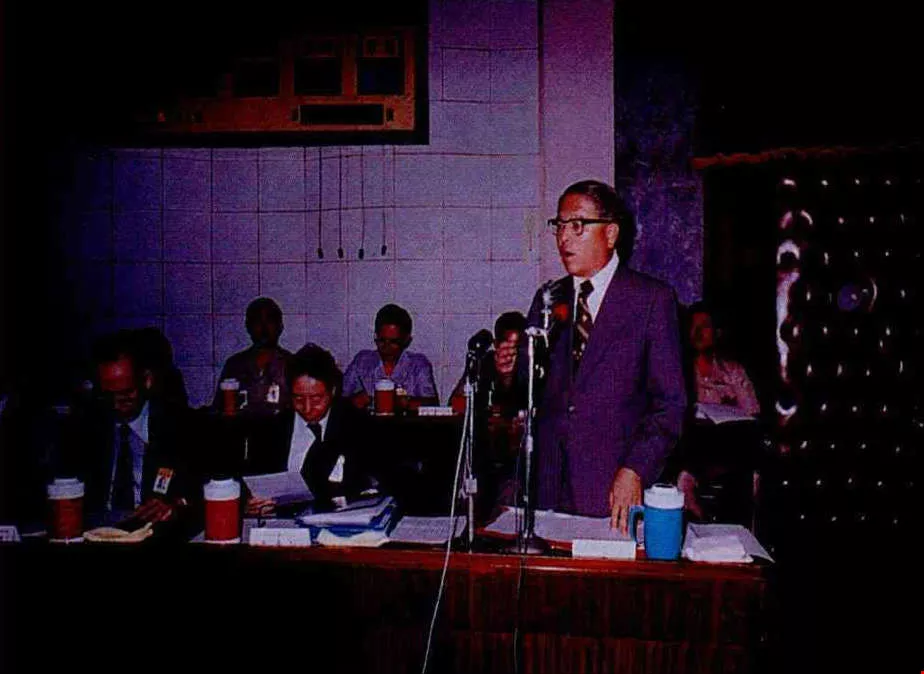
After the sixth provincial assembly elections in 1977, 13 non-KMT assembly members took up their seats and organized themselves into a coordinated group. Their interpellations often focused on sensitive topics such as the legal process and military affairs. When their adversary was the highly articulate provincial governor Lin Yang-kang, gripping verbal skirmishes often ensued.
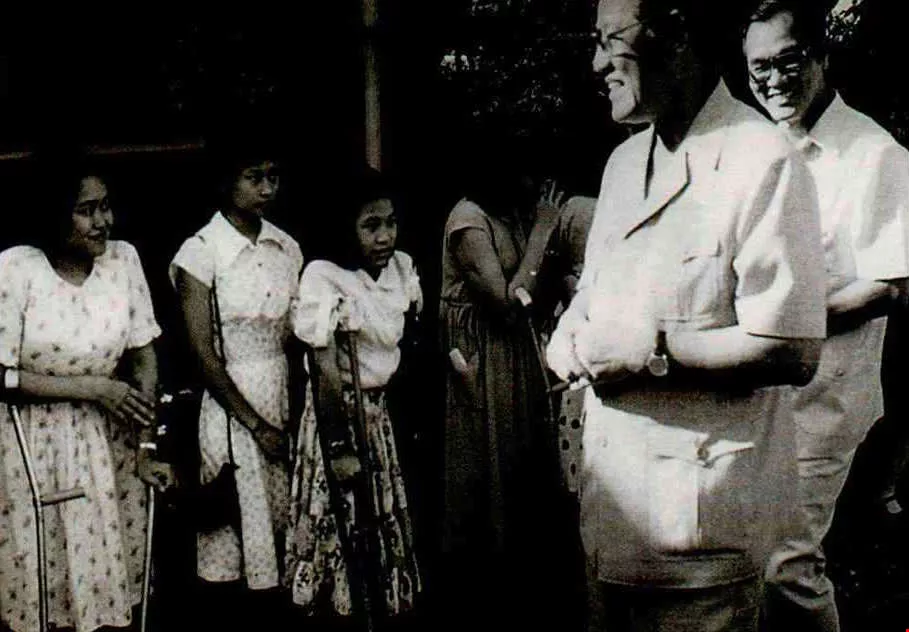
President Lee Teng-hui was once the 11th Taiwan provincial governor. During his term he promoted the "80,000-strong army for agricultural construction" program to improve the structure of agricultural production and stabilize farm incomes. (courtesy of TPG Department of Information)
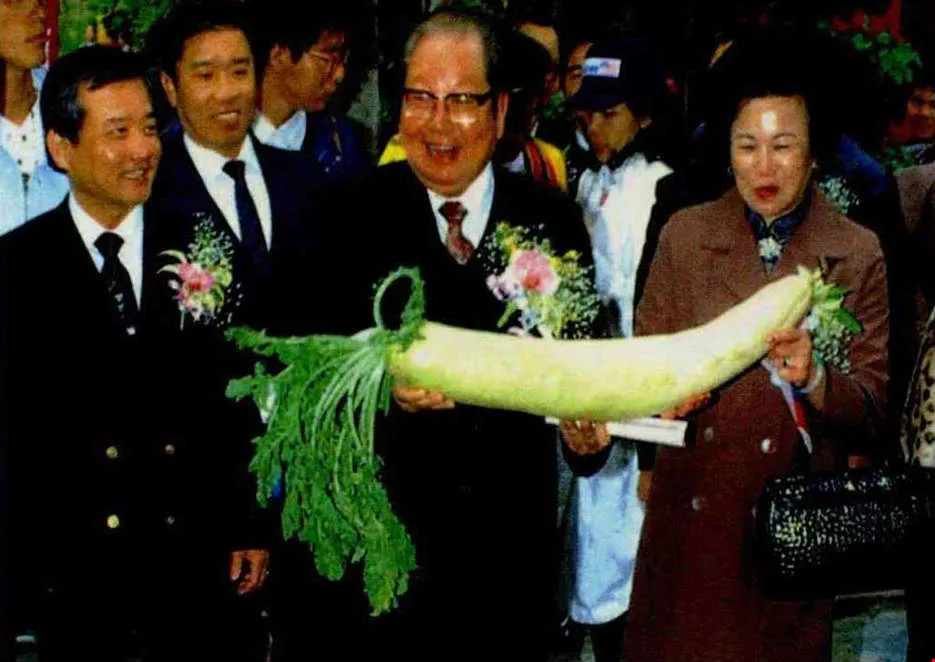
Twelfth provincial governor Chiu Chuang-huan set Taiwanese agriculture on a new course towards high-quality produce, and introduced farmers' health insurance on a trial basis. (courtesy of TPG Department of Information)
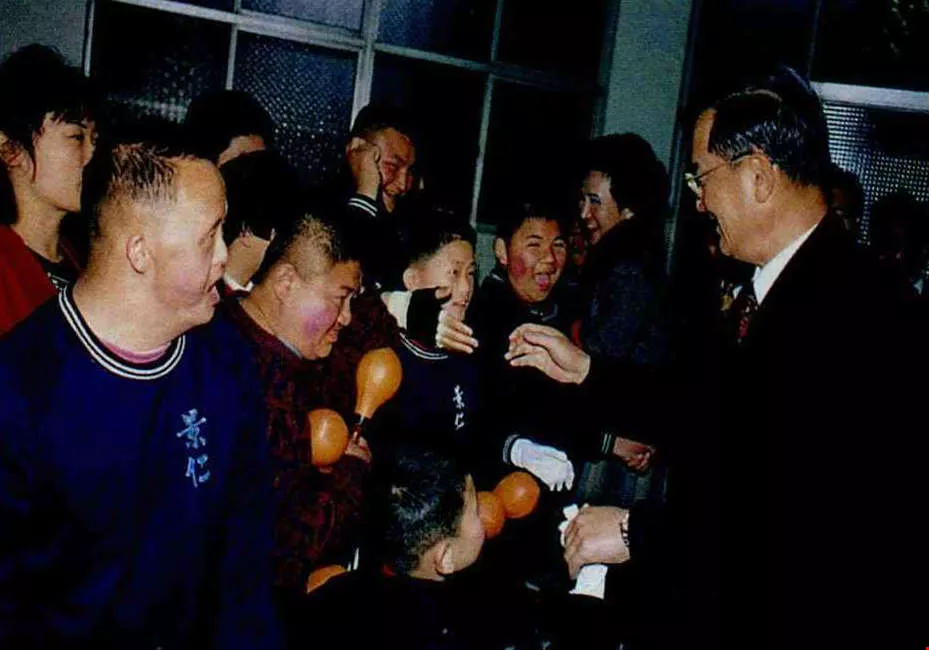
Current ROC Vice-President Lien Chan was the 13th Taiwan provincial governor. Although he only served in this post for two years and eight months, his term of office is well remembered for such achievements as the beginning of work on the Mutan Reservoir and the completion of the Southern Link Railway. (courtesy of TPG Department of Information)
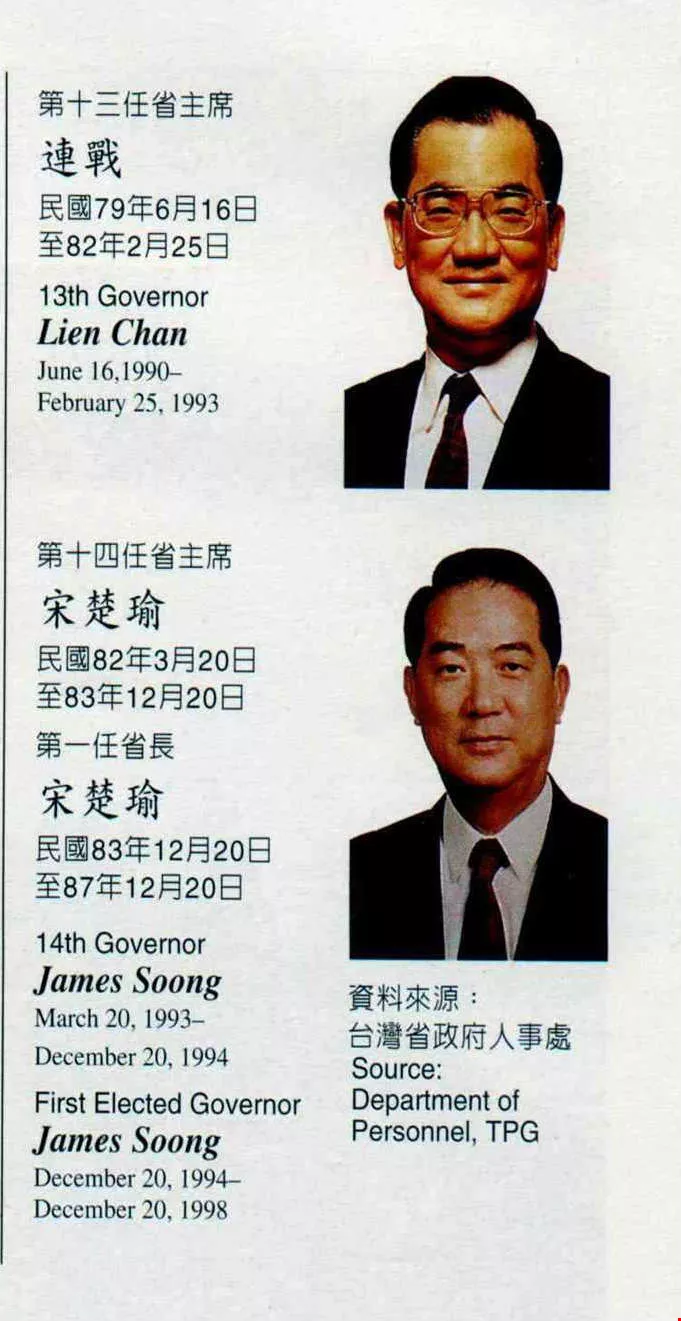

@List.jpg?w=522&h=410&mode=crop&format=webp&quality=80)


