A Flock of Egrets Across the Blue Sky
Gypsy Chang / photos Wang Chia-hsiung / tr. by Beatrice Otto
November 1987


The cattle egret that loves to be with cattle. (photo by Vincent Chang)
In May this year, thousands of egrets were seen flying around the white popinac woods beside Wannien Bridge in Touliu, Yunlin County.
They came flock after flock, gradually filling the hills like falling snow. Almost every available perch in every tree was occupied by one of the snow-white birds.
Each morning at four or five o'clock, the guests at the bridge would spread their wings and soar off into the sky, flocking to the seaside or to the hillside paddy fields in search of food, coming back at dusk in dribs and drabs or even droves.
As soon as they heard, the people of Touliu shot off to the bridge to get the first glimpse of the 'flying snow,' where-upon some seemed entranced while others either stared gaping-mouthed or pointed and otherwise gesticulated, until the area was jammed up with traffic.
After them came the photographers and people curious enough to go into the woods and find out what was happening, not to mention those taking the opportunity to collect a few eggs. The people of Touliu started to worry that all the commotion might frighten away the birds and so the road into the woods was fenced off to afford the birds some security.
How did the birds suddenly appear here? Some say they used to live in the windbreak by the sea but the gales, which wreak havoc with the windbreaks, forced them to fly inland. The residents around Wannien Bridge say that they simply followed the night herons that settled in the woods a few months before.
Specialists have said that there is nothing extraordinary in this migration. "In the mating season, egrets naturally flock together to build nests," said Chuang Yung-hung, a project assistant of the Wild Bird Society of Taipei.
Ten years ago, the Environmental Research Center at Tunghai University spent a year investigating the nesting habits of egrets on Taiwan. They discovered that there were more than 57 past or present nesting sites, each housing from a few hundred to tens of thousands of egrets.
In order to enable them to wade in water and catch frogs, fish, and insects to eat, egrets have unusually long legs and beaks. They appear rather elegant when standing, they have wings so broad as to be almost circular, and when they fly they tend to draw in their necks. The most striking to see in the wild is the white egret, a favorite target for nature photographers.
Of egrets that make a permanent home on Taiwan, the main species are the cattle egret, the little egret, and the night heron, in addition to the relatively small and rare cinnamon bittern. As winter approaches they tend to head to the south of Taiwan until the beginning of spring, when they return to the valleys of the north. A minority will fly as far south as the Philippines to escape the winter.
The cattle egret grows to about 50 cms. In winter it is completely white, but during the summer mating season its neck and back turn bright orange. At plowing time, it is a favorite companion for farmers, often standing in flocks in paddy fields or perching on the backs of cows thereby earning itself the nickname of 'cattle egret.'
The little egret is the most common species on Taiwan. In surveys conducted by the Wild Bird Society of Taipei of bird populations during the last two years, the little egret has been second only to the common sparrow.
The little egret is bigger than most riverside birds, with its long beak to catch fish. It is not at all shy, and will stand by the mountain stream, giving sidelong disdainful glances while casually gulping down the odd hapless fish. The author Liu K'e-hsiang has described it as resembling a cartoon pig wolfing down a whole cake in one go.
Both the cattle egret and the little egret go hunting for food during the day and rest at night, whereas the night heron emerges, as its name suggests, at night.
Although the three species have differences, they cooperate to supplement each others' needs. For example, when migrating to new nesting grounds, the night herons will often blaze a trail and only when they have settled on a new site will the white egrets follow. Then the white egrets go off hunting during the day while the night herons stay behind to 'mind house' until they change shift in the evening, thereby maintaining a round-the-clock housewatch.
The three types of egret, in a spirit of share and share alike, build nests in the same tree, with close neighbors upstairs and down. The photographer Hsu Jen-hsiu has seen seven such families of the three species happily occupying the same tree!
Egrets are monogamous birds, although they often cross breed. They build their nests in March or April and lay their eggs at the end of April (three or four eggs each). The parents take turns to sit on the eggs, turning them over with their beaks every so often to keep them at an equal temperature. The baby egrets hatch after 21 days or so.
According to investigations at Tunghai University, egrets do not change nesting site in order to avoid natural calamities, but rather because their surrounding food supply runs low or because of human interference.
In recent years, as estuaries, seaports, and lower mountain areas have been developed more, suitable nesting sites for egrets have become increasingly scarce. In the past, farmers looked upon them as a symbol of good luck, but since the advent of insecticides, they have come to be seen only as the clumsy tramplers of seedlings in paddy fields. So the once 'beneficial bird' is nowadays a 'harmful bird.' Since edible insects have become fewer, egrets have started eating more fish--a pair of night egrets can get through ten or more fish in one night--a habit which has earned them the wrath of local fish raisers.
Consequently, they now have several new enemies. A fruit farmer in Tainan County, trying to protect the night herons nesting in his fruit trees, has now become involved in a dispute with the nearby fishery. Disagreements between developers and conservationists arise wherever egrets try to live.
Ch'en Ping-huang, an Associate Professor in the Department of Environmental Sciences at Tunghai University, has said that people have heard enough stories of such disputes in which for the most part, neither side wins, development is slowed down, and conservationism suffers setbacks and misunderstandings. In his mind, the two sides should stop being narrow-minded and over-defensive, and should try to find the best solution by assessing our resources and needs, and then making whatever concessions necessary. Only then will it be possible for people in this fiercely competitive industrial and commercial society to be able to enjoy both a high level of material comfort and places such as Touliu in which to relieve the stresses of work and satisfy their spiritual needs.
[Picture Caption]
The cattle egret that loves to be with cattle. (photo by Vincent Chang)
The woods around Wannien Bridge in Touliu. Egrets flying in the sky like swirling snowflakes. (photo by Vincent Chang)
During the mating season, the little egret uses its wings as an umbrella.
Two night herons mingle with a flock of white egrets. (photo by Arthur Cheng)
(Upper left) The Eastern reef heron, rarely seen on Taiwan, has black and white feathers.
(Lower left) The night heron, active at night, rests in the shade of the trees during the day. (photo by Arthur Cheng)
(Right) A yellow-beaked Eastern white egret mixes with a flock of the little egrets.
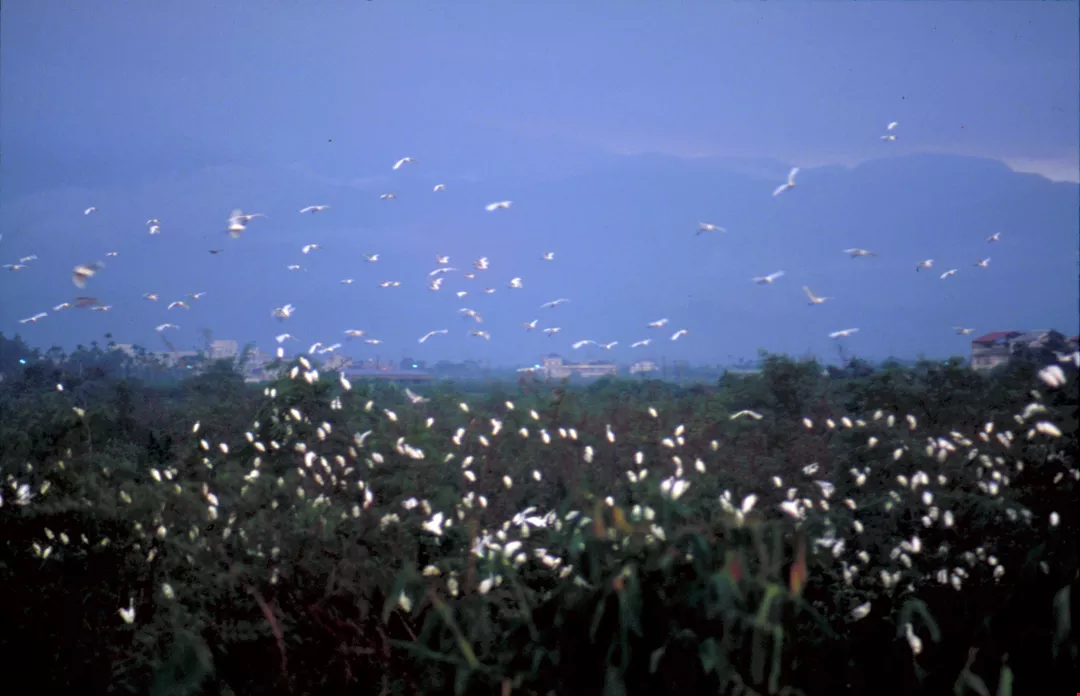
The woods around Wannien Bridge in Touliu. Egrets flying in the sky like swirling snowflakes. (photo by Vincent Chang)
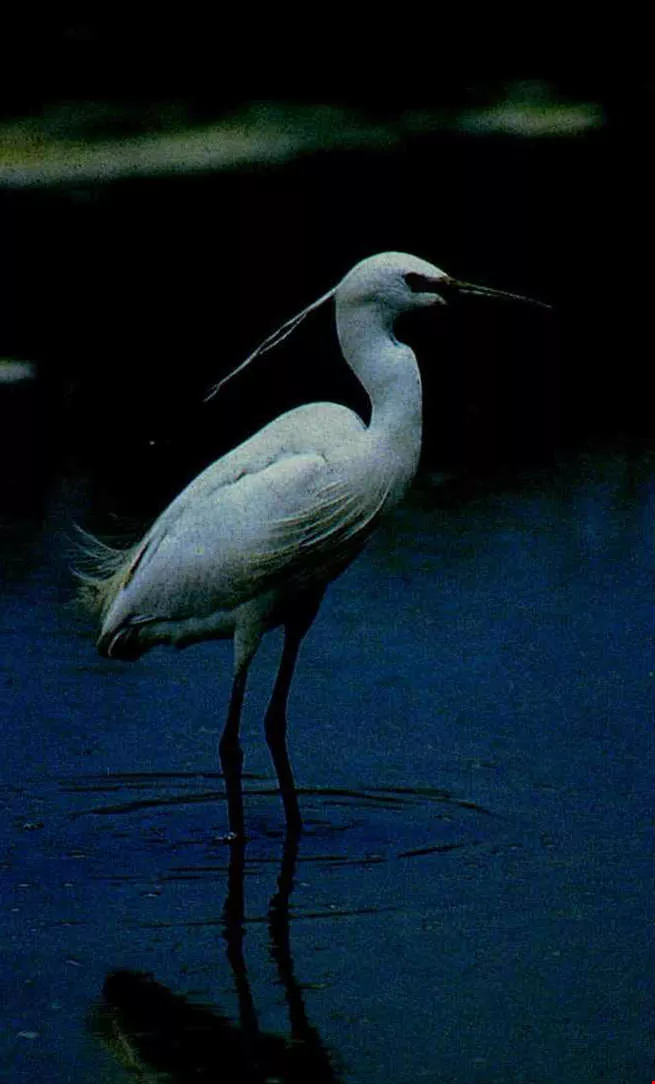
During the mating season, the little egret uses its wings as an umbrella.
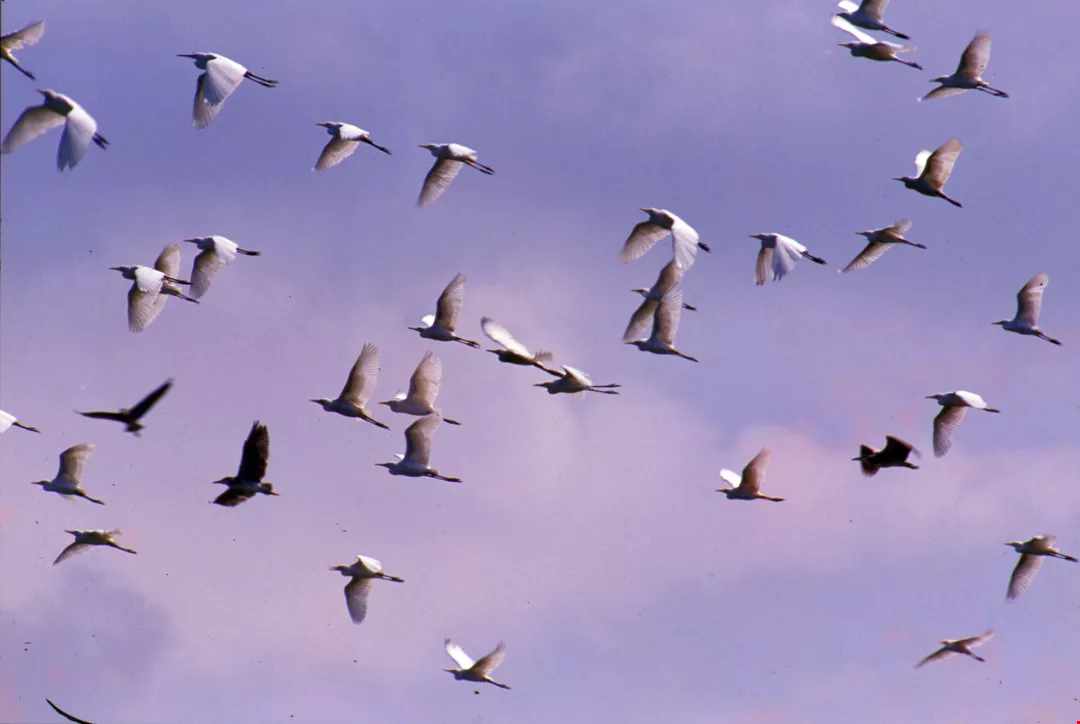
Two night herons mingle with a flock of white egrets. (photo by Arthur Cheng)
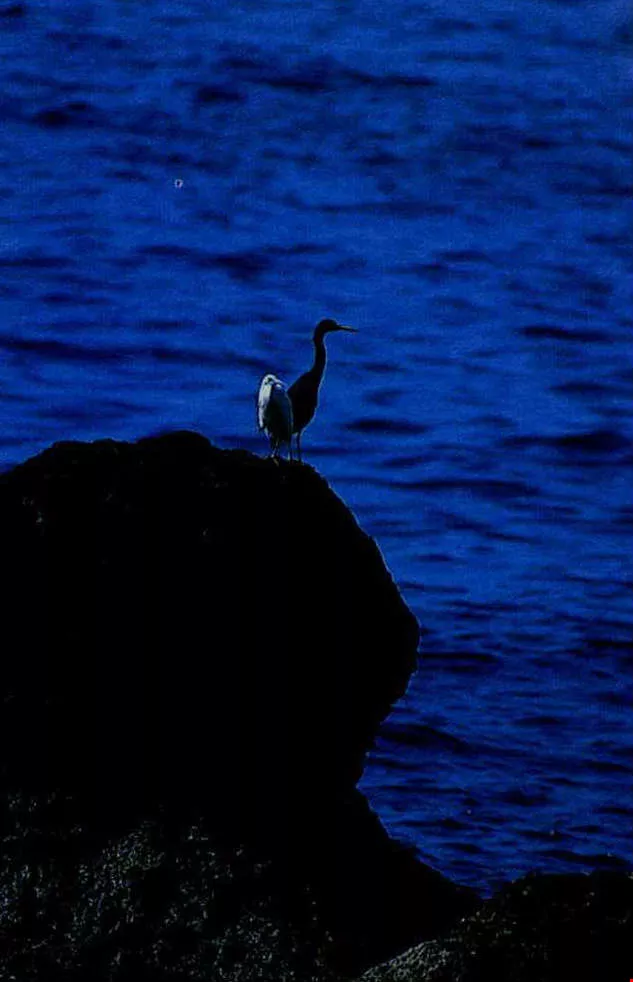
(Upper left) The Eastern reef heron, rarely seen on Taiwan, has black and white feathers.
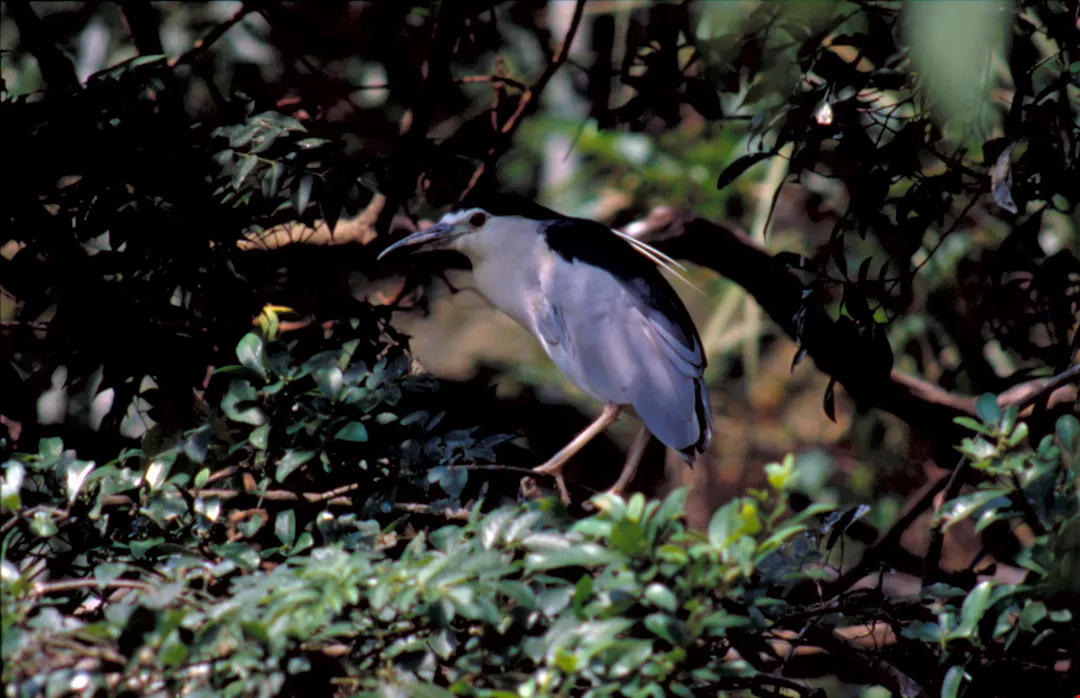
(Lower left) The night heron, active at night, rests in the shade of the trees during the day. (photo by Arthur Cheng)
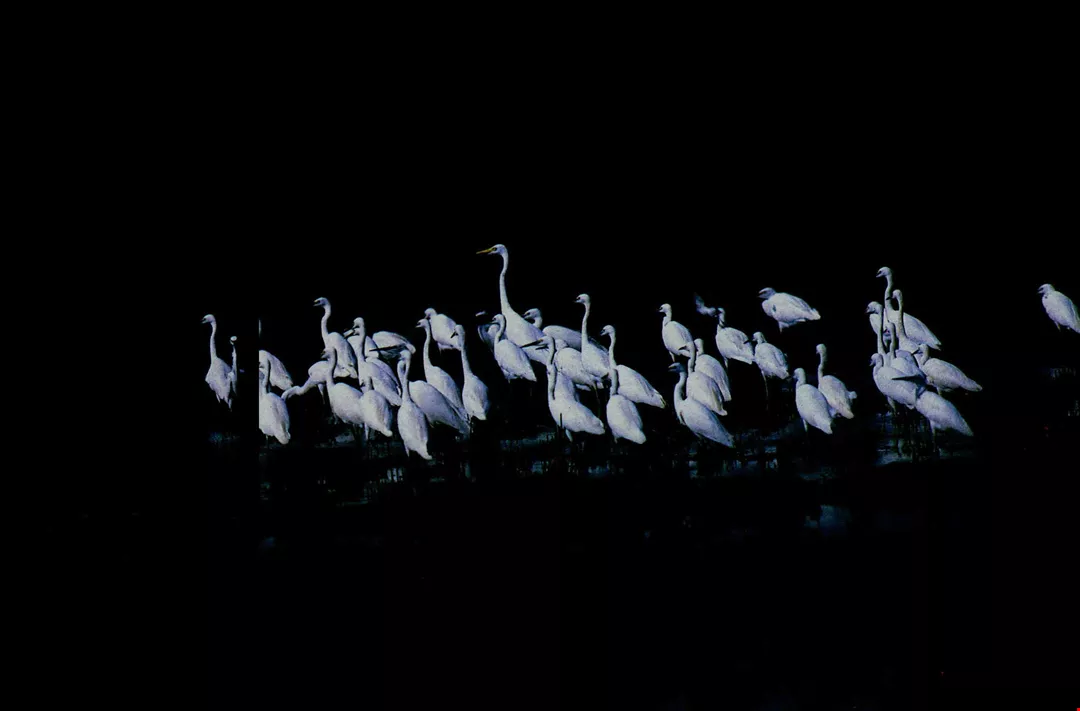
(Right) A yellow-beaked Eastern white egret mixes with a flock of the little egrets.


@List.jpg?w=522&h=410&mode=crop&format=webp&quality=80)


