Reasons to Shop Nanmen Market:
Fresh-Made Foods, Holiday Treats, and More
Chen Chun-fang / photos Kent Chuang / tr. by Scott Williams
March 2026

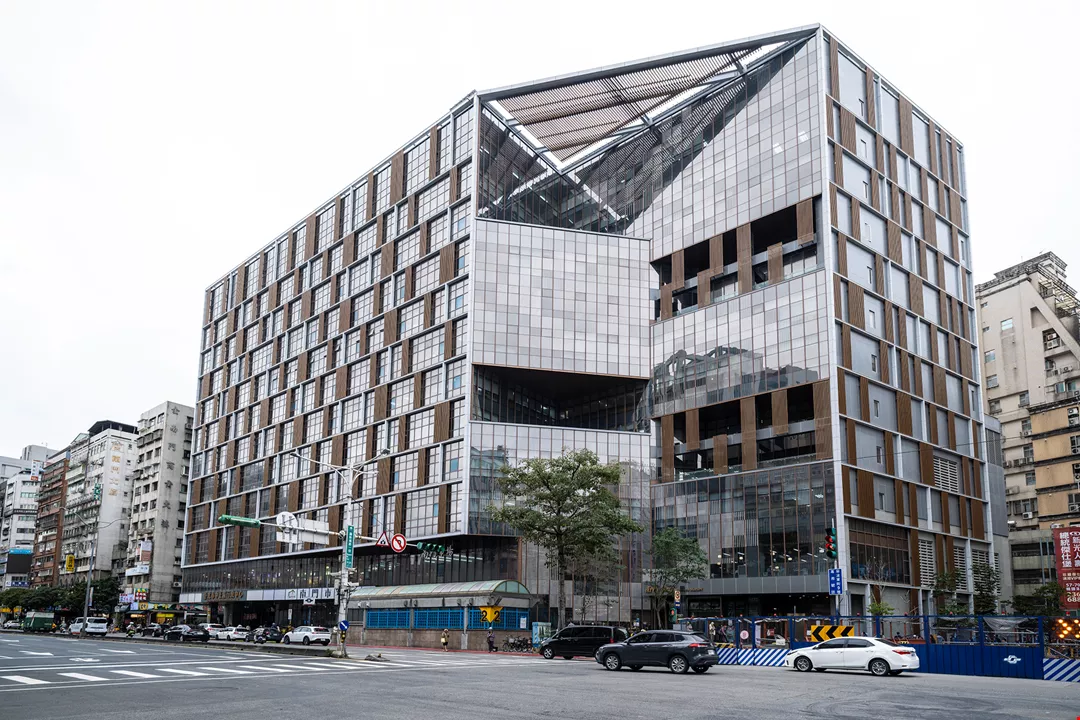
Many cities around the world have markets that form a part of their identity and offer visitors a way to experience the local living environment. Rotterdam’s Markthal (“market hall”) and Thailand’s floating markets are prime examples. In Taiwan, Taipei has the 100-year-old Nanmen Market, which now sports a brand-new exterior and a spacious, brightly lit interior. Though recently renovated, Nanmen continues to deliver the palette of flavors and friendliness for which it has long been known. More than a simple food market, it is a repository for immigrant memories, holiday spirit, fine foods, and crafts.
Now rebuilt for a second time on its original site as a brand-new glass-curtain-walled building, Nanmen Market boasts a modern exterior, yet its interior retains all of the warmth of old.
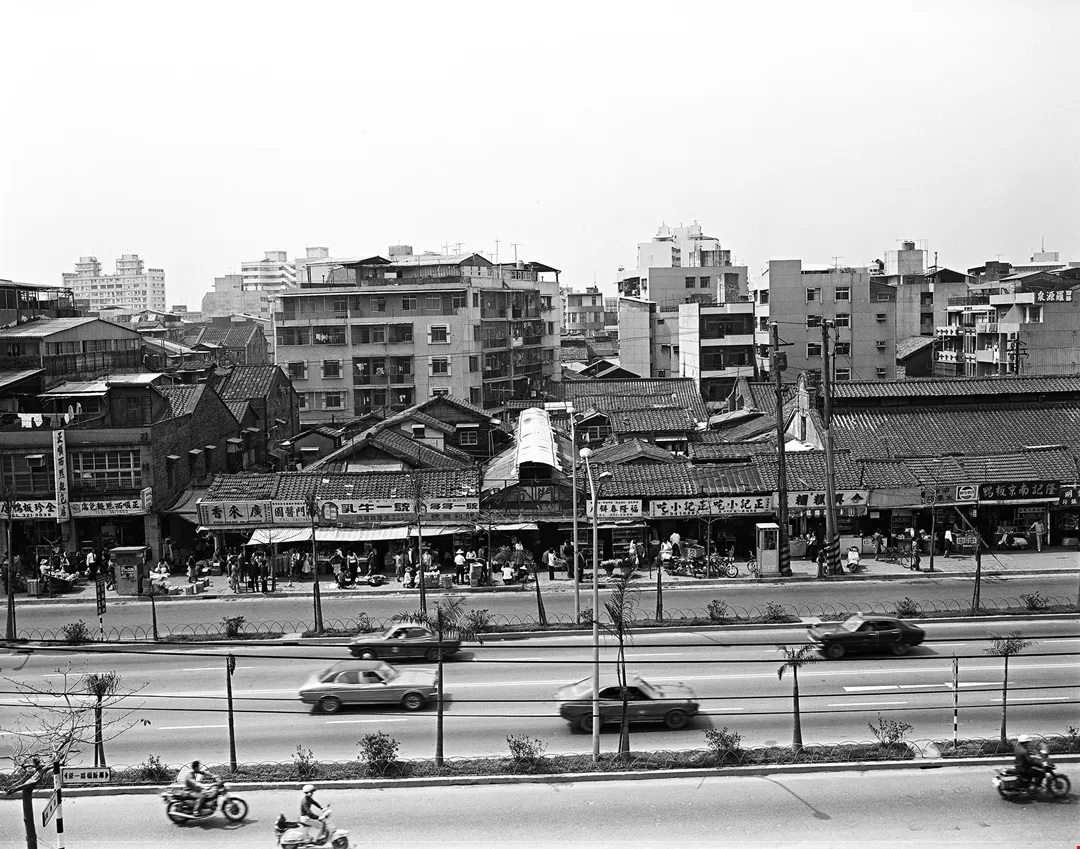
Established in 1906, the market was originally known as Chitose-cho Market due to its location in Chitose-cho during the Japanese colonial era. After WW2 it expanded in scale and was renamed Nanmen Market. The photo shows the market before its first renovation, when it was a set of single-story buildings that looked very different from today’s market. (MOFA file photo)
Growing with Taipei
Wang Quanguo, chair of the Nanmen Market Management Committee, says that the market has always been known as a lively, bustling place. That’s even more true around the Lunar New Year, when it’s filled with seasonal shoppers who queue up in long lines at famous stalls to purchase beloved holiday treats.
The old Nanmen Market was surrounded by staff quarters for military personnel, civil servants and teachers. When the Nationalist government arrived in Taiwan with people from all over China, the market began catering to the new arrivals’ nostalgia for their former homes, providing them with specialties from all over the mainland, from Shanghai-style songgao and braised carp with scallions, to Hunan-style smoked pork and Huzhou-style glutinous rice dumplings.
Generations of immigrants have brought their children here to learn about their culinary heritage, and food lovers also come to hunt for unusual ingredients. The renowned chef Fu Pei-mei used to be a regular customer. Her daughter Angela Cheng frequently accompanied her to the market and still recalls visiting each of the stalls with her.
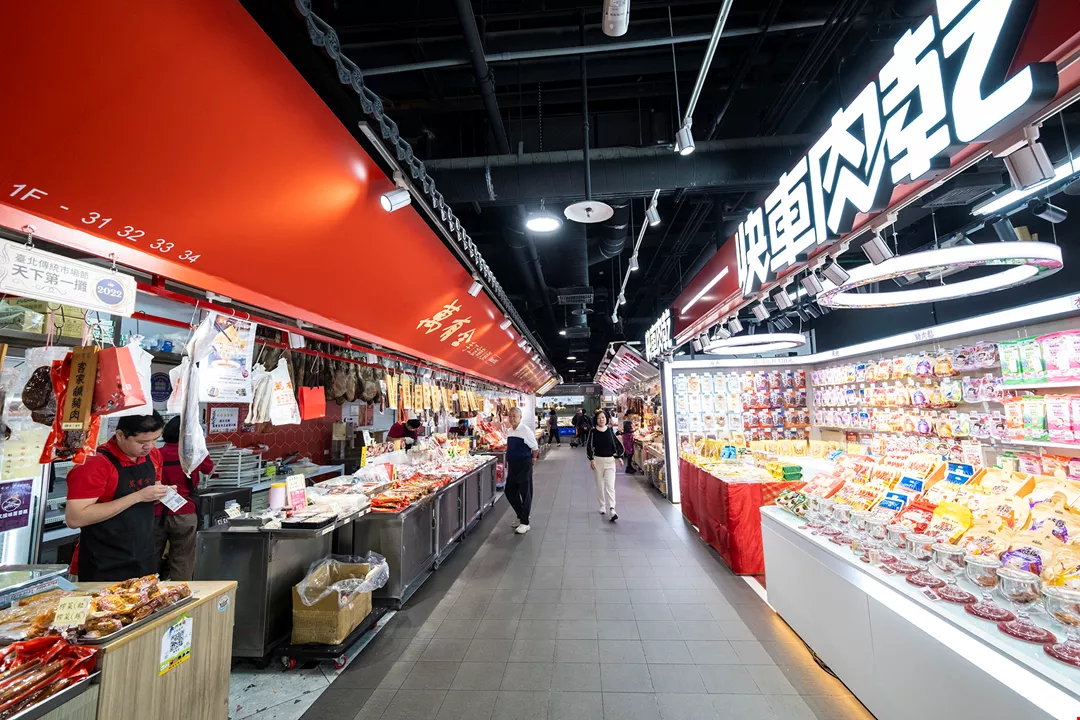
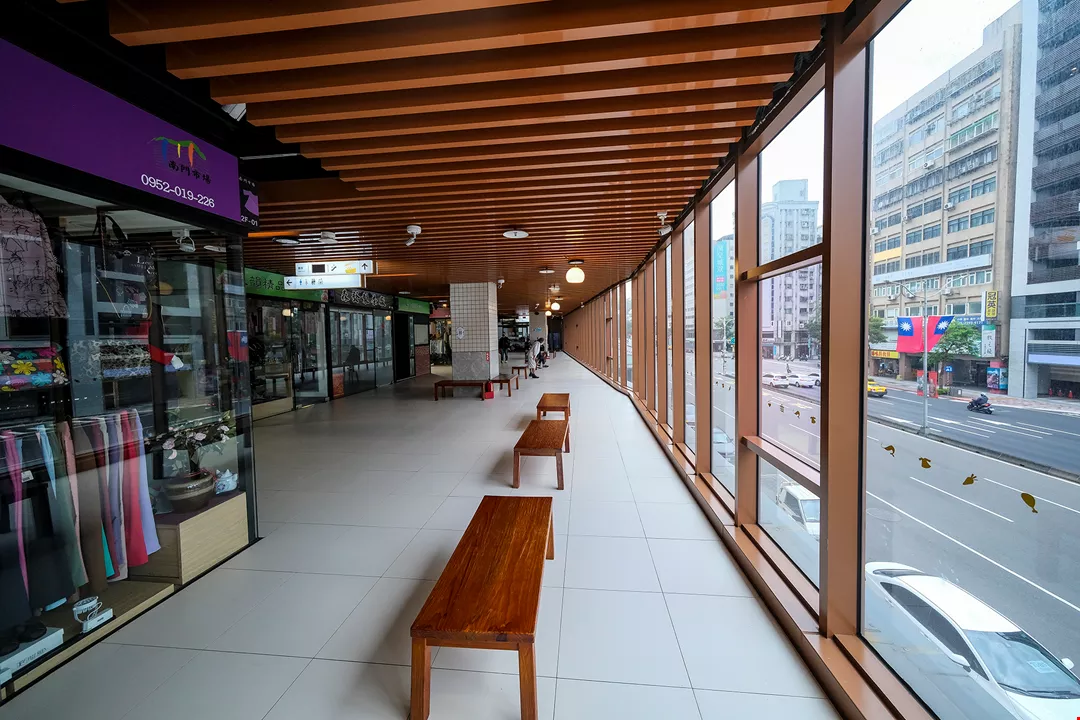
Post-reconstruction, the market is bright and spacious with wide halls, and feels a bit like a department store.

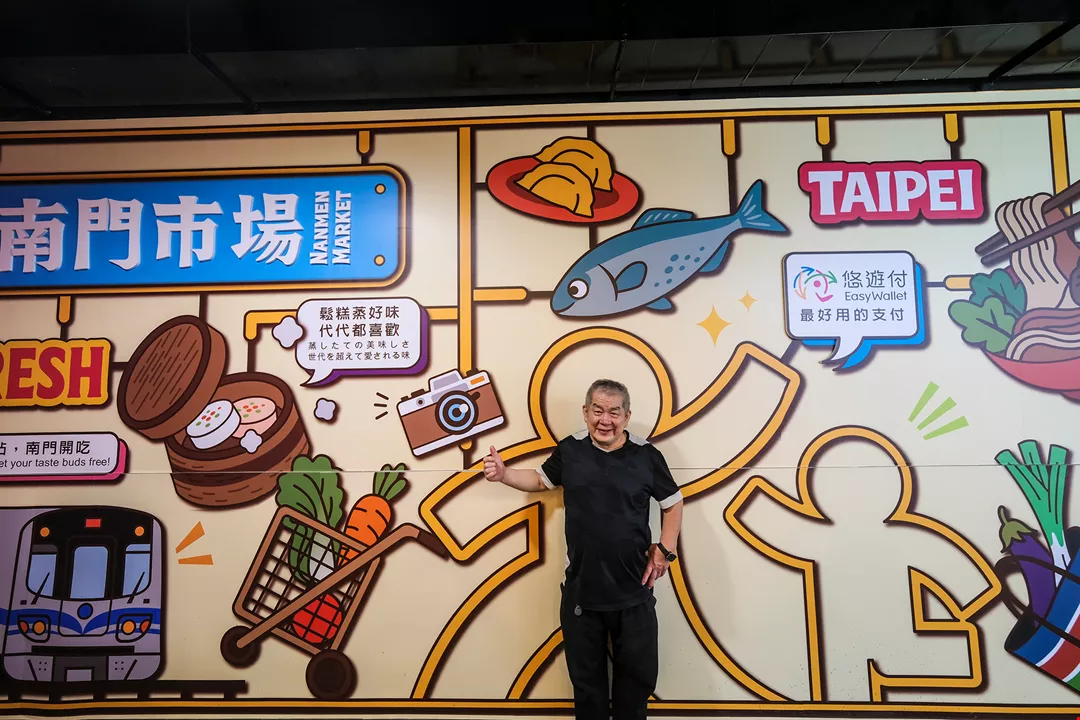
Wang Quanguo, chair of the Nanmen Market Management Committee, has a deep attachment to the market. His innovations include a selfie wall, self-service ordering kiosks, and even AI-assisted customer service, all aimed at leading Nanmen into the future.
A five-star traditional market
While other markets often experience high turnover among their vendors, many of Nanmen’s have spent more than half their lives here. They view their stalls as family businesses to be passed down to their heirs. Wang himself grew up at Nanmen, lived in one of the old market lofts, and knows every inch of the place.
Sharing anecdotes, the tells us that Kuaiche (“express train”) dried meats got its name because the market used only to close on the second and 16th days of every lunar month. Kuaiche’s owners would therefore rush back to Chiayi on the night express on the night of the 15th to see their parents and children, and then hurry back to Taipei on the night of the 16th to open the stall again. The Kuaiche name represents the hard work they put into their business and their love for their family.
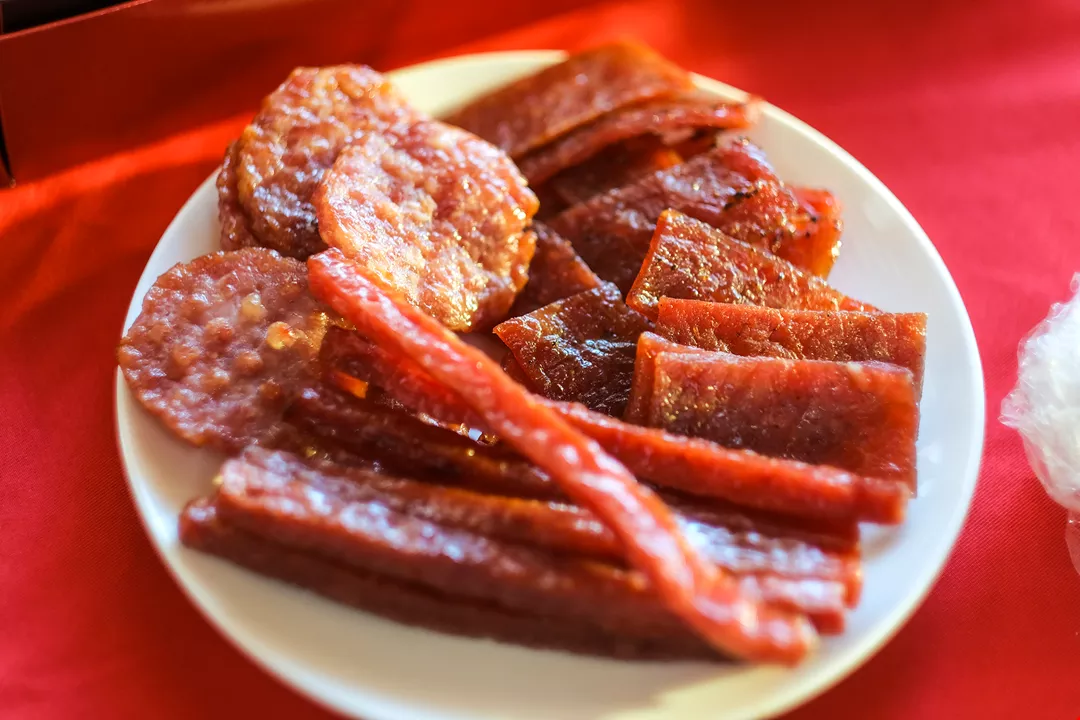
King Long Jerky, established in 1976, provides an example of the old market’s warmth. Original co-owner Bai Yuqiao says that when her husband, Wang Qinlong, first started the business at Nanmen Market, the stall’s sales were so poor that he thought about giving up. But Nanmen vendors of his father’s generation encouraged him to stick it out, pointing out that the fresh-made pork floss and jerky he made were rare in those days. They argued that the business would eventually take off. They proved to be correct, and King Long has since been passed on to the next generation.
It’s this sort of generational business and mutual support that has enabled Nanmen Market to weather reconstruction and even relocation. More, the vendors’ desire for Nanmen to become even better has made them meticulous about managing the current bright and spacious iteration of the market. Wang Quanguo is particularly proud of the basement meat and produce area, where the floors are sparkling clean and there’s not a hint of a bad smell. The fresh fish are neatly arranged, and the chillers keep the meats fresh all day long.
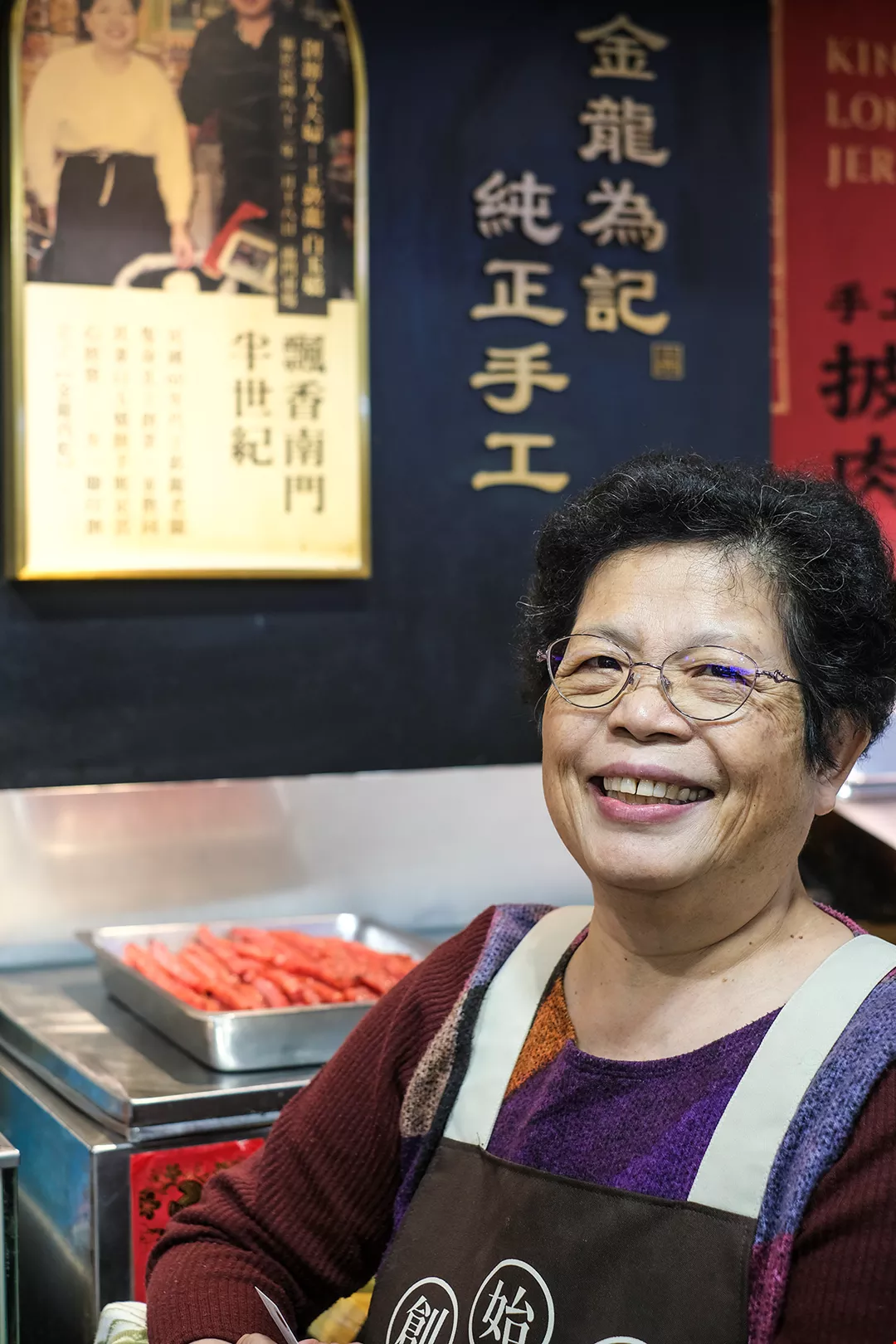
King Long Jerky co-owner Bai Yuqiao says that the support and encouragement of other stalls helped keep the business going through its difficult early days.
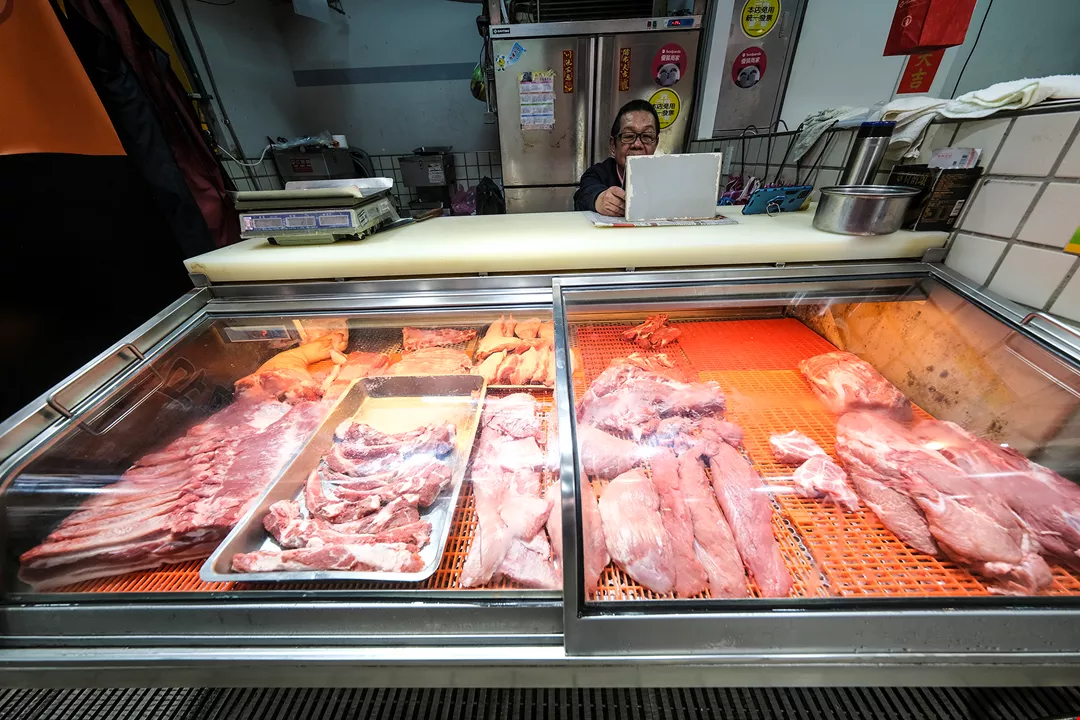
All of Nanmen’s fresh meats are kept in chiller cabinets to ensure that they stay fresh for customers.
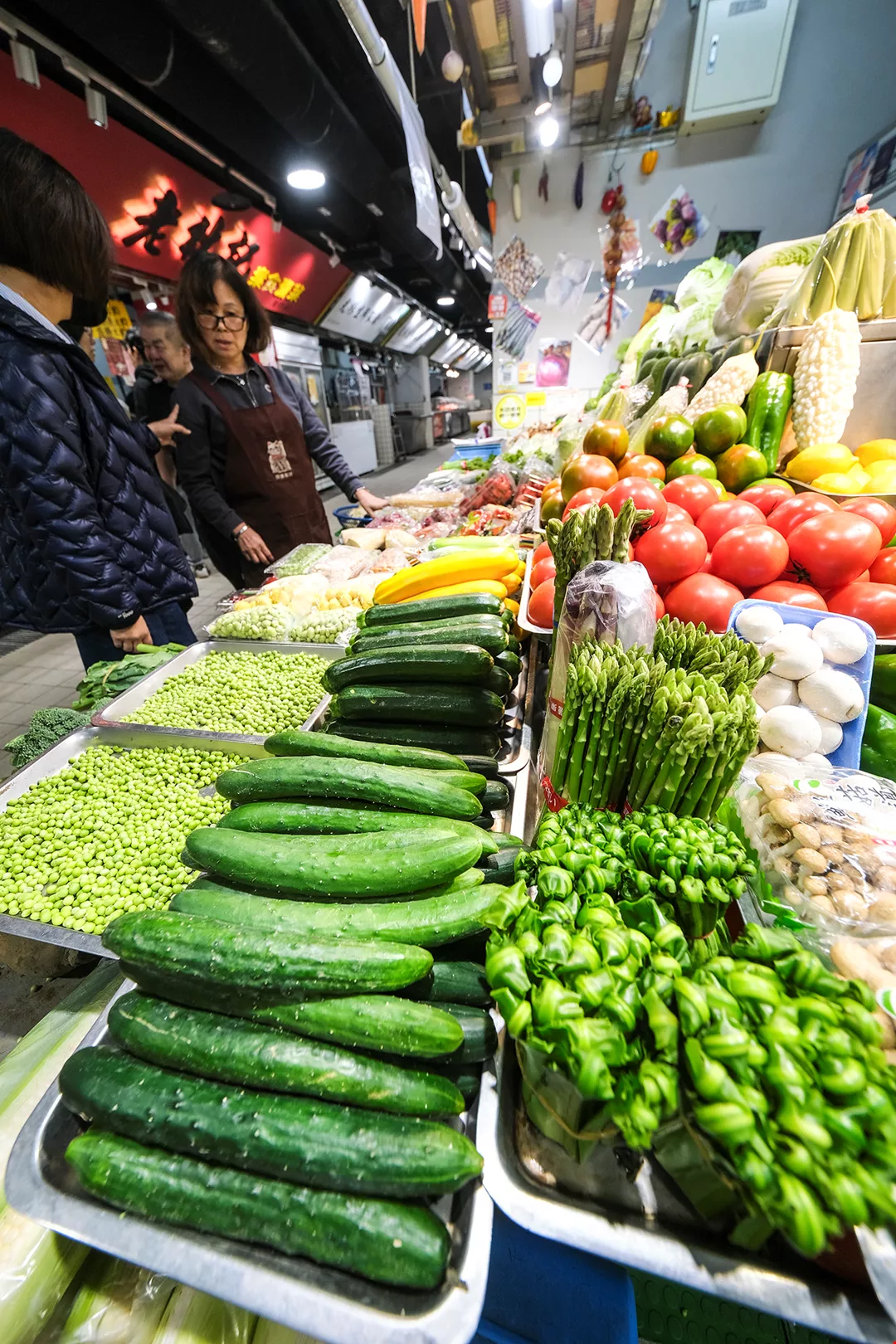
Proud vendors make sure their goods are nicely presented.
Experience the holiday vibe
Nanmen Market also transforms Taiwan’s holidays into a visual and edible landscape, making it a great place to experience the local festive atmosphere.
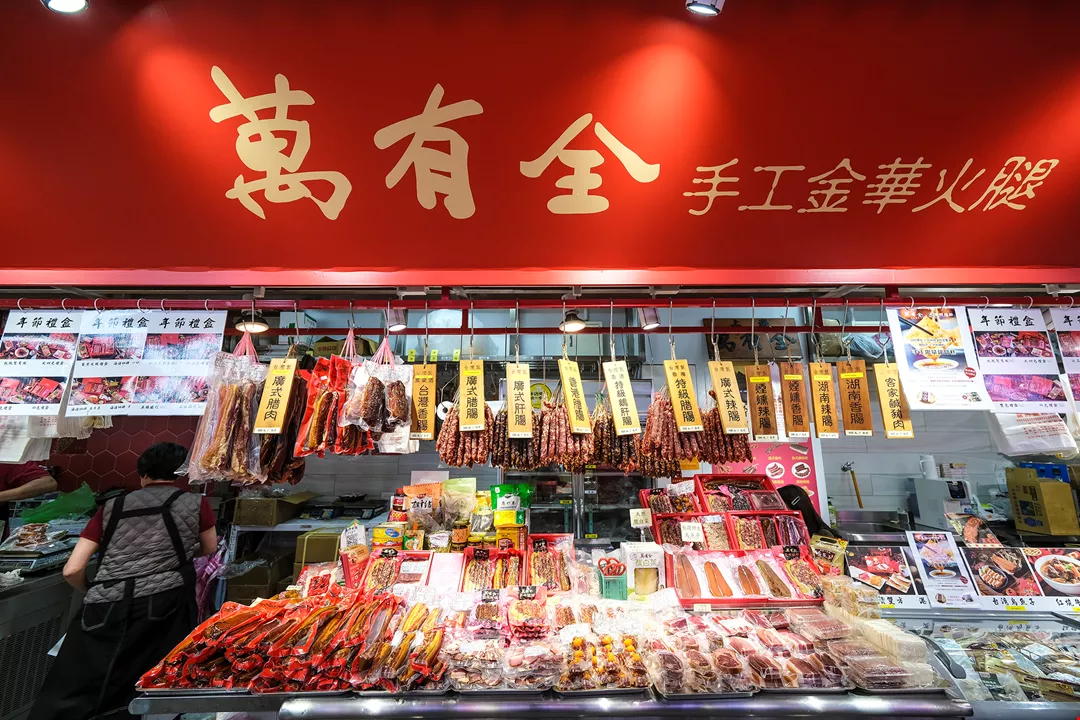
The Wanyouquan stall ages its hams for a full year to develop their flavor. The stall offers a wide variety of New Year’s essentials, including ham, dried eel, and dried bamboo shoots.
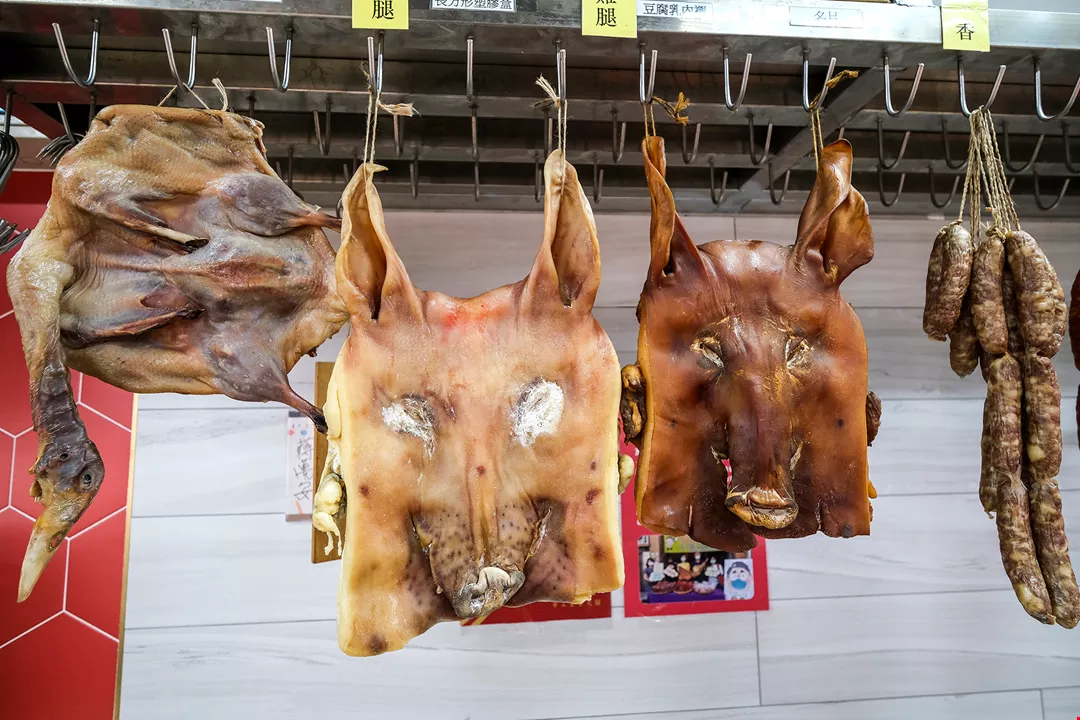
The salt-cured pig heads that hang to one side are only sold at the Lunar New Year. Customers shopping for the occasion swarm the stall, which also carries chicken legs, sausages, and mullet roe.
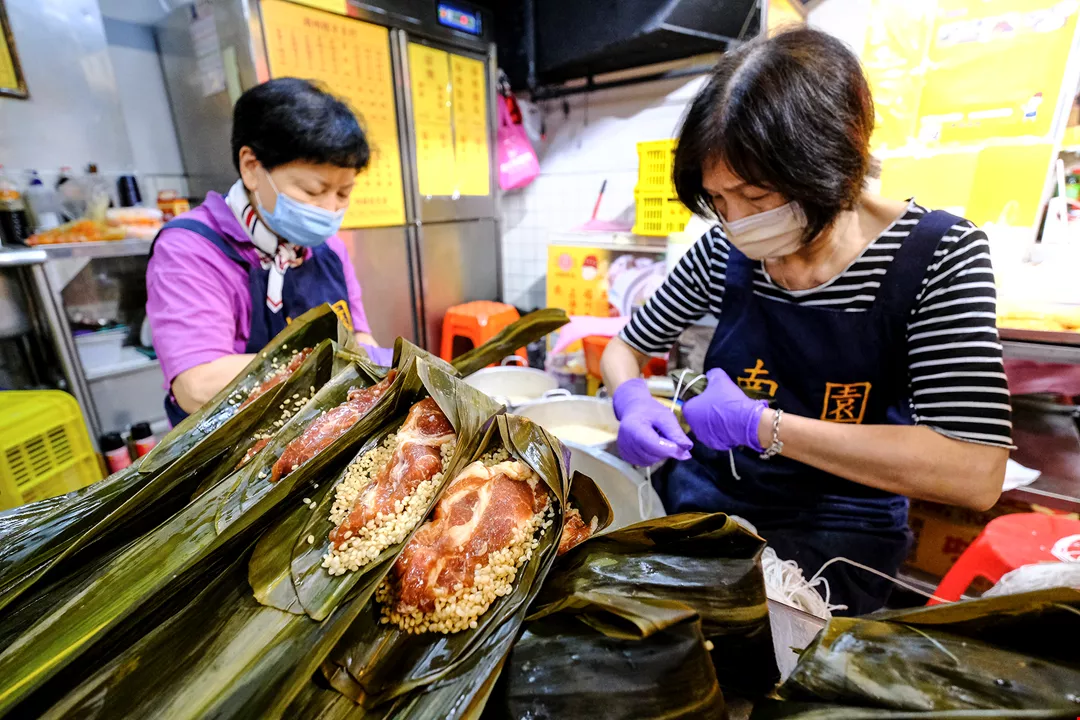
Each stall offers its own riff on glutinous rice dumplings for the Dragon Boat Festival in May or June. Southern style, northern style, alkaline, sweet bean paste, and even rare Huzhou style dumplings are all available!
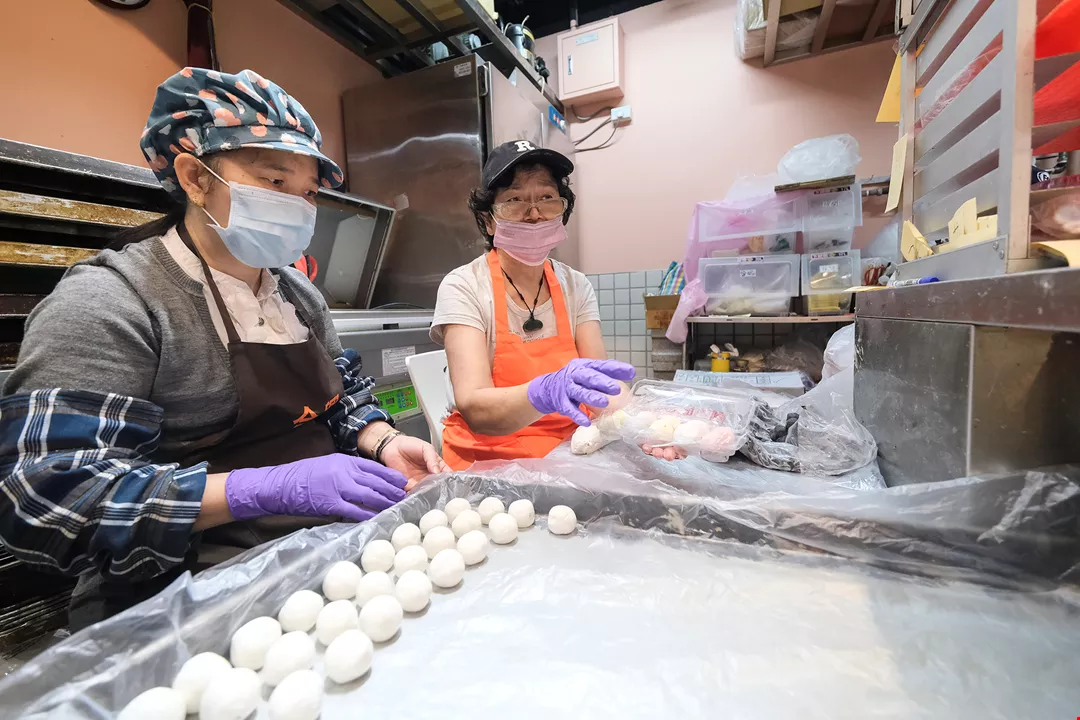
At the winter solstice, you can watch the staff at Hoshing cakes and dumplings make tangyuan from natural ingredients. The stall’s “five elements” tangyuan are colored using red yeast for red, pumpkin for orange, “plain” for white, matcha for green, and black rice for purple.
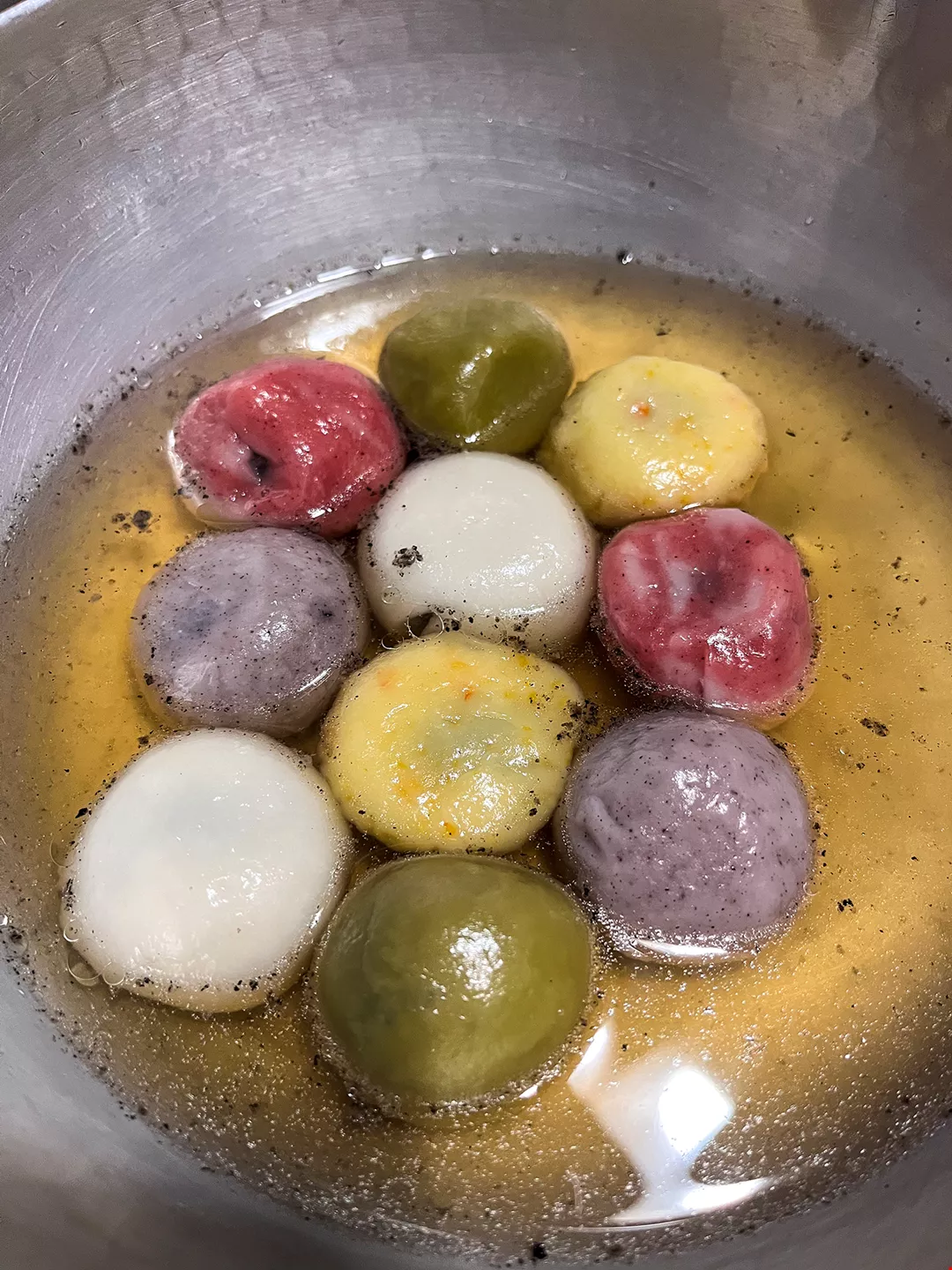
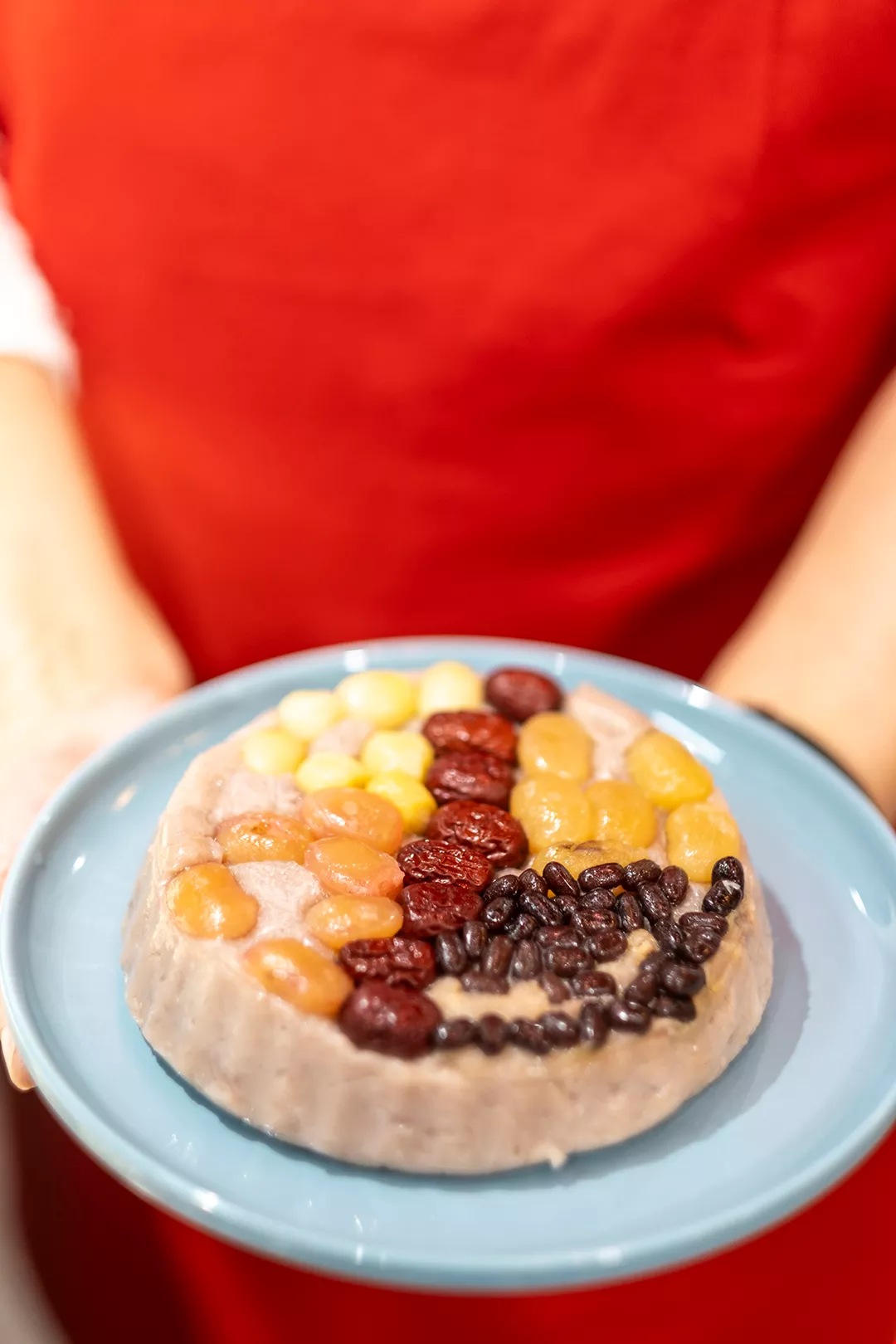
Nanmen Market is a great place to experience the festive New Year’s atmosphere! Vendors sell a wealth of seasonal treats, including eight-treasures sticky rice pudding.
Immigrant flavors
Nanmen Market also draws people with its Jiangzhe-style snacks, freshly made egg dumplings and other treats. The market preserves and passes on many flavors from other regions. Veterans from mainland China introduced a treat from their original hometown, Mr. Chang Hot Pot Food Shop’s signature winter-bamboo-shoot egg dumplings.
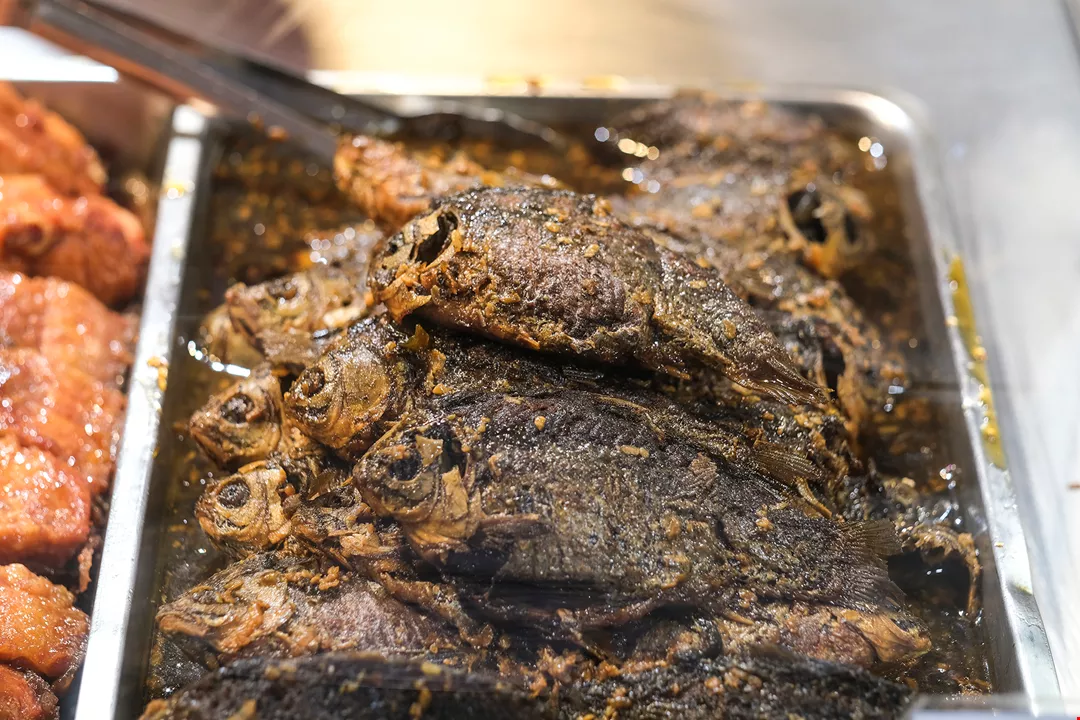
Braised crucian carp with scallions is cooked slowly in a special sauce.
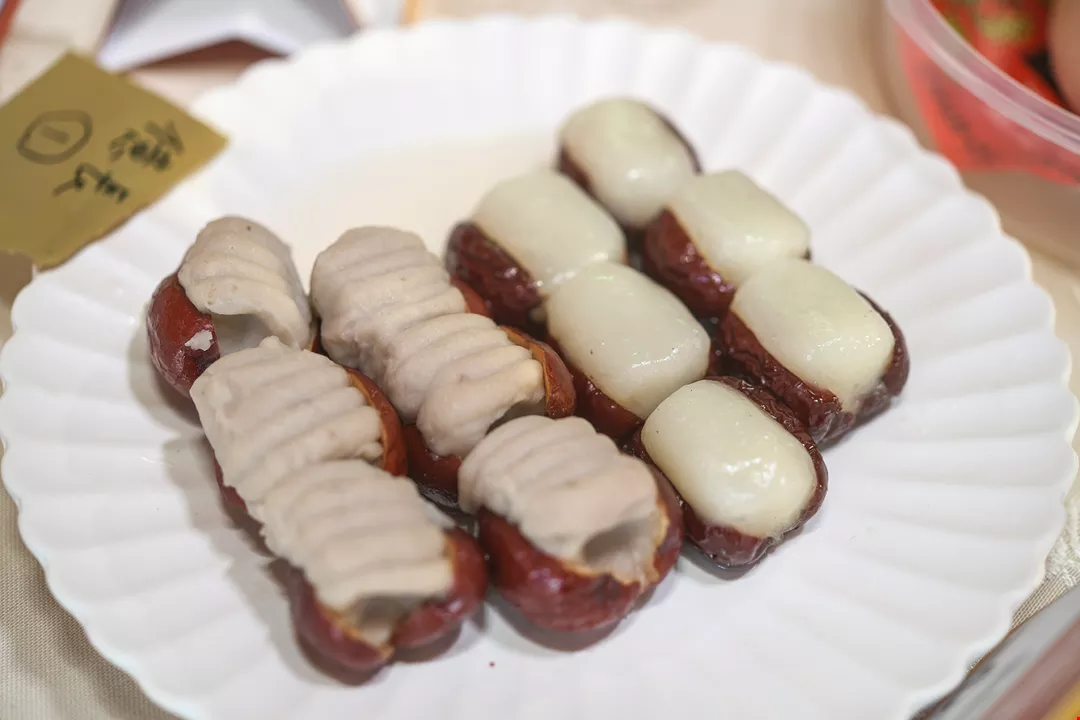
Xin tai ruan (“too softhearted”) is a treat made from pitted jujubes. Usually stuffed with glutinous rice, Yi-Chang’s version is filled with a taro puree.
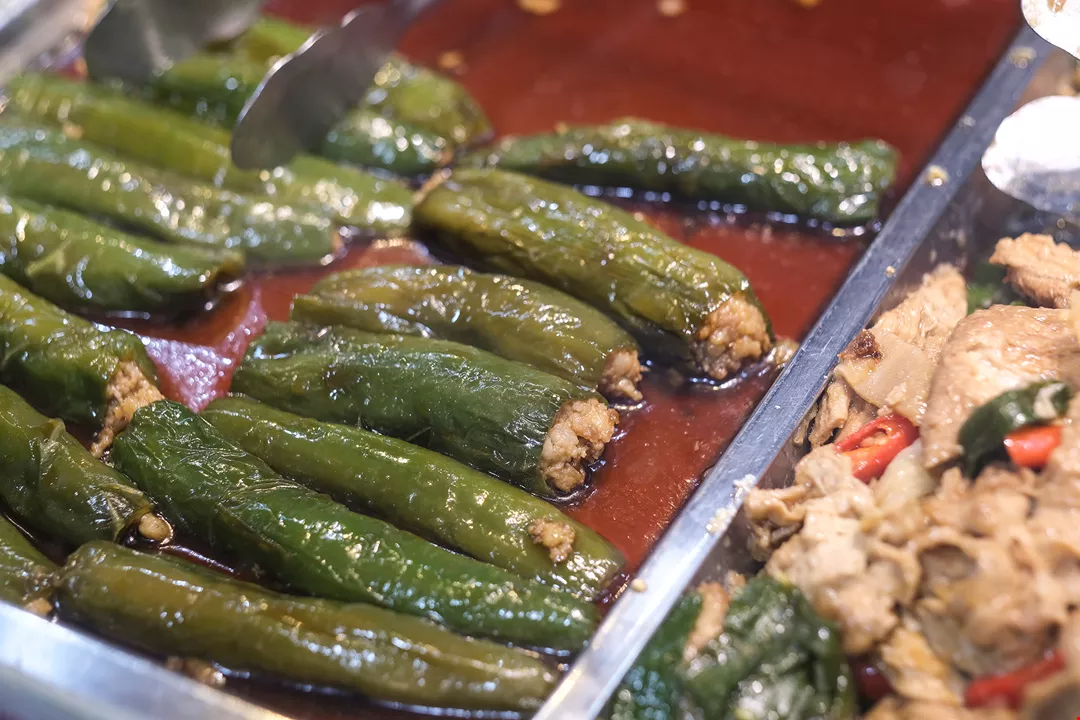
Stuffed green peppers are seeded and filled with minced pork before cooking. Foxconn founder Terry Gou reportedly had them served at his wedding banquet.
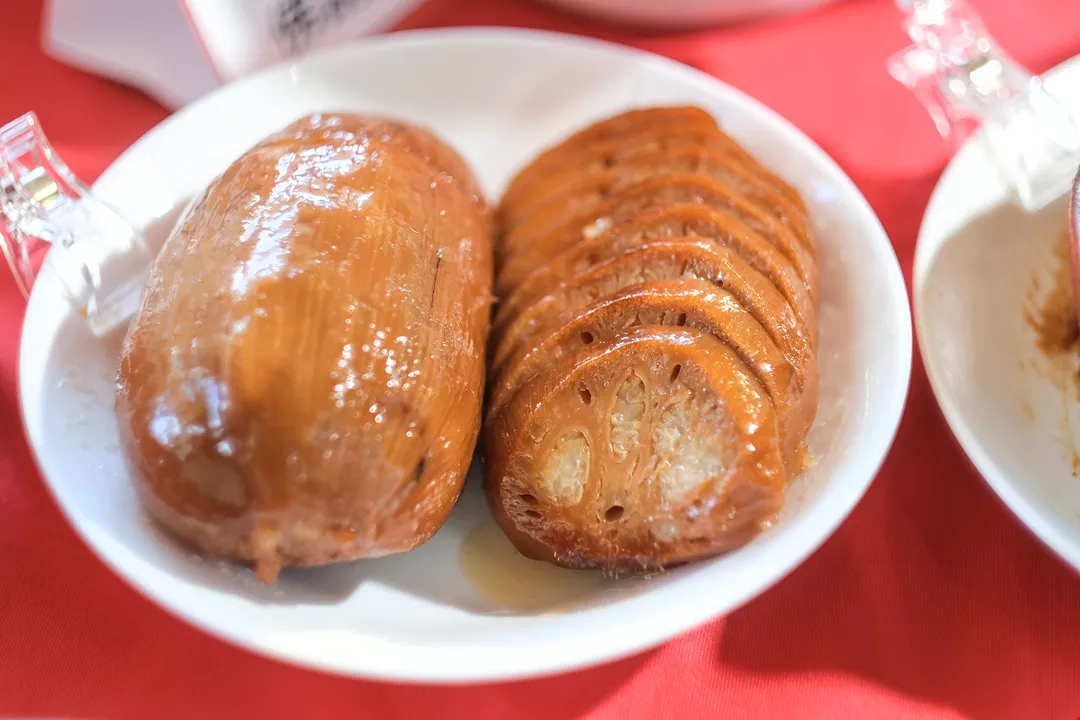
Candied lotus root is a Hangzhou specialty stuffed with glutinous rice and simmered in a sugar syrup for at least eight hours.
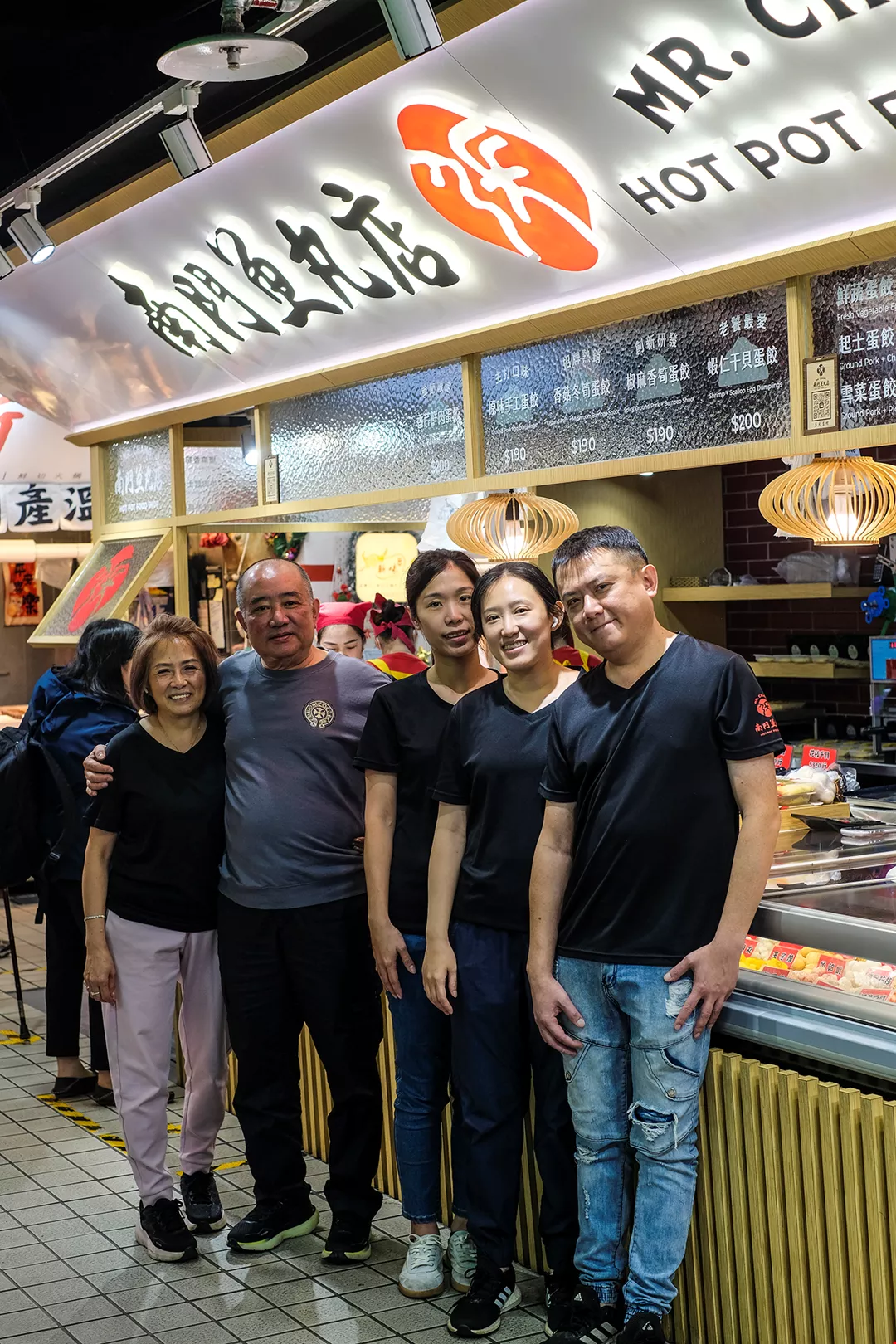
Many stalls at the market have been passed down within families. Chang Ruinan (second from left) and his wife (left), the third-generation owners of Mr. Chang Hot Pot Food Shop, pose with their children.
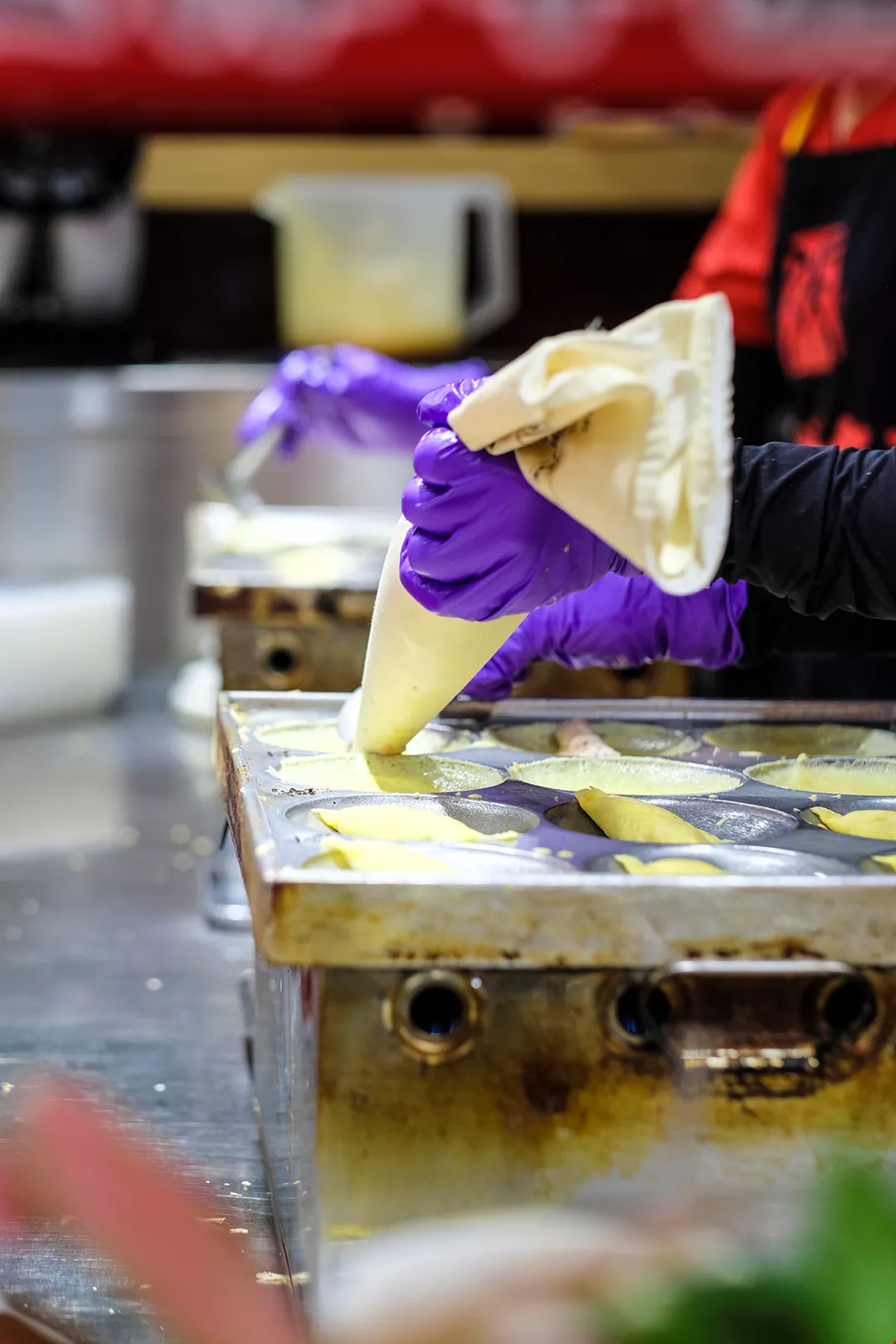
Egg dumplings being made at Mr. Chang Hot Pot Food Shop. The stall’s signature egg dumplings, filled with shiitake mushroom and bamboo, were added in the 1990s at the request of customers from the postwar Chinese immigrant community.
Belly-warming meals
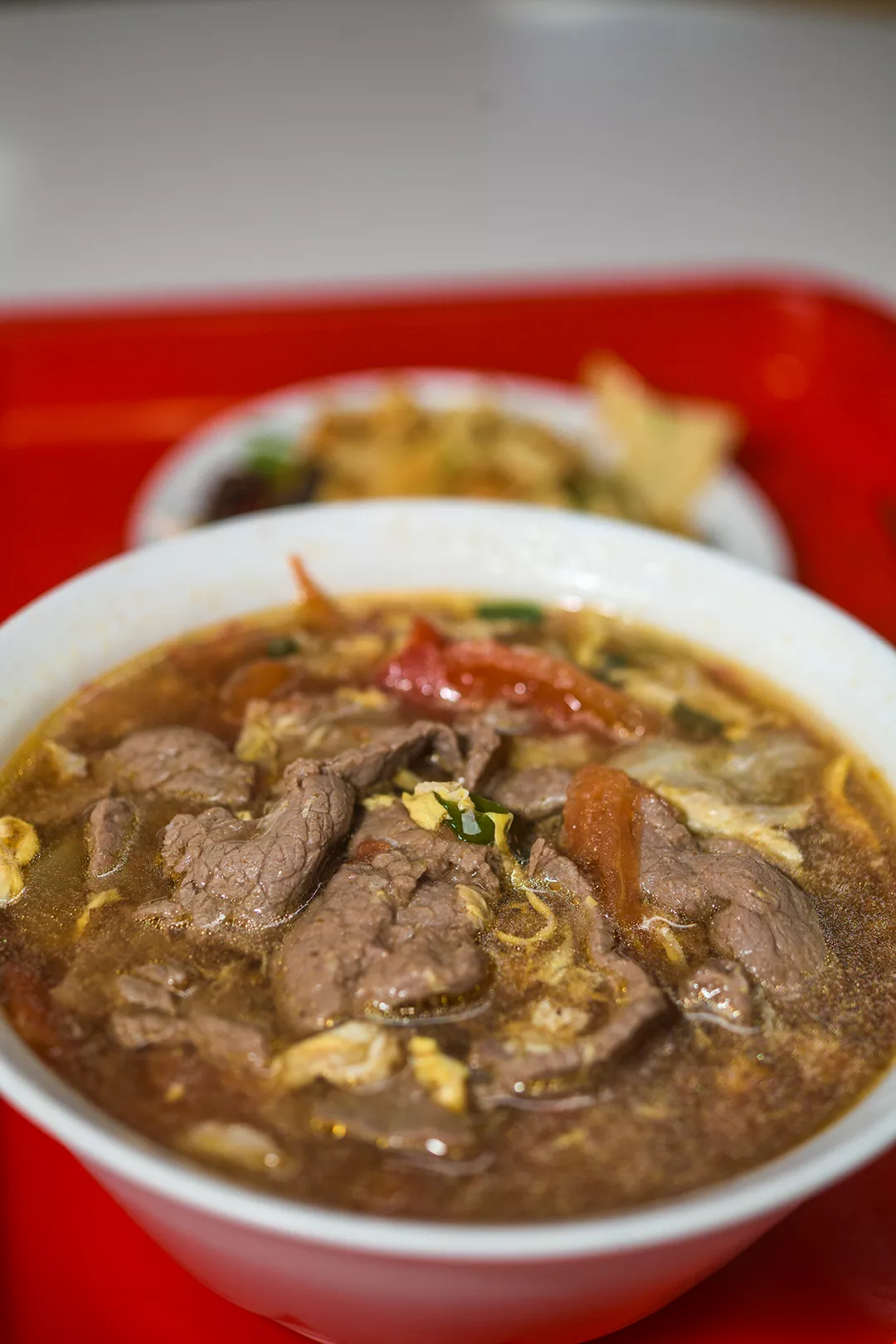
When tired of shopping, make your way to the second-floor food court to eat a bowl of knife-cut noodles or fried rice, or to enjoy a cup of boba or fresh juice. Authentic, downhome flavors are at the heart of the Nanmen experience.
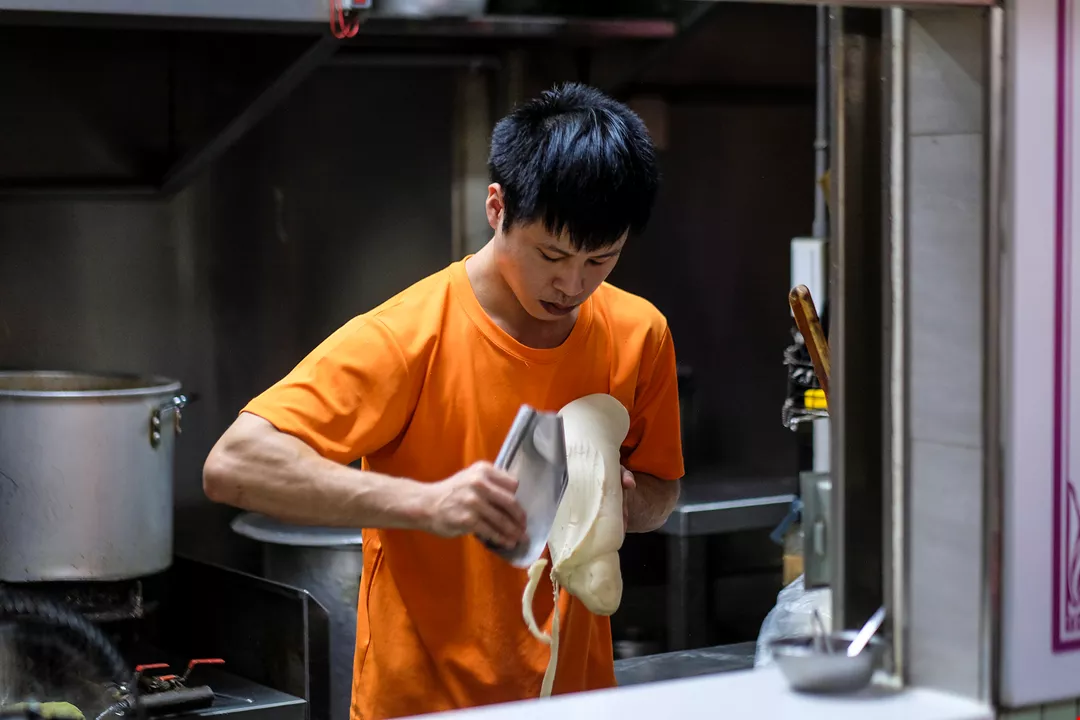
Customers often queue up outside Hehuan Knife-Cut Noodles’ second-floor location before it even opens!
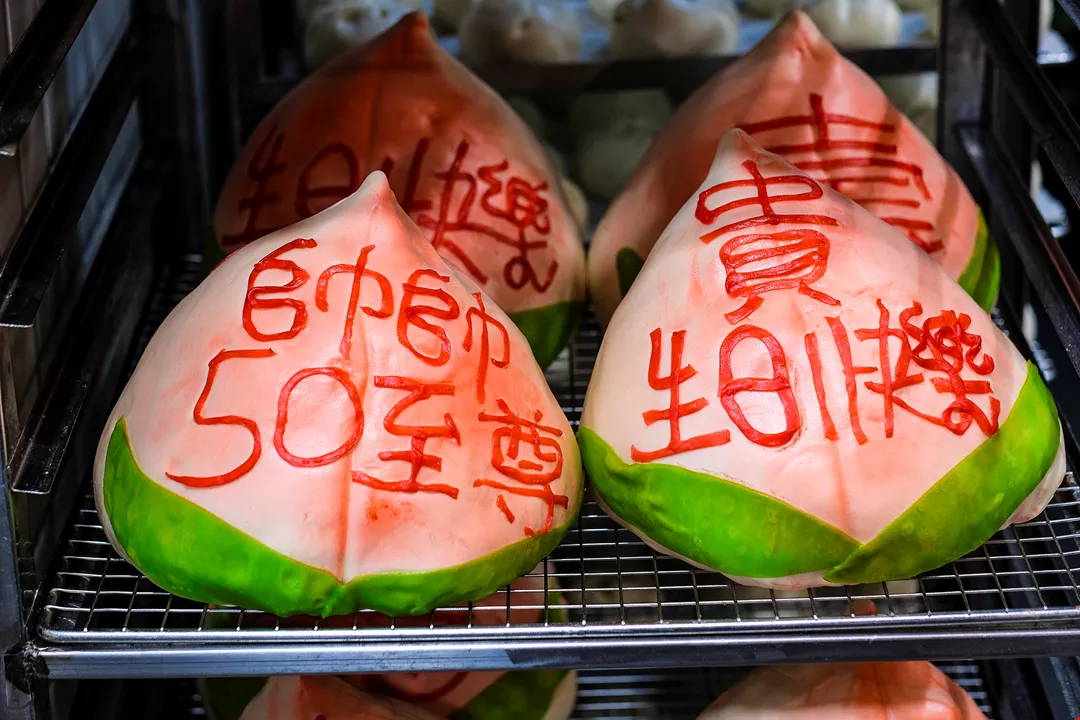
Hoshing cakes and dumplings carries giant longevity peach buns that are filled with many small buns.
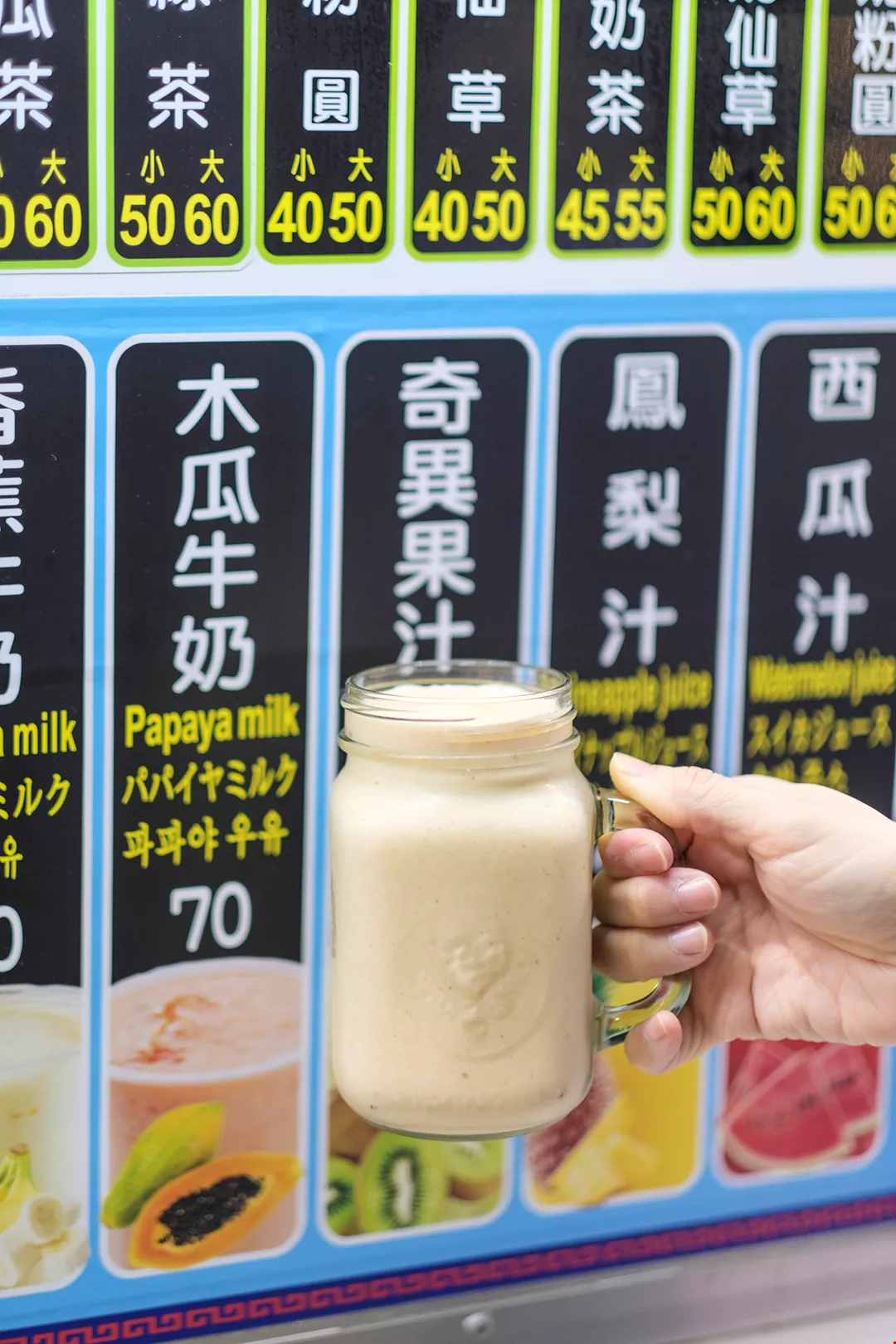
Heiguan, located in the second-floor food court, sells a variety of juices and teas. It also has a tourist-friendly menu that lists items in Chinese, English, Japanese and Korean.
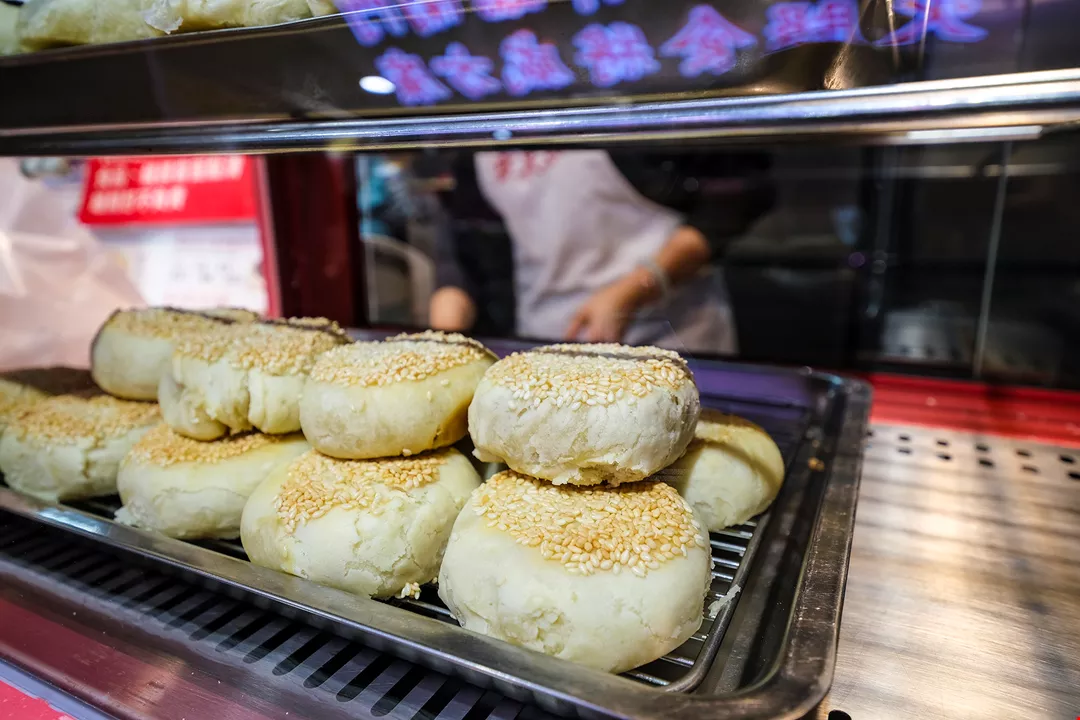
Xuelihong, a purveyor of vegetarian snacks, sells a variety of traditional flaky pastries.
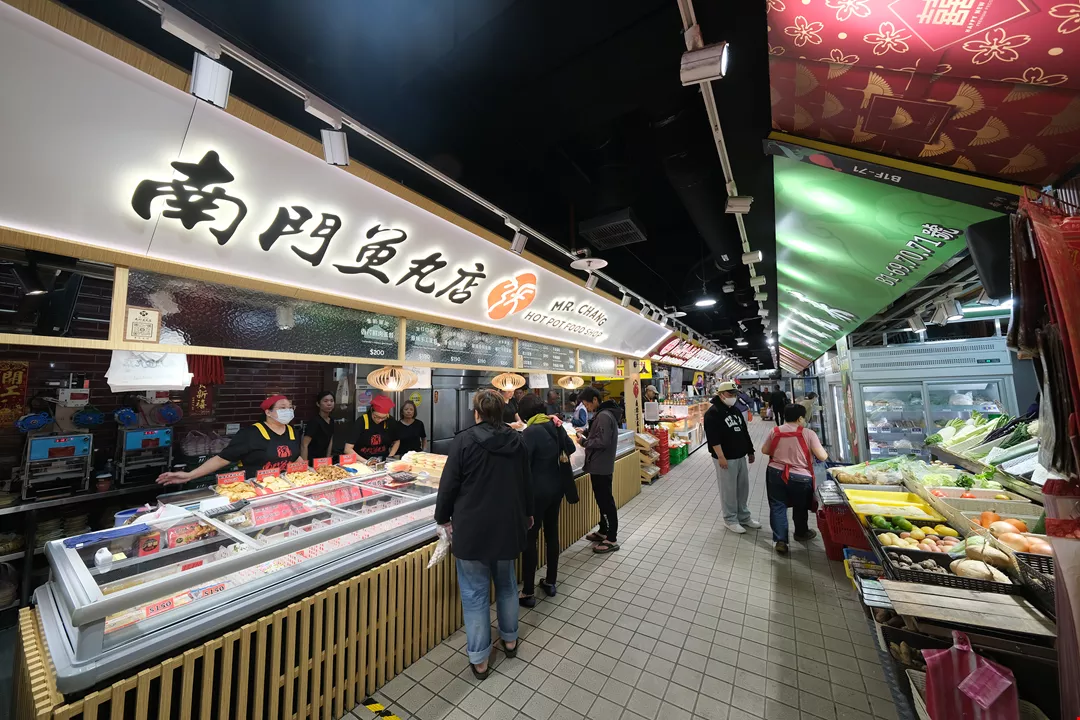
Market trivia According to Chang Ruinan, the third-generation owner of Mr. Chang Hot Pot Food Shop, if a shop has nanmen (南門) in its Chinese name, it means that it is a shop of long standing, like Nan Men Beef and Lamb or “Nan Men Yuwan” (Mr. Chang Hot Pot Food Shop).

Opening hours: Tuesday–Sunday, 7 a.m.–7 p.m.


