Traditional Grocery Stores
A Window on a More Personal Age
Lynn Su / photos Chuang Kung-ju / tr. by Robert Green
April 2018

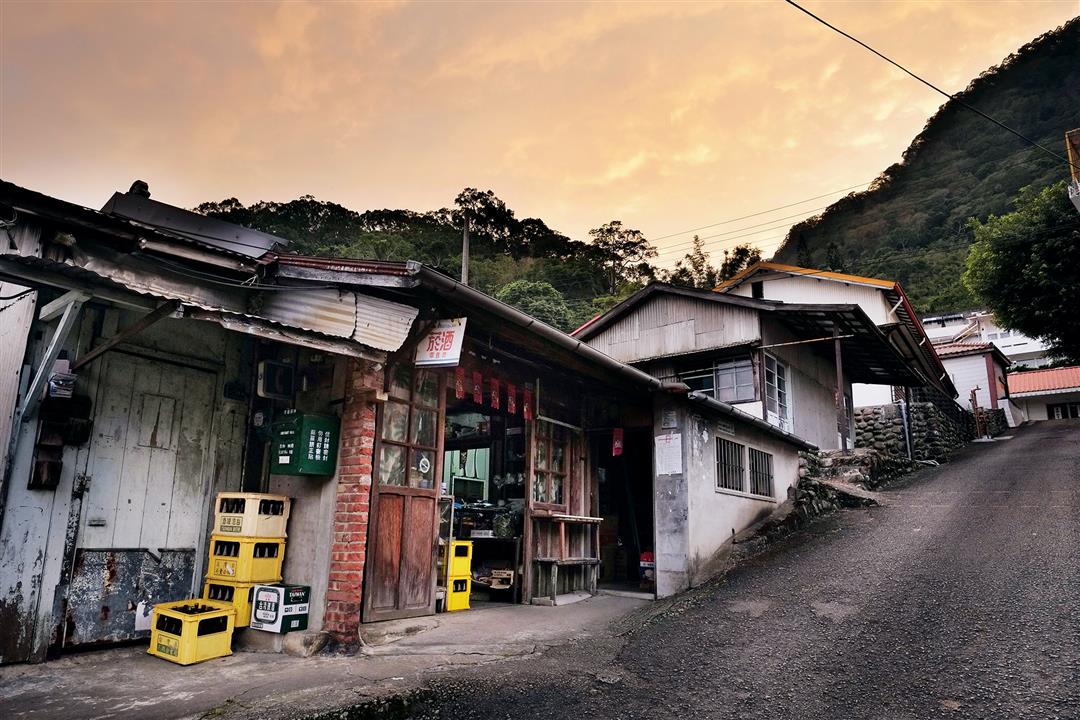
Corner grocery stores once played an important role in the everyday lives of people in Taiwan. Today they are the last vestiges of vanishing traditional society. They arose to meet the needs of local communities, and place a high value on serving those communities. Their wares included cigarettes, alcohol, rice, salt, snacks and toys. They also sold frozen goods, cold drinks, dried foodstuffs, and objects needed for religious rituals. They also extended credit to customers and provided postal services.
Amid the sundries, local news also spread through the chitchat of the store’s customers. The store’s owner and the customers all played a role in this ever-changing drama of life. Some kids born in the 1970s who helped out in their families’ corner stores witnessed the heyday of such stores during their childhoods and then watched this world fade away before their eyes. They have set out to capture the vanishing world by summoning the memories of their youth.
Comic-book author Ruan Guang-min created Yong-jiu Grocery Store, a series based on his grandfather’s corner store. Illustrator Hsu Ming-hung took up the subject in Baochun’s Grocery, which explores the ups and downs of a family grocery. Lin Hsin-yi, a journalist, and her husband Wing Tseng, a photographer, compiled The Good Old Groceries, which records the stories of 32 traditional grocery stores in pictures and words. Through text, images, and personal memories, they conjure up the golden age of the corner grocery.
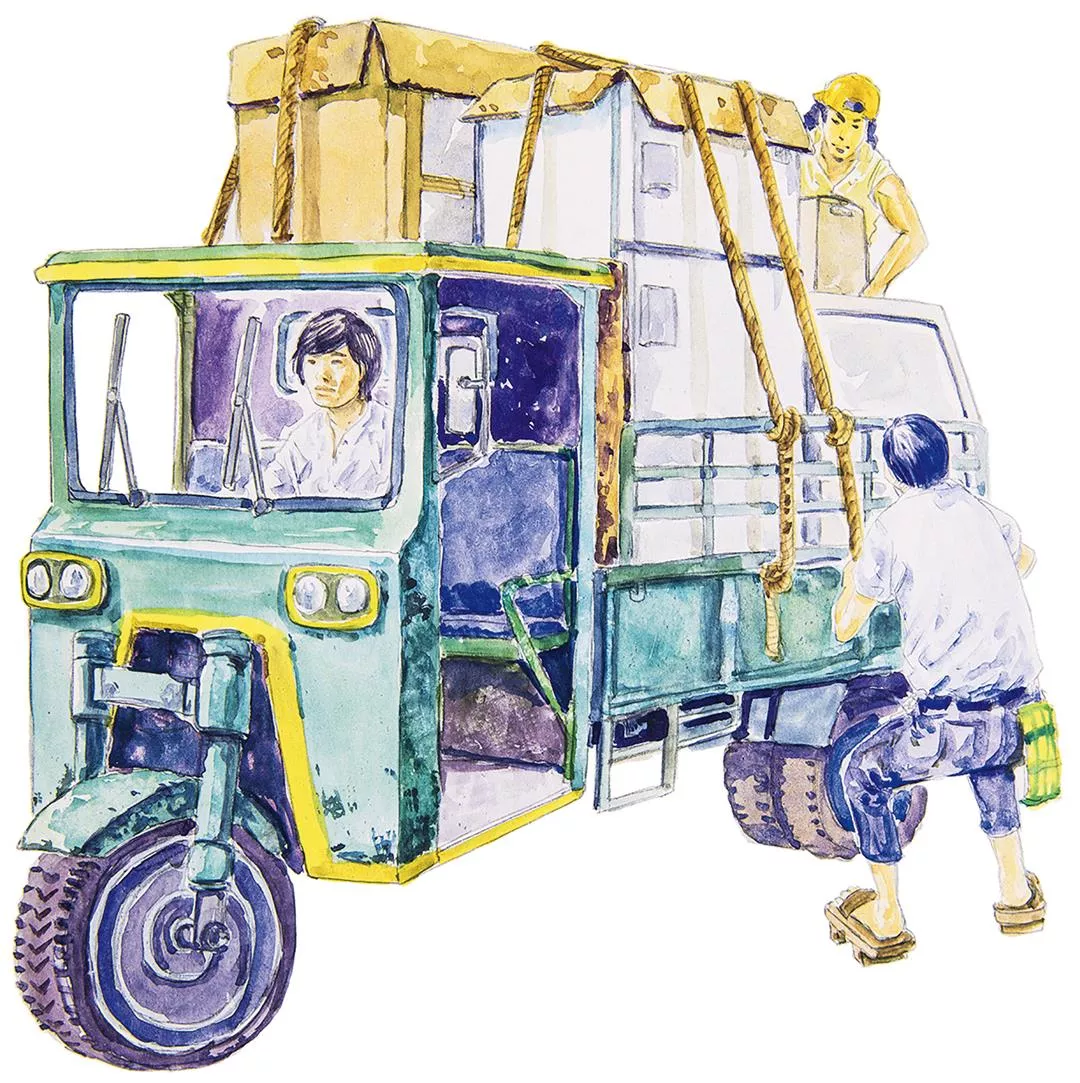
art by Ruan Guang-min
The comfort of the familiar
In terms of convenience, efficiency and orderliness, the corner store is no match for the modern convenience store. But its charm lies in the warmth of its atmosphere. This unique aspect is evident in the relationships between owner and customers. That human warmth also permeates the artistic representations of the world of the corner store.
Ruan Guang-min’s work is marked by a concern for the lives of regular people, and he prefers to tell stories through comics designed for young readers. His stories depict human relations and explore attitudes toward life. His experience working in his grandpa’s corner store led to the creation of Yong-jiu Grocery Store. The story examines the corner store’s struggle for survival in the modern society. He focuses on the interactions of ordinary people and how they navigate everyday life. Through the humdrum rhythm of daily life emerges the comforting warmth of familiarity that reflects the essence of the corner store.
Hsu Ming-hung, who wrote Baochun’s Grocery in first-person prose, has quite another opinion when he talks about his family’s grocery, which has been open for more than 60 years. “For me the store is a constant in my life, even with the difficulties that has brought,” he says candidly.
Hsu left his hometown to study and work in an urban area after high school, but occasionally returned home to help out in the store. On his first two trips home, he tried to convince his family to adopt more modern methods to run the shop, but this just led to endless arguing. On his third trip back, his attitude began to change. “I decided to stop being so stubborn, and as I fell in with my parents’ rhythms, I slowly discovered that the charm of the place was the human warmth,” Hsu says. “And that’s exactly why my parents continued running the place.”
After this change of heart, Hsu began to record daily life in the shop in a journal. Through these stories he realized that the vitality of the shop arose from the family’s willingness to help others. This caring atmosphere also broke down his misgivings about his family and made him more tolerant.
Others experienced a similarly complicated process in understanding the traditional groceries. Journalist Lin Hsin-yi struggled to adopt a more personal approach in her writing after spending years reporting from an objective standpoint. She initially set out to record the life of the traditional stores objectively and dispassionately. But the restrictive approach proved difficult. After many drafts, she decided to give priority to describing specific events, but occasionally letting the author’s voice emerge.
At first glance, The Good Old Groceries gives the impression that Lin succeeded in avoiding personal commentary in the work. But just as the perspective of a documentary filmmaker becomes apparent during the telling of the story, Lin’s affection for her subject is revealed through her loving descriptions.
He husband, Wing Tseng, says he decided to depart from his commercial photography techniques and adopt a new style for this book project, which he treated as a relaxing pastime. He avoided professional lighting, using only natural light and capturing his subjects in spontaneous photos. The portraits in the book reveal subjects who stare directly into the lens, rather than profile shots taken from a distance. The candid expressions of the shopkeepers reveal the warmth they feel for their customers, and the pictures complement the stories told in the text.
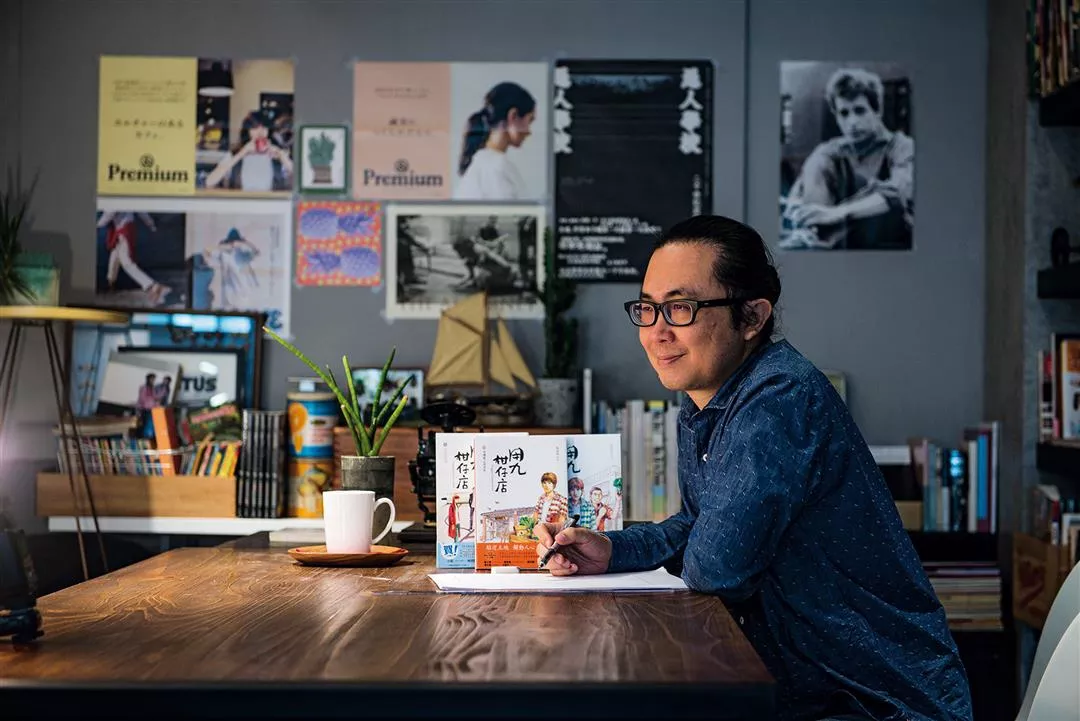
Ruan Guang-min’s Yong-jiu Grocery Store Vol.1: Leave a Light On won two awards at the 2017 Golden Comics Awards. Overseas publication rights have been licensed to a French company. (photo by Chuang Kung-ju)
Timeless tales of the people
The artists and authors often find quite simple sources of inspiration. “A comic-book artist acts as a bridge,” says Ruan Guang-min. “I draw the things I know and have experienced. In the future if someone doesn’t know what a traditional grocery was like, they can learn about it from my book.”
Hsu Ming-hung also had posterity in mind. “At first I just wanted to jot down the history of the shop so that my kids and grandkids would know the stories of the family business,” he says.
Wing Tseng expresses a similar sentiment. “I will be more than satisfied if in a hundred years people can find our book in the library and learn about this part of history,” he says.
The authors’ common sentiments indicate that the traditional groceries are a bright spot in the shared memory of the community. In the 1980s, after modern convenience stores began to replace the traditional groceries, Lin and Tseng scoured old communities to seek out the last of the traditional stores. They visited towns and villages large and small, fishing communities, Hakka townships, old military housing complexes, Aboriginal villages, and mining areas. Along the way they discovered a cross-section of regional and communal history.
“From the historical perspective,” says Tseng, “differences become visible in the customs and practices of Taiwan’s various communities—old-established Chinese immigrants, Chinese who came after World War II, Hakka communities, and Aborigines.”
Although it lacks the long history of an ancient civilization, Taiwan has experienced intense and dramatic changes in governance over the past century, resulting in pronounced differences among various communal histories. By studying the traditional grocery stores, one can also glimpse the trajectory of these political, economic, and social changes. Although Lin and Tseng didn’t set out to explore this aspect of the groceries, they have provided a deeper layer of historical significance through a work intended only to provide a documentary record and nostalgia for the old stores.
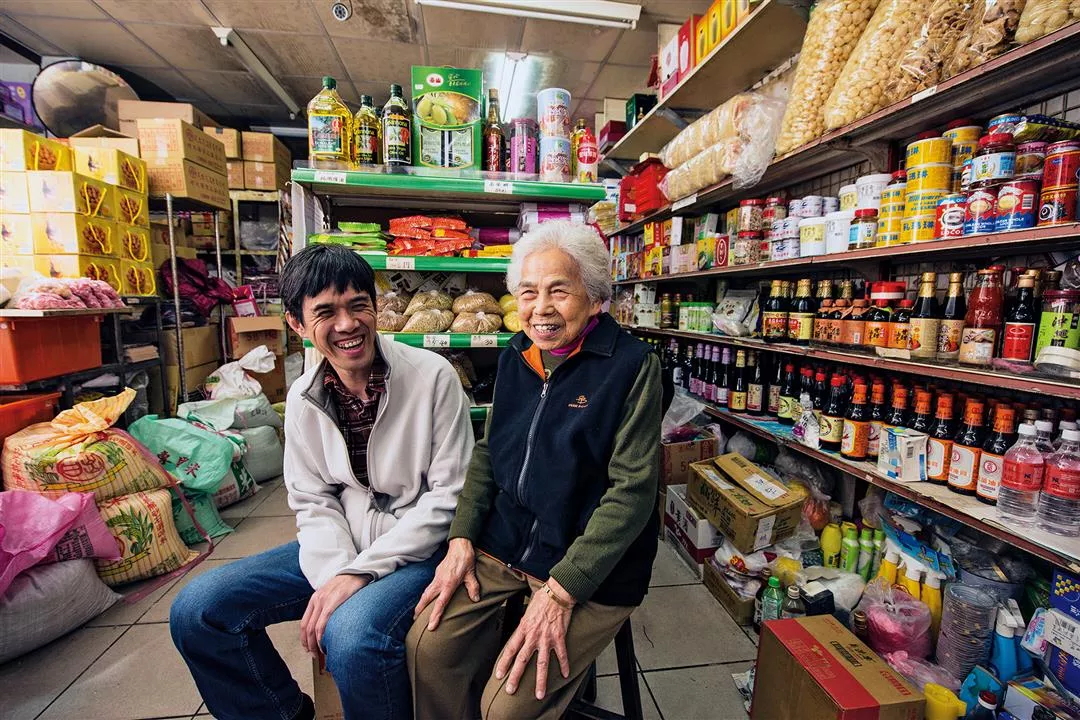
Hsu Ming-hung with Zhuang Baochun, his grandmother. She began to work in the family grocery store at the age of 18 and at 90 she is a living part of history. (photo by Chuang Kung-ju)
The heart of the neighborhood
If The Good Old Groceries provides readers with a historical perspective, the fictional Yong-jiu Grocery Store takes a look at the struggles of running such a shop.
In fact, the protagonist, witnessing the changing times, seems surprisingly relaxed about the inevitable dying out of traditional groceries. “In every age people develop their own style based on their material circumstances and their aesthetic experience,” Lin Hsin-yi says.
The final installment of the Yong-jiu Grocery Store series is slated to be published this year. In the story, the main character returns to his hometown and helps his grandfather, who has become too ill to run the family shop. The interaction between the characters is meticulously rendered and resonates with readers, even as concern over the inevitable waning of the traditional shop helps drive the plot. “I couldn’t ignore the realities and make it seem like the shop would triumph over the prevailing trends” Ruan Guang-min says frankly. “My attitude in approaching the ending was simply to admit that that’s just how things go.”
Consumers have an unwavering demand to do their daily shopping, no matter how times change. It might no longer be a great age for the traditional grocery store, but growing demand for specialized agricultural and artisanal products, such as small-batch soy sauces, has led to the rise of specialty stores. Food and beverages are now sold in some neighborhood shops and there is a vogue for independent bookstores that offer drinks and snacks. These are all offshoots of the corner grocery. The New Village Grocery, a specialty shop in Hsinchu which hosted a book event for The Good Old Groceries, sells unpackaged foodstuffs and non-plastic housewares. It too is a new take on the traditional grocery.
No matter how times change, enterprises succeed when they don’t forget the people they serve. This is also the essence of the traditional grocery store. These shopkeepers persist in meeting the daily needs of their customers and continue to dance to the music of time.
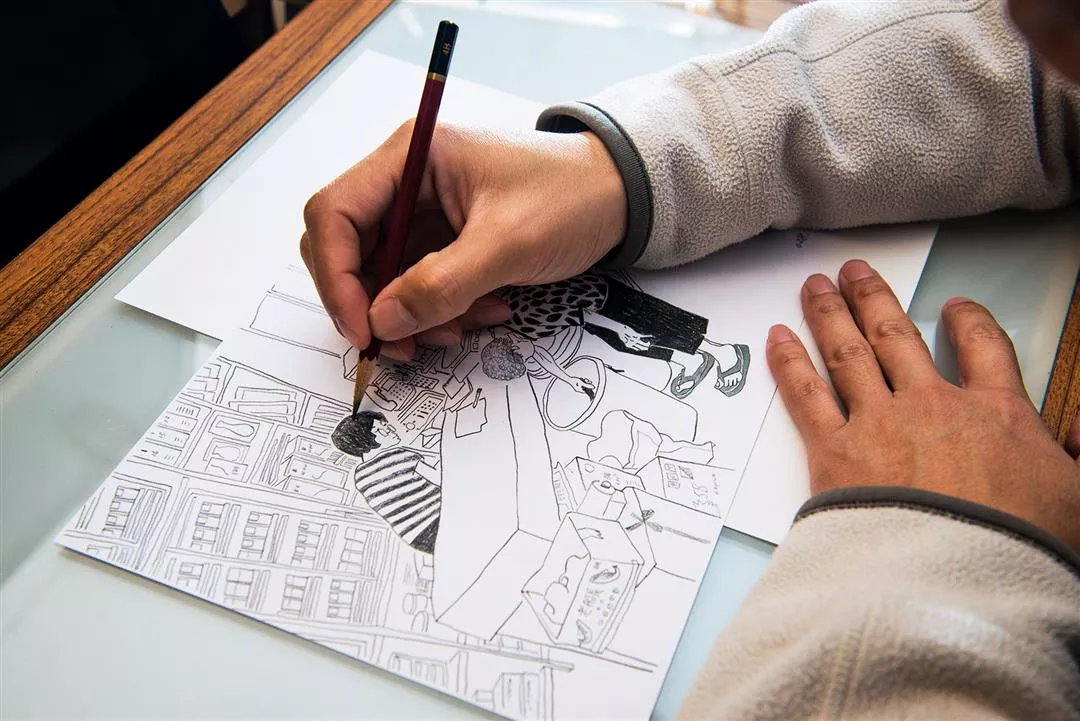
Hsu Ming-hung usually draws in color on a computer, but when he turns to capturing his memories of the simple charm of the traditional grocery he uses a 6B graphite pencil.
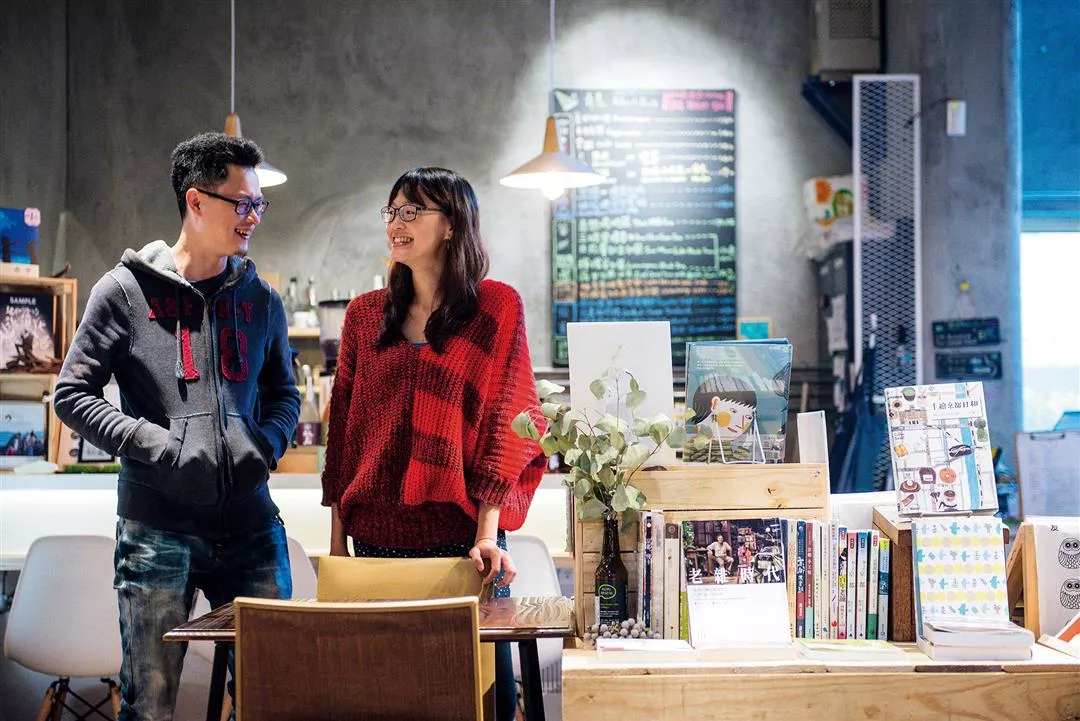
Although neither Wing Tseng (left) nor Lin Hsin-yi (right) grew up in a family with a traditional grocery store, their good memories of these shops led to The Good Old Groceries.
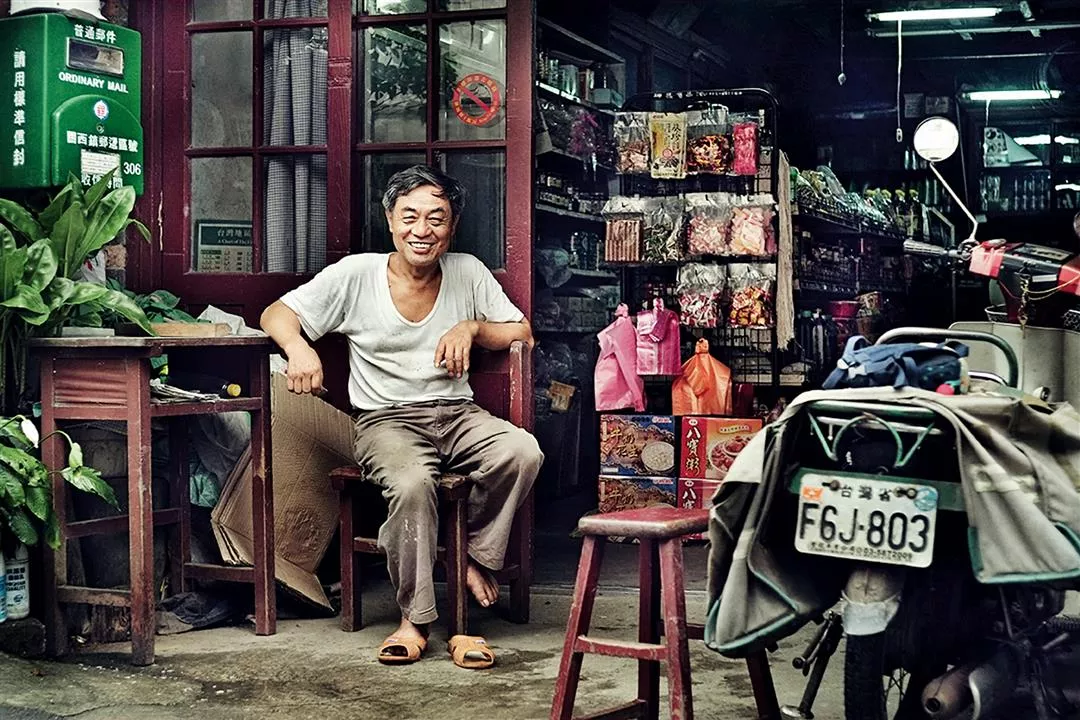
Traditional grocery shops are centers of both resources and information, and their welcoming atmosphere makes them a good starting point for visitors wanting to explore a locality. (courtesy of Wing Tseng)
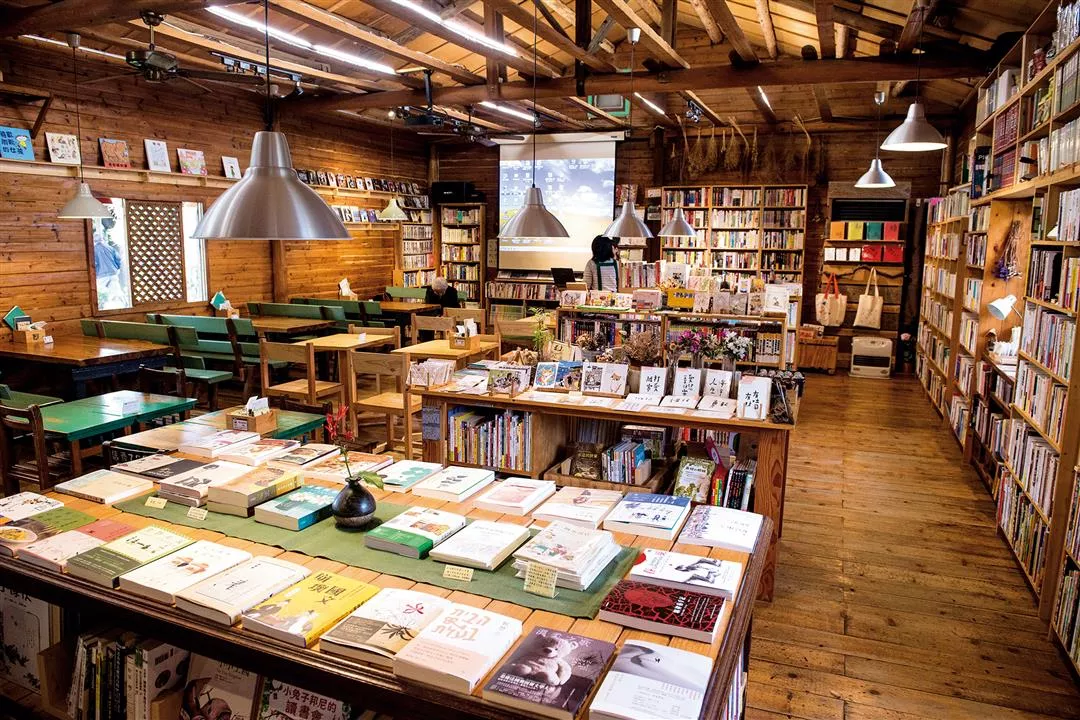
Lifestyle Bookstore, located in Taoyuan’s Pingzhen District, is both a bookstore and a place for locals to mingle, as they used to in neighborhood groceries. (photo by Chuang Kung-ju)


@List.jpg?w=522&h=410&mode=crop&format=webp&quality=80)
