Qu Yuan’s Poetics of Solitude:
Solitary Elegy / Splendor at the National Palace Museum
Esther Tseng / photos Jimmy Lin
May 2026
Held in the National Palace Museum’s collection, Yuan-Dynasty painter Wang Zhenpeng’s Dragon Boat Race by the Baojin Hall recreates the grand spectacle of dragon boat races during the Northern Song Dynasty.
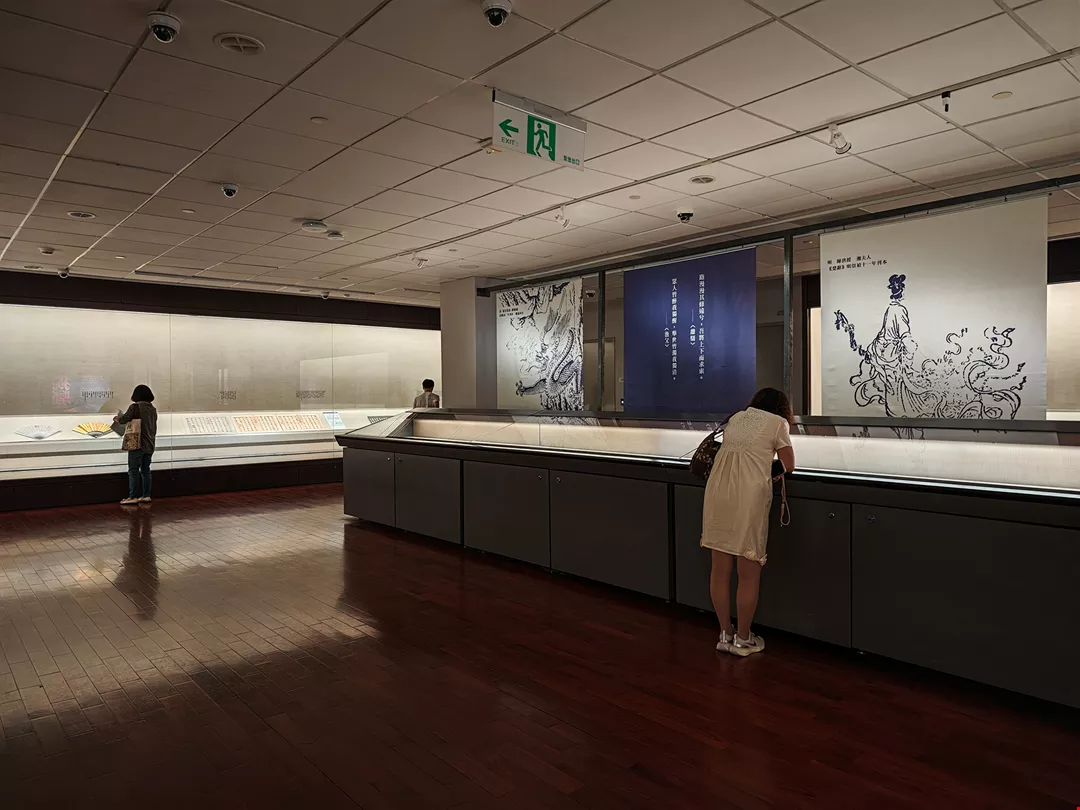
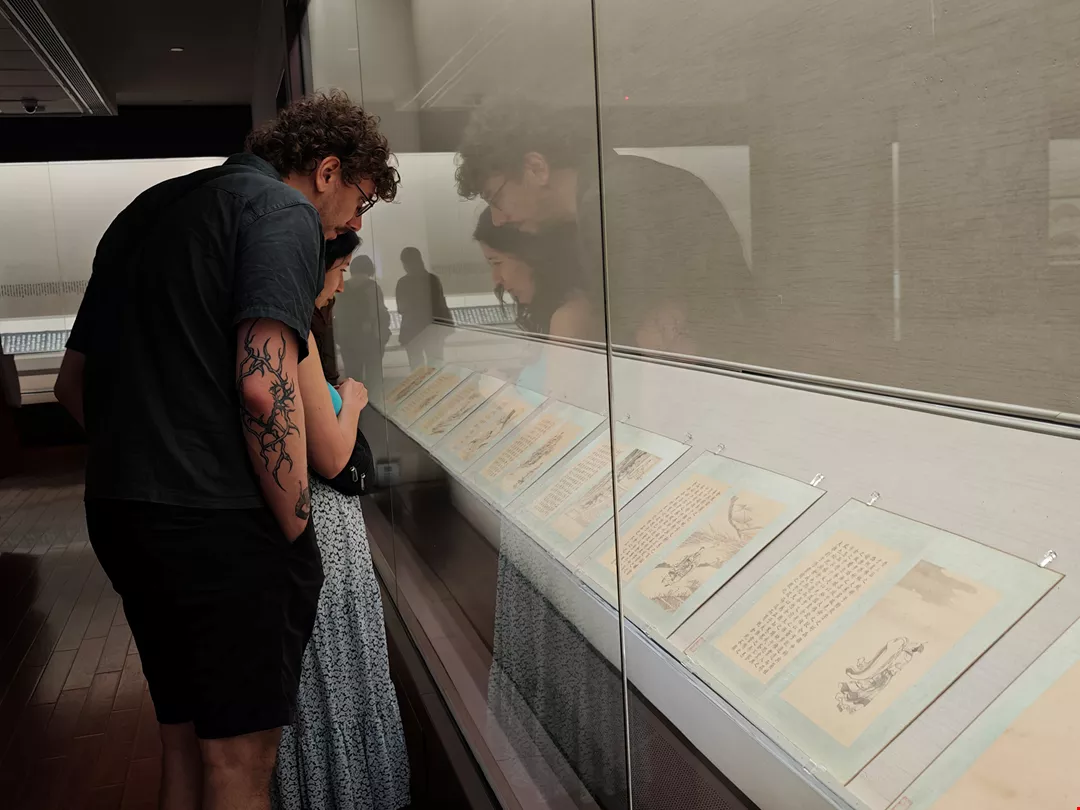
Beyond time-honored customs—eating zongzi (sticky rice dumplings), racing dragon boats, hanging mugwort to ward off evil, balancing eggs at noon, and collecting “noon water”—this year’s Dragon Boat Festival offers a special experience. Currently on view at the National Palace Museum (NPM), the exhibition Solitary Elegy / Splendor: Cultural Imagery of the “Chuci” and the Dragon Boat invites the public to step away from the boisterous festivities and look inward. Here, visitors can discover the enduring cultural resonance of Qu Yuan (c. 340–278 BCE), a Chinese poet who lived in the State of Chu during the Warring States period.
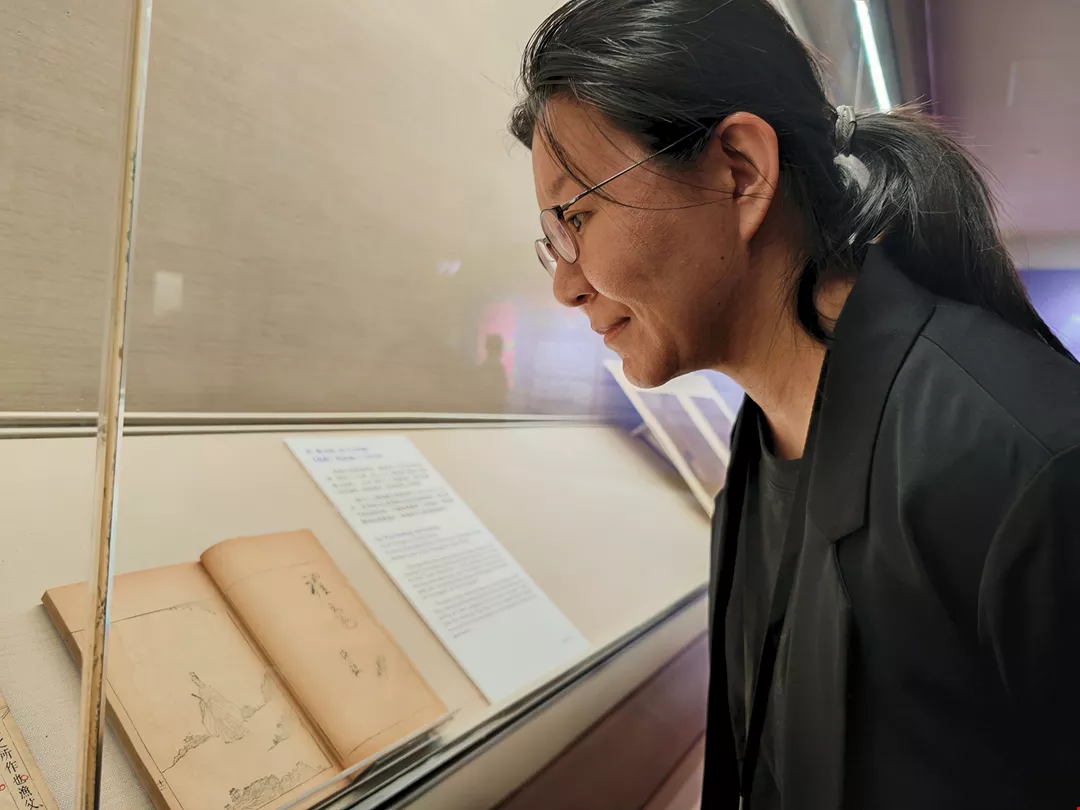
Lin Wan-ru, curator and assistant research fellow in the NPM’s Department of Painting and Calligraphy, tells us that the Chinese name of the exhibition not only alludes to Qu Yuan’s masterpiece, the Li Sao (Encountering Sorrow), but also glances at a Chinese idiom meaning “to reign supreme in the world of arts and letters.” Pointing to the exhibition’s color motif—a striking contrast of mauve and pink—she says with a smile: “It has a bit of a nightclub vibe. After all, the Chuci [Songs of Chu, an anthology of ancient Chinese verse most closely associated with Qu Yuan]—along with the broader culture of the State of Chu, exudes a sense of mystery and romanticism.”

Through a rich array of calligraphic works, paintings, and historical documents, Solitary Elegy / Splendor encourages the public to step away from the festivities and look inward to savor the aesthetics of solitude embodied in Qu Yuan’s poetry 2,000 years ago.
As we enter the fifth lunar month, the weather becomes palpably warmer. This is a season when people are particularly prone to infectious diseases, giving rise to early folk practices aimed at keeping evil at bay and preventing illness. After Qu Yuan drowned himself in the Miluo River, immemorial customs such as making zongzi and racing dragon boats gradually merged with the legends commemorating his life. Over the centuries, this convergence has contributed both to the literary stature of the Chuci and the cultural memory of the Dragon Boat Festival.
Solitary Elegy / Splendor serves as a perfect prelude to this year’s Dragon Boat Festival, which falls on 19 June.
Which came first: the Dragon Boat Festival or dragon boat racing?
Originally, dragon boat racing was associated with naval drills and the worship of water deities. It was only in later times that these practices coalesced with legends such as Qu Yuan’s tragic drowning to form the cultural underpinnings of the Dragon Boat Festival.。

“Qu Yuan is great not merely because he was a patriotic poet, but because he gave the world the Chuci—a literary masterpiece that resonates deeply with so many.” —Lin Wan-ru, curator of Solitary Elegy / Splendor
A turbulent era: Qin–Chu rivalries
To truly understand Qu Yuan’s anguish, one must return to the geopolitics of more than 2,000 years ago and revisit the fierce rivalry between the states of Qin and Chu. Solitary Elegy / Splendor features a rubbing of the inscription “Cursing the State of Chu” from the Northern Song Jiang Modelbook. In this text, which date back to the late fourth century BCE, King Huiwen of Qin, while offering sacrifices to the gods, denounces Chu as diplomatically untrustworthy and thus justifies his military campaigns against them—providing a vivid historical record of superpowers vying for dominance in ancient China.
Qu Yuan lived precisely during this era of turmoil, witnessing his homeland’s decline from a formidable power to a fractured state. His existential angst and the frustrations of his political career ultimately led to the creation of the Chuci, a monumental work of literature.
A rubbing of Su Shi’s calligraphic work, Rhapsody on the Pine Wine of Zhongshan.
Solace across time: Su Shi encountering Qu Yuan
The exhibition highlights a calligraphic piece, Rhapsody on the Pine Wine of Zhongshan, by the Song writer Su Shi (1037–1101), alongside a Song manuscript of the Li Sao copied onto decorated paper. These artworks illustrate how the Chuci served as a source of solace for generations of literati during times of hardship.

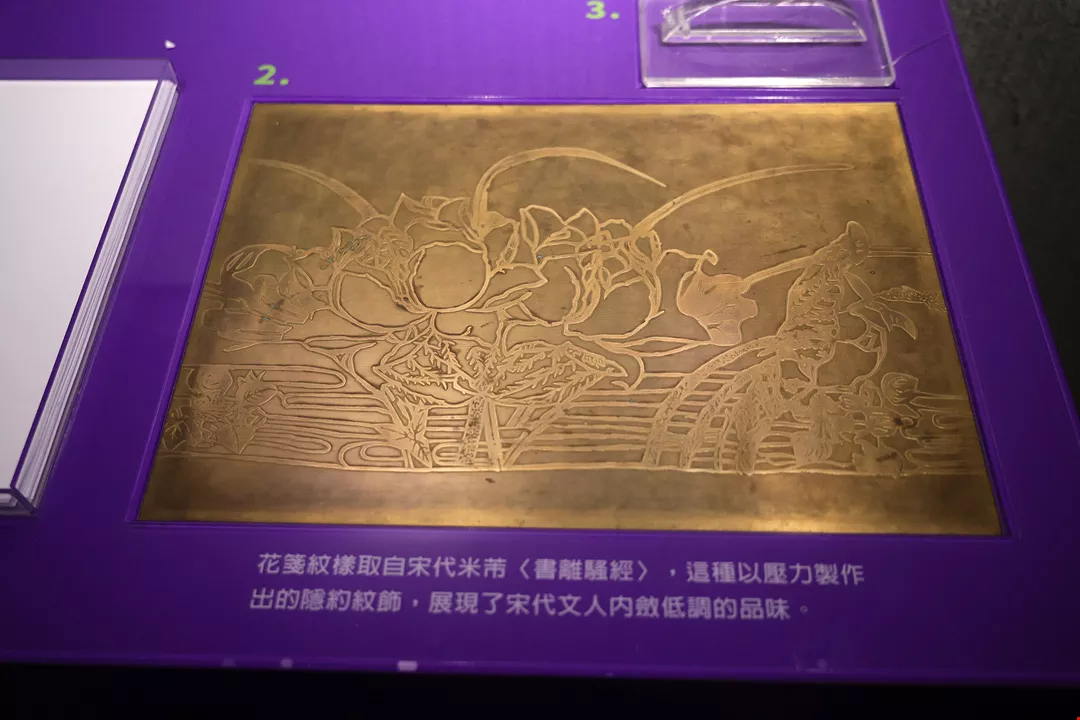
Yahuajian (decorative pressed paper) refers to a type of paper with subtle motifs pressed into it. Ink behaves differently across the impressed patterns, creating a delightful contrast that reveals the preciousness of the paper. An interactive station at Solitary Elegy / Splendor invites visitors to try different angles and watch the hidden patterns emerge.
At the end of his rhapsody, written while he was in exile in Huizhou, Su reveals his intention to compose a piece on faraway wanderings and to continue the legacy of the Li Sao. “When we look back and admire Su Shi today,” Lin Wan-ru says, “we realize that the very spiritual model he himself admired was Qu Yuan.”
Lin further explains that the transcription of the Li Sao on precious decorated paper shows that the Chinese literati, when facing adversity, naturally turned to reading and copying the Chuci to regain inner peace.
As the fifth-century text Shishuo Xinyu (A New Account of the Tales of the World) aptly puts it: “To drink wine heartily and to read the Li Sao thoroughly is enough to make one a true man of letters.”

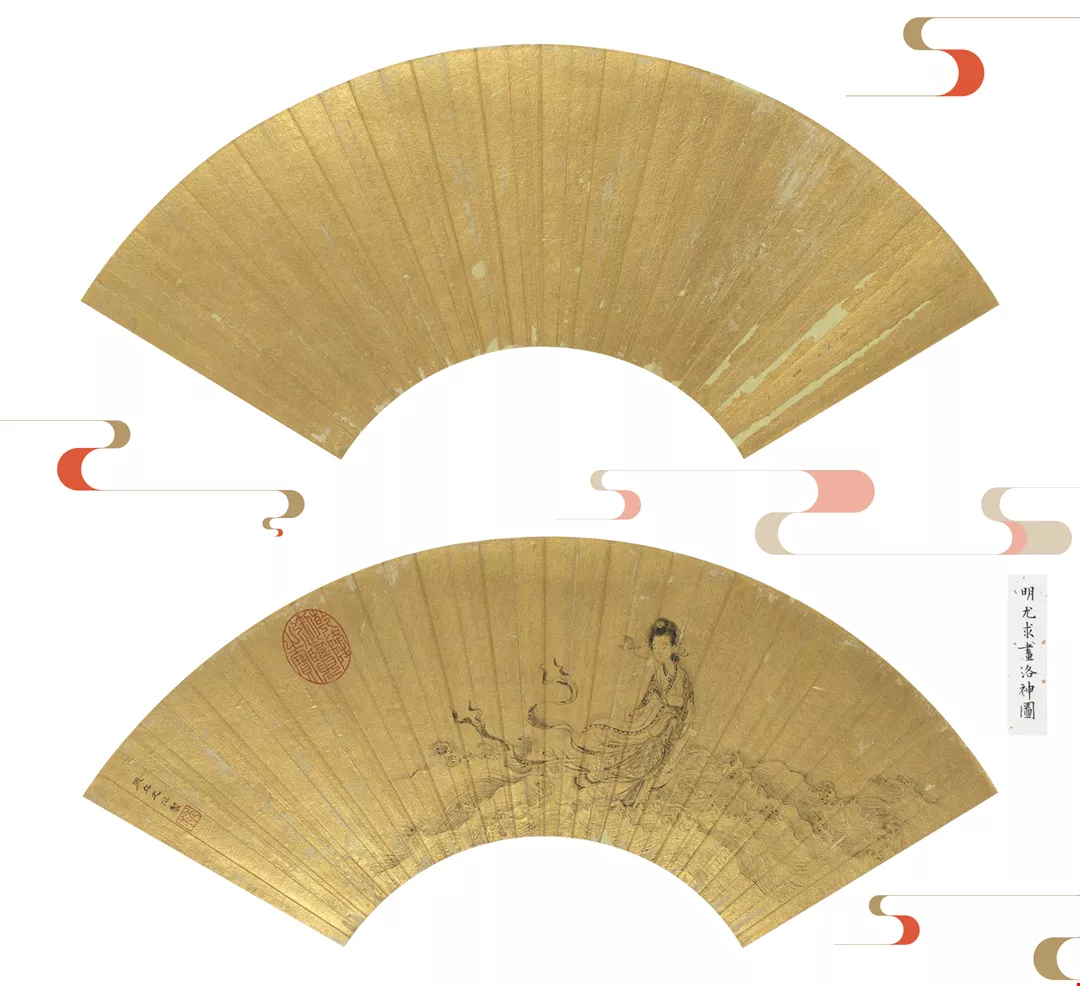
You Qiu, Nymph of the Luo River, Ming Dynasty (courtesy of the National Palace Museum)
The exhibition features You Qiu’s Nymph of the Luo River on a gold-leaf folding fan, illustrating the profound impact of the Chuci and its romantic tonalities on later artists. Whether through the fragrant plants in its pages or through its depictions of supernatural figures, the Chuci has long been woven into the cultural life of the Chinese-speaking world. (courtesy of the National Palace Museum)
Cultural influence: from literature to daily life
Solitary Elegy / Splendor goes beyond literary appreciation. “The Li Sao, composed during Qu Yuan’s deepest personal frustrations, resonates with so many of us because it soothes the heart, gives vent to emotions, and sublimates and transforms them,” Lin observes. The emotional power of the poem transcends class and cultural boundaries, moving readers in fundamental ways.

Solitary Elegy / Splendor aims to show how the Li Sao transcends class and cultural boundaries to soothe the human heart. By showcasing copies of the classic made by struggling literati throughout history, the exhibition demonstrates the text’s immense cultural impact and its enduring power to elicit empathy.
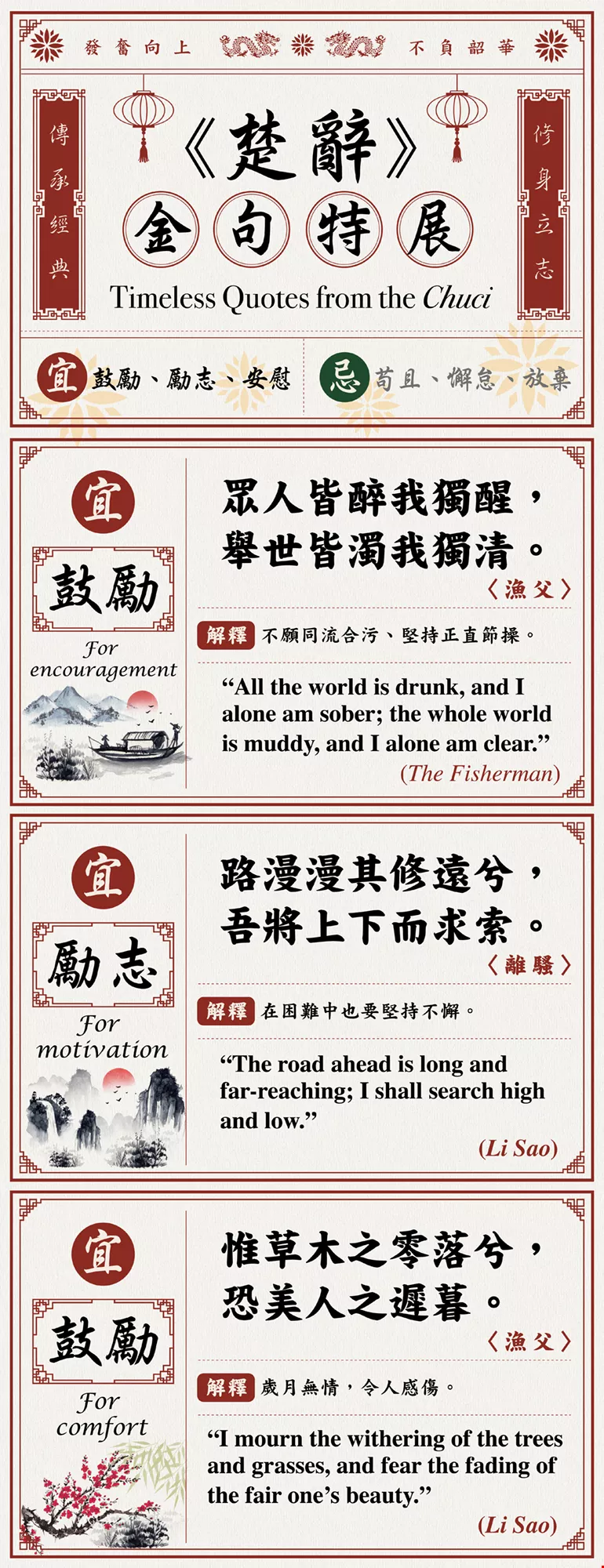
The influence of the Chuci has long permeated our daily lives. Its legacy is evident everywhere: we continue to follow Qu Yuan in associating virtue and beauty with fragrant flora, we wear aromatic plants during the Dragon Boat Festival, and we are fascinated by artists’ depictions of deities from the Jiu Ge (Nine Songs). Famous expressions like “All the world is drunk, and I alone am sober” remain deeply rooted in the cultural consciousness of the Chinese-speaking world today.

Racing at Baojin: a glimpse of Yuan-Dynasty Imperial Dragon Boat Festivities
Another highlight of Solitary Elegy / Splendor is Dragon Boat Race by the Baojin Hall, a marvelous example of jiehua (ruled-line painting) by the 14th-century architectural painter Wang Zhenpeng. Lin tells us that only about nine such works exist worldwide today, and the NPM proudly houses four of them.
A court painter of the Yuan Dynasty, Wang Zhenpeng meticulously depicted the delicate scales on the dragon boats, the ornate beams of the architecture, and the intricate latticework of the windows—even rendering the rolled-up blinds with astounding precision. A closer look reveals aquatic acrobatic performances and the majestic Baojin Pavilion, featuring a lavishly draped dragon throne on the balcony, prepared for the emperor. Through these fine details, the artist conjured up the grandeur of the Northern Song spectacle on Jinming Pool, where the emperor had personally overseen the dragon boat races.
Finding strength in solitude
Ultimately, the exhibition is far more than a seasonal display; it is a profound dialogue about personal sorrow and spiritual sublimation. Amidst the festive cheer of the Dragon Boat Festival, visitors are invited to feel the solitude and melancholy that inspired Qu Yuan’s poetry. By returning to the Chuci, modern readers can still find resilience and comfort amidst life’s trials and tribulations.
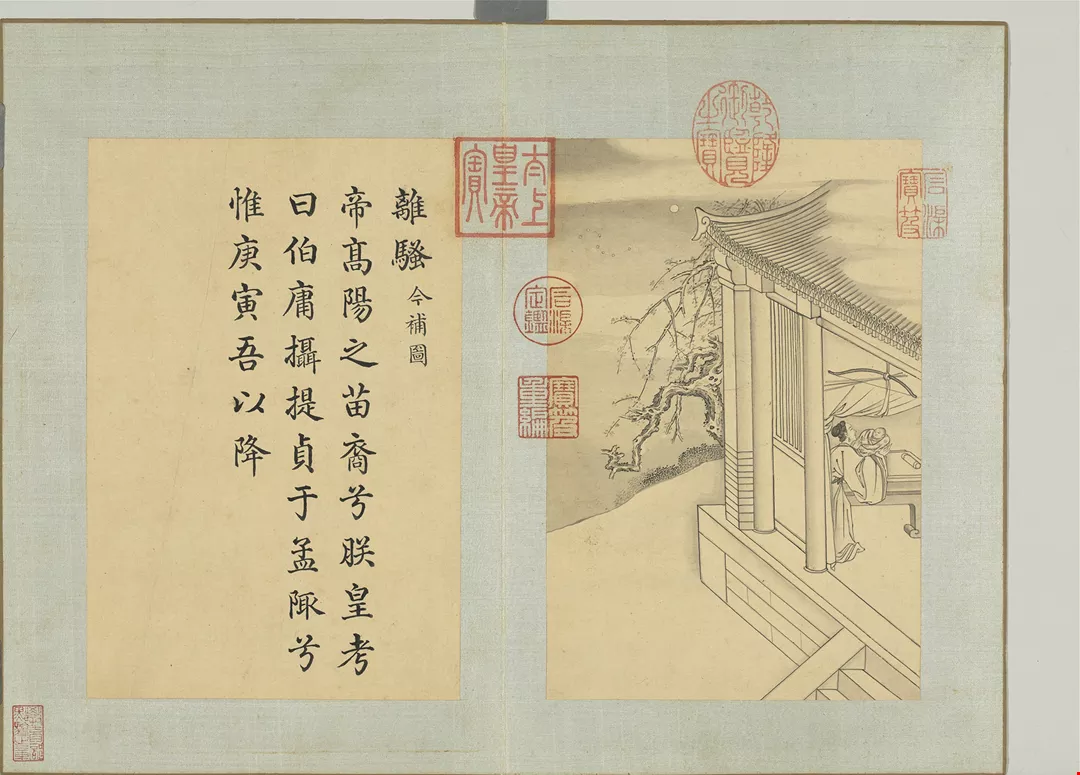
In 1781, the Qianlong Emperor commissioned court painter Men Yingzhao to produce the Imperially Commissioned Supplement to Xiao Yuncong’s Illustrations of the “Li Sao”, expanding upon the work of the late-Ming to early-Qing artist Xiao Yuncong. Accompanied by the famous opening lines of the Li Sao, the exquisite illustration and sophisticated layout here demonstrate that the Chuci remained a revered classic, widely read and copied among Qing courtiers and literati. (courtesy of the National Palace Museum)

A portrait of Qu Yuan
Among the NPM’s collection of rare books is an edition of the Chuci published in the 11th year of the Chongzhen reign (1638), which includes a portrait of Qu Yuan by Chen Hongshou. This picture, Qu Yuan Walking and Chanting, perfectly captures the poet’s anxiety, indignation, and overwhelming isolation. Qu Yuan is depicted wearing a tall hat and a long sword, with hollow cheeks and a deeply furrowed brow reflecting his heavy heart. Emanating moral integrity, he wanders alone along the riverbank.
展覽:Solitary Elegy / Splendor: Cultural Imagery of the “Chuci” and the Dragon Boat
Location: Galleries 210 & 212, Exhibition Area I, National Palace Museum
Dates: April 14–June 21, 2026