Not to be simplified
Located at the western edge of the Pacific Ocean, Taiwan is often labeled a “small country” in international discourse, especially when compared to China across the Taiwan Strait. And in Western societies, many people assume that small places have very homogeneous cultures. However, says Thome, “Taiwan is completely the opposite.”
Taiwan’s complexity derives from its layered history. From the Qing Dynasty to the Japanese era to the Nationalist government of China, which relocated to Taiwan, the island has endured several episodes of regime change and linguistic transformation. Nonetheless, under the long era of martial law and authoritarian rule, any discussion of identity—“Who am I?”—was suppressed and could not be considered openly and fairly.
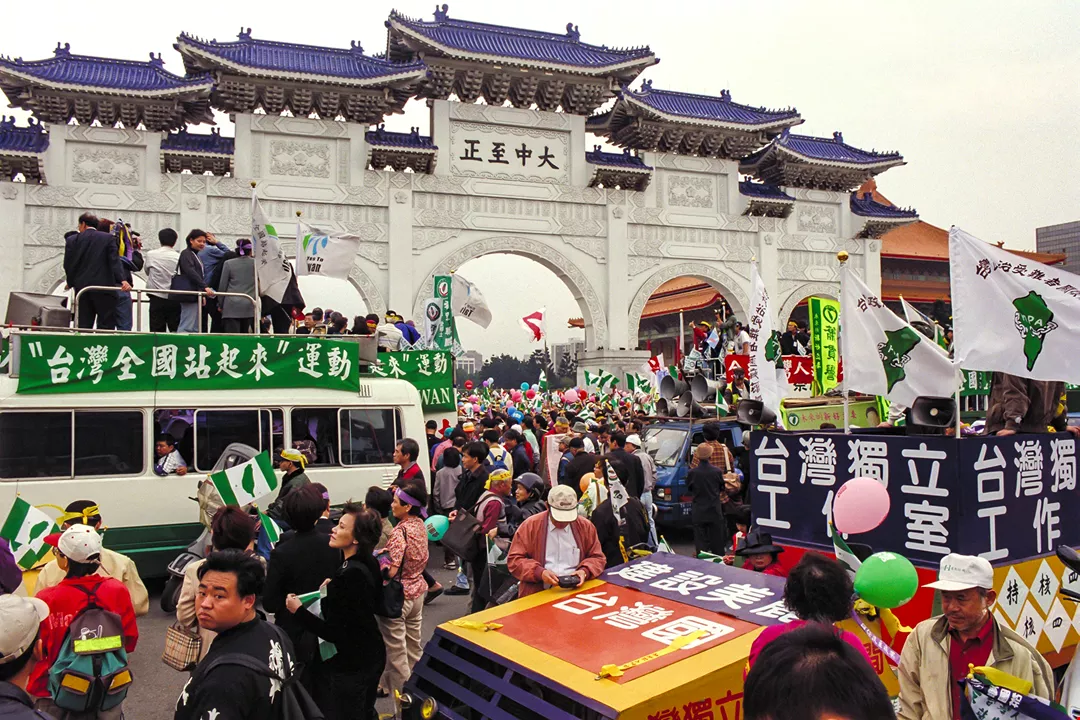
It was democratization that opened this sealed door. Thome recalls that the year 2005, when he was doing his postdoctoral research in Taiwan, fell during the early part of President Chen Shui-bian’s second term. It was an era in which discussion of the identity of Taiwanese was bursting out like lava from a volcano. Virtually every weekend various political parties or groups with different ideas would hold demonstrations, and debates about historical memories and the nation’s future raged in the streets.

Stephan Thome believes that Taiwan is by no means “small” and is very complex. Following the long years of martial law and authoritarian rule, starting in the 1980s demonstrations brought opinions on many issues—including national identity, gender, labor rights, and the status of the Indigenous peoples—into the streets. (MOFA file photo)