.
Meanwhile, the bridge’s streamlined landscape lighting columns each have a different curvature and angle. This is not simply a visual variation; rather, it deliberately disrupts the columns’ natural frequency, reducing wind-induced resonance. Otherwise, when strong winds hit, an entire row of lighting columns could vibrate at the same time—or even break.
At the same time, the lighting columns form a work of art. In the original design competition, the ZHA team titled its proposal “A Dancer’s Quiet Moment at Midnight,” drawing inspiration from the postures of dancers at Taiwan’s Cloud Gate Dance Theatre. The light poles rise gradually from lower to higher and finally meet at the pylon, like a dancer leaping into the air and pausing at the highest point in a moment of prayer.
What is even more intriguing is that the “dancer” faces Guanyin Mountain on the Bali side of the river. Chang says this detail shows how the design team wove local culture into the bridge, allowing a world-class engineering project not only to cross an estuary but also to form an emotional connection with the land beneath it.
Even light and shadow were built into the bridge’s design.
The bridge deck is made of welded steel box girders and is only 4.1 meters thick, reducing weight as much as possible. Seen from a distance, it appears as a light, slender line across the sky.
The design team also treated natural sunlight as a kind of pigment. The pylon’s constantly shifting three-dimensional double-curved surfaces refract light and shadow differently as the angle of the sun changes. From afar, the color of the steel cables nearly blends into the sky, quietly “disappearing” into the skyline. The massive bridge seems to lose its weight, floating lightly over the mouth of the Tamsui River.
In the exhibition, the models, construction photographs, and pylon-evolution display appear to simply present engineering details. What they truly reveal, however, is a way of thinking: not choosing between aesthetics and engineering, but recognizing that “aesthetics solves engineering challenges, and engineering supports the realization of aesthetics,” as Chang puts it.
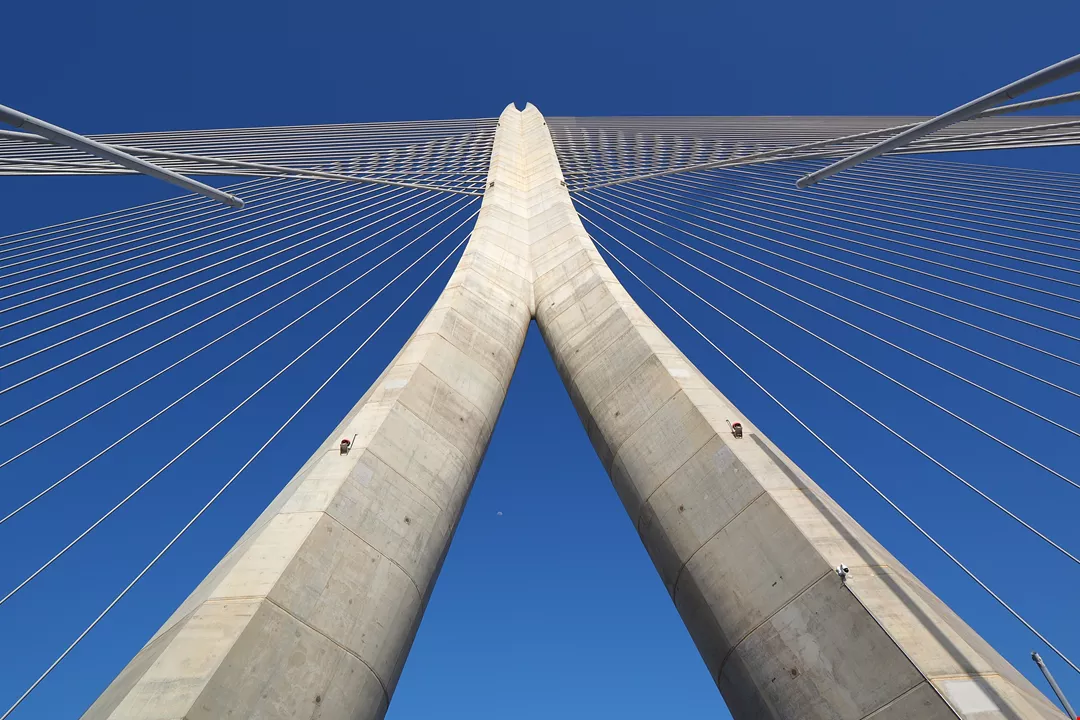
The pylon’s curves are not a display of virtuosity; they use aesthetics to solve engineering challenges.
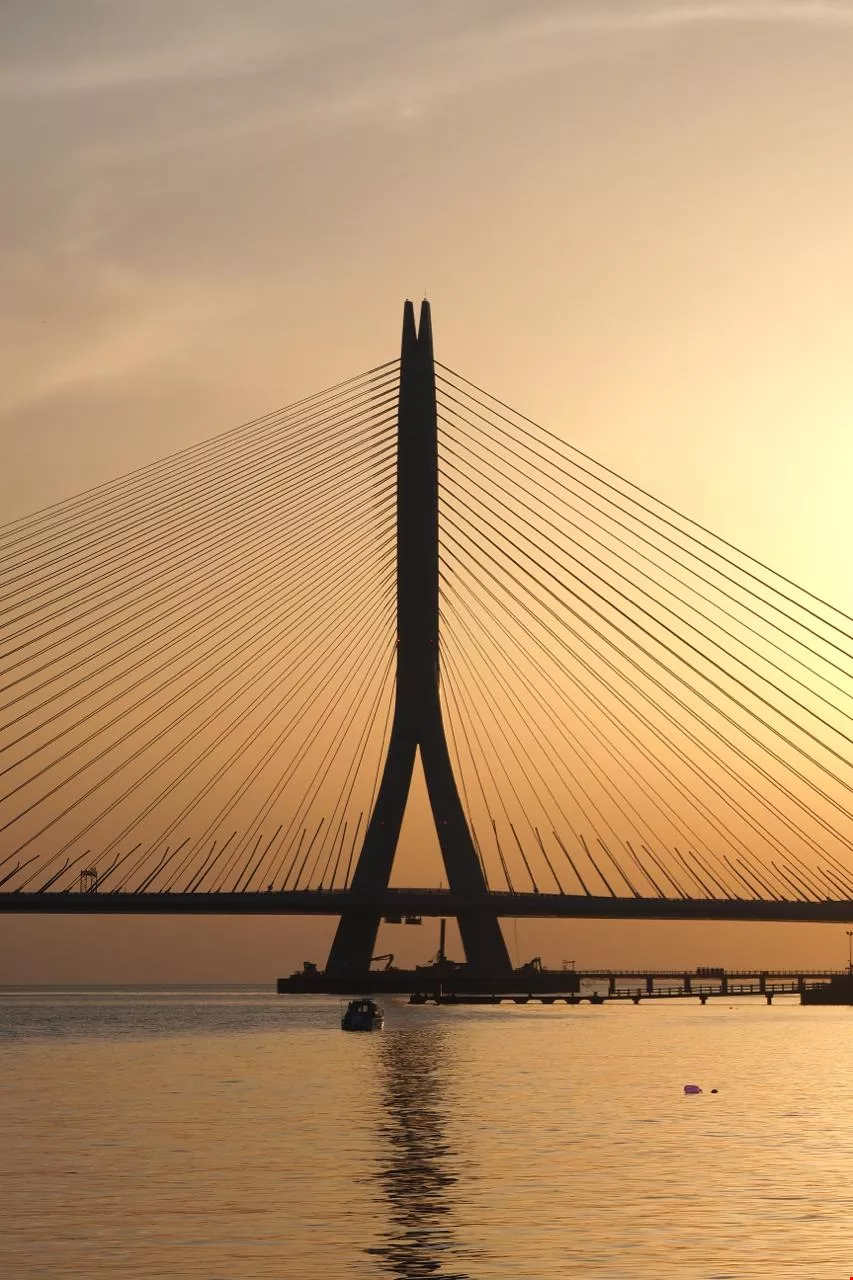
The main pylon of Danjiang Bridge is designed like hands pressed together in prayer, facing Guanyin Mountain in a gesture of blessing.
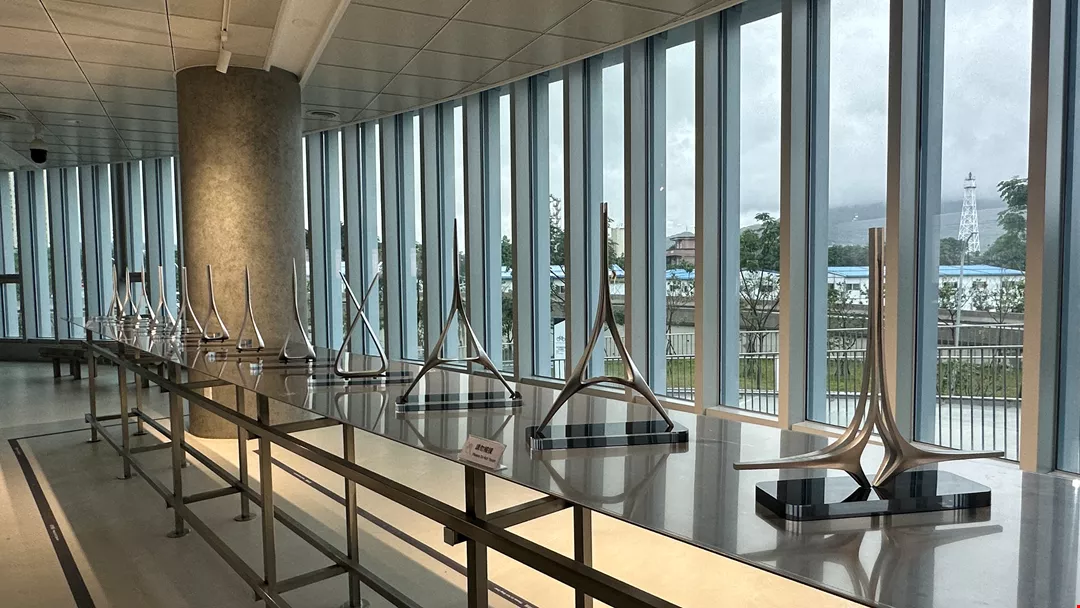
The pylon models in the exhibition trace how ZHA’s design evolved from concept to final scheme, with the tower’s lines gradually refined along the way.



@List.jpg?w=522&h=410&mode=crop&format=webp&quality=80)

@List.jpg?w=522&h=410&mode=crop&format=webp&quality=80)

@List.jpg?w=522&h=410&mode=crop&format=webp&quality=80)
