Northern Taiwan’s New Aesthetic Gateway to the World The Danjiang Bridge
An Unprecedented Architectural Marvel
Cathy Teng / photos Jimmy Lin
May 2026
On May 12, 2026, the Danjiang Bridge, connecting Tamsui and Bali in northern Taiwan, will officially open to traffic. Designed by the renowned Zaha Hadid Architects, this world-class structure was recognized by CNN in 2025 as one of the great buildings “set to shape the world.” It not only revolutionizes the region’s transportation network but also permanently redefines the skyline of the Tamsui River estuary.
Rediscovering a century-old sunset
When visiting Taipei, beyond looking up at the iconic Taipei 101—famously scaled by Alex Honnold—in the city center, many locals will highly recommend taking the MRT north to Tamsui. There, you can take in the “Tamsui Sunset,” a breathtaking vista historically celebrated as one of the Eight Views of Taiwan.
For over a century, people have gathered at this estuary to admire the setting sun, chatting and laughing amidst the tangerine glow. This space holds the layered memories of countless youths and serves as a cherished piece of the nation’s cultural heritage.
Built to alleviate traffic congestion and connect the tourism and recreational hubs on both sides of the Tamsui River, the Danjiang Bridge faced a formidable engineering challenge: how to overcome Taiwan’s inherent geological limitations without obstructing the iconic sunset.

Designed to preserve Tamsui’s century-old sunset vista, the Danjiang Bridge stands out among Taiwan’s major public works as a rare project that places landscape aesthetics at its core.
An unparalleled and irreplicable masterpiece
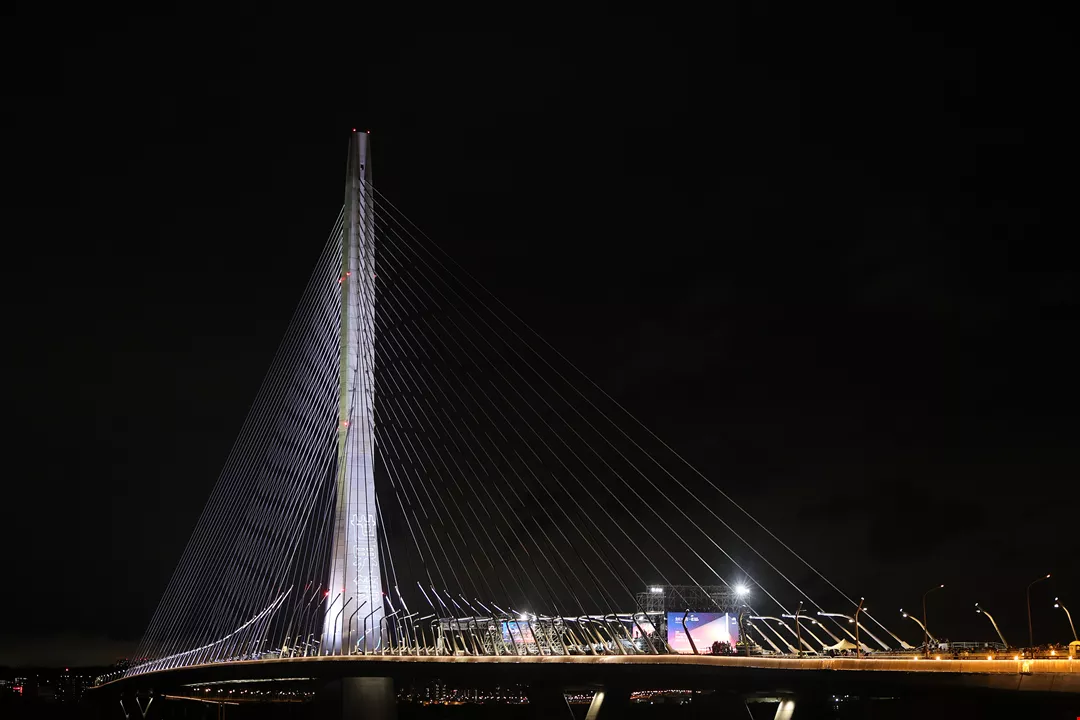
Following a rigorous international competition, the visionary design by Zaha Hadid Architects (ZHA) emerged victorious. During the recent “Danjiang Bridge Architectural Aesthetics and Urban Design Forum,” ZHA Associate Director Huang Shao-wei shared the team’s meticulous process. They repeatedly analyzed year-round solar patterns and the sun’s setting trajectory to determine how the bridge could span the estuary without disrupting the historical view. Their solution was a “single-tower, asymmetric cable-stayed bridge”—a design that introduces minimal structural mass into the landscape, perfectly preserving the public’s sightline of the setting sun.

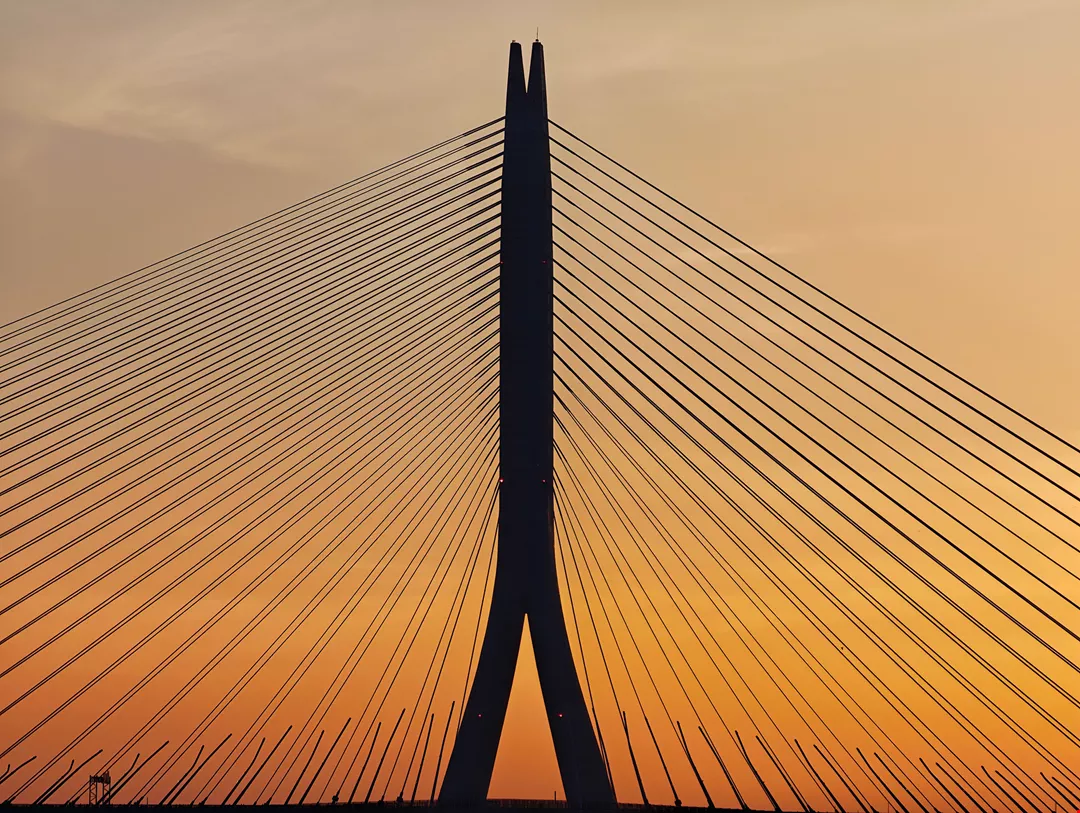
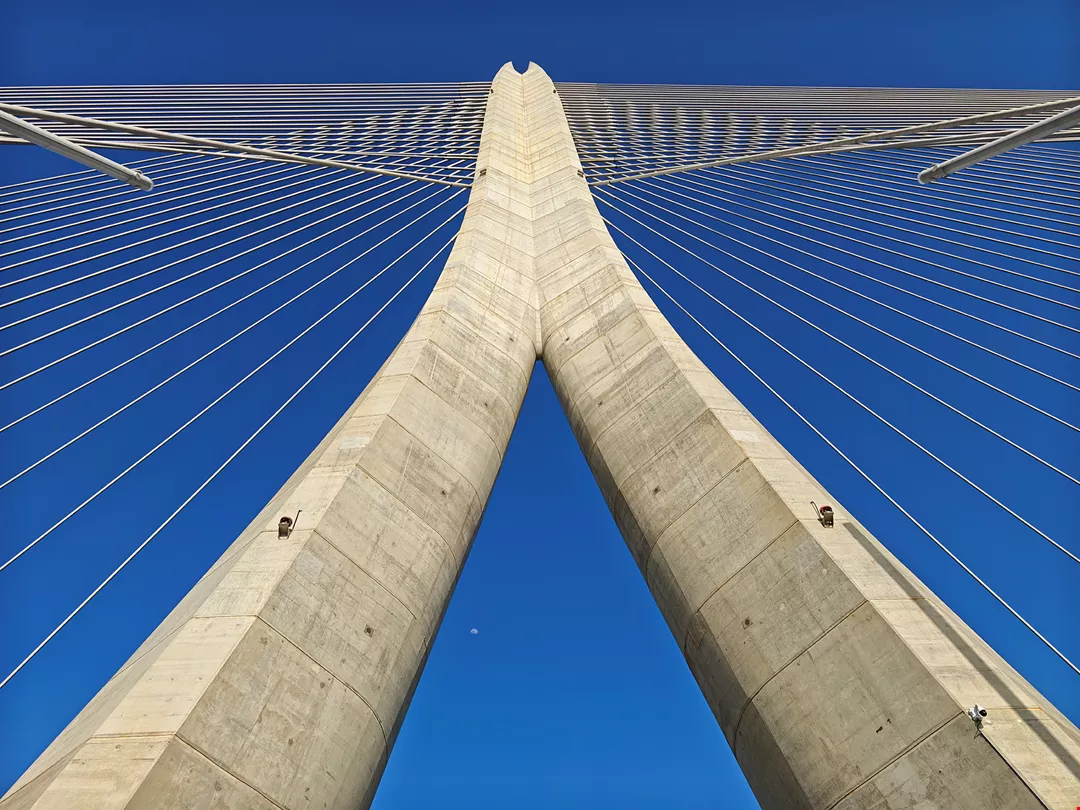
The main pylon is shaped like hands clasped in prayer, while the extending stay cables evoke the elegance of a dancer moving through the night.
.
Drawing inspiration from the graceful movements of Cloud Gate Dance Theatre performers, the main pylon is designed to resemble hands clasped in prayer reaching toward the sky. The radiating stay cables extend outward, evoking the elegance of a dancer moving through the night. Spanning the estuary with minimalist lines, the bridge deck is only about four meters thick, resulting in a visual profile that feels exceptionally light and pure. This landmark not only marks the first completed work in Taiwan by Zaha Hadid, famously known as the “Queen of the Curve,” but also stands as her final masterpiece before her passing.
With a total main bridge length of approximately 920 meters and a main span reaching 450 meters, it proudly stands as the world’s longest single-tower asymmetric cable-stayed bridge to date.
The project’s difficulty was daunting; situated right at the estuary, the structure bears the full brunt of powerful ocean winds and tidal forces. Yet, the “Taiwanese spirit” prevailed. As engineers expressed in a documentary detailing the project: “We can’t lose face on this,” “What sustains us is a sense of accomplishment,” and ultimately, “It's all worth it for Taiwan.” This profound dedication transformed a digital blueprint into a physical landmark, turning a project once plagued by delays into a monumental triumph.
Construction of the Danjiang Bridge began in 2019. After a grueling 68-month construction period, the two ends of the bridge were successfully connected in September 2025, culminating in its highly anticipated completion and opening in 2026.
At a special appreciation gala held ahead of the opening, everyone from planners, designers, and supervisors to frontline construction workers took the stage. These engineers and laborers, who rarely step into the spotlight, are the true unsung heroes who made this “unparalleled and irreplicable” bridge a reality.
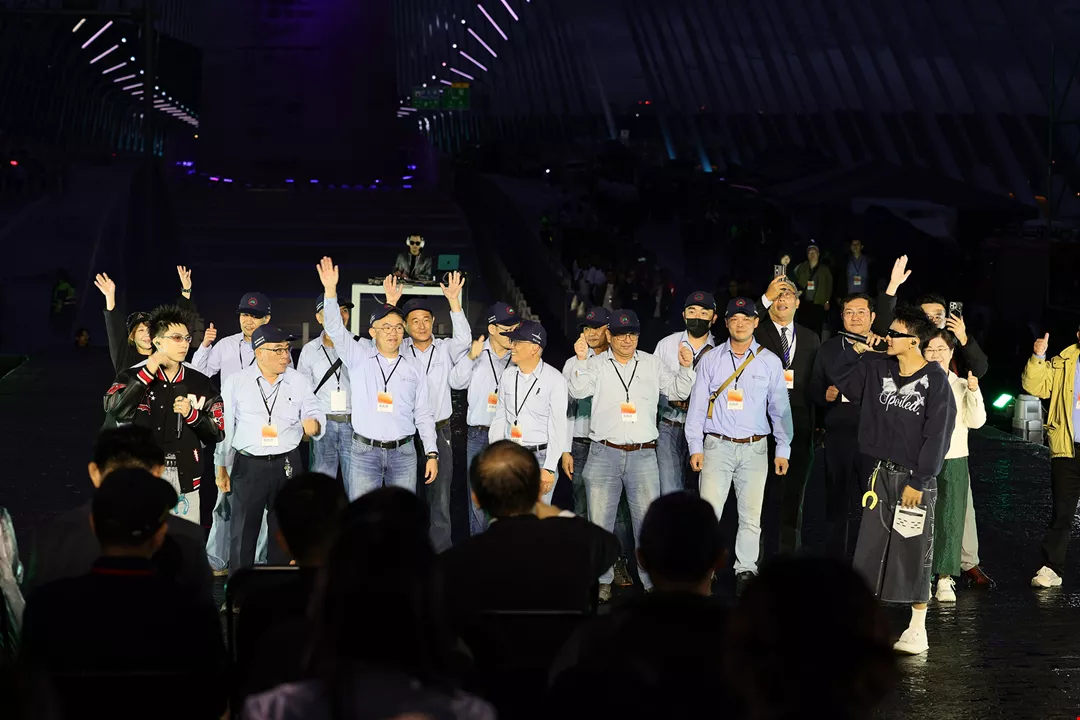
The unsung heroes step onto the stage to receive public tribute. Their hard work translated the Danjiang Bridge’s unique and irreplicable design from paper to reality.

Dancing with the bridge: the people’s stage
Boasting a generous width of up to 70 meters, the bridge deck masterfully integrates a light rail system, vehicular lanes, motorcycle lanes, bicycle paths, and pedestrian walkways. This inclusive design ensures the bridge gracefully accommodates multiple modes of transit.
Even before its official launch, the bridge had already become a newly shared scenic destination for the public.
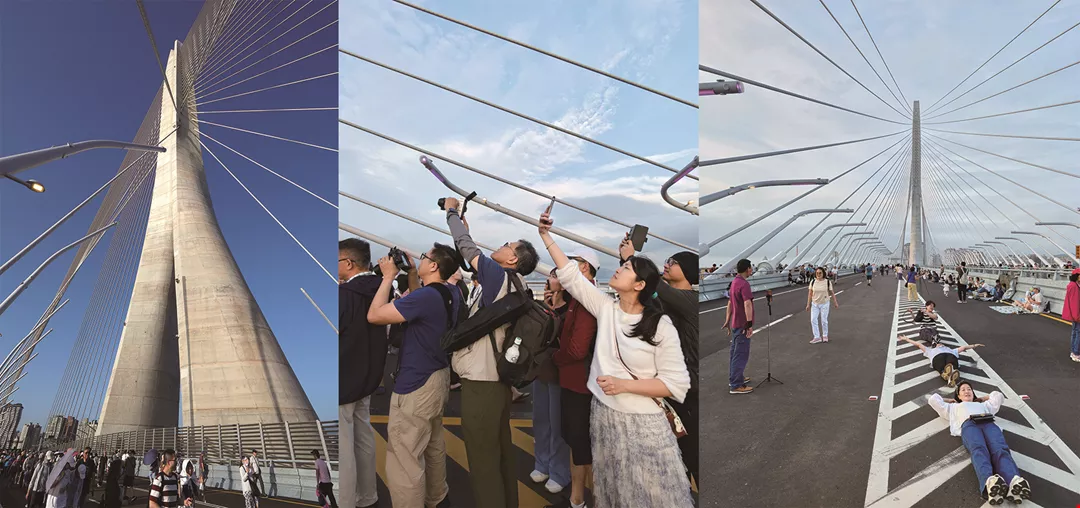
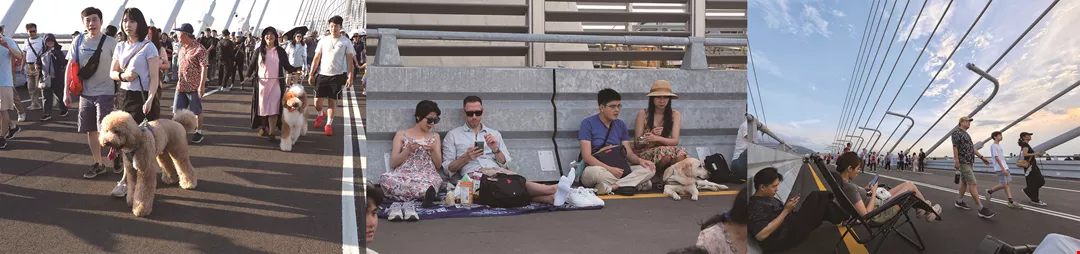
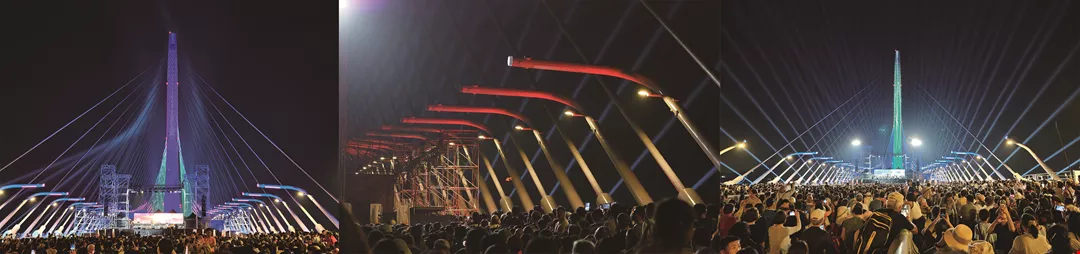
In the month leading up to the inauguration, weekend festivals allowed citizens to be among the first to “walk the bridge.” The express lanes, ultimately destined for high-speed traffic, were temporarily transformed into a vibrant public square for strolling, picnicking, cycling, attending concerts, and enjoying live performances. Visitors eagerly took selfies with the Danjiang Bridge from every conceivable angle.

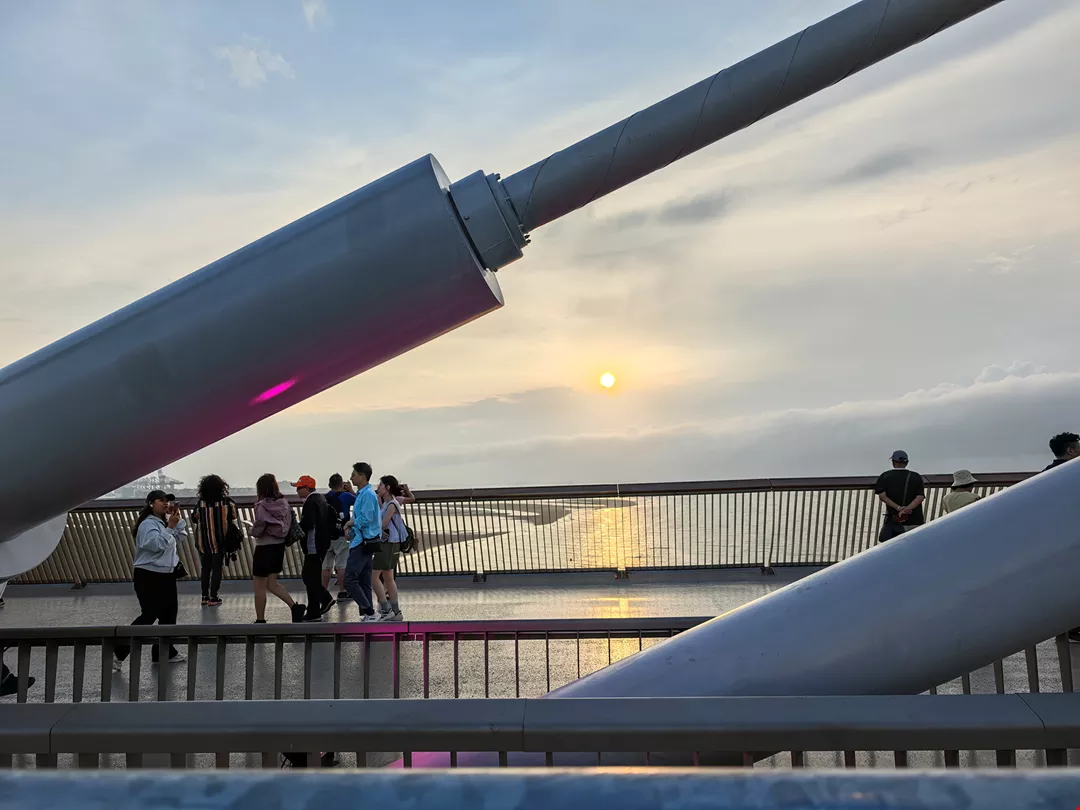
Before the official opening to traffic, the public enjoys the rare opportunity to walk on the fast lanes, happily snapping selfies and interacting with the magnificent structure.

With the bridge open to the public prior to traffic launch, visitors relish a leisurely time suspended above the river.
.
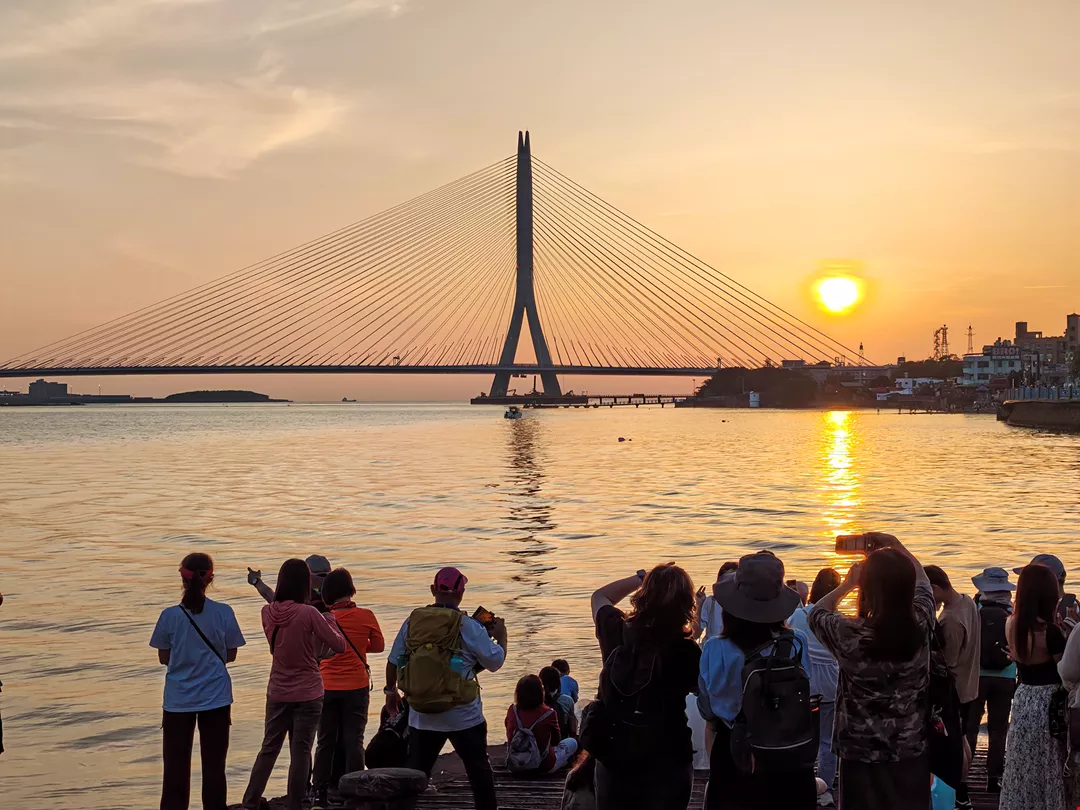
Photography enthusiasts flooded social media with the bridge’s varying moods—capturing it bathed in daylight, glowing at sunset, and illuminated under the stars. Tamsui’s famous “golden-yolk sunset,” which visually shifts to the left or right of the structure depending on the season, appears to literally dance with the bridge, staging an ever-changing, daily tango of light and shadow across the estuary.

The bridge’s streamlined silhouette and dynamic nighttime lighting elevate it beyond a mere transit link. It stands as a monumental work of public art anchored at the mouth of the Tamsui River.
Cloud Gate Theater premiered a new work at the inauguration ceremony, using movement to engage with the beauty of the bridge’s structural mechanics and shifting light.
A bridge connecting the present and the future
It is a bridge, yet it transcends the traditional definition of one. While it successfully alleviates traffic and shortens travel distances, it also fundamentally redefines how people experience the Tamsui River estuary.
During the inauguration ceremony, President Lai Ching-te declared that the Danjiang Bridge is “Taiwan’s new calling card to the world.” He emphasized that this monumental structure did not simply rise from the earth naturally; rather, it is the collective triumph of countless individuals who poured their expertise, perseverance, and sweat into its creation.
President Lai Ching-te remarked that despite lacking precedents or prior experience to draw upon, the engineering team continuously shattered limitations and conquered challenges, becoming a true source of national pride.

The Danjiang Bridge is not only a world-class feat of engineering but also a proud testament to Taiwan’s engineers and their international partners, who step-by-step turned imagination into reality.
.
The genesis of the Danjiang Bridge is more than just a massive public works initiative; it represents a profound civic inquiry into “how to coexist with nature” while maintaining the utmost reverence for historical landscapes. Beyond serving as a physical landmark, the bridge is a living embodiment of Taiwanese values. Through sustainable design, it preserves the most beautiful sunset for future generations, while simultaneously demonstrating Taiwan’s engineering prowess and resilience—proving to the world our ability to overcome adversity and forge aesthetic miracles.
As the sun dips into the Tamsui River estuary once more, the bridge, the interplay of light and shadow, the people, and the city are coming together to shape a distinctly Taiwanese landscape for the next generation.

With the interplay of the setting sun, gathering crowds, and architectural shadows, the Danjiang Bridge has become a vibrant public stage that reconnects the people with the estuary.
The Danjiang Bridge is a monument of confidence, allowing the people of Taiwan to appreciate their nation’s urban aesthetics and engineering capabilities.