A city that needs to be read slowly
By day, the old city is vivid in the sunlight. Cut-and-paste ceramic decorations gleam on temple roofs, competing for attention against the sky, while red temple walls and soaring swallowtail roof ridges stand out. Tainan’s days brim with energy, and the sun can feel like a constant recharge—though sometimes it sends you indoors for a generous bowl of shaved ice.
When the sun sets, the city gradually sheds its daytime bustle and its colors grow subdued. In softer light, streets, buildings, and old houses that people hurry past during the day invite a second look. Tainan takes on a calmer, warmer character at night, giving people the chance to get to know it anew.
Tainan’s history has never been confined to museums. Monuments, temples, old streets, and historic buildings are scattered throughout the city; turn a corner and you may come upon traces of another era. It is a city to be slowly savored. But when daylight fades, how can that history remain visible? The question helped prompt Tainan to think about light, and it launched the Tainan 400 City Light Environment Redesigning Project (hereafter “the Lighting Project”).
Speaking during “Light Being,” a series of activities running from August to late September of 2026 to introduce the fruits of the Lighting Project (which started in 2024 and still is ongoing), Chen Si-yu, director of the Tainan Municipal Administration of Cultural Heritage, says: “Tainan’s monuments and historic buildings are important embellishments of the city’s appearance. Through this lighting redesign, we hope people can keep discovering the existing culture here after dark by extending the hours in which it can be seen.”
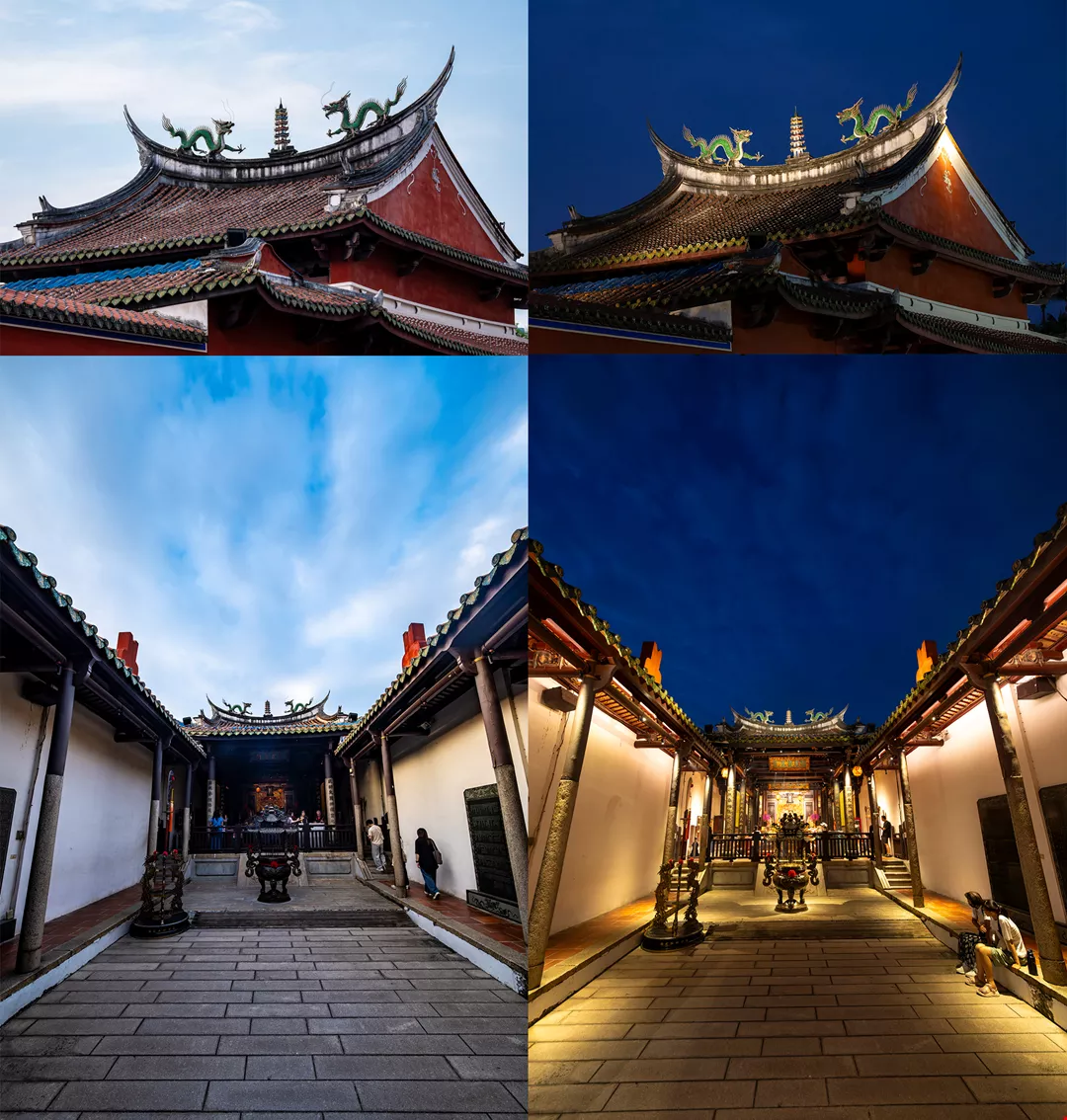
The Sacrificial Rites Martial Temple takes on a different character after dark.
After dark, lighting outlines the roof ridge and brings out the beauty of its architectural details.
Lighting traces the corridors and pathways, guiding visitors into the temple and bringing depth to its spaces.




-1.jpg?w=1080&mode=crop&format=webp&quality=80)


@List.jpg?w=522&h=410&mode=crop&format=webp&quality=80)
@List.jpg?w=522&h=410&mode=crop&format=webp&quality=80)


