Landscapes on people’s bodies
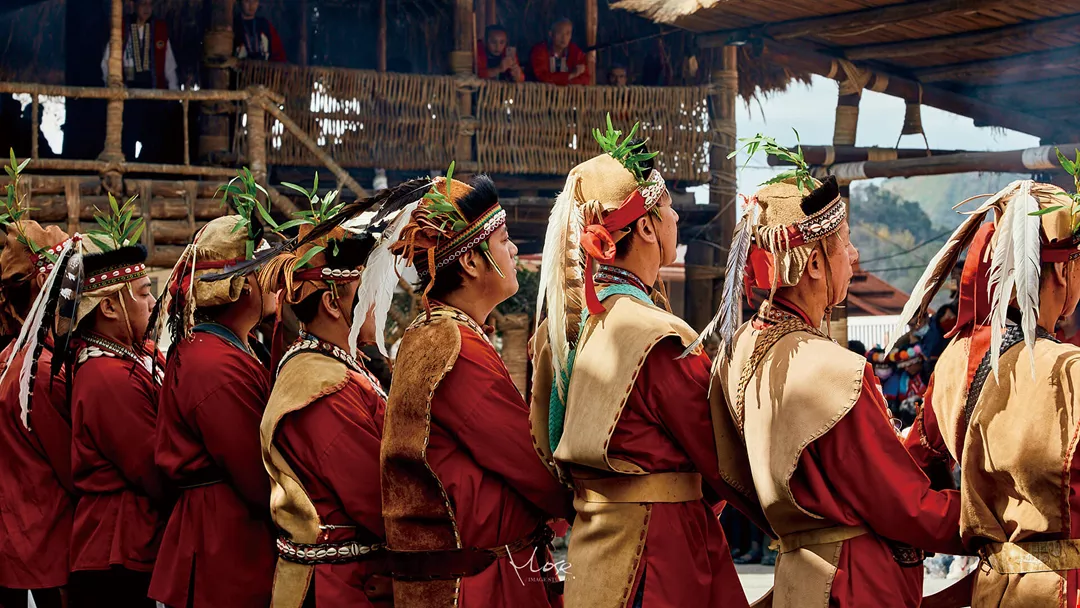
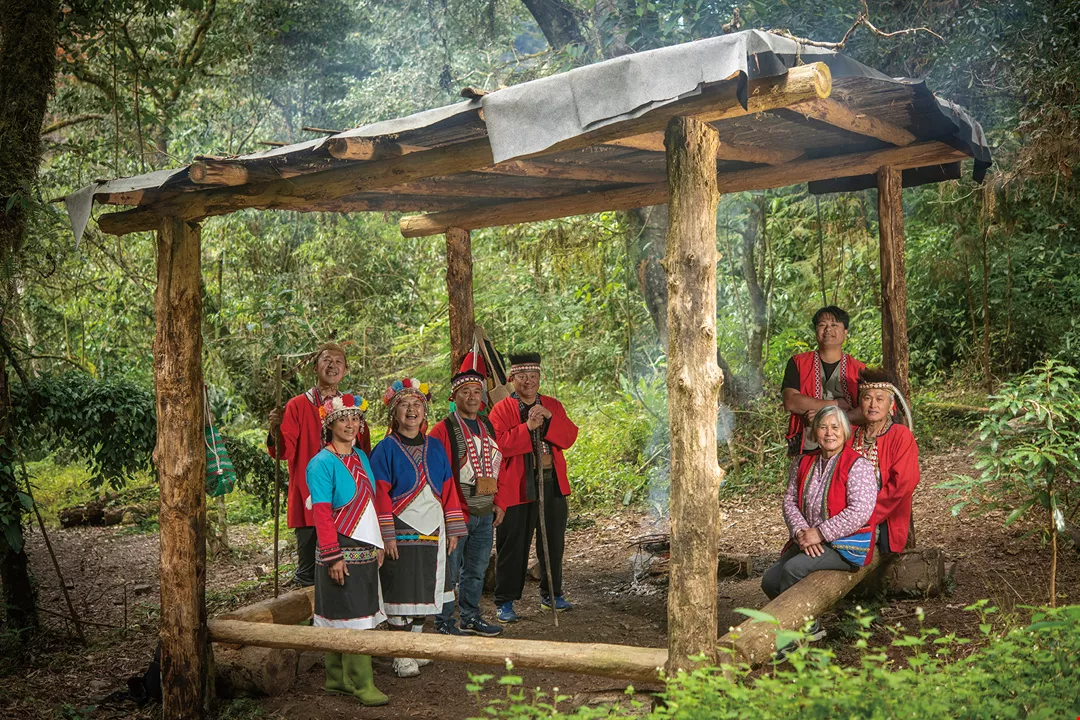
On the day of our visit, Mo’o ’e ’Akuyaeana is wearing traditional Tsou attire, which is donned only on important occasions. Everything from his hat and upper garment to ornamentation is powerfully linked to the local landscape. In former times the residents used natural leather acquired by hunting to make clothes. The community’s mother-tongue teacher, Inguyu ’e Yasiungu, explains that the main color used is red because in the past when hunters returned home with prey on their backs, their shoulders would be red with blood.
For significant events, feathers—symbolizing male skills and heroic bearing—are inserted into the leather hat. In the past, source birds included the crested serpent eagle, mountain hawk-eagle, Swinhoe’s pheasant, and Mikado pheasant, but the Tsou can no longer hunt these birds as they are now protected. At the back of the hat is a piece that can hang down to cover the neck. Mo’o ’e ’Akuyaeana says: “Putting it down means one is going into battle against enemies. It’s not polite to wear it down normally, so it is usually tied up.”
Since the Tsou have long lived in the mountains, it seems a little odd to see seashell ornamentation on their apparel. “It’s not odd at all,” says Mo’o ’e ’Akuyaeana. “In the past there were Tsou people living all the way down to Anping [on the coast] in Tainan.” Mo’o ’e Mhozana, of the middle generation, adds: “In Anping District there is a Cha-Ha-Mu Aboriginal Park [Cha-Ha-Mu being the old Tsou name for Tainan]. This was validated by the Tainan City Government, which shows that the Tsou once lived in Anping.”
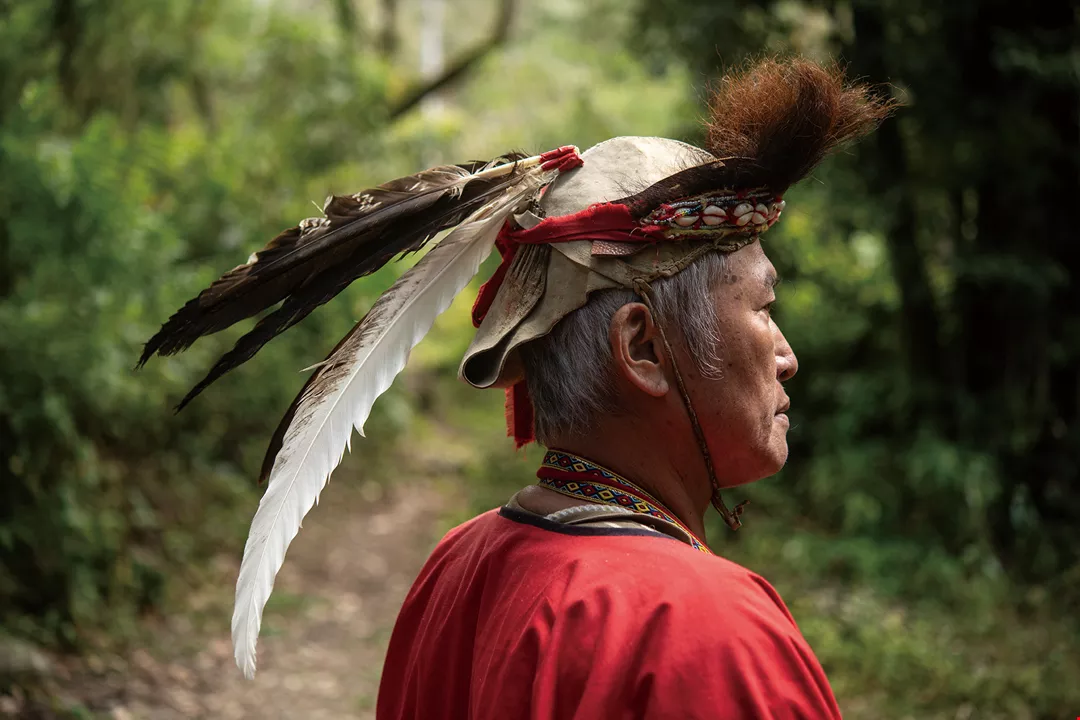
There are strong links between traditional Tsou apparel and the landscapes in which the Tsou people live. The main material is natural leather acquired by hunting. Feathers on headwear symbolize hunters’ mastery over their hunting grounds. Seashells adorning the garments are a reminder that the Tsou once lived close by the sea.





@List.JPG?w=522&h=410&mode=crop&format=webp&quality=80)


