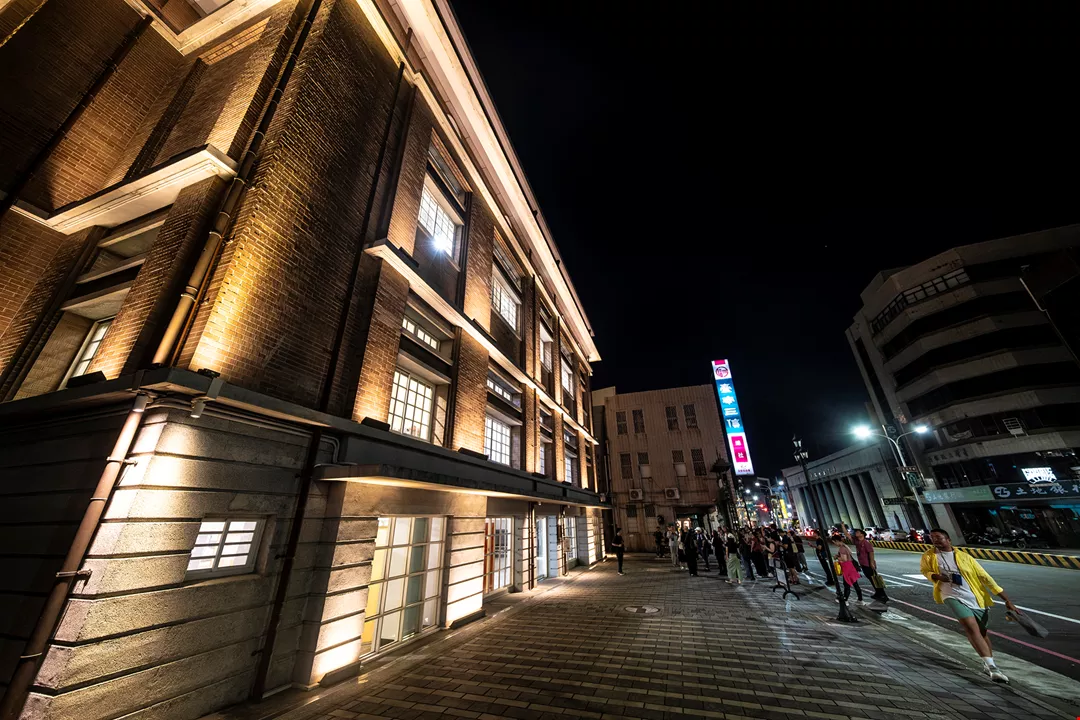
Establishing an order of light
“What makes Tainan appealing is that the whole city feels like a cultural space without walls. Its history isn’t something you can see only in a museum; it lives in its streets, buildings, religious practices, and daily life,” says lighting designer Nell Liao, who has worked on the Lighting Project.
This is a city where different eras mix together with everyday life. There are grand public buildings as well as small shophouses and temples tucked into alleys. Spaces of different scales call for different designs of light and shadow. As someone turns from a main road into an alley, what should catch the eye? When a person approaches a building, what should they notice first?
That is why Liao began with a clear principle: “The first thing to do in planning Tainan’s nighttime lighting was to reestablish an order of light.”
So-called “order” does not mean illuminating every important site. It means allowing some places to be bright and others dark, while points of light link buildings, streets, and alleys. The lighting leads people from one place to another and helps them discover the city’s details as they move.

Turning on a light takes only the flick of a switch. However, as lighting extends from buildings into the streets, it illuminates not only architecture, but also the shared city night.