The fascinating ecology of tung blossoms
Without a guided tour, visitors here might easily miss the captivating botanical details of the tung flowers. The intact blossoms blanketing the forest paths are actually male flowers. To attract insects for pollination, male blossoms bloom in clusters of dozens or even hundreds. Once their mission is accomplished, they gracefully fall from the branches entirely intact. Conversely, the often-overlooked female flowers shed their petals one by one, leaving the ovary at the center securely on the branch to nurture seeds.
Furthermore, tung blossoms change color. When they first open, the floral core is a pale yellow, which transitions to red within three to five days. Occasionally, you may spot intact yellow-cored blossoms on the ground, which are weaker male flowers that have detached early to redirect nutrients to their stronger peers—a stunning display of nature’s ingenious survival mechanisms.
Taiwan’s most common tung trees are divided into two main varieties: the “thousand-year tung” (Vernicia montana, or wood-oil tree) and the “three-year tung” (Vernicia fordii, or tung-oil tree). The former features wrinkled fruit, cup-shaped glands on its leaves, and dense wood, with seeds that are ideal for oil extraction. The latter boasts smooth fruit and flat glands, and while it grows rapidly, its economic value is lower. A local botanical mnemonic summarizes them perfectly: “three-flat-smooth, thousand-cups-wrinkled.”
During the era of Japanese rule, tung trees were introduced and cultivated extensively to meet industrial and military demands for tung oil, which Hakka communities also ingeniously utilized as a waterproof coating for their traditional paper umbrellas. As the petrochemical industry rose to prominence, the tung tree was largely abandoned, left to grow quietly in the mountain forests. It wasn’t until recent years, driven by the cultural revival of the Hakka Tung Blossom Festival, that these trees re-entered the public eye while beautifully reawakening memories of Taiwan’s forestry industry heritage.
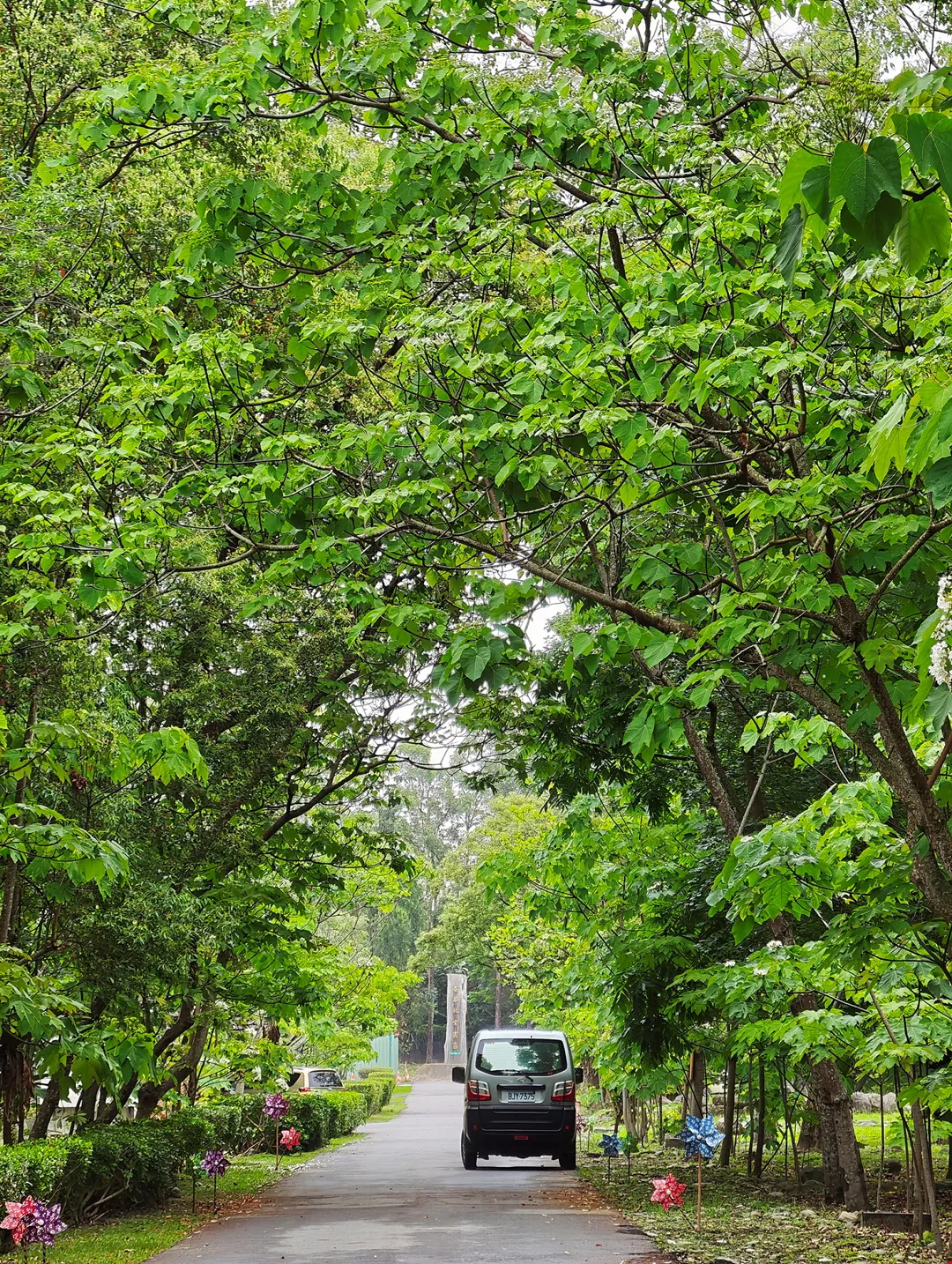
The flat terrain of Nanhua Forestry Culture Park transforms tung blossom viewing into an effortless, inclusive spring excursion for family members of all ages.
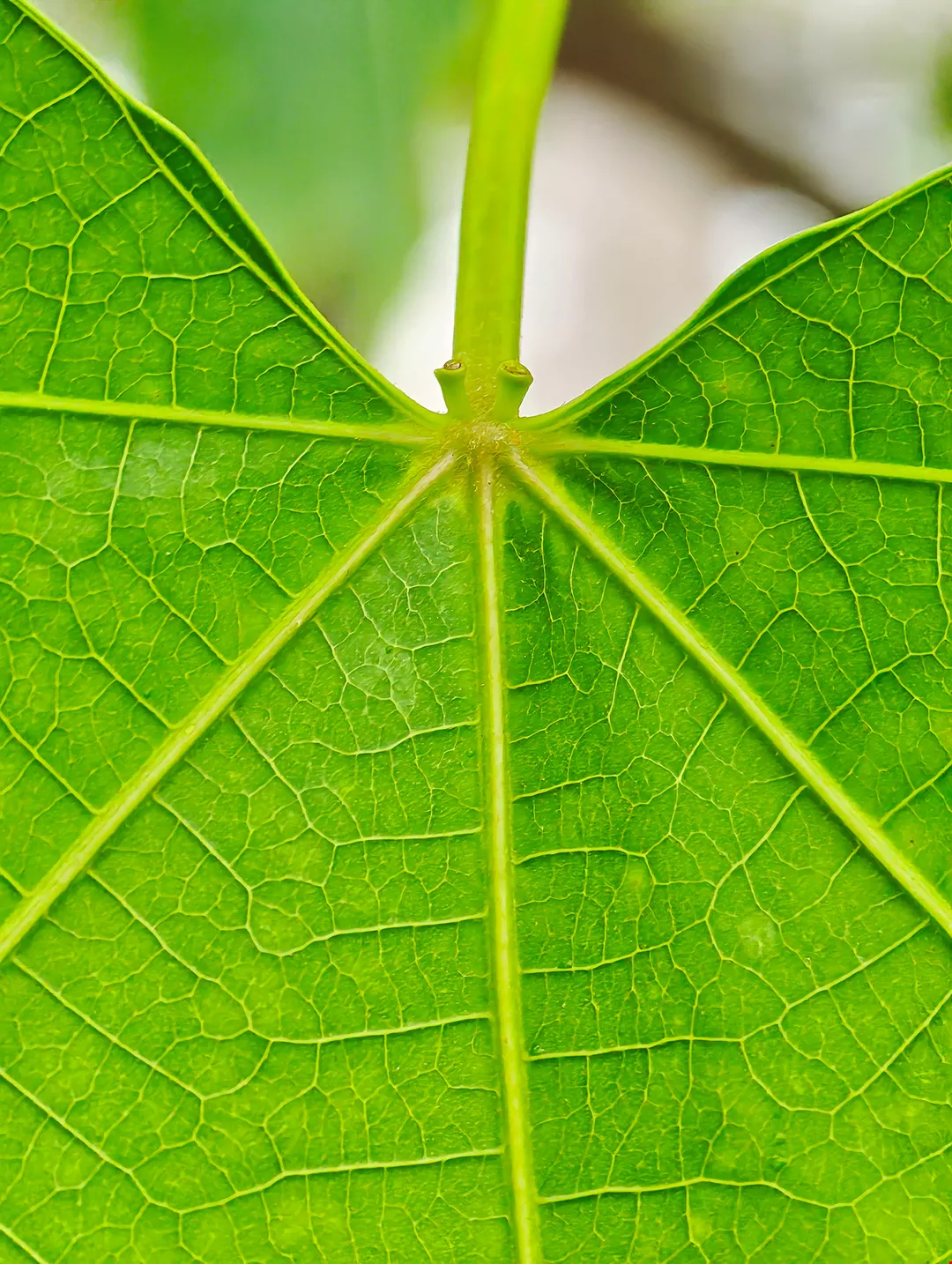
At the base of each thousand-year tung’s leaf sit a pair of cup-shaped glands that secrete nectar to attract ants. In return, the ants fiercely guard the plant by driving away beetles and other pests, forming a wondrous symbiotic alliance.