Mao Kao-wen Takes On the Entrance Exam "Monster"
Liu Yung-fang / photos Vincent Chang / tr. by Christopher Hughes
September 1991


Sorting out education is not easy, but Mao Kao-wen has made all the arrangements and is ready to act. (photo by Pu Hua-chih)
Minister for Education Mao Kao-wen wants to get rid of the entrance exam?! For many people this news is like a miracle. For forty years the question of whether or not to keep the exam has been the subject of inconclusive debate, so is the ice really breaking? Is there a timetable? Everybody is asking the minister if this can really be the case.
At 6:00, after we had waited nearly two hours, Minister Mao finally appeared. His warm smile barely concealed his fatigue--the meeting he came from had clearly been a "tough battle." After taking our seats, we first asked him about the entrance examination system. He smiled and said he would like to tell us everything about his plans for reform in his own way, and if we still had questions or wanted to cut and edit it, that would be up to us. Over the next two hours he expatiated on the aims and tasks of educational reform and the ideas he has in mind. In view of this precious opportunity, we have decided to preserve the first person format of his remarks.
Today I can say that the reason I want to bring down the entrance examination monster is because it has had too many influences on the educational environment that have not been good. Looking at primary and middle schooling, the most serious problem at present is that it is impossible to have normal teaching and all-round balanced development. This phenomenon is mainly created by the pressure of gaining entrance to higher education. So how can we ease this situation? There are four ways:
Increasing University Numbers: The first is expanding the numbers of full-time students in higher education. Four years ago, when I came to the Ministry of Education, students accounted for 1.9 percent of the population of Taiwan. Now this has already increased to 2.3 percent and I hope that it will reach 3 percent this decade. This will be done by establishing new colleges and expanding existing departments.
The second way is by increasingly the number of part-time students, which is also a development and extension of education. In the past education has always been a bastion, but today's rapid social development demands that workers also need to follow up with re-training. This will open up an alternative stream beside full-time students and add flexibility to the ladder.
Combining Technical Training and a Qualification System: The third way is to establish technical training. At present the ratio of high-school students to technical school students is 2.8 to 7.2. The problem is that many people do not go for technical schools because everyone wants to go to high school so that they can have the pressure of the entrance exam. If vocational training can be organized well, then these students will be willing to study there and the pressure will be eased.
The fourth way is to establish a system of qualifications. Merging technical training with the certificate system means that in future you would not have to depend on a diploma to get employment but that you could use your certificate. At the moment the problem is how to make businesses take the certificate seriously, not the diploma. We all need to work hard on this.
Why does everyone want to study at university to much? It is because once you have passed the entrance exam you can enjoy yourself for four years and have no problems after that. So on the one hand we will open the front door, while on the other we will tighten up the elimination system. Because of this, the individual will have to think carefully about whether his interests and abilities are suitable for study at university. If not, then they can say: "I don't want to go to university, I want to go to college, I want to get a job," or perhaps go for retraining later on, not just blindly try to get into university.
Grasp the Basics: At present everybody's object of study is the entrance exam. I have always stressed that with a uniform exam you will have uniform students and study. To give an example, suppose I am practicing Kung Fu on a mountain and you are to be my opponent. The first thing is definitely to analyze your height, weight and strength of arm, which school you are and so on. After three years I can come down and defeat you. Yet if I don't know who my enemy is today, I only need to practice well the basics so that whoever I meet I can adapt to. Studying is the same. Even if different tests or methods are used to select students, you still have to grasp the basic concepts, there is no need to go and learn fancy tricks. There will be no place for the displays of special exam books and cram schools in this.
Because of the existence of the entrance exam today, teaching is aimed solely at selecting students according to it. No matter what the individual's personality, the same way of assessment is always used. We often say that the fairness of the entrance exam lies in its freedom from abuse and favoritism, but in terms of educational ideals is it fair to use the same measure for different people? Is it really worth concluding that for the sake of "no abuses" it's right to let the education of the whole younger generation be dictated by the entrance exam? Standing in the position of minister of education, I feel that we should consider this very carefully.
What's Fair?: The methods for substituting the entrance exam I have talked about today don't mean that I am being reckless or taking lightly the possibility of creating abuses. They will also be taken into consideration while drawing up the policy. Many people take the view that an absence of defects is the highest ideal of fairness. I personally don't think that is necessarily so. All kinds of problems with young people today and the inability to have normal teaching in schools have all arisen from the use of a single method of assessing students. The price is too high.
In fact, the entrance exam has really come about for technical convenience. Yet the problem of its influence on the whole educational environment must be examined. How should we adjust this uniform method so as to develop sufficiently lively teaching with students developing according to their own interests and characters so that they end up with their own piece of territory in future? I personally feel that education is a kind of ideal, a kind of aspiration that should be relentlessly pursued. We cannot get stuck on the idea of it having "no technical defects" and not question whether or not this petrified system can supply the personnel that society will require for the future.
As to how we can solve this problem, we can first consider the junior to high school stage and then the high school to university stage.
Study at the primary-junior stage provides the basic education for citizens. It is the opportunity for students to reach out and discover where their own strong points and interests lie and look to their future, so we must definitely confirm the importance of putting into practice all-round education and normalizing teaching. If we can let them have a really human outlook, correct habits and academic interests then I think the education of the citizen will have been a success. Let us first enlighten him and then, after many more things, go again! So the use of any examination is not suitable for the stage from primary to high school. Later, willingness to go into higher education and overall performance at school can be used to assess the student. Moreover, comparison of points of attainment can be used for a regular assessment. Of course everybody will suspect that this will not be fair or feasible, so let us experiment first.
The plan is to experiment with this scheme for three years and then analyze the results for a year. The experiment has already been in progress for one year and the results are very good. In the next academic year, besides being expanded in Taipei and Kaohsiung, it will also be carried out in Ilan, Penghu and Taitung. If it goes smoothly then we hope it will be put into practice formally in 1994. But if the results are very good in this period then perhaps it will be put into practice as a matter of course.
Shrinking the Examination Monster: As for the stage from high school to university, for many years now everybody has incessantly criticized the university entrance examination but always without any way of solving the problem. I think that the aim of the reforms is definitely to take this in hand and solve it with patience--definitely not to panic. Last year the universities and colleges joined together to establish a university examination center under the management of Li Tsung-tao, chancellor of Chunghsing University. It is an ongoing organization which on the one hand will improve the content of the examination and on the other will improve the system with the task of coming up with an alternative plan within six years.
The strategy at first will be to find other paths into study, gradually shrinking the examination system step by step, and replacing it with another concrete program. Since that may take some time, we're not going to get rid of the examination system within five years, as the media would have it. Even if the program turns out to be unfeasible, there already exist a number of paths and the entrance exam is naturally very unstable and will collapse itself. I personally hope that there will be a number of different paths for assessing different kinds of people.
The most pressing task at the moment is how to normalize teaching because the examination has still not been abolished. What can be done now? One of the reasons why there is so much pressure for the entrance exam is that everybody wants to go to the elite schools. As long as you don't try to select a school, there's a school for everybody at the stage from primary school to high school. So I hope we can raise the general standard of these schools. The Department of Education has already planned to spend 20 percent of its budget on improving the government primary and junior schools in Taiwan Province. Apart from this we want to aid private schools to raise the average educational level.
To have equal opportunities in education you must not only provide education but it must also be good-quality education, so the supply of teachers must be strengthened. Teacher training institutions can establish departments for further re-training open to graduates from other universities to train as teachers and multiply the sources of teachers. Apart from this the teacher training laws must be changed and a policy for strengthening teachers' rights and responsibilities set out in law.
Revising Textbooks: Another important point is the revision of textbooks. This process has already been under way for two years now with the level of difficulty and quantity being adjusted to suit the attainment levels of the majority of students. Only when this is completed can teaching be normalized. At the same time the rationalization and simplification of exam topics has also been under way for two years. This year I especially stressed that it was enough to understand basic reasoning and there is no need to learn all kinds of tricks and use special books to prepare for the exams. Only after this is done can schools be asked to normalize their class streaming.
Another advantage of rationalization the exams will be the breaking of the elite schools. This is because if the topics are too difficult it is like planning who out of the first 2,000 of 60,000 students will go to which elite schools and there is a very clear distinction. But if the high achievers number around 20,000 and the distinction is not so clear, then the elite schools will gradually disappear--a kind of carrot-and-stick method of winning. I think that the examination topics should seek to distinguish who are the top 20,000 students and who are the 40,000 behind them.
It will only be when this is done that class streaming can be rationalized and it will only be in the third year of junior school that streaming will begin. Now the public can gradually accept the concept of normalizing teaching, but first of all teachers must be able to pay attention to differences and use the right kind of materials; secondly, up until now the emphasis has only been on knowledge but now we must also lay down the value of moral, physical, social and aesthetic education. This will be a very big battle and is also the reason why we are expanding the budget for the province's primary and junior schools, enlarging the number of teachers and reducing the size of classes.
From central policy to local practice it is, of course, hard to avoid mistakes and differences. So to carry things out properly I want to communicate with the provincial education department and even write a letter to every school principal, teacher and parent.
The Cake Theory: Looking back over the last four years at the Ministry of Education, everyone's ideas have gradually jelled and arrangements are more or less complete. When the time is ripe we can act. What I mean by "the arrangements" is the law reform, revising the whole system, passing the budget, adjusting personnel and ensuring money is really spent on education. Only in this way can a one-man show be avoided. Otherwise any executive command one might make may be reversed by a command from one's successor.
So at present we are revising the university laws to encourage each university to develop its own characteristics. In the past their locked budgetary structures have not left them funds to make their own impression so we are considering making the miscellaneous expenses of the public universities their own budget which they can use flexibly for themselves. Hopefully they will also set up foundations and freely use donations from society.
I often talk about the "cake theory." Government money is like the milk and egg for the cake. The problem is how to make the frosting for the top of the cake. Enabling each one to use the money in their own style is more flexible. One can make a chocolate cake, another can make a lemon cake, letting our higher education develop a variety of features.
Just a Logistics Unit: There needs to be a rise in the quality of Taiwan's research students, especially the Ph.D. students, and I hope that in the next decade teachers in higher education will be supplied from native stock. So as to improve the academic environment, universities and colleges will gradually be given the right to examine and the responsibility for maintaining their own standards. Outside the schools the establishment of all kinds of academic groups will be encouraged. That means changing the environment and clearing the paths of higher education on the one hand while, on the other, increasing the pressure. So far as I know, the ten universities who have been elected to examine their own theses are all nervously making comparisons with each other. [Laughs].
I feel that the debate over education has until now been rather argumentative because everybody has studied, has children and all have their own experience. My thinking is that before the policy is decided there should be full communication, publicity, public hearings and seminars. Decisions must be cooperative to the finish. After decisions there must be support.
Education is essentially a very lonely affair. Training personnel takes years to show results. It is not a very colorful business but you definitely need to have ideas and aspirations otherwise you just end up compromising on things.
Truthfully speaking, doing executive work we are in the back line. The classroom, studio and laboratory are the real stages of education. It is only there that the products are made. We support from behind but we are not the main players.
[Picture Caption]
Sorting out education is not easy, but Mao Kao-wen has made all the arrangements and is ready to act. (photo by Pu Hua-chih)
"Look, where is my name?" Perhaps in a few years the agony and the ecstasy of such scenes will be no more. (photo by Diago Chiu)
If teaching can be normalized students will only have to learn the basic s and no fancy tricks. (photo by Arthur Cheng)
Primary and junior school students started using the new, less-rigorous textbooks last year.
Opening the front door and tightening up on elimination means that university will no longer be four years of fun.
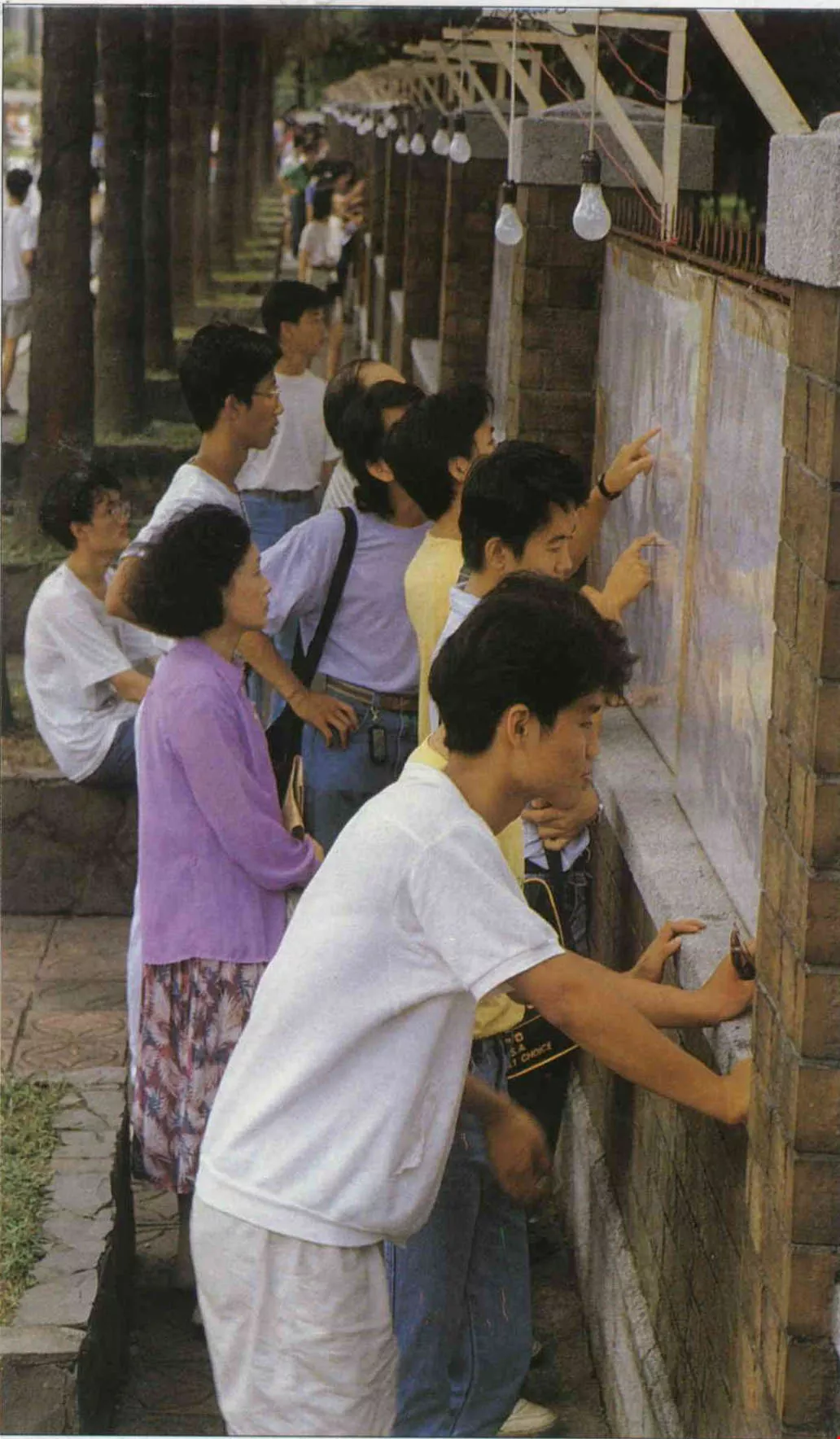
"Look, where is my name?" Perhaps in a few years the agony and the ecstasy of such scenes will be no more. (photo by Diago Chiu)
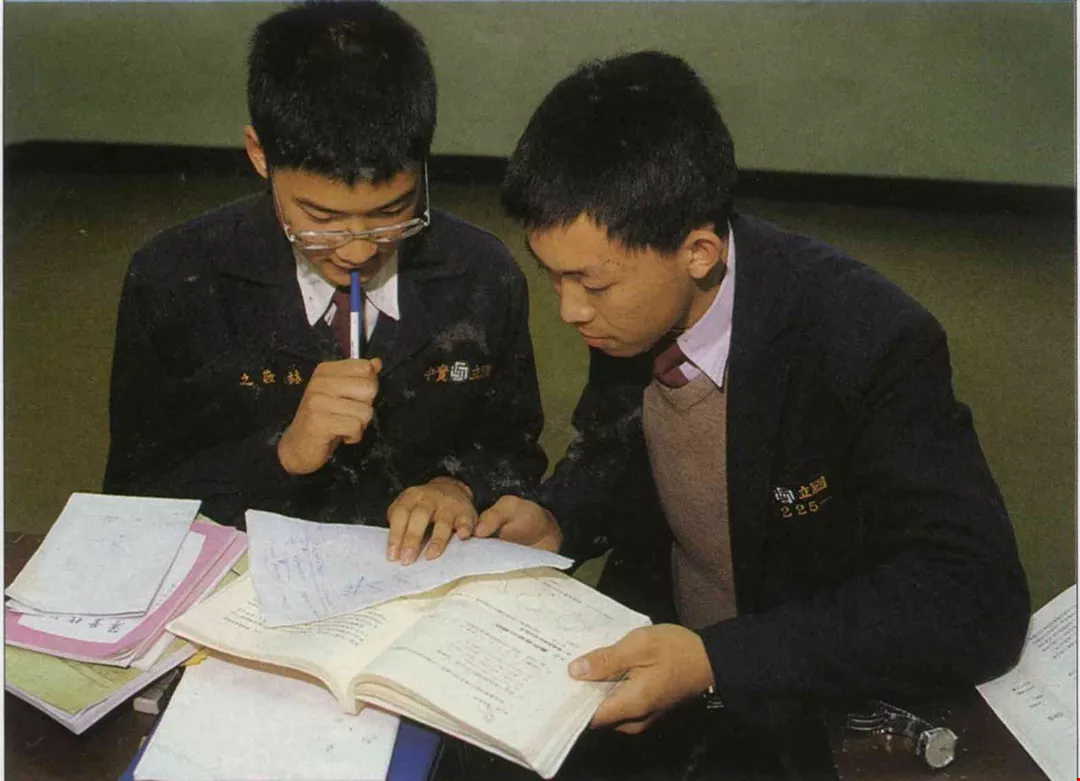
If teaching can be normalized students will only have to learn the basic s and no fancy tricks. (photo by Arthur Cheng)
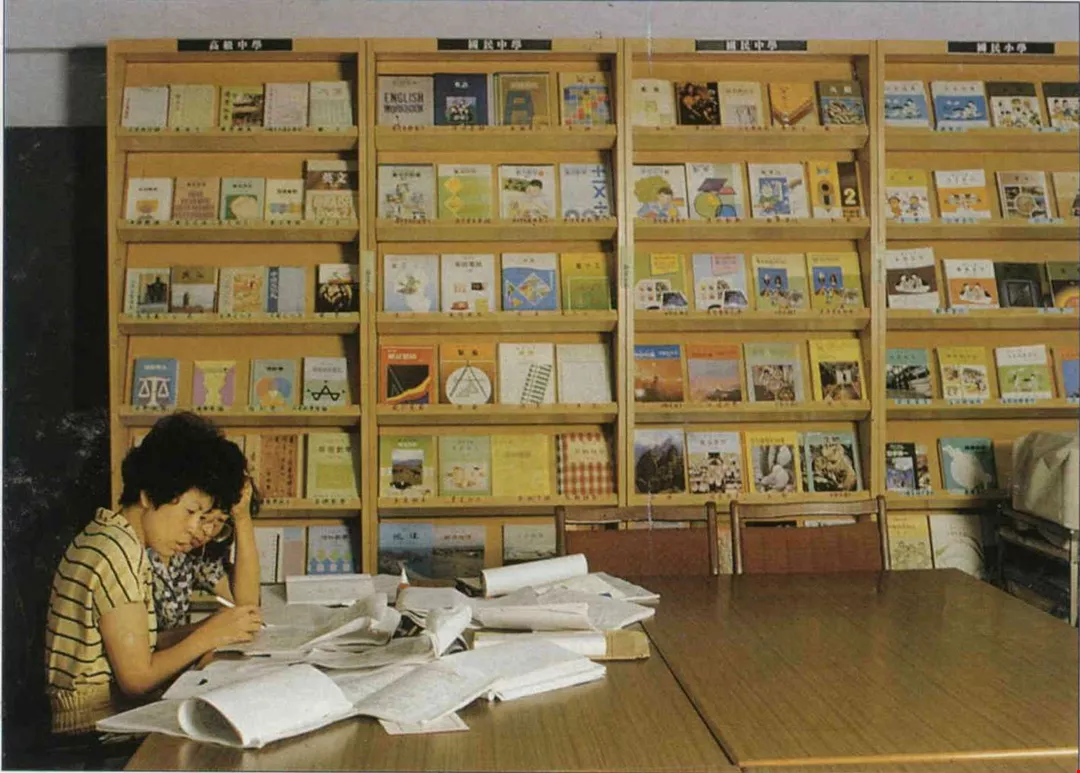
Primary and junior school students started using the new, less-rigorous textbooks last year.
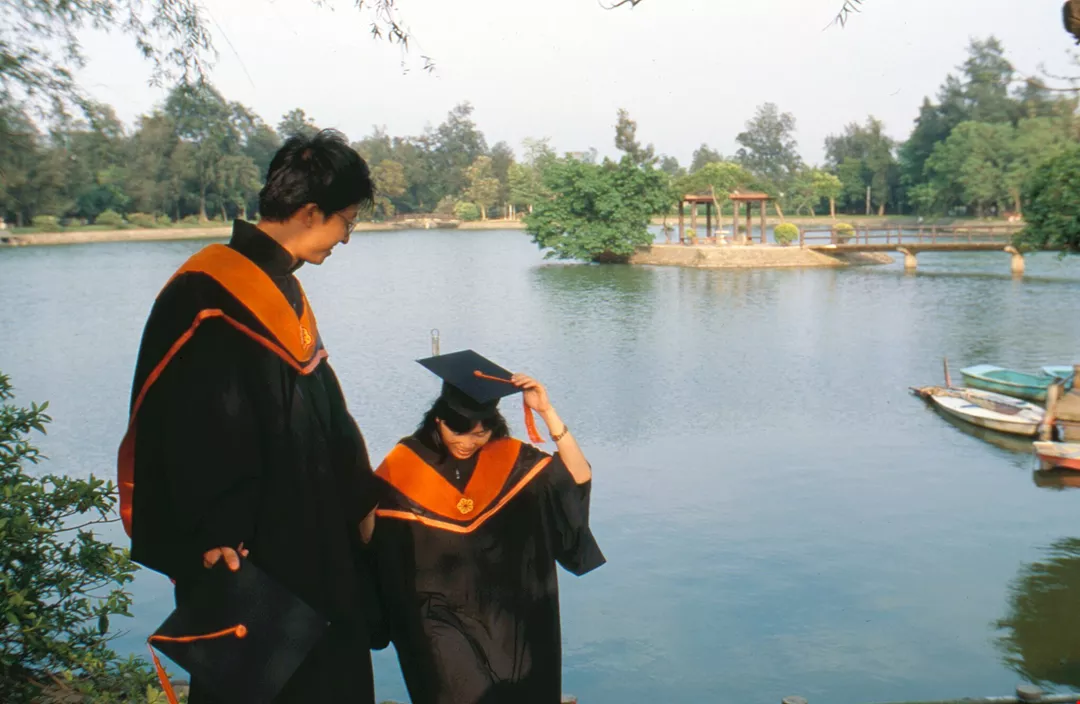
Opening the front door and tightening up on elimination means that university will no longer be four years of fun.


@List.jpg?w=522&h=410&mode=crop&format=webp&quality=80)