Underworld Hero--Wanted Dead and Alive
Elaine Chen / photos Hsueh Chi-kuang / tr. by Phil Newell
April 1994


This photo is widely circulated as a picture of Liao Tien-ting, but it is impossible to be sure if it is really him. (photo courtesy of Shih Hui-chun)
Among the famous people of the Japanese occupation era, perhaps Liao Tien-ting is best known to ordinary folks. Liao's life story has been the source of creative inspiration in the traditional arts, serving as the basis for everything from Taiwanese opera to story-telling to novels to films to TV, and even dance.
But was Liao really so magnificent? History has yet to produce a formal verdict on this man of mythical proportions. What was he really like? Why has he become a near-deity in whom the people have a religious faith, and whom the criminal underworld also admires?
"Listen closely! Today, in order to raise himself up in his chosen profession, and also for justice for the Taiwanese people, Tien-ting has no choice but to kill Chin Chiang; let the fight to the death begin!" On cable television, story-teller Wu Leh-tien is vigorously relating the tale of Liao Tien-ting. In one hand he holds his microphone, and in the other he has a toy gun which he fires--bang! bang!--directly at the screen. He pulls out a handkerchief soaked in red ink and covers his face with "blood," and then hits the floor rolling.
"What else can I do? People have been hearing the story of Liao Tien-ting for 20 years now. You have to add a little embellishment or you couldn't pull it off," puffs a winded Wu, his face dotted with pearls of sweat after the day's shooting is done.
Liao Tien-ting's story must be an exceptional one to have lasted 20 years. Over the last two decades, Wu Leh-tien has reached all of Taiwan, first through story-telling on the radio, and now appearing on cable TV.
Taxi driver Chung Ching-san, who spends a lot of time listening to the radio, is familiar with every detail of the Liao Tien-ting story. The Liao he sees with his mind's eye is a noble thief, a reliable sworn brother of whom nothing is too much to ask, a man who accepts responsibility and fights for what is right. No wonder Liao is also admired by many gangsters.
Though Wu Leh-tien by no means comes from a shady background, it is not without reason that he has chosen Liao Tien-ting to be the central character in his story.
"At that time, resistance to the Japanese had collapsed, and he alone was willing to stand up to them. He helped all the people who were angry but dared not speak out to vent their frustrations," contends Wu.
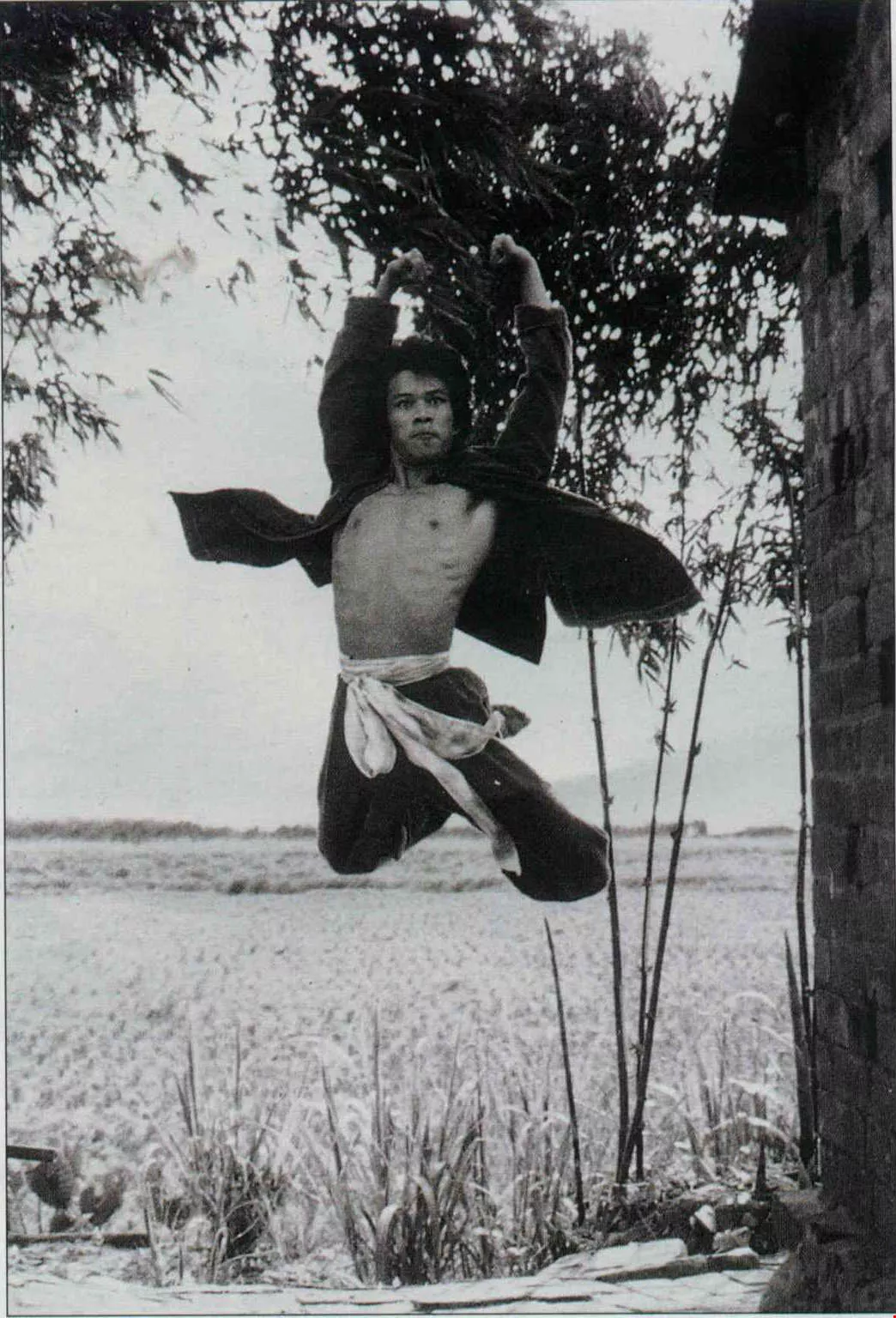
Dancer Chen Wei-cheng made quite a hit when he per formed the role of Liao Tien-tang, especially choreographed for him when he was with the Cloud Gate dance company. (photo courtesy of Chen Wei-cheng)
A master of fighting skills
It is said that Liao was a master of all the tricks, and that he brought together all different fighting styles in one man. He never fought by the book, so that his opponents never knew what to do next. His arms and wrists were powerful; if he grabbed hold of you the pain would go right through you. Moreover, it is said that he could kick to two or three times his height, and land on the ground without making a sound. He could get up and down tall buildings as if it were the most natural thing in the world.
According to A Brief Introduction to the Han Min Temple of Pali, legend has it that Liao was a master of tactics and trickery. He had a long cloth sash wrapped around his waist, which he would twirl to amuse himself when just hanging around. But it became a device for turning aside the blows of attackers in a fight. He could also duck and run through underbrush as fast as a quail, without a sound and leaving no trace, and he relied on this quail technique to escape whenever he was surrounded by Japanese out in the wilds.
It is also said that Liao robbed from the rich to give to the poor; he gave some of his money to the destitute. According to a story about Liao recorded in the Taipei City Gazetteer, once after robbing the home of Ku Hsien-jung, he was caught by the police. Jumping into the Tanshui River to escape, he made his way to Wuku. Seeing an old couple who were bemoaning the fact that they didn't have enough money to bury their deceased relation, Liao simply knocked on the door and generously handed over some cash. Moved by this display of generosity, the old couple made a fire to dry his clothes and let him stay the night.
Tradition also has it that Liao specially targeted high and mighty Japanese, usually inviting trouble for himself in the process. Once, coming upon a Japanese police official in a bordello who was chasing out all the Taiwanese customers, Liao got so angry he knocked the official down and made him beg for mercy.
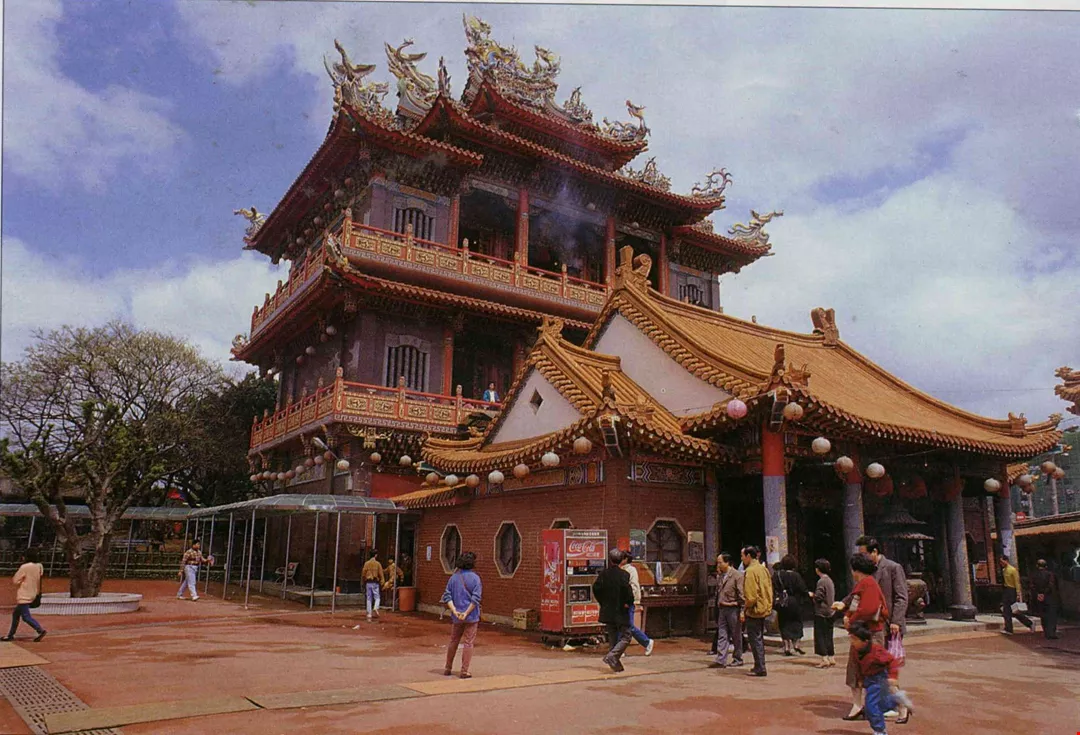
The Han Min Temple in Pali was originally the grave site of Liao Tien-ti ng; it has been expanded three times to give it its current appearance.
Inflated reputation
"He was just a minor figure in reality. But over time there have been many legends and stories passed around so that his reputation has become 'inflated' and he has become a great hero," suggests Lin Wan-chuan, who serves as archivist in the Committee for Taipei City Historical Records.
"When I was small the Chung Sheng theater group performed the story of Liao Tien-ting, and at that time they were still pretty close to the truth. But what Wu Leh-tien does on the radio is nothing but nonsense!" states Huang Kuo-lung, an artist in his 60s.
Wu's secretary Liu Feng does not reject this point. He says that some listeners have called in saying that the story is just too ridiculous; many of these callers are "mainlanders" who were born in provinces outside of Taiwan. "But for most people the more exciting something is, the better. We even had to invent a few characters, like Red Turtle or Tu Chiao Bo, for dramatic effect."
Wu has also been able to keep up the Liao story for 20 years because he uses Taiwanese in story- telling, and has a strong local accent, so that local people can strongly identify with him. In fact, Wu has really been employing Liao's legend to release his own feelings.
Many people have written accounts of Liao Tien-ting, but most are based on fables, and have no factual foundation. The only official document that mentions Liao is the Taipei City Gazetteer, and even then the people who edited the Gazetteer after the war placed his tale in the volume devoted to odd tales and legends (rather than in the volume devoted to important persons), suggesting that they didn't even believe that Liao really existed. It is stated in the preface to that volume that such legends carry little weight in a scientific era, but instead are seen as extensions of the fantasies of a people, or revelations about the people themselves. The tales of Liao are just tales, nothing more.
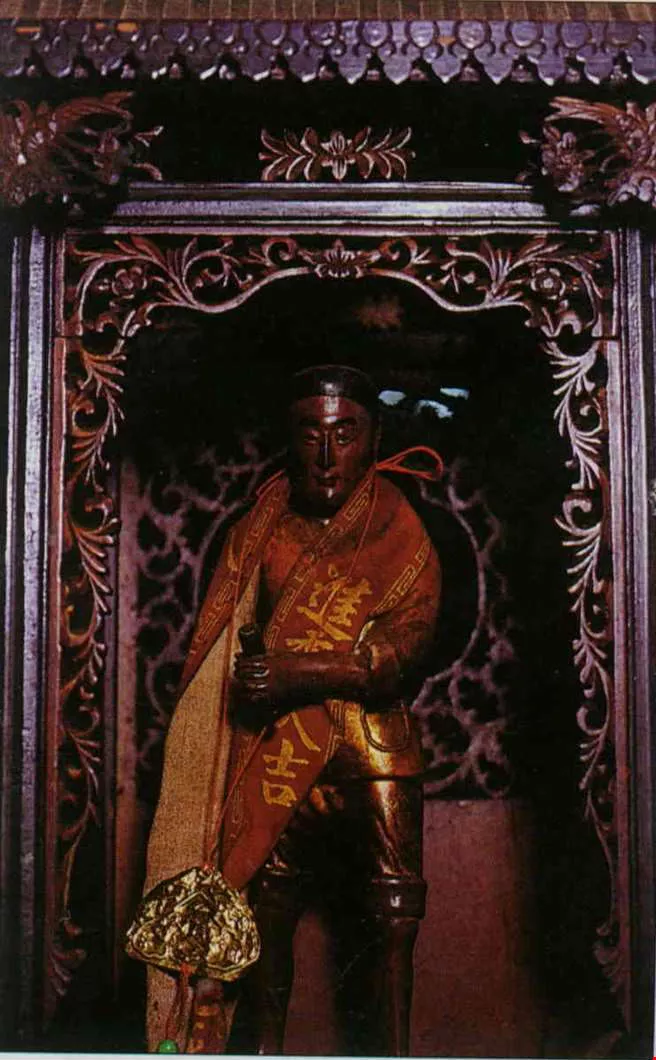
The statue of Liao Tien-ting shows him with a Japanese-style rifle; other deities stand in awe of him.
Playing tricks on the Japanese
Yet, for historians, Liao has remained an intriguing topic. Li Chi-hua, an assistant researcher in the Institute of Taiwan History in the Academia Sinica, possessed of a deep impression from the stories of Liao that she heard in her childhood, decided to research him in the original Japanese language documents.
She collected stories of the misdeeds and arrests of Liao Tien-ting from the crime beat pages of the Taiwan Daily News (a Japanese language newspaper from the occupation era). She also travelled to Chingshui Rural Township in Taichung County to dig up the family's household records, and she also found documents about Liao Tien-ting kept by the Japanese Governor-General's office, which are now stored by the Taiwan Provincial Government.
Based on these official documents, she discovered some discrepancies between historical fact and popular fancy. Liao was indeed an incorrigible thief, but he only began to be taken seriously by the Japanese police after he stole a police weapon and ammunition in August of 1909. It was only a brief three months from then until his death.
Tradition has it that Liao became the focus of the Japanese authorities' attention because he belonged to an anti-Japanese organization. But according to the documents consulted by Li Chi-hua, "Liao was simply wanted for theft and murder, and not for being an anti-Japanese 'bandit' or for thought crimes. The crimes he committed were social crimes, violations of criminal law, and not political crimes of resistance to Japan."
"But he did have a rebellious personality, and only acted against Japanese or wealthy Taiwanese. He also enjoyed playing practical jokes on the Japanese. No matter what he did he could never be caught, often causing the Japanese to lose face," says Li, taking the following example: Liao once sneaked right up to the front door of the police station in the dead of night, and covered the lanterns in graffiti, leaving the Japanese to discover it to their annoyance the next day.
Liao also stole weapons from the police and, posing as an officer of the Kushan station, he robbed eight homes. This was a serious blow to the authority of the Japanese police.
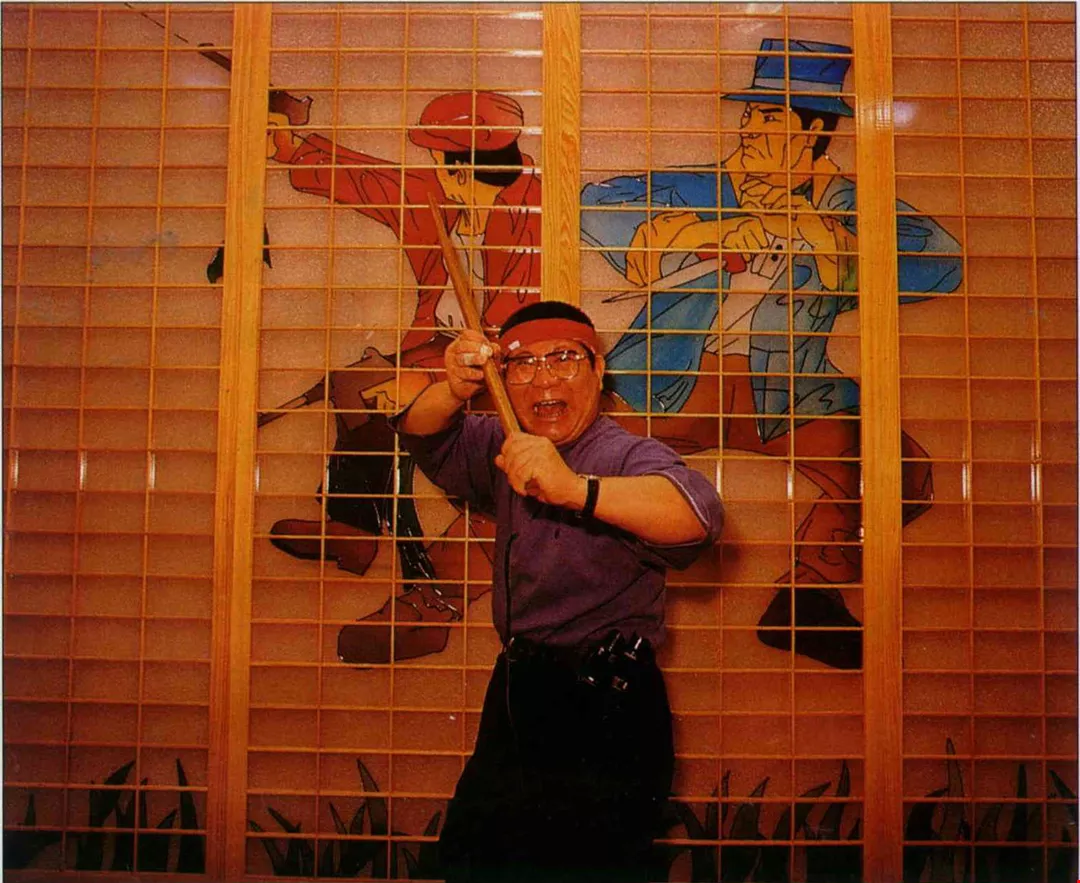
Story-teller Wu Leh-tien has been telling the tale of Liao Tien-ting for two decades now. He embellishes the story to freshen it up for his cable TV audience.
Politically correct outlaw
The Japanese police were frustrated at their inability to catch him on the many occasions when he defied their authority. In the article "Criminal Who Disappears Like Magic" printed in the September 1, 1909 edition of the Japanese language Taiwan Daily News it said: "For him, a police dragnet is no more difficult than a spider's web in the corner of the room; it cannot hold this gossamer shadow."
"But Taiwanese felt great when they found out. Everyone loved to chat about this type of thing," relates Li Chi-hua.
Painter Huang Kuo-lung grew up around Tai-pei's Tihua Street, and recalls often hearing the adults talking about Liao's exploits in Tataocheng. "At that time there was a famous bordello known as the 'Hall of the Kingdom of Ten Thousand Miles.' Liao would have his fun there all day. When he ran out of money he would walk over to the home of Ku Hsien-jung, which was right in the neigh-borhood, to get some. At that time Ku Hsien-jung had a social status like the heir to a great dynasty, but had to station Japanese military police outside just to keep Liao from bothering him," says Huang.
Besides word of mouth, another reason Liao's exploits were widely known is that the newspapers gave him a lot of coverage. Flipping through the pages of the Taiwan Daily News, Liao's name shows up in the crime beat on more than ten occasions. When his case became extremely serious, reporters filled whole pages with stories about him. It could be deduced that the authorities did this deliberately, to try to intimidate the population and prevent them from harboring criminals. Unexpectedly, Liao entered the popular psyche, winning a great deal of sympathy and support.
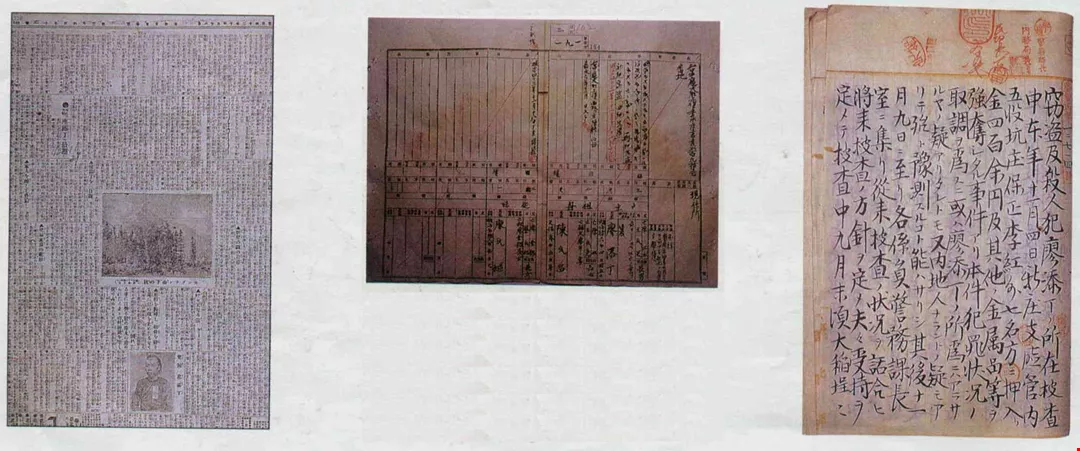
(middle) Liao's housing registration from the occupation. (right) The report on Liao by the Japanese Governor-General's office. (left) On 21 Nov.1909, Taiwan Daily News reported Liao's death in detail. (reproduced from Chingshui Township records office,the Historical Research Commission of Taiwan Province, and the Taiwan Branch of the National Central Library.)
Just the facts, ma'am, just the facts
If you accept the theory of social commentator Nan Fang Shuo, Liao Tien-ting should be seen as "an outlaw seeking social justice." When the government is unable to ensure fairness and equity, inevitably "bandits" will arise who live dangerously and oppose the depredations of officials. They steal only from the rich or from the regime, and leave the ordinary people alone. "These outlaws go outside the system to express the anger and frustration of the people." In an article discussing why a bandit in India was widely popular, Nan Fang Shuo argues that the man in the street will always harbor a certain amount of sympathy for such rebels, because stories of noble thieves in their mountain hideaways having it out with the soldiers of the regime can satisfy the people's desire to go against the system, a desire they are otherwise too timid to display.
Official documents tell us that Liao's life was as follows: He was born in 1883. His father died when he was eight and his mother remarried. He was brought up mainly by his mother when he was young, and later by his grandmother.
Liao began to commit crimes at 18. At the age of twenty, because of his third conviction for theft, he was imprisoned by the Taichung District Court for ten and a half months. In this period he escaped from jail twice, becoming a major headache for the police. At the age of 22 he conspired with Chang Fu of Panchiao to steal 3000 yen from a tea company; be accidentally injured Chang while they were resisting arrest. At 23, he cooperated with several others in a string of robberies of wealthy people, taking gold objects. When he was captured that year, a small gun, a Japanese saw, and other weapons were taken off his person.
He ran up a long record of thefts between the ages of 24 and 27, and was again arrested. After getting out of prison, Liao committed several major crimes one after another: Stealing a gold reserve from a tea company in Shihlin in July; theft of guns, ammunition, and swords from Tataocheng slaughterhouse, the police dormitory, and the Jihhsin Street police station on August 19; robbery at the Lin Pen-yuan home just a day later; the murder of secret policeman Chen Liang-chiu in Keelung in September; and the robbery of the Li Hung home in Wuku in November.
The point worth noting is that Liao received a great deal of help in all of this from ordinary people and even from some people responsible for ensuring public order. They provided him with food and shelter, as can be seen from the instructions and warnings issued by the Japanese police. There were definitely people who were arrested because they provided Liao with food or tools.
Liao's crimes became increasingly serious, and he shot and killed policeman Chen Liang-chiu when the latter got too close to him on one occasion when the police were giving chase. He was tried in absentia and sentenced to death.
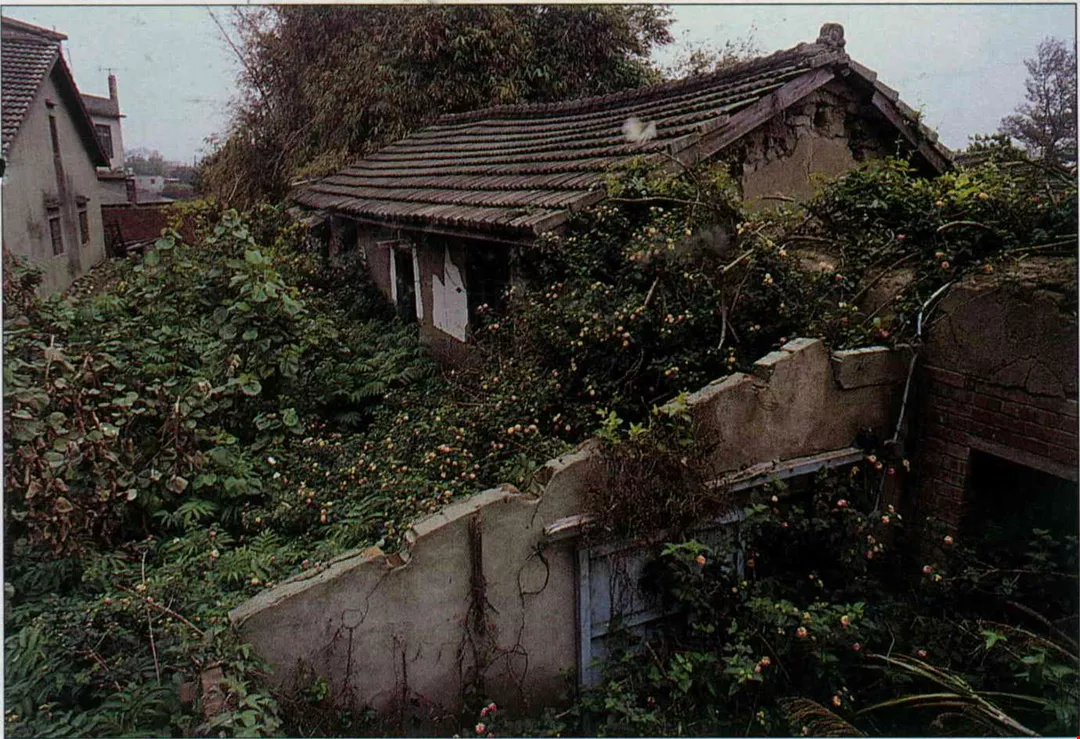
His name literally means to add a nail, but Liao, who died young without any offspring, left his family home to decay to its current decrepit state.
Liao's last night
In the end, however, Liao did not die directly at the hands of the Japanese police, but was trapped by someone he knew and trusted. That person was called Yang Lin, and he was the younger brother of the husband of Liao's lover. There are differing accounts of why he sold Liao out.
As far as the Japanese police were concerned, Yang Lin did it for the money. But according to Yang himself (as quoted in the Brief Introduction to Han Min Temple), he only sacrificed Liao out of regard for the overall situation. At that time, the Japanese police had already become aware of the relationship between Liao and the Yang family, and he was afraid that if he didn't kill Liao, the entire Yang family would face disaster.
It's hard to determine the truth, but it is certain that at that time Yang Lin did cooperate with the Japanese police. According to the final report on Liao Tien-ting prepared by the Governor-General's office, on November 18 of 1909, Yang found out where Liao had been hiding out for several days in the mountains, and deceived Liao by telling him that the Japanese thought he had made his way to Taichung and therefore had pulled out of the mountains completely. Yang used a shovel to dig up some peanuts from the surrounding area, which he gave to Liao to eat, and he gave Liao--who hadn't slept in several days--a chance to get some rest. Yang took advantage of this moment to rush to the police to report Liao's whereabouts.
At 10 a.m. the following day, just as Yang was bringing the Japanese police up, Liao happened to awaken. Seeing the situation. Liao simply said. "You told the police where I was hiding." He grabbed the gun and fired at Yang, but the gun jammed. Yang had his chance to pick up a shovel, and he hit Liao hard over the head. Liao died on the spot from a fractured skull, ending his brief life of 27 years.
Yang was rewarded with 2000 yen, but was later imprisoned for plotting the murder of Liao Tien-ting.
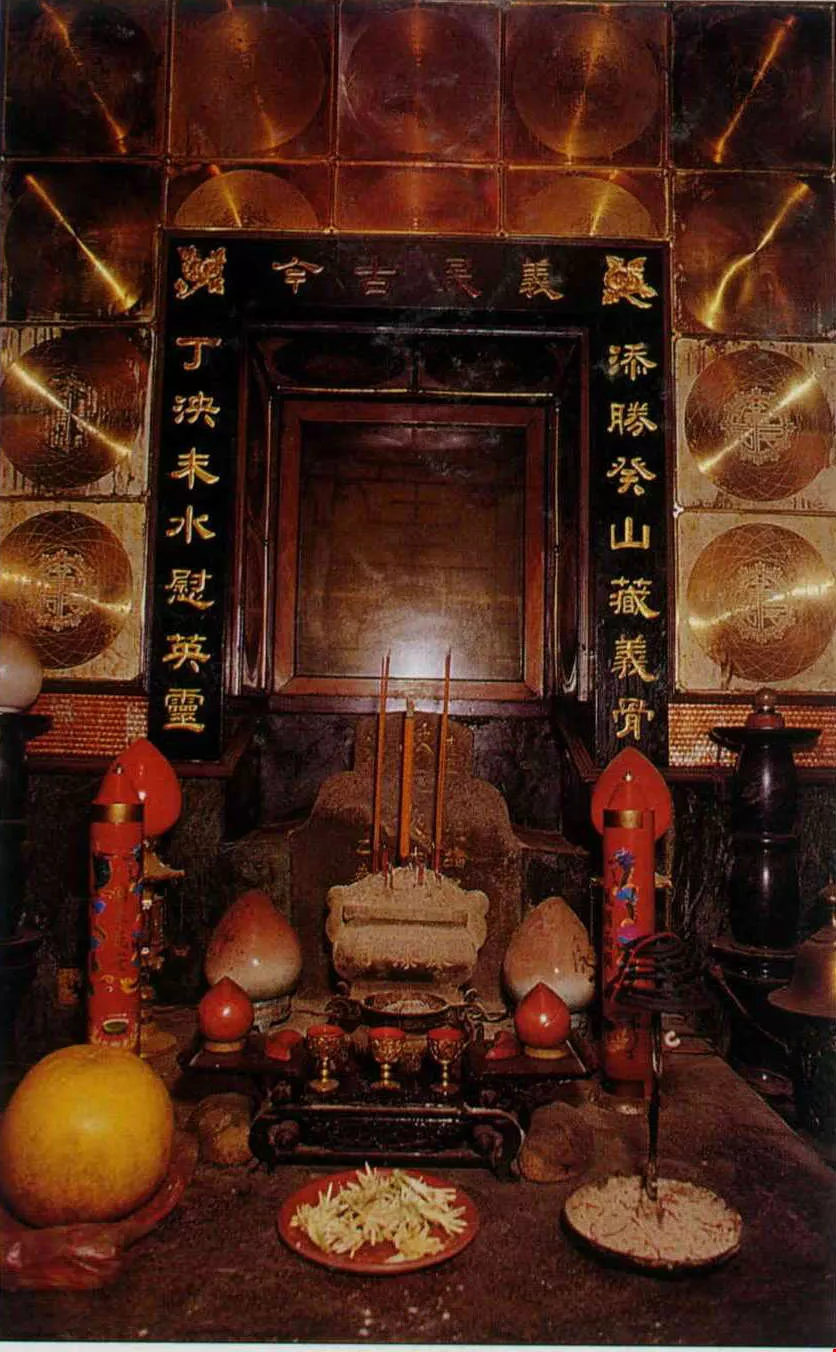
Liao's grave is just behind the main hall of the Han Min Temple. Incense is burned there as an offering to Liao uninterruptedly.
From criminal to deity
Many fantastic legends arose after his death to add a certain supernatural mystery to Liao. It is said that his body dripped blood continuously as it was being carried down the mountain, and that when the sky darkened and the rain began to fall each spot where his blood dropped emitted a bright glow, like that of a firefly. This lasted for a long time and only disappeared gradually.
Further, on dry nights light would leap from the hole in the ground where Liao hid before his death and head straight for the living quarters of the Japanese police official Matsumoto, where it would circulate for weeks before dissipating. At that time, Matsumoto's wife and daughter fell inexplicably ill. Matsumoto didn't believe in ghosts, but as the illnesses worsened he had little choice but to listen to the entreaties of others and go to pay his respects at Liao's grave, to treat him as his godson, to burn incense for him all year round, and to put up a grave marker for him, on which reads: "Grave of Liao Tien-ting, He Who Appears and Disappears Like Magic; Built by Matsumoto." The story goes on that the bad luck hitting the Matsumoto household disappeared as expected. But his superior was extremely unhappy when he got wind of what had happened, and instructed Matsumoto to take down the marker. It was only rediscovered after the end of the Japanese occupation era, and today is kept in the Han Min Temple in Pali.
When Liao was killed, his body was carried down to the place where the Han Min Temple is now located for an autopsy, after which it was quickly buried by the local township authorities. Later his sworn brothers from the underworld went there to pay their respects, and local townspeople impressed by his courage also went there to worship. His grave became as busy as a marketplace, but soon thereafter the Japanese government declared it off-limits. Everyone assumed they did so because they feared it would promote anti-Japanese sentiment.
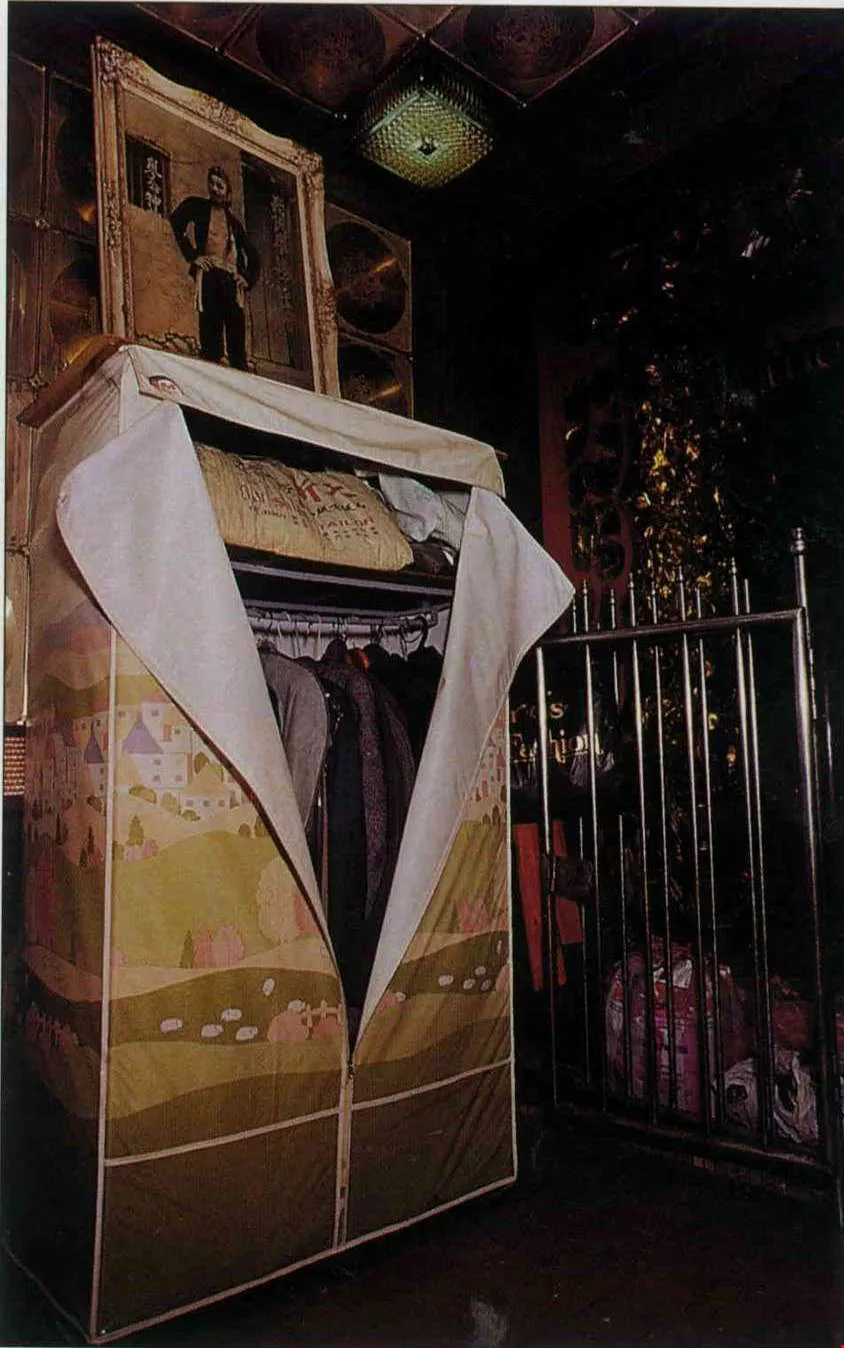
A plastic wardrobe next to Liao's grave is filled with suits brought as offerings by those paying homage to Liao.
A must stop for religious pilgrims
After the restoration from Japanese occupation, local people recalled his spirit of righteous rebelliousness and fixed up the burial site. Once a family lost their cow, and came to the temple to ask Liao for help in recovering the creature; incredibly, the cow came back on its own just a few days later. According to Hsu Ching-chuan, a volunteer at the Han Min Temple, most people who come to seek help at the site because they've lost something end up finding what they're looking for. When you think about it, this seems right, for wasn't Liao a master thief? Wouldn't he understand all the tricks of modern thieves?
In 1958, local people in Pali built a temple in front of the grave site. To commemorate Liao's anti-Japanese spirit, they named the temple "Han Min," which means "the Chinese people." Thereafter it was a popular place for people to go to worship, and it was expanded in 1985. Today, after three expansions, the Han Min temple has become a can't-miss stop for religious pilgrims. On Sundays, the one-hectare-large parking lot is overflowing, and even the roadside is jam-packed with private cars and tour busses.
It is said that the "wise guys" of the underworld greatly admire Liao Tien-ting. It is even said that convicts go straight to this temple to pay their respects after being released from prison. You can tell from the smoldering cigarettes stuck into the incense burner in place of incense and from the sharp suits which many visitors give as their offerings that the "character" of this temple is indeed not the run-of-the-mill.
"We get at least 100 suits a year. After they are left at the temple as offerings, we collect them and give them away during the annual clothing drive," says Hsu Ching-chuan, pointing to a plastic wardrobe by the side of the grave.
Liao frequented gambling dens when he was alive, so during the lottery craze in Taiwan many people came to seek his endorsement of their luck. Taxi driver Chung Ching-san has been to the temple to ask for help. He used a plate filled with incense ash which had been levelled off; after passing a stick of incense over it, he would take it out under the sun to have a look. "If you're lucky you'd be able to see Arabic numerals in the ash," he says, quite seriously.
It seems that prayers for wealth or for good luck are far removed from the original intent of those who built Han Min Temple: "The spirit of the Chinese includes benevolence and righteous courage to be a true martyr; the hearts of the people resist oppression and glorify the hero." Yet one can't help but wonder if the temple in its current form is not closer to the real Liao Tien-ting. It's hard to say.
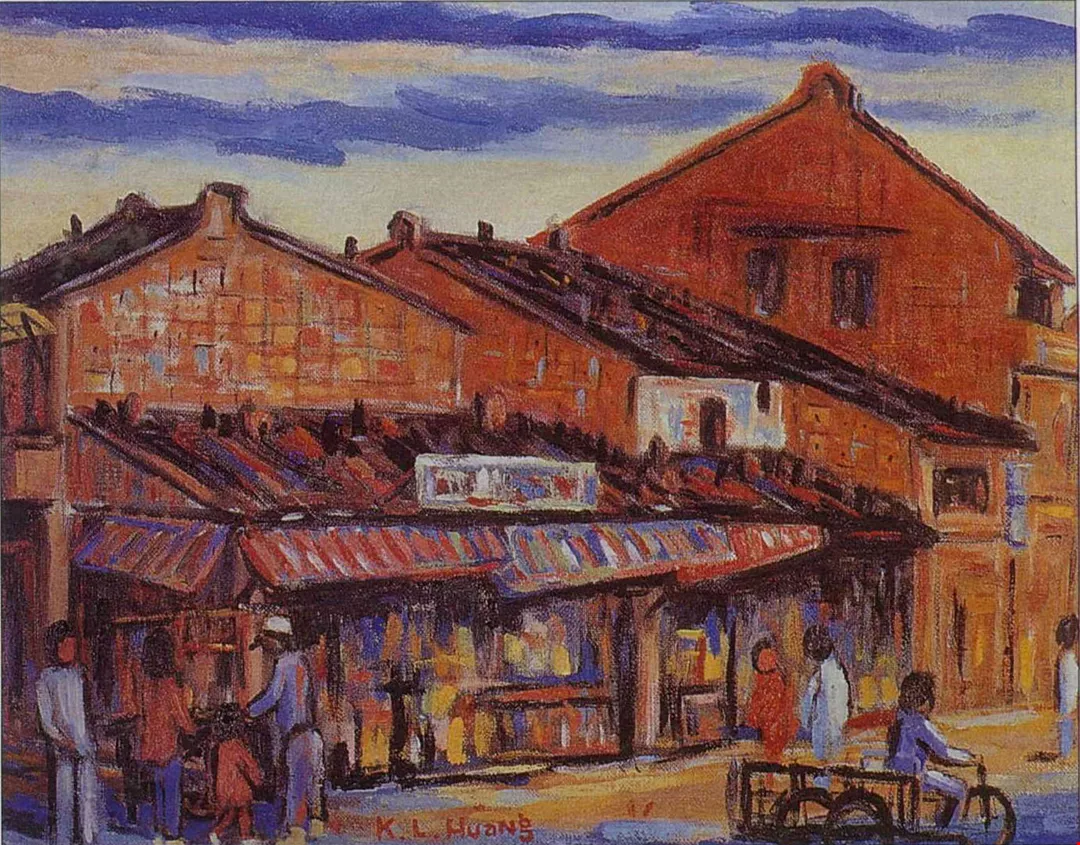
This painting by Huang Kuo-lung is of the Japanese occupation era home o f Ku Hsien-jung. Liao Tien-ting often came here to ask for a small contribution for the poor. (rephotographed by Hsueh Chi-kuang)


@List.jpg?w=522&h=410&mode=crop&format=webp&quality=80)


