Old Streets Battle for Survival
Teng Sue-feng / photos Cheng Yuan-ching / tr. by D.J. Toman
November 1993


What stands out most in the minds of visitors to Spain is the country's sun and historic sites.
what of Italy?"Without question, it's the fashion and the cathedrals!" is the typical response from tourists.
New York, New York. It is the startling contrasts between this town's old and new architecture, and its extremes of prosperity and poverty, that grip one's mind and refuse to let go.
The old architecture of the above places is treated as national treasure and an asset with which to attract tourist dollars.
But in Taiwan, the fate of early residences and quaint old streets is entirely different...
Whenever a road is built, a cultural asset is inevitably destroyed. Perhaps this is stretching the truth a bit.
Nevertheless, from the relocation of Taipei's Lin An-tai traditional family residence, the protests of Sanhsia residents over the fate of the town's old streets, to the pleas by scholars and Lin clan descendants for urban planners to spare the Lin Family Garden in Taichung's Wufeng district, seemingly endless conflicts exist between preservation and development.
The over 200 year-old, 8000 square meter Lin An-tai compound once stood quietly on Taipei's Tunhua South Road. Then, when in 1977 the Taipei city government considered widening Tunhua S. Rd. into a 50-meter boulevard, a controversy erupted over whether the road should yield to the homestead or the homestead capitulate to the road. The road eventually won the battle, and the old home was forced to migrate elsewhere.
In order to put 20,982 beams, 38,093 bricks, and 240,050 tiles back together again in one piece, in 1984 the city government allocated a NT$26.78 million budget and spent a year and one half of time to get the old residence back on its feet at its new location beside Taipei's Sungchiang Park.
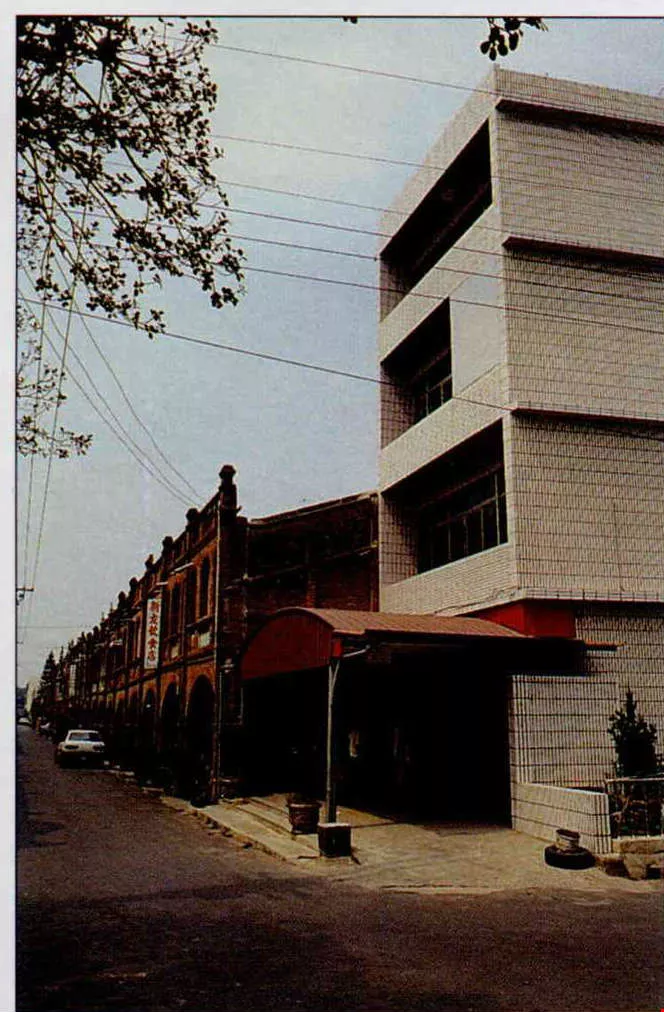
The residents of the old Hukou Street find there is not enough space, and one has gone ahead to build a new home.
Same problem, no answers:
For Taiwan, whose cities are progressively building modern urban avenues, conflicts ignited over preservation versus development are old news. The latest case to attract notice is that of a 200 meter long winding stretch of over 100 old houses along Minchuan St. in Sanhsia. As the ease has bearing over the interests of over 100 households, it is not something that a simple several million dollars can solve.
Sanhsia's Minchuan St. rowhouses are traditional Taiwanese combined shops and residences. Their interior arrangements and unique exterior designs belong to the Hoklo (southern Fukien) architectural style. The buildings' facades combine a baroque style with select Japanese architectural patterns. The quaint yet refined appearance once attracted quite a few tourists.
The point of contention in this controversy is the same old problem--whether to build a road or preserve a historical 80 year-old row of houses. In 1990s Taiwan, where land is money and real estate values continue to soar, who can resist the temptation of land value appreciation?
While it is accurate to call this a conflict of interests, we cannot overlook the position of the residents.
Four years ago, when it was determined that a stretch of the Second Northern Freeway would pass by Sanhsia, and when Sanhsia was chosen as the home for Taipei University, which grew out of National Chunghsing University's Graduate School of Business and Law, one major construction project after another sent the price of real estate in Sanhsia skyrocketing. According to a survey conducted by Tamkang University's Graduate School of Architecture, four years ago the price of land in the old city district of Sanhsia was less than NT$50,000 (US$2000) per ping (36 sq. feet), but now the going rate has gone up eightfold to a whopping NT$400,000 (US$16,000) per ping.
"The housing market has been a bit slower of late, but as long as restrictions on the number of floors which can be built are gradually put into effect, we'll see a rush to build in many places besides Sanhsia," says Mi Fu-kuo, associate professor at Tamkang University's Graduate School of Architecture. Over the last two years, all the old village streets bordering urban areas have faced the ever-present threat of demolition.
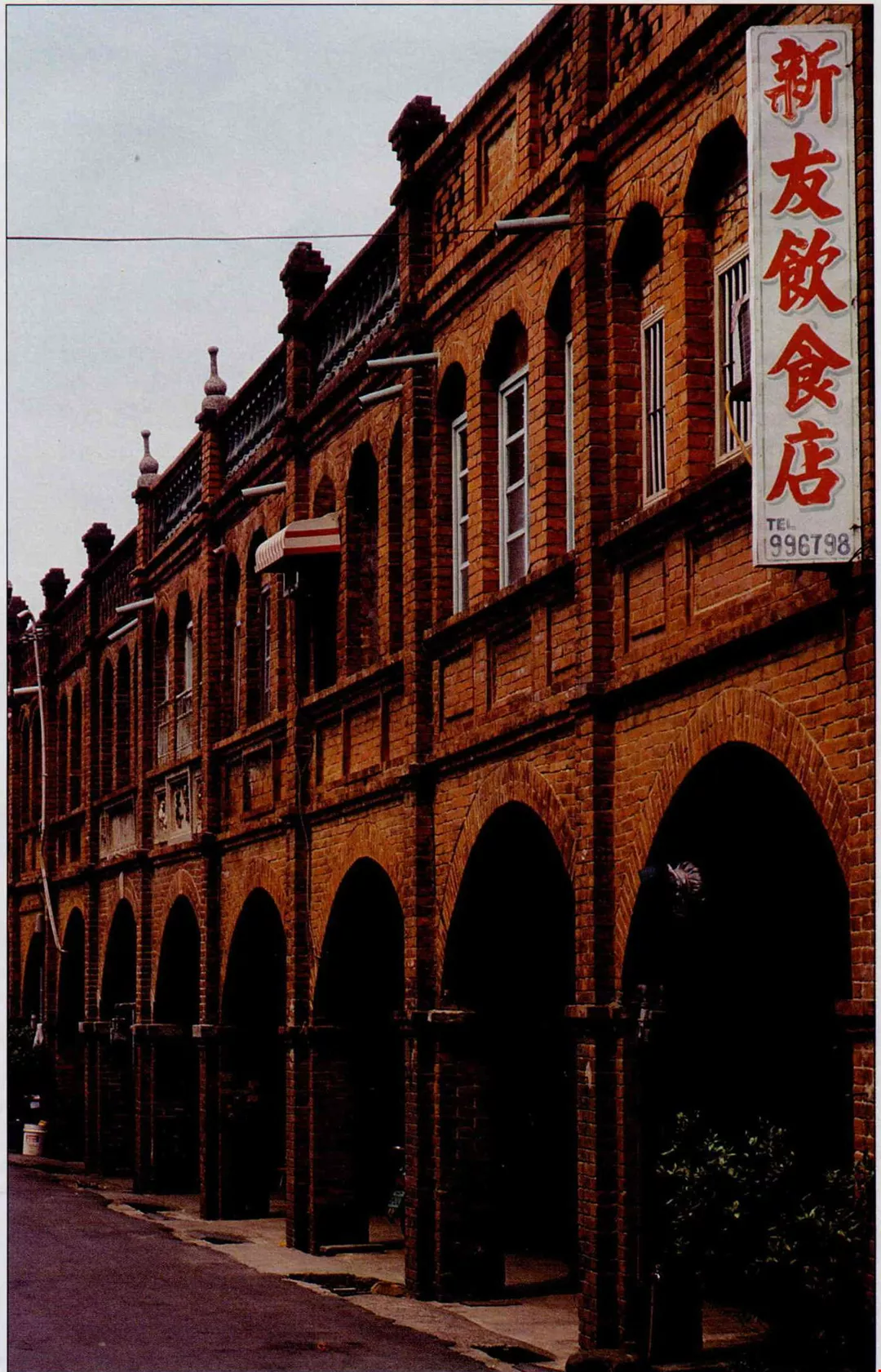
Old rowhouses from the Japanese period still stand in quiet old Hukou Street, imparting a feeling of rhythmic elegance.
My home is not a historic site:
When heavy rain this past May caused the collapse of a dilapidated baroque structure behind Minchuan St., a conflict soon erupted. Fearing that the rickety old houses might collapse and cause human tragedy, residents protested to the government, demanding that historic site restrictions be lifted. White banners of protest were hung out on the streets, and the names of pro-preservation scholars were scrawled on walls, as were accusations that their "insistence on preserving run-down relics disregards the security of people and property."
Facing the intense indignation of local residents, the Ministry of the interior finally succumbed in August and lifted the zoning order, ending Min-chuan Street's one year and nine month stint as a Class C Historic Site.
Now that the inhibiting historic site restrictions have been lifted, has Minchuan St. found its own direction? "The feeling of uncertainty and uneasiness about the future still lingers," says Chen Chun-tse. Chen, an art teacher and graduate of the National Taiwan Academy of Arts, returned to the Minchuan St. home of his ancestors last year and opened a traditional handicraft store there. He says that while the historical site zoning restrictions have been lifted. no one knows when the road will be widened. "What am I supposed to do about my store?" he asks.
Most residents believe that if the old street is razed and the road widened to 15 meters. then their old dwellings can be turned into modern houses. As long as they provide the land and split the demolition bill with the builder, they can have their share of a modern three and one-half story building.
Village representative Chen Ya-tao, who was behind the formation of the Old Street Self-Preservation Committee, says that his family's Romanesque fittings can be re-fabricated at a future "Sanhsia Cultural Village." There are a lot of ways to deal with the situation, and now we can take the time to talk things through. Sanhsia still has a lot of places which can be developed. Sanhsia's real estate is already going through the roof," he says, with more than a hint of optimism.
The "road builders" were victorious over the group of people who wantedto keep the old Lin An-tai compound in its original place. At least the old homestead was able to find new life next to Sungchiang Park. (Sinorama file photo)
The rise and fall of a street:
If real estate bordering urban areas is hot, and Taipei city land is hotter, then the passions over contested urban land run to the boiling point.
Taipei city's Tihua Street, just seven or eight meters wide, is a favorite of culturally minded people and a headache for would-be developers. Like Minchuan Street, Tataocheng, a historic commercial district on the Tamsui River, once played a significant role in Taiwan's 300 year history of development. During the Japanese period, Tihua St., home to numerous western and Chinese style stores, was a golden strip where only the rich could afford to live.
These days, the I km strip known as Tihua St. is home to Taiwan's largest wholesale market, particularly for cloth and herbal medicine. The street gets especially busy around Chinese New Year, when crowds of shoppers and temple-goers clog the street and traffic comes to a standstill. The street's arched passageways, red brick houses, planter fences, and its mixed classical western and modernist architecture leave lasting impressions on those who shop there.
In 1986 the Taipei city government designated Tihua Street as a special district in hopes that, through overall planning and without diminishing the local cultural flavor, preservation and development could go hand-in-hand.
Over two hundred landowners who were asked for their opinions had nothing but gripes to offer. "The structure's been changed, and now the house could topple over at any moment; roaches and rats come and go, it's so unsanitary"; "the brick structural design is no longer in keeping with the needs of modern lifestyles--how is one to repair it?"; "the northern section by the Taipei Bridge has been infiltrated by prostitution, disturbing the peace of the residents"; "Tihua Street is a commercial district, and unless the roads are widened there is no way to resolve the traffic problems caused by the loading and unloading of goods". . . .
Decline is unavoidable, yet Tihua Street real estate is just as valuable as ever. The NT$400,000 per ping price tag of housing is testing the determination of street residents to tear down existing structures. Years ago, residents applied to the Taipei city government's City Planning Commission to turn the street's old structures into 20-story high rises. But due to differences of opinion over the overall development plan, the building license was never granted.
The development of Tihua Street interests more than just Taipei city residents, as even the Japanese have designs on it. Five years ago, when a "Save Tihua Street" movement was started in cultural circles, a Japanese consortium reportedly planned on purchasing the street's building facades at great expense and reconstructing them back in Japan, but the plan was scrapped when opinion in Taiwan came out against it.
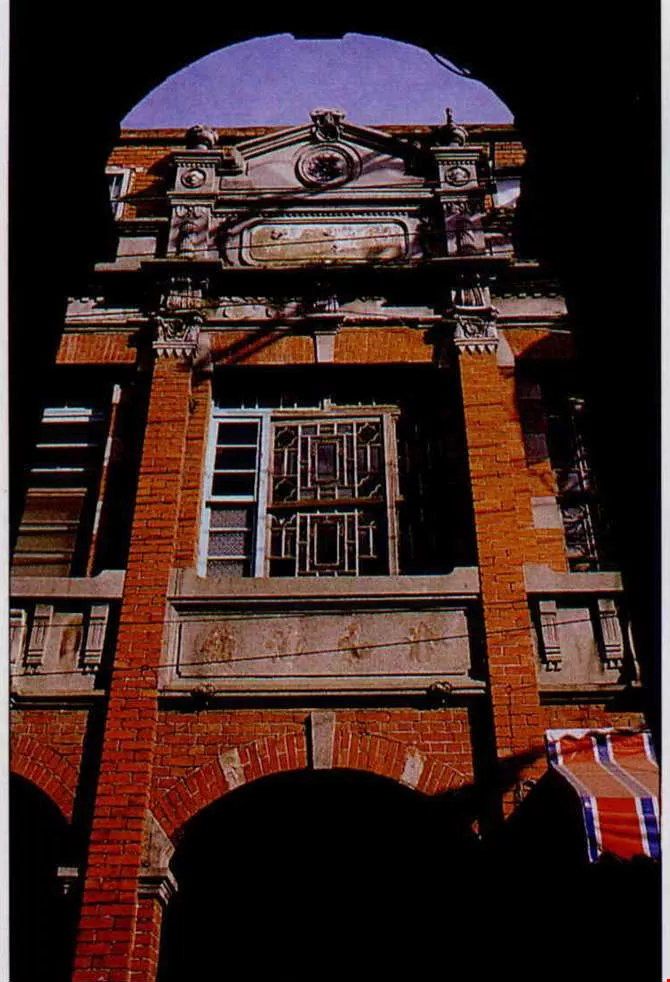
Red brick adorned with detailed baroque patterns afford Taipei residents a unique atmosphere in which to carry out their shopping at Tihua Street.
In search of a new life:
Is there any value in preserving 80-year-old houses? Most local development be sacrificed in order to leave behind cultural assets? And is reconstruction the only way to breath new life into an old street?
Quite a few people have been stumped by the choice between the old and the new.
"At the very root, the problem is that one can not just apply the concept of freezing historic sites to a living community. The defining characteristic of a community is change," says Chung Yuan University Associate Professor Yu Chao-ching. Enlisted by the Penghu county government to survey residents' interest in preservation, after holding over a dozen meetings with Makung's Chungyang Ward residents and nearly two years of failed efforts at compromise among residents, Yu decided to "first discuss the issue of improving public facilities with local residents."
Due to its close proximity to Class A historic site Matsu Temple, Chungyang Ward, in Penghu County's Makung city, was incorporated into a preservation zone in 1984. But professor Yu Chao-ching asks rhetorically that if public facilities in the surrounding area are improved, and if parks, public squares, green spaces, and fire fighting facilities are provided and a community is gradually built, won't property values go up?
"The point is that one cannot measure worth with money alone. The point of development is to benefit life, so if worth is simply supplanted by real estate, then the relationship between the environment and existence disappears," Yu stresses.
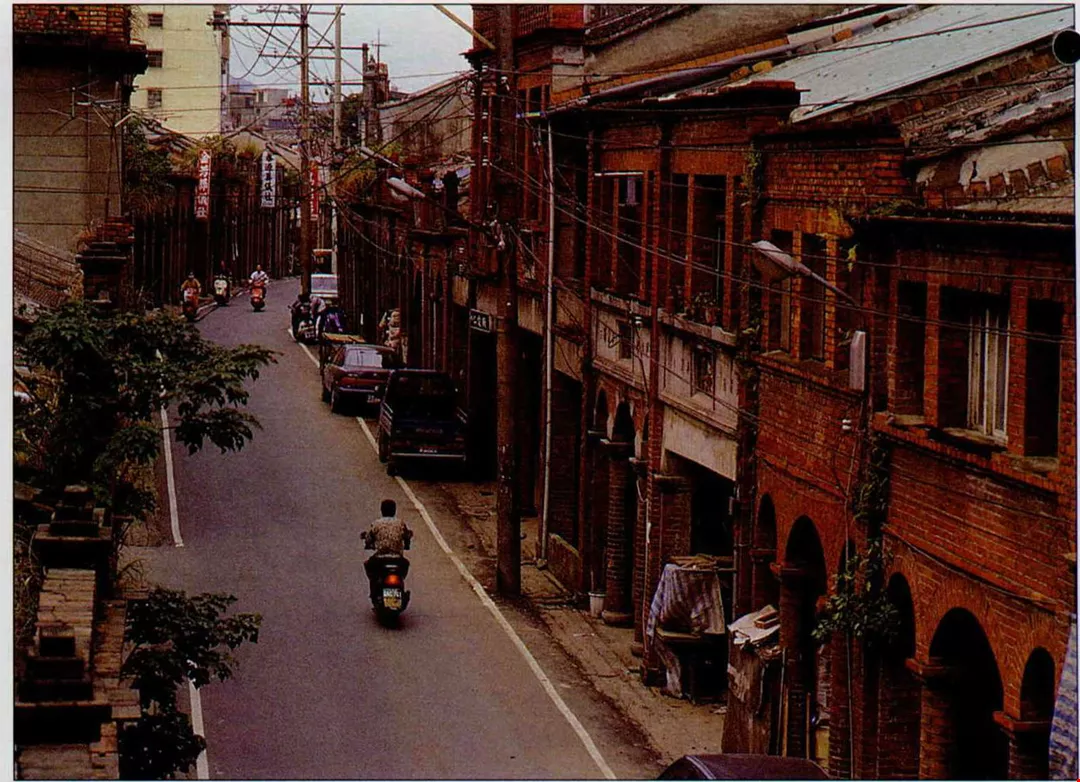
After successfully protesting historic site zoning restrictions, now that quiet has returned to Sanhsia's Minchuan Street, what path shall residents choose next?
A third choice:
Different focuses stand between residents and scholars. For the majority of residents of Minchuan and Tihua streets, preservation and development are two polar opposites between which they play out an endless tug-of-war. But what is the third choice other than these two extremes?
The setting sun glows on Tamsui's ancient, history-rich Chungcheng Road. The port began commerce in the late Ching dynasty, opening Tamsui's door to the outside world. Chungcheng Road Developed along the river, once served as a lifeline or Tamsui residents. The value of the road does not lie in its buildings, but rather in its practical community life. Tamsui's glorious sunsets and quaint old streets and houses make it a tourism gold mine popular with city visitors on weekends.
"As all these new things appear one after another, where does Tamsui stand?" township chief Chen Chun-che asks himself. People come to Tamsui to see old things, and could anything new which Tamsui comes up with compare with the bustling eastern section of Taipei? Given recognition on the part of most residents that refurbishing of town streets doesn't mean the simple widening of roads, Chungcheng Rd. residents have determined not to let themselves become pawns in the real estate speculation game.
Tamkang University students and faculty, who have taken a personal interest in the renovation of the old town streets, established a Tamsui Community Workshop on the old street. They are set to help residents relocate the bazaar area. This way, Fuyou Temple overlooking the Tamsui River can see Kuanyin Mountain once again and Tamsui can become a cultural settlement.
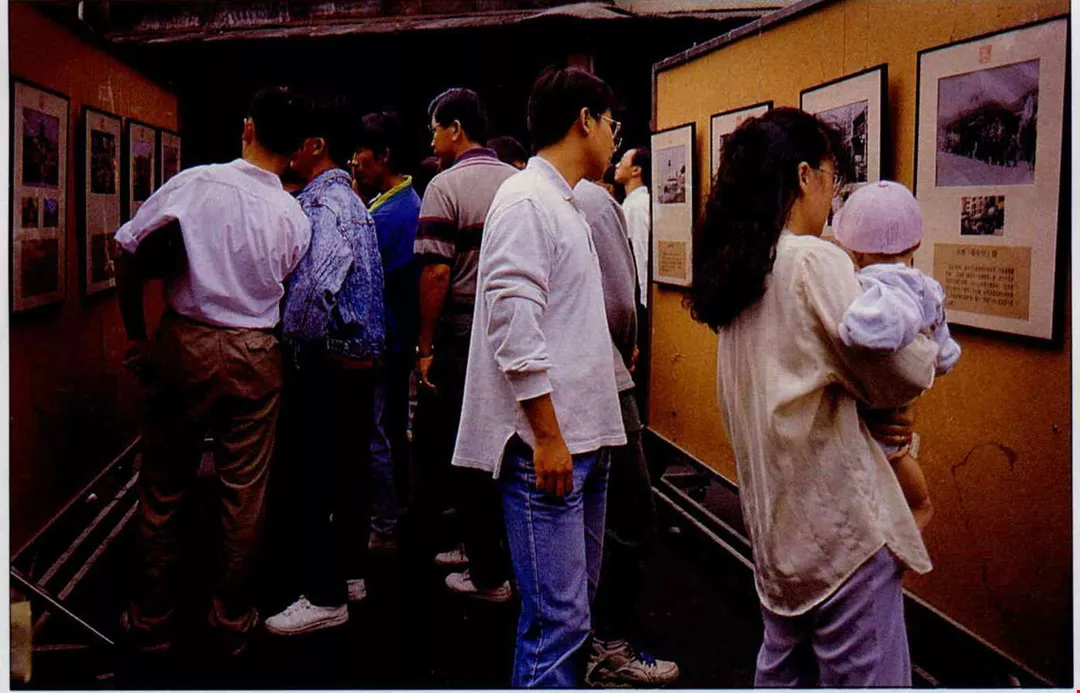
The Tamsui cultural bazaar is open on weekends and holidays: Visitors can take in the sunset by the river bank after a day at the market.
Learning a thing or two abroad:
It is hard to say who makes more economic sense, the preservationists or developers.
Granted, not all residents in culturally rich areas oppose preservation, especially those who have seen the economic benefits that successful preservation was brought in other places around the world.
The Executive Yuan's Council for Cultural Planning and Development allotted special assistance funds for the people of Chungyang Ward and Hsiyu Township's Erkan settlement on Penghu island this past August. After traveling to Japan to learn how local residents in places such as Kawagoe, Nara and Kurashiki made efforts to gain protected status pay off, all agreed that Taiwan could stand to learn a lesson from Japan's bottom-to-top experience.
Many of Japan's cities and villages resemble Taiwan's in that decline can be seen in densely populated urban areas and towns. After years of effort, residents of Okayama Prefecture's Kurashiki teamed up with the government over river dredging, street beautification, and building restoration. As a result, this textile town became a model for the preservation of Japanese settlements, attracting four million tourists in one year.
Lin Lin-hsiang, a Chungcheng Ward representative, hopes to get residents of such historic settlements as Tihua St., Chiufen, Tamsui, Meinung, and Lukang together next year for a national conference of old neighborhoods. The purpose of such a con ference, he says, would be "to allow the people who live within them to feel as if they have something to show off, and to bring everyone together to preserve these neighborhoods out of pride for them. "
Japanese scholar Muramatsu Teijiro noted at a conference sponsored by the Council for Cultural Planning and Development that accelerated post-war modernization in Japan brought destruction to some, old buildings and traditional streets, but since the 1960s, when the preservation movement took off in Japan, protection of cultural assets began to quicken. As of July 1990, Japan had 29 streets tagged for preservation.
Even more important, Muramatsu Teijiro stresses, is the concept of active regeneration of old streets. Since wherever people live there is bound to be destruction, preservation means creation, not freezing.
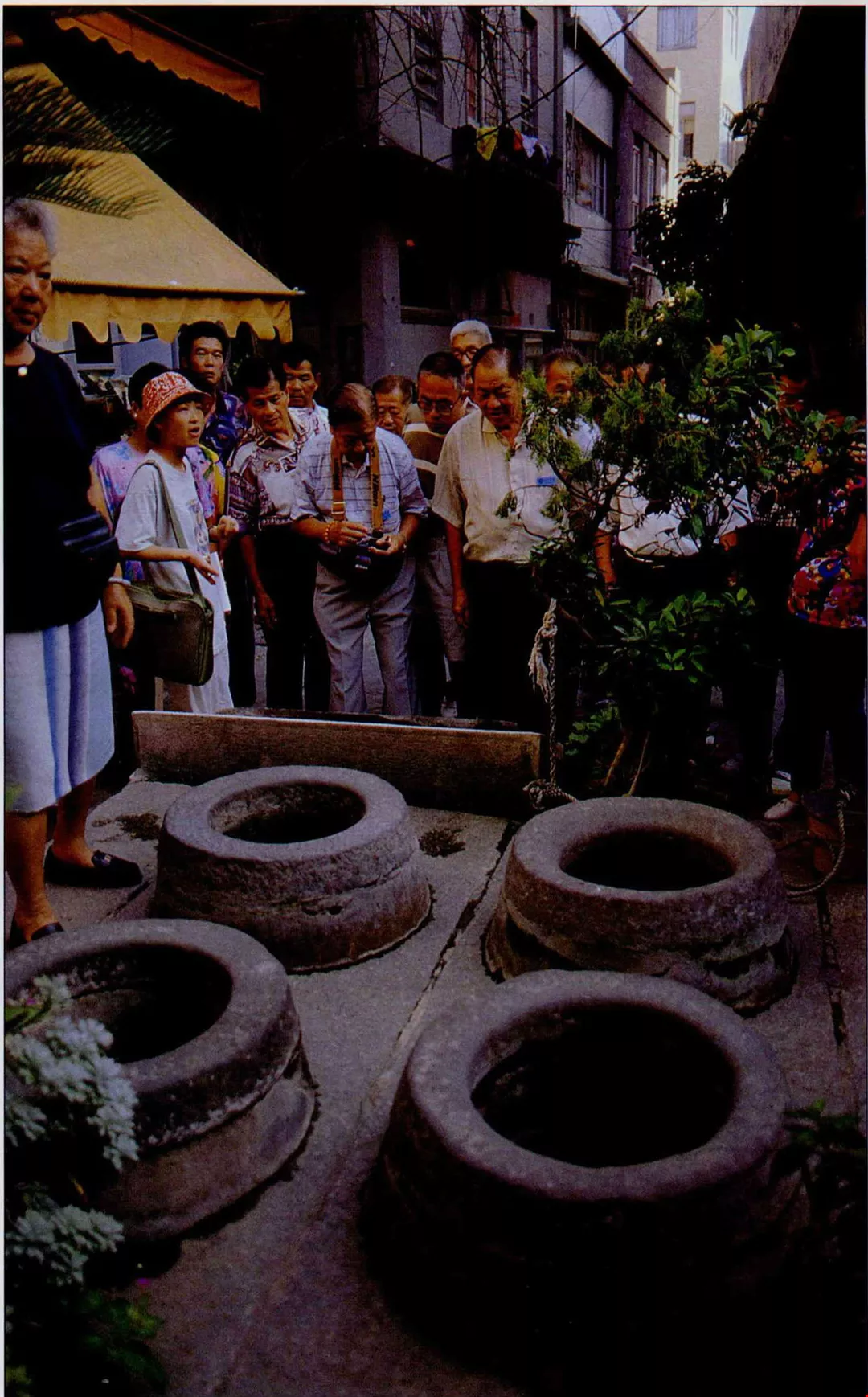
A popular Class A historic site, the "Four-eyed Well," lies just off Chungyang Street in Makung city, Penghu County.
Laying down the ground rules:
Japan can do it, but what about Taiwan? It is commonly believed among many scholars that as long as the government can lay down the ground rules, all neighborhoods which meet the conditions for protected zones should receive assistance. Of course, if the people are made to feel as if they are being taken advantage of, then it is clear they will not be very accommodating.
Still, no matter how accommodating the people are willing to be, the key question is how to put ideas into practice.
"These days it's easy to build a road but hard to protect an old alley because protection carries a cost," says Chungyang Ward resident Lin Lin hsiang. The costs he alludes to are that the government must spend more money and residents of the protected area must all chip in to maintain their old homes. At its root, the problem is not that the residents of protected zones are unwilling to keep the homes of their ancestors, but rather it is the stalling of governing departments who promise to "go back and look into the matter" which keeps them from getting a clear idea of the long-term prospects.
The architecture department of Chung Yuan University set up a work station at Tihua Street to facilitate communication with local residents and probe for their opinions. After years of stalemate between would-be preservationists and developers, the immediate reaction of some residents was "what on earth is the government doing?"
Whenever problems arise surrounding the fate of a cultural asset, so that preservation must be balanced against development, the question for most people is: can the highest authorities in charge of cultural administration play their part in timely fashion to resolve the conflict?
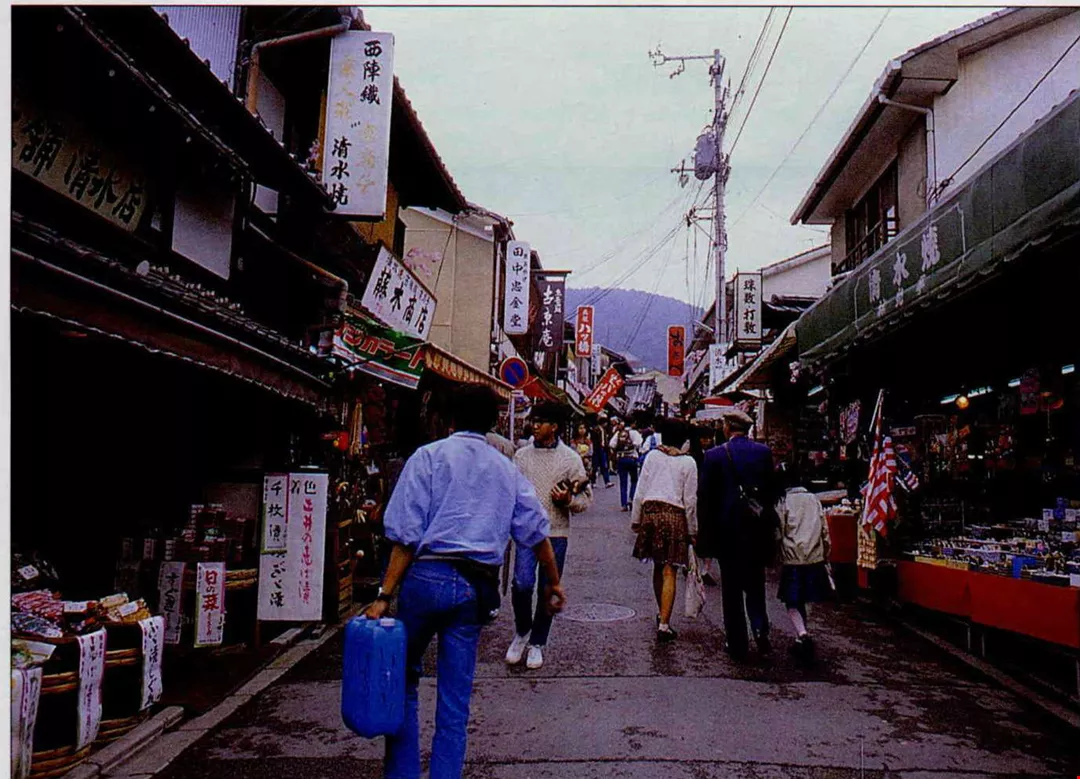
On the old street winding down from Kyoto's Kiyomizu Temple, all kinds of treats and handicrafts are sold. Visitors would have no trouble Spending an entire day here.
Fundraisers needed:
Hsu Yu-chien, chairman of the architecture department at the Huafan Institute of Technology, surveyed manpower distribution at civil affairs authorities throughout Taiwan. After taking a close look at the situation, Hsu acquired great sympathy for civil affairs departments."The provincial Department of Civil Affairs, which oversees all Class B historic sites, is staffed by only two people, plus it must also take on election duties. At the local level there is normally just one person in this position."
"Now the cultural policy of the central authorities should be under attack," Hsu Yu-chien says. Nothing can be accomplished without the basic ingredients, and budgetary and planning departments must have flexibility when assessing the restoration of historic sites. Legislators should also support the government's cultural budget, not hack at it at will, as happened to half of the Ministry of the Interior's cultural assets work budget, or a full NT$250 million.
The price of preservation is high, the difficulty tremendous. "The government must be prepared to lose money at first," stresses Hsu Yu-chien.
"Actually, as everyone knows, the key is getting all responsible departments together over the issue," says Chao Wen-chieh, chief of the Historical Site Preservation Section at the Ministry of the Interior's Civil Affairs Department. The government is highly concerned with cultural development, but the problem at this time is fundraising, which calls for assistance from budgetary departments.
Taiwan is certainly not lacking for money, and historical assets should by no means be assigned to five people in the Ministry of the interior's Historical Site Preservation Section. One cultural figure says, "Popular forces can participate at every step." There are plenty of outstanding fundraisers among the people, so "all the government has to do is ride in on their coattails."
Strolling along Taiwan's old streets, what do we see? Billboards filled with real estate advertisements with words like "blue sky, green fields, user-friendly design, century-old village." Will tearing down old houses to make way for high rises really give us the quality of life we seek?
[Picture Caption]
p.6
The residents of the old Hukou Street find there is not enough space, and one has gone ahead to build a new home.
p.7
Old rowhouses from the Japanese period still stand in quiet old Hukou Street, imparting a feeling of rhythmic elegance.
p.8
The "road builders" were victorious over the group of people who wantedto keep the old Lin An-tai compound in its original place. At least the old homestead was able to find new life next to Sungchiang Park. (Sinorama file photo)
p.10
Red brick adorned with detailed baroque patterns afford Taipei residents a unique atmosphere in which to carry out their shopping at Tihua Street.
p.10
After successfully protesting historic site zoning restrictions, now that quiet has returned to Sanhsia's Minchuan Street, what path shall residents choose next?
p.12
The Tamsui cultural bazaar is open on weekends and holidays: Visitors can take in the sunset by the river bank after a day at the market.
p.13
A popular Class A historic site, the "Four-eyed Well," lies just off Chungyang Street in Makung city, Penghu County.
p.14
On the old street winding down from Kyoto's Kiyomizu Temple, all kinds of treats and handicrafts are sold. Visitors would have no trouble Spending an entire day here.
p.15
Italy takes the prize for the most historic sites per square kilometer. Are ancient buildings better off in Italy than in Taiwan? This photo was taken in Florence.


@List.jpg?w=522&h=410&mode=crop&format=webp&quality=80)


