Huang Liang-hsun Leads Pili Puppetry on a New Path
Kobe Chen / photos Jimmy Lin / tr. by David Mayer
January 2015


Glove puppetry has long been among the brightest stars on Taiwan’s cultural scene. And the glove puppetry that everyone knows and loves the best is Pili puppetry, successor to a style created in the early 20th century by Huang Hai-dai. Regarded by many as a national treasure, Huang handed the art down to his son Huang Chun-hsiung, who took the ball and ran with it, creating puppet characters known to virtually everyone in Taiwan, such as the Man Behind the Mirror and the Confucian Swordsman Shi Yan-wen. Then the art form continued into a third generation, and was developed into the Pili style, under the able stewardship of the brothers Chris and Vincent Huang. Through it all, tradition survived even as new wrinkles were introduced over the years.
The torch began making its way in 2014 into the hands of a fourth generation as 29-year-old Huang Liang-hsun stepped into the family tradition. He is currently in charge of creating the puppet animation for The ARTI: The Adventure Begins, a 3D animated film scheduled for theater release during this year’s Chinese New Year holidays that promises to give glove puppetry a whole new look.
Huang Liang-hsun, with his long, wavy locks, black-framed glasses, and stylish way of dressing, is hardly the sort that one would associate with traditional glove puppetry.
Born in 1985, Liang-hsun liked to watch glove puppet shows on TV, but he describes his relationship to his family’s Pili puppetry as “awkward.”
“For me,” says Liang-hsun, “Pili puppetry is like a relative that I haven’t seen in a very long time. There’s a closeness, to be sure, but there’s also a certain lack of familiarity.”
Though Pili puppetry is a family tradition, Liang-hsun’s father Chris had never expected his son to take over the reins. Young people, after all, are always testing the limits of the possible, and challenging the status quo. And young Liang-hsun had never shown any real interest in glove puppetry.
But then, as a student in the Department of Biochemical Science and Technology at National Taiwan University, Liang-hsun started a rock band and came to notice that almost all of his favorite indie rock groups in Iceland, while heavily influenced by British music, nevertheless performed in their own language and wove elements of their own culture into their songs.
In Taiwan, despite no lack of world-class talent, indie groups haven’t had much impact, mainly because they’ve turned their back on their own culture and history.
“An artist must not become divorced from his own cultural milieu. Imitation alone is just not going to move people,” opines Liang-hsun. The process of writing rock songs and emulating Western rock culture prompted Liang-hsun, in the end, to redirect his focus back upon his own Taiwanese culture. Once he did so, he suddenly realized that the glove puppetry his family has passed down through generations is a quintessential and enduring element of bedrock Taiwanese culture.
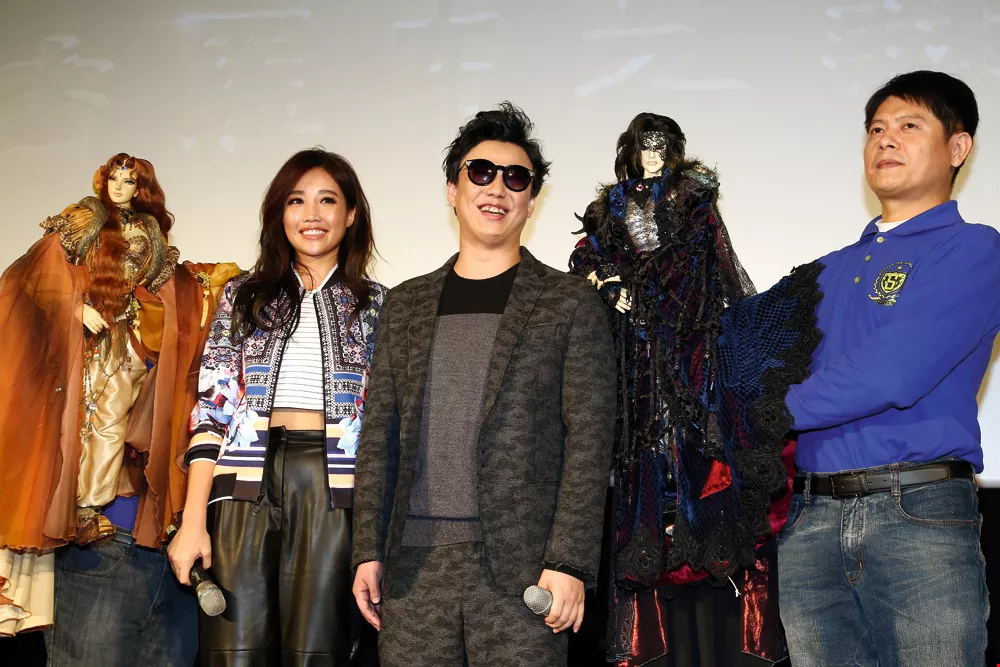
It is a longstanding tradition in glove puppetry to have just one person voice all the lines. But Huang Liang-hsun has broken with precedent by hiring singers A-Lin and Ricky Hsiao to work as a team.
Glove puppetry is very much a part of everyday life. After televised glove puppetry rocketed to popularity, puppet characters such as Shi Yan-wen, Su Huanzhen, and Yi Ye-shu became big stars. For the past 30 years, they’ve been a shared memory for generations of Taiwanese TV viewers. Even people who never really got into puppetry shows cannot but be familiar with the names of these kick-butt heroes. More than mere roles in a show, they are full-blown features of the cultural landscape—the very cultural landscape that Liang-hsun was trying to get in touch with, in fact. And so his artistic impulse turned toward the world of glove puppetry.

The adoption of 3D cinematography and animation has resulted in a unique new form of animated puppetry that moviegoers are sure to find intoxicating.
After finishing his military service, Liang-hsun took a job at Pili, which came as a pleasant surprise for his father Chris Huang. It was nice, of course, to have a successor, and he was also hoping his son might take puppetry in a new direction.
In 2009, the movie Avatar scored blowout box-office success across the globe with its stunning 3D special effects. Chris Huang, who had spent his whole career seeking to tell martial arts tales in an aesthetically pleasing way, got a hankering to make a glove puppet film in 3D.
The company had broadcast over 2,000 Pili puppetry shows on television without interruption since 1985, and in getting the ball rolling at the very beginning, he had broken away from the style long practiced by his father.
Chris Huang explains: “If glove puppetry is to develop, it must progress with the times, keep up with technology, and innovate continually. That’s the only way it can create new cultural value and breathe new life into tradition. The Pili style was a huge innovation 30 years ago, but we can’t stop now.” Describing glove puppetry as the great love of his life, Chris says he decided to put his faith in the next generation and completely hand over the reins so that the art form could keep in step with the times.
Liang-hsun adds: “All he said was that he wanted to make a 3D film. He had nothing to say about anything else—he just left it all up to me.” Chris is directing the film, but Liang-hsun is in charge of all the rest, no questions asked. This level of trust is not just a matter of family ties, however; Liang-hsun has earned it.
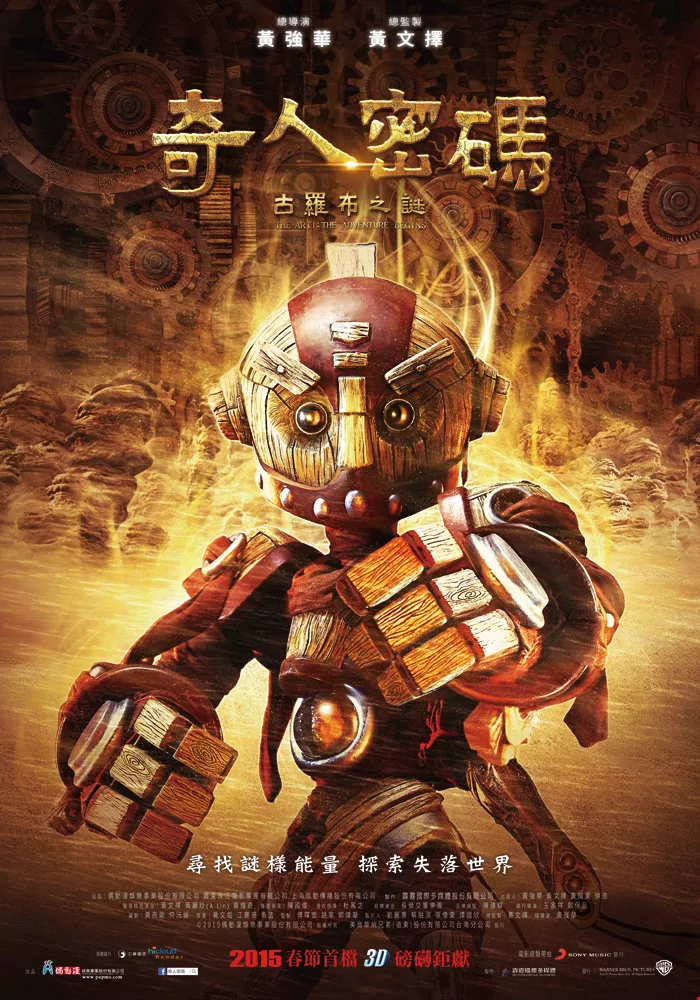
The ARTI: The Adventure Begins, scheduled for theater release during the Chinese New Year holiday, seeks to take glove puppetry to a whole new level.
The firm has spent NT$350 million in producing The Adventure Begins, employing a production staff of 200, all of whom—including the screenwriters, film crew, editors, animators, postproduction people, voice talent, and audio postproduction—are from Taiwan. And the one leading this huge team is not the 30-year veteran Chris, but the newcomer Liang-hsun, who’s been in the business for less than a year.
Having never studied cinema, animation, or glove puppetry, Liang-hsun got tangled up in the tug-of-war between tradition and innovation. People bombarded him with all sorts of recommendations: “It’ll be good for box office if you go with characters from the Pili series,” “One puppeteer has to handle all the roles for it to be real Pili puppetry,” and so on. But Liang-hsun was firmly convinced that the only way to change was to challenge the status quo. He explained his way of thinking, successfully persuaded his father and other veterans of glove puppetry, and earned trust within the company.
And precisely because he came to the task unburdened, he has even had the audacity to dismiss the idea that the lines in glove puppetry must all be spoken in Taiwanese, which has always had “sacred cow” status.
Not only has the language always been Taiwanese, it’s been a classical version of it, no less, that is grammatically different from the Taiwanese that people speak today. Before Liang-hsun came along, the biggest change anyone ever made was to throw in a few modern expressions; it has still been de rigueur to go with elegant, classical Taiwanese.
Liang-hsun feels that glove puppetry should closely reflect contemporary life, and most people in Taiwan switch between Mandarin and Taiwanese depending on who they’re talking to and what the situation is. Accordingly, to his way of thinking, the “Taiwanese-only” stricture should be ditched.
In making The Adventure Begins, the voice actors have been required to do every single line in both Mandarin and Taiwanese. After that, it is up to the production staff to decide which language to use in each scene on the basis of the storyline.
Because the movie is being filmed in 3D, the puppets have been made bigger, with more delicately defined features, and the costumes are hemmed in at the waist. All these changes have made the puppets more lifelike, as do the moving body parts, including the legs, the arms, and even the eyelids and eyelashes. And rather than using the Pili characters of the past, the entire cast in this movie is composed of “newcomers.” Meanwhile, the company has made liberal use of Taiwan’s deep pool of animation talent to meld puppetry scenes filmed on actual location with animation scenes. The result is something utterly new that the team has taken to calling “puppet-mation.” In the process, they hope to redefine the possibilities of glove puppetry.
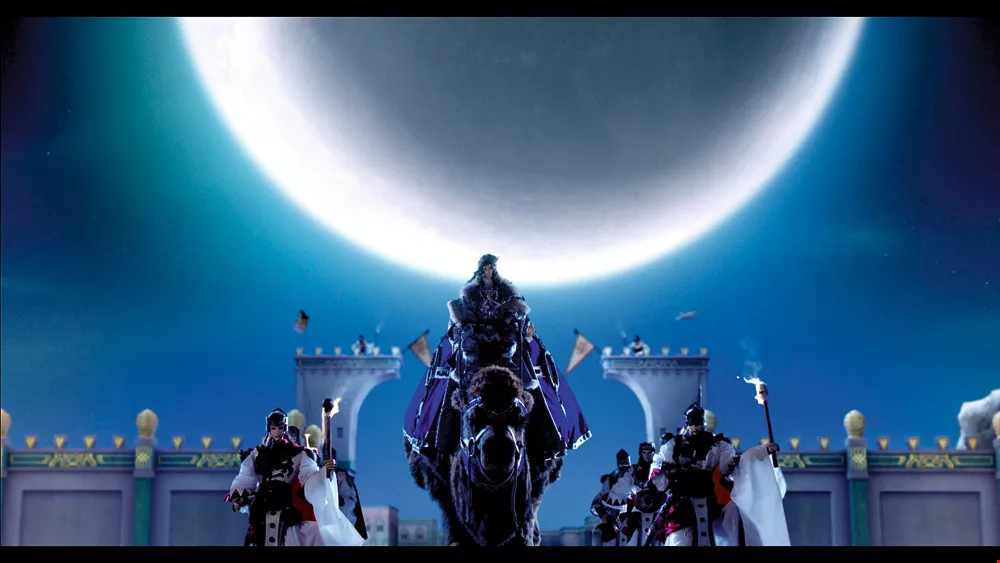
The ARTI: The Adventure Begins is set in the mysterious kingdom of Loulan. In its treatment of fictional history and other elements of fantasy, the film is unlike anything seen before in glove puppetry.
From form to content, everything has been seriously remade in The Adventure Begins. For a corporation, innovation is necessary to survival, but for Liang-hsun, there’s also a deeply personal parallel between his own life and the movie’s plot.
The storyline of The Adventure Begins revolves around Zhang Mo and his wooden puppet by the name of ARTI, which is both machine and sentient being. To be able to move, as the story goes, it relies on a remarkable power source. The problem with this power source, unfortunately, is that it is gradually depleted with the passage of time. As the power source runs down, ARTI loses its power. Zhang Mo therefore strikes out on a journey to the mysterious kingdom of Loulan in search of more power.
Lead character Zhang Mo is a descendant of the ancient Han Dynasty official Zhang Qian, a real historical figure who served on China’s western frontier and was at the forefront of interactions between East and West. Zhang Mo does something similar in the movie, acting as an intermediary between the kingdom of Loulan and the people of Lop. And it just so happens that this is much the same position as Liang-hsun finds himself in.
Whether intentionally or not, Liang-hsun has woven his own situation into the life story of his lead character: a young man who is called upon to carry on the unfinished business of his forebears, and must set off to find a new life force that will keep the family line flourishing. For Liang-hsun, much like his protagonist, has needed to combine tradition with inventiveness to blaze a brand new “cultural silk road” of his own.
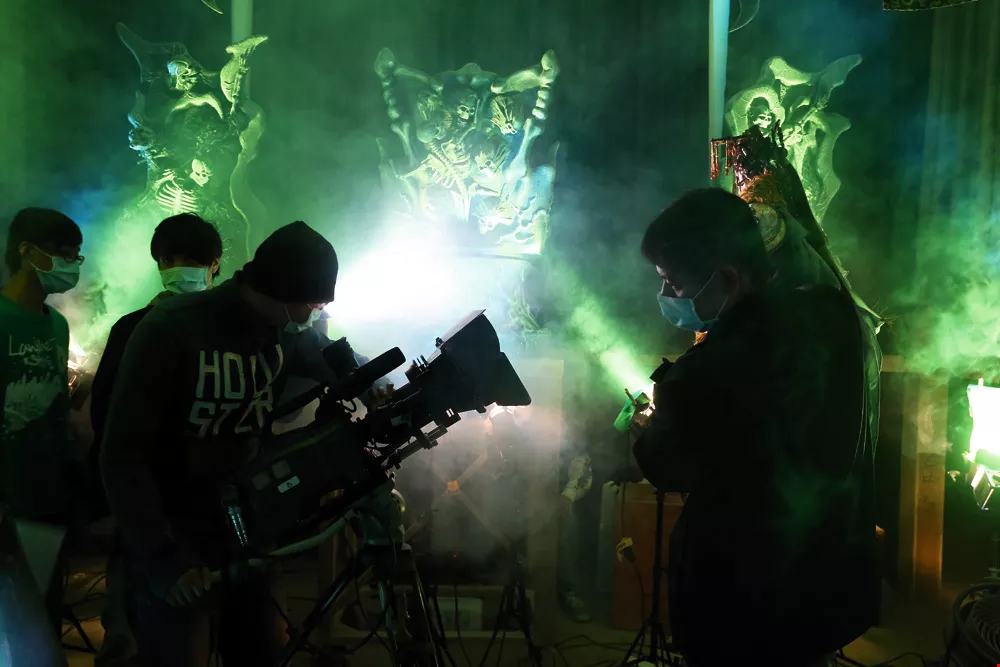
Veteran puppeteers team up with lighting and camera crews at Pili International Media’s TV studio in Yunlin County to film glove puppetry shows.
When he first got involved in the production of The Adventure Begins, Liang-hsun was only doing screenwriting, but the manager in charge of the animation staff wasn’t doing satisfactory work, so Liang-hsun had to take over.
He found that the pool of animation talent in Taiwan, though very large, was highly dispersed, with lots of tiny companies and freelancers who could not possibly take on a huge production. For this reason, most producers of Taiwanese films up to that point had always contracted animation out to providers based in South Korea, Japan, and mainland China. Taiwanese animators could only take on small projects, and for that reason were never able to develop a full-fledged value chain. Liang-hsun, however, rounded up just about every single animator in Taiwan for his undertaking in a bid to ensure a locally made film.
It took about nine months to film The Adventure Begins, but postproduction lasted three years—a whole year longer than originally expected. Says Liang-hsun: “The director [Chris Huang] was very demanding. During postproduction, we’d ask him what we should do with a certain scene: Add some falling boulders? An explosion? Or falling leaves? And he’d just say ‘ok,’ meaning that he wanted all three. This naturally slowed things down quite a bit.” But with such exacting requirements regarding visual impact, and such tremendous attention to detail, expectations are that the movie will be quite impressive. Liang-hsun chuckles that his postproduction work probably tied up all the animators in Taiwan and forced all other filmmakers to shut down animation work for the duration.
By changing with the times, glove puppetry has continually broken free of its own internal limitations while simultaneously creating new looks for the art form, and giving audiences more to choose from. Martial arts heroes dominated the glove puppetry of the past, and now puppet-mation has brought something totally different to the fore.
It will be interesting to see whether Huang Liang-hsun, as the latest successor to the family’s puppetry tradition, can steer glove puppetry onto a new “silk road” to success.

@List.jpg?w=522&h=410&mode=crop&format=webp&quality=80)


