Old Traditions, New Creativity
Dawncake’s Brilliant Gamble
Liu Yingfeng / photos Jimmy Lin / tr. by Chris Nelson
October 2013


Miyahara Eye Clinic doesn’t take patients anymore, and you can no longer make a withdrawal at Taichung Fourth Credit Cooperative. So what’s drawing so many people to Taichung’s old business district?
The answer is Dawncake, a firm that’s had a foothold in Taichung for a decade.
At a street corner not 100 meters from Taichung Railway Station stands a four-story building with a red-brick arcade and a sloping, sapphire-blue glass roof.
Above the Baroque-style columns of the front entrance, mottled characters reading “Taichung City Health Bureau” are faintly visible. Pushing through the main doors, you see sunlight shining down on floor tiles arranged in the form of “double happiness” characters, illuminating the airy interior. Restored by Dawncake, the old Miyahara Eye Clinic, with its mixture of splendid retro styles, is breathing new life into the long declining old business district adjoining Taichung Station.
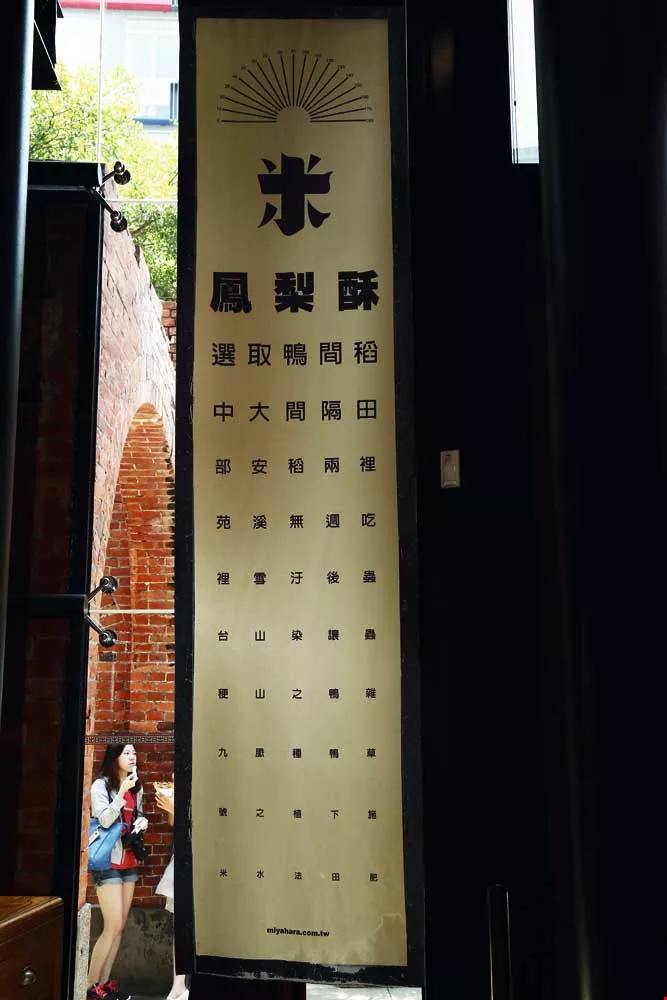
Dawncake has its own retailing style, with emotional marketing that blends local culture with historical memories.
Taichung is a stronghold of bakeries known for pineapple cakes and sun cakes. But Dawncake, also from Taichung, took the road less traveled, building its business on Western cheesecakes.
In 2000, founder Lai Shufen went to Japan to study pressed flower craft. After returning to Taiwan, she opened a workshop in Taichung to teach flower pressing, while at the same time running a teahouse selling light refreshments with afternoon tea. Little did she realize that one of her desserts, Green Tea Mountain Yam Cheesecake, would become a hit, and she decided to close her workshop and concentrate on running her teashop. In 2002, she rented a new shop next to the green strip alongside the National Taiwan Museum of Fine Arts, naming it Dawncake.
Dawncake chairman You Jie, in charge of molding the Dawncake brand image, used to be a public servant. At age 29, he set aside his secure lifestyle and went to the US to study oil painting and jewelry design. After coming back to Taiwan, as fortune would have it, he met Lai and became a partner at Dawncake.
The other key member of the Dawncake team that year was company general manager Weng Lifen, just 22 years old at the time. She joined Dawncake after studying restaurant management at National Pingtung University of Science and Technology. This team of novices was making creative use of localness in its products long before Taiwan’s “cultural and creative” craze burgeoned.
At the end of 2003, they opened their second shop: Dawncake Monastery. The tiny shop displays pictures of monasteries, there are pews for seating, and the employees wear grey monastic robes, giving the shop a medieval European air.
Elements of local culture such as tea trade bills and native flora and fauna are all essential to Dawncake’s designs. Full of local flavor, the designs make Dawncake’s products great gifts, fulfilling the team’s philosophy that “more local is more international.” “We love to play around. Ten years ago, when nobody understood ‘cultural creativity,’ Dawncake was already into it,” says Weng.
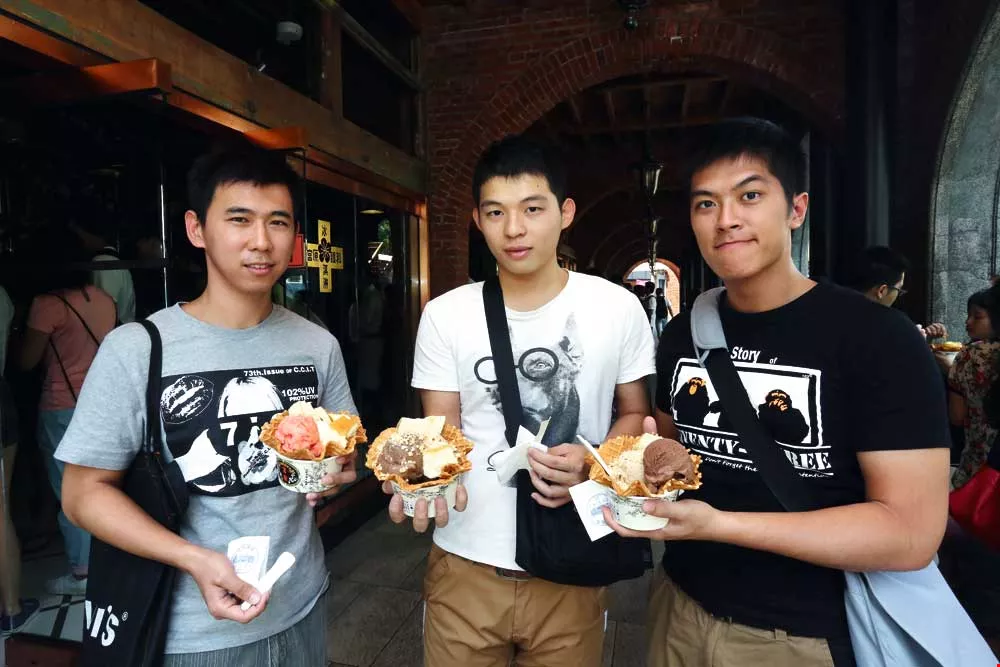
Dawncake’s pâte de fruits, and chocolates adorned with prints of native plants, are highly popular. Many customers come from afar to try their signature ice cream.
Beyond marketing and packaging, they also researched flavors. Always a step ahead of its competitors, Dawncake developed Taiwan’s first pineapple cakes made from an indigenous variety of pineapples back in 2006.
Weng says that since cheesecake has to be stored at low temperatures, it’s not suitable as a souvenir. So Dawncake began developing pineapple cakes for customers to take home with them.
Opting out of traditional methods, Dawncake experimented with indigenous pineapple varieties. After going through some 300–400 kilograms of failed product, they finally found the rather tart and fibrous Kaiying No. 2 pineapple best suited for pineapple cakes.
“If you don’t know Chanel No. 5, you don’t know perfume; if you don’t know Kaiying No. 2, you don’t know pineapples. To pineapple farmers, Kaiying No. 2 is the real deal.” This perception, also a snappy ad slogan, helped them dress up their pineapple cakes fashionably, and the indigenous pineapple fever sweeping Taiwan helped drive Dawncake’s sales to new heights.
In 2010, this playful, imaginative team boldly extended their creativity to the renovation of old buildings. Dawncake set its sights on the Miyahara Eye Clinic, near Taichung Station, as a location for another new shop. But this decision didn’t go over very well with outsiders.
Weng explains that the district where Miyahara Eye Clinic was located was once Taichung’s most prosperous. During the Japanese era, the Japanese government intended to build what’s now Taichung’s Central District into Taiwan’s Little Kyoto. Because of the neighboring train station, back then there was a cluster of commercial buildings such as the Lai Lai and Far Eastern Hotels; old local shops like Sunbooth and Wani also made their fortunes here.
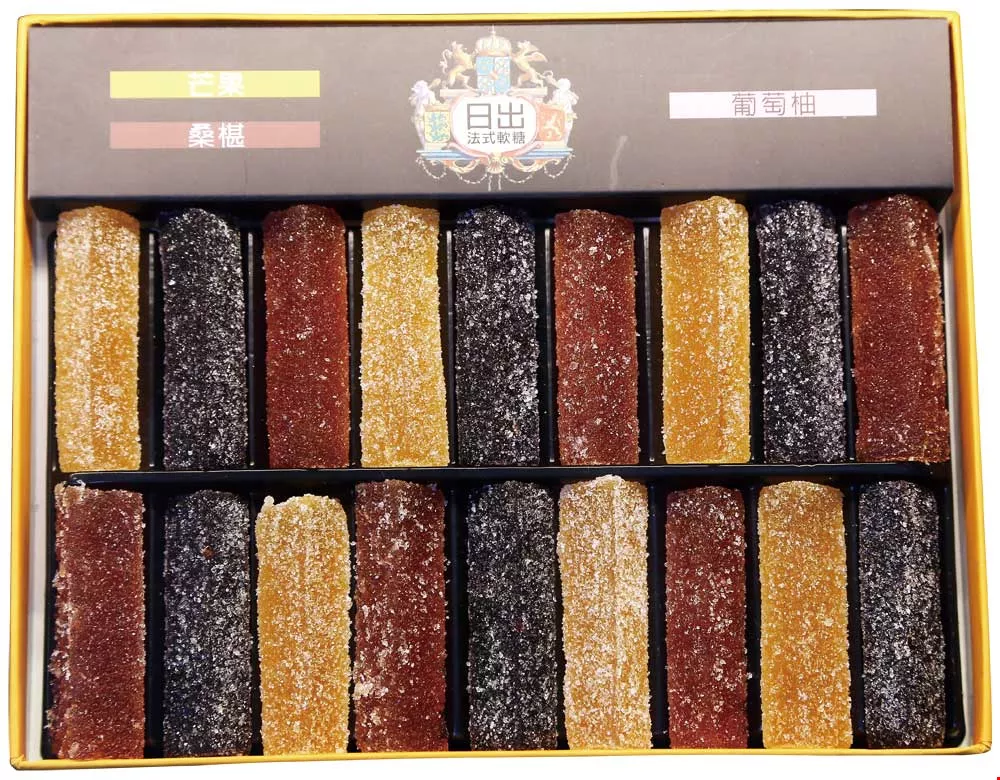
Dawncake’s pâte de fruits, and chocolates adorned with prints of native plants, are highly popular. Many customers come from afar to try their signature ice cream.
The station-front community aged with the passage of time. As people and shops gravitated to Taichung’s 7th Redevelopment Zone, few have been willing to set up shop downtown in recent years. “When people heard that Dawncake was preparing to open a shop there, they laughed at us as if we were crazy,” says Weng.
Yet to the Dawncake team, this crumbling district was chock full of historical memories. “We want to revive the Central District!” Exclaiming this seemingly naïve wish, the Taichung-born team bought the eight-decade-old Miyahara Eye Clinic, and started the first steps of refurbishment.
Following the refurbishment, the Miyahara Eye Clinic reawakened.
Built in 1927, Miyahara Eye Clinic was founded by Takekuma Miyahara, former member of the advisory prefectural council and administrator of Taichung Hospital. In 1929, he quit his post as hospital administrator and opened Taichung’s first eye clinic in the prosperous quarter in front of Taichung Railway Station, now the intersection of Zhongshan Road and Lüchuan East Road.
After World War II, Miyahara moved back to Japan, and the location was taken over by the ROC government, and converted to the Taichung City Health Bureau. As demand grew, the original space was soon no longer adequate. The Taichung City Government, though intending to relocate the bureau to a different place, instead suspended the plan due to budget problems.
In 1956, the prominent local personage Zhang Ruizhen stepped in and reached a settlement with the city government to take over this property in exchange for a newer building for the bureau to move into. After the Miyahara Eye Clinic building was taken over by Zhang, there was a dispute over its ownership, and during litigation the clinic building was divided into a nine-unit rental space, whose tenants included Taiwan Daily and Young Soldier Daily.
The courts eventually ruled in favor of Zhang in 1970, but by then the building was gradually falling apart due to long-term neglect. Add to this the 921 Earthquake of 1999 and major typhoons, and the structure had suffered so much damage that in 2008 part of the building was deemed hazardous by the Taichung City Government. The once proud Miyahara Eye Clinic was facing certain demolition.
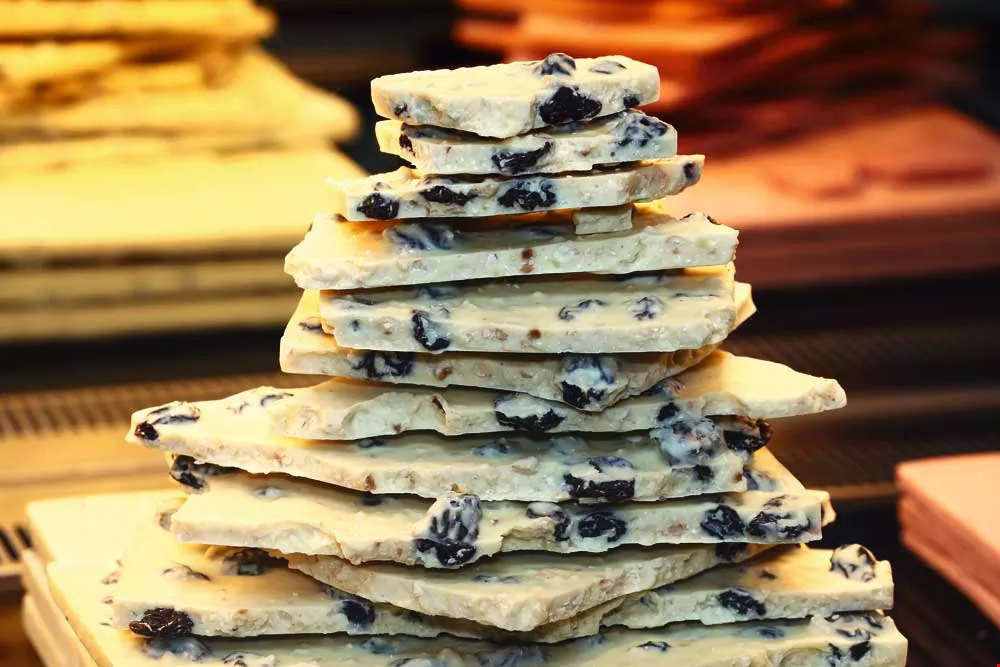
Dawncake’s pâte de fruits, and chocolates adorned with prints of native plants, are highly popular. Many customers come from afar to try their signature ice cream.
To bring back its former glory, the Dawncake team sought the help of architect Yang Shuhe, who had designed an indigenous pineapple cake shop for Dawncake. He called his college classmates, architect Su Chengbin and Kun Shan University lecturer Chen Gongyi, to design it with him. Su was in charge of interior design, and it just so happened that his graduation project while studying architecture at Chung Yuan Christian University had been on the Miyahara Eye Clinic, so he had a feeling for this old building.
Spurred on by Dawncake’s drive to “revive the Central District,” Su says that in contrast to most business owners, who insist on using every bit of space, Dawncake chairman You Jie had a different idea, asking the design team to spare old relics that were worthy of keeping.
For optimal effect, the design team compromised between two schools of architectural thought: “restoring old as old” and “restoring old as new.” In the end they compromised to restore as “old and new together.” The old clinic’s red brick walls facing Lüchuan East Road were completely restored, while the damaged bricks along Zhongshan Road were left as is.
In its visual designs, the team incorporated Dawncake’s book-loving culture to a great degree. A composite space blending scholarly and retro styles shaped the clinic’s overarching mood.
After spending two years and over NT$10 million, the restorations were finished in late 2011. Then Dawncake applied an unconventional marketing strategy, taking care to hide its own brand name and leaving the name Miyahara Eye Clinic. This intriguing mixture of new and old styles plus unique marketing proved to be successful in drawing people in.
Not a year later, Dawncake bought a 1966-built structure a few hundred meters away. Once home to the Taichung Fourth Credit Cooperative, it had later been bought by Union Bank of Taiwan. In August 2013, the seven-story, light-blue-tiled, postmodern-style building opened under its old name “Taichung Fourth Credit Cooperative.” The long-vanished vitality of Zhongshan Road was gradually being restored.
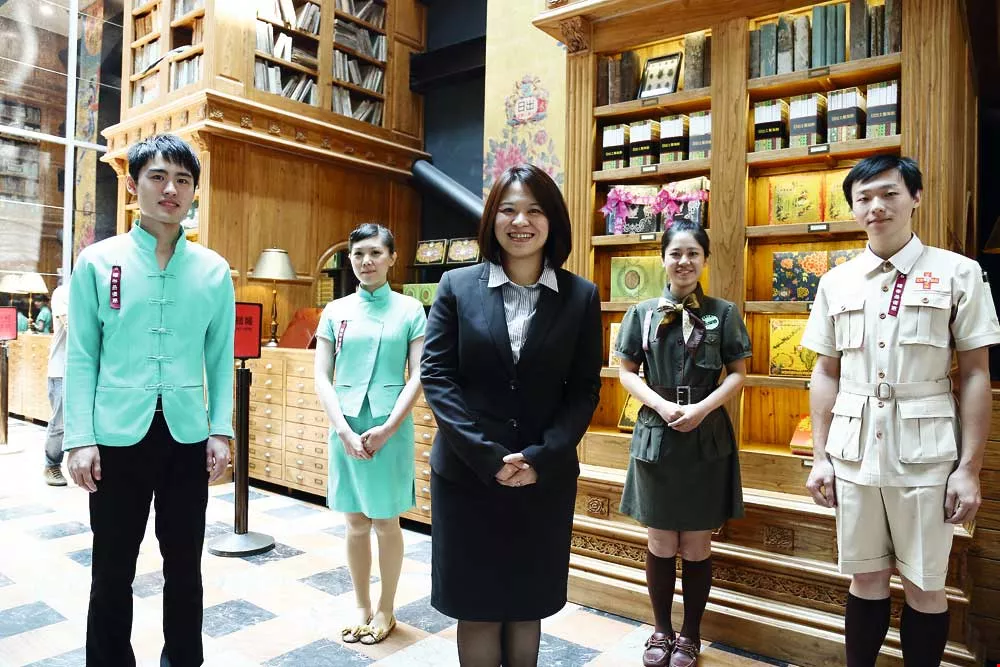
Dawncake general manager Weng Lifen has led her team in successfully restoring the Miyahara Eye Clinic to its former glory, breathing new life into the long quiescent old business district.
As the Miyahara Eye Clinic and Taiwan Fourth Credit Cooperative opened for business, business operators started moving in. An old hotel, once a Japanese-era youth hostel and later the Formosa Hotel, also took on a fresh new appearance near the Miyahara Eye Clinic.
Witnessing the slow transformation of these streets, Taichung author Liu Ka-shiang penned in his essay “A Bakery’s Dream for Taichung,” “We have no way of foreseeing what business decisions Dawncake will make next. But this raising of stakes tells us that while Tainan is transforming and showing its lifestyle aesthetics, Taichung has a bakery trying to undo the decay and decline of this city’s station-front area by means of its own convictions.”
Skilled at describing historical memories, the playful, creative Dawncake is seeking by its own efforts to bring its ideal of reviving the Central District to fruition, one step at a time. This brilliant adventure of urban regeneration is about to play out.

@List.jpg?w=522&h=410&mode=crop&format=webp&quality=80)

@List.jpg?w=522&h=410&mode=crop&format=webp&quality=80)


