Of Arms and Money:Interview with Former Procurement Official Chou Cheng-chih
interview by Eric Lin / tr. by Phil Newell
February 2000


Retired Lieutenant General Chou Cheng-chih, former head of the Procurement Bureau in the Ministry of Defense, thinks that the recently passed National Defense Law will create a new atmosphere in the area of arms procurement. (photo by Diago Chiu)
Taiwan's main way to acquire high-tech weaponry is to purchase it from abroad. However, because of pressure from mainland China and political considerations in arms exporting countries, arms purchases are often extremely sensitive, and thus are considered of the highest secrecy in the ROC Ministry of National Defense (MND). To find out more about the situation, Sinorama interviewed Chou Cheng-chih, former head of the Procurement Bureau at the MND and currently a legislator. What problems does Taiwan face in purchasing weapons? Now that the National Defense Law has been passed, what changes will there be in military procurement?
Q: What were the procedures for arms purchases in the past?
A: In the past, the main arms exporting country for Taiwan was the US. Procedure for purchasing weapons from the US was as follows: First, armed forces headquarters would map out a program of the equipment needs for the various services. This plan would then be sent to the MND for review. After it was decided which weapons should be purchased, people would be sent to the US to hold a "preparatory meeting" with the US government. At this meeting we would put forward our requests to the US side. Then would come consultation among the US Defense Department, State Department, and Congress. Finally, a formal "Sino-American Conference" would be held to work out the details. After agreement was reached, we could go ahead with the purchases.
Political factors still have the greatest impact on arms purchases. Political concerns in arms-exporting nations as well as pressure exerted by mainland China on arms exporters often affect our military procurement situation. Thus our procedure for buying weapons from the US has not always gone smoothly, and we have needed to do some serious negotiating.
Q: What negotiating tactics are involved in arms procurement? In deciding what to buy, isn't some flexibility required to meet negotiating contingencies?
A: Naturally you have to show flexibility, but you can also employ negotiating tactics. Take for example our purchase of AH-1W and OH-58D helicopters from the States. First we set an artificially high target in order to maximize room for negotiation. At that time the most advanced American helicopter was the Apache. But it seemed to us that the Apache's logistics system was not yet fully in place, so we did not really set our sights on buying it. Instead, we really wanted to buy the AH-1W and OH-58D, which had a comprehensive maintenance system in place. Thus our negotiating strategy was to first attempt to purchase the Apache, and to be as vocal and hard-nosed about it as possible, and then, at the appropriate time, to "give in" to the US side, and purchase what we really wanted-the AH-1W and OH-58D.
Q: Taiwan has partially turned to other source countries, such as France and the Netherlands to buy weapons. Is the weapons purchasing situation improving as a result?
A: Of course unilateral purchasing limits one's options, whereas with multilateral purchasing, we have more opportunities to buy and more selection when we do. In the past, buying only from the US, we were limited by what the United States was willing to sell. But as other countries have sold weapons to us, the US position has softened. For example, at first the US strongly opposed our purchase of Mirage fighter planes from France. But in fact, after we bought the planes from France, the US softened its own position on selling fighter planes to us.
Now when we buy weapons, we can compare similar-class weapons from various countries, and consider many variables: Are the weapons precisely suited to our needs? Is the cost reasonable? Is the sale likely to go through? Can we establish an effective maintenance system in Taiwan? In the past, when buying only from the US, our room for such considerations was more limited.
Q: Although Taiwan is able to buy some advanced weaponry, often it cannot acquire complete systems. Some people outside the military suggest that this will greatly reduce our fighting ability. For example, when we purchased Lafayette frigates from France, the French were unwilling to sell us the radar system. Will such problems affect the functioning of these warships?
A: The proposal to purchase Lafayette frigates came from the Navy. In negotiations with France we knew that we would not be able to buy the complete system. At the time our thinking was that first we would buy the ships, and then figure what to do next. New radar could be developed by the Chungshan Institute of Technology, and in the meantime, we could take the existing weaponry off our other frigates and put it on the Lafayettes. As for the radar, it is still in the research and development stage.
In selling weapons, arms exporters often have their own agendas. For what we can't buy, we have to find our own solutions.
Q: In recent years our military has suffered a number of plane crashes. In the case of the F-16, the US has confirmed that engine trouble led to the crashes. Is there some flaw in the arms purchasing process?
A: F-16 crashes have indeed been caused by engine problems. The root cause is most likely that the US did not control quality well enough.
The US does not sell the F-16 only to Taiwan. Their arms-sales procedure is to first discuss sales conditions for the F-16 with various countries, and then present a single contract to the manufacturer. The manufacturer then subcontracts numerous parts-such as the engine, tires, and bolts-to downstream contractors. After the planes are completed, the US government conducts spot tests. Taiwan's F-16s have problems because the American government did not do quality control properly. Although there is no compensation stipulation in the intergovernmental arms purchase agreement, the American government has compensation rules in its contracts with manufacturers. The MND is currently looking into how we can get compensation from the manufacturer through the US government.
Contractual guarantees are very important. The amount spent for each purchase is enormous, so the MND is naturally very careful. For example, the contract for the purchase of the Lafayettes from France stipulated that if anyone on either side took a commission, the other side could seek compensation. Since then word has come out in France that some officials had sought private gain from the sale; if this is confirmed officially by the French, then we can seek compensation through the international courts.
Q: The Legislature has recently passed the National Defense Law. What impact will this have on future weapons procurement?
A: In the past, at every stage-from planning to evaluation to buying-procurement was done entirely by military officers in the MND. Inevitably, there was public skepticism about the process. In the future, according to the new law, there will be an "Office of Strategic Planning" which will include non-governmental scholars and specialists, and also elected officials. First each armed service will put forward its needs, and then the Office of Strategic Planning will make a comprehensive evaluation of the situation and decide the nation's overall strategy and direction for weapons procurement. This will not only draw together ideas from many sources, but also the arms purchasing process will be more trusted by the public.
Q: Is it really feasible to increase our national defense capability through arms purchases abroad? Is our military capable of integrating new high-tech weapons into service?
A: Given the military threat posed by mainland China, we have no choice but to purchase high-tech weapons to try to overcome their quantitative advantage with a qualitative one. But the military certainly will have to improve its ability to utilize these high-tech weapons.
It is essential to raise the quality of the military, at all levels-officers, non-commissioned officers, and enlisted men. Currently, maintenance personnel generally leave service after only two years, so there is little cumulative experience. We can see something of the need to improve personnel quality from the recent crashes of Mirage aircraft. Human error has been mainly behind the crashes. Besides the condition of the pilots themselves, there are other problems: Taiwan's airspace is limited, and training is inadequate-pilots get only limited flight hours and conditions.
Taiwan's public generally does not see military life favorably, and correspondingly there is little sense of honor associated with military service, so as a result the most talented people do not enter the national defense ranks. This is really the biggest problem for the nation's military, and it is the responsibility of the whole people.
p.116
Retired Lieutenant General Chou Cheng-chih, former head of the Procurement Bureau in the Ministry of Defense, thinks that the recently passed National Defense Law will create a new atmosphere in the area of arms procurement. (photo by Diago Chiu)
p.117
Faced with pressure from the PRC, most arms exporters think twice before selling to Taiwan. Taiwan's main sources of arms at present are France and the US. The photo shows an exhibition of defense technology held at Taipei's World Trade Center. (photo by Diago Chiu)
p.118
Taiwan is enthusiastic about US-made CH-47 helicopters (right) and Knox-class frigates (left). The frigates are heavily prepared for missile warfare (below left) and their presence in the Taiwan Strait would greatly enhance Taiwan's security. (photo by Wang Ching-cheng)
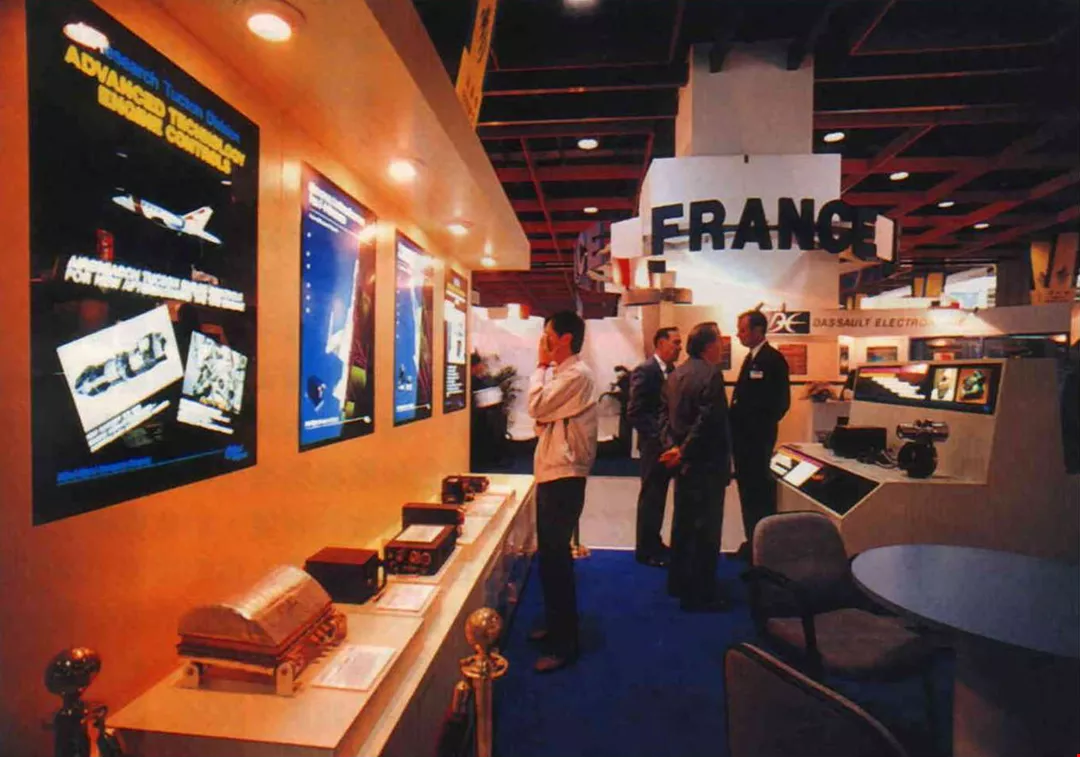
Faced with pressure from the PRC, most arms exporters think twice before selling to Taiwan. Taiwan's main sources of arms at present are France and the US. The photo shows an exhibition of defense technology held at Taipei's World Trade Center. (photo by Diago Chiu)
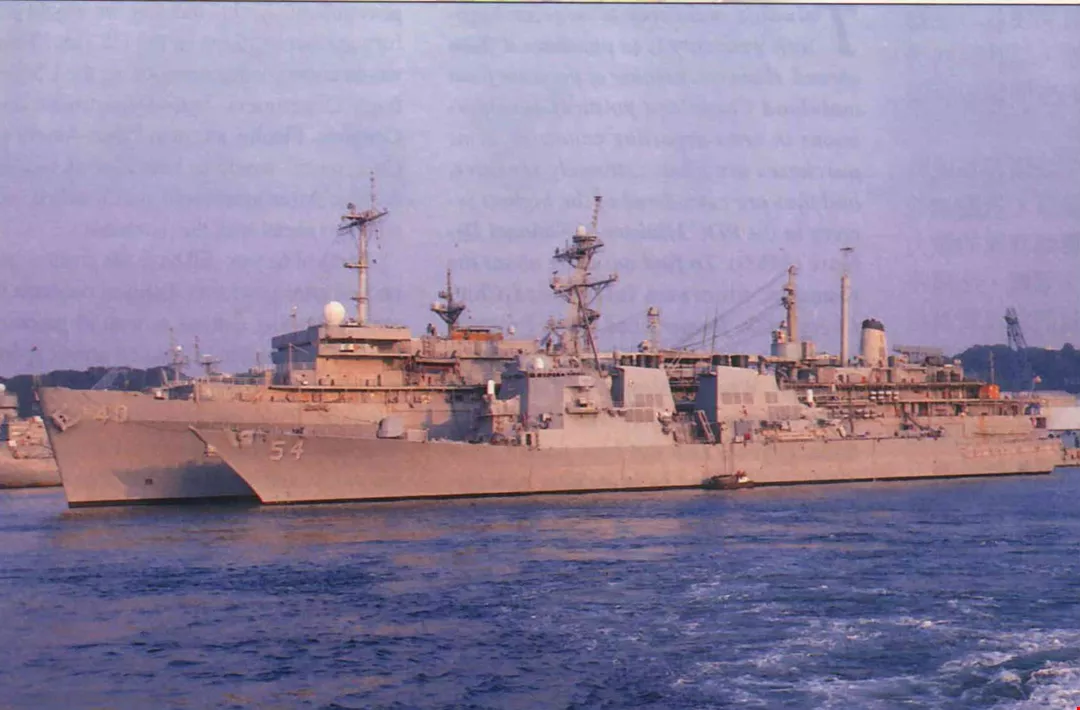
and Knox-class frigates.

Taiwan is enthusiastic about US-made CH-47 helicopters.

The frigates are heavily prepared for missile warfare (below left) and their presence in the Taiwan Strait would greatly enhance Taiwan's security. (photo by Wang Ching-cheng)