Chien Mu’s Last Class: The Cultured Elegance of Su Shu House
Sanya Huang / photos Jimmy Lin / tr. by Jonathan Barnard
September 2017


In 1990, when the author and educator Chien Mu moved from Su Shu House in Waishuangxi, where he had long lived, his friends and former students worried that such a major change would prove challenging. Yet Chien himself seemed unbothered. He remained cheerful, happily observing the changing times. Only three months after the move to Hangzhou South Road, however, Chien unexpectedly passed away. Afterwards, Su Shu House became a museum dedicated to his life and work. For 27 years, a steady stream of admirers from Taiwan and abroad have come to visit the house and walk through the elegant garden as younger scholars lecture on The Analects of Confucius or on the work of Chien Mu himself, recapturing the spirit of a leading cultural light of his generation.
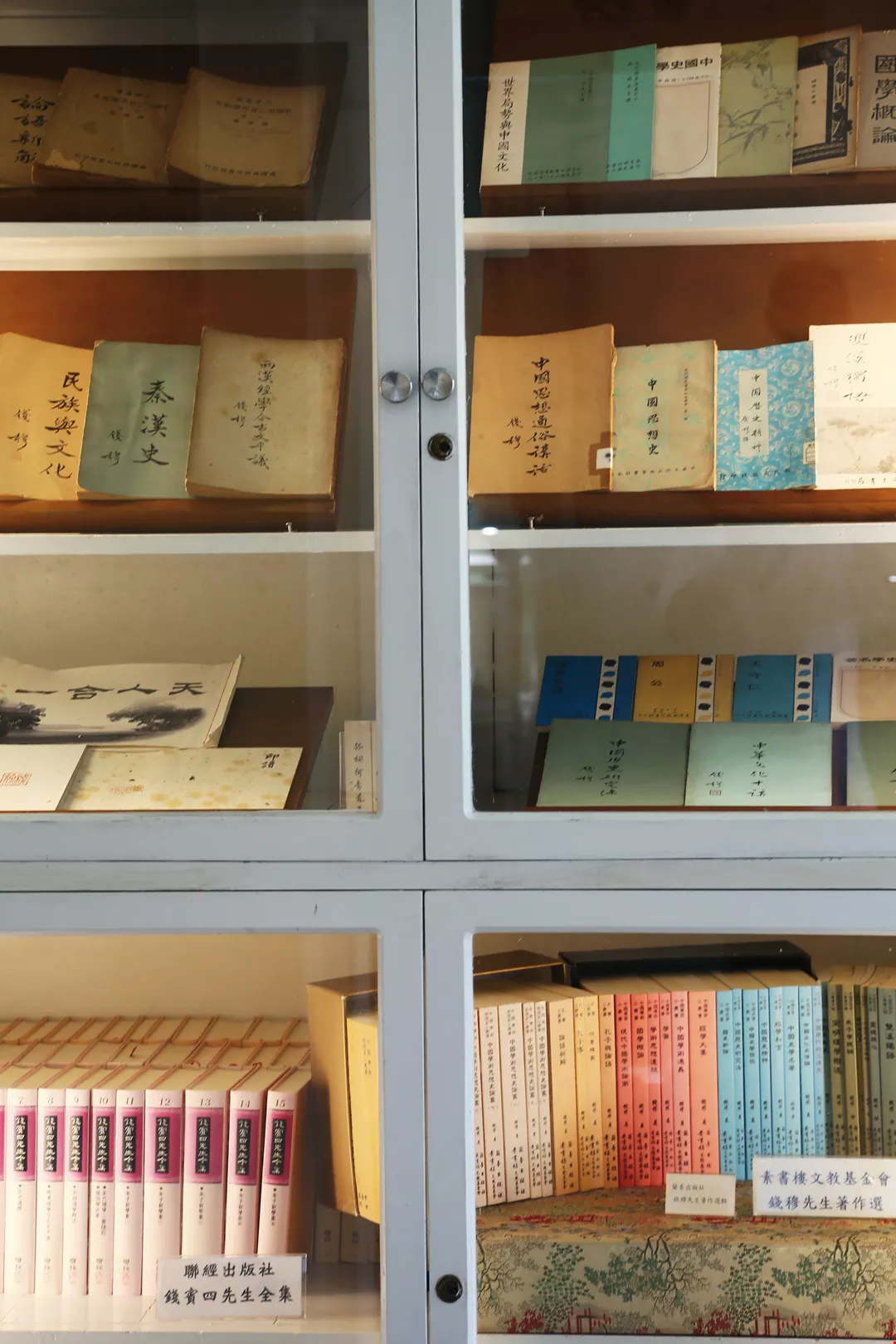
Chien Mu (1895‡1990), an important scholar of contemporary history, hoped from a young age to pursue an academic career, but circumstances cut short his formal education. Although merely a secondary-school graduate, diligent self-study would earn him honorary doctorates from the University of Hong Kong and Yale, and membership of Taiwan’s Academia Sinica. His works run to more than 17 million Chinese characters, and the full stack of his publications tops 190 centimeters.
During the span of 77 years from when he was 18 to 95 years old, his career as an educator brought him to posts at Peking University and National Southwest Associated University. Later he would move to what was then the British colony of Hong Kong, where he founded New Asia College at the Chinese University of Hong Kong and educated many prominent scholars, including Yan Gengwang of the Academia Sinica and Yu Ying-shih, who would have a distinguished career in the United States. In his later years, Chien Mu lived at Su Shu House in Taipei’s Waishuangxi, where he continued to lecture and write. The compound became a spiritual stronghold, attracting those with a deep interest in Chinese culture.
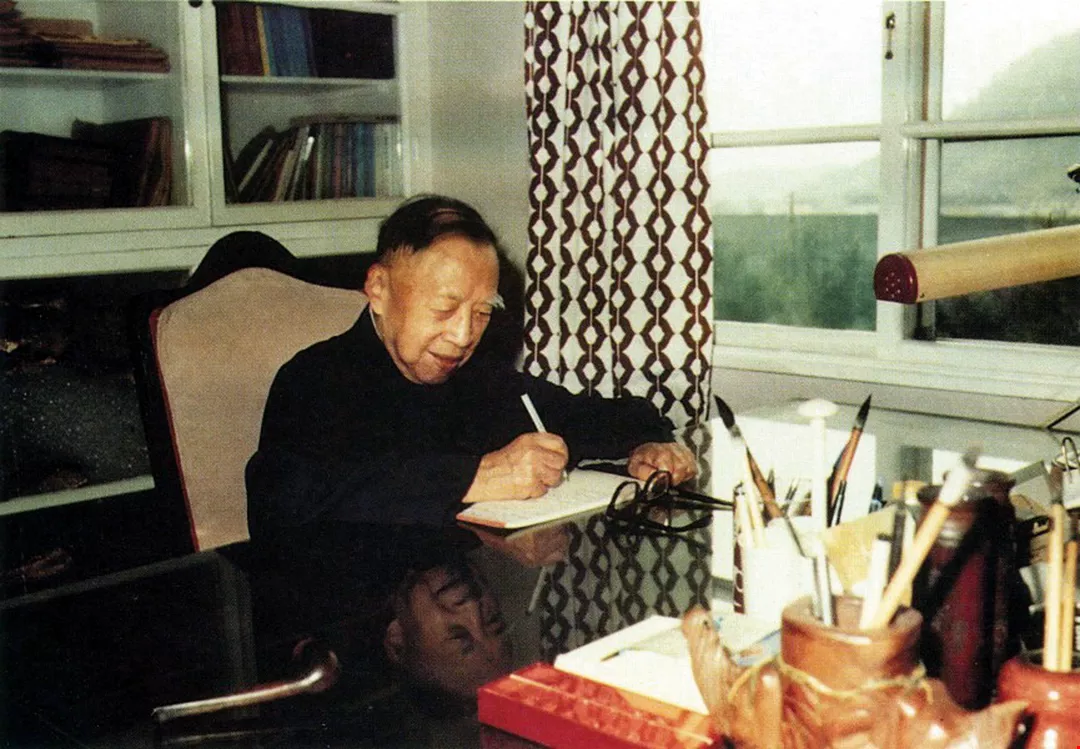
No matter how busy with other matters, Chien would get right down to work with his writing and studies when he returned home. An experienced meditator, he could quickly regain his energy and focus no matter what he had been doing. (courtesy of the Su-Shu-Lou Cultural and Educational Foundation)
Origins of Su Shu House
Chin Chao-fen, executive director of the Su-Shu-Lou Cultural and Educational Foundation, notes that the line “Strong grass cannot be felled by the wind” truly captures the essence of Chien Mu’s life. From the Xinhai Revolution that ended the Qing Dynasty, through the War of Resistance Against Japan and the Second Chinese Civil War, to the madness of the Cultural Revolution, which engulfed mainland China and impacted Hong Kong when Chien was based there, and on up to the severing of ROC‡US diplomatic relations, which occurred after he had moved to Taiwan, Chien determinedly forged ahead with his scholarship, completing his massive academic project A New Study of Zhu Xi as well as ambitious cultural works such as Examining Chinese People and Culture Through Chinese History and The Global Situation and Chinese Culture. These books are highly accessible introductions to Chinese culture that cultivate a sense of cultural self-confidence and self-respect.
In 1964, Chien stepped down from his post as president of New Asia College, after 16 years in Hong Kong working as an educational administrator. He was then invited to teach at the University of Malaya. He had expected to settle down and live in Kuala Lumpur long term, but he couldn’t get used to the hot and humid climate and had frequent serious stomach problems. He was left with no choice but to return to Hong Kong. At that time mainland China was caught in the grip of the Cultural Revolution, and the resulting turmoil spilled over into Hong Kong. So once again he had to search for a new place to live.
Eventually, Chien Mu and his wife decided to move to Taiwan and came first to scout out land to build on. A good friend who knew he was looking for a building site recommended the Su Shu House location, which is in a small basin surrounded by hills at Waishuangxi in Shilin, a northern suburb of Taipei City. At high points the site offers views of the National Palace Museum halfway up the opposite slope. Babbling Waishuangxi Creek, which runs all four seasons of the year, can be found down the hill. The scenery is beautiful. Zoned for cemeteries, the land was cheap, which was important for an academic who hadn’t accumulated substantial savings. A friend asked: “Does it violate any fengshui taboos?” But after coming from Hong Kong to visit the site, a smiling Chien said he wasn’t worried about the fengshui. The immediate neighborhood had an elementary school, so in fengshui terms it could be described as a focal point for cultural energy. He thus decided to build his home here.
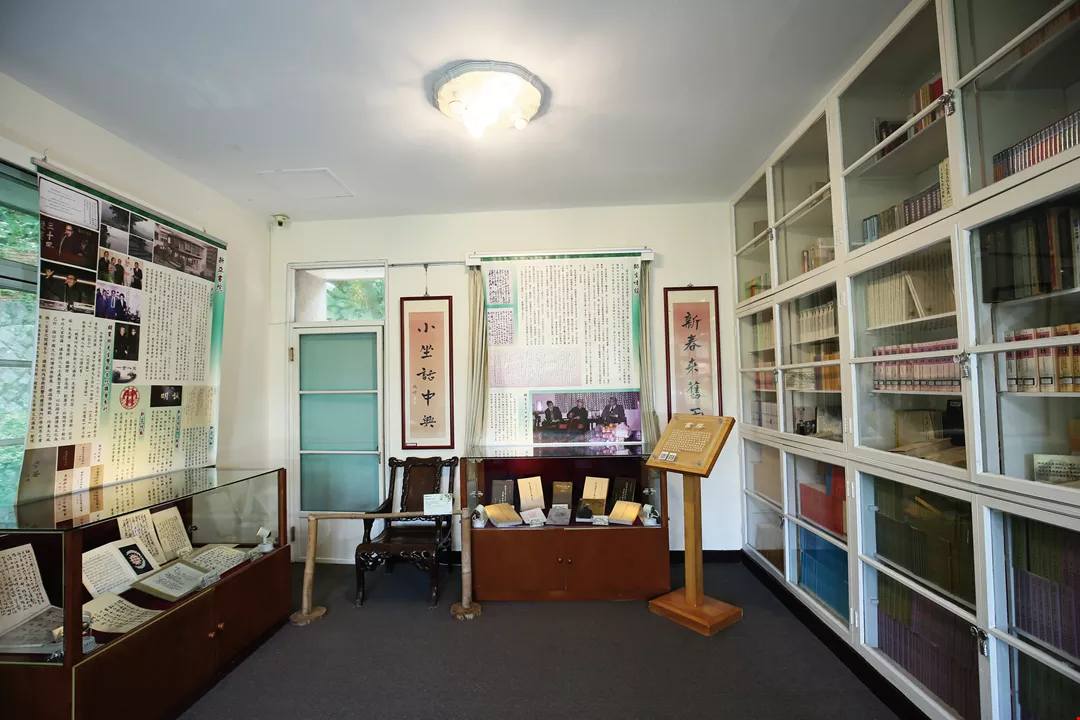
The second-floor study is the focal point of Su Shu House. It is just about the size of the downstairs living and dining rooms put together.
Courtesies extended to a scholar
Changing the zoning to residential took more than a year, during which time Chien once again moved back to Hong Kong. The basic designs for Su Shu House were drawn up by Chien’s wife, based on the style of their house in the Sha Tin neighborhood of Hong Kong. When ROC president Chiang Kai-shek learned of Chien’s plans to move to Waishuangxi, he had the Yangmingshan Administration Bureau take over responsibility for constructing the home.
Once Chien was actually living at Su Shu House, Chinese Culture University founder Chang Chi-yun invited him to teach graduate students in history at the university, and Chien had the students come to his house two hours a week for class. At the invitation of National Palace Museum director Jiang Fucong, Chien also received a special appointment as a researcher at the museum.
“When Mrs. Chien would do yardwork,” notes Chin Chao-fen, “her husband might come out, sit on a stone bench and muse: ‘Let me look around…. That would be a good spot for a pine.’ They personally planted all the trees, flowers and other plants in this garden.”
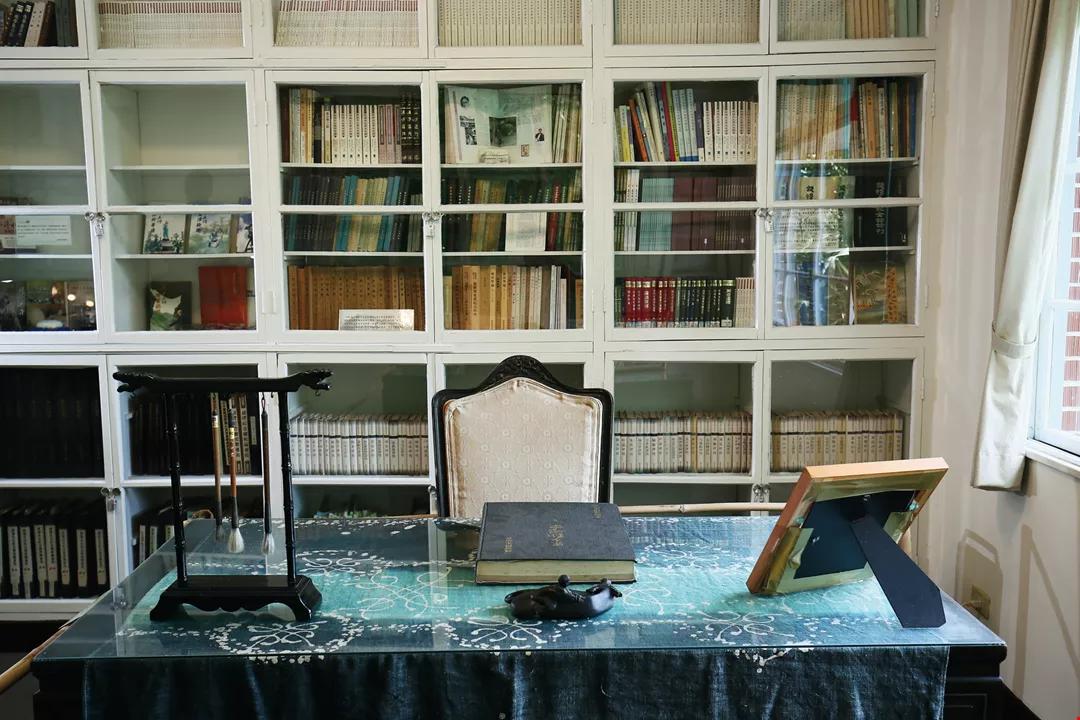
Chien Mu’s desk, made from precious rosewood, “is said to be a gift from Chiang Kai-shek,” explains Chin Chao-fen, executive director of the Su-Shu-Lou Cultural and Educational Foundation.
Holistic humanism
People tend to describe Chien Mu as an historian, and he himself described history as an essential means to understand both the past and the future. He firmly believed that the Chinese conception of harmony between man and nature could be of tremendous benefit to mankind. Traditional Chinese values help to supplement places where Western thought comes up short, such as when considering the meaning of happiness.
Chien Mu was aware that despite the appearance of developmental diversity in today’s world, in truth Western commercial and material culture dominates. Because that dominant culture lacks a basic and essential cultural understanding of human values, it offers a future of narrowed horizons.
One doesn’t read Chinese cultural classics simply as an academic exercise, but rather to understand how their content can be integrated into people’s actual lives and be disseminated to the world through people’s hearts and minds. Otherwise, that content will exist only as stale words on the pages of dusty old books.
Unending last class
“Every fall, I would ascend the steps through the flaming maple trees, up to Su Shu House, where I would listen to Chien Mu’s lectures,” says Wu Zhanliang, a professor of history at National Taiwan University. “It almost felt as if I were making a pilgrimage.” When Wu was a student at Taipei’s Jianguo High School, he would go there with the Confucian scholar Hsin Yi-yuen, who was then teaching at Jianguo and had introduced Wu to the study of Chinese classical culture. He brought a sense of reverence on his journeys to lectures at Su Shu House.
Chien Mu announced that June 9, 1986 would be the date of his last lecture before his retirement from Chinese Culture University. Luminaries such as Professor Lu Yaodong, General Kong Lingsheng, and politician James Soong were eager to avail themselves of a last opportunity to study under the great educator, and they all attended the lecture at Su Shu House.
Today the furniture he used while he lived there is still in place, as are his complete written works. The garden still features his beloved pines and bamboo. As one sees these markers of his life and cultural spirit, it almost seems as if the departed master of the house remains as well, still giving his last class.
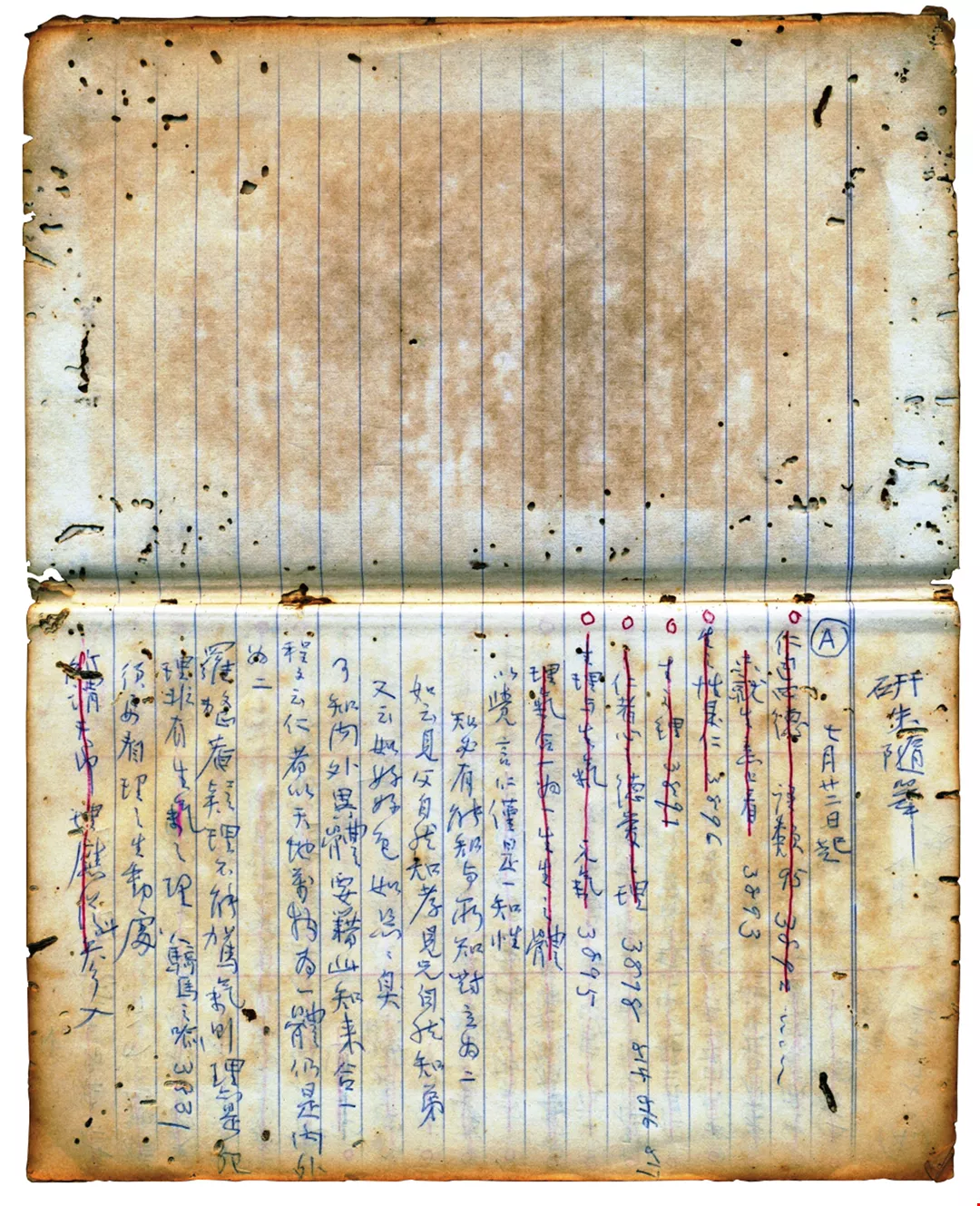
When reading, Chien Mu would always take notes in a notebook, which he would then refer to when writing. He would cross out the observations that he used in his writings, to prevent duplication. (courtesy of the Su-Shu-Lou Cultural and Educational Foundation)
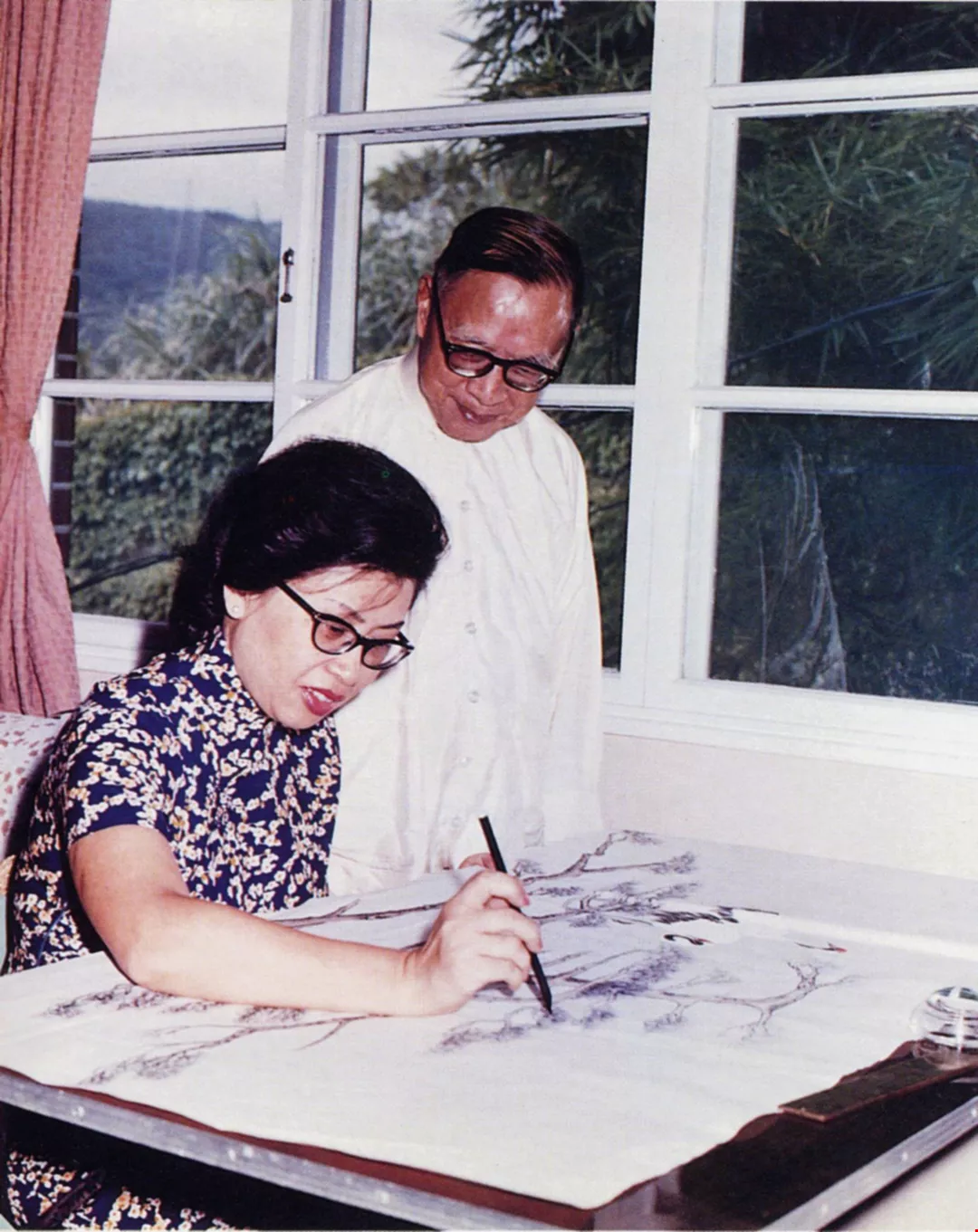
Chien Mu watches his wife Hu Mei-chi paint a pair of cranes amid pine trees. Thanks to his wife’s attentive care, Chien could devote his later years even more fully to peacefully reading, writing and teaching. (courtesy of the Su-Shu-Lou Cultural and Educational Foundation)
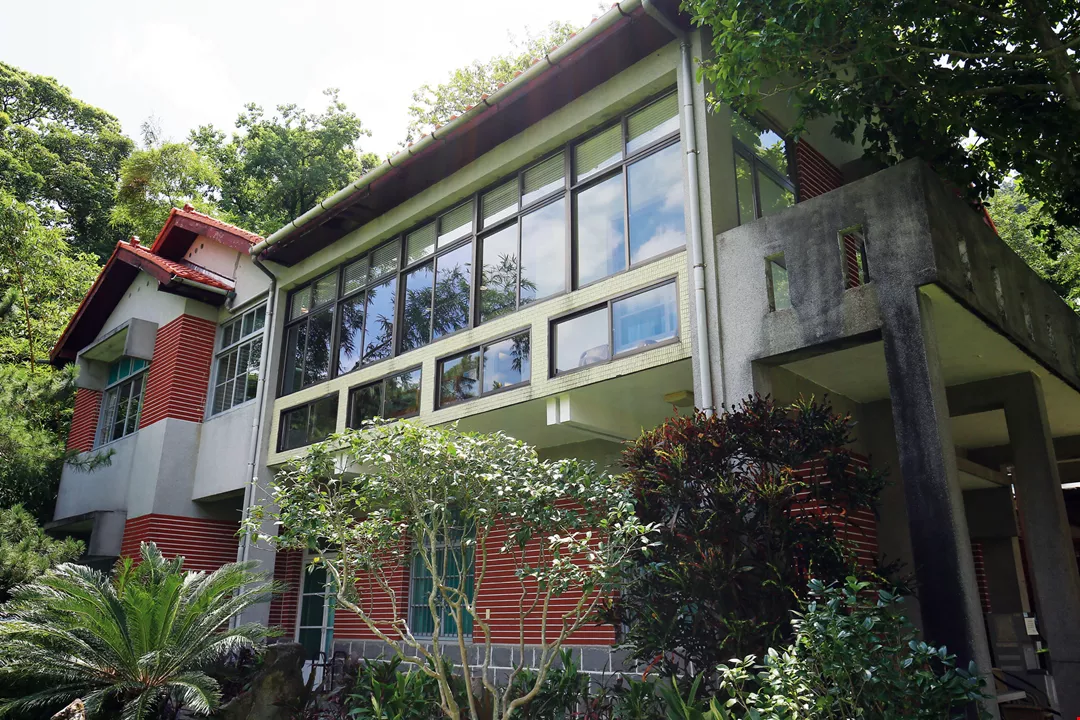
Su Shu House


@List.jpg?w=522&h=410&mode=crop&format=webp&quality=80)


