"Reducing CO2 is a Question of Social Justice"--An Interview with Chang Kow-lung, EPA Minister
interview by Coral Lee / photos Chuang Kung-ju / tr. by Anthony W. Sariti
October 2005


Longtime leader of Taiwan's anti-nuclear movement and former professor of physics at National Taiwan University, Chang Kow-lung took office this summer as EPA Minister and then began actively to promote his economizing ideas. Recently he even made some candid and critical remarks on the low cost of hydro-electric power in Taiwan and Tai-wan's oil pricing policy, saying this was nothing less than the behavior of a "barbaric society." Faced with the tough task of reducing greenhouse gases, a topic that takes center stage in international debates, how can the EPA play the role of negotiator, wedged as it is between the ministries of economic affairs, interior, transportation and communications, and agriculture? With his characteristic firmness, the cultured and refined Minister Chang agreed to give Sinorama an interview in which he presented his views on the reduction of carbon dioxide.
Q: First, I would like to ask you to talk a bit about the EPA's position on the policy of reducing greenhouse gases. Where does the EPA put its major emphasis with regard to this inter-ministerial topic?
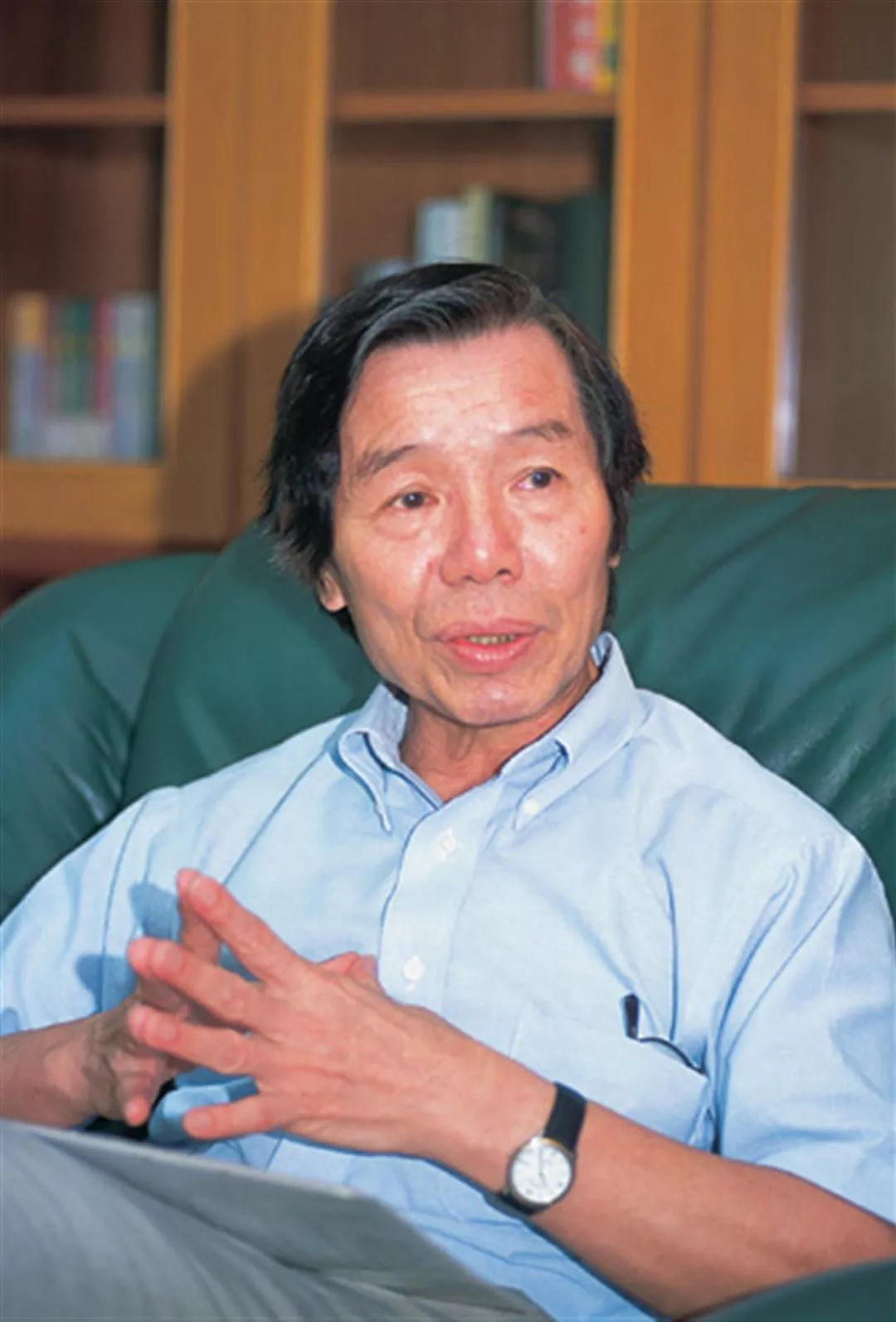
EPA Minister Chang Kow-lung says his agency will function as a bridge between ministries on the policy of reducing greenhouse gases and will use the "Greenhouse Gas Reduction Act" as a basis for its monitoring and control activities.
A: The greenhouse effect has a global impact on the environment, which includes the recent Hurricane Katrina disaster in the US, the fact that flooding is beginning to occur in parts of Europe that have not seen anything like this in over a hundred years, and so on. The situation in Taiwan is more serious. The frequency and extent of mudslides are increasing yearly, and each incident brings with it tens of billions of NT dollars worth of damage. The EPA is duty bound to engage in government efforts to prevent and reduce greenhouse gases, including the setting of reduction targets, assisting in strategic planning, and controlling and monitoring activities in the process of achieving these targets.
Currently the EPA is actively pushing the establishment of a new law, the Greenhouse Gas Reduction Act, to serve as a basis for monitoring and control activities. In the interim before this law is passed, a Climate Change and Kyoto Protocol Response Group has been set up under the Executive Yuan's Commission on Sustainable Development that will promote the relevant policy. In this response group, chaired by the premier, the EPA is responsible for all ministerial administrative coordination. In addition, the EPA recruits experts to participate in all national energy conferences to discuss the creation of mechanisms for the control of greenhouse gases.
Because in recent years carbon dioxide has been the major element in the growth of greenhouse gases, the Commission on Sustainable Development has charged the EPA with including CO2 emissions as an item in its environment impact assessments (EIA). In the future, CO2 emissions from major economic construction projects will at least be controlled through the EIA mechanism.
As for the official responsibility given to the EPA by this government, we will loyally carry it out. In this process, the blueprint for Taiwan's economic development will certainly be affected. In June this year the national energy conference set targets using the growth rate of CO2 emissions in OECD countries as a standard. Right now this rate is 1% a year, while the rate in Taiwan is 7% a year. Our target is 1%. At present we produce 12 metric tons per person yearly, and we are estimating less than 13 metric tons by 2025.
Q: At national energy conferences there is always a big argument: if the structure of Taiwan's industry does not change and we continue to develop energy intensive industries like large steel mills and naphtha cracker plant No. 8, how will Taiwan ever cut down on harmful emissions?
A: In 1998 the national energy conference set a target that CO2 emissions be reduced to the 2000 standard by 2020. The reason this target cannot be met is that during this period the government has not yet made an effort at restructuring industry. Consequently, I am very worried. If industries that produce carbon dioxide emissions continue to develop, we won't even be able to meet the second, revised target.
Fortunately, the Commission on Sustainable Development has given us the responsibility to include CO2 in our environmental impact control system. Thus, in the future emissions for all industries will have a quota. So it's like a balloon. As the economy continues to develop, the balloon will expand a bit, but it won't burst. In the past, this balloon didn't even exist.
Q: You talked about the problem of coordination among the ministries. In the course of doing this story I have discovered that residential and commercial sectors that promote energy efficiency in buildings seem to lack horizontal contacts. The Ministry of the Interior regulates energy efficiency for the outside of buildings while the Bureau of Energy is responsible for promoting energy efficiency inside buildings in terms of air conditioning and lighting. But each does its own thing. What can the EPA do about this?
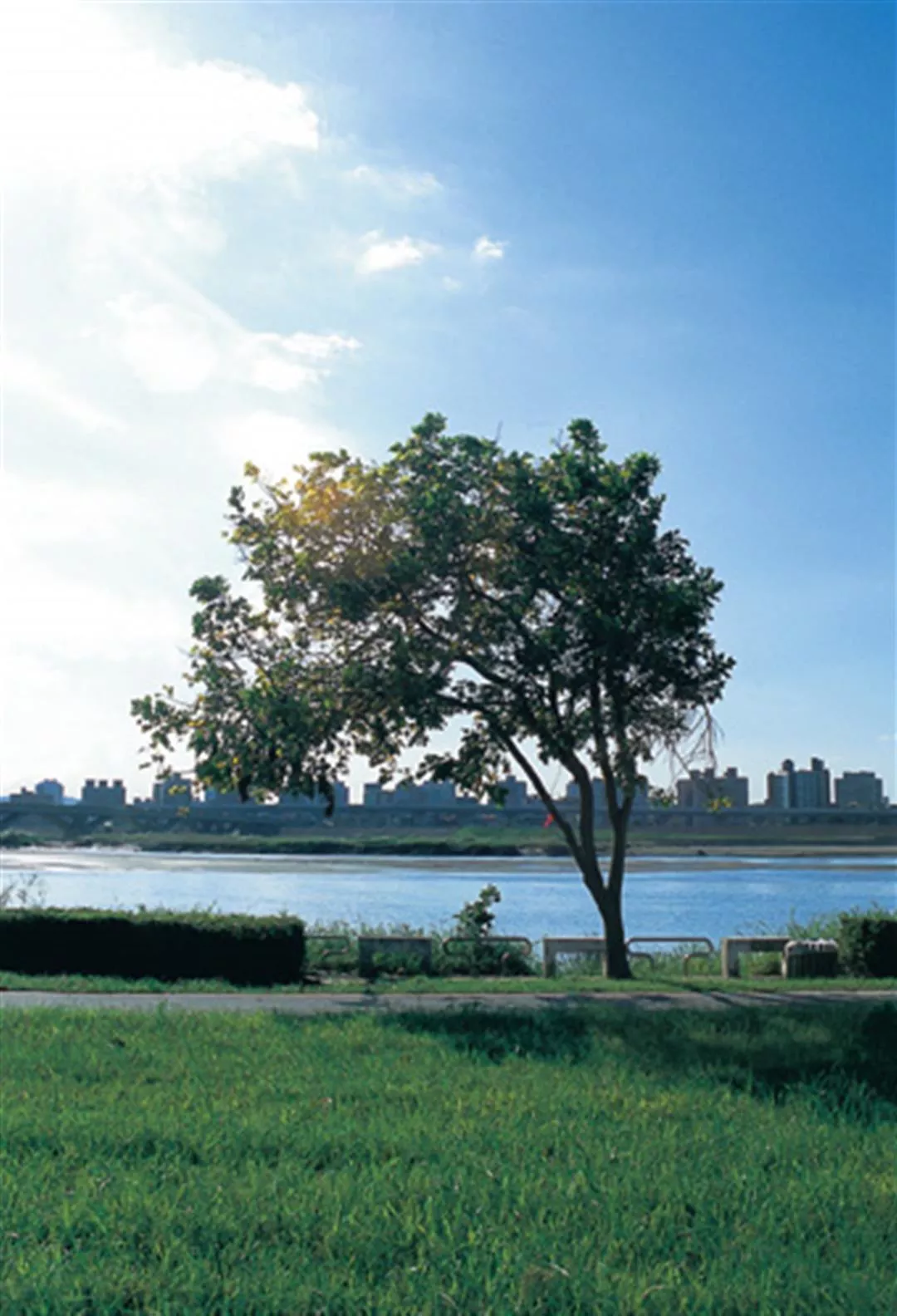
Creating a clean, low-carbon green environment is not only the responsibility of manufacturing industries. Because the final user of any product is the consumer, "the public most certainly has a responsibility to participate," says Chang Kow-lung.
A: Let me first talk a bit about "green" buildings. Recently I visited the Environmental Science & Technology Park in Kaohsiung to take a look around. In the control center was a model solar-power room with solar panels installed on the south wall and stacked on the outside face of every story. This was a huge mistake because this design had the solar panels producing electricity only half the day when the sun was shining. In addition, the second, third and fourth layer of panels only received sunlight for an extremely short period of time, greatly violating the spirit of energy efficiency--namely, using a minimum capital investment to get a maximum benefit. The proper method is to set up the panels on the roof. Although the angle of elevation varies with latitude, the principle is that the solar panels should be, as much as possible, perpendicular to the sun at all times.
As for the question of integrating the various ministries, I am right now in the midst of conceptualizing how to pull together elements from the Bureau of Energy, the Industrial Technology Research Institute, the Ministry of Economic Affairs, Taipower and the solar energy association to form a group on energy efficiency strategy that will go to each bureau and make an energy-efficiency diagnosis and then in stages move out into the schools, military barracks and industry. If those in the private sector wish to improve their cooling equipment, the government should extend no-interest loans to them as an economic incentive to have people participate in the program to reduce CO2 emissions. Although at present it is the MOEA Bureau of Energy that has the lead in this, we at EPA very much want to get out in front and actively push this idea.
Q: Do you think the average person has a desire to improve energy efficiency at home or in the office?
A: Of course, in addition to economic incentives, we must use the law in regulating energy usage. Each citizen has a basic environmental human right. Wealthy people cannot infringe upon the environmental rights of others. For example, everyone needs the greenery of parks, but would we permit a small number of people to buy up a botanical garden? In the same way, the people who suffer from the greenhouse effect are usually those lower down on the socio-economic ladder. They are forced to live in potential mudslide zones, littoral subsidence areas and areas with the most fragile of ecosystems. Thus in the future the law will regulate energy usage. It will not be a situation where if you have money you can just put in more air conditioning and make it as cold as you want. If your CO2 emissions surpass 13 metric tons a year, you will have to buy a part of someone else's pollution quota.
Q: The reduction strategy for residential, commercial and transportation sectors is keyed to energy saving and raising energy efficiency, but if hydroelectric and fuel costs are not adjusted upwards, won't this mean twice the work with half the results?
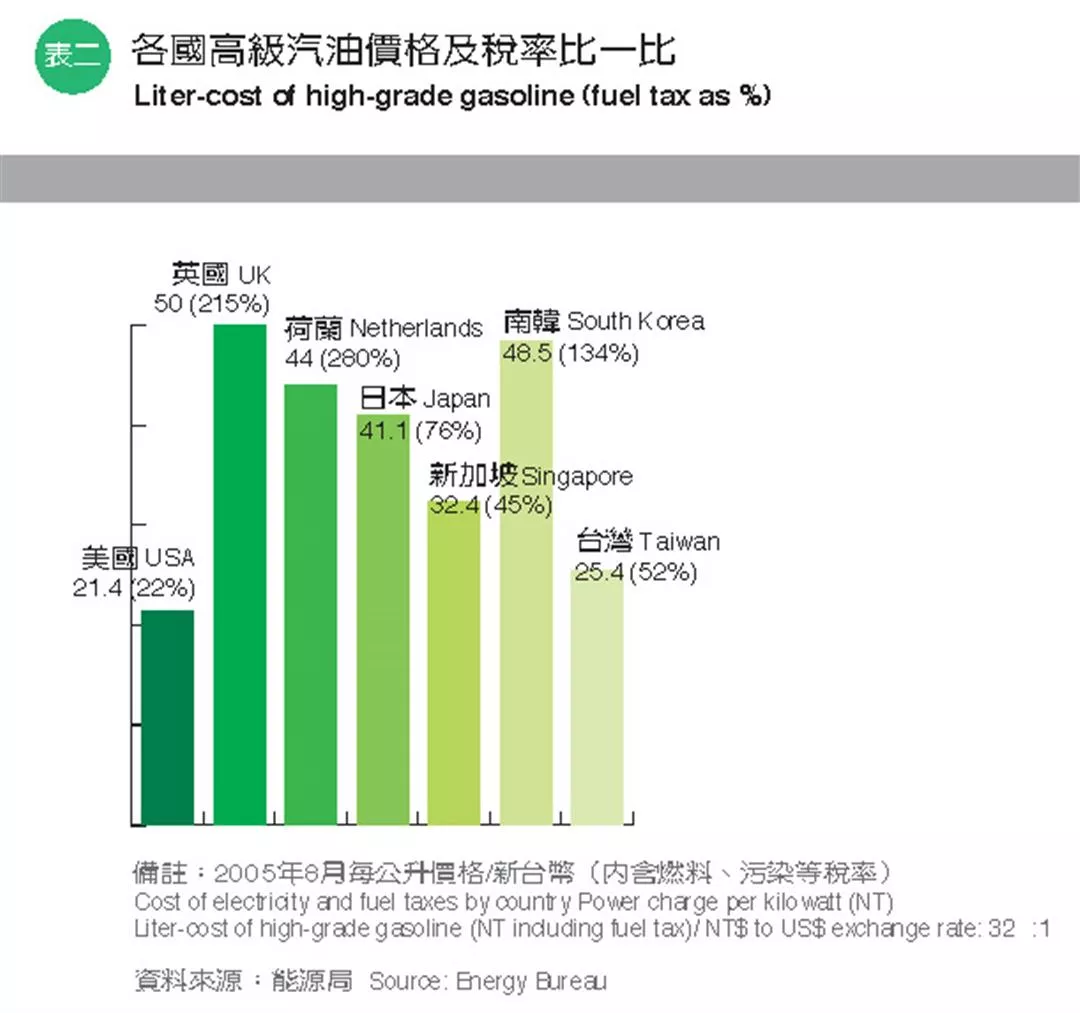
A: Yes. European national income is twice that of Taiwan but their CO2 emissions are the same as ours. The most fundamental reason for this is that they have adopted a system of economic sanctions and incentives. Denmark and other countries have a tax on high-octane gasoline of more than 200%. By contrast, Taiwan has a tax of only 52%. This is why I use the term "barbaric society" to characterize the low fuel tax policy. Any person, especially a businessperson, seeks profit. If energy is cheap, business people will have no desire to invest in energy-saving factory designs or to renovate equipment to improve the manufacturing process. But if energy gets to a certain price level, then in three to five years capital investment in these things can be recovered. From the point of view of a sustainable industry, the earlier this is done the more beneficial it would be. This is how European tax rates can be so high yet they are able to maintain economic development and at the same time have a high-quality environment.
Q: To respond to the call to reduce CO2 should Taiwan promote the concept of "green transportation"? What plans does the EPA have regarding this topic?
A: There is one principle to green consumption, the less you use the better. In other words, if you can walk, don't ride, if you must ride, choose public transportation and don't drive a car. According to British researchers, one person traveling one mile in an individual car consumes 8,100 BTU, while the same person traveling the same distance in a public conveyance uses only 3,800 BTU. Moving one ton of goods one mile in a truck takes 28,000 BTU, while by train it takes only 670 BTU. From these figures we know that public transportation produces far less CO2 emissions than does individual transportation.
Thus the country should have a mechanism for collecting high taxes from individual drivers to make up for the environmental damage and social harm caused by those members of the public who drive cars. In London it costs £5 to enter the city in a vehicle. In Singapore the permit to buy a car costs more than the car itself.
People who drive cars today can be said to thoroughly enjoy all of society's privileges! A person spends a few hundred thousand NT dollars to buy a car and although the purchased car is the result of the individual's own efforts, our society, in addition to providing the motorist with all kinds of conveniences, also must provide at all times 100 square feet of space to park the car. In Taipei, for example, one hundred square feet of land is worth NT$10 million. The parking fees paid by the public can't begin to compare with the capital investment, and when you turn around and see that a poor person may spend an entire lifetime and yet be unable able to afford just 30 square feet of land you realize that this is extremely unfair.
Furthermore, to provide a safe and convenient transportation environment it is necessary to set up traffic lights, create pedestrian crossings, organize police to direct traffic and people to take care of cars broken down on the side of the road, etc. These are all conveniences that car owners enjoy, but the costs are born by the public at large and are not reflected in a reasonable way in the purchasing and operating costs of the automobile.
Q: On this question, in addition to making the public aware of these ideas and concepts, what concrete actions can the EPA take?
A: Although transportation policy is not the EPA's official responsibility, we hope that through the Commission on Sustainable Development we will influence the Ministry of Transportation and Communications and the other ministries to move in the direction of this goal. We will also stand with NGO environmental and human rights organizations to push for new laws, but in the interim before these laws are passed we must first get the concepts out there, and see how many people agree with them. Society has talked about the concept of "user fees" for quite some time but nothing has ever come of it. If a collective force can be put together then laws will quickly follow.
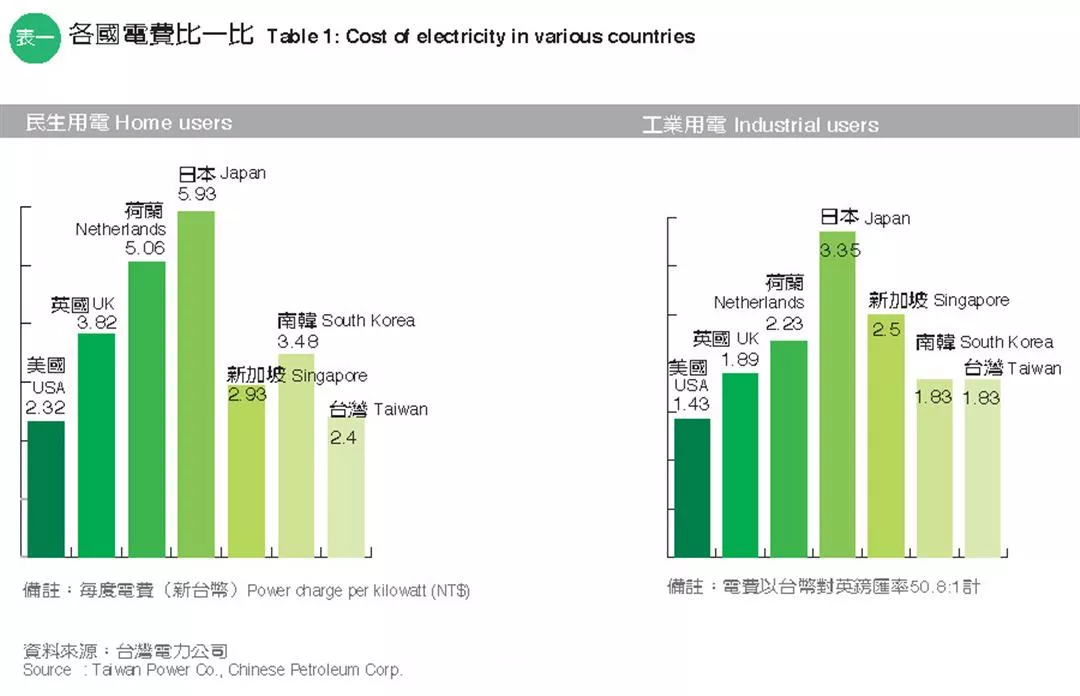
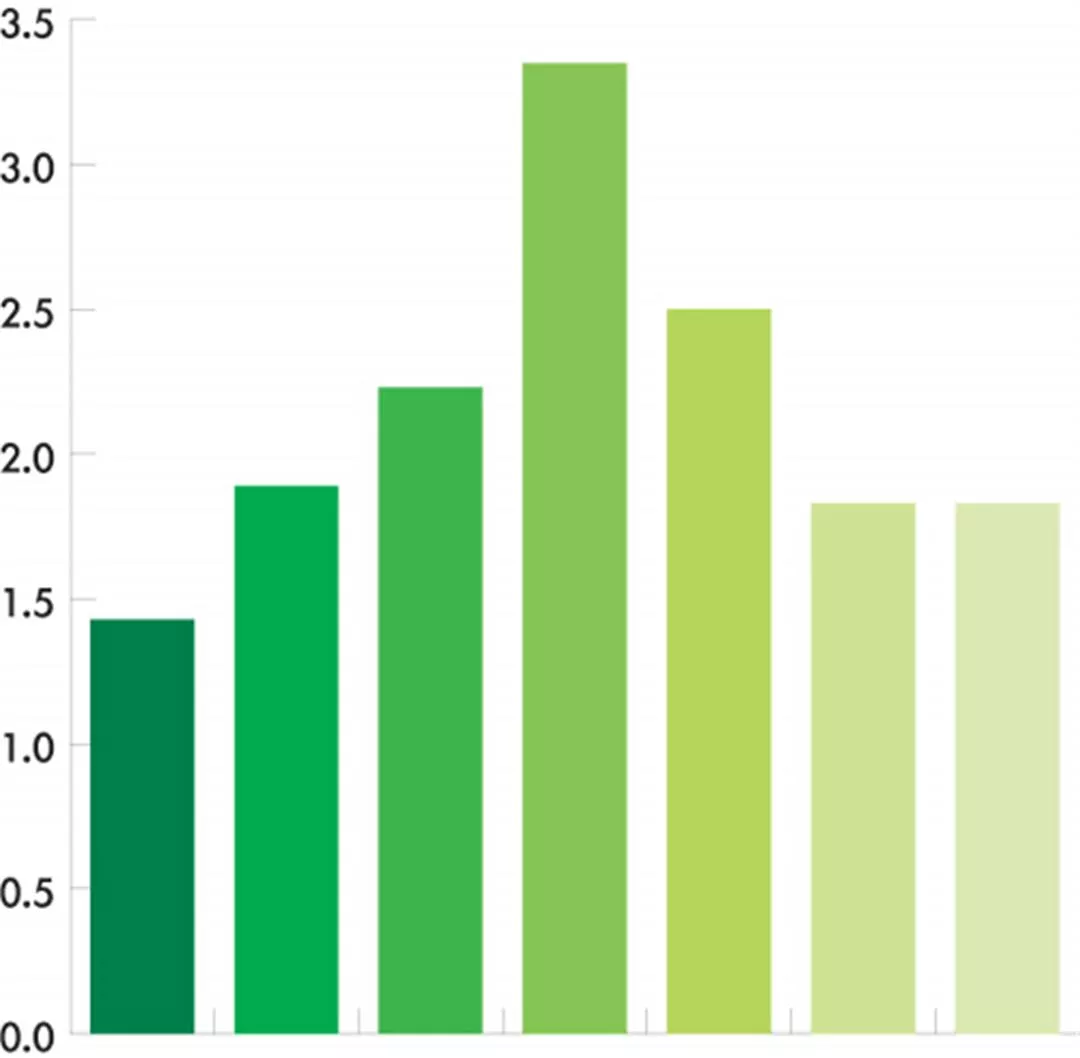
Table 1: Cost of electricity in various countries
Table 2: Liter-cost of high-grade gasoline (fuel tax as %)

@List.jpg?w=522&h=410&mode=crop&format=webp&quality=80)


@List.jpg?w=522&h=410&mode=crop&format=webp&quality=80)
