The Revitalization of Taiwanese Film and Television
Teng Sue-feng / photos Jimmy Lin / tr. by Christopher J. Findler
December 2005


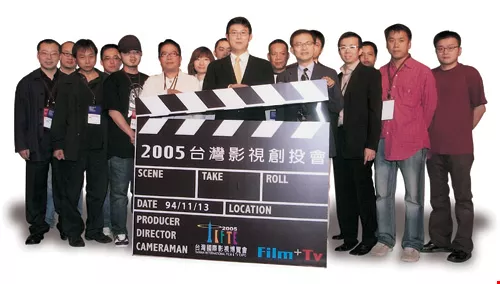
Television, film, and music arewindows into a country's culture. To ensure that Taiwan's culture continues to boom, the Government Information Office (GIO) staged the first Taiwan International Film and TV Expo, an event that seeks to integrate the visual media of film and television. To this end, the GIO invited experts from around the world to attend in hopes of pooling their wisdom to help industries in Taiwan find their place on the world stage.
In mid-November, Taiwan's broadcasting and television industries celebrated their annual star-studded festival.
On the evening of the 12th, Taiwan's top model Lin Chih-ling and variety show host Chang Fei presided over the Golden Bell Awards. In the area of individual contribution to a TV series, Best Leading Lady was awarded to Wang Chuan, who has enjoyed a distinguished career on stage. In the Public Television movie A Story of Soldiers, she played a woman emotionally tormented by her husband. He lost both legs in the war and her son laid down his life for his country as a soldier. Wang did an outstanding job of portraying the agony her character felt as a result of being cruelly toyed with by destiny. Best Leading Male went to Tuo Chung-hua for his portrayal of a down-and-out musician in Love's Lone Flower, an adaptation of Pai Hsien-yung's novel of the same name, in which the main character experiences the vicissitudes of romance and family.
On the 13th, the 42nd Golden Horse Awards were held, for the first time in the port city of Keelung. Kung Fu Hustle, a martial arts movie directed by and starring Hong Kong comedy king Stephen Chow, caught many off guard when it snagged five awards, including Best Feature Film, Best Director, and Best Supporting Actress. Best leading male went to razzle-dazzle singer from Hong Kong Aaron Kwok. After being nominated five times, Taiwan starlet Shu Chi finally won Best Actress for her performance in director Hou Hsiao-hsien's Three Times, a finely crafted film which depicts Taiwan under Japanese occupation, in the 1960s, and in modern-day times--three eras, three love stories, three types of beauty. It also won the award for Best Taiwanese Motion Picture.
In addition to the star-studded Golden Bell and Golden Horse awards ceremonies, this year, the GIO combined for the first time four major events, including the Taipei Film and TV Festival and the Taiwan Film and TV Project Promotion, to create the Taiwan International Film and TV Expo.
GIO minister Pasuya Yao, who single-handedly brought the idea to life, observes that convergence between film and television is a trend and a key link in enhancing competitiveness. Faced with the spectacular performance of its South Korean counterpart, however, Taiwan's film and TV industry is gradually fading into oblivion. Yao hopes to use the Expo, with its specialists in TV and film from around the world, to spark innovation and give creators and backers a chance to combine forces.
Because digital technology is seen as an important factor in the future success of the film and TV industry, the International Film and TV Expo invited representatives from abroad to share their experience in employing digital TV content in mobile telecommunications.
Suenaga Masashi, president of Japan's Mobile Broadcasting Corporation, explains that in order to serve Japan's huge commuter population, in 1998 Mobile Broadcasting was set up, using both satellite and cable television technologies to transmit TV content, such as the news and horse racing, to customers in their cars, on their computers, or through their mobile phones.
Although "television--anywhere, anytime" is an admirable vision, Suenaga points out that many places in Japan still cannot receive digital telecommunications signals. The main obstacles are the lack of an integrated telecoms agreement in Japan and the fact that mobile phone and automobile equipment are required to be produced according to certain standards. They expect that in the future, Japan's high-speed transportation systems, such as its bullet trains, will have unrestricted access to stable signals.
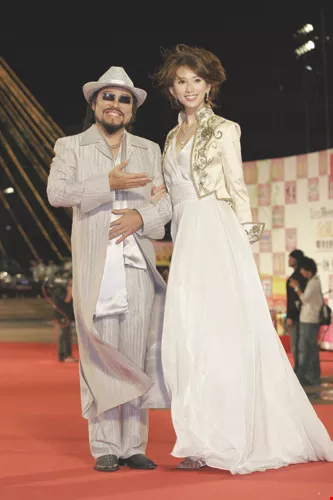
The Golden Bell Awards, hosted by top model Lin Chih-ling and entertainer Chang Fei, attracted a huge television audience.
Reengineering the industry
Back in Taiwan, the Executive Yuan long ago listed digital content as an emerging strategic industry. In the area of hardware, wireless digital TV was officially launched in June 2005. From 2006, all TV sets with screens 29 inches or larger will be required to come with built-in digital reception capabilities. From 2008, only digital TV sets will be available, and all TV braodcasting using analog frequencies will cease by 2010.
Faced with the advent of digital convergence, the issue of integrating the 4Cs (computers, cable TV, communications, and content) has come to the fore.
David Su, vice president and general manager of AU Optronics Corporation, observes that growth in Taiwan's information industry is gradually slowing. If the use of high-resolution digital TV sets could be expanded, the industry would hit new heights. People turning in old sets for new ones would drive the market forward. According to estimates, flat-panel liquid crystal display (LCD) TVs make up 12% of all TV sets produced today. That proportion is expected to reach one half next year. Not only is all broadcast TV content going digital, consumers want high resolution TVs, because the color saturation and power consumption of flat-panel TVs are far superior to those of traditional sets. What's more, flat-panel TVs are thin, take up less space, and are all the rage in modern home decoration.
To drive the digital audiovisual industry forward, however, in addition to support in the form of government policies and collaboration among the film, TV, and high-tech industries, the film and TV industry itself will need to put more effort into creativity, raising capital, and getting their work into circulation.
Kow Fu Hong, executive officer of Taiwan TV and Film Project Promotion, asserts that Taiwan's creativity is self-evident in both music and theater, but the local market is small. At present, small-scale producers are responsible for its audiovisual arts. They've run into a brick wall--if they don't market their product elsewhere, they won't succeed, no matter how good it is.
Faced with the shortcomings of Taiwan's film and television industry--"rich in creativity, poor in marketing"--TV and Film Project Promotion invited Barrie M. Osborne, renowned Hollywood producer of The Matrix and the trilogy The Lord of the Rings, and Philip Lee, Hong Kong producer of The Emperor and the Assassin and Crouching Tiger, Hidden Dragon, to Taiwan to share their successful marketing experience. They carried out extensive discussions on such topics as budget control, marketing, obtaining bank loans, international copyright, and government subsidies.
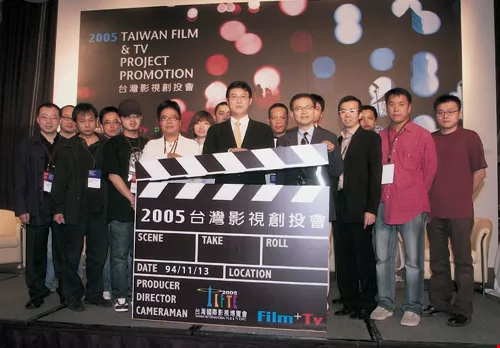
The Taiwan Film and TV Project Promotion (TFTPP), spearheaded by GIO minister Pasuya Yao (center, photo at left), is creating a platform for communication between artists and investors. To encourage international productions to come to Taiwan, a panel discussion was hosted by author Tom Wang (standing, upper photo), with professionals such as Hong Kong producer Philip Lee (seated at right, upper photo) and Lord of the Rings film trilogy producer Barrie M. Osborne (middle photo) offering their input and opinions on Taiwan's film industry.
Completion bonds
Li explains that when raising funds for any project, a comprehensive business plan that starts with selecting a good script, budget control, a shooting schedule, and choosing actors is indispensable. When producing his 1997 film The Emperor and the Assassin, he employed an insurance mechanism used in the United States called completion bonds when applying for bank loans. Banks are not necessarily going to be willing to finance a movie just because they see a film shooting plan, so to win their trust, it's best to also include a completion bond.
With a completion bond, a type of insurance designed specifically for the film industry, the producer guarantees backers that it will finish a film within the allotted time and budget. The US has a long tradition of intangible asset insurance, so filmmakers can use the business plans of as yet unmade motion pictures as loan collateral. In the event that the movie cannot be finished on time, an insurance company, a third-party responsible for overseeing the completion of the work, finds a new production team and financial backers to finish it, thereby reducing the bank's risk.
Imoto Mitsuru, general manager of Japan's North Stars Pictures, explains the trust system used in Japan. When he made the well-known Japanese comic Fist of the North Star into a full-length movie, he set up a trust account and then raised funds from businesses and individuals. Because the Japanese public is familiar with this best-selling comic, many people were willing to invest in it. Furthermore, the Japanese government helped by amending its regulations on financial trusts. After setting low and high caps on investments, filmmakers can recruit investors from the general public over the Internet. At this point, they have attracted an impressive 14,000-plus small-scale investors.
Japan's money raising trust fund, however, is not necessarily suited to every country. Lord of the Rings producer Osborne points out that regulations in the US are too complicated. You would need a legal team just to take care of the paperwork and the time and money required would virtually kill you. If you want to shoot a film in the US, he suggests avoiding this method.
He asserts that raising funds for movies is tough work. For example, when looking for big Hollywood filmmakers to work with on The Lord of the Rings, director Peter Jackson ran into brick wall after brick wall. Some insisted that he condense the trilogy into one film, but Jackson's original idea was to shoot two films. Luckily, the indomitable Jackson made a 30-minute clip which helped convince independent US movie producer New Line Cinema to invest in the project. In the end, New Line even suggested that he stay faithful to the original and shoot the film in three parts. Thus the box office smash trilogy was born.
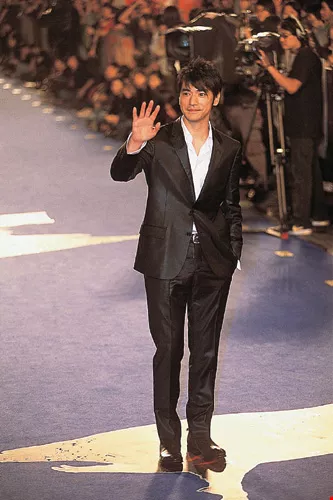
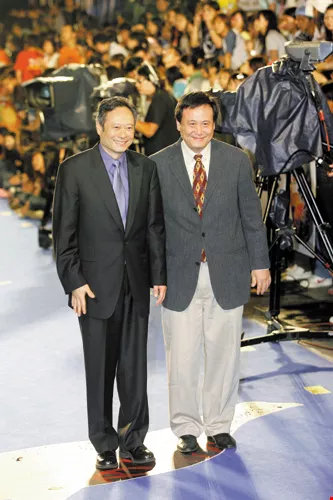
The stars came out in force for the Golden Horse Awards, including (left to right) film and TV star Takeshi Kaneshiro (photo by Chuang Kung-ju), internationally acclaimed director Ang Lee and his younger brother Khan Lee, Best Actor and Actress winners Aaron Kwok and Shu Chi, Hong Kong method actor Anthony Wong, and Taiwanese musical superstar Jay Chou.
Searching for resources
However, many professional producers taking part also admitted that the completion bond system was more suited to accomplished directors with established reputations. Philip Lee suggests that new Taiwanese directors starting out should begin by applying for government awards and subsidies.
"Soft money," like the GIO's Guidance Fund for Domestically Produced Films, has been available for years in countries such as Italy, New Zealand, Australia, and Canada. In the case of New Zealand, the New Zealand Film Commission mainly targets short films, scripts, and new directors for subsidies, whereas for productions with budgets exceeding NZ$10 million (about NT$230 million), the government prefers international projects, so as to attract overseas production teams to New Zealand to shoot their films. In this way, they can import new technology, software, and talent into their film industry, while promoting New Zealand's natural beauty.
Up until now, Taiwan's film subsidies have only had an annual Guidance Fund totalling NT$100 million. Now, however, in order to support and nurture the TV and film industry, the Executive Yuan plans to invest a development fund of NT$20 billion over five years into the culturally innovative film, TV, and digital content industries, estimating that 60% of this may be used to invest in film and TV.
According to Executive Yuan Development Fund Management Committee vice executive secretary James Ho, the development fund, set up 30 years ago, has contributed NT$170 billion to date into the treasury. In the future, film and TV investment will take two forms. First, encouraging those within the industry to back projects, which would then be selected and approved by the development fund committee. Second, encouraging holding companies to invest in films with market potential.
The stars came out in force for the Golden Horse Awards, including (left to right) film and TV star Takeshi Kaneshiro (photo by Chuang Kung-ju), internationally acclaimed director Ang Lee and his younger brother Khan Lee, Best Actor and Actress winners Aaron Kwok and Shu Chi, Hong Kong method actor Anthony Wong, and Taiwanese musical superstar Jay Chou.
A return to dream-weaving
Although film watching can be compared to "weaving dreams in the dark," the film and TV industry is, after all, a business, and as such all film or TV investments have to promise financial return if they are to have a future.
Judging by Japanese, Korean, Hong Kong, and Chinese box office receipts, top-grossing films are either locally produced or in Mandarin Chinese. Japan, for example, is an enthusiastic consumer of home-grown animation. Moreover, after Korea's government regulated that theaters must show locally-produced films for at least 106 days of the year, box-office takings for Korean films have been reaching new heights year by year. Last year, the top two box-office hits in China were Kung Fu Hustle and House of Flying Daggers. Clearly, the way forward for the Asian film industry lies in producing films which will be well received by home audiences. Taiwan's film and TV industry, therefore, will need to move away from its current penchant for artsy highbrow films and start targeting more closely the mainstream market if it is to pull audiences back into the cinemas.
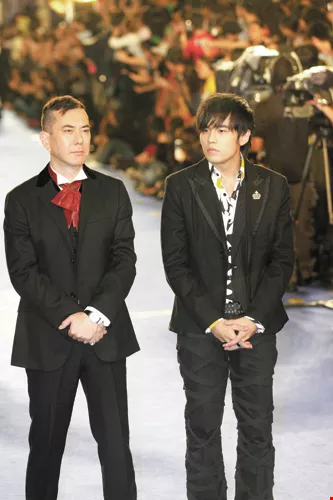
The stars came out in force for the Golden Horse Awards, including (left to right) film and TV star Takeshi Kaneshiro (photo by Chuang Kung-ju), internationally acclaimed director Ang Lee and his younger brother Khan Lee, Best Actor and Actress winners Aaron Kwok and Shu Chi, Hong Kong method actor Anthony Wong, and Taiwanese musical superstar Jay Chou.

The Taiwanese film industry desperately needs to make films that will pull audiences into the multiplexes. This photo shows the Warner Village multiplex in Taipei's Hsinyi District.
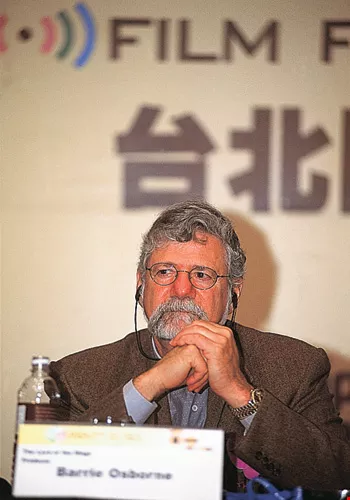
The Taiwan Film and TV Project Promotion (TFTPP), spearheaded by GIO minister Pasuya Yao (center, photo at left), is creating a platform for communication between artists and investors. To encourage international productions to come to Taiwan, a panel discussion was hosted by author Tom Wang (standing, upper photo), with professionals such as Hong Kong producer Philip Lee (seated at right, upper photo) and Lord of the Rings film trilogy producer Barrie M. Osborne (middle photo) offering their input and opinions on Taiwan's film industry.
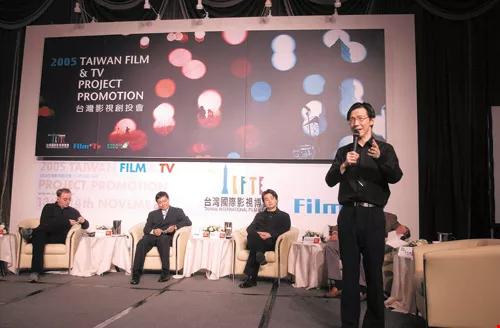
The Taiwan Film and TV Project Promotion (TFTPP), spearheaded by GIO minister Pasuya Yao (center, photo at left), is creating a platform for communication between artists and investors. To encourage international productions to come to Taiwan, a panel discussion was hosted by author Tom Wang (standing, upper photo), with professionals such as Hong Kong producer Philip Lee (seated at right, upper photo) and Lord of the Rings film trilogy producer Barrie M. Osborne (middle photo) offering their input and opinions on Taiwan's film industry.
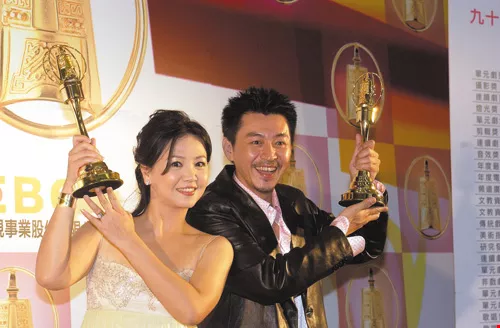
Winners of Best TV Drama Actor and Actress awards, Wang Chuan and Tuo Chung-hua, after their wins.


@List.jpg?w=522&h=410&mode=crop&format=webp&quality=80)


