Good Things Come to Those Who. . . Lift Weight!--Taiwan's Successful Women Weightlifters Look to 2000 Olympics
Marlene Chen / photos Hsueh Chi-kuang / tr. by Phil Newell
July 1997


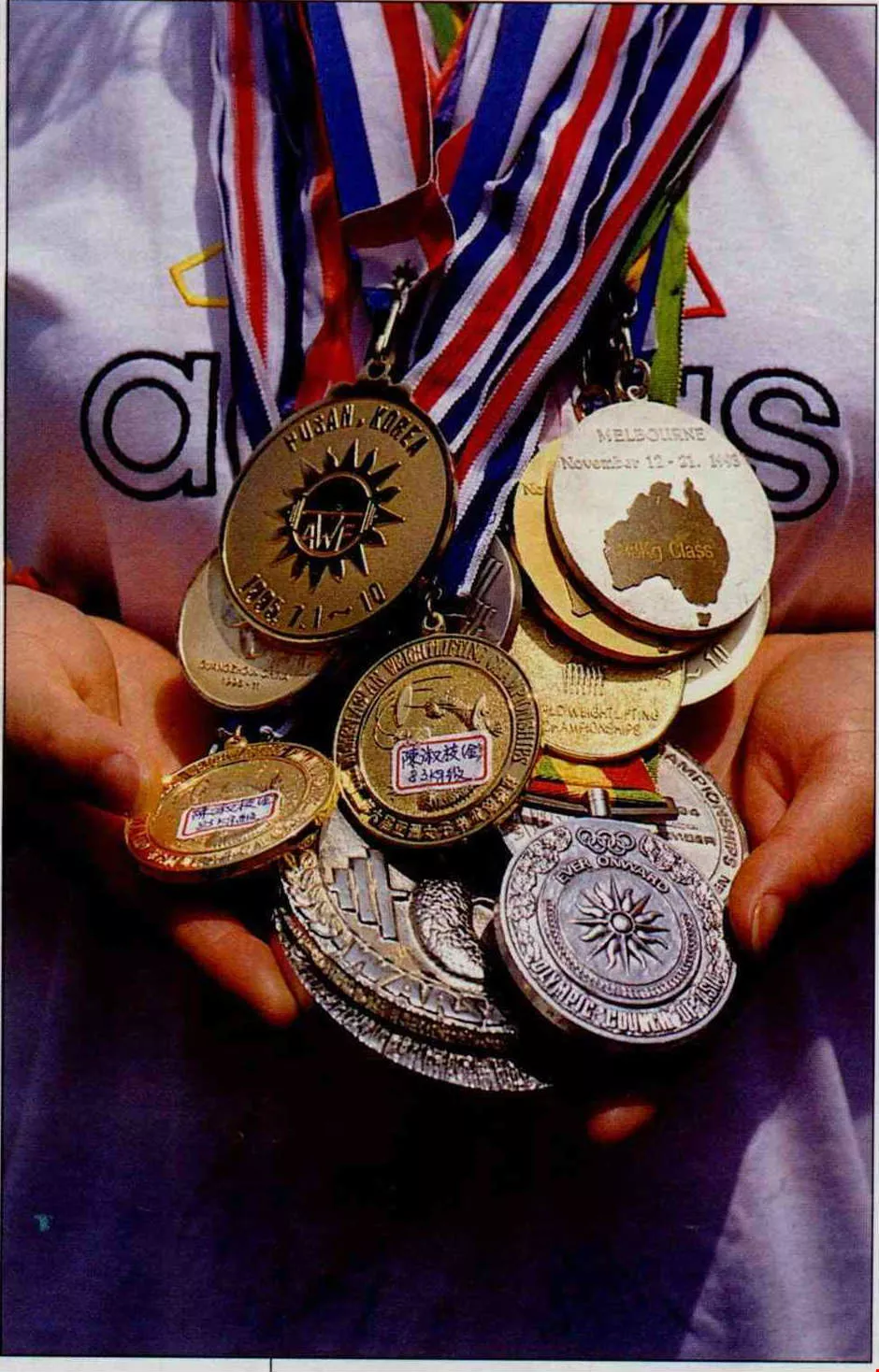
After ten years of weightlifting competitions, these medals constitute only a small part of Chen Shu-chih's haul.
There is a line in the Records of the Historian describing a man so strong he can move a mountain. But displays of strength are no longer a monopoly of chivalric martial arts heroes, and it is not only males who can play the role of strongm.... uh, I mean, strongperson.
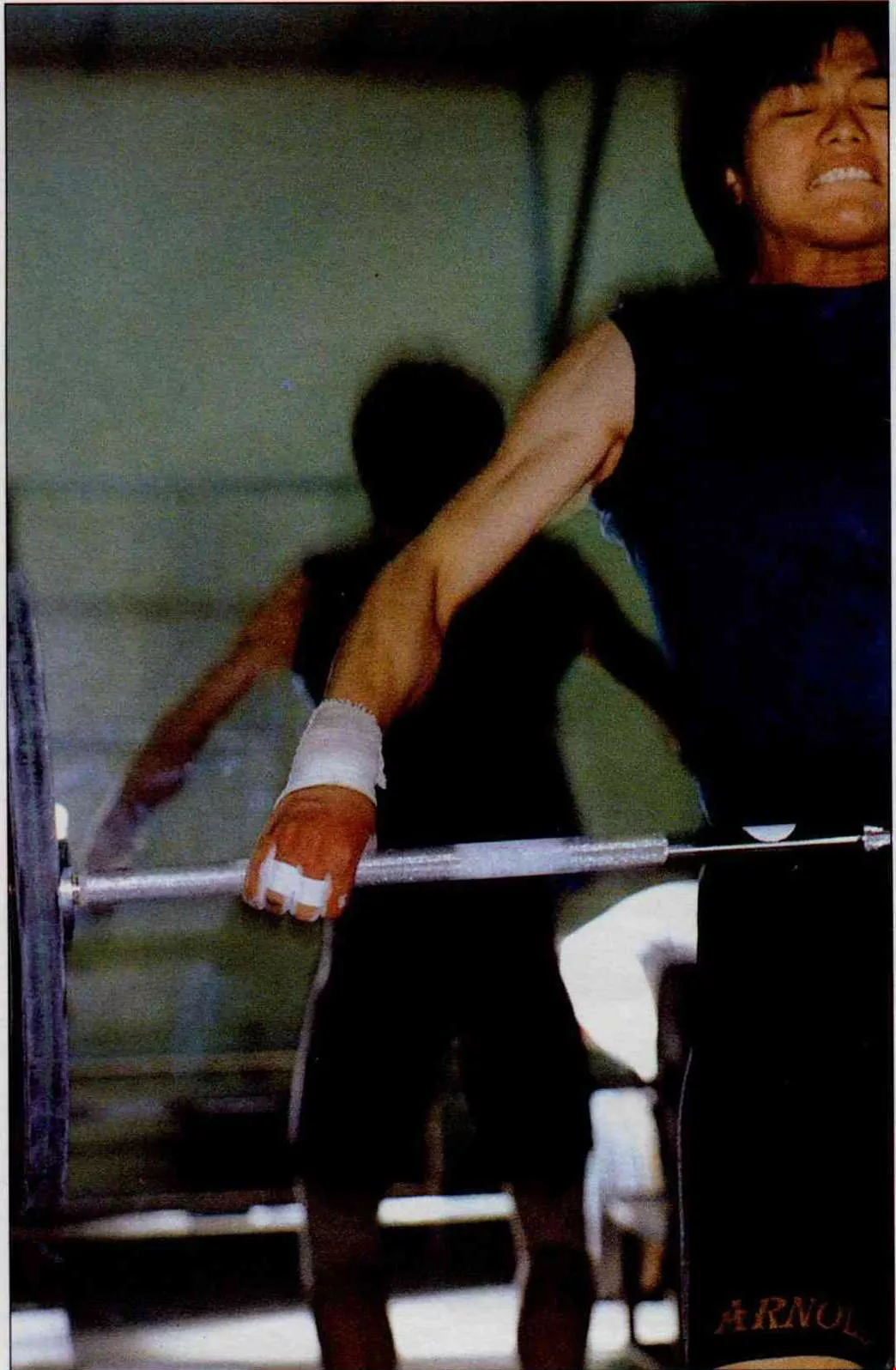
Behind every sporting event is an incredible amount of training, unseen by the public. Though the East Asian Games are barely over, Wu Mei-yi is already back to pushing herself to the limit every day.
In the last ten years, the athletes of the ROC national women's weightlifting team have won nearly 100 medals in international competition. Among athletic events for which Taiwan has national teams, it is vying with the taikwando team for most total medals. To maintain this level of achievement, competitors leave behind hearth and home and forsake all, engaging in intensive training all year round.
At the weightlifting stadium at the Pusan East Asian Games, the eyes of 10,000 spectators settle on the empty platform. There, a barbell lies in silence.
It is Wu Mei-yi's last attempt. In the first she successfully lifted 105 kilos. To win the gold, and set a new world record, she will try to lift 124.5 kilos, more than her previous personal best. With only one attempt remaining, coach Tsai Wen-yi chats with her about her technique off to one side, trying to distract her from the tension.
Wu steps on stage again. She walks to the barbell, sets herself, slowly bends at the waist, and with her hands, covered in white powder, finds the most comfortable lift position on the barbell.
There is a lot of baggage on this lift-the attention of the audience, the support of her family, ten years of effort, her coach's care and supervision, support from the government. . . . The accumulated weight exceeds that on the bar. Will Wu be able to pull off this lift?
A decade of effort
The second East Asian Games finished up in May. Though Wu's attempt ended in tears of disappointment, she still came away with the silver medal. Including Wu's medal, the women's weightlifting team won four golds and five silvers. Nine weight classes, nine athletes, and every one of them came home draped in gold or silver.
"Ten years," says ROC weightlifting team head coach Tsai Wen-yi, describing the hard road that the women have traveled. Senior weight lifters Chu Nan-mei and Chen Shu-chih, who came back from the Pusan games with a gold and silver respectively, have dedicated themselves to this sport for that long. Chu, recently honored by the International Weightlifting Federation (IWF), has continually participated in international championships for ten years. "Only five women in the world" among female weight lifters have been so honored, says Chu with a shy smile, spreading out her powder-covered hands as she prepares to work out in the weight room.
It was only in 1984, when the IWF passed international rules, that women's weightlifting formally became a competitive event. In that year, Tsai was participating in the men's weightlifting at the Los Angeles Olympics. His coach, Yang Chin-kun, brought back to Taiwan the news that women's weightlifting would become an event. "You could say that he deserves most of the credit for the development of women's weightlifting in Taiwan," says track and field coach Chen Ku-feng.
Chen, who leads the Tainan City Tekuang High School women's track and field team, has long emphasized weightlifting in the training of his athletes. After hearing the news, with the strong support of school principal Sun Pi-fang, he began training full-time weight lifters. It was then that Chu Nan-mei and Chen Shu-chih switched over from track and field to weightlifting.
At that time international women's weightlifting was just getting started, so, unlike men's weightlifting, with a long history behind it, standards were not exceedingly high. Also, it differs very much from track and field and basketball, where Asians are often at a physical disadvantage. So many people in the sports community reasoned that Taiwan had the potential to develop competitive, medal-quality teams in women's weightlifting.
"We seized the opportunity to be right in step with the rest of the world, and that's why we have the results that we have today." This view is shared by many in this field.
Take for example the 50-kilo Chu Nan-mei. In the first world championships of women's weightlifting, held in the US in 1987, she could only snatch 52.5 kilos, and clean and jerk 62.5. That was well behind what mainland Chinese lifter Huang Xiaoyu could do then-75 and 95 kilograms, respectively, for the two events.
Ten years later, at the Pusan East Asian Games, Chu's results were 80 kilos in the snatch and 100 kilos in the clean and jerk, for a 180 total. Not only is this better than the gold medal-winning performance back in 1987, it closely approaches the number one performance of 1996-187.5 kilos. Naturally, such an accomplishment is closely related to the fact that competitors got started early, became well aware of the standards required in women's weightlifting right at the start, and have been in training for a long period of time.
A future, and also a fortune?
In weightlifting, competitors are divided into classes according to body weight. Women's weightlifting classes range from the lowest at 46 kilograms or below to the ninth of 83 kilos and up.
Most women weight lifters had training in other sports before turning to weightlifting, or are natural athletes. Most young competitors today first came into contact with weightlifting in middle school. As for further development of talent, it used to be catch-as-catch-can, but now there are scientific "talent spotting" methods. Tsai Wen-yi points out that sports science plays a leading role in the selection of talent. Factors such as body shape, motor skills, education, psychology, intelligence, and inheritance all affect an athlete's potential.
Besides ability, athletes also must have the motivation to get involved. Many do not hesitate to admit that they began weightlifting as a way to move on to higher education, because weight lifters have a smooth path to educational advancement. Wu Ming-tung, special coach for weightlifting at the Youchang Middle School in Kaohsiung City, points out that many middle and high schools in Taiwan already have weightlifting teams, and those who will join their teams have reserved places in those schools. There are also places reserved for weight lifters in admissions to college and university.
Wu Mei-yi, Chu Nan-mei and Chen Shu-chih were among the first to go into weightlifting, encouraged by their mentor, coach Chen Ku-feng. Later, because their grades were pretty good, they got their wish and were sent on to special sports schools.
Another attraction of the event of weightlifting was the prize money for breaking records. In the past, for each national record broken, a weight lifter would get NT$50,000. All you had to do was surpass the existing record by half a kilo, and the prize was yours. "This was a major incentive for people to get involved in weightlifting," says Chen Ku-feng.
Su Ming-te, chairman of the Chinese Taipei Weightlifting Association (CTWA), says that in fact there was a big problem with this system. It should be the case that the more you break a record by, the larger the award. If the award is the same for breaking a record by 0.5 or 10 kilos, then each time a person will only lift 0.5 more than the existing record, to increase the number of record-breaking efforts and collect more award money. Thus, in 1992 the Ministry of Education abolished this system. Now rewards focus on international competitions, and depend on how high the athlete finishes.
How much can you bear?
Whatever the reasons for getting involved, once one gets in, like in other sports, the goal becomes to challenge one's physical ability to the limit. For the athletes, what comes then is training, training, and more training.
The weightlifting practice area, located in the National College of Physical Education and Sports (CPES), is where national team members congregate to work out. Every afternoon except Sunday, there are 30 or so weight lifters working out, and you also see athletes pushing themselves in training on Monday, Wednesday, and Friday nights. There is little conversation, besides an occasional word of advice to a lifter from a coach, and athletes asking each other for tips. There is virtual silence except for the loud "bangs" as weight lifters drop their barbells onto the wooden floor. Two industrial-size fans placed by the door turn laboriously to bring some fresh air into the stuffy basement room.
The CPES weightlifting team works out alongside the national team. Some members of the national team have already taken on the role of assistant coach. Besides working out themselves, they also instruct two to four students. Wu Mei-yi says that, after so many years in training, most national team members know how to make their own adjustments. Head coach Tsai says that the best coach of all is the athlete herself. As they teach their students, they can also improve their own skills.
The weightlifting event includes the snatch and the clean and jerk. After warming up, each athlete looks for a few square meters of space and gets down to work. "Oof!" Tsai Hui-wan, who is in the first weight class (46 kilos and under), takes a barbell loaded with weights off the rack. Because the weights are so heavy, Chen Hsiao-lien stands behind Tsai just in case she is needed to help out.
"Oof!" Barbell on her shoulders, Tsai squats, then stands. Breathing heavily, she listens to the coach's instructions as she completes her set. After a brief rest, she adds 2.5 kilo steel weights to each end of the barbell and immediately starts her reps. After each set she adds more weight, and when the weight reaches a certain level, she starts back down, removing the iron plates one by one. One round of exercises involves the whole cycle from lighter to heavier, then heavier to lighter. Off to one side, Chen Jui-lien (fifth weight class), who has just completed a cycle, sits on a chair breathing heavily; sweat has already drenched her sport shirt.
Not just lifting
Right next to Chen, Chu Nan-mei (second weight class, 50 kilos or less) stands facing a full-length mirror. This is not there for the athletes to fix their hair or check out their clothes, but to observe and adjust their technique. Chu is practicing the snatch, which means lifting the bar in one single movement from the floor to over the head.
In formal competition, if the elbow bends slightly, if the movement is not completed all at once, or if there is a slight downward movement after getting the barbell over the head so that the barbell has to be pushed upward again, the attempt will be judged unsuccessful. Because the barbell is very heavy, if the center is even slightly off the axis of the body, the weights might very easily topple forward or backward.
To succeed in this lift, it is necessary to pay attention to every detail, from the grip on the bar and every angle of the body when getting set, to the actions of every muscle and joint during the lift. Tsai, who just finished his degree last year from the Graduate Institute of Coaching Science at CPES, says: "The view that strength is all that is needed for weightlifting is incomplete."
Thus, competitors must focus their concentration and thoughts. It is for this reason that making a racket is prohibited in the weight area, because if an athlete is distracted she might easily be injured. Tsai, besides noting the physical and mental condition of his charges, says "a coach even has to pay attention to their emotional state."
Pain is standard issue
Despite every effort made to avoid injuries, lifting twice their body weight over and over again inevitably exhausts the competitors and causes injury. Weight lifters collect injuries-from wrists, elbows, and shoulders to waist, knees, and ankles-as easily as other people collect stamps. But they don't have nearly as much fun-in fact, injury is their worst nightmare.
An athlete's body is her main asset. A slight injury can interrupt training, a serious one can end a career. If one occurs just before a competition, all the training invested for that event is wasted. Thus, even in practice, athletes carefully wrap their knees and wrists, and wear a weight belt; they also wear shoes specially designed for weightlifting.
After practice, athletes must set aside time to rest and recuperate. "Only people who can recover quickly can lift greater weight, so recuperation training is indispensable," says Tsai Wen-yi. Currently the weight training room does not have specialized equipment such as a sauna, so to relax their tired muscles the lifters have to help each other with massages. The national team needs to go outside for hydrotherapy, sauna, massage, and dietary advice.
Physical therapy is just one element in scientific training methods. In addition, every month weight lifters must undergo bio-testing, reading the athlete's physical condition from blood and urine. Muscle-to-fat ratio must be properly controlled. In comparison with main rival the PRC squad, says Coach Tsai, Taiwan's team doesn't have as many lifters, nor does it have a special training center. Taiwan's advantage, then, besides the higher educational levels of its lifters, depends on superior scientific training.
Heavy psychological burden
Competitors have more concerns than just physical condition and technique. In order to be able to concentrate on training, most of the weight lifters live in the dorms of the northern training center, which is located on the CPES campus. The athletes do everything together in a uniform way, even sleeping at the same time at lights-out. They take their "time off" right in the center.
Giving up family life and living a life of intensive training, the women have not only tangible weight on their shoulders, but intangible as well. In particular, a competitor must train for two or three years even to begin to show real achievements. If an athlete finds it impossible to break through to a higher level of performance, or is injured, she can easily become discouraged. Coach Tsai says that if the athlete really can not get any better, the coach must figure out how to tell her, so that she can change her life's direction at the earliest opportunity. Otherwise, the coach must use every way possible to get the athlete to work harder and harder.
Every athlete needs strong desire, combined with the encouragement of peers. And winning a medal or prize money or breaking a record is a great confidence-builder. Chu Nan-mei, who has reset the national record 20 or 30 times, describes the most unforgettable experience of her career as "the first time I broke the national record." However, so that athletes will focus all their attention on progressing, says Chen Shu-chih, currently number one in the world in her weight class, a comprehensive system to care for the athletes' needs is most important.
A tough field to get ahead in
Huang Tien-lin, chairman of the First Commercial Bank and long a sports fan, is a key player supporting weightlifting in Taiwan. His bank provides athletes and coaches with about NT$300,000 per month. After the team's outstanding performance in the East Asian Games, Huang specially appropriated another NT$72,000 to reward them and encourage further progress. Currently he is discussing with the CTWA the possibility of hiring retired athletes at the bank.
The National Youth Commission has a special program to allow outstanding athletes to take college credits in education without any entrance exam. After their period of study is over, they can get a certificate and apply for a position as a teacher. Eight members of the women's softball team that took 6th place at the Atlanta Olympics last year took courses at teacher's colleges under the program.
Despite the good intentions, there have always been more athletes than career openings. The problem of a future career is a critical factor determining whether or not an athlete will remain in a sport. Many athletes hope that after retirement they can become teachers or coaches. Chen Shu-chih, who has an MA from the Graduate School of Coaching at CPES, says that while she can teach in a school, what can the other athletes, without similar credentials, do?
Before 1993, the Ministry of Education had a special program for hiring coaches. If one passed the procedure, then one would gain a lifetime certification, and would be sent to various schools to promote basic training in a variety of sports. Unfortunately, says Render Lee, chief of the Department of Physical Education and Sports of the Ministry of Education, this program has been discontinued.
Basic training
Without a degree, they can't become teachers. And the special coaching program has been discontinued. Many weightlifting instructors at the primary level are serving in the guise of "substitute teachers." These primary-level teams are the training ground for "fresh troops" for the national team in the future. Su Ming-te, head of the CTWA, says that cultivating primary-level talent is vital for the future of weightlifting. Each summer, the CTWA sponsors a summer training camp for athletes who performed well in the Taiwan Area Middle School Games.
The weightlifting team at Youchang Middle School in Kaohsiung is one of the most accomplished in southern Taiwan; coach Wu Ming-tung just happened to hook on with the last group of special coaching appointments. Wu Ming-tung says that the main reason Youchang has done so well is that the team has received strong support from the school principal, parents, and local residents. Kaohsiung City Councilor Lan Hsing-mu recently lent support to Wu when they together went to the China Petroleum refinery next to the school to apply for a "good neighbor" grant to serve as funding for the weightlifting team. In four short years, an empty basement room has become a busy weight training center with athletes working out every day.
Four years ago, when the room was just set up, they had no equipment at all. The students used wooden poles for barbells, and could only practice very basic moves. Thinking back to the first time they tried to get students to join up, Wu says with a laugh that while the basketball club attracted more than 100 students, only 10 or 20 signed up for weightlifting. Some girls were also interested, but their parents felt that weightlifting was not appropriate for girls, so Wu had to use all his verbal skills to persuade the parents.
Still feminine
Early on, guys had a monopoly on weightlifting. But as society has become more open, there has been greater acceptance of women in all kinds of sports. "Weightlifting" is no longer equivalent to "masculinity." But compared to track and field events, most people still have prejudices about weightlifting. They think that weight lifters must certainly be muscle-bound, even doubting that a woman weight lifter is ever going to find a husband.
"Back then my little Shu-chih was excellent in track and field, basketball, and weightlifting. I suggested that being good in everything was not as good as specializing in one thing. I never expected that she would choose weightlifting," recalls Chen's mom. "I thought that women who trained in weightlifting would definitely be bulky and indelicate."
Chen Shu-chih laughs, "Since I started weightlifting, I haven't had a bit of fat on my body, so I look even more womanly!" Ling Yi-hua of the Kaohsiung City Sanmin School of Home Economics team, is 158 cm tall and weighs 49 kilos; her figure is not in the least bulky. When Coach Tsai meets parents or students who fear that weight lifters all develop physiques like mountains, Wu Ming-tung brings out Ling as the best example to the contrary.
The weightlifting team at Youchang is just entering its fourth year, but it has already produced a group of outstanding athletes. Ling Yi-hua, who graduated only two years ago, has already broken one national mark.
To the Asian Games!
Seeing his charges pile up great achievements produces a real feeling of accomplishment for Chen Ku-feng. Chen, who established a foundation for women's weightlifting, says that the reason women's weightlifting can continue to move forward is that Tsai Wen-yi is there to rely on. However, "we have first-class athletes, but only a third-class training facility." Seeing the 30 or 40 competitors crammed into the nearly airless basement training room which is only the size of a couple of basketball courts, Tsai, who is concurrently CTWA secretary-general, can't help but be dismayed.
CTWA director Chang Chao-kuo points out that there are sports arenas in southern Taiwan (in both Tainan and Kaohsiung). The CTWA recently suggested to the Ministry of Education that another training center should be established in Linkou in northern Taiwan. It could be made available for use by indoor sports like weightlifting, judo, and taikwando. But this plan will only be completed with cooperative efforts among the weightlifting community, the Ministry of Education, and supportive civic groups.
Women's weightlifting has been formally listed as an event for the 2000 Olympics. Li Jen-teh points out that Taiwan has already determined that weightlifting and taikwando will be two main areas of concentration in preparation for the games. Chu Nan-mei says that the near-term goal is next year's Asian Games. As for whether she will participate in the 2000 Olympics, Chu-who is soon to be married- will have to see what the situation is when the time comes.
Weightlifting is an athletic event of slow and steady progress, so dedication is one of the keys to victory. The professional life of a weight lifter is only about a decade. Of the women who have participated in dozens of competitions large and small over the years, some will soon retire. Whether there will Olympic medals in the future, and whether others will carry on the tradition, will depend on how much effort is made here in Taiwan and on the overall conditions in the athletic world. We can only "weight" and see.
p.120
At the 1984 Los Angeles Olympics, Tsai Wen-yi won a medal for Taiwan. The upcoming Olympics will be the chance for ROC women weight lifters to shine.
p.121
After ten years of weightlifting competitions, these medals constitute only a small part of Chen Shu-chih's haul.
p.122
Behind every sporting event is an incredible amount of training, unseen by the public. Though the East Asian Games are barely over, Wu Mei-yi is already back to pushing herself to the limit every day.
p.123
An inspirational sign, hung in the weight room of the Taipei Physical Education College, encourages the athletes to keep pushing forward.
p.124
In a corner of the dorm, Wu Mei-yi (left), Tsai Hui-wan (center), and Chen Jui-lien (right) take advantage of a break in training to make some tea and chat. All members of the national women's team, they spend all day, every day together, making them closer than even family.
p.125
Weightlifting requires excellent technique. National team member Chiang Ming-cheng, a coach at the Taipei Physical Education College, instructs students by example.
p.126
Primary-level training needs local support and funding. The Sanshan Guowang Temple, located across from the Youchang Middle School, donated NT$250,000 to the school team for equipment.
p.127
Basic weightlifting starts in middle school. In the absence of specialized equipment, these kids just tie weights to their waists to strengthen their arms.
p.128
In each lift there is hope for the future.
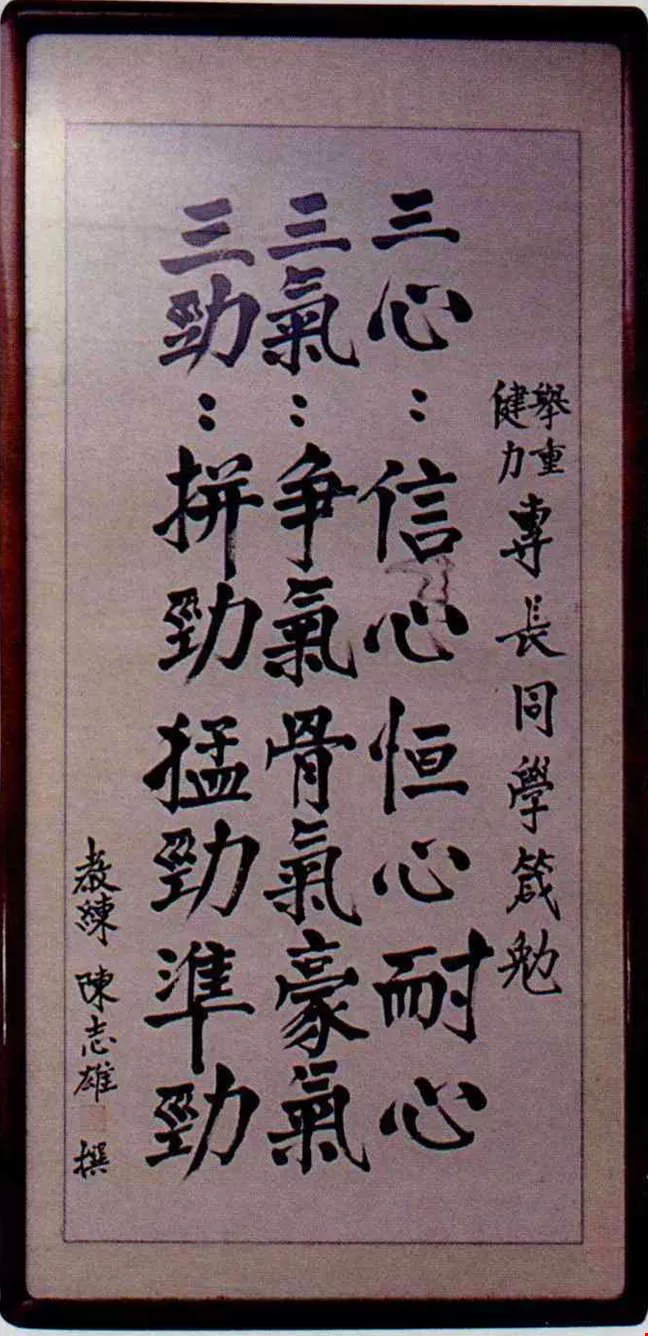
An inspirational sign, hung in the weight room of the Taipei Physical Education College, encourages the athletes to keep pushing forward.
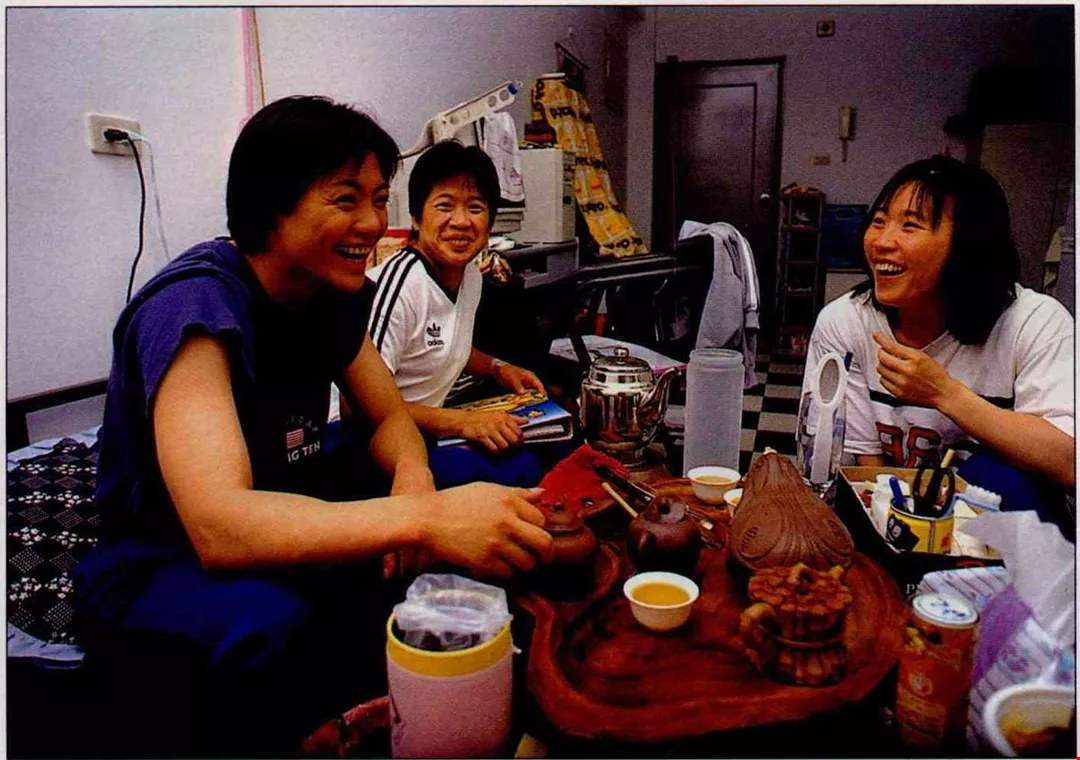
In a corner of the dorm, Wu Mei-yi (left), Tsai Hui-wan (center), and Ch en Jui-lien (right) take advantage of a break in training to make some tea and chat. All members of the national women's team, they spend all day, every day together, making them closer than even family.
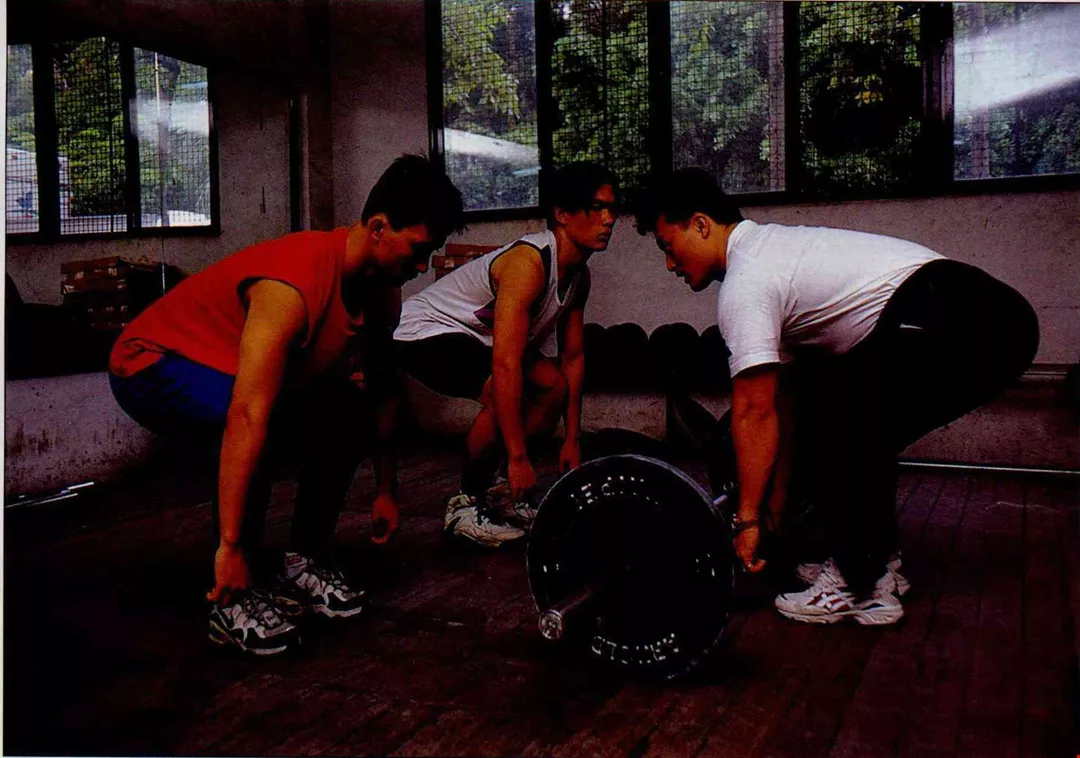
Weightlifting requires excellent technique. National team member Chiang Ming-cheng, a coach at the Taipei Physical Education College, instructs students by example.
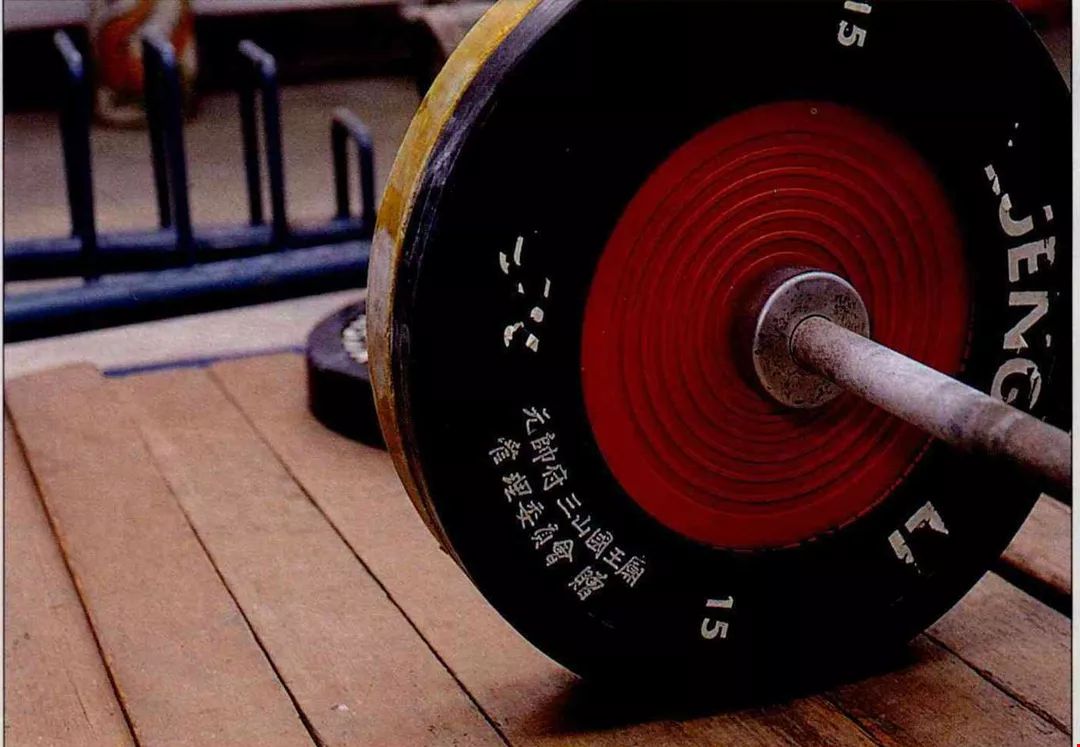
Primary-level training needs local support and funding. The Sanshan Guow ang Temple, located across from the Youchang Middle School, donated NT$250,000 to the school team for equipment.
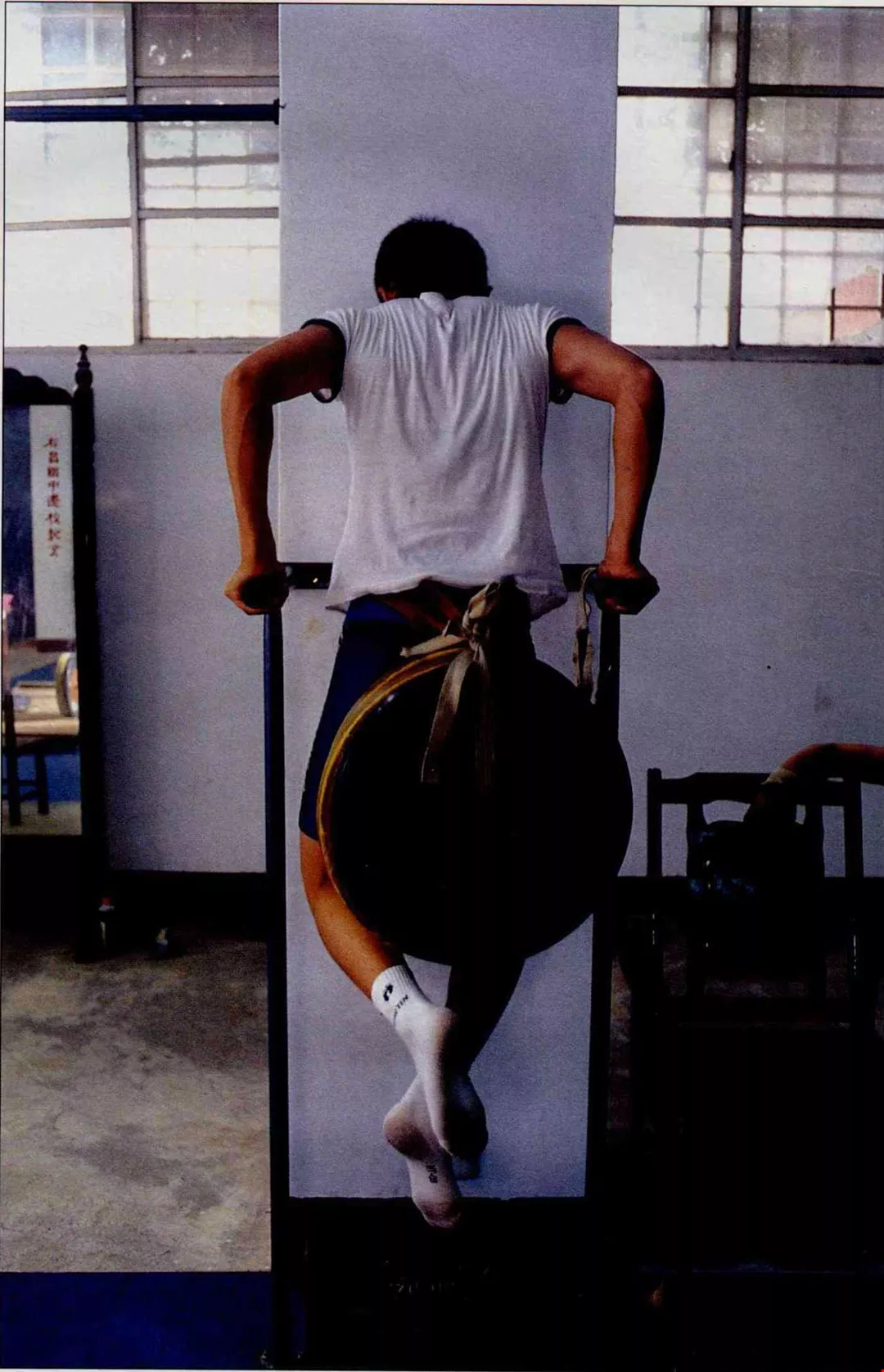
Basic weightlifting starts in middle school. In the absence of specialized equipment, these kids just tie weights to their waists to strengthen their arms.
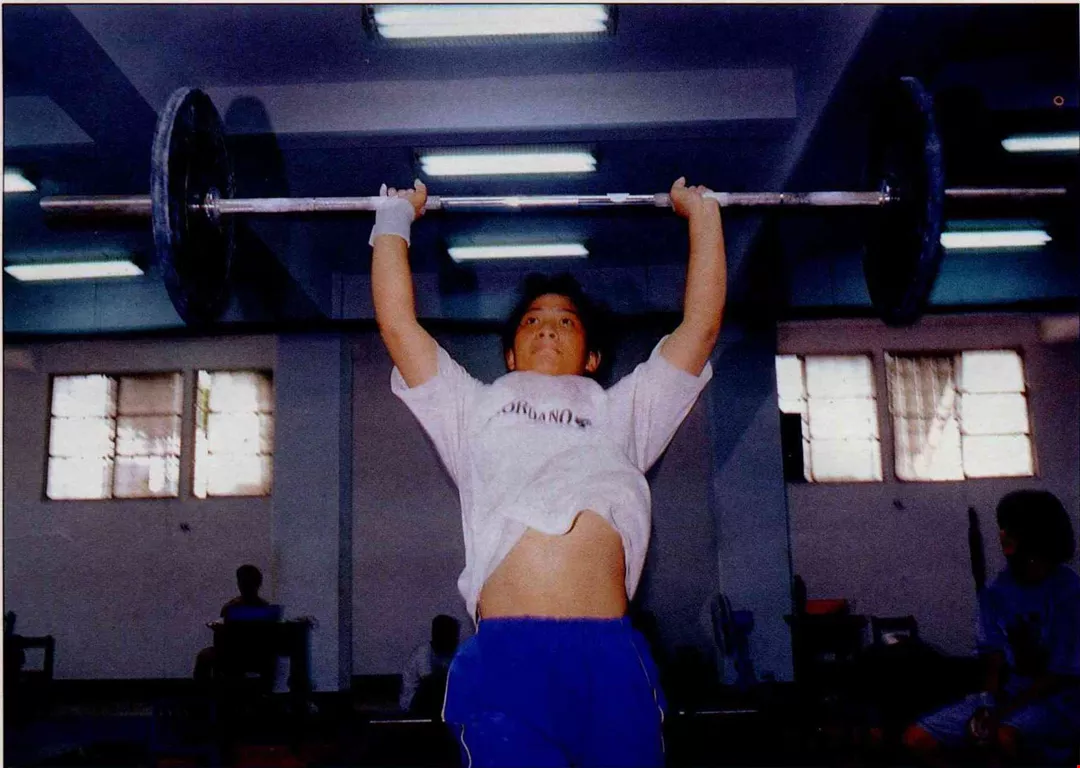
In each lift there is hope for the future.
@List.jpg?w=522&h=410&mode=crop&format=webp&quality=80)

@List.jpg?w=522&h=410&mode=crop&format=webp&quality=80)


@List.jpg?w=522&h=410&mode=crop&format=webp&quality=80)
@List.jpg?w=522&h=410&mode=crop&format=webp&quality=80)

